
Animal and Plant Wonders of Creation
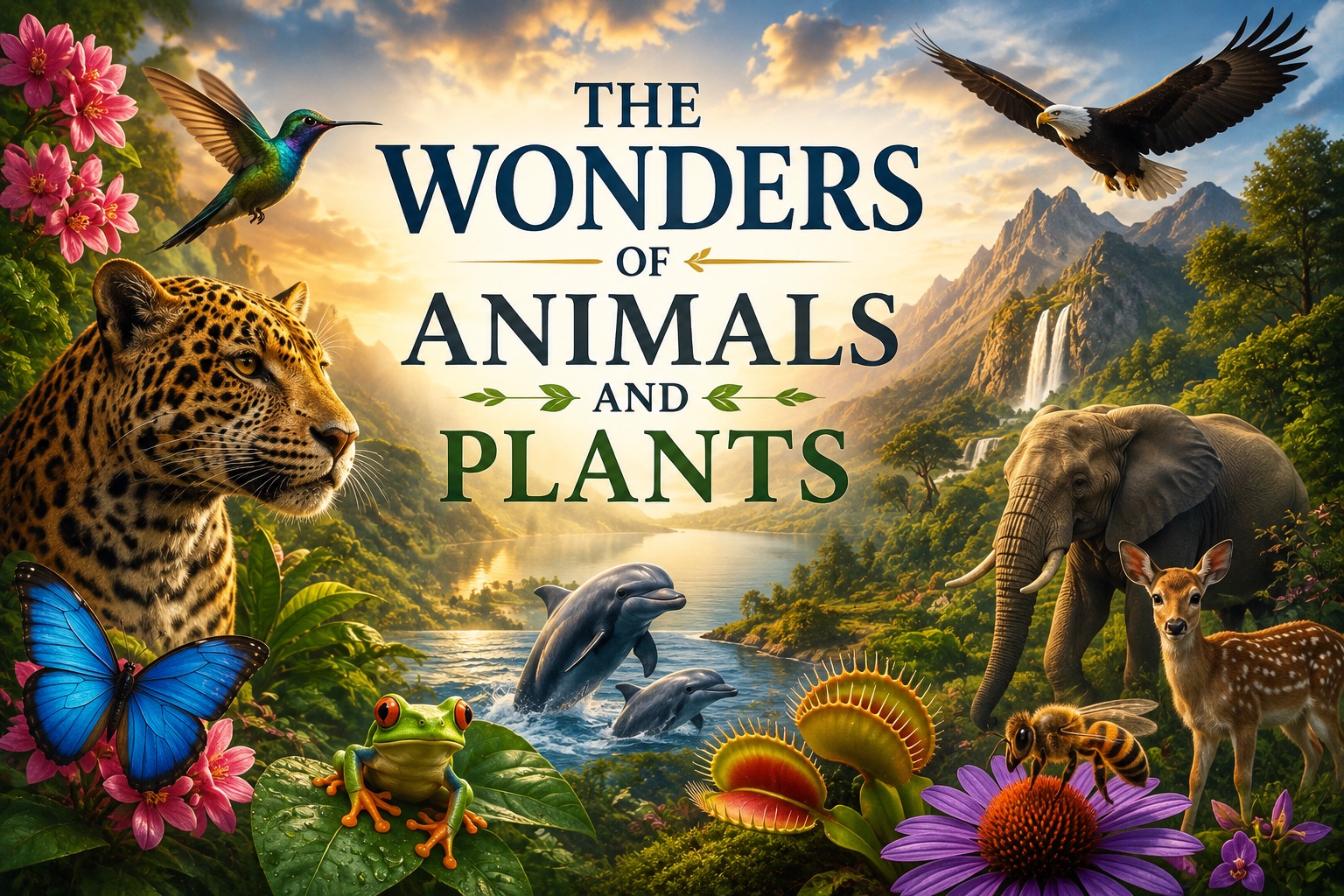
The animal and plant worlds are filled with astonishing wonders. Tiny creatures can navigate thousands of miles, animals can detect magnetic fields that humans cannot sense, birds can fly almost silently, plants can respond to touch, and green leaves can capture energy from sunlight. The more carefully we examine living things, the more amazing they become. For those who believe in God, nature continually points beyond itself to a wonderfully wise and loving Creator.
“O LORD, how manifold are thy works! in wisdom hast thou made them all: the earth is full of thy riches.” Psalm 104:24
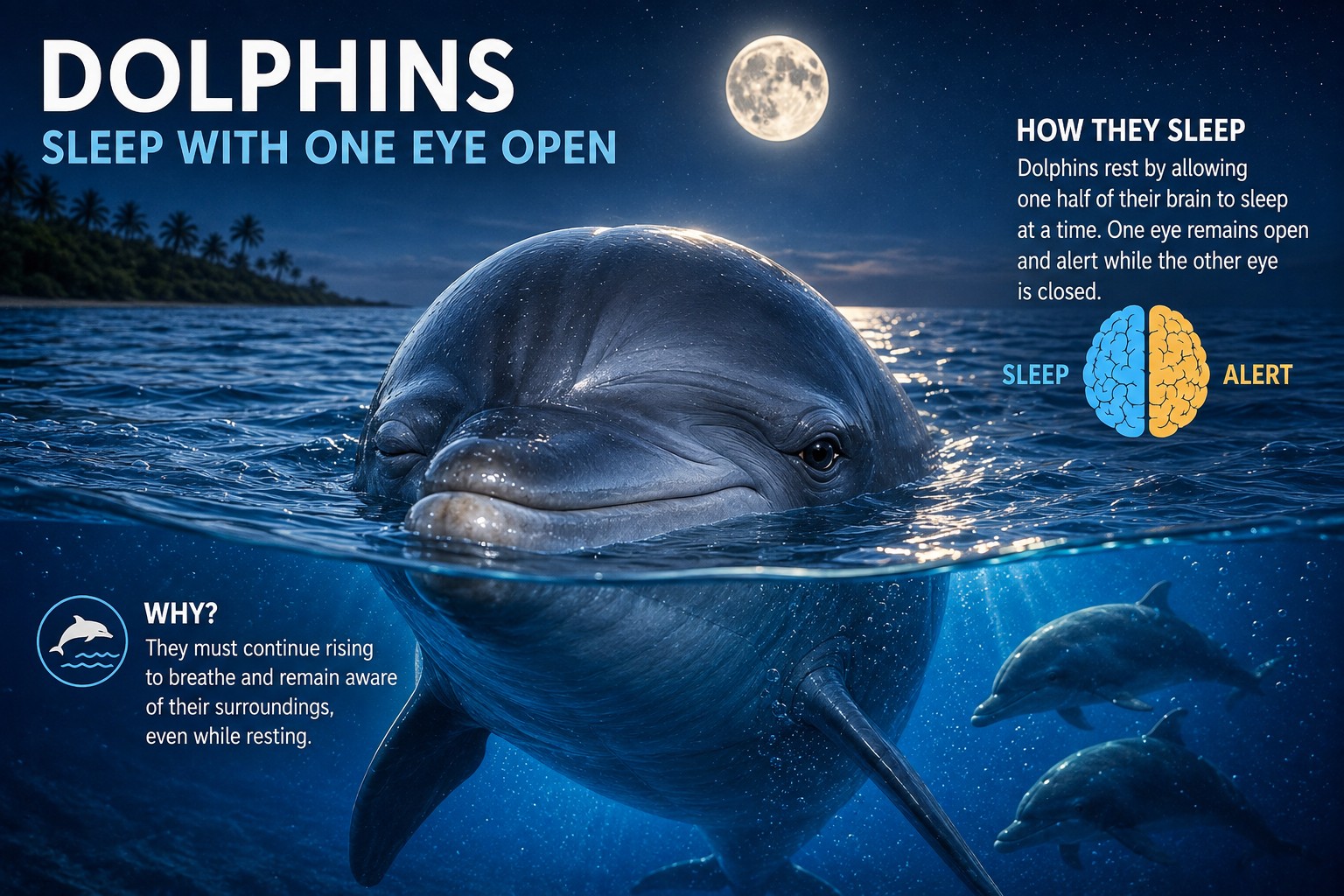
Dolphins Sleep with One Eye Open
Dolphins have an extraordinary way of sleeping. Unlike humans, they cannot become completely unconscious for long periods because they must deliberately come to the surface to breathe. So dolphins can allow one half of their brain to sleep while the other half remains awake. One eye may remain open while the other is closed. After some time, the two sides change roles. This allows the dolphin to rest while still breathing, swimming and remaining alert to possible danger. What an amazing solution to a difficult problem!
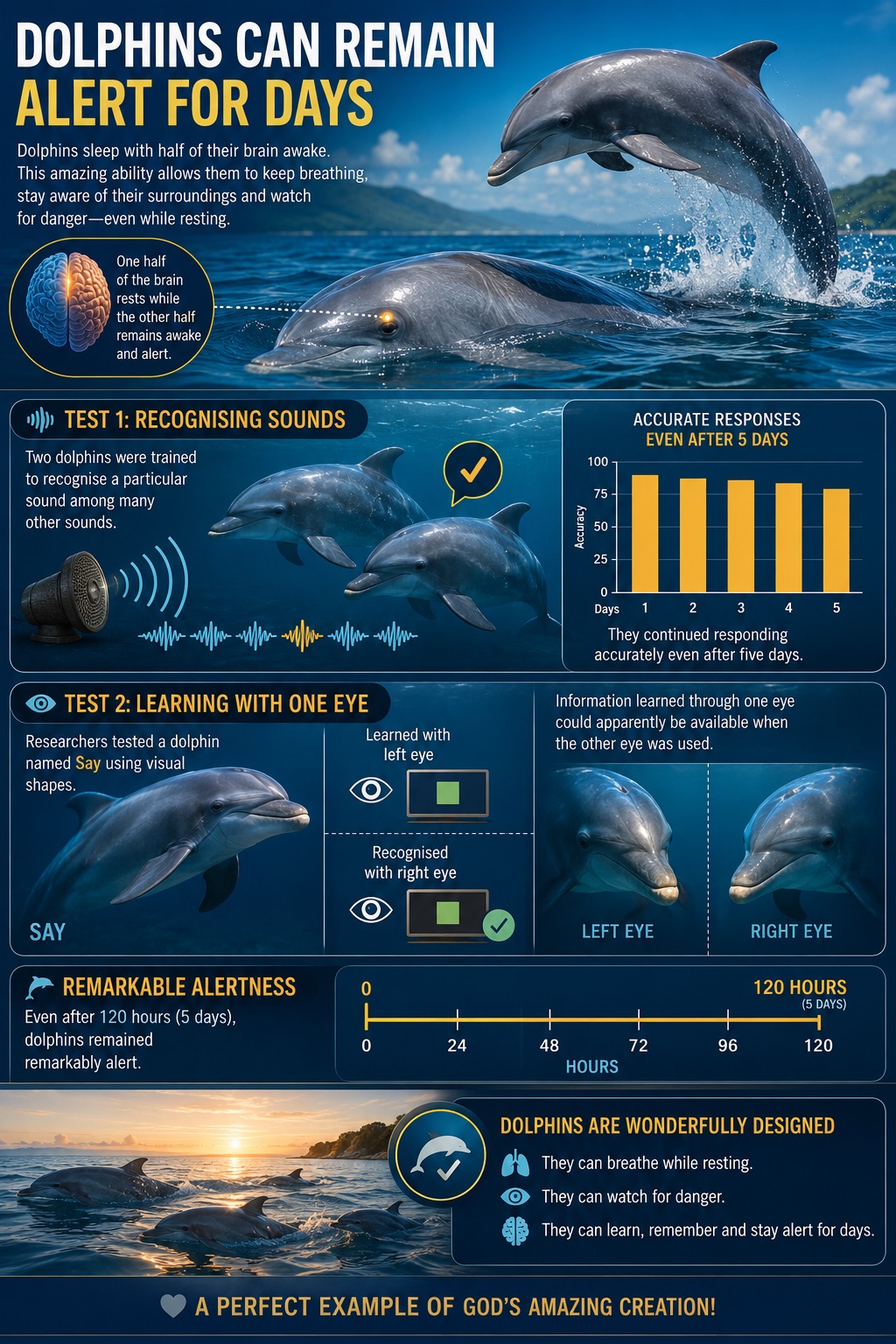
Dolphins Can Remain Alert for Days
Scientists tested dolphins to discover whether this unusual sleeping system affected their ability to remain alert. Two dolphins were trained to recognise a particular sound among many other sounds. Even after five days, they continued responding accurately. Researchers also tested a dolphin named Say using visual shapes. They discovered that information learned through one eye could apparently be available when the other eye was used. Even after 120 hours, the dolphins remained remarkably alert. Their bodies are wonderfully suited to a life in which sleeping, breathing and watching for danger must all work together.
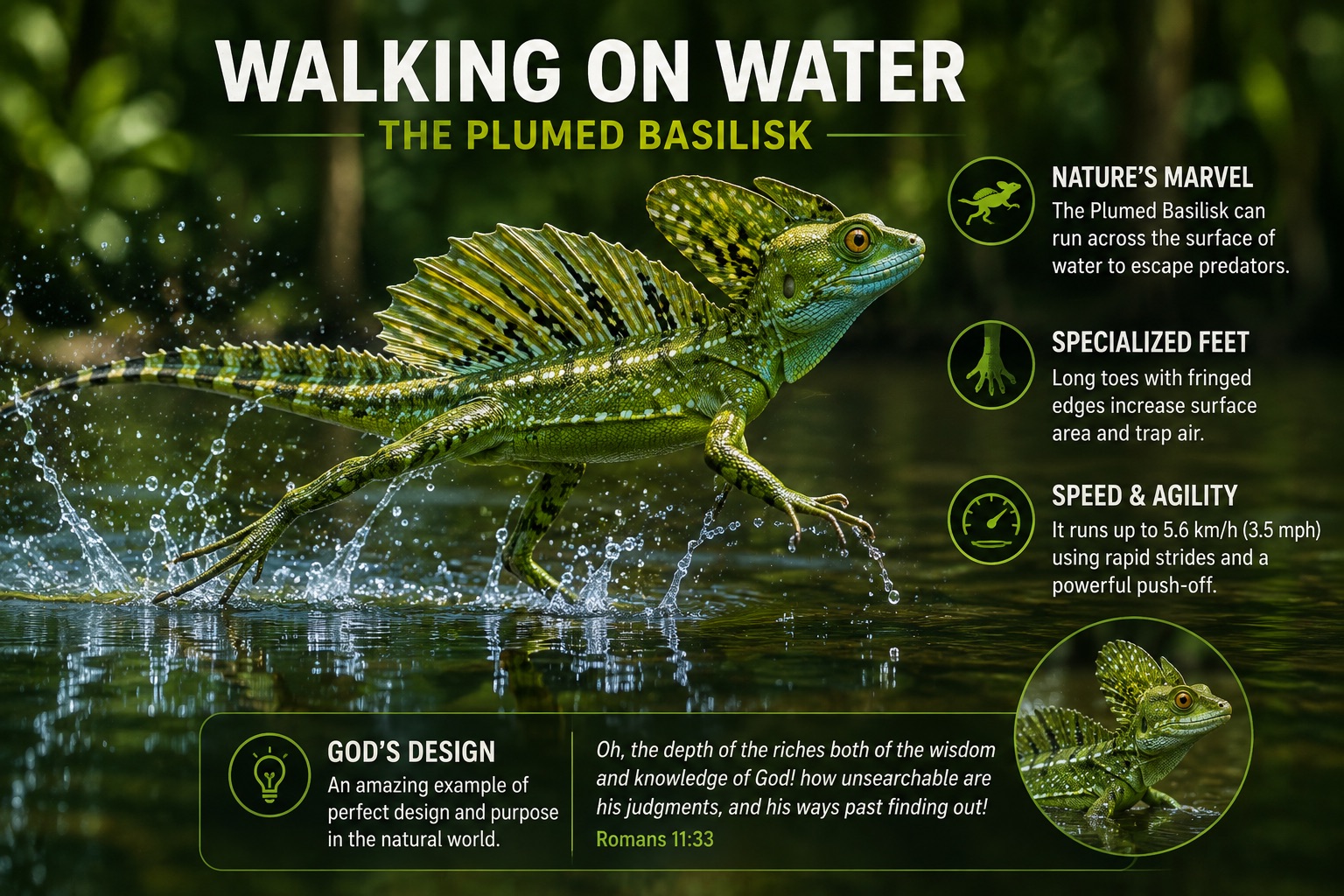
Walking on Water – Plumed Basilisk
The plumed basilisk is a beautiful Central American lizard with an extraordinary escape method. When threatened near water, it can leap into a stream and run across the surface on its hind legs. Its feet strike the water rapidly, creating pockets of air that help support its body for a short distance. Because of this remarkable ability, it is sometimes called the “Jesus Christ lizard.” A small lizard running across water is a wonderful reminder that even creatures we might easily overlook possess astonishing abilities.
Bloodhound – An Extraordinary Nose
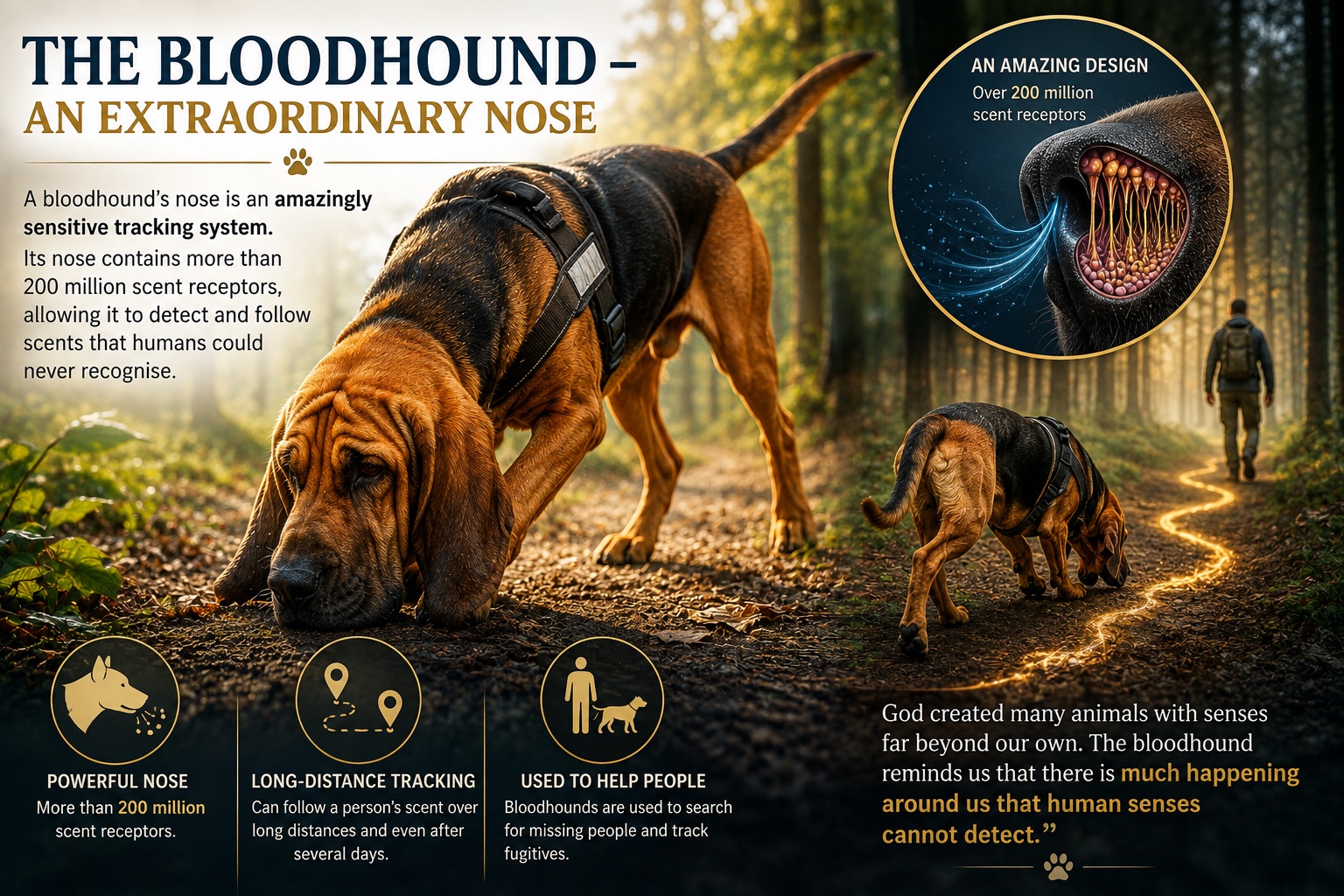
A bloodhound’s nose is an amazingly sensitive tracking system. Its nose contains more than 200 million scent receptors, allowing it to detect and follow scents that humans could never recognise. Bloodhounds can follow a person’s scent over long distances and sometimes even after several days. For this reason, they have been used to search for missing people and track fugitives. God created many animals with senses far beyond our own. The bloodhound reminds us that there is much happening around us that human senses cannot detect.
Eagle – Remarkable Eyesight
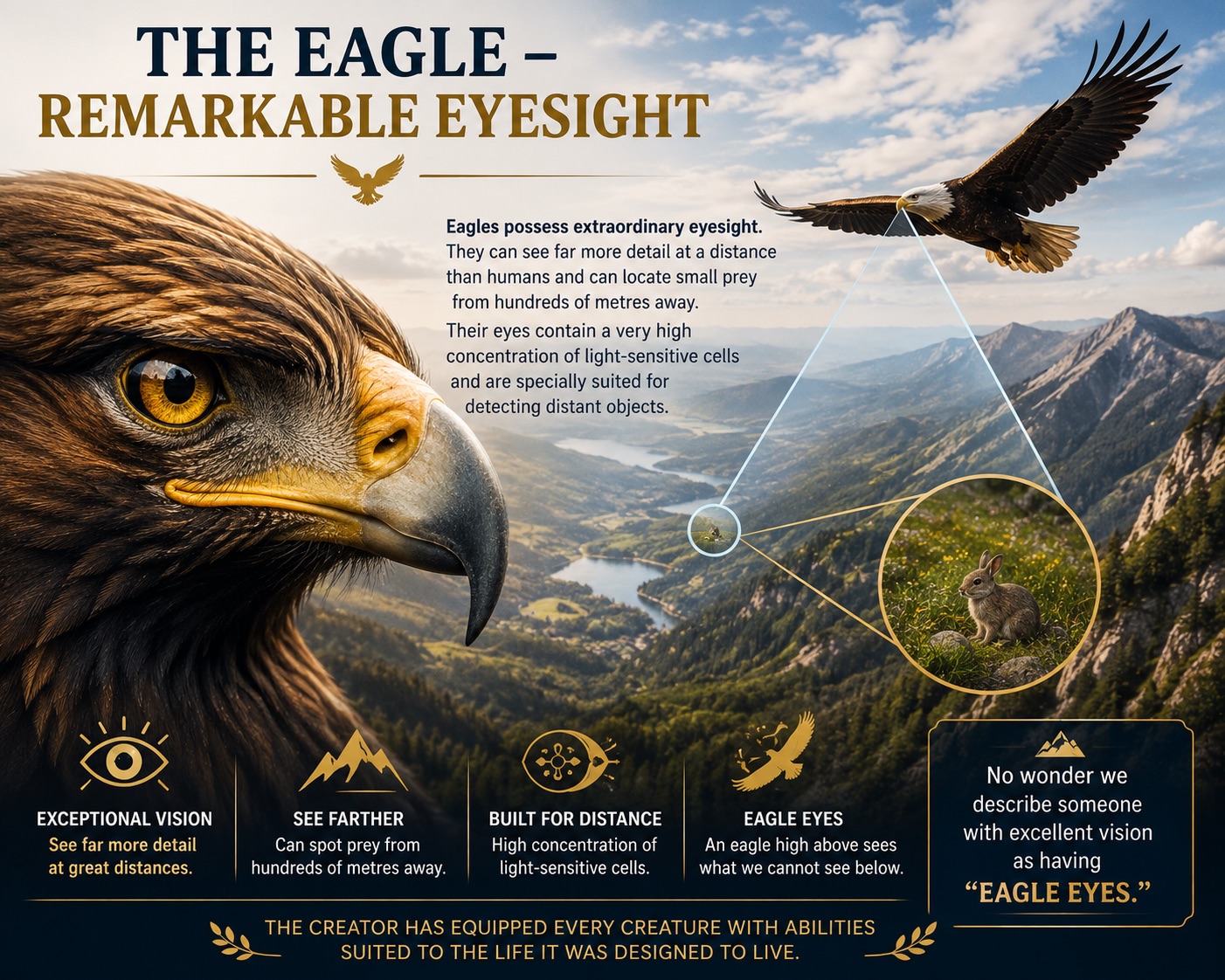
Eagles possess extraordinary eyesight. They can see far more detail at a distance than humans and can locate small prey from hundreds of metres away. Their eyes contain a very high concentration of light-sensitive cells and are specially suited for detecting distant objects. An eagle soaring high above the ground may see something that would be almost invisible to a person standing below. No wonder we describe someone with excellent vision as having “eagle eyes.” The Creator has equipped every creature with abilities suited to the life it was designed to live.
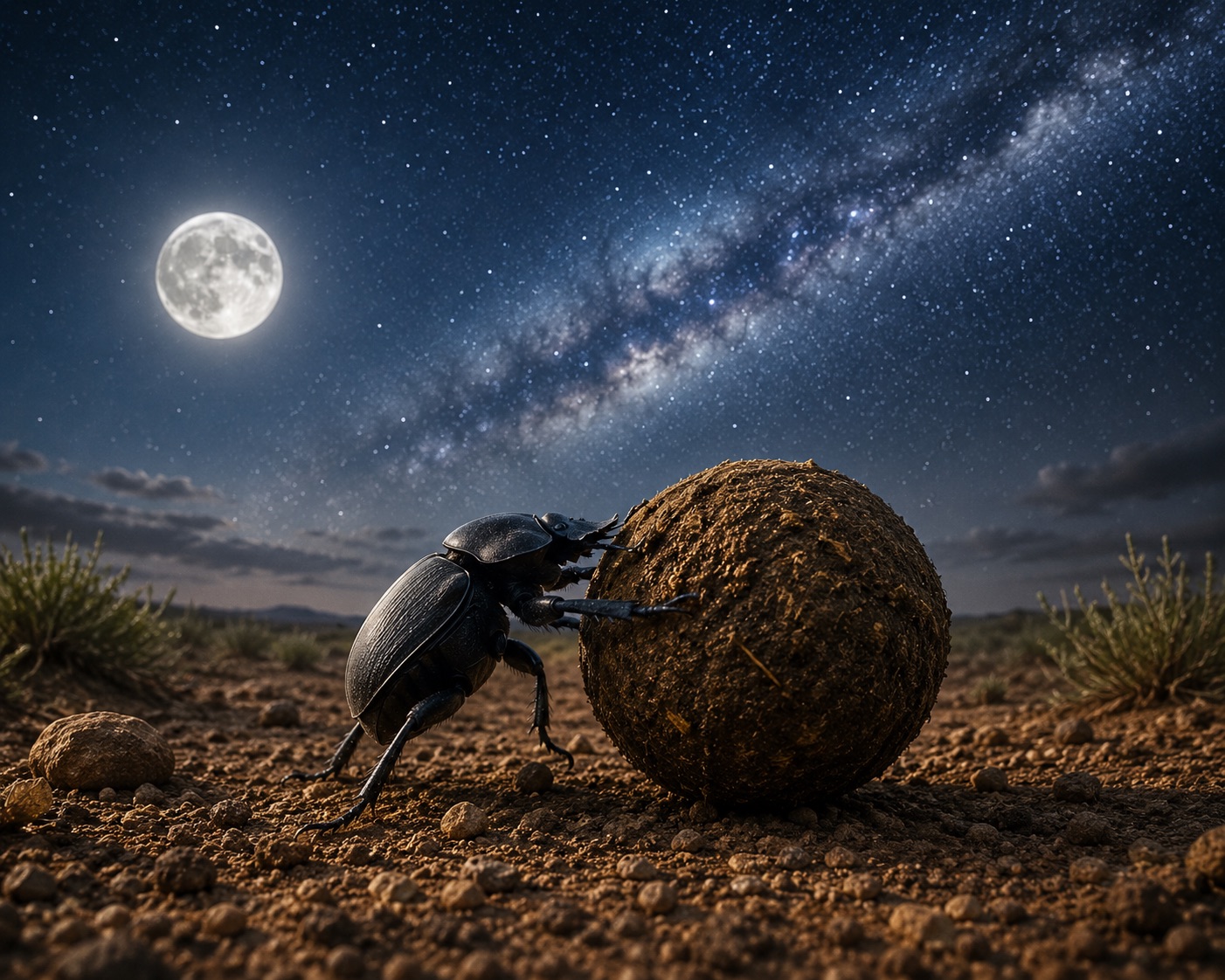
Even a humble dung beetle possesses an astonishing navigation system. After making a ball of dung, the beetle tries to roll it away in a straight line. But how does such a tiny creature know which direction to travel? Some dung beetles can use patterns of light in the sky to guide themselves. Research has shown that certain species can use moonlight, and some can even orient themselves using the bright band of the Milky Way. Imagine that: a tiny beetle looking towards the heavens for direction! The same God who made the stars also created creatures capable of using their light.
Bats – Seeing with Sound
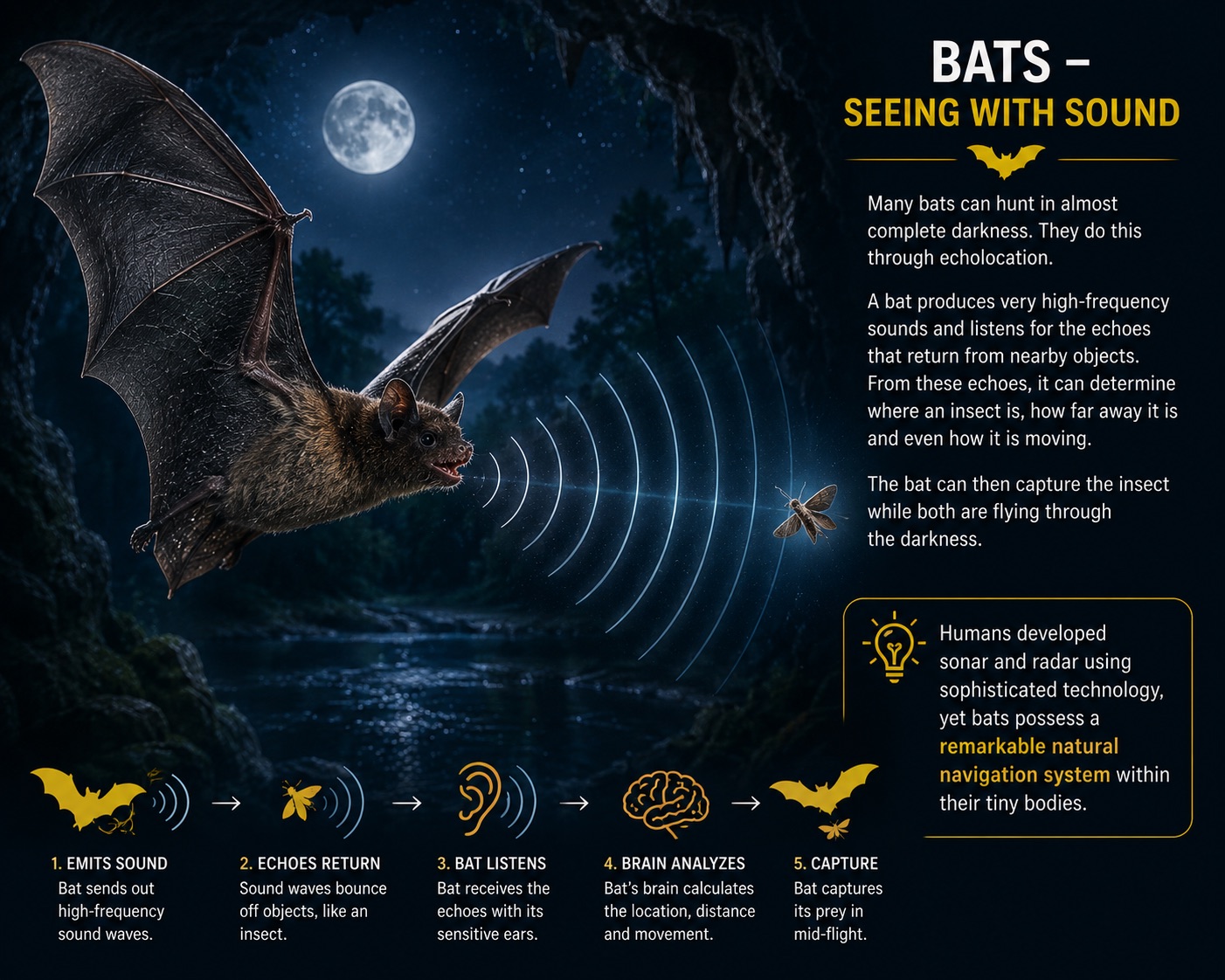
Many bats can hunt in almost complete darkness. They do this through echolocation. A bat produces very high-frequency sounds and listens for the echoes that return from nearby objects. From these echoes, it can determine where an insect is, how far away it is and even how it is moving. The bat can then capture the insect while both are flying through the darkness. Humans developed sonar and radar using sophisticated technology, yet bats possess a remarkable natural navigation system within their tiny bodies.
Hummingbirds – Masters of Flight
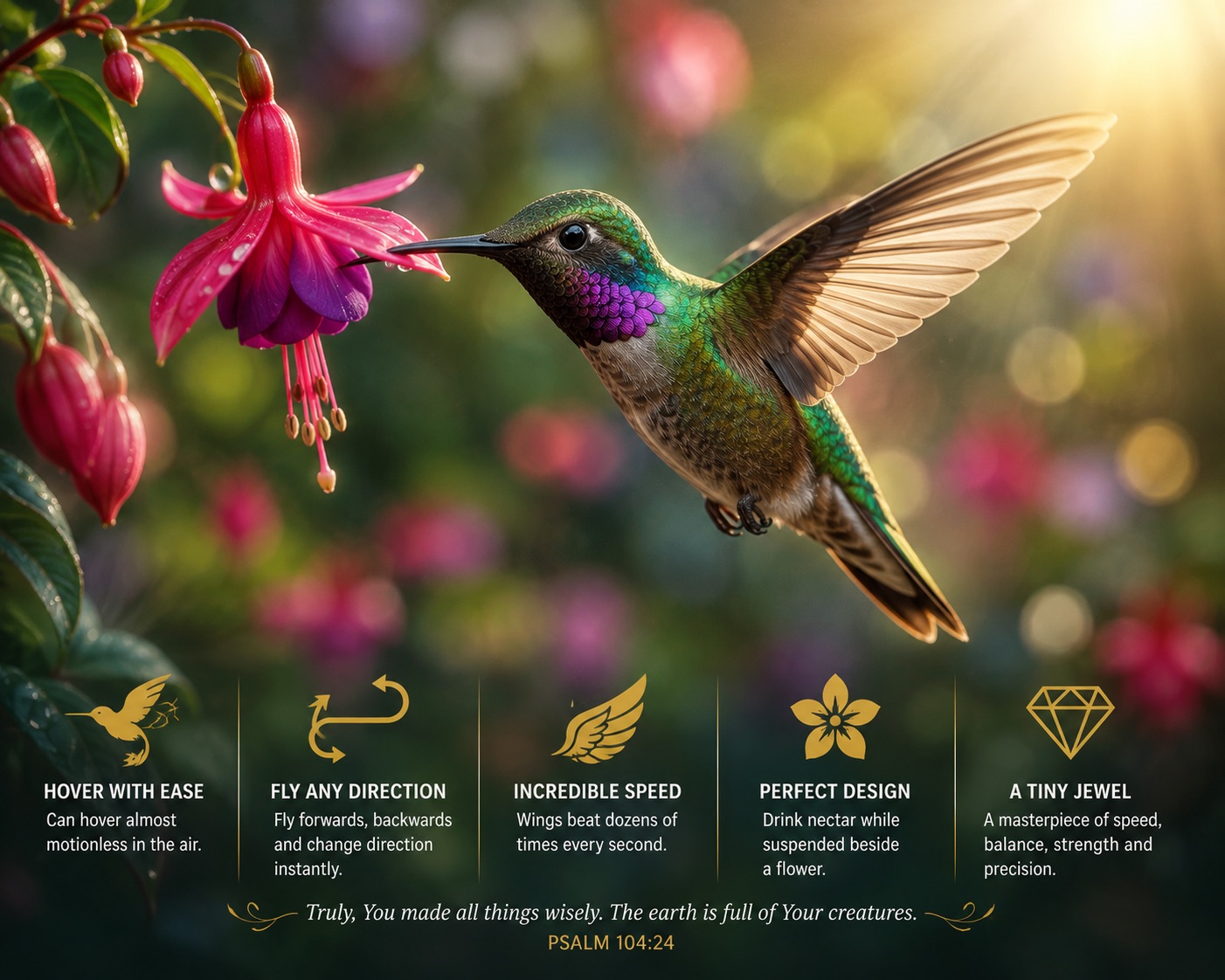
Hummingbirds are among the most remarkable flyers in the animal world. They can hover almost motionless in the air, fly backwards and change direction with astonishing speed. Their wings move extremely rapidly, sometimes dozens of times every second. This allows them to remain suspended beside a flower while drinking nectar with their long bills. Their tiny bodies combine speed, balance, strength and precision in an extraordinary way. Watching a hummingbird beside a flower is like watching a tiny flying jewel created by God.
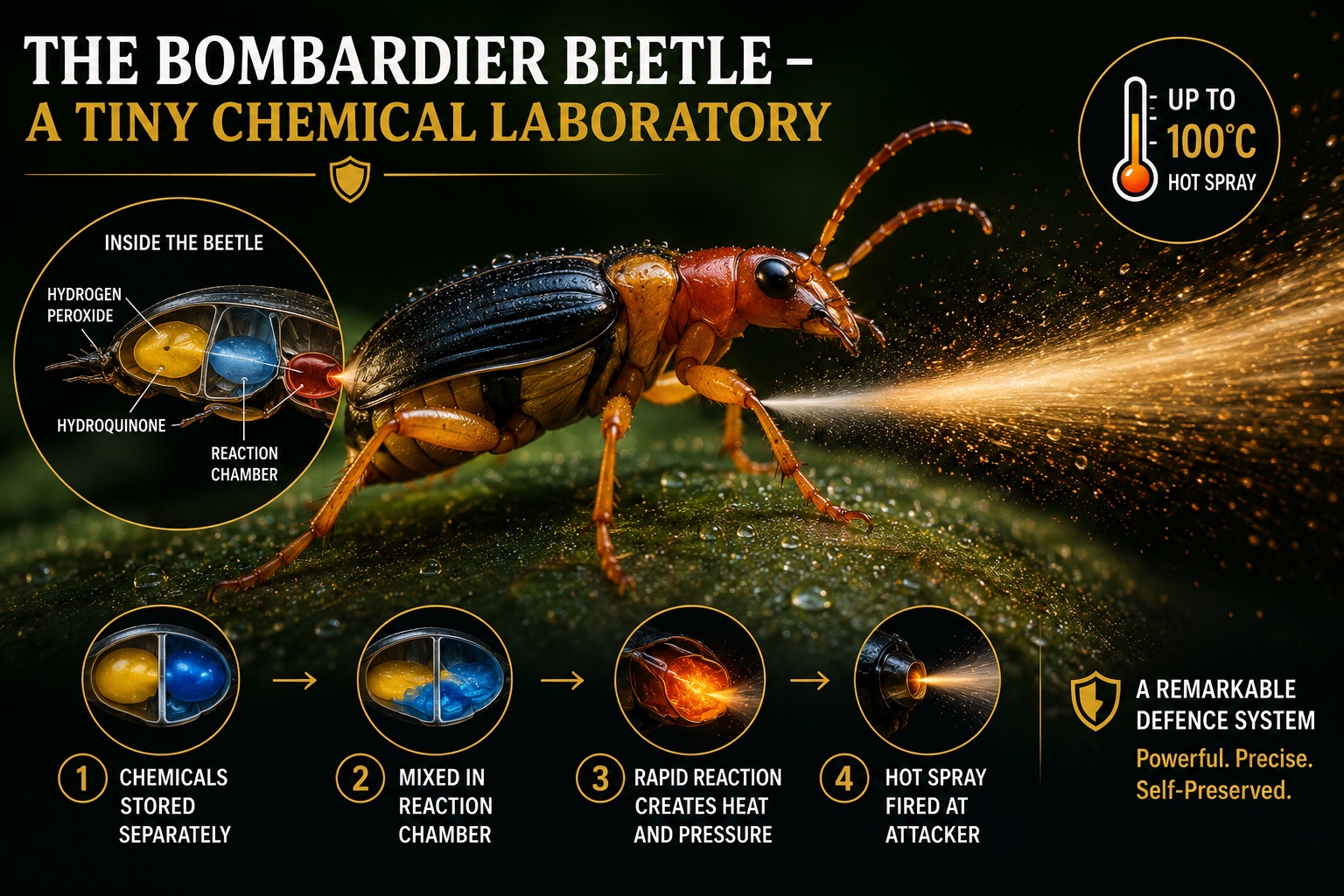
Bombardier Beetle – Tiny Chemical Laboratory
The bombardier beetle possesses one of the most extraordinary defence systems in nature. Inside its body are chemicals that are normally kept separate. When danger appears, the beetle releases these chemicals into a special chamber where they react rapidly. The beetle then fires a hot, irritating spray towards its attacker. The chemical reaction can approach the temperature of boiling water, yet the beetle can repeatedly produce this defence without destroying itself. It is difficult not to marvel at such a tiny creature containing its own controlled chemical defence system.
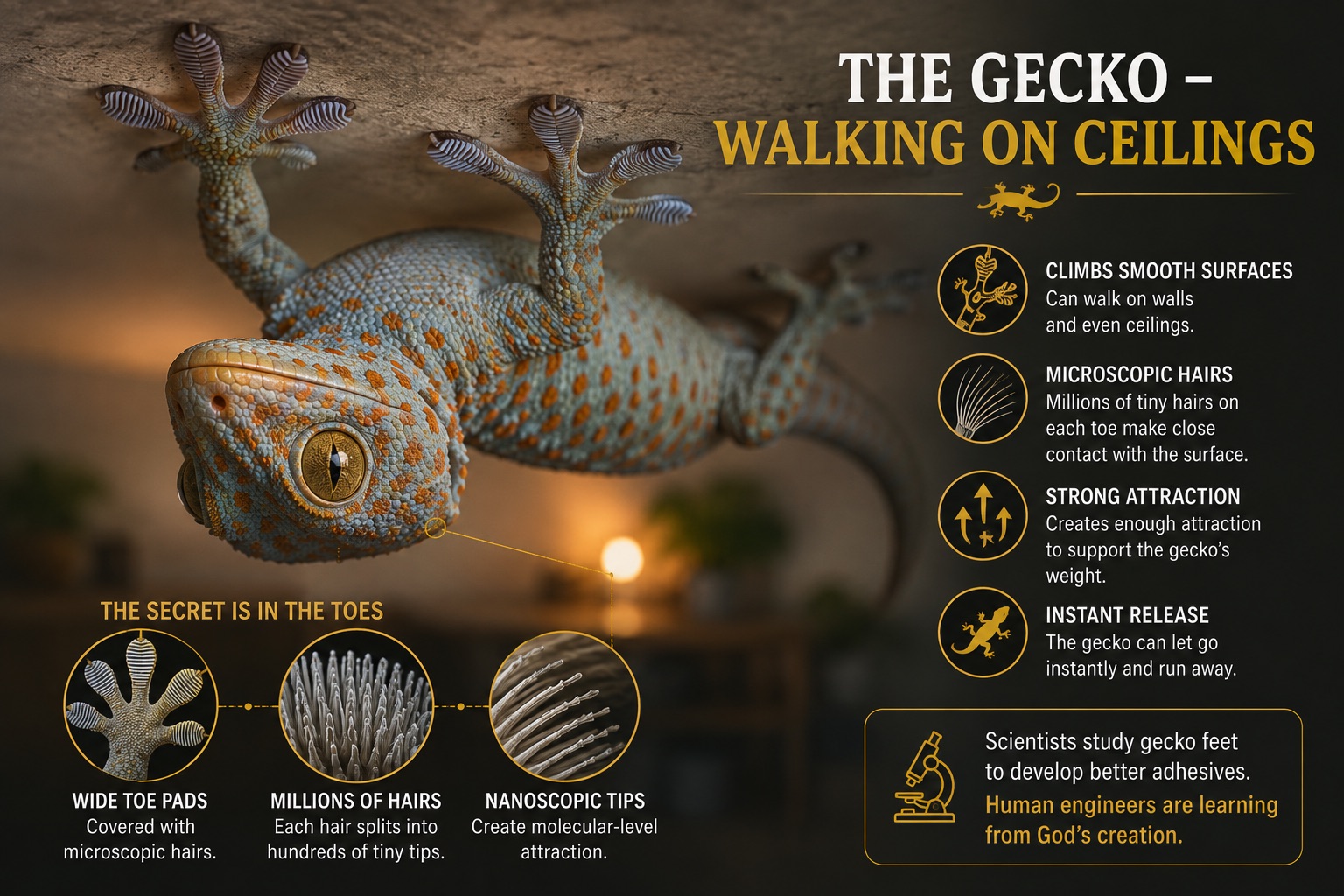
Gecko – Walking on Ceilings
Geckos can climb smooth walls and even walk upside down across ceilings. They do not use glue or suction cups. Their toes contain millions of microscopic hair-like structures. These make extremely close contact with the surface and produce enough attraction to hold the animal’s weight. Yet the gecko can release its feet instantly and run away. Scientists have studied gecko feet in the hope of developing better adhesives. Once again, human engineers are learning from something already present in God’s creation.
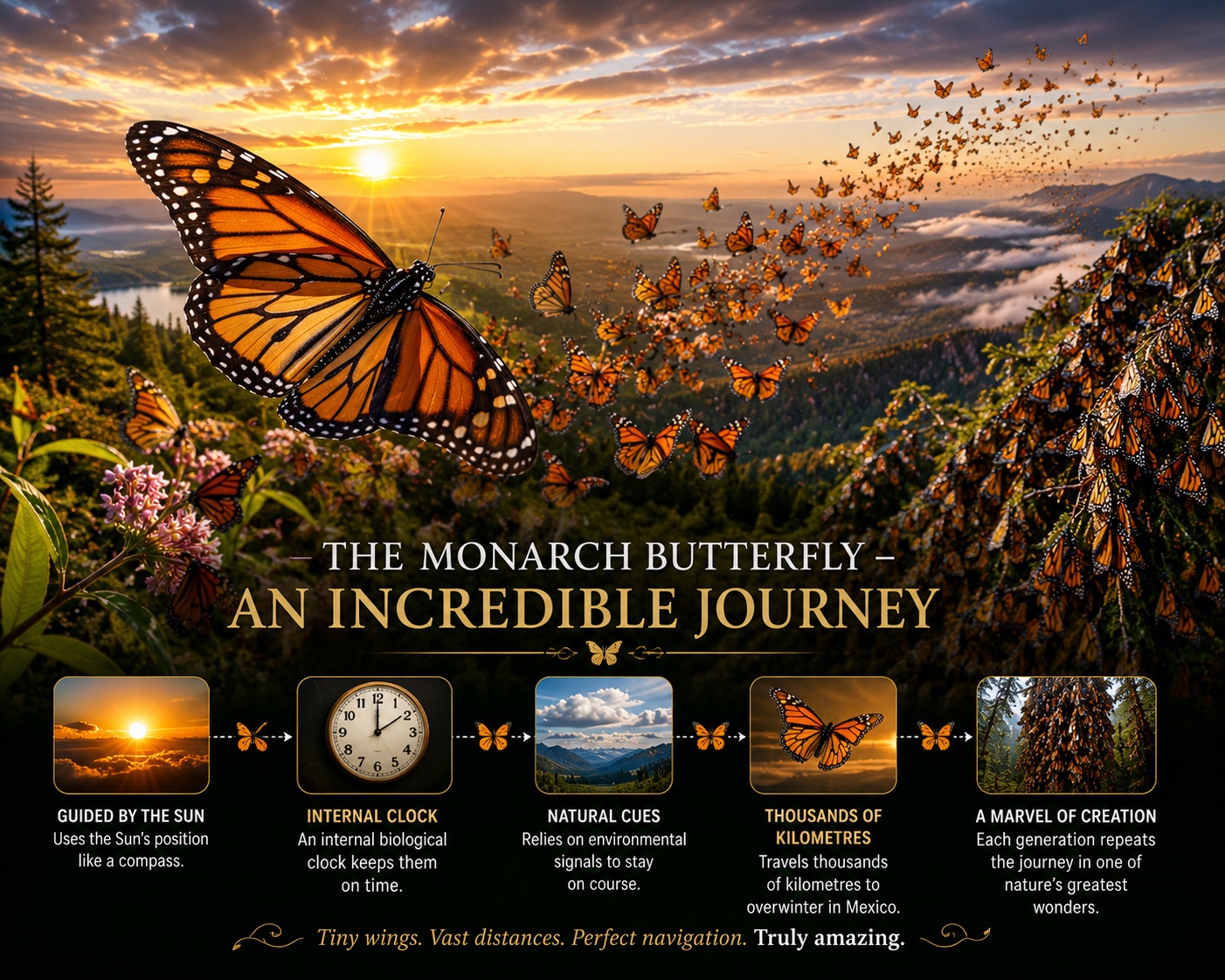
Monarch Butterfly – Incredible Journey
The monarch butterfly looks delicate, yet it can make an astonishing migration. Monarchs from parts of North America travel thousands of kilometres to overwintering areas in Mexico. Even more remarkably, the butterflies making the great autumn journey have never made that journey before. They use information from the Sun, their internal biological clock and other natural cues to find their way. How does such a tiny creature know where to go? Generation after generation, these butterflies demonstrate one of the most beautiful navigation systems in nature.
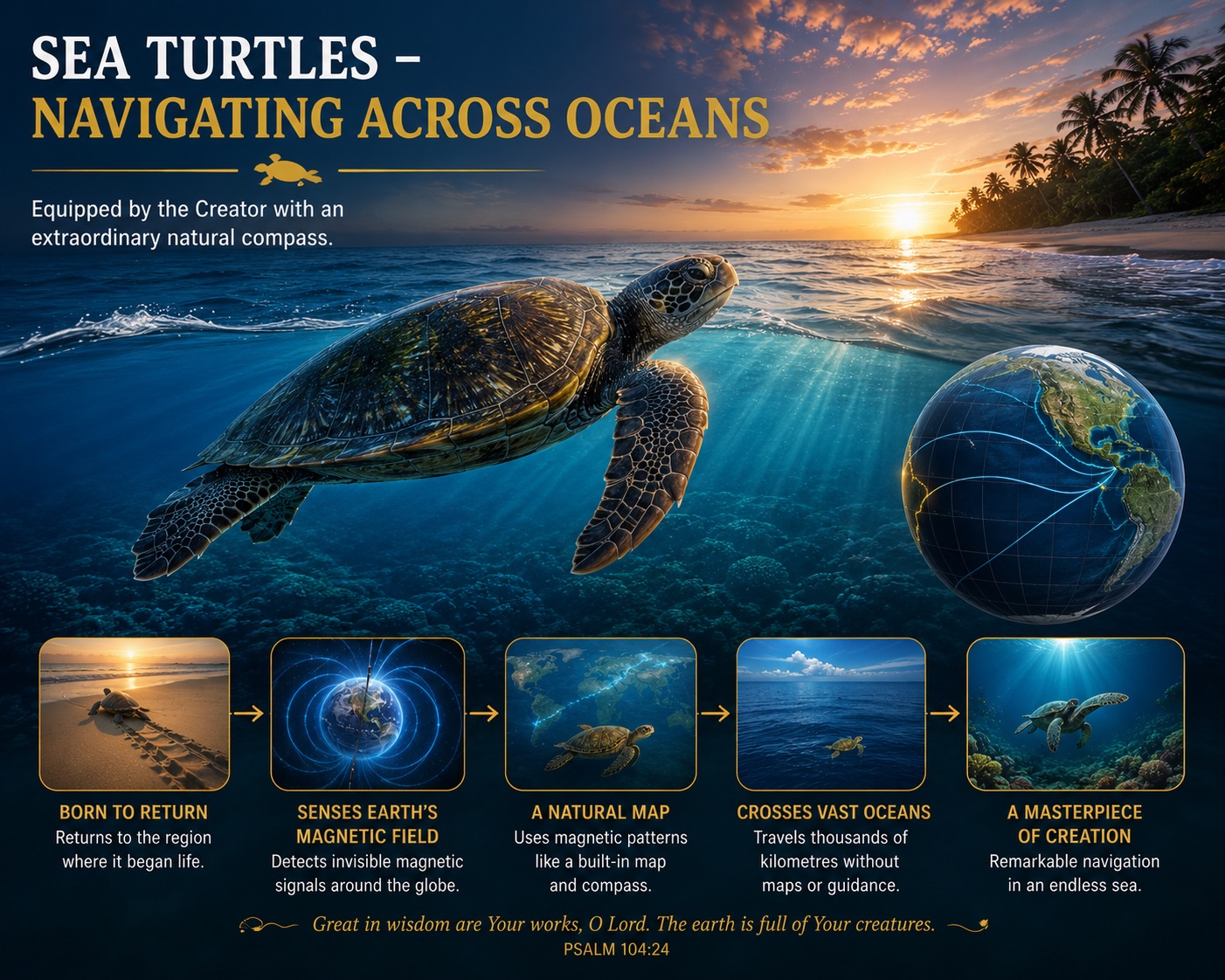
Sea turtles may travel thousands of kilometres through the ocean and later return to the region where they began life. Scientists have discovered that they can detect Earth’s magnetic field. Different parts of the world have slightly different magnetic characteristics, and turtles appear able to use this information like a natural map and compass. They cross vast areas of ocean without maps, satellites or human guidance. The Creator has placed remarkable navigational abilities even within creatures travelling through an apparently featureless sea.
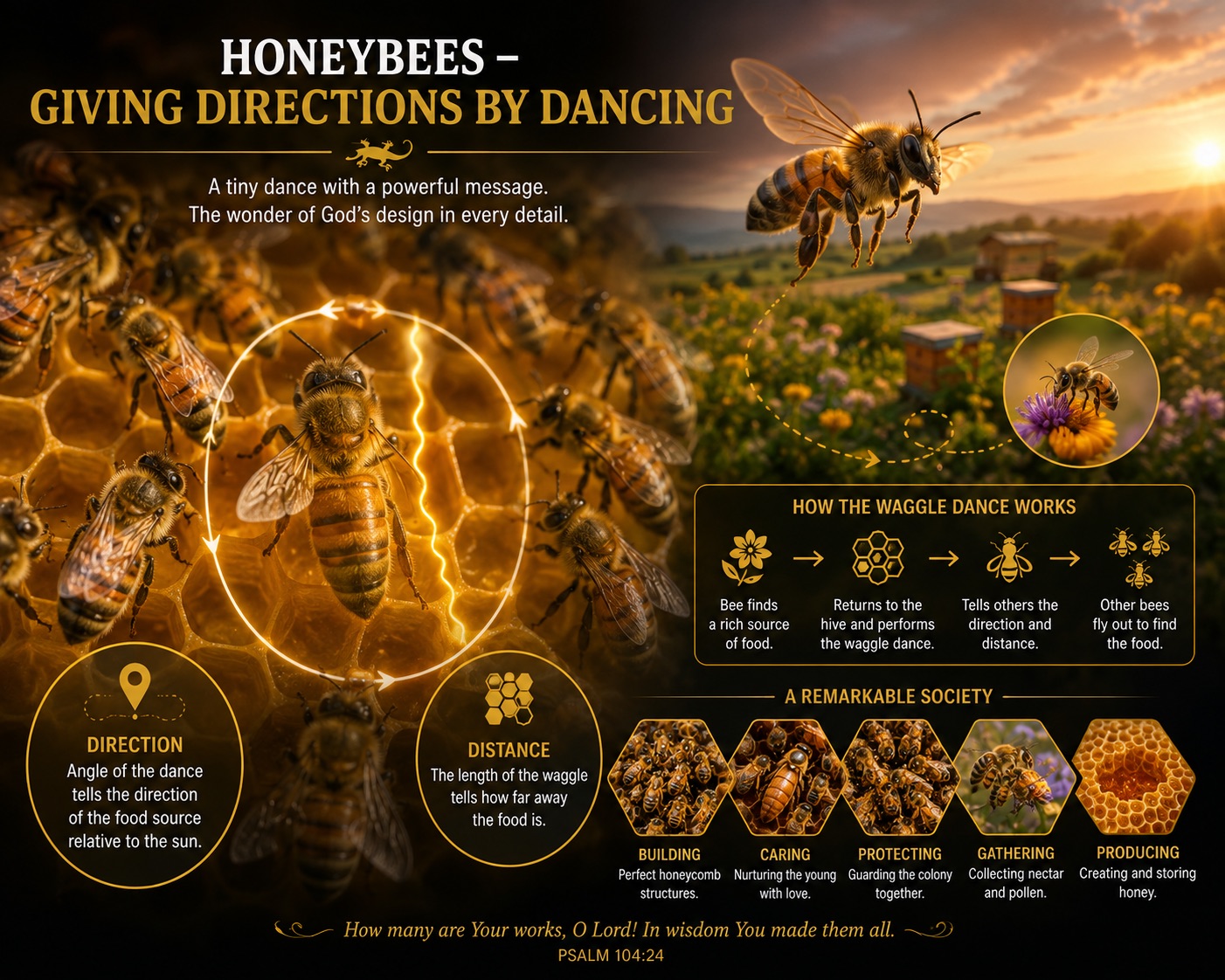
Honeybees – Giving Directions by Dancing
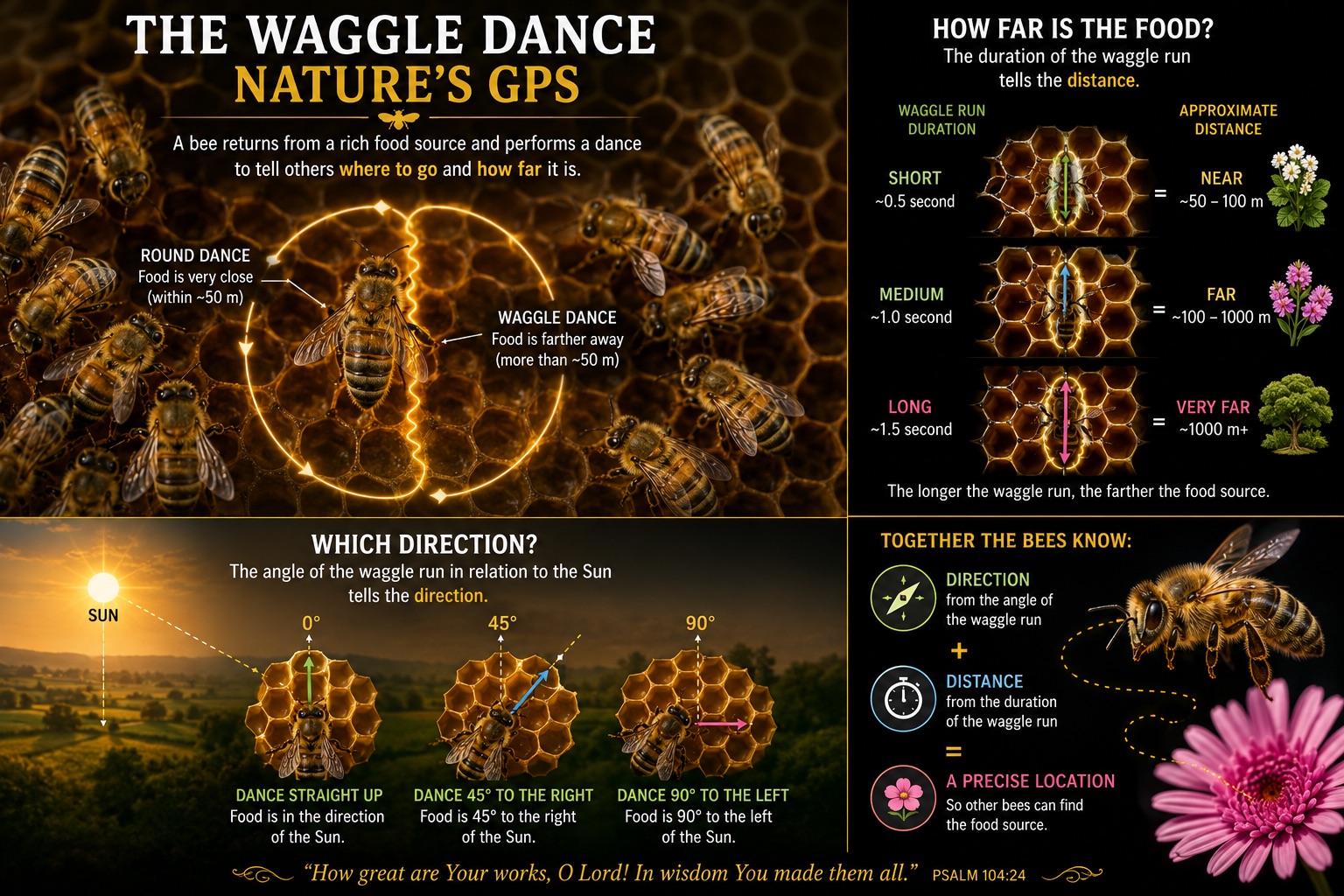
Honeybees have an amazing method of communication. When a worker bee discovers a rich source of food, it returns to the hive and performs a special movement known as the waggle dance. The dance gives other bees information about the direction and approximate distance of the food. A tiny insect can therefore return home and effectively tell others, “Food is in that direction and about this far away.” Thousands of bees also cooperate to care for young, protect the colony, build honeycomb and gather food. Their organised society is one of the great wonders of the insect world.
Bees and Animals that Keep the Sabbath
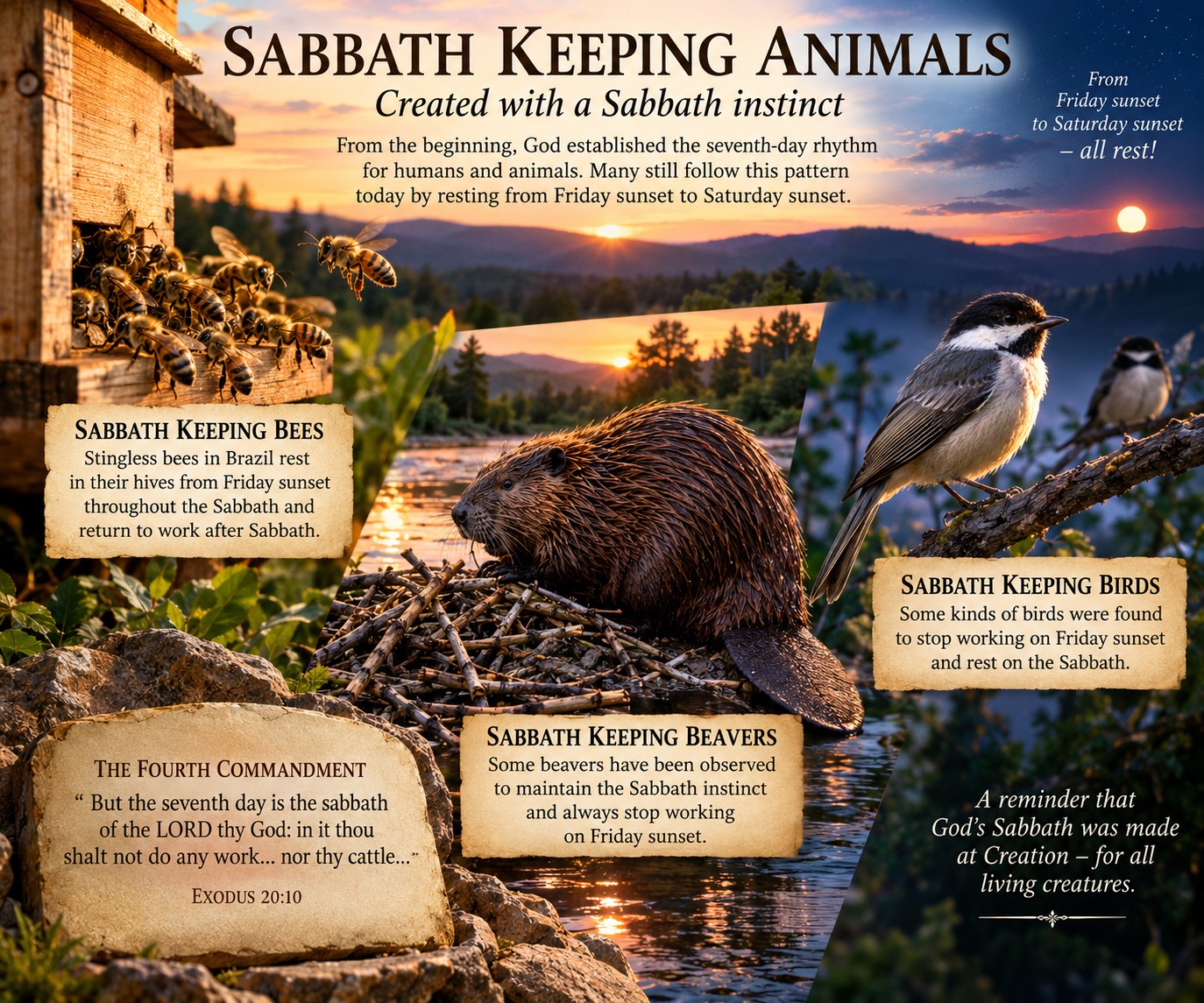
At Creation, God established the seventh-day Sabbath as part of the natural order of life. Humans and animals were created with a natural Sabbath-rest instinct, following the Creator’s rhythm of six days of activity followed by the seventh-day Sabbath.
Remarkable reports describe stingless bees in Brazil resting in their hives from Friday sunset throughout the Sabbath, while returning to work afterwards. Similar observations have been reported concerning birds that stop nest-building on Sabbath and beavers that rest on Saturday. These fascinating examples may preserve traces of the original Sabbath instinct established at Creation. (Salvation1)
Even more significantly, animals themselves are included in the Fourth Commandment:
“But the seventh day is the sabbath of the LORD thy God: in it thou shalt not do any work… nor thy cattle…” Exodus 20:10
These Sabbath-keeping animals provide a fascinating reminder that God’s seventh-day rhythm was established not by human tradition, but at Creation itself.
Read the full fascinating story: Sabbath-Keeping Bees & Sabbath Instinct – Salvation1
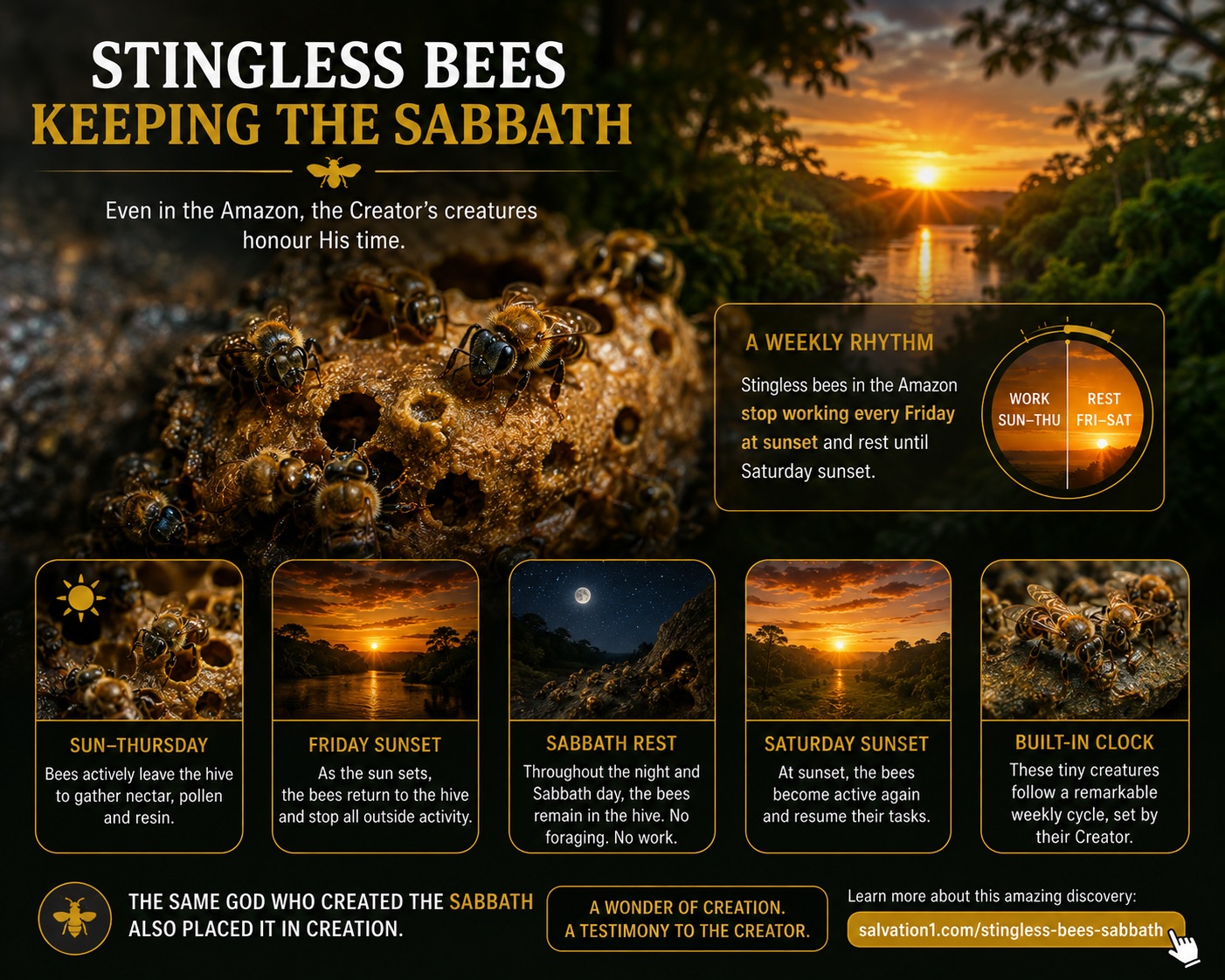
A fascinating reminder of Creation! The Fourth Commandment specifically includes animals in the Sabbath rest (Exodus 20:10). Reports of certain bees, beavers and birds following a Sabbath pattern provide a remarkable illustration of the possibility that traces of this God-given Sabbath instinct remain in nature today.
Octopus – Master of Disguise
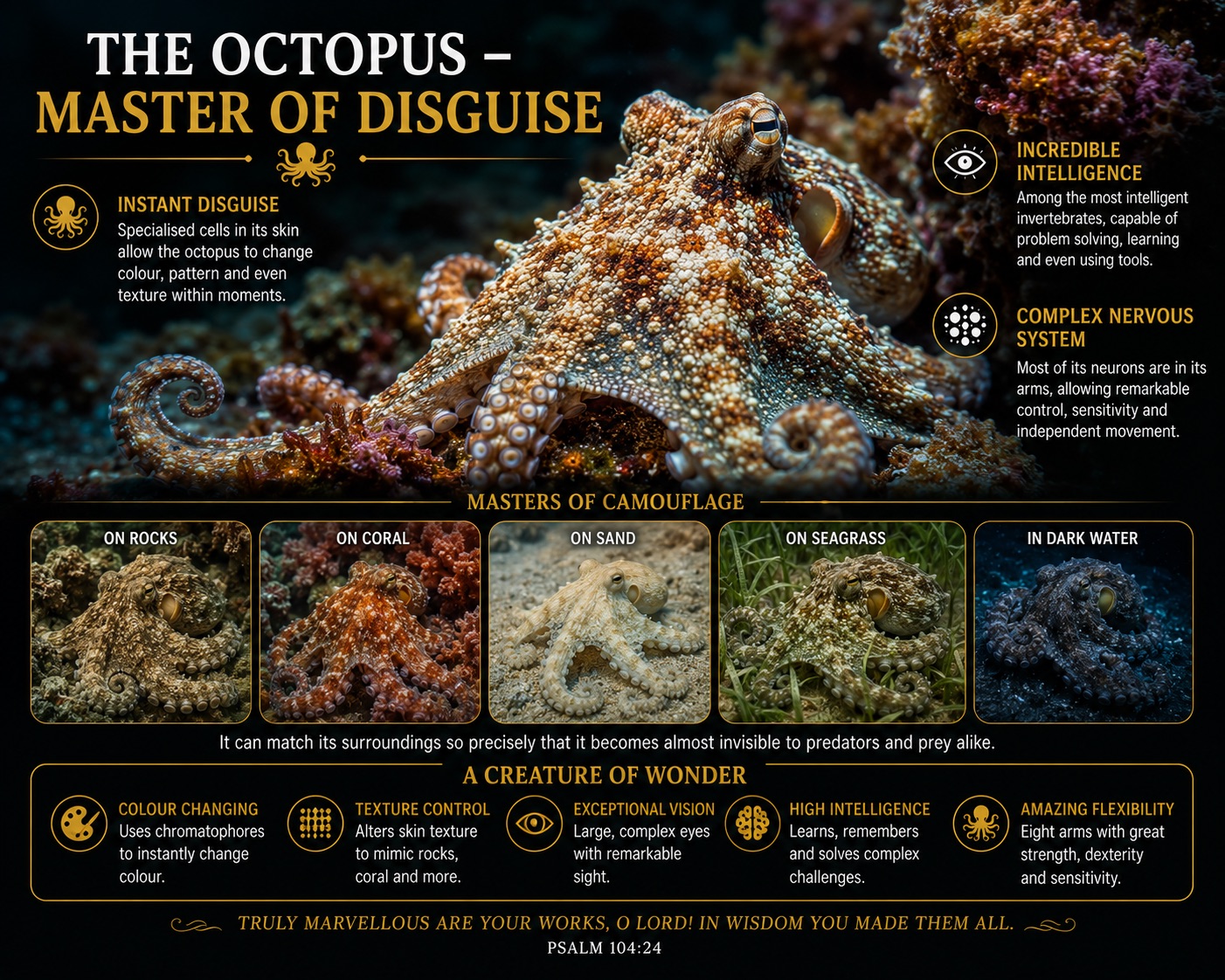
An octopus can change its appearance within moments. Specialised structures in its skin allow it to alter colour and patterns. Some species can also change the apparent texture of their skin. An octopus resting on rocks or coral can become extremely difficult to see. Its nervous system is equally remarkable. A large number of its neurons are located in its arms, allowing extremely complex movement and sensory control. The octopus combines intelligence, flexibility, eyesight and camouflage in a truly extraordinary creature.
Spider Silk – Remarkable Material
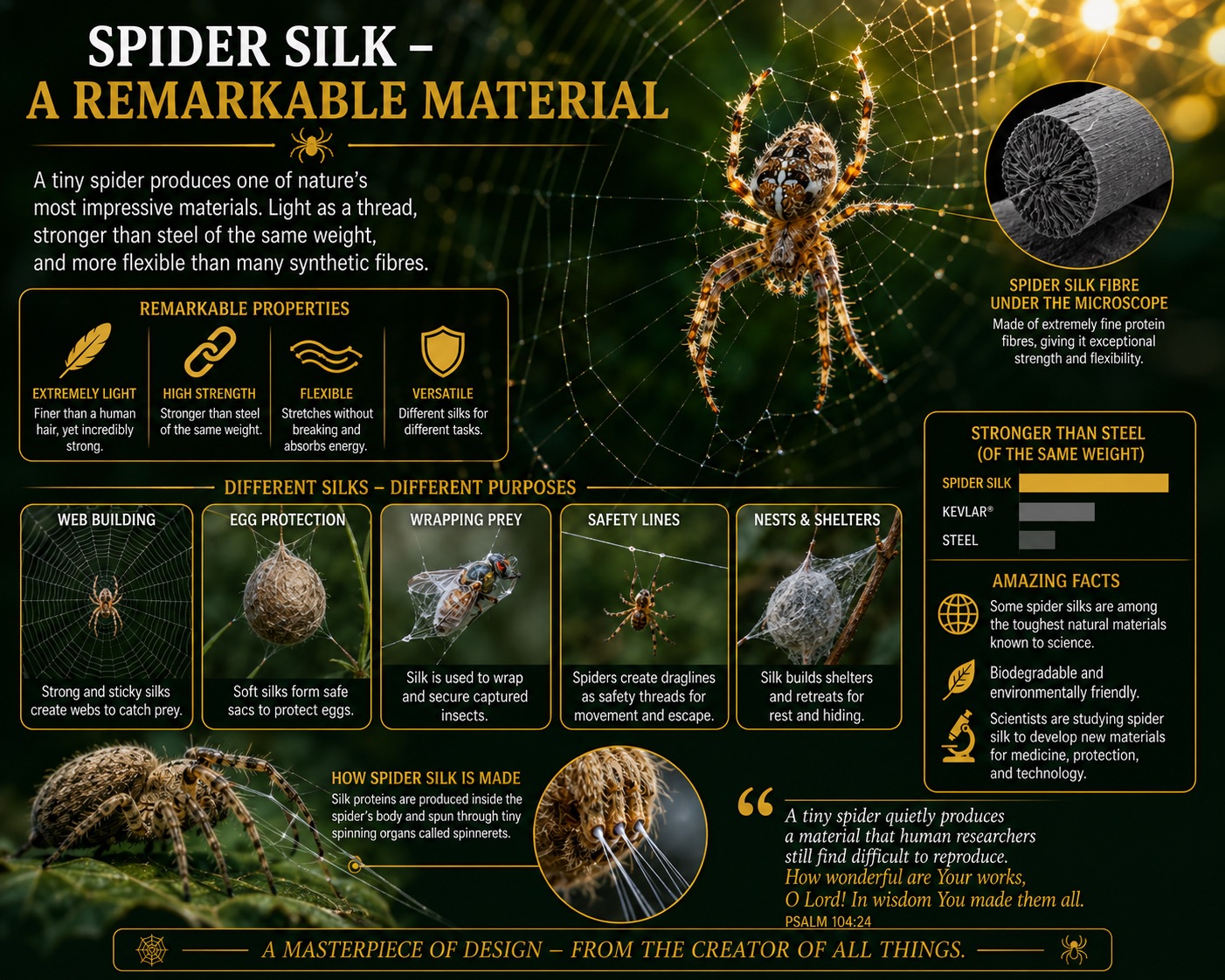
A spider produces one of nature’s most impressive materials. Spider silk is extremely light, yet some types combine remarkable strength and flexibility. Different silks are produced for different purposes. Spiders use them to build webs, protect eggs, wrap prey and create safety lines. Scientists continue to study spider silk because they would like to imitate its useful properties. A tiny spider quietly produces a material that human researchers still find difficult to reproduce.
Wood Frog – Surviving Frozen
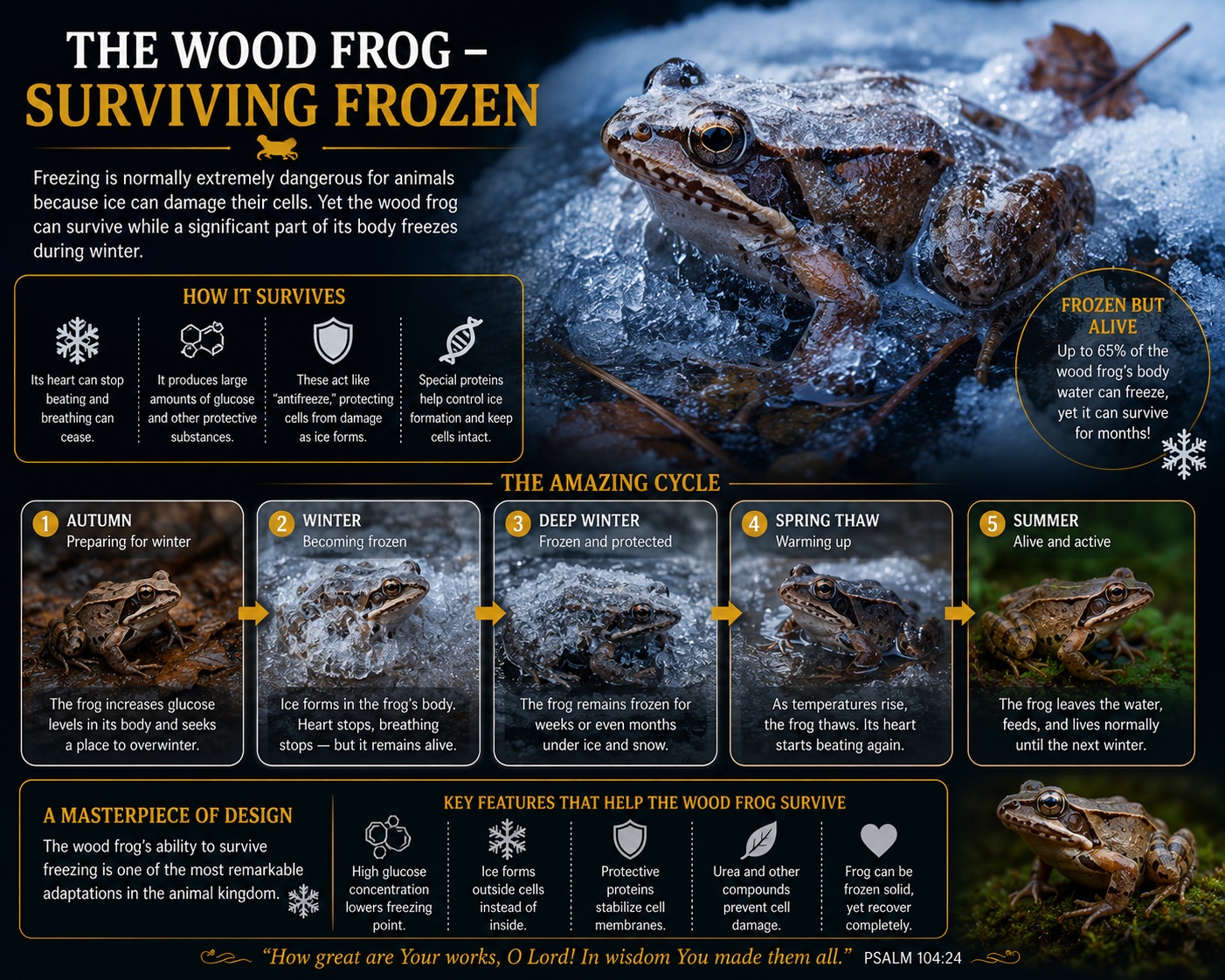
Freezing is normally extremely dangerous for animals because ice can damage their cells. Yet the wood frog can survive while a significant part of its body freezes during winter. Its heart can stop beating and normal breathing can cease. The frog produces large amounts of glucose and other substances that help protect its cells. When warmer weather arrives, the frog thaws, its heart begins beating again and it becomes active. What appears almost lifeless can become a lively frog once more. The Creator has given this small animal a remarkable way to survive severe winter conditions.
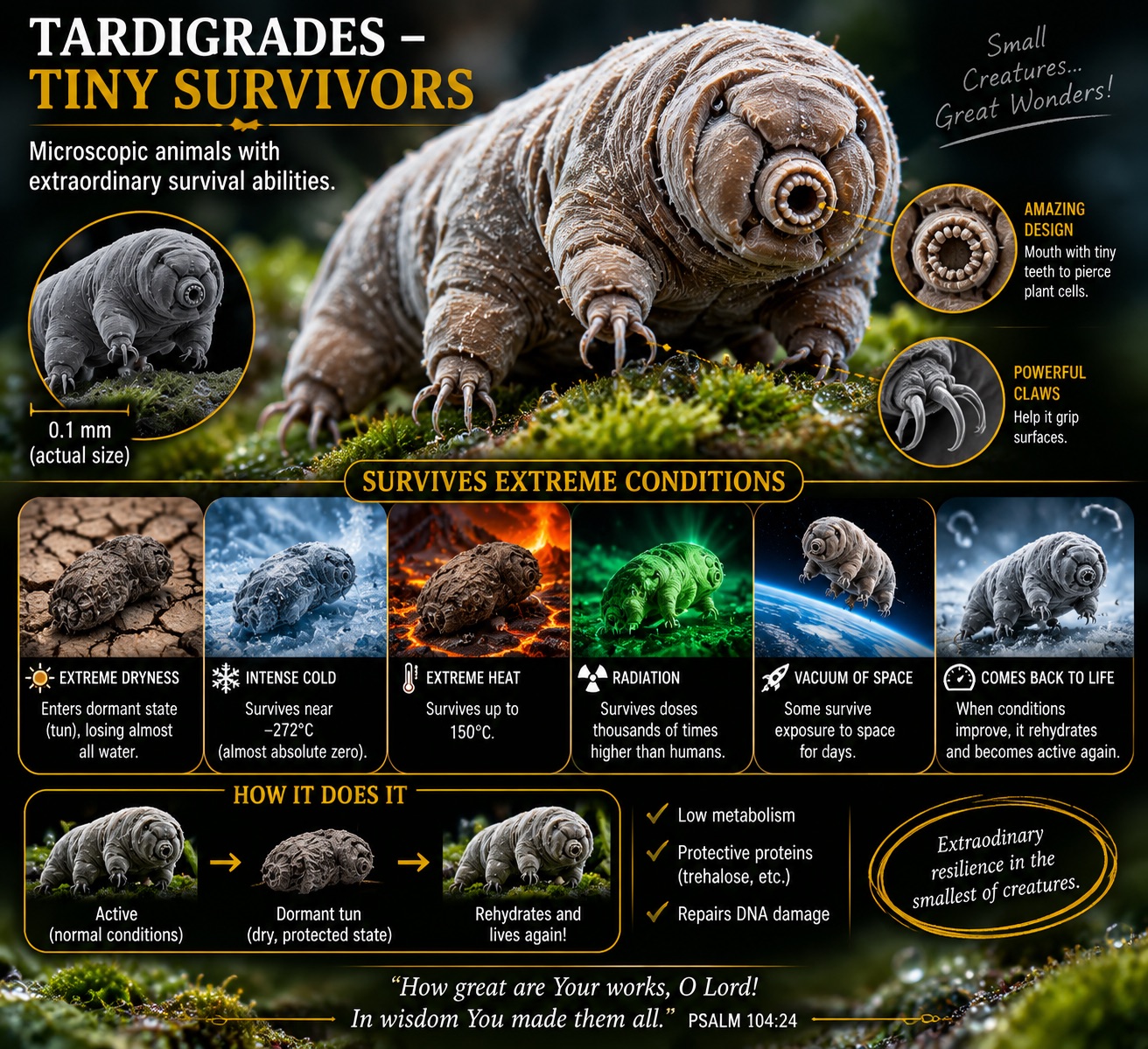
Tardigrades – Tiny Survivors
Tardigrades, sometimes called water bears, are microscopic animals with extraordinary survival abilities. When conditions become extremely dry, some tardigrades can enter a special dormant state. Their metabolism becomes extremely low, allowing them to survive conditions that would kill most animals. Scientists have exposed tardigrades to severe cold, radiation and even the vacuum of space, and some have survived. Some of the most amazing creatures God has made are so small that we normally never see them.
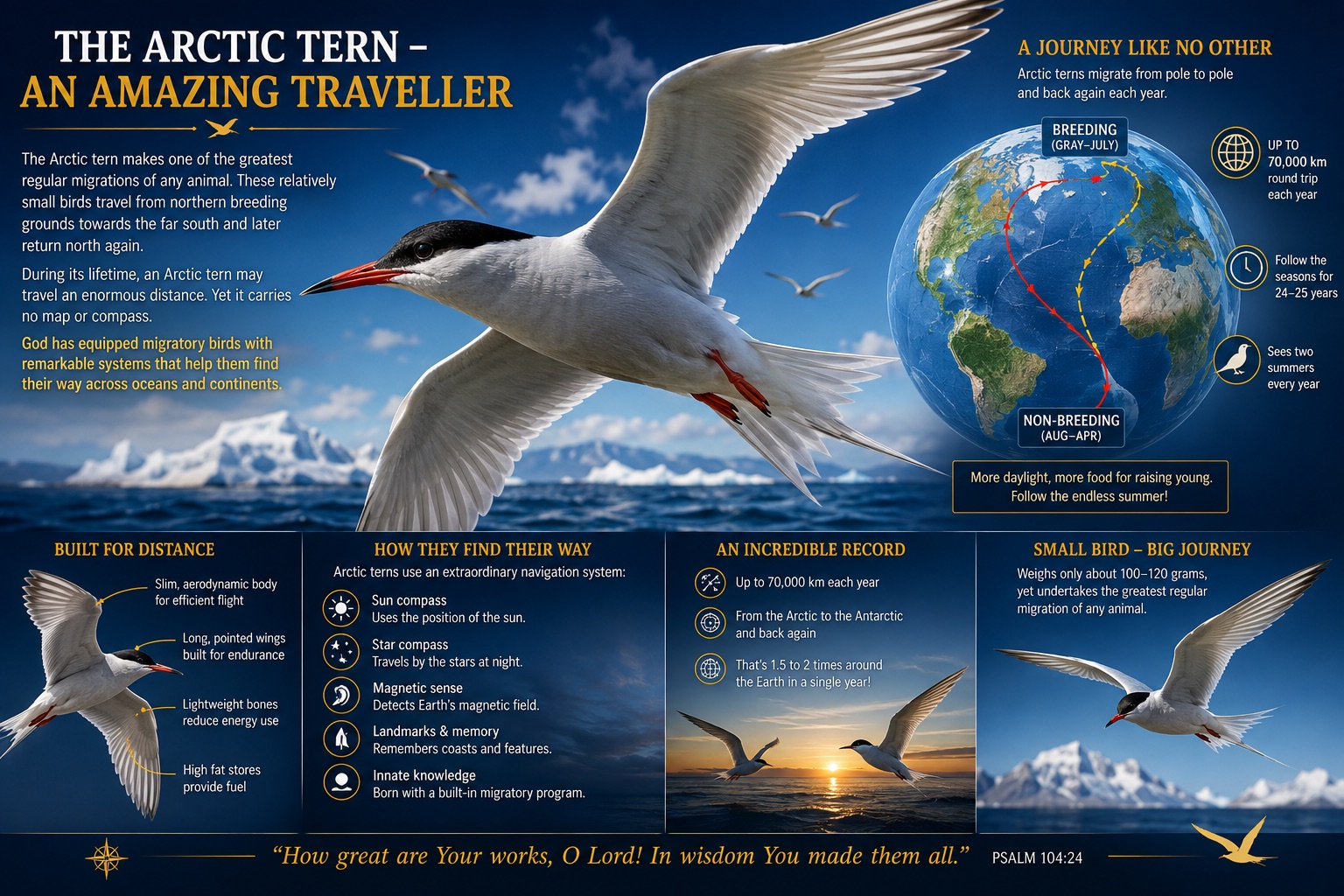
Arctic Tern – Amazing Traveller
The Arctic tern makes one of the greatest regular migrations of any animal. These relatively small birds travel from northern breeding grounds towards the far south and later return north again. During its lifetime, an Arctic tern may travel an enormous distance. Yet it carries no map or compass. God has equipped migratory birds with remarkable systems that help them find their way across oceans and continents.
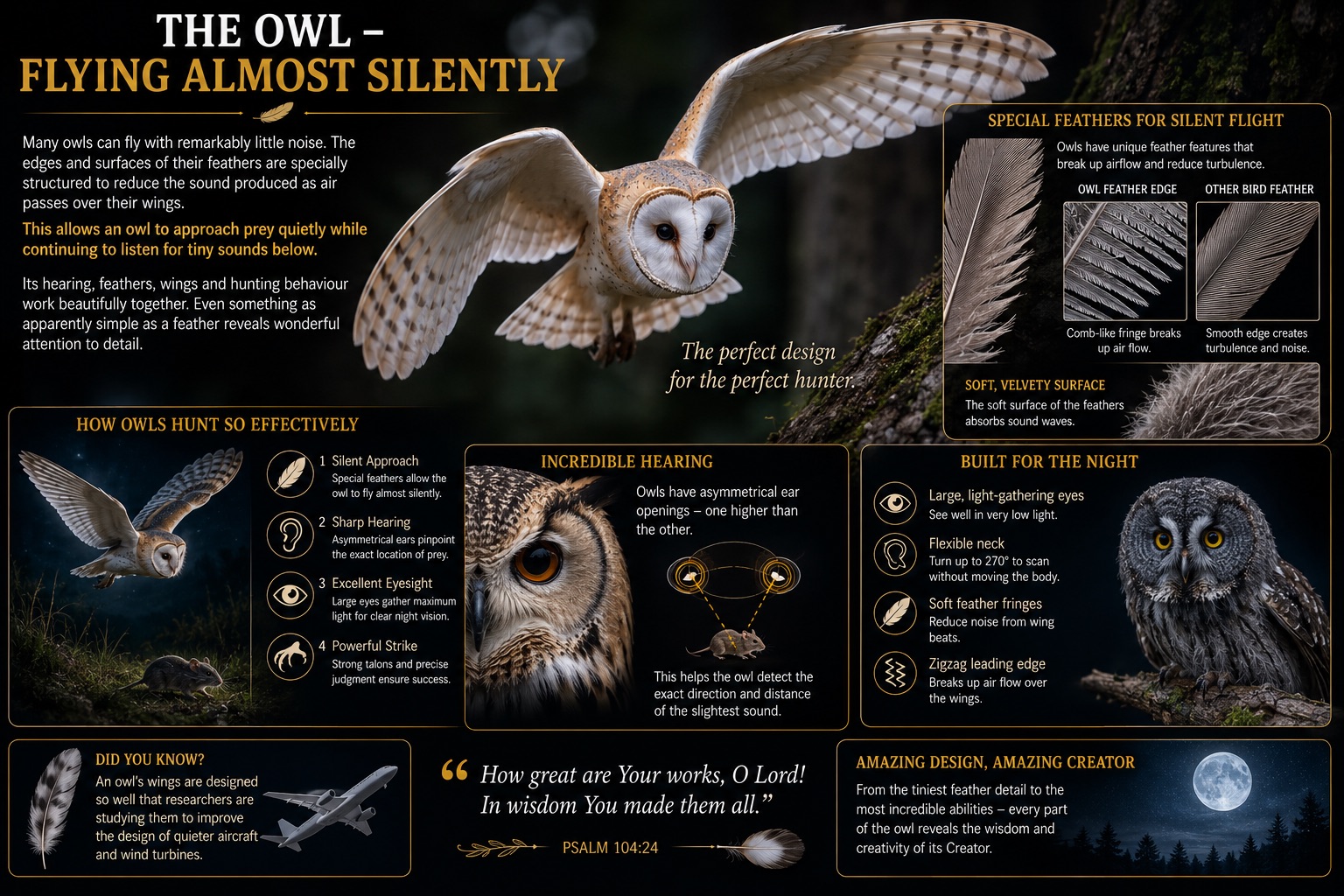
Owl – Flying Silently
Many owls can fly with remarkably little noise. The edges and surfaces of their feathers are specially structured to reduce the sound produced as air passes over their wings. This allows an owl to approach prey quietly while continuing to listen for tiny sounds below. Its hearing, feathers, wings and hunting behaviour work beautifully together. Even something as apparently simple as a feather reveals wonderful attention to detail.
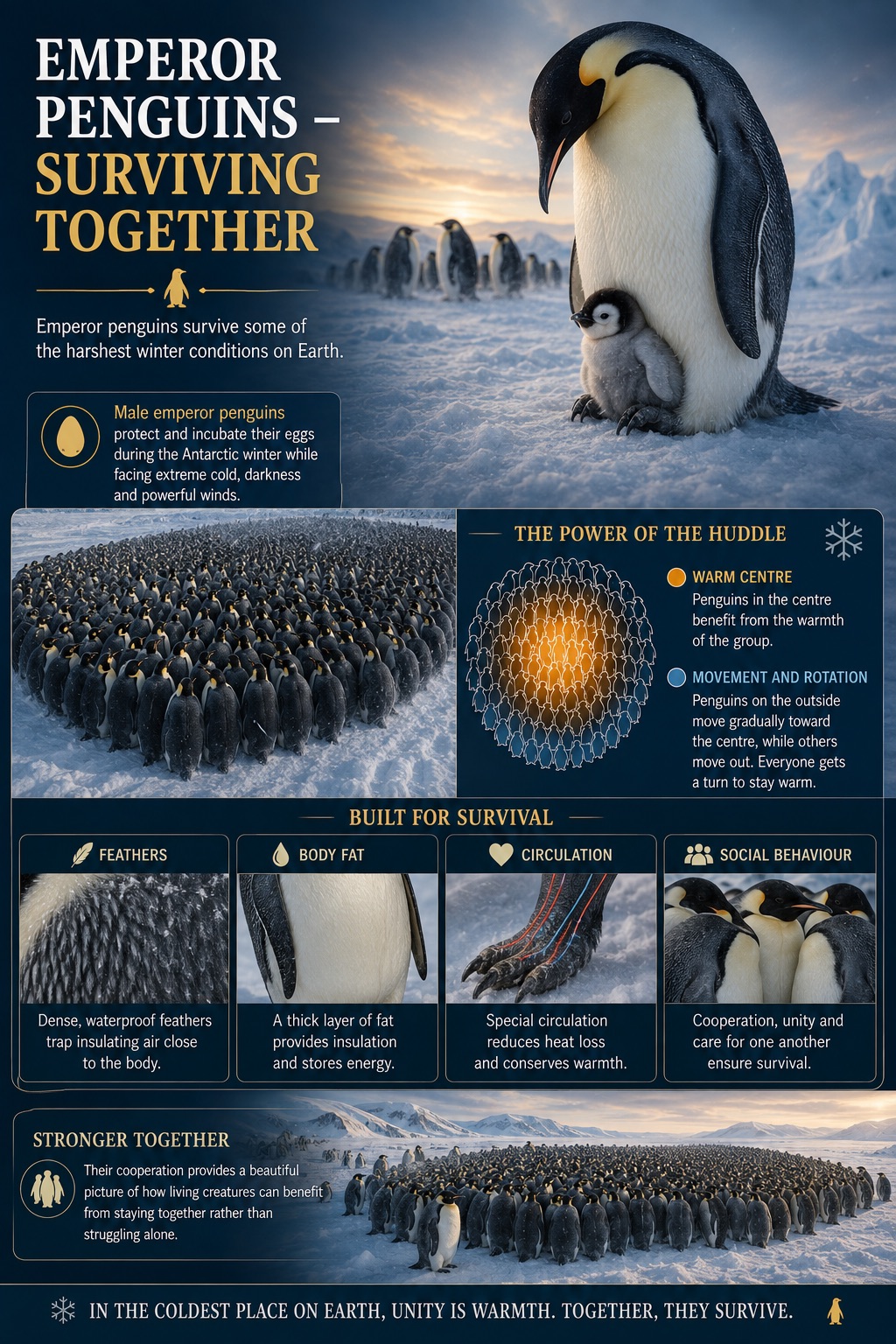
Emperor Penguins – Surviving Together
Emperor penguins survive some of the harshest winter conditions on Earth. Male emperor penguins protect and incubate their eggs during the Antarctic winter while facing extreme cold, darkness and powerful winds. To survive, the penguins gather into large huddles. Those near the centre benefit from the warmth of the group, while movements within the huddle allow others to share that protection. Their feathers, body fat, circulation and social behaviour all help them survive. Their cooperation provides a beautiful picture of how living creatures can benefit from staying together rather than struggling alone.
From Animal Wonders to Plant Wonders
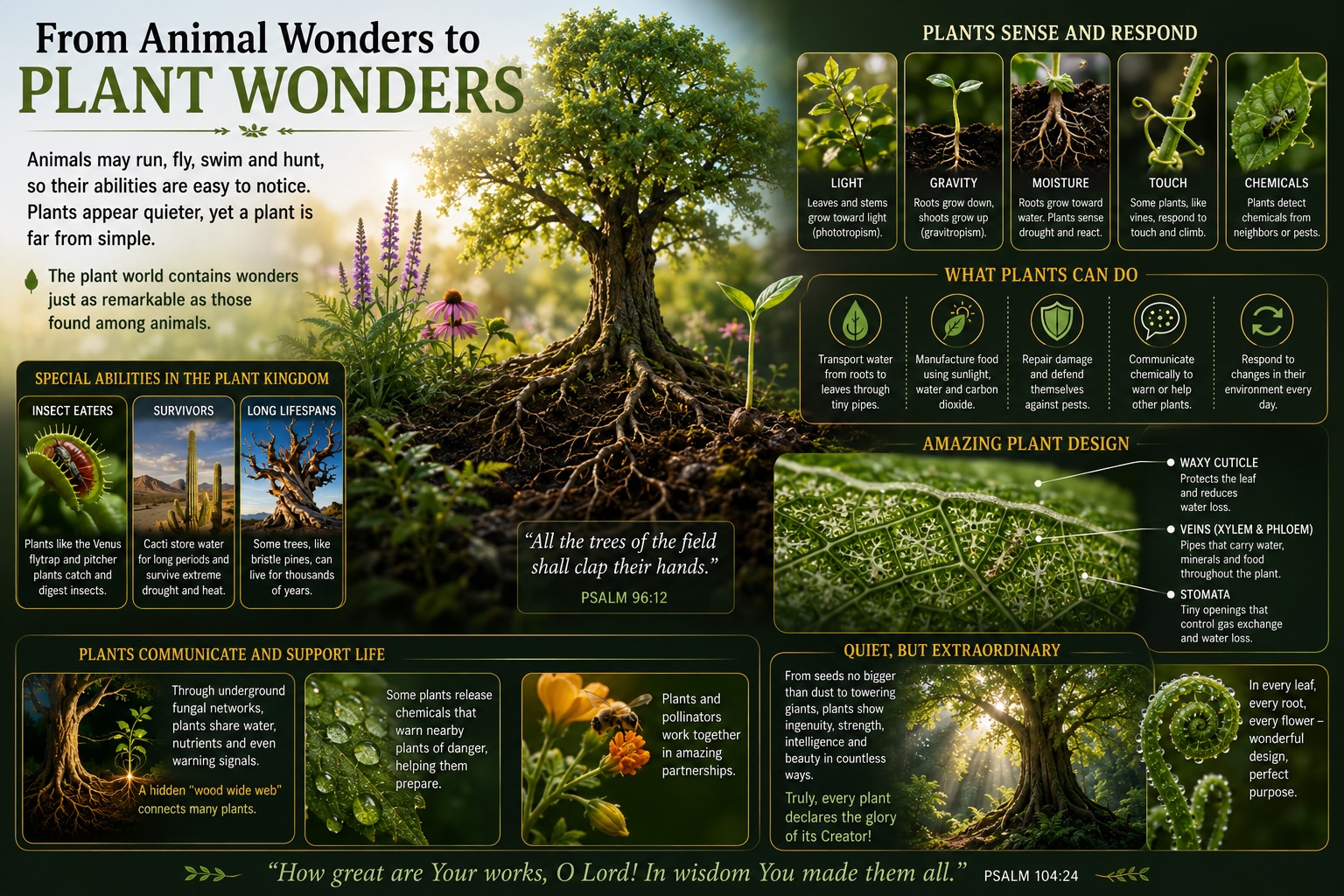
Animals may run, fly, swim and hunt, so their abilities are easy to notice. Plants appear quieter, yet a plant is far from simple. Plants detect light, gravity, moisture, touch and chemicals. They transport water, manufacture food, repair damage, communicate chemically and respond to changes around them. Some capture insects. Some survive severe drought. Others live for thousands of years. The plant world contains wonders just as remarkable as those found among animals.
Venus Flytrap – Plant that Detects Touch
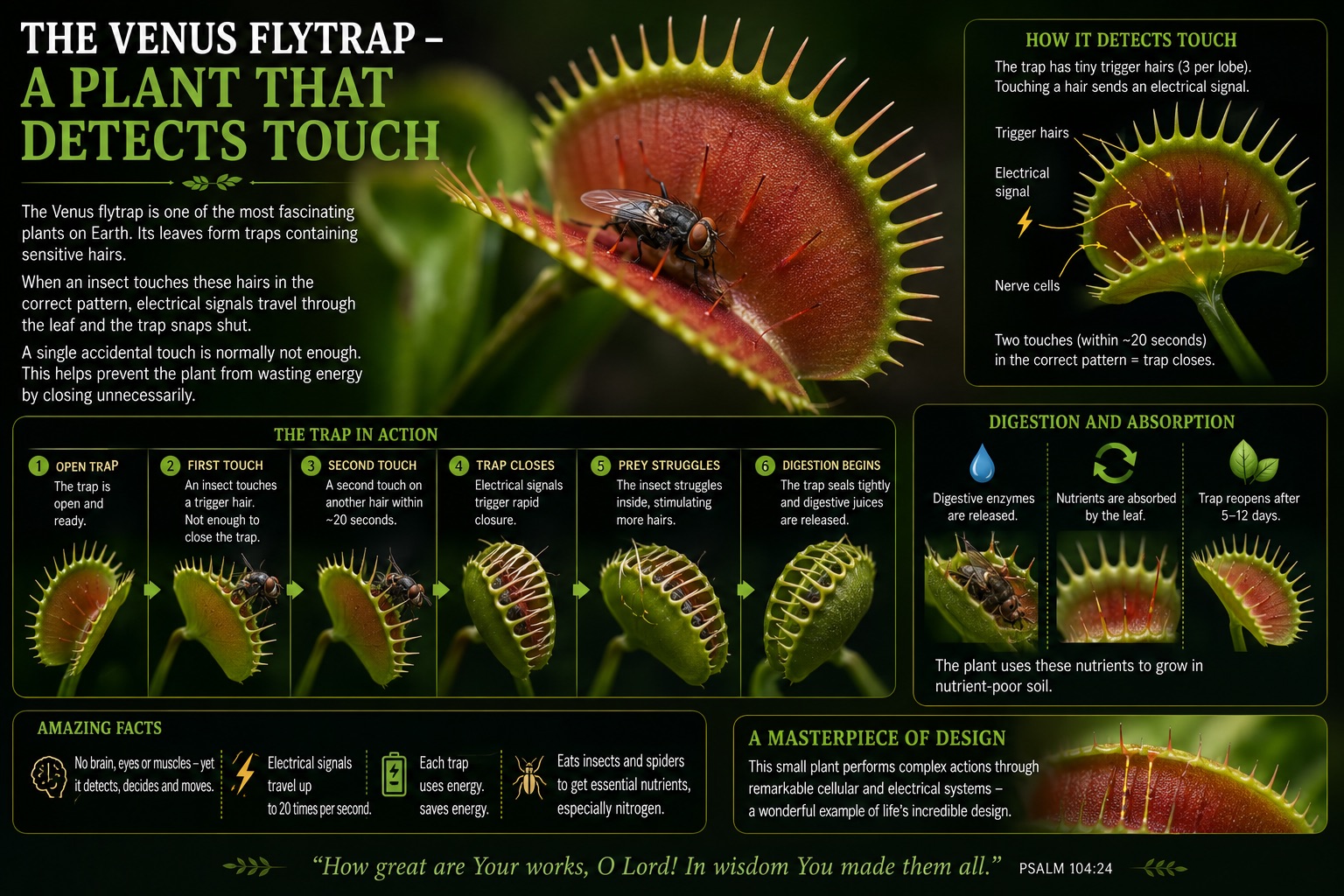
The Venus flytrap is one of the most fascinating plants on Earth. Its leaves form traps containing sensitive hairs. When an insect touches these hairs in the correct pattern, electrical signals travel through the leaf and the trap snaps shut. A single accidental touch is normally not enough. This helps prevent the plant from wasting energy by closing unnecessarily. When trapped prey continues moving, further signals encourage the plant to begin digestion. This little plant can detect touch, produce electrical signals, move rapidly and digest prey. It has no brain, eyes or muscles, yet it performs all these actions through beautifully coordinated biological systems.
Mimosa – Moving Plant
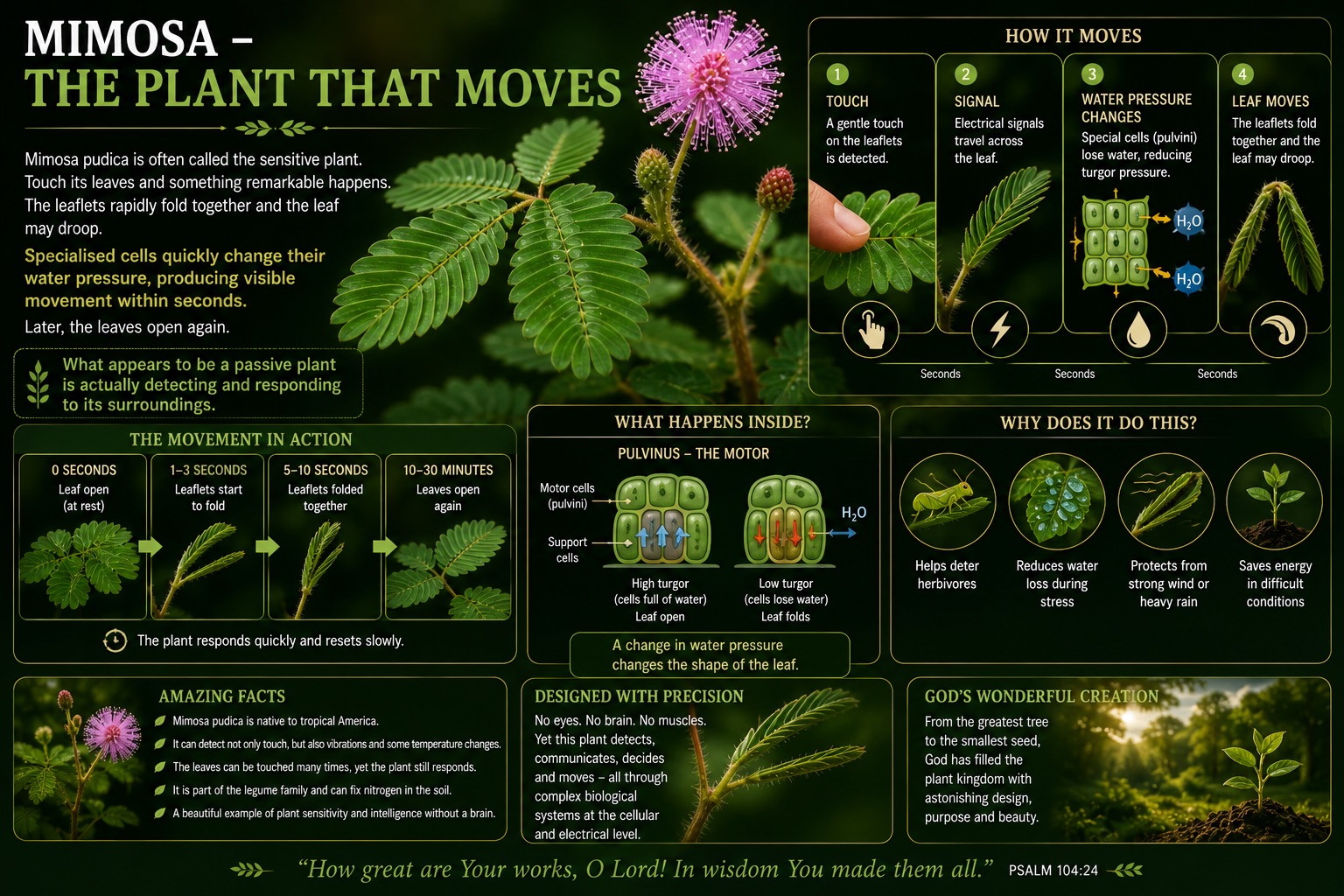
Mimosa pudica is often called the sensitive plant. Touch its leaves and something remarkable happens. The leaflets rapidly fold together and the leaf may droop. Specialised cells quickly change their water pressure, producing visible movement within seconds. Later, the leaves open again. What appears to be a passive plant is actually detecting and responding to its surroundings.
Durian – Delicious Fruit that Stinks!
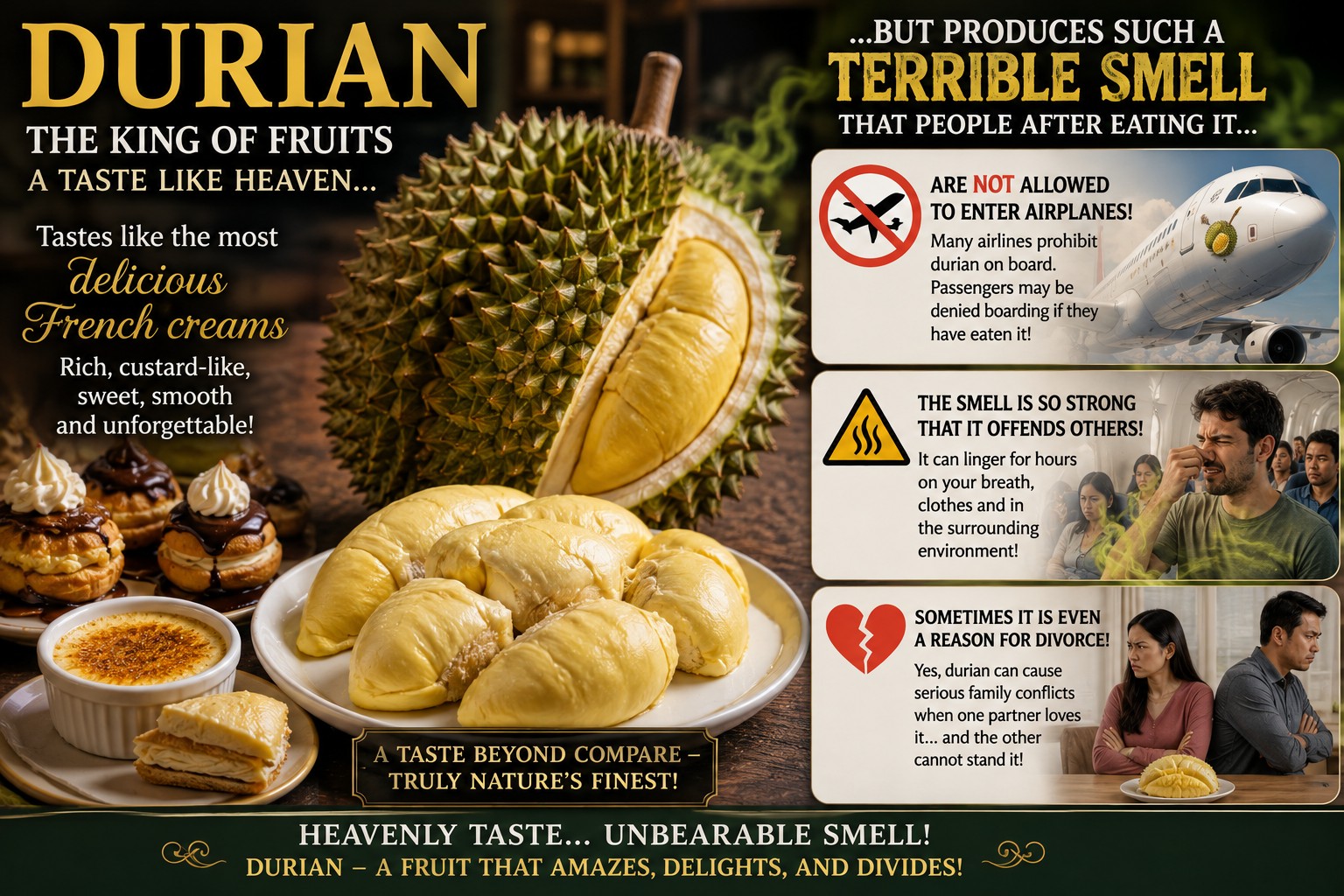
Durian, known in Southeast Asia as the “King of Fruits,” is one of the strangest fruits in the world. Hidden inside its large, thorn-covered shell is incredibly rich, smooth and creamy flesh. The famous naturalist Alfred Russel Wallace compared it to a rich almond-flavoured custard, while Kew Gardens compares the experience to eating custard cream. Some varieties can taste almost like an exquisite French cream dessert.
But there is a shocking contrast: durian can smell absolutely terrible! Its powerful sulphurous odour has been compared with rotten onions, sewage and other unpleasant smells. It is so penetrating that durians are banned from some hotels, trains and public transport, and some airlines will not allow fresh durian in the passenger cabin.
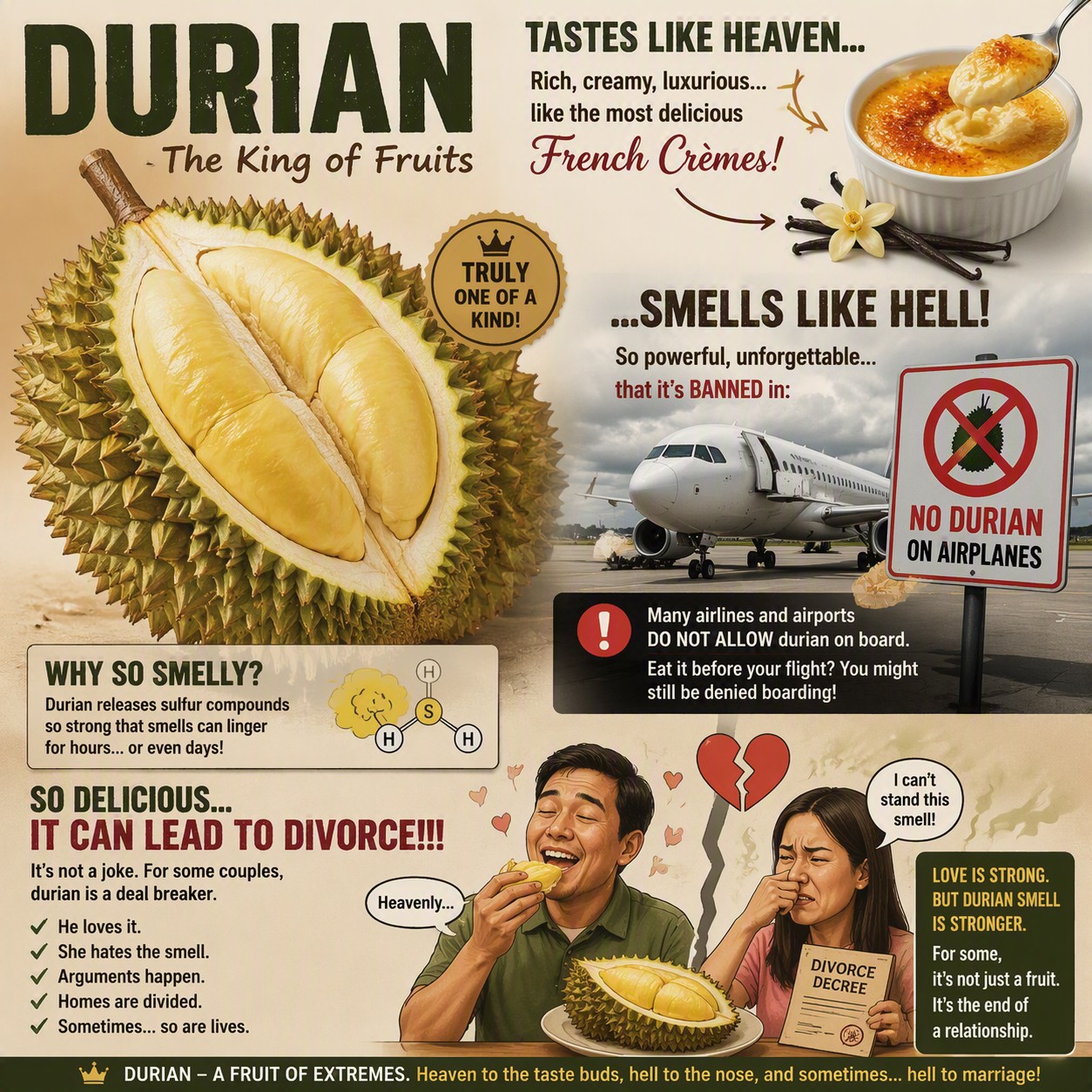
The smell can cause extraordinary situations. In 2018, passengers on an Indonesian flight refused to fly until a cargo of durians was removed from the aircraft!
Stories even circulate about durian causing arguments between couples—but I could not find reliable evidence that eating durian has actually caused divorces, so it is better not to present that claim as fact.
Perhaps no other fruit offers such an amazing contradiction: it can taste like a luxurious cream dessert while smelling so terrible that people want it out of the building!
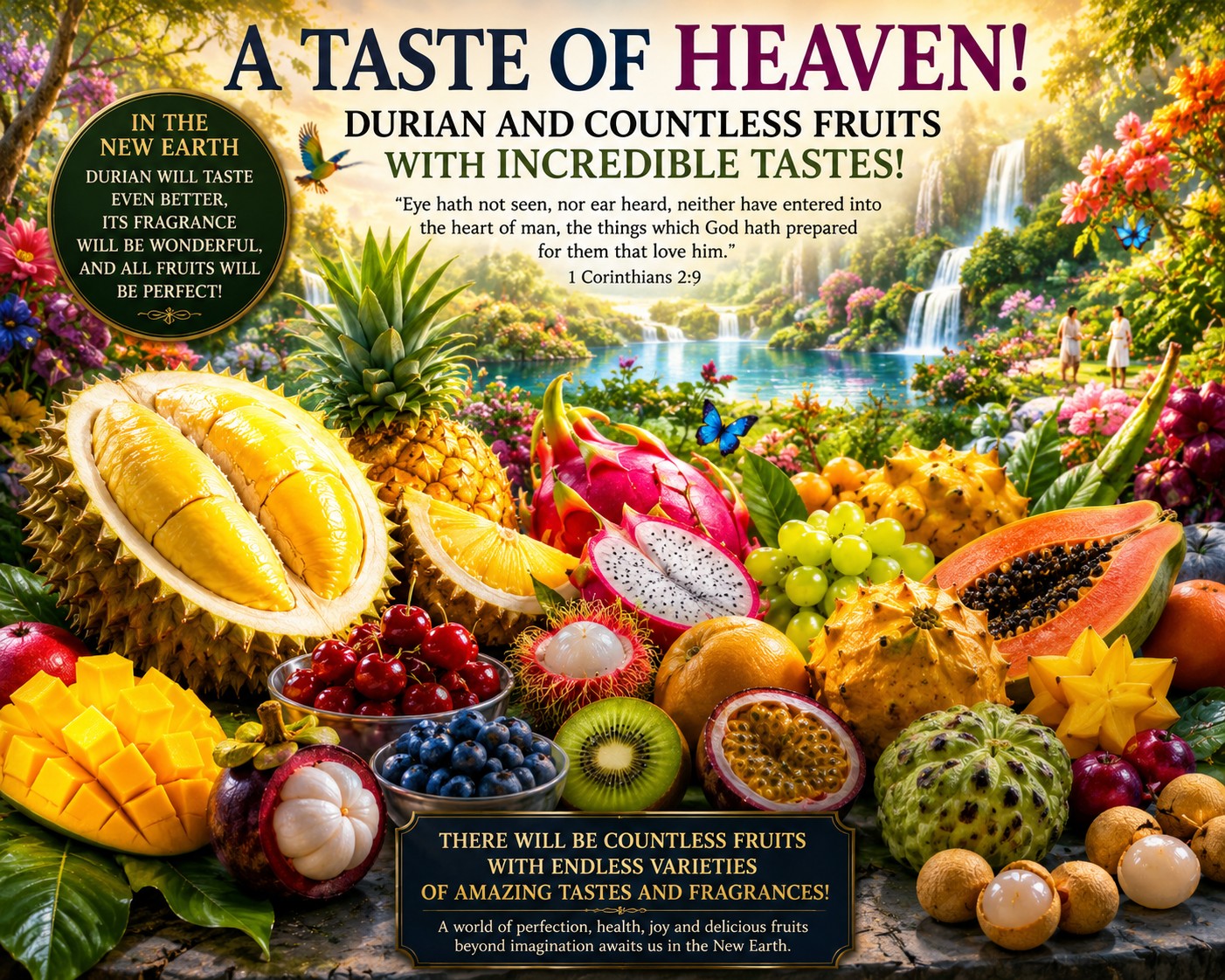
Yet imagine durian on the New Earth—even more delicious, but with a wonderful fragrance instead of its unpleasant smell! And durian may be only a tiny foretaste of what God has prepared. There could be countless fruits with endless varieties of extraordinary flavours, fragrances, colours and textures—delights beyond anything we can experience today. “Behold, I make all things new.” Revelation 21:5
Sunflowers – Following the Sun
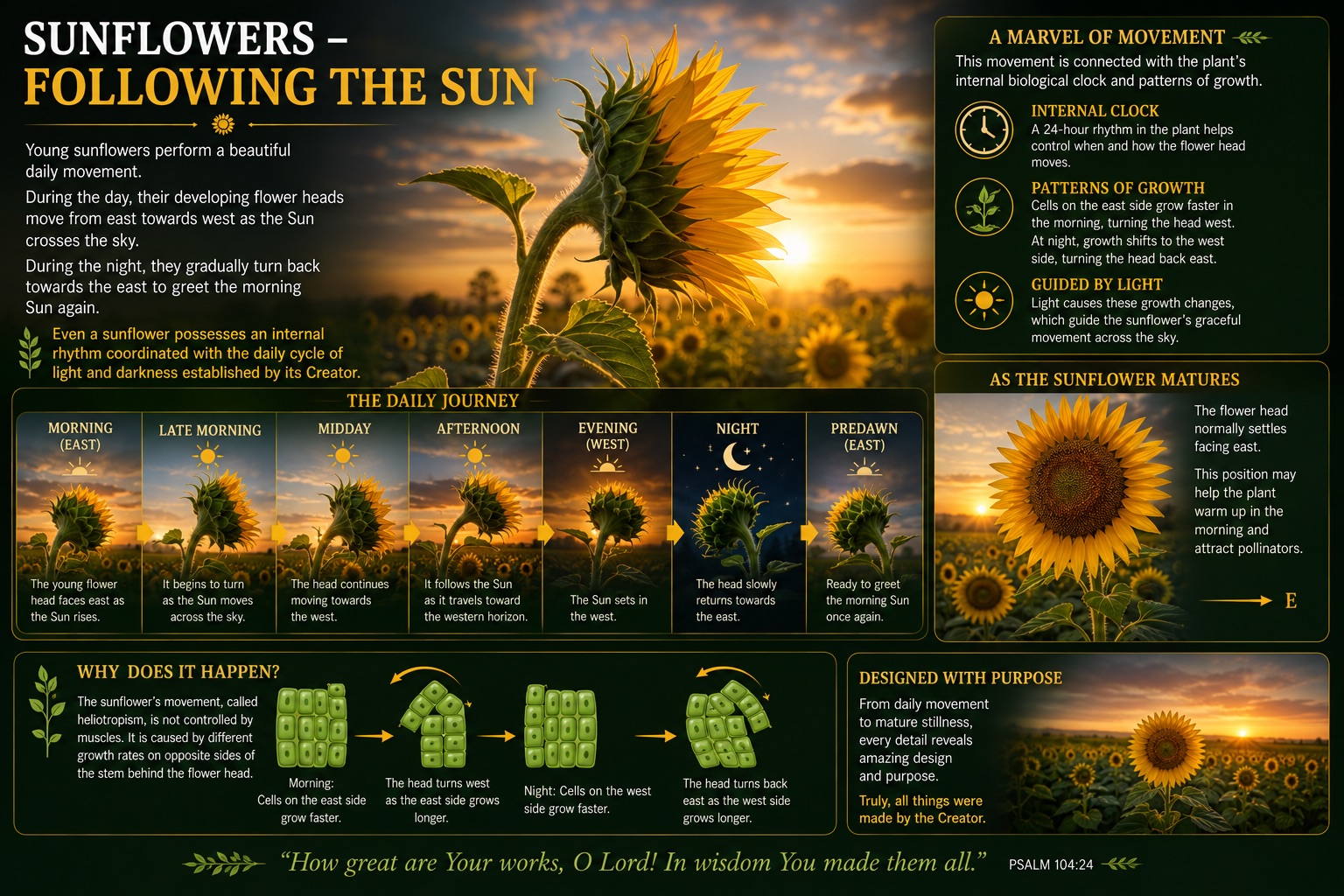
Young sunflowers perform a beautiful daily movement. During the day, their developing flower heads move from east towards west as the Sun crosses the sky. During the night, they gradually turn back towards the east to greet the morning Sun again. This movement is connected with the plant’s internal biological clock and patterns of growth. As the sunflower matures, its flower head normally settles facing east. Even a sunflower possesses an internal rhythm coordinated with the daily cycle of light and darkness established by its Creator.
Sunflowers – Always Looking Towards the Sun
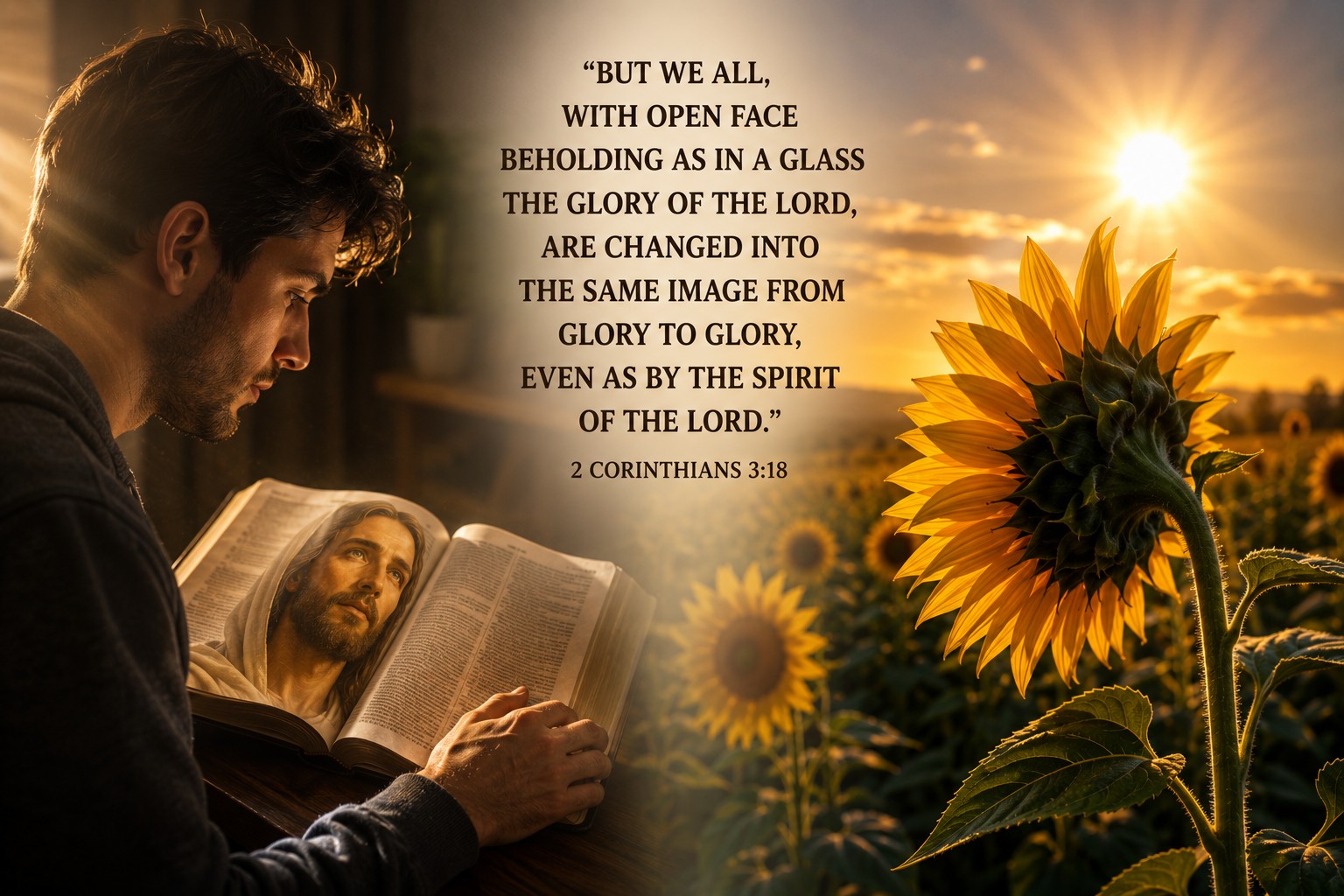
Young sunflowers display a remarkable behaviour called heliotropism—during the day they turn and follow the sun across the sky. In a beautiful way, they illustrate what should happen in the Christian life: our eyes should remain continually fixed upon Christ, the Sun of Righteousness.
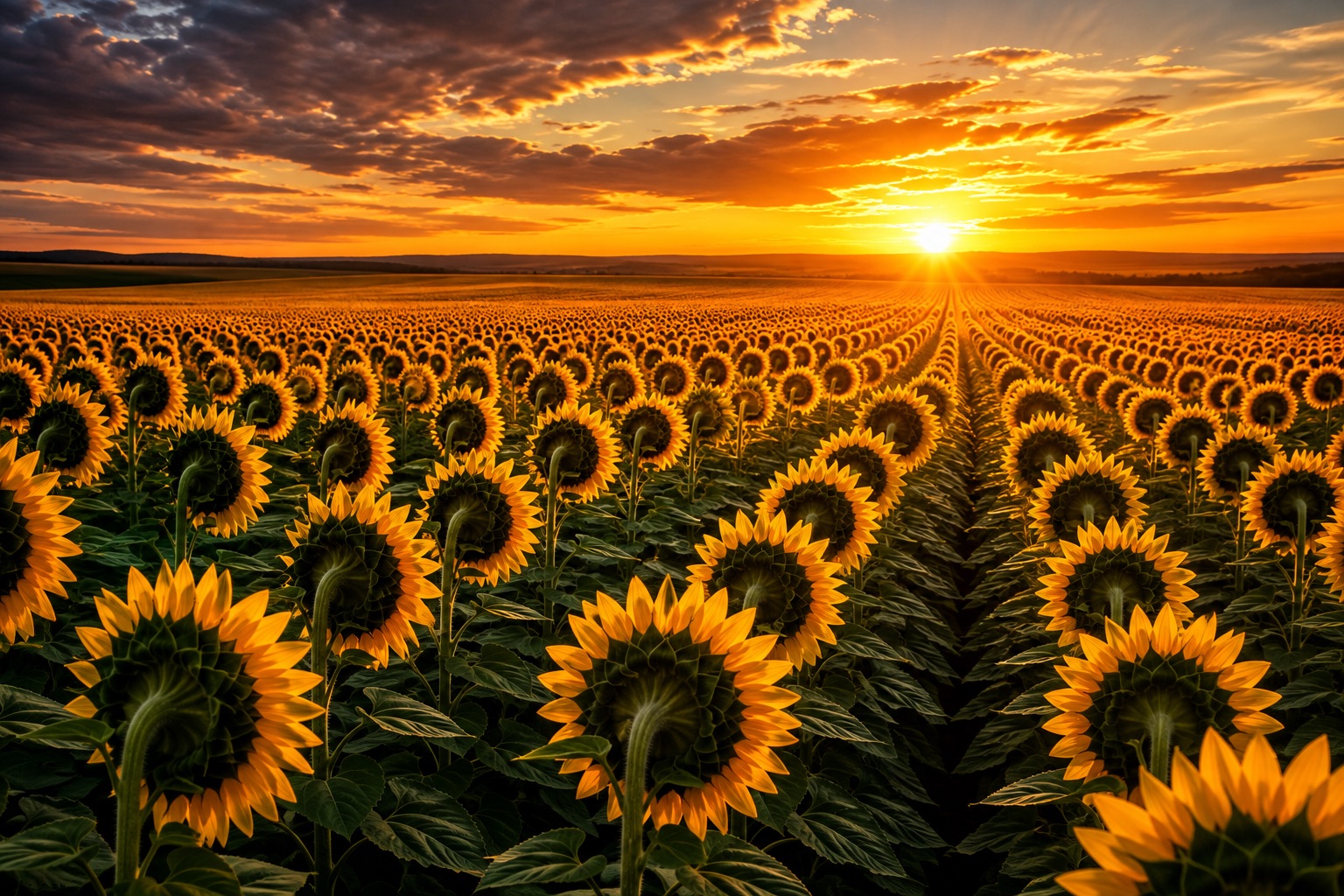
The more we look to Jesus—through His Word, prayer and communion with Him—the more we are changed into His likeness. Just as the sunflower turns towards the light and even resembles the radiant sun in appearance, by continually beholding Christ we gradually reflect more of His loving, pure and unselfish character.
“But we all, with open face beholding as in a glass the glory of the Lord (His loving character), are changed into the same image from glory to glory, even as by the Spirit of the Lord.” 2 Corinthians 3:18
“Looking unto Jesus the author and finisher of our faith.” Hebrews 12:2
“But unto you that fear my name shall the Sun of righteousness (Christ) arise with healing in his wings.” Malachi 4:2
Keep looking to Jesus. By beholding Him, we become changed into His likeness.
Orchids – Beauty with Purpose
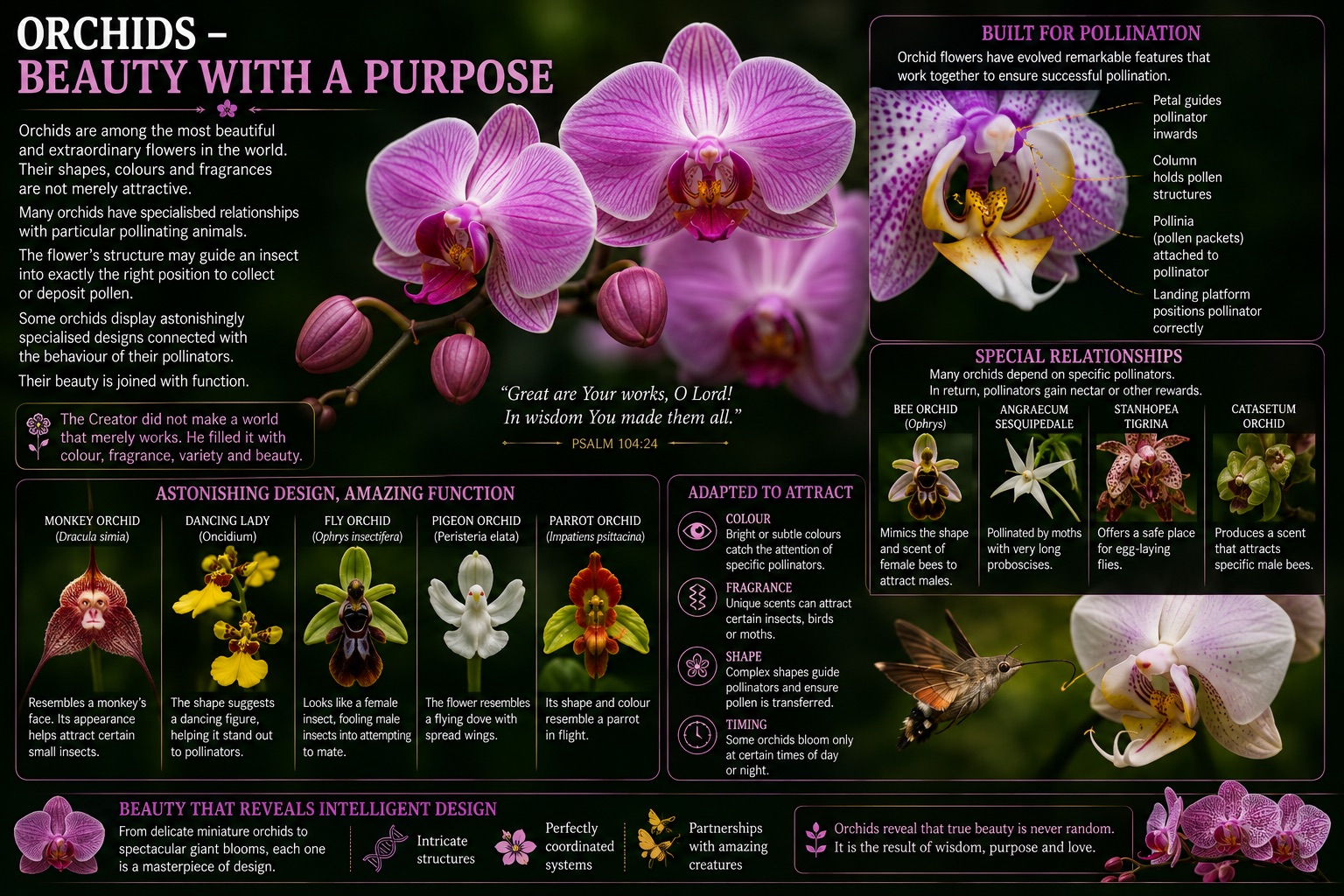
Orchids are among the most beautiful and extraordinary flowers in the world. Their shapes, colours and fragrances are not merely attractive. Many orchids have specialised relationships with particular pollinating animals. The flower’s structure may guide an insect into exactly the right position to collect or deposit pollen. Some orchids display astonishingly specialised designs connected with the behaviour of their pollinators. Their beauty is joined with function. The Creator did not make a world that merely works. He filled it with colour, fragrance, variety and beauty.
Desert Plants – Surviving Without Rain
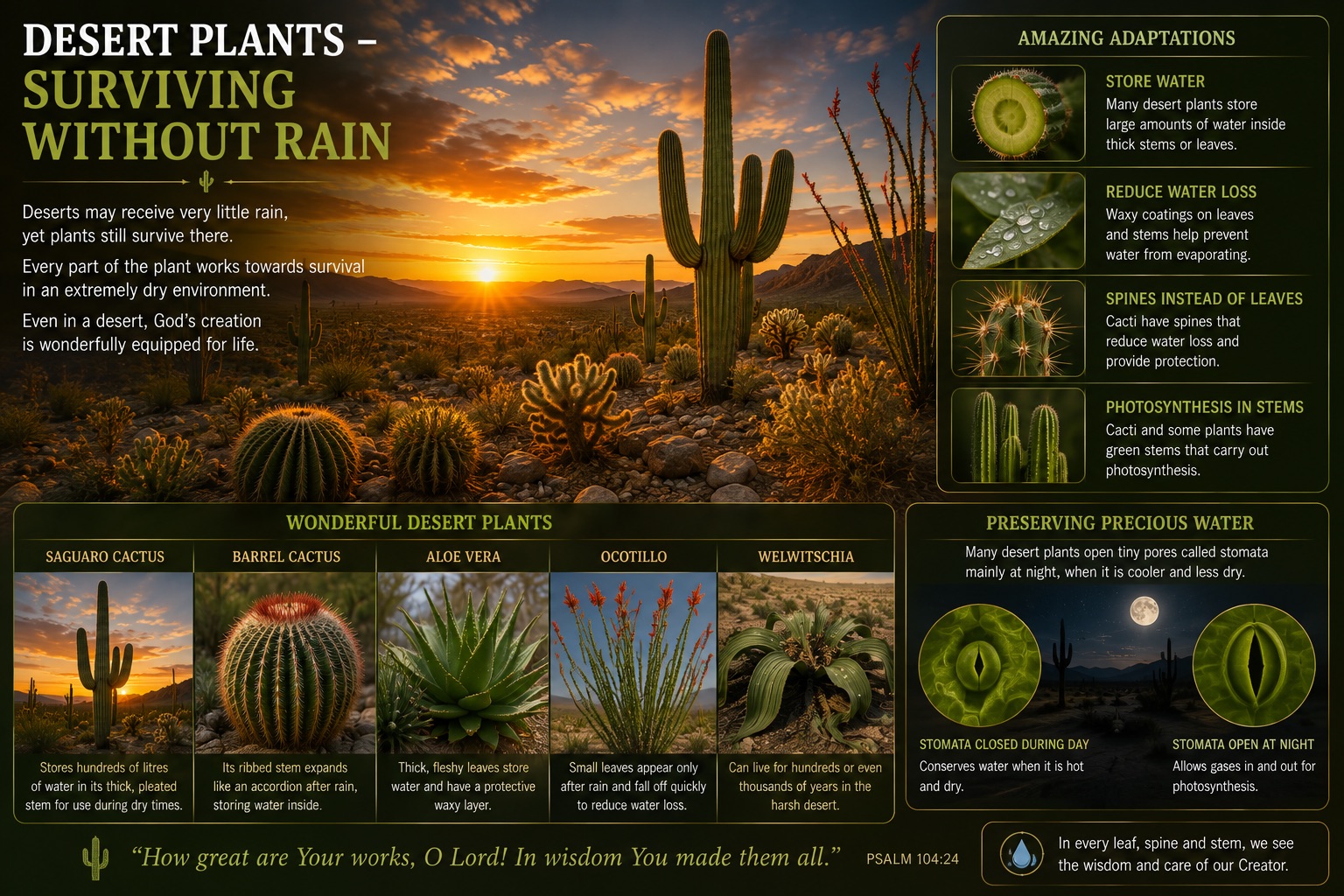
Deserts may receive very little rain, yet plants still survive there. Some store large amounts of water inside thick stems or leaves. Many possess waxy outer surfaces that reduce water loss. Cacti have spines instead of ordinary leaves, while their green stems carry out photosynthesis. Some desert plants open tiny pores mainly at night, when temperatures are lower, helping them conserve precious water. Every part of the plant works towards survival in an extremely dry environment. Even in a desert, God’s creation is wonderfully equipped for life.
Giant Sequoias – Living Giants
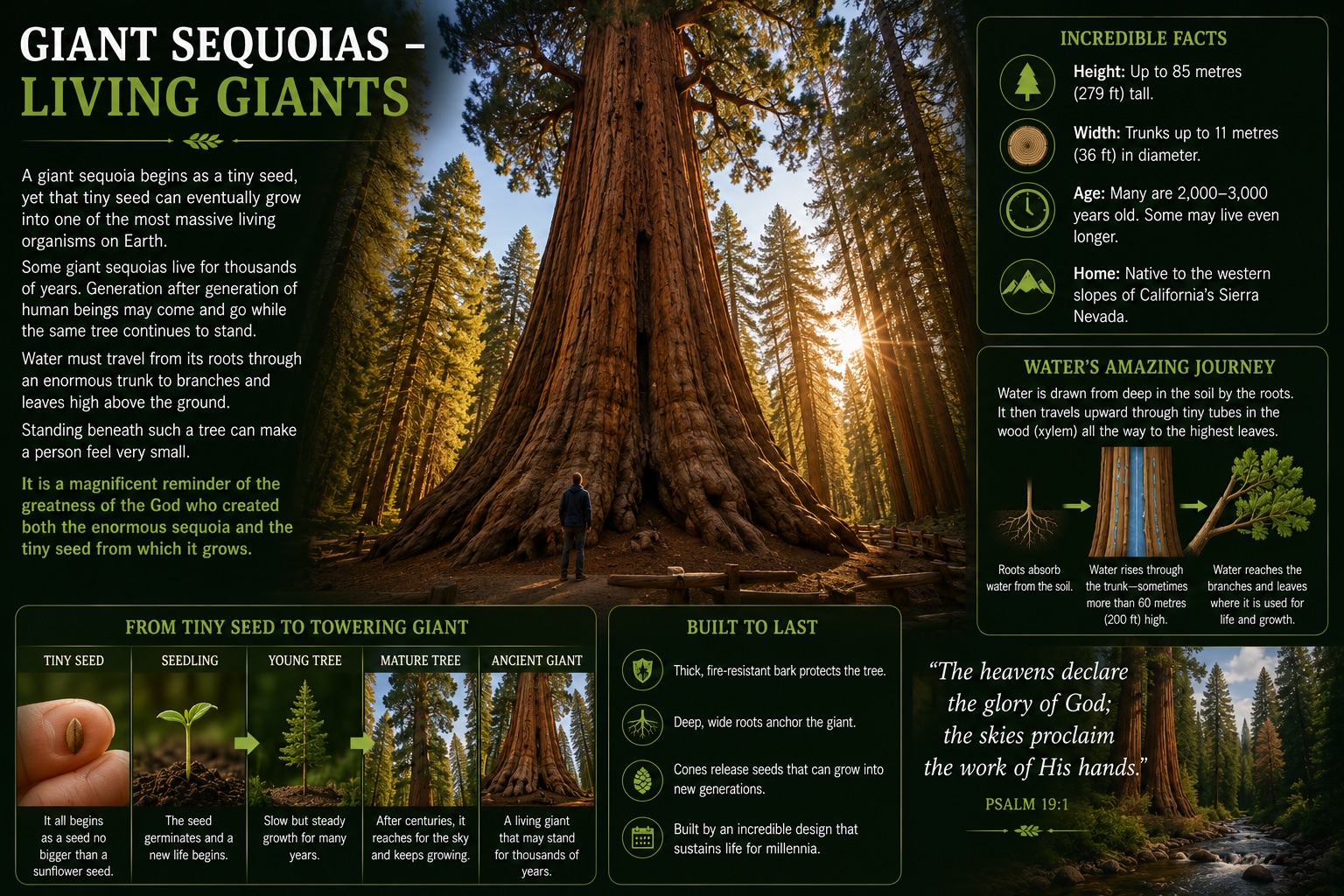
A giant sequoia begins as a tiny seed, yet that tiny seed can eventually grow into one of the most massive living organisms on Earth. Some giant sequoias live for thousands of years. Generation after generation of human beings may come and go while the same tree continues to stand. Water must travel from its roots through an enormous trunk to branches and leaves high above the ground. Standing beneath such a tree can make a person feel very small. It is a magnificent reminder of the greatness of the God who created both the enormous sequoia and the tiny seed from which it grows.
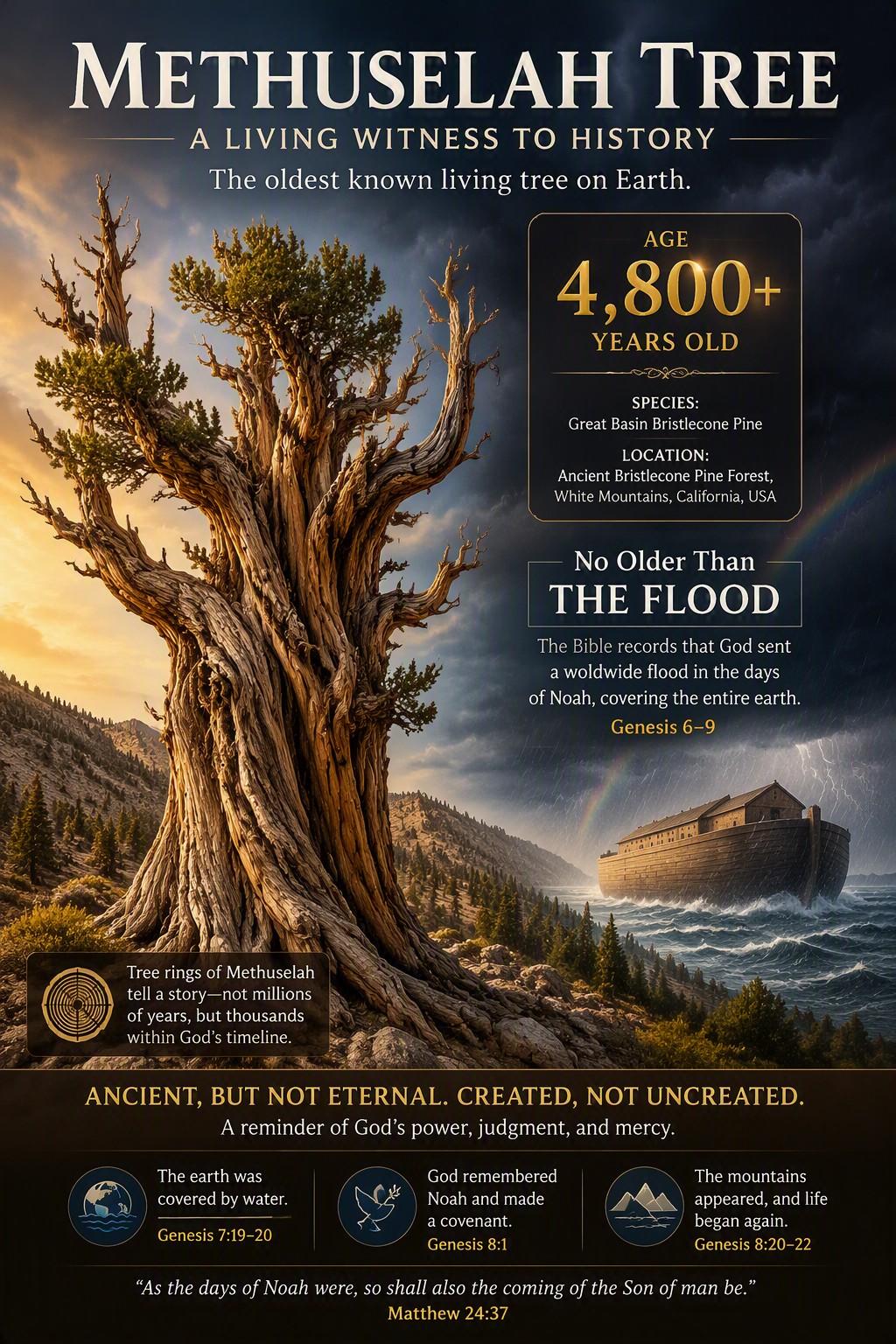
Methuselah – A Living Witness to the Flood
High in California’s White Mountains grows Methuselah, a remarkable bristlecone pine with about 4,700 growth rings, making it one of the oldest known individual living trees on Earth.
This is fascinating when compared with the Bible. According to biblical chronology, Noah’s worldwide Flood occurred about 4,500 years ago, destroying the vegetation that was overwhelmed by the catastrophe (Genesis 7:19–24; 8:1–11).
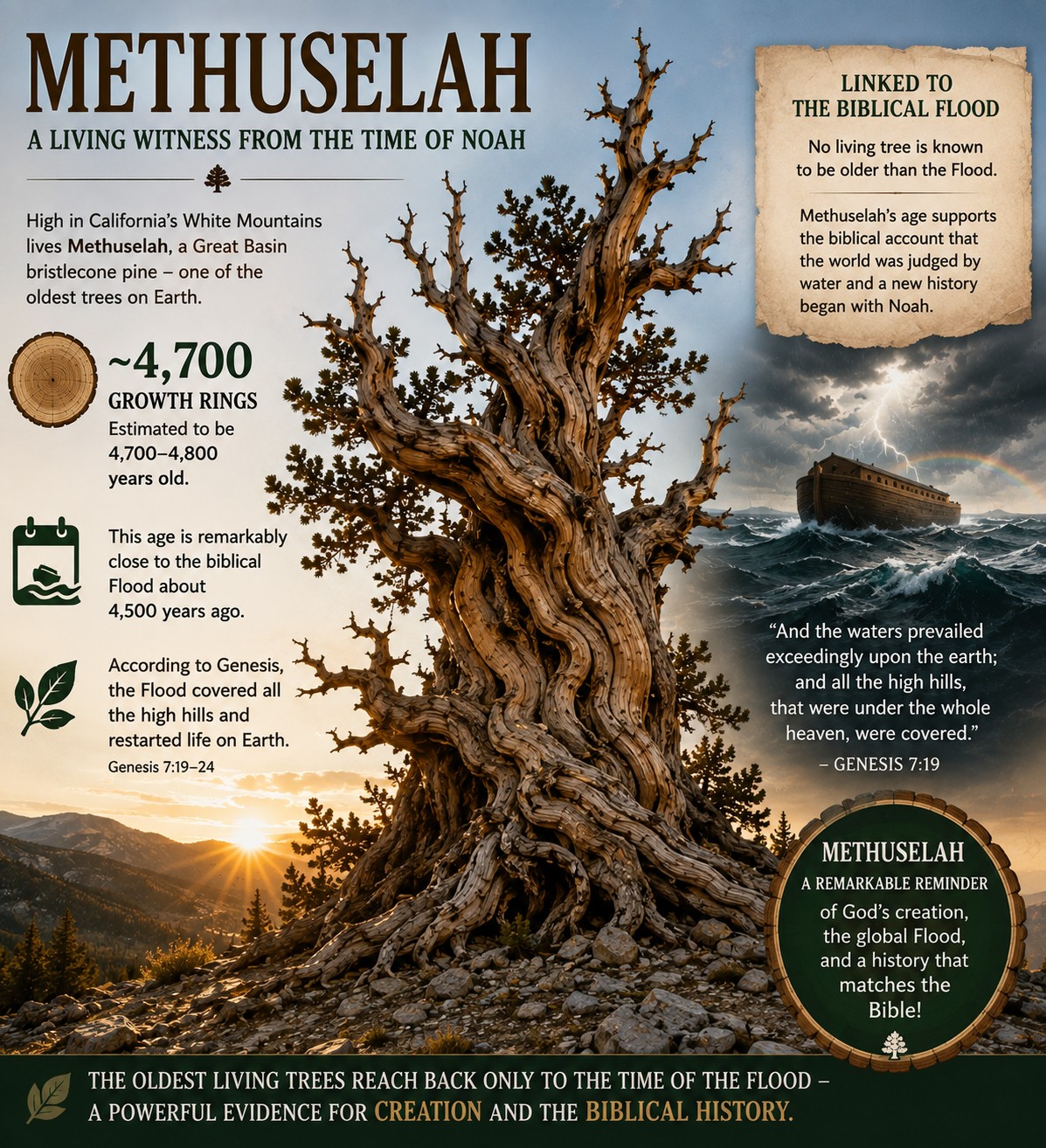
Why, then, do we not find individual living trees tens of thousands of years old? Remarkably, the oldest known trees reach back only approximately to the time of the Flood.
Methuselah has slightly more rings than the traditional Flood date would allow, but creationist researchers point out that more than one growth ring can sometimes form in a single year, especially under unusual environmental conditions such as those proposed for the post-Flood period.
Methuselah therefore provides an intriguing observation consistent with the biblical record: the world’s oldest individual living trees appear around the very period when Genesis describes the old world being destroyed and life beginning again after the Flood.
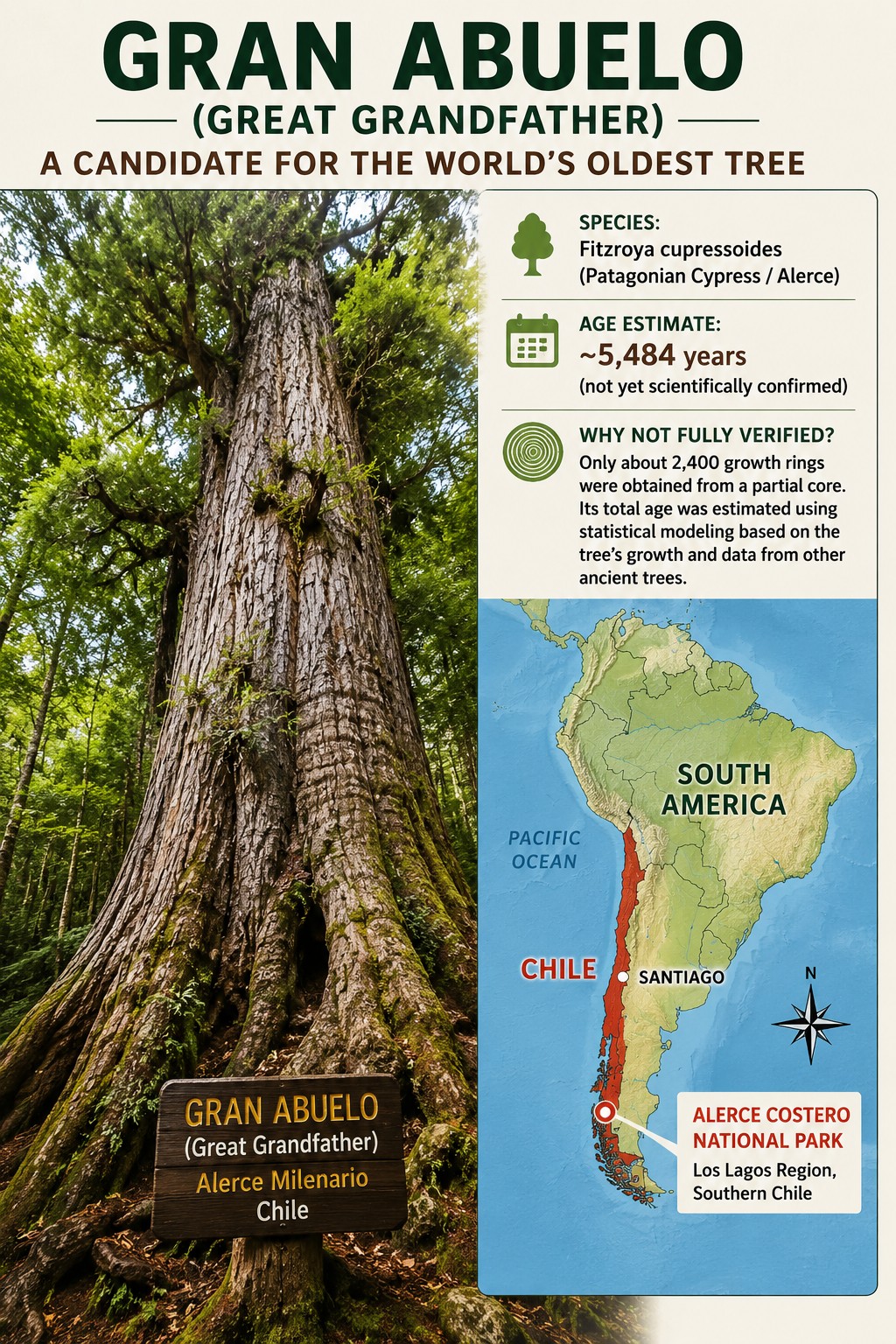
There is a tree in southern Chile that some researchers believe may be even older than Methuselah, the famous bristlecone pine in California. Known as Gran Abuelo (“Great Grandfather”), it has been estimated to be about 5,484 years old.
However, this extraordinary age cannot be directly confirmed by counting its annual rings, because scientists were unable to obtain a core reaching the centre of its enormous trunk. Only about 2,400 rings were directly counted. The proposed age of 5,484 years was therefore calculated using statistical modelling based on the tree’s growth and data from other ancient trees. For this reason, Gran Abuelo is better described as a possible candidate for the world’s oldest living tree rather than the oldest scientifically confirmed tree.
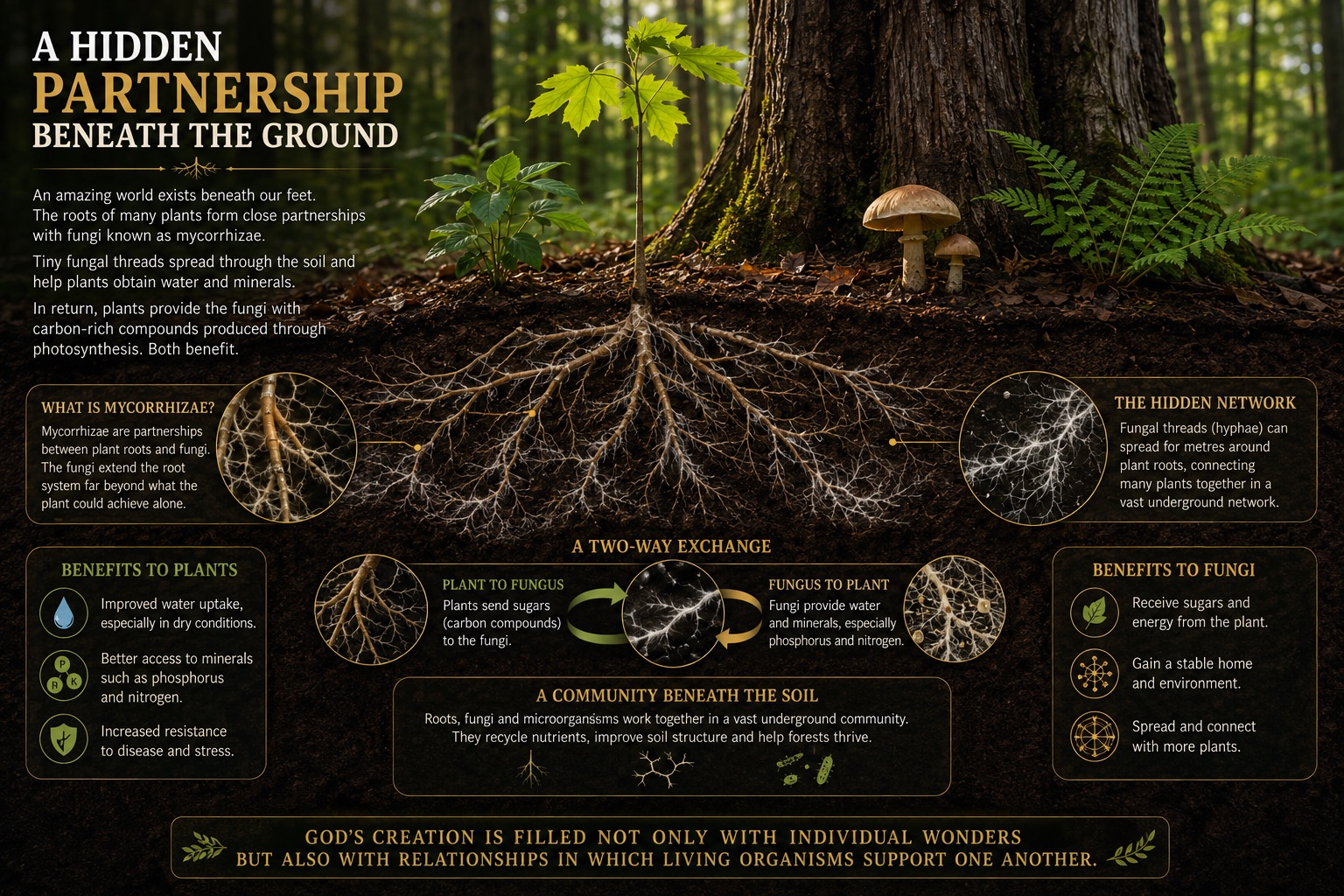
Hidden Partnership Beneath the Ground
An amazing world exists beneath our feet. The roots of many plants form close partnerships with fungi known as mycorrhizae. Tiny fungal threads spread through the soil and help plants obtain water and minerals. In return, plants provide the fungi with carbon-rich compounds produced through photosynthesis. Both benefit. A forest is therefore far more than the trees we can see. Beneath the soil exists an enormous hidden community of roots, fungi and microorganisms. God’s creation is filled not only with individual wonders but also with relationships in which living organisms support one another.
Miracle Inside Every Green Leaf
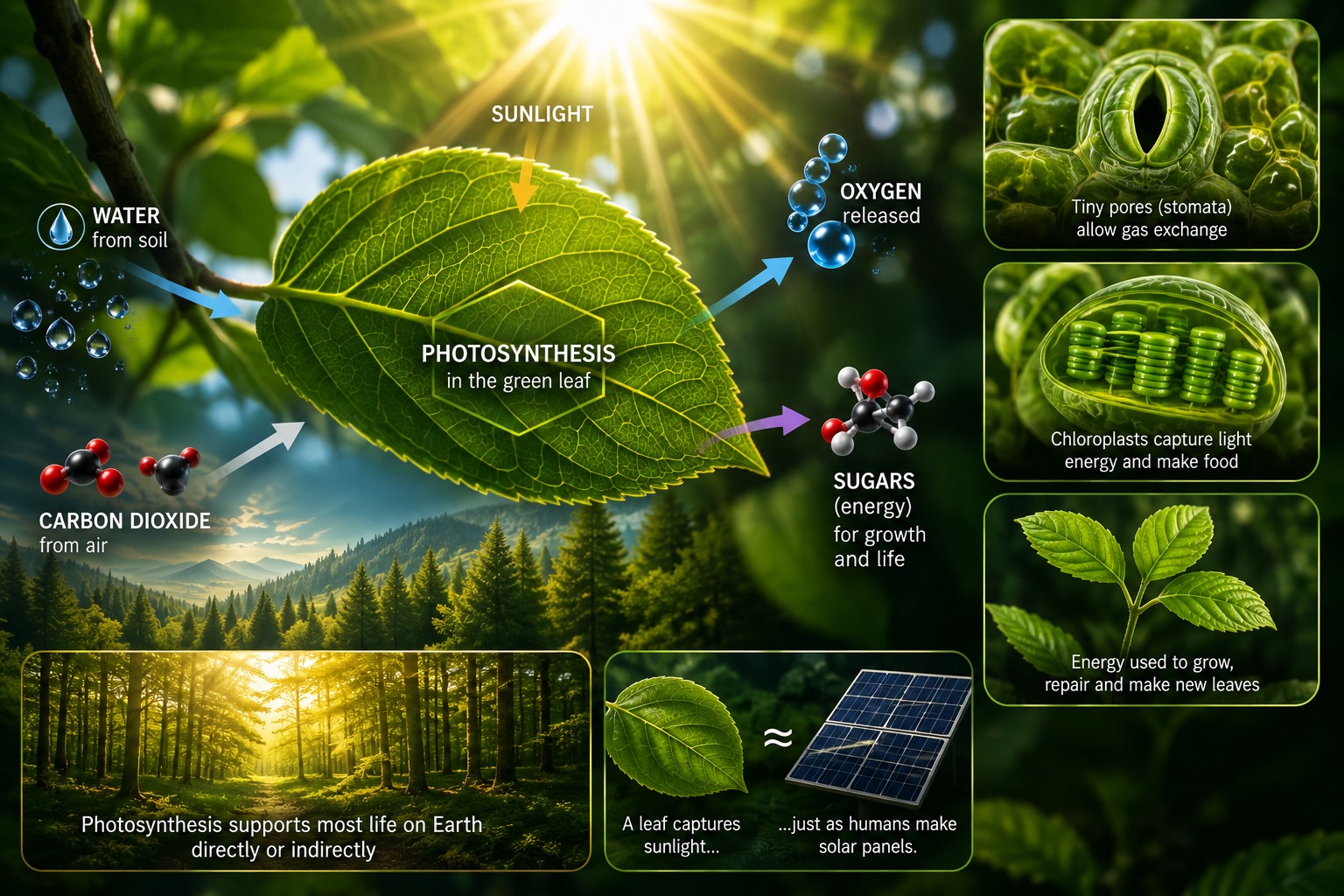
Perhaps one of the greatest wonders of creation is also one of the most common. A green leaf receives sunlight and uses its energy in photosynthesis. Using water from the soil and carbon dioxide from the air, plants produce energy-rich organic compounds and release oxygen. This process supports most life on Earth either directly or indirectly. Every forest, field and garden is filled with tiny living “solar factories.” Human beings can manufacture solar panels, but a leaf can capture light energy while also growing, repairing itself and producing more leaves. Something we walk past every day is actually an extraordinary work of creation.
What do these Wonders Tell Us?
A dolphin sleeps with half of its brain awake. A basilisk runs across water. A bat navigates with sound. A butterfly travels thousands of kilometres without ever having made the journey before. A sea turtle senses Earth’s magnetic field. A beetle carries a tiny chemical defence system. A gecko walks across ceilings. A frog survives freezing. A bee gives directions by dancing. And these are only a few examples.
Then we look at plants. A Venus flytrap detects touch and produces electrical signals. A sunflower follows the daily movement of the Sun. A cactus survives extreme drought. A tiny seed becomes an enormous tree. A green leaf captures sunlight and helps provide food and oxygen for life.
The closer we look, the more astonishing creation becomes. Science allows us to discover how many of these systems work. But learning how they work can make them even more wonderful. For the believer, nature is not merely a collection of fascinating organisms. It is the handiwork of a wise, powerful and loving Creator.
God created a world filled with beauty, colour, variety, cooperation and life. He created flowers that delight the eye, birds that fill the air with song, fruit that provides food, trees that give shade and countless creatures with abilities that continually surprise us. Creation reveals not only enormous intelligence and power but also generosity.
And the God who notices even the smallest creatures cares far more deeply for human beings.
“Are not five sparrows sold for two farthings, and not one of them is forgotten before God?… Fear not therefore: ye are of more value than many sparrows.” Luke 12:6–7
“For the invisible things of him from the creation of the world are clearly seen, being understood by the things that are made, even his eternal power and Godhead.” Romans 1:20
“The heavens declare the glory of God; and the firmament sheweth his handywork.” Psalm 19:1
“O LORD, how manifold are thy works! in wisdom hast thou made them all: the earth is full of thy riches.” Psalm 104:24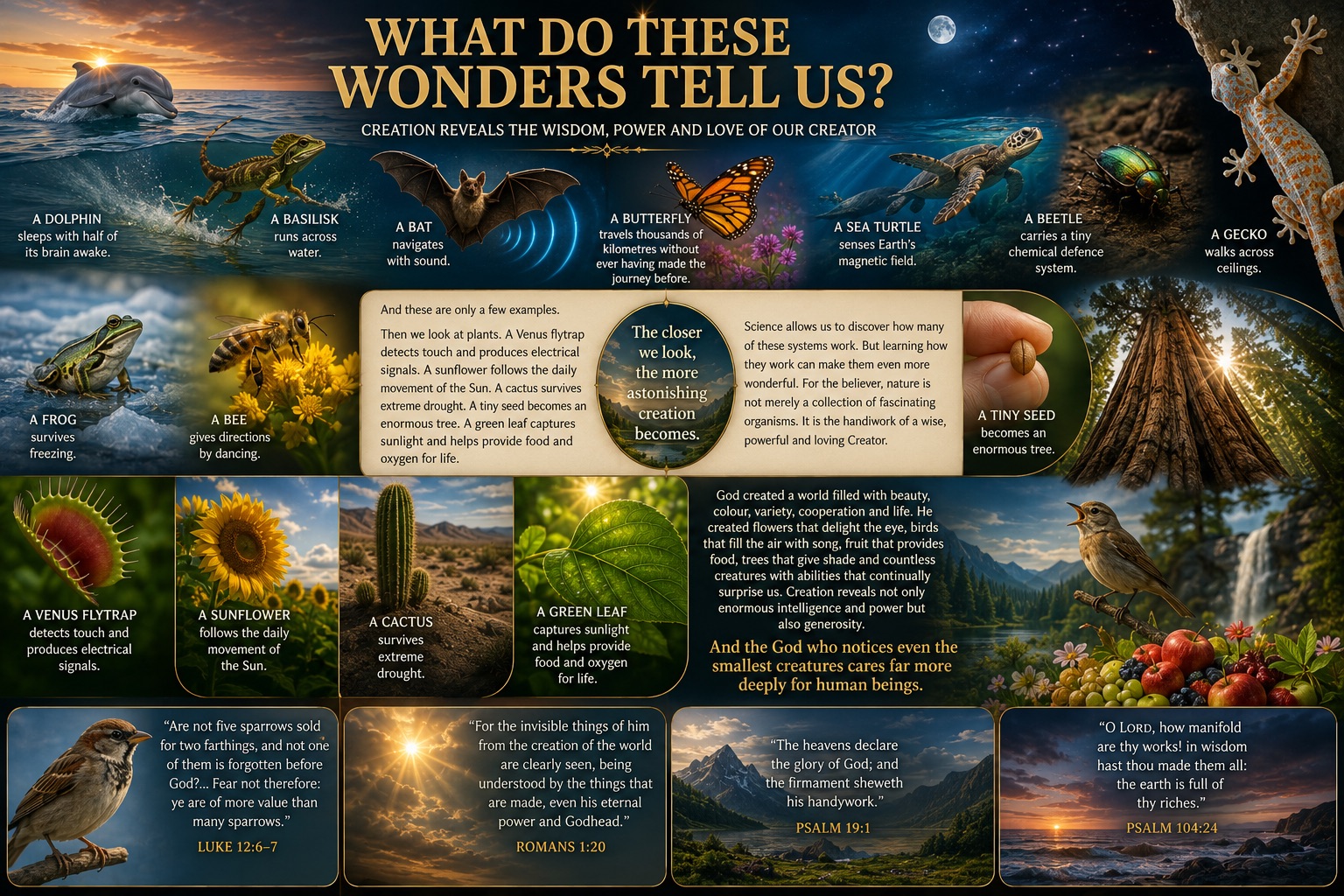
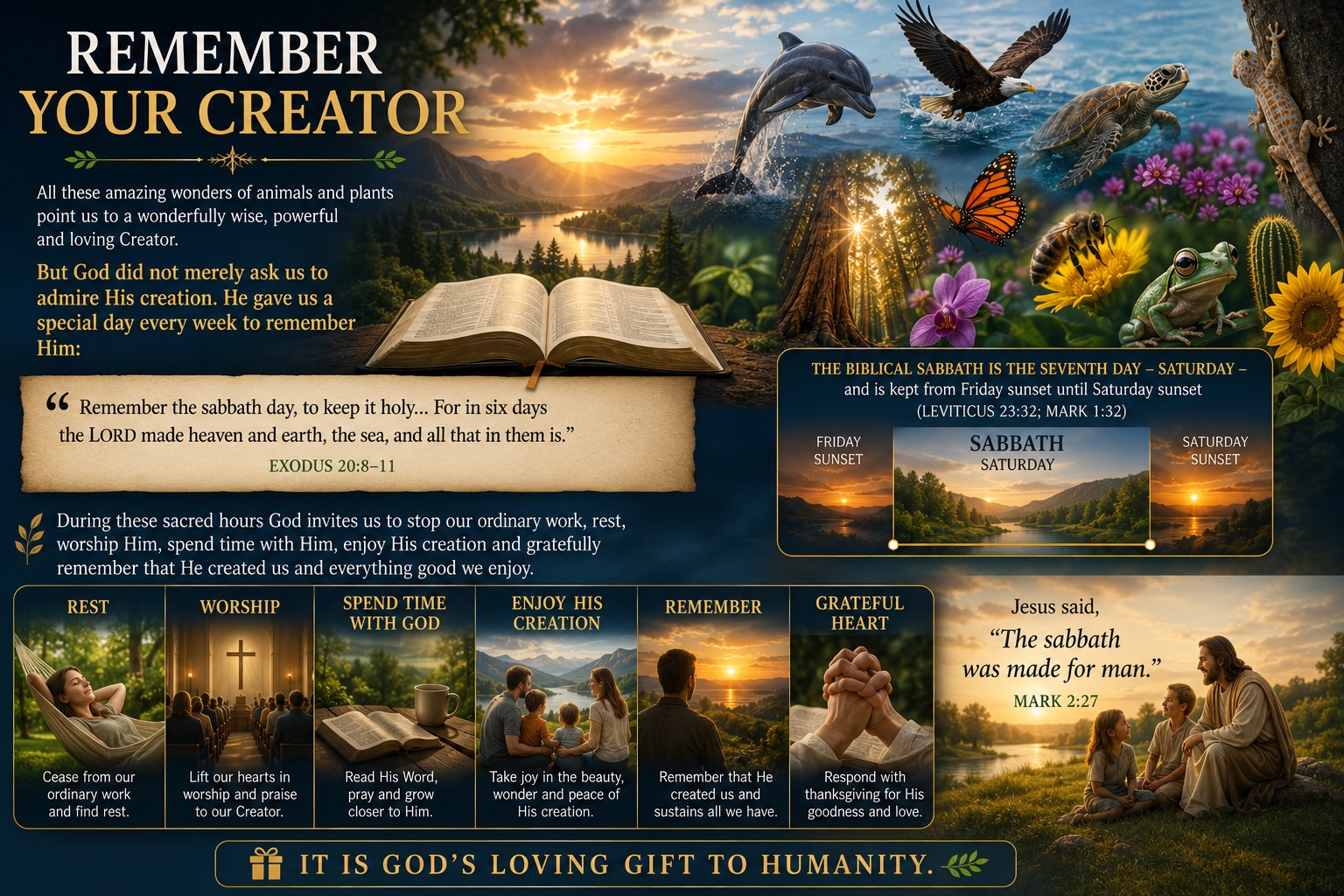
Remember Your Creator
All these amazing wonders of animals and plants point us to a wonderfully wise, powerful and loving Creator. But God did not merely ask us to admire His creation. He gave us a special day every week to remember Him: “Remember the sabbath day, to keep it holy… For in six days the LORD made heaven and earth, the sea, and all that in them is.” Exodus 20:8–11
The biblical Sabbath is the seventh day – Saturday – and is kept from Friday sunset until Saturday sunset (Leviticus 23:32; Mark 1:32). During these sacred hours God invites us to stop our ordinary work, rest, worship Him, spend time with Him, enjoy His creation and gratefully remember that He created us and everything good we enjoy. Jesus said, “The sabbath was made for man.” Mark 2:27. It is God’s loving gift to humanity.
Sabbath and the Gospel
God’s original creation was perfect, but sin brought suffering, decay and death. Yet God loved us too much to abandon us. He gave His only Son to save us: “For God so loved the world, that he gave his only begotten Son…” John 3:16.
This gives the Sabbath an even deeper meaning. God finished His perfect work of Creation on Friday, and then rested on the seventh day. Adam and Eve did not help God create anything. Their first full day of life was spent resting in and enjoying God’s finished work.
In the same beautiful way, Christ finished His work of redemption on Friday and declared, “It is finished.” John 19:30. He then rested in the tomb during the Sabbath. We cannot add anything to Christ’s perfect salvation. We simply receive it by faith and rest in what He has already accomplished for us. “There remaineth therefore a rest to the people of God. For he that is entered into his rest, he also hath ceased from his own works, as God did from his.” Hebrews 4:9–10.
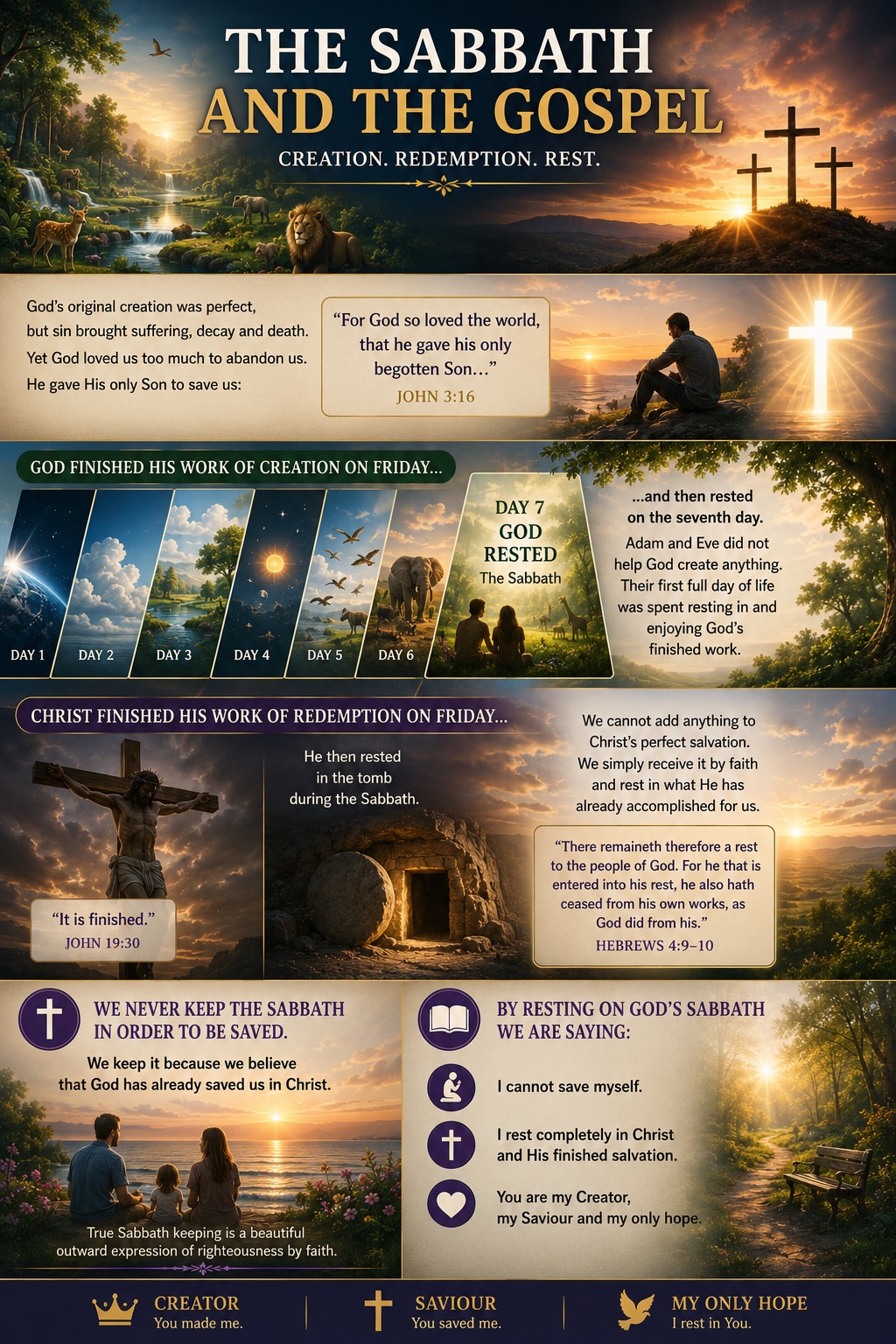
Therefore, we never keep the Sabbath in order to be saved. We keep it because we believe that God has already saved us in Christ. True Sabbath keeping is a beautiful outward expression of righteousness by faith. By resting on God’s Sabbath we are saying: I cannot save myself. I rest completely in Christ and His finished salvation. You are my Creator, my Saviour and my only hope.
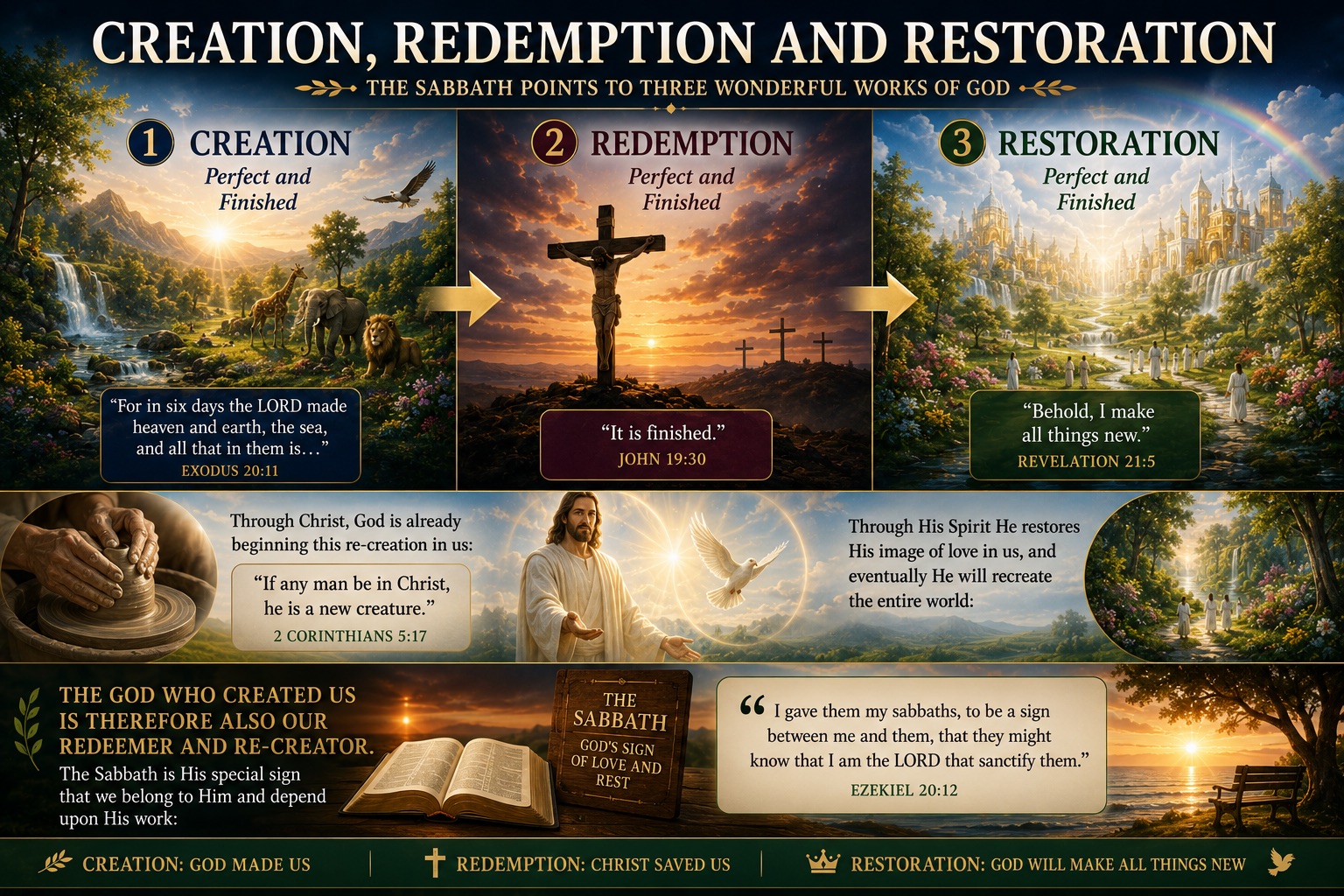
Creation, Redemption and Restoration
The Sabbath points to three wonderful works of God. It points backward to His perfect and finished Creation. It points to Christ’s perfect and finished redemption. And it points forward to the perfect and finished restoration when God will make everything new.
Through Christ, God is already beginning this re-creation in us: “If any man be in Christ, he is a new creature.” 2 Corinthians 5:17. Through His Spirit He restores His image of love in us, and eventually He will recreate the entire world: “Behold, I make all things new.” Revelation 21:5.
The God who created us is therefore also our Redeemer and Re-Creator. The Sabbath is His special sign that we belong to Him and depend upon His work: “I gave them my sabbaths, to be a sign between me and them, that they might know that I am the LORD that sanctify them.” Ezekiel 20:12.
Sabbath and the Final Choice
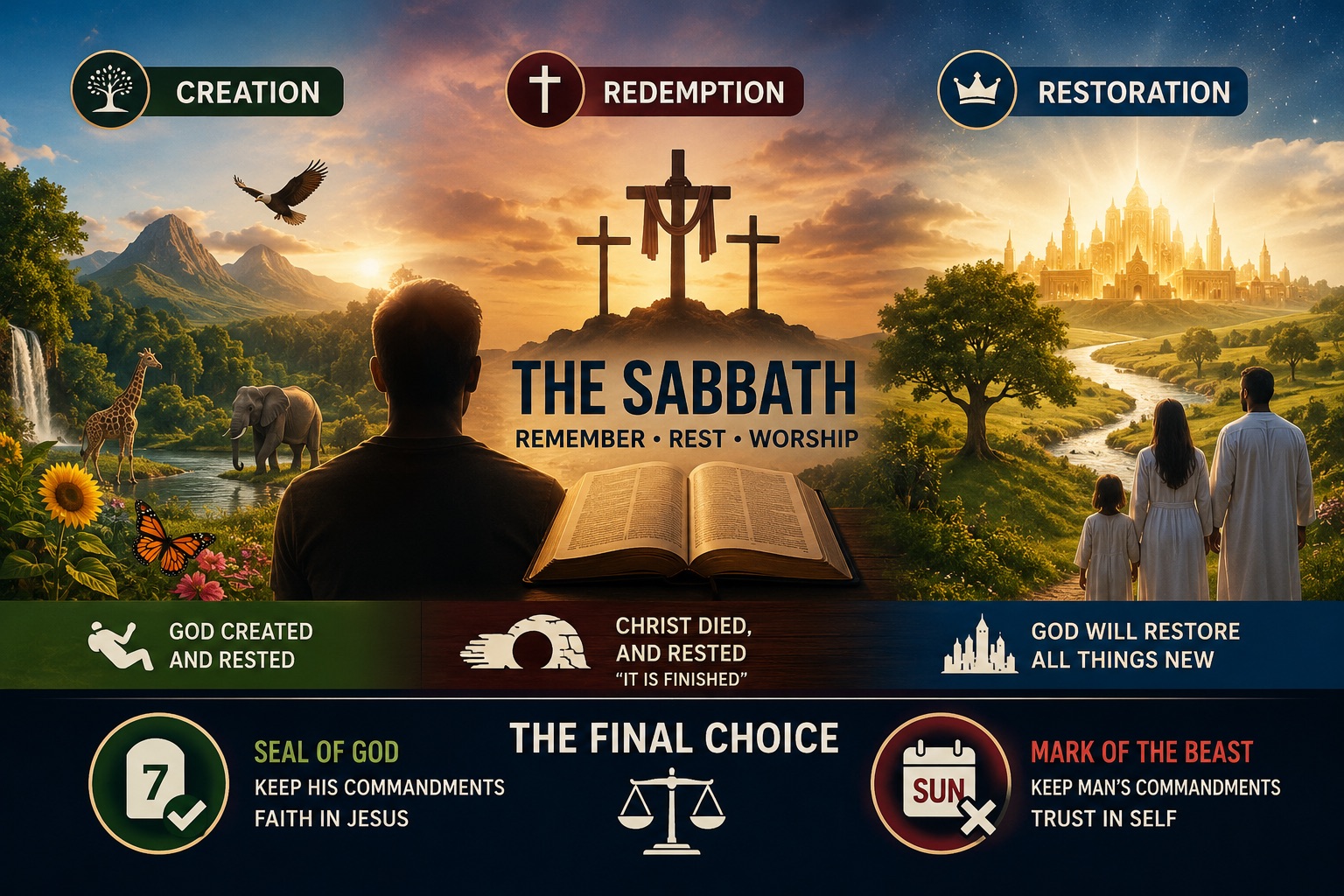
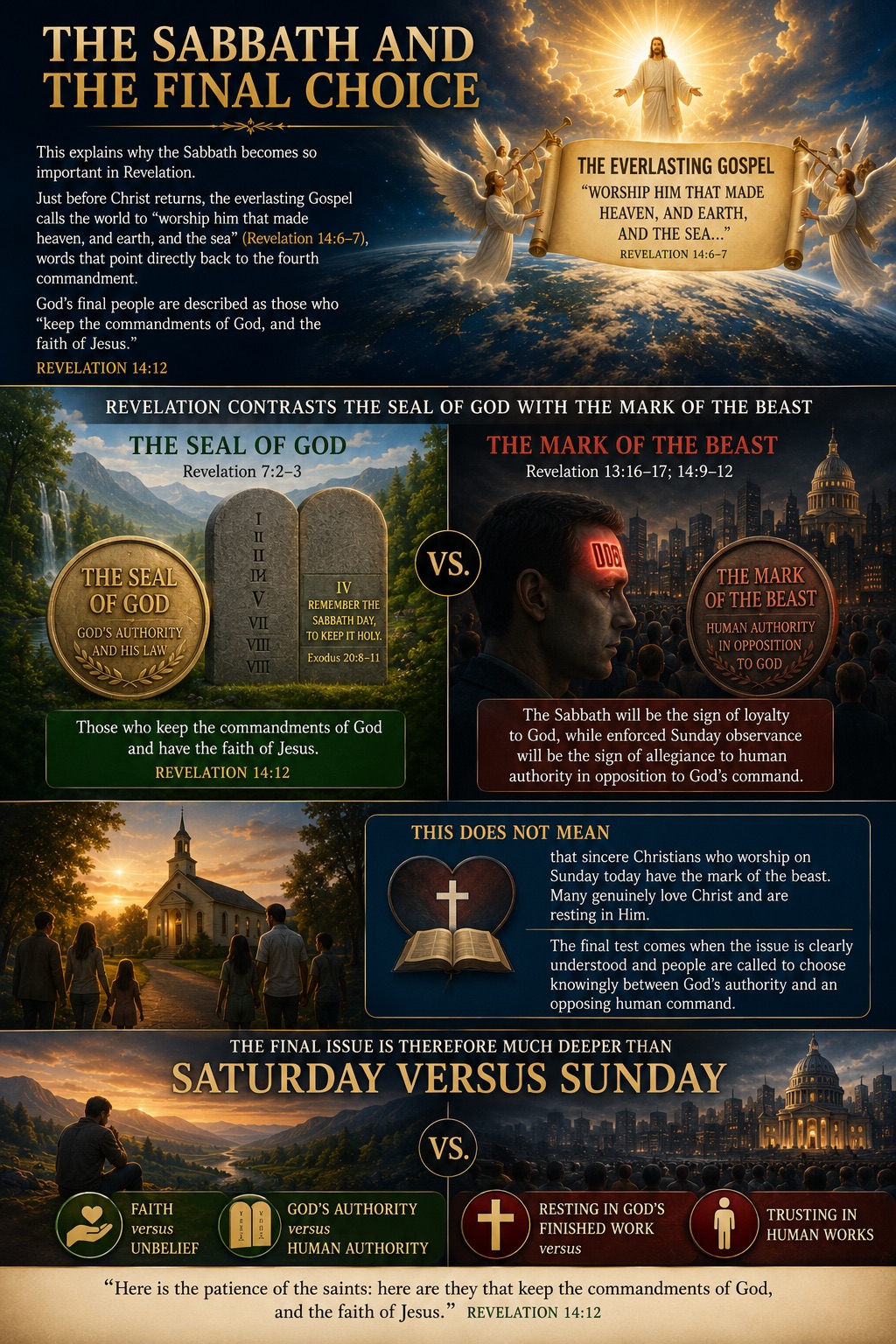
This explains why the Sabbath becomes so important in Revelation. Just before Christ returns, the everlasting Gospel calls the world to “worship him that made heaven, and earth, and the sea” (Revelation 14:6–7), words that point directly back to the fourth commandment. God’s final people are described as those who “keep the commandments of God, and the faith of Jesus.” Revelation 14:12.
Revelation contrasts the seal of God with the mark of the beast (Revelation 7:2–3; 13:16–17; 14:9–12). In the final crisis, according to the Adventist understanding of prophecy, the Sabbath will become the outward sign of loyalty to God and His righteousness by faith, while enforced Sunday observance will become the sign of allegiance to human authority in opposition to God’s command.
This does not mean that sincere Christians who worship on Sunday today have the mark of the beast. Many genuinely love Christ and are resting in Him. The final test comes when the issue is clearly understood and people are called to choose knowingly between God’s authority and an opposing human command.
The final issue is therefore much deeper than Saturday versus Sunday. It is ultimately faith versus unbelief, God’s authority versus human authority, and resting in God’s finished work versus trusting in human works.
Weekly Celebration of God’s Love
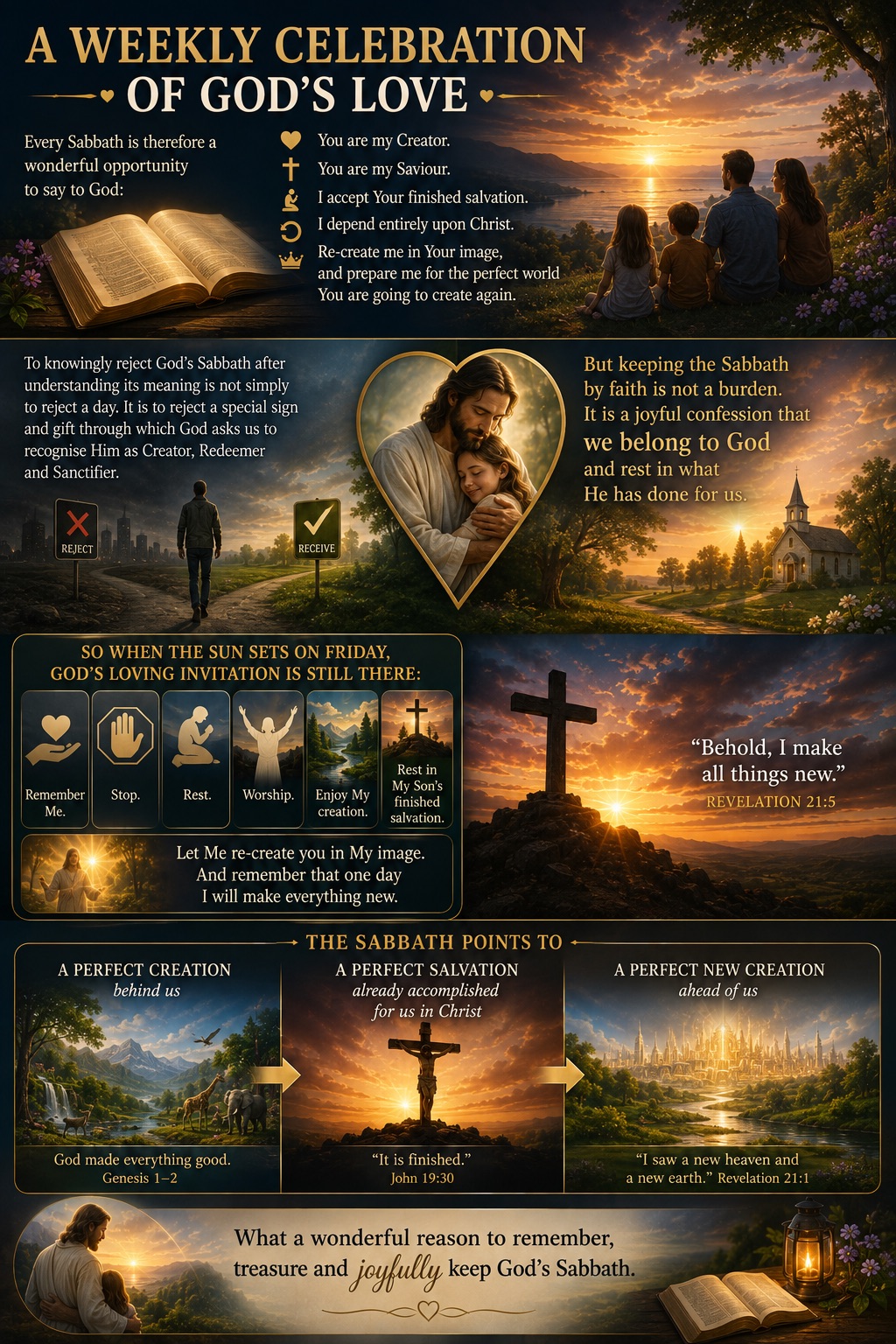
Every Sabbath is therefore a wonderful opportunity to say to God: You are my Creator. You are my Saviour. I accept Your finished salvation. I depend entirely upon Christ. Re-create me in Your image, and prepare me for the perfect world You are going to create again.
To knowingly reject God’s Sabbath after understanding its meaning is not simply to reject a day. It is to reject a special sign and gift through which God asks us to recognise Him as Creator, Redeemer and Sanctifier. But keeping the Sabbath by faith is not a burden. It is a joyful confession that we belong to God and rest in what He has done for us.
So when the sun sets on Friday, God’s loving invitation is still there: Remember Me. Stop. Rest. Worship. Enjoy My creation. Rest in My Son’s finished salvation. Let Me re-create you in My image. And remember that one day I will make everything new.
The Sabbath points to a perfect Creation behind us, a perfect salvation already accomplished for us in Christ, and a perfect new Creation ahead of us.
What a wonderful reason to remember, treasure and joyfully keep God’s Sabbath.
RELATED ARTICLES