
Life and Experience of Pastor Jack Sequeira
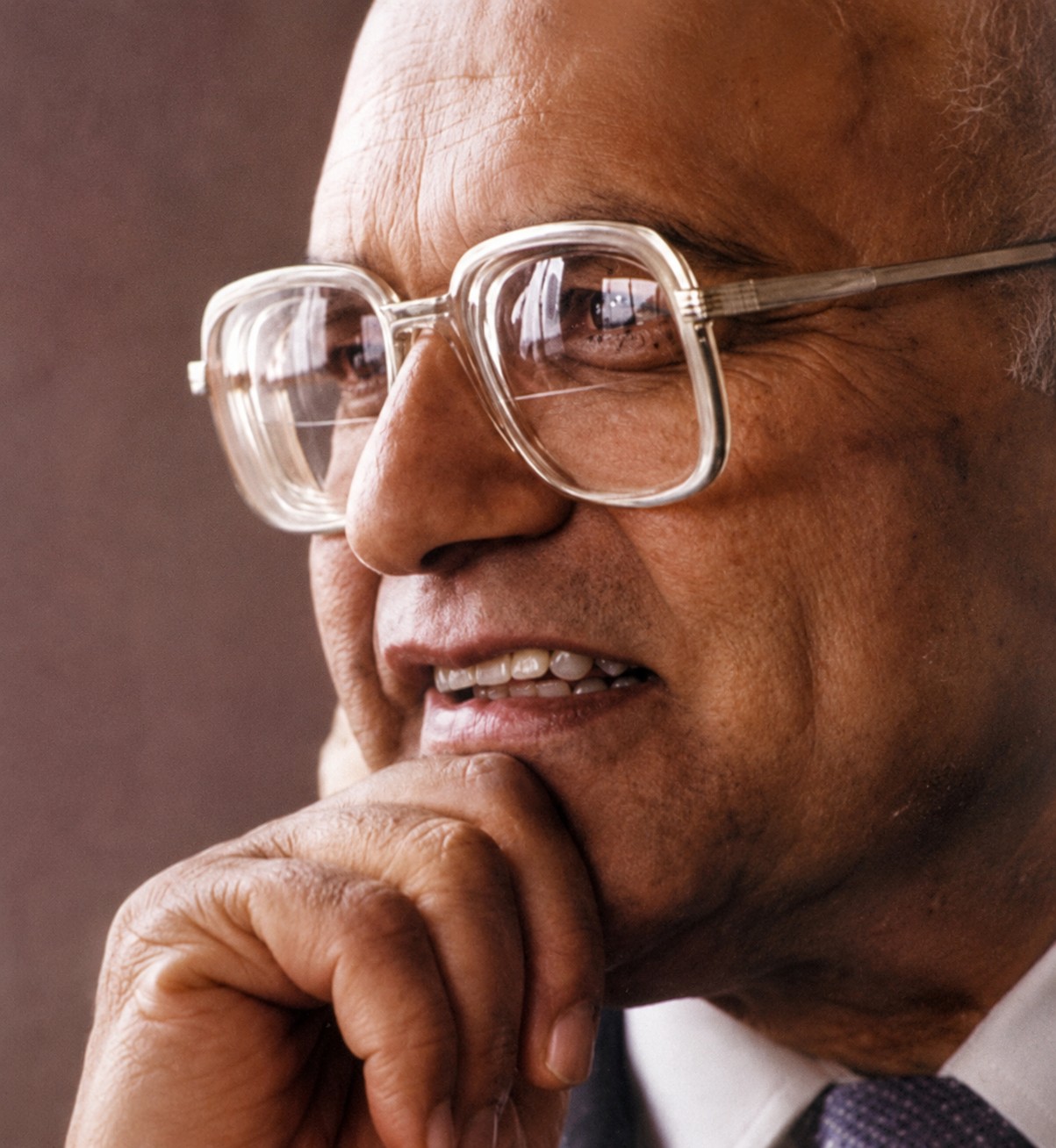
EARLY LIFE IN KENYA
E. H. “Jack” Sequeira was born on 25 September 1932 in Nairobi, Kenya, to parents whose roots were in Goa, on the west coast of India.
His full name was Emidio Herculano Sequeira, but throughout his church ministry he was known simply as Jack Sequeira. In his own writings and publications he usually identified himself as E. H. “Jack” Sequeira. The name Jack became so closely associated with his ministry that most Adventists around the world knew him by that name rather than by his given name, Emidio.
At the time of his birth Goa was still under Portuguese rule. His parents had migrated to the British colony of Kenya in 1913, and his father worked in Nairobi as an accountant for the British Government. Four years after Jack was born, the family moved to Mombasa, Kenya’s main Indian Ocean port and second-largest city, where he spent most of his childhood.
His parents were devout Roman Catholics. Jack attended Catholic primary and secondary schools and, as a boy, served as an altar boy. Religion was therefore a serious part of his upbringing, although he later said that he had never personally studied the Bible and, as a Catholic boy in those days, had not even seen a Bible of his own.
One of his great interests as a young man was motorcycles. He did not merely ride them; he enjoyed racing them. What appeared to be an ordinary hobby would eventually play an unexpected part in both his conversion and his call to the ministry.
THE MAU MAU YEARS AND NATIONAL SERVICE
During the early 1950s Kenya was being shaken by the Mau Mau uprising and the wider struggle against British colonial rule. The British authorities introduced national service, and Sequeira moved to Nairobi to complete two years of compulsory service.
After finishing his national service, he remained in Nairobi and worked as an architect.
Across the road from his home lived Seventh-day Adventist missionary Robert J. Wieland, then president of the Central Kenya Field. Public transport was unreliable, while many African pastors were responsible for as many as eight or ten churches. Wieland therefore bought damaged motorcycles from insurance companies, repaired them and made them available to pastors who needed transportation.
Because Jack knew motorcycles so well, Wieland asked him to help. The two became friends. Yet Sequeira later emphasised an interesting fact: Wieland did not attempt to convert him and did not initiate religious discussions with him.
Jack had, however, already heard something about Seventh-day Adventists through the Adventist daughter of his landlady.
THE MEETINGS THAT CHANGED HIS LIFE
In 1957, Nairobi Central Seventh-day Adventist Church organised a series of evangelistic meetings. Jack’s landlady was a Presbyterian, but her Adventist daughter, who had moved to Britain for postgraduate studies, encouraged her mother to attend.
The landlady asked Wieland to take her to the meetings. Wieland instead asked Jack. Sequeira believed Wieland knew exactly what he was doing: the young Roman Catholic would probably never have entered an Adventist evangelistic meeting by himself, but he was willing to take his landlady.
Jack sat near the back and listened. For about three weeks he heard evangelist Dale Ringering explain biblical teachings and prophecy. Sequeira later described it as the first time in his life that he had really been exposed to the Bible. The experience made a profound impression on him, and he decided to become a Seventh-day Adventist.
JOE HUNT, ROBERT WIELAND AND SEQUEIRA’S BAPTISM
An important detail about his conversion has sometimes been reported incorrectly. Although Robert Wieland eventually baptised Sequeira, Wieland did not give him his baptismal Bible studies.
Those studies were conducted by missionary Joe Hunt. Twice each week Jack rode approximately two miles on his motorcycle to Hunt’s home for instruction. When the course was completed, Wieland happened to be baptising his own son, Bob. Hunt therefore asked him to baptise Jack at the same service.
Only many years later, according to Sequeira, did he discover why Wieland had not been allowed to instruct him. Wieland and Donald Short had written the controversial manuscript 1888 Re-Examined, and church leaders in East Africa were suspicious of Wieland’s interpretation of the 1888 General Conference session and its message of righteousness by faith. Sequeira said Wieland was therefore prevented from studying with him in case he influenced the young convert with those ideas.
This is important because it corrects the later claim that Sequeira simply received his distinctive theology from Wieland when he became an Adventist. Sequeira strongly denied that explanation. Although the two later reached similar conclusions on important aspects of righteousness by faith, Sequeira maintained that he came to those conclusions through his own later study.
CONVERTED — BUT STILL WITHOUT ASSURANCE
Becoming an Adventist did not immediately solve Sequeira’s deepest spiritual problem. Soon after his baptism he discovered that changing churches had not changed his fallen human nature. In one later sermon he remembered promising God at baptism that he would never sin again, only to fail within days. He spent years repeating the same pattern: resolution, effort, failure, guilt and another resolution.
Looking back, he believed that he had moved from what he regarded as one form of legalistic religion into another. He was trying to obtain assurance by meeting what he understood to be God’s requirements, but the harder he examined himself, the less assurance he possessed. This struggle would eventually become one of the keys to understanding his entire ministry.
THE EXTRAORDINARY MOTORCYCLE JOURNEY TO ENGLAND
Only about six months after his conversion, Sequeira became entitled to three months of home leave under regulations applying to non-Africans employed in colonial Kenya. The leave was normally intended to allow them to visit their ancestral homeland. Jack had never lived in India.
Instead, in 1958, he decided to fulfil a very different dream: he would ride his motorcycle from Nairobi to London.
Shortly before his departure, Bob Osmunson, youth leader of the East African Union, gave him an issue of The Youth’s Instructor. It contained an article about Newbold College in England. Osmunson told Jack that he believed God was calling him to the gospel ministry and suggested that, if he actually succeeded in reaching Britain on his motorcycle, he should consider Newbold.
Sequeira resisted the idea. He described himself as an introvert and could hardly imagine becoming a preacher. But during the journey he could not escape the conviction that perhaps God really was calling him.
The journey from Nairobi to London took approximately two months. By the time he reached Britain, his mind was changing.
FOURTEEN MONTHS SELLING CHRISTIAN BOOKS
Before beginning formal theological education, Sequeira spent approximately 14 months as a literature evangelist. He sold Christian books door to door and later helped train students in literature evangelism for the South England Conference.
The work also helped support his education. One particularly unusual episode occurred in 1961, while he was a Newbold student. To earn money for his tuition, he spent time selling literature in Kiruna, Sweden, about 150 miles north of the Arctic Circle. He later remembered being there during the period of the midnight sun, when for weeks the sun never fully disappeared below the horizon.
Stories like this later became characteristic of his preaching. Sequeira rarely taught theology only in abstract terms; he constantly drew lessons from experiences he had accumulated across several continents.
NEWBOLD COLLEGE
In the autumn of 1959, Sequeira entered Newbold College in England. He remained there for four years, graduating in the spring of 1963 with a B.A. in theology.
The Adventist historical account also identifies the experienced missionary and theology teacher George D. Keough as one of the important teachers who influenced him at Newbold.
But theological education did not solve Jack’s spiritual struggle. Newbold regularly held Weeks of Prayer. Sequeira later remembered responding emotionally to powerful preaching and making new promises to God that he would live a better life. Sometimes his resolutions lasted several days, sometimes a few weeks. Then he failed again.
He described those promises as “ropes of sand.” After four years studying theology, he reached graduation with knowledge about Christianity but still without the inner peace for which he longed. His own summary was painfully simple: he graduated with a theology degree but “with no peace or assurance of salvation.”
JEAN HARRISON
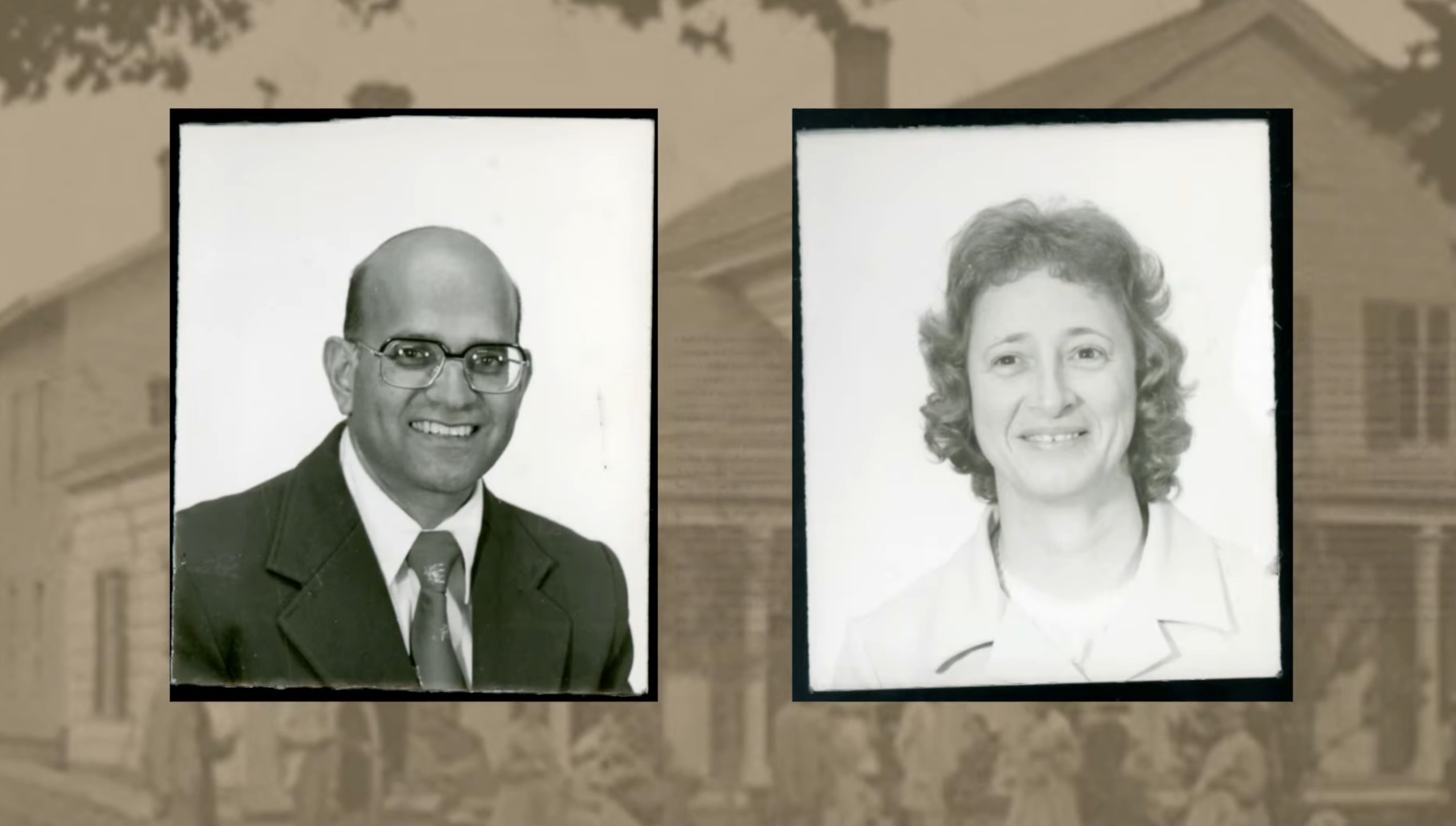
Jack married Jean Harrison on New Year’s Day, 1 January 1964. Jean was from North London and had trained at Newbold College as a Bible instructor. She had also served at the New Gallery Centre in London. Their marriage would last for more than 58 years.
Jean was never merely an observer of Jack’s ministry. During their African years she taught English, worked in church administration, assisted ministerial departments and helped train pastors’ wives and women in African villages. Later in America she worked in college computer centres, contributed to General Conference Women’s Ministries, researched women for the Seventh-day Adventist Encyclopedia, and served for eight years as an editorial secretary for Adventist Review.
ANDREWS UNIVERSITY — AND MORE STRUGGLE
The East African Union recommended that Sequeira undertake further study in the United States, partly because an advanced qualification would help him obtain the necessary work permit for service in East Africa. Jack and Jean therefore went to Andrews University in Berrien Springs, Michigan.
Life there was not financially easy. Sequeira later recalled that while studying in 1964 he worked two jobs to support himself. He repaired cars in a motor garage and in the evenings cleaned toilets.
In 1965, he completed an M.A. in Systematic Theology. Jack had hoped that further theological education would finally produce the assurance of salvation he lacked. It did not. He was careful later to say that he did not blame his professors. Nevertheless, he graduated still struggling spiritually.
He began to think that perhaps academic study was not the answer. Maybe missionary service would give him the Christian experience he was seeking.
1965 — MISSIONARY SERVICE BEGINS IN UGANDA
In 1965, Jack and Jean entered missionary service in Uganda. Jack served in departmental work involving education, young people, home missionary activity and, during his Uganda service, temperance work.
But even missionary service failed to solve his internal struggle. Years later he admitted that after about five years he was spiritually exhausted. He felt almost hypocritical telling church members how Christians should live while privately experiencing his own continuing battle with sin. He said that he came close to giving up the ministry.
1966–1968 — TEACHING IN KENYA
From 1966 to 1968, Sequeira served in Kenya, teaching at Kamagambo Teacher Training College near Kisii and Maxwell Secondary School in Nairobi.
His preaching was already making an impression. Adventist historical records trace the beginnings of an important Kenyan Adventist youth movement to sermons Sequeira preached at Kamagambo in August 1966. His preaching reportedly stirred a group of young people with a desire to work spiritually for other youth.
During the Sequeiras’ years in Kenya, their son Christopher was born.
1969 — BACK TO UGANDA AND SUDDENLY STATELESS
In 1969, Sequeira returned to Uganda, where he served in education and youth leadership. Then his life was abruptly disrupted.
According to Sequeira’s own account, changes affecting the British colonial passport under which he travelled left him effectively stateless. The Ugandan government under President Milton Obote cancelled his work permit. In Sequeira’s words, he suddenly found himself without a country and without a job. He said that the United States Embassy in Kampala was the only diplomatic mission then prepared to offer him a route to permanent residence.
The Afro-Mideast Division therefore sent him back to Andrews University while his immigration situation was being addressed. What appeared to be another personal disaster became one of the most important turning points of his life.
DISCOVERING THE 1888 MESSAGE
While serving in Uganda, Sequeira had heard African pastors speak about the 1888 message of righteousness by faith. Some of these pastors had been influenced by Robert Wieland, but when Jack asked them what the message actually consisted of, he felt they could not explain it adequately.
Now, back at Andrews University, he had an opportunity to investigate it for himself. He began an intensive study of what E. J. Waggoner and A. T. Jones had taught around the time of the 1888 Minneapolis General Conference, together with Ellen G. White’s comments concerning the message.
Gradually, something changed in his understanding of the gospel. For years Sequeira had concentrated on what God expected from him. Now he became convinced that what God required for his salvation had already been accomplished for him in Jesus Christ.
This was the breakthrough for which he had been searching since his conversion. He returned to Africa with something he said he had previously lacked: peace and assurance of salvation.
1970 — MASTER OF DIVINITY
Sequeira completed his M.Div. at Andrews University in 1970. Yet he still had one concern about the 1888 message. Waggoner and Jones often used the proof-text method, taking individual Bible verses to establish theological points. Sequeira wanted to know whether their central conclusions would survive careful examination of Scripture in its context.
That question would soon become very important.
1971–1972 — PRINCIPAL OF BUGEMA ADVENTIST COLLEGE
Back in Uganda, Sequeira became principal of Bugema Adventist College, serving there during 1971–1972.
Their daughter Jennifer, usually called Jenny, was born during the family’s years in Uganda.
But Uganda was becoming increasingly dangerous. General Idi Amin had seized power in a military coup in 1971. The following year he ordered the expulsion of Uganda’s Asian population. The Sequeira family was directly affected.
1972 — EXPELLED BY IDI AMIN
In 1972, the Sequeiras became part of the mass expulsion of approximately 80,000 Asians from Uganda. Many of those expelled had been born in East Africa and had lived there for generations.
Sequeira later described the restrictions imposed on his family in vivid detail. They lost virtually everything they had in Uganda. According to his recollection, each person was permitted only limited luggage, while the family was allowed to take only a very small amount of money from their bank account. Their home and much of what they owned had to be left behind.
Yet another personal disaster was about to become another decisive turning point.
THREE MONTHS IN BEIRUT
After leaving Uganda, the Sequeiras went to Beirut, Lebanon, where the headquarters of the Afro-Mideast Division was located. Church leaders decided to assign Jack to Ethiopia, but obtaining a work permit took about three months.
Sequeira spent those months in the library of Middle East College. He returned to the theological question he had been unable to settle completely at Andrews and undertook a careful exegetical study of the two New Testament books most heavily used by Waggoner and Jones: Romans and Galatians.
His conclusion was balanced. He believed that Waggoner and Jones had indeed taken a few individual texts out of their proper context. But after examining Romans and Galatians for himself, he became convinced that their fundamental message concerning Christ our righteousness and righteousness by faith was correct.
Sequeira later said: “This is what sealed my convictions on the 1888 message and completely transformed my ministry.”
He regarded 1973 as the beginning of a new phase in his ministry. From that point onward, the centre of his preaching became what he repeatedly called the “incredible good news of salvation in Christ.”
1973–1977 — ETHIOPIA
In 1973, Jack, Jean and their children moved to Ethiopia, where they served until 1977. Jack worked in ministerial leadership, including responsibility as Ministerial Association Secretary for the Ethiopian Union Mission.
It was an extraordinary time to arrive. After their traumatic experience in Uganda, Sequeira remembered being reassured that what had happened under Idi Amin could never happen in Ethiopia because Ethiopia was a Christian country that respected private property.
Within about a year those assurances collapsed. Emperor Haile Selassie was overthrown in 1974, and Ethiopia entered a revolutionary period that eventually produced a Marxist government. Sequeira had escaped political upheaval in Uganda only to encounter another revolution in Ethiopia.
Those experiences deeply coloured his later preaching. His sermons were filled not merely with theological arguments but with stories of Africa, political upheaval, danger, missionary mistakes and encounters with people whose Christianity had to operate under circumstances very different from comfortable Western church life.
1978–1982 — BACK TO KENYA
After Ethiopia, the Sequeira family returned to Kenya. Jack served for approximately two and a half years as Evangelism Director and Ministerial Association Secretary for the East African Union Mission, followed by about eighteen months as chaplain to Adventist students attending Kenya’s public universities.
By the time he left Africa, Sequeira had worked as a teacher, education leader, youth leader, departmental director, college principal, ministerial director, evangelism director and university chaplain.
Altogether, Jack and Jean spent approximately seventeen years as missionaries in Uganda, Kenya and Ethiopia. These were years of African independence movements, political coups, Idi Amin’s dictatorship, forced expulsion, refugee uncertainty and the Ethiopian revolution. They were also the years during which Sequeira’s understanding of the gospel reached the form that would define the remainder of his ministry.
Africa was therefore not merely a chapter in his biography. It formed him.
THE “IN CHRIST” MESSAGE
From 1973 onward, Sequeira increasingly organised his theology around an expression he found repeatedly in Paul’s writings: “in Christ.”
His own spiritual history explains why it meant so much to him. For years his Christianity had begun with the question: What must I do so that God can accept me? Now he began with a completely different question: What has God already done for humanity in Jesus Christ?
Sequeira distinguished three stages in what he called the “in Christ” motif. First was the plan, formed in the mind of God before the foundation of the world. Second was the historical reality accomplished through Christ’s incarnation, life, death and resurrection. Third was the individual experience of that salvation when it is received by faith and worked out in the believer through the Holy Spirit.
For Sequeira this distinction protected the gospel from becoming another system of human achievement. Faith did not create salvation. Repentance did not persuade God to become gracious. Obedience did not add something lacking in Christ. Faith received what God had already accomplished in Christ.
ADAM AND CHRIST
Closely connected with this was Sequeira’s understanding of biblical solidarity, which he described as “the many in one.”
He saw Romans 5 and 1 Corinthians 15 as presenting two representative heads of humanity: Adam and Christ. Through the first Adam came sin, condemnation and death. Christ came as the last Adam, the Representative and Saviour of humanity, to reverse what the first Adam had brought upon the human race.
This corporate understanding of humanity became one of the most distinctive features of Sequeira’s theology. It also became one of the most controversial.
HIS VIEW OF OBJECTIVE SALVATION
Sequeira rejected Calvinistic limited atonement, according to which Christ’s saving death applies particularly to the elect. But he also disagreed with what he regarded as the traditional Arminian idea of merely provisional salvation—that Christ made salvation possible for everybody but that the saving reality applies only when an individual believes.
Sequeira argued that something objective and real happened to humanity in Christ before anybody responded in faith. He taught that through Christ’s saving work humanity was objectively redeemed, reconciled and justified, while insisting that this salvation must still be received by faith to become the personal experience of the individual.
This did not mean that Sequeira believed everyone would finally be saved. He rejected universalism. For him, salvation was God’s gift to humanity, but the gift could be rejected.
The controversy was therefore not primarily over whether faith was necessary. Sequeira emphatically believed that it was. The disagreement concerned what Christ had already accomplished for humanity before an individual believes.
DISAGREEMENT WITH THE BIBLICAL RESEARCH INSTITUTE
This interpretation brought Sequeira into disagreement with theologians associated with the Biblical Research Institute of the General Conference, as well as with some independent Adventist ministries.
His critics argued that Scripture reserves justification in its saving sense for believers. Sequeira believed that restricting Paul’s “in Christ” language in this way weakened the objective character of the gospel and risked making the human response part of the basis of salvation.
He considered faith and repentance absolutely necessary, but he did not believe that they contributed anything to Christ’s completed saving work. They received what God had already provided.
This distinction remained central to his theology for the rest of his life.
THE HUMAN NATURE OF CHRIST
The second major theological issue associated with Sequeira was the human nature of Jesus Christ.
He believed the question was directly connected with the gospel. In his understanding, sin was not merely a collection of wrong actions. Humanity also possessed a fallen condition inherited from Adam. If Christ came to redeem humanity completely, Sequeira reasoned, He had to enter the humanity that actually required redemption.
He therefore defended what is normally called the post-Fall understanding of Christ’s humanity.
Yet he strongly rejected the idea that this made Jesus personally sinful. His distinction was clear: Christ did not possess a sinful character and never committed sin. Rather, He assumed the fallen humanity that needed redemption while remaining perfectly sinless.
To illustrate the point, Sequeira once told of being entrusted with money belonging to somebody else. Carrying the money did not make him a thief; stealing it would have. In a similar way, he argued, Christ assumed humanity’s fallen condition without ever consenting to sin.
QUESTIONS ON DOCTRINE AND THE ADVENTIST DEBATE
Sequeira connected much of the modern Adventist controversy over Christ’s humanity with the discussions surrounding the publication of Questions on Doctrine in 1957.
He believed earlier Adventist literature had generally presented Christ as taking post-Fall humanity, although the church had never adopted either the pre-Fall or post-Fall position as an official fundamental belief.
He later appealed particularly to Adventist historian Jean Zurcher’s study Touched With Our Feelings and to several non-Adventist theologians whom he believed supported important elements of the post-Fall position.
In 1996, Pacific Press published Sequeira’s major treatment of the subject, Saviour of the World: The Humanity of Christ in the Light of the Everlasting Gospel.
Whether readers agreed with his conclusion or not, Sequeira’s concern was consistently connected with salvation: What humanity did Christ have to assume in order genuinely to save fallen humanity?
1982 — MOVING TO THE UNITED STATES
In the summer of 1982, after approximately seventeen years of African missionary service, Jack, Jean and their family moved to the United States.
This began a very different phase of Jack’s ministry. After years of missionary administration, education, evangelism and union-level responsibilities, he returned to the everyday work of a local pastor.
1982–1987 — IDAHO
Sequeira served as a district pastor in the Idaho Conference, including the Kuna and Nampa churches, for approximately five years.
His ministry increasingly concentrated on the gospel, Romans, righteousness by faith, the cross and assurance of salvation. The theological ideas developed during his African years were now being presented to American congregations.
1987–1991 — WALLA WALLA
In 1987, Sequeira accepted a call to become pastor of Walla Walla City Church in Washington State, where he served until 1991.
By this period he was becoming increasingly known outside his own congregations as a preacher and teacher of righteousness by faith.
His style helped. Sequeira possessed serious theological training but rarely sounded like someone merely reading an academic paper. He told stories. He spoke about motorcycles, African villages, political upheaval, refugees, students, his own mistakes and even his own spiritual failures.
Most importantly, he was prepared to admit publicly that years of theological education and missionary service had once failed to give him assurance. That made his message personal rather than theoretical.
1991–2001 — CAPITAL MEMORIAL CHURCH
In 1991, Jack and Jean moved across the United States when he accepted the pastorate of Capital Memorial Church in Washington, D.C. He remained there for approximately ten years, until his retirement in January 2001.
The contrast with his earlier life was striking. The missionary who had lived through Idi Amin’s Uganda and revolutionary Ethiopia was now serving close to the political centre of the United States.
Yet his international outlook continued. In 1997, the church discovered that 83 international embassies were located within its surrounding postal area. Sequeira and the church board concluded that this gave the congregation a special responsibility towards the diplomatic community and cooperated with General Conference leaders in arranging outreach that included an international prayer breakfast.
Even in Washington, Sequeira continued to think like a missionary.
BEYOND BELIEF
During his Capital Memorial years, Sequeira’s best-known book appeared. Pacific Press published Beyond Belief: The Promise, the Power, and the Reality of the Everlasting Gospel in 1993.
The book brought together the main themes that had developed through his own spiritual journey: humanity’s sin problem, God’s love, the two Adams, Christ’s saving work, the cross, justification, sanctification, law and grace, assurance of salvation and Christian life through the Holy Spirit.
The title expressed something essential about Sequeira’s message. Christianity could not remain merely a collection of doctrines that a person intellectually accepted. The gospel had to become a living reality.
ROMANS — THE BOOK THAT SHAPED HIS MINISTRY
Of all the books of the Bible, Romans became particularly important to Sequeira.
That is hardly surprising. It was Romans, together with Galatians, that he had studied intensively during his enforced stay in Beirut after being expelled from Uganda.
Again and again his preaching returned to Romans 3–8, especially Romans 5 and its contrast between Adam and Christ. He later produced an extensive teaching series under the title Romans: The Clearest Gospel of All.
What began as Bible study by a displaced missionary waiting for permission to enter Ethiopia became one of the central biblical foundations of the rest of his ministry.
WHY HIS PREACHING CONNECTED WITH PEOPLE
One reason Sequeira reached ordinary church members was that he rarely presented theology as an abstract intellectual exercise.
He could tell people that he knew what it was like to be religious and afraid. He knew what it was like to make promises to God and fail. He knew what it was like to study theology and still lack assurance. He knew what it was like to preach Christian victory while privately struggling with his own failures.
And he knew what it was like eventually to stop making his own performance the foundation of his salvation.
This gave unusual force to the message that dominated his later life: Stop looking to yourself as the basis of your acceptance with God. Look to Christ.
HIS CONCERN FOR ADVENTISTS WITHOUT ASSURANCE
Sequeira repeatedly said that after 1973 his ministry became especially concerned with Adventists who lacked assurance of salvation.
He received letters from people telling him that his presentation of the gospel had helped them remain Christians or remain within the Adventist Church when discouragement had made them consider leaving.
For Sequeira, the issue was intensely pastoral. If Christians continually examined their spiritual performance to determine whether God accepted them, he believed they would tend towards one of two extremes: self-righteousness or despair.
The gospel offered another foundation: Christ’s righteousness rather than their own.
RETIREMENT IN 2001
Jack Sequeira officially retired from denominational pastoral ministry in January 2001.
But retirement did not mean the end of his work. He continued preaching, conducting seminars, answering theological questions and making his sermons and studies available to people around the world.
The internet dramatically expanded his audience.
JACK SEQUEIRA MINISTRIES
The online ministry that eventually became associated with JackSequeira.org had roots in work begun during his Capital Memorial years. The family later credited Jacquie Bokow with developing an early web presence from 1996, while their biography dates JackSequeira.org itself to 2002. The most reasonable way to understand these statements is that the online work developed gradually before becoming the later formal website.
Norm and Joan Barker also helped develop an outreach distributing information about Sequeira’s books and recordings, while other supporters contributed financially.
Eventually the website contained a large collection of sermons, Bible studies, books, audio material and teaching series. His material spread far beyond North America and appeared in several languages.
The preacher who had once travelled thousands of miles physically to reach people could now reach them without leaving home.
CHRISTOPHER AND JENNY
Jack and Jean had two children.
Their son Christopher, born during their African missionary years, married Nenette. Both later taught at Livingstone Adventist Academy in Salem, Oregon. They had four children: Jazmine, Parker, Shasta and Luis.
Their daughter Jenny, born during the family’s Uganda years, continued the family’s international service in another form. She served as a health Peace Corps volunteer in The Gambia and later worked in global public health, particularly in programmes affecting women and children. Her international work included countries such as Azerbaijan, Ethiopia, Nigeria and Uganda.
In a remarkable way, the international character of Jack and Jean’s missionary life continued into the next generation.
OREGON AND HIS FINAL YEARS
After retirement, Jack and Jean initially remained in the Washington, D.C., area but later returned to the Pacific Northwest, eventually living in Oregon.
Age gradually reduced Jack’s ability to travel and preach. For a man who had spent most of his adult life teaching the gospel, the inability to preach was difficult.
His family later remembered that during his final period Jack regretted being unable to continue preaching. Jean therefore printed a page from the ministry website showing locations around the world from which people were accessing his material.
It encouraged him to see that, although he could no longer travel, his preaching was still reaching people.
HIS DEATH
Jack Sequeira suffered a disabling stroke and died in a hospital in Portland, Oregon, on 26 March 2022, aged 89.
He had served the Seventh-day Adventist Church for almost sixty years in different capacities and on several continents.
More than 200 friends reportedly attended his memorial service. Appropriately for someone whose life had been shaped so profoundly by Africa, memorial support was directed towards theology students in Kenya and Uganda and an Ethiopian Adventist church project in Oregon.
He was survived by Jean, Jenny, Chris and Chris’s wife Nenette, and grandchildren Jazmine, Parker, Shasta and Luis.
OBITUARY
Born on September 25, 1932 in Nairobi, Kenya, to parents from Goa, India, Jack lived a long and fruitful life. He suffered a disabling stroke and fell asleep in Jesus on March 26, 2022 in a Portland, Oregon, hospital.
Jack served the Seventh-day Adventist Church in many capacities in England, Uganda, Kenya, Ethiopia, and the United States.
After graduating from Newbold College, England, he trained students in the colporteur work, for the South England Conference. After studying at Andrews University, he served in Uganda as Education, Missionary Volunteer, and Home Missionary Secretary in 1965. Then he was called to Kenya to teach at Kamagambo Teacher Training College near Kisii, and Maxwell Secondary School in Nairobi, (1966-68). He returned to Uganda as Education and Missionary Volunteer Secretary, (1969) and then as Principal of Bugema Adventist College (1971-72).
Being included in Idi Amin’s notorious Exodus, when 80,000 Asians were deported from Uganda, Jack and his family had to leave everything in their home and stayed in Beirut, Lebanon, the headquarters of the Afro Mideast Division. Later, Pastor Jack was assigned to Ethiopia, (1973-77), then back to Kenya as Chaplain for the SDA students in government universities (1978-82).
In 1982 the family moved to the US to fulfil General Conference requirements related to their refugee status due to their Uganda experience. Jack served as a District Pastor for the Idaho Conference until 1987, when he was called to pastor the Walla Walla City Church in the Upper Colombia Conference. From 1991-2001 he served the Potomac Conference as pastor of the Capital Memorial Church in Washington, DC.
Pastor Jack was known around the world for his infectious smile and biblical preaching from the Word of God; the book of Romans; and Righteousness by Faith. He firmly believed in salvation by faith accomplished by Christ over two thousand years ago and was used by the Lord to bring many to a better understanding of our Creator God.
He is survived by his wife, Jean, daughter Jenny, son, Chris and wife Nenette, and their children Jazmine, Parker, Shasta, and Luis.
HIS FAMILY CONTINUES THE MINISTRY
After Jack’s death, Jean, Chris and Jenny agreed that his website should remain available because people throughout the world were continuing to use his sermons and studies.
At the end of 2023, the family announced that because of Jean’s advancing age they would no longer operate Jack Sequeira Ministries as an organisation selling books and media. The website, however, would remain online.
Chris and his son Parker took responsibility for its future management. The family reported that the ministry had reached thousands of people around the world and continued receiving messages from people whose lives had been affected by Jack’s teaching.
A REMARKABLE LIFE JOURNEY
Even without considering theological debates, Jack Sequeira’s life was extraordinary.
He was born in colonial Kenya to Goan parents. He grew up as a Roman Catholic altar boy in Mombasa. The Mau Mau period took him to Nairobi. He became an architect. His love of motorcycles introduced him to Robert Wieland. A request to take his landlady to evangelistic meetings introduced him seriously to the Bible.
He became an Adventist in 1957. Six months later he rode a motorcycle from Nairobi to London. He sold Christian books. He worked north of the Arctic Circle to help finance his education. He studied theology at Newbold. He married Jean. He studied at Andrews while repairing cars and cleaning toilets to support himself.
He became a missionary. He taught in Kenya. He became stateless. He returned to university. He discovered righteousness by faith. He became principal of an Adventist college. Idi Amin expelled his family from Uganda. He arrived in Beirut with little more than luggage and used the interruption to study Romans and Galatians.
He became a missionary in Ethiopia and soon found himself in another revolution. He returned to Kenya as an evangelist, ministerial leader and university chaplain. He became an American pastor. He served in Idaho, Washington State and Washington, D.C. He became an author and internationally known preacher. Eventually, when age and illness stopped him travelling, the internet continued carrying his sermons around the world.
But beneath this remarkable geographical journey lay an even more important spiritual journey.
FROM RELIGION WITHOUT ASSURANCE TO ASSURANCE IN CHRIST
For Sequeira himself, the defining story of his life was not Africa, America, motorcycles, university degrees or denominational positions.
It was his long search for assurance of salvation.
As a young Christian he tried promises. They failed. He tried willpower. It failed. He studied theology. That did not give him assurance. He entered missionary service. Even missionary work did not solve the problem.
Eventually his attention shifted away from his own performance towards what he believed God had already accomplished in Jesus Christ.
That discovery transformed his ministry.
The question was no longer primarily: What must I accomplish so that God will accept me?
It became: What has God already accomplished for me—and for humanity—in Jesus Christ?
From that point onward, almost every major theme of his preaching returned to the same centre: Christ our righteousness.
Christ the last Adam. Humanity in Christ. The cross. Justification by faith. Assurance of salvation. Sanctification as the result rather than the cause of acceptance. Obedience motivated by love instead of fear. And the Holy Spirit reproducing the character of Christ in those who believe.
A PASTOR RATHER THAN MERELY A THEOLOGIAN
Sequeira undoubtedly became a theologian, and some of his conclusions generated serious theological controversy. But those who heard him preach often remembered something else.
They remembered his smile, his stories and his ability to take complicated biblical ideas and explain them in language ordinary people could understand.
His own experience made him particularly sensitive to Christians who were frightened about their salvation.
He had been one of them.
That is perhaps why his preaching could be so forceful on this subject. He was not merely explaining a theological theory. He was explaining the answer he believed had rescued him from years of spiritual frustration.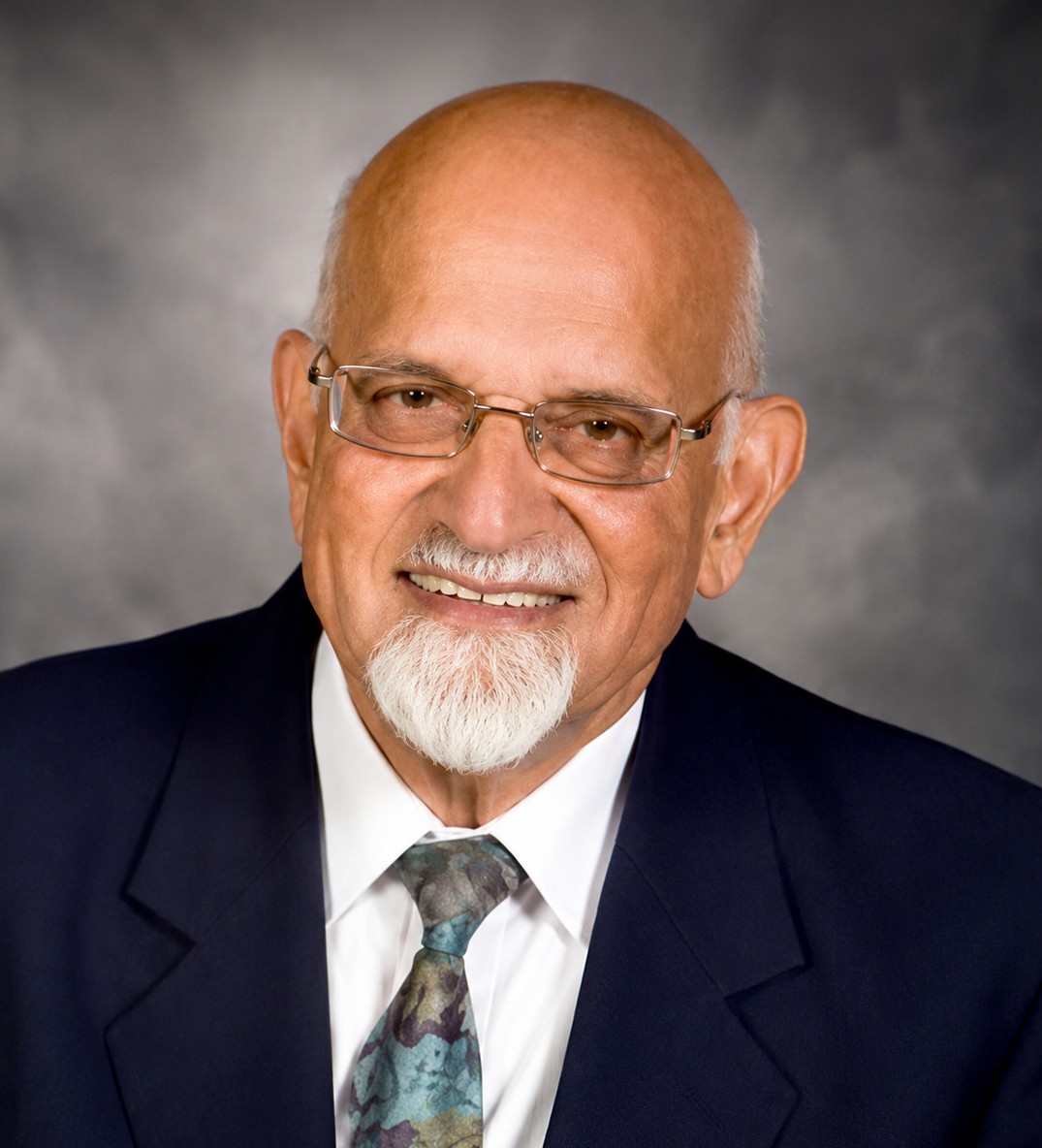
A CONTROVERSIAL LEGACY
An accurate biography should not hide the fact that Sequeira remained a controversial figure in Adventist theology.
Some Adventist theologians strongly disagreed with his interpretation of objective justification, corporate humanity “in Christ” and the post-Fall human nature of Christ.
But those controversies should not obscure what actually drove him.
Sequeira feared a form of Adventism in which people could know the Sabbath, sanctuary, prophecy, health message and Second Coming while remaining uncertain whether God actually accepted them.
He feared that sanctification could subtly become another attempt to earn acceptance. He feared that the human response to the gospel could begin to replace Christ as the foundation of salvation.
Above everything else, he wanted the everlasting gospel of Jesus Christ to stand at the centre of Adventism.
THE MESSAGE HE WANTED PEOPLE TO REMEMBER
Jack Sequeira held many positions during his life. He was a literature evangelist, teacher, departmental director, youth leader, college principal, ministerial director, evangelist, university chaplain, pastor, author and Bible teacher.
But none of those titles fully explains his influence.
The message that finally defined his life was born out of his own failure to find assurance in himself.
For years he had looked at Jack Sequeira and asked whether Jack Sequeira was finally good enough. Eventually he became convinced that he had been looking in the wrong direction.
He needed to look at Jesus Christ.
The young Catholic altar boy from Mombasa became an Adventist. The Adventist became a theology student. The theology student became a missionary. The missionary became a refugee. The refugee became a student of Romans and Galatians.
And the man who once possessed a theology degree but no assurance spent roughly the final half-century of his life telling other Christians that their assurance was never meant to rest in themselves.
It rested in Christ.
That conviction explains Jack Sequeira better than any denominational position or theological controversy.
From the transformation of his ministry in 1973 until his final years, he devoted himself to proclaiming what he believed to be the heart of the everlasting gospel:
Our salvation does not begin with what we accomplish for God. It begins with what God has accomplished for us in Jesus Christ.