
Men and Women Who Changed the World on Their Knees
Praying Hyde
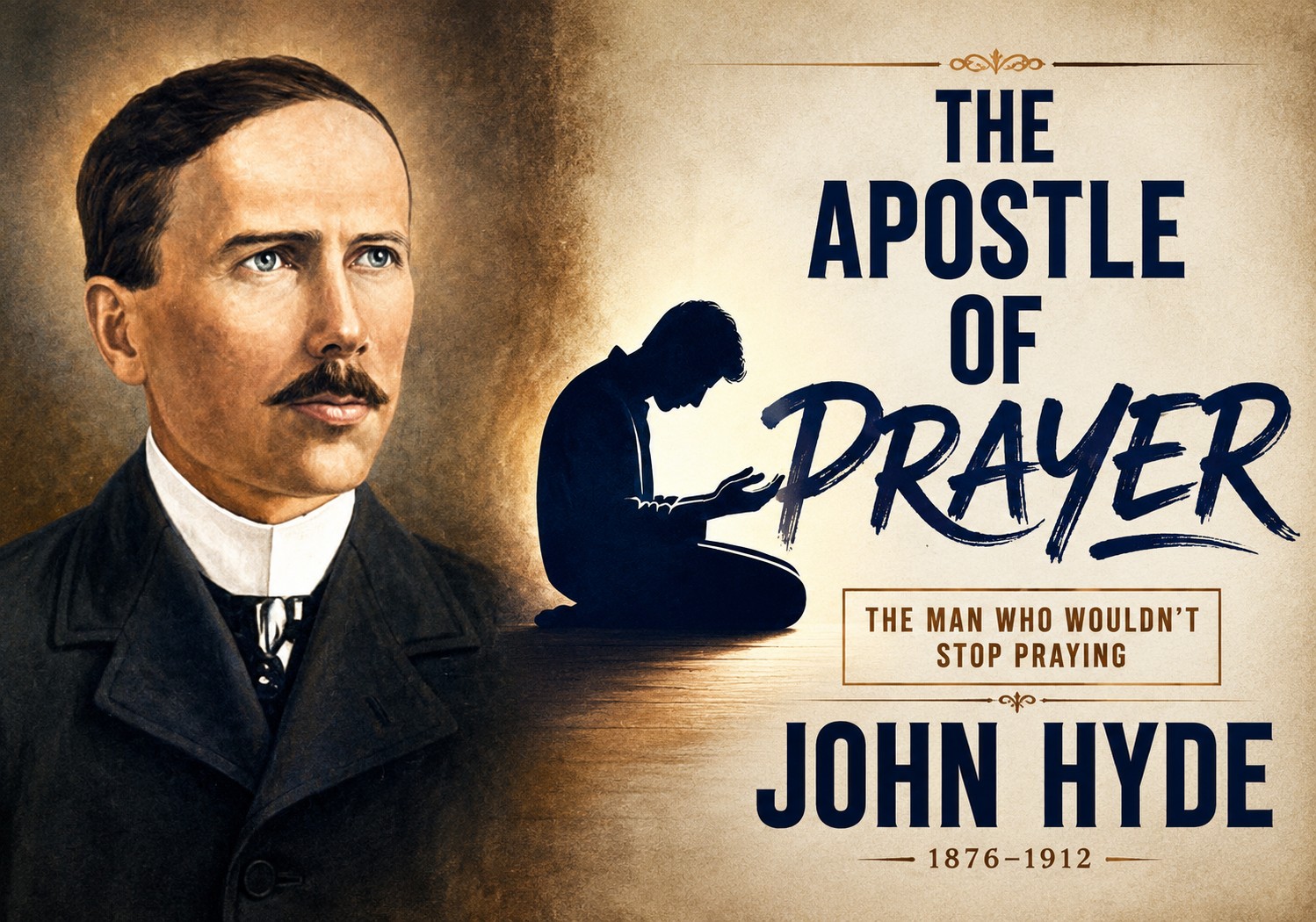
John Nelson Hyde, affectionately known as Praying Hyde, was born on 9 November 1865 in Illinois, USA, and died on 17 February 1912. He was an American missionary who devoted most of his adult life to serving in the Punjab region of India. Though he battled partial deafness and struggled to learn local languages, Hyde became one of the most influential prayer warriors in Christian history. His life demonstrated that true spiritual power does not come from talent, education, or eloquence, but from an intimate relationship with God cultivated through prayer.
When Hyde arrived in India in 1892, the results of his ministry were disappointing. There were few converts, opposition was common, and progress seemed painfully slow. Instead of becoming discouraged, Hyde turned to prayer. He began spending long hours alone with God, often praying through entire nights. During this season, he became convinced that prayer could accomplish what human effort could never achieve. His dependence upon God grew so deep that fellow missionaries began to recognize a remarkable spiritual authority in his life.
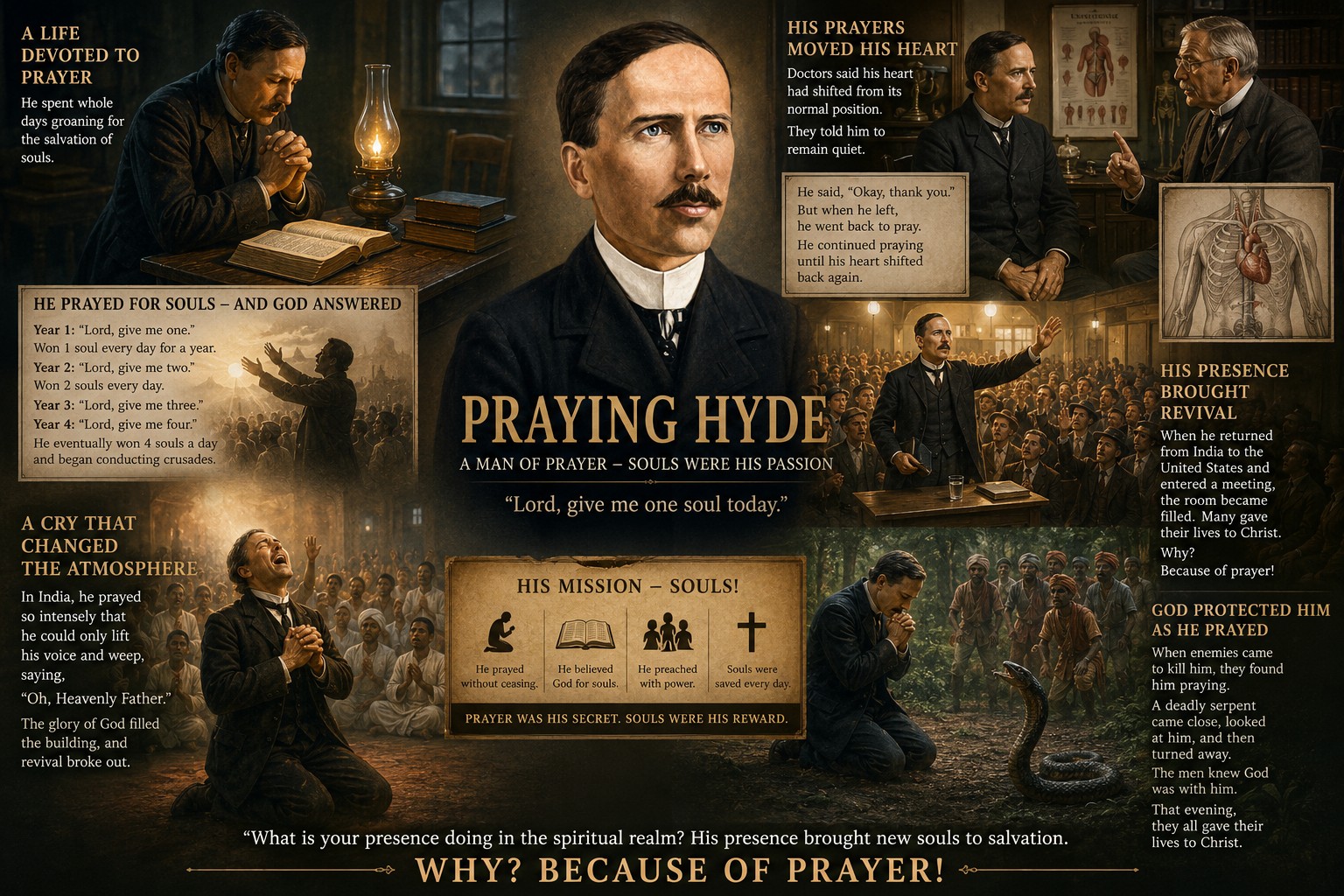
This was a man who spent much of his life in prayer. He prayed until his heart reportedly shifted from its normal position. When he went for a medical examination, the doctors told him that the only way he could recover was by remaining quiet for a long period. He looked at the doctor and said, “Okay, thank you.” But when he left, he went back to pray. According to the account, he continued praying until his heart shifted back again.
This was a man who would spend whole days groaning for the salvation of souls. At one point, he began praying for one soul a day. He would say, “Lord, give me one soul today.” Then he would go out to minister, and a soul would come to Christ. For one full year, he won one soul every single day. The following year he prayed, “Lord, give me two,” and he won two souls a day. The next year he asked for three, and the year after that he asked for four. Eventually, he was winning four souls a day and began conducting crusades.
On one occasion, he returned from India to the United States. A preacher was holding a programme, but many people were not attending. They invited Praying Hyde. He went to pray and then came to the meeting. The glory of God upon him was so powerful that people were drawn to the meeting. That day, when Praying Hyde entered, the room became filled, and many people gave their lives to Christ. What is your presence doing in the spiritual realm? His presence brought new souls to salvation. Why? Because of prayer. Because of prayer!
There was another occasion during a meeting in India when he had prayed so intensely that he simply lifted his voice, weeping, and said, “Oh, Heavenly Father.” Those were the only words he spoke. Yet the glory of God filled the whole building, and that place became a centre of revival. That was Praying Hyde.
Many who met Praying Hyde testified that there was something unusual about his prayers. People often spoke of sensing God’s presence in a profound way whenever he interceded. Evangelist J. Wilbur Chapman later acknowledged that time spent praying with Hyde left a lasting impression on him regarding the necessity and power of prayer. Hyde’s influence came not from public fame or impressive sermons but from countless unseen hours spent alone with God.
George Müller: Depending on God for Every Need
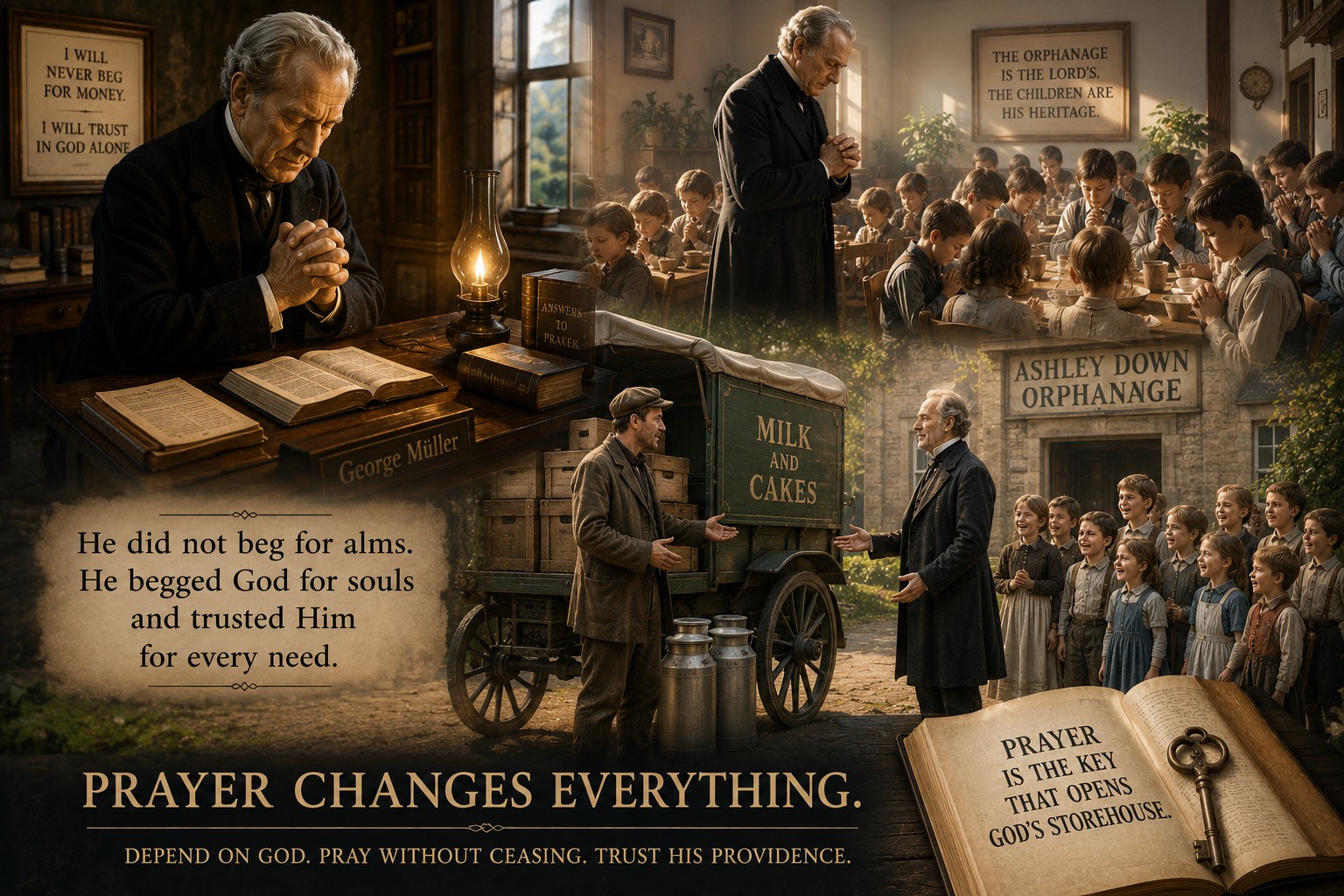
George Müller was born on 27 September 1805 in Kroppenstedt, Prussia—present-day Germany—and died on 10 March 1898 in Bristol, England, at the age of ninety-two.
As a young man, Müller was a thief, liar, drunkard and gambler. He even spent time in prison. However, at the age of twenty, he attended a small Christian prayer meeting where he saw believers kneeling and sincerely speaking to God. This experience deeply affected him and led to his conversion. The dishonest young man was gradually transformed into one of the greatest examples of faith and prayer in modern Christian history.
Müller later moved to England and became a preacher in Bristol. In 1834, he founded the Scriptural Knowledge Institution to establish Christian schools, support missionaries and distribute Bibles and Christian literature. He also established five large orphan houses and cared for 10,024 orphans during his lifetime.
Müller never organised fundraising campaigns or directly asked people for money. He did not borrow money or go into debt. Instead, he brought every need to God in prayer. Again and again, help arrived at exactly the right time.
Bread and Milk at the Last Moment
On one famous occasion, the children were seated at the tables for breakfast, although there was no food in the orphanage. Müller calmly thanked God for the food He was going to provide.
Almost immediately, there was a knock at the door. A baker explained that he had been unable to sleep because he felt that God wanted him to bake bread for the orphans. He had risen during the night and brought enough fresh bread to feed them.
Soon there was another knock. A milkman’s cart had broken down directly outside the orphanage, and the milk would spoil before the cart could be repaired. He therefore offered all the milk to the children. God had provided their entire breakfast at precisely the right moment.
£2,000 After 1,195 Days of Prayer
Müller once prayed for 1,195 days for the money required to furnish a new orphan house. On 12 February 1842, a Christian man unexpectedly visited him and gave him £2,000—an enormous sum at that time. It was enough to meet the entire need, with several hundred pounds left over.
Müller wrote, “The Lord not only gives as much as is absolutely necessary for His work, but He gives abundantly.”
Fog Disappeared After Prayer
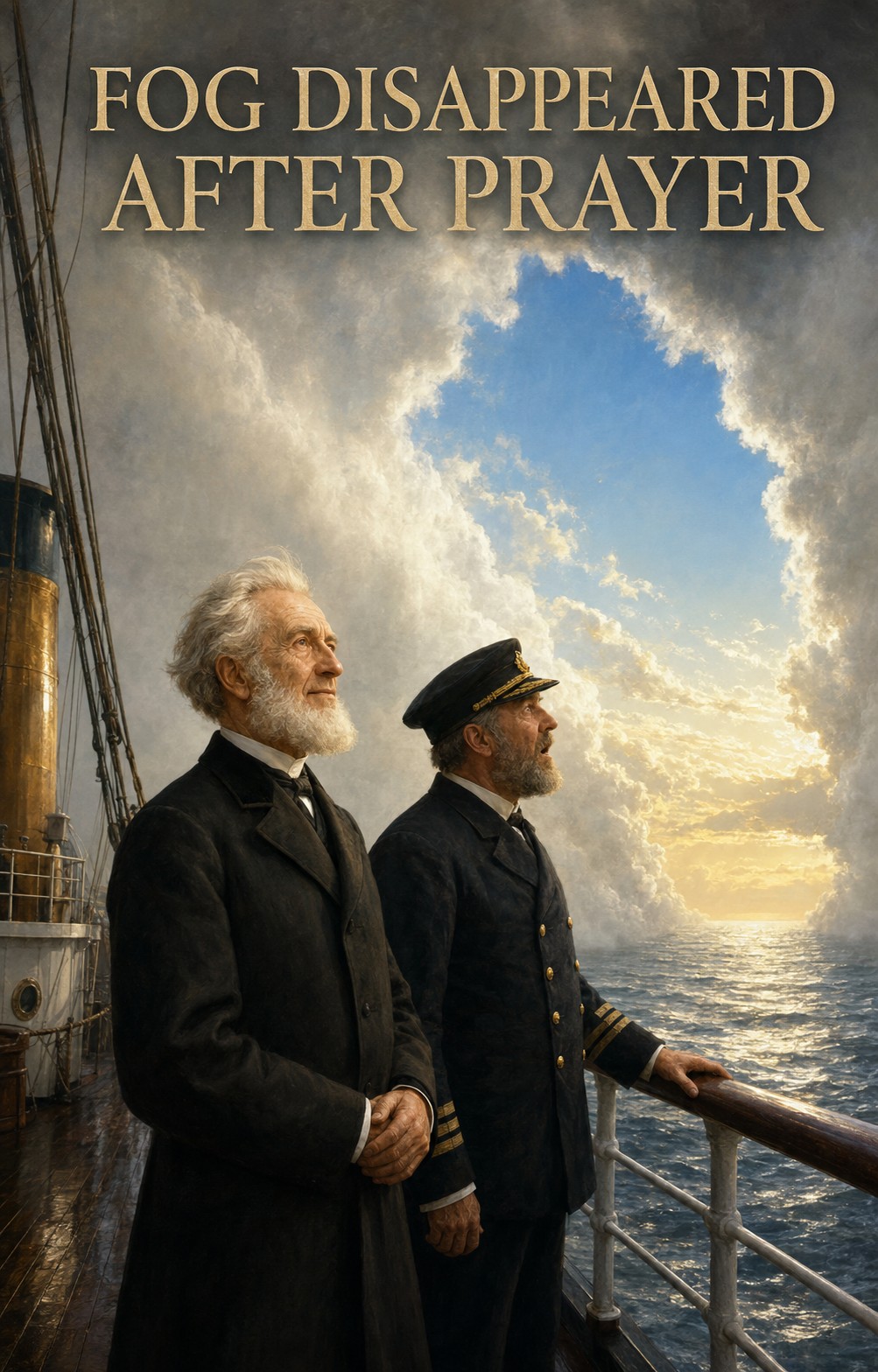
In 1877, Müller was crossing the Atlantic when the ship encountered extremely thick fog. The captain told him that it would be impossible to reach Quebec in time for an important preaching appointment.
Müller asked the captain to join him in the chart room, where he prayed simply and confidently for God to remove the fog. When the captain began to pray, Müller stopped him and said that there was no need because God had already answered.
When they returned to the deck, the fog had completely disappeared. The ship continued its journey, and Müller reached his appointment on time. The captain was deeply affected by what he witnessed.
Praying for Conversions for More Than Fifty Years
In November 1844, Müller began praying every day for the conversion of five individuals. After eighteen months, the first was converted. Five years later, the second accepted Christ, and after another six years, the third was converted.
However, the remaining two showed no change. Müller continued praying for them every day—whether he was sick or healthy, at home or travelling—and refused to give up. After more than thirty years, he declared that they were still unconverted, but he remained confident that God would answer.
Müller continued praying for them until his death, more than fifty years after he had begun. Later biographical accounts report that the remaining men were eventually converted, one of them shortly after Müller’s funeral. Müller did not live to see the final answers, but he died believing that God had heard him.
Living Demonstration That God Answers Prayer
Throughout his ministry, Müller received and distributed an enormous sum—equivalent to well over £100 million today—without personally soliciting donations. His work fed, clothed and educated thousands of orphans, supported missionaries, established schools and distributed vast numbers of Bibles and Christian books.
However, Müller’s greatest purpose was not simply to obtain food or money. He wanted his life to demonstrate that God is real, that He hears prayer and that He can be completely trusted.
I am talking about doing everything through prayer. Every need Müller had, he first brought to God. He did not continually depend upon people or manipulate them into helping him. Listen, can you come to the place where, instead of continually depending upon people, you first take your needs to God?
I also told myself that I would not beg anybody for money but would ask God for everything. On one occasion, after praying for many hours, I asked God to meet a particular financial need. Within seconds of finishing my prayer, someone sent me money. I thought, “This thing is real!”
However, prayer is not merely a method of obtaining everything we desire. Many people pray only when they want something from God, while neglecting fellowship with Him, obedience to His Word and prayer for His kingdom. Seek first God’s kingdom, pray according to His will and make His work your priority. Then trust Him to care for your needs in the way and at the time He knows to be best.
Father Nash and Abel Clary
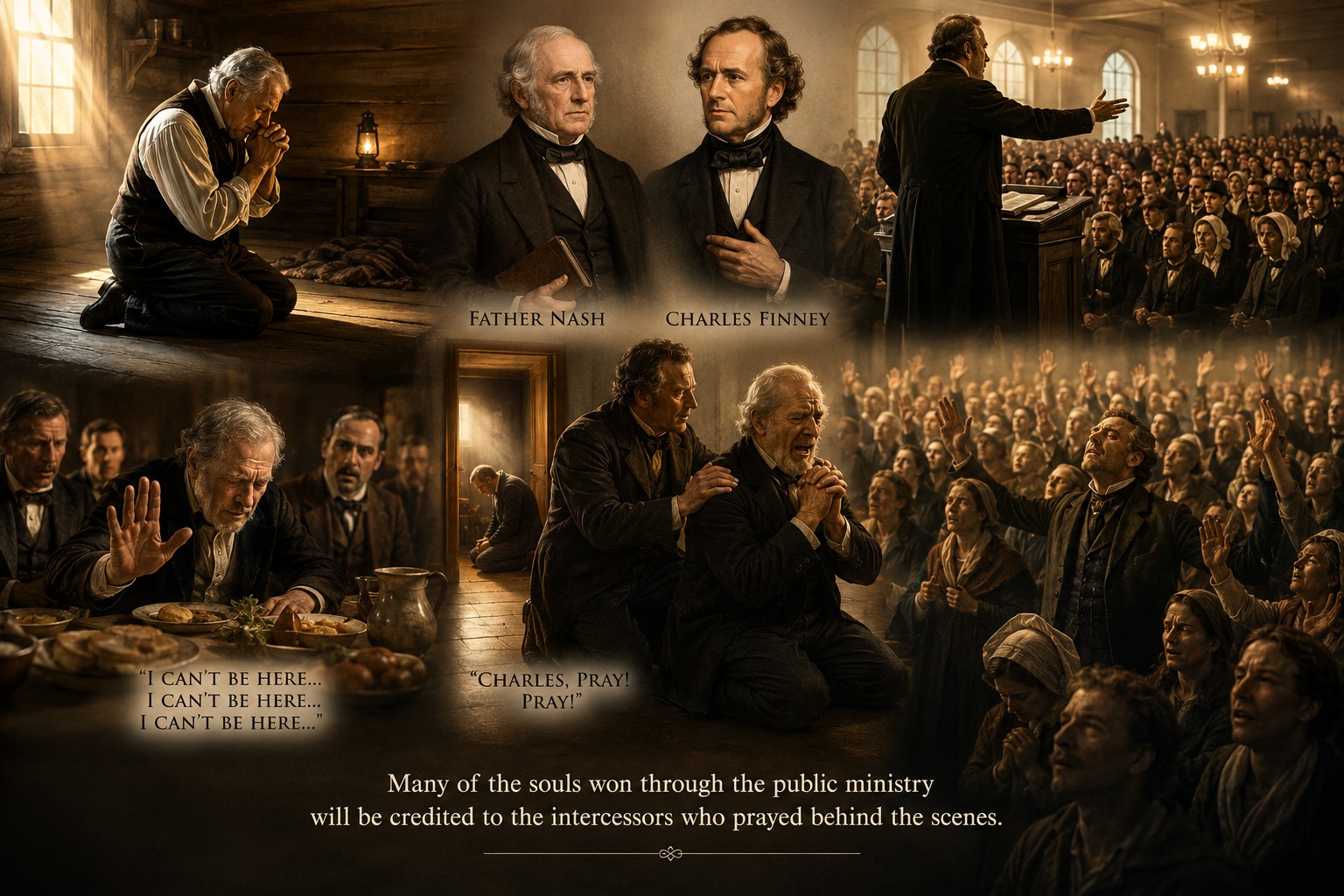
There was a man called Father Nash, one of the greatest intercessors associated with Charles Finney. Father Nash had been a pastor of a church, but eventually the congregation voted against him because they considered him an old man. He also developed an eye problem and could no longer preach effectively, so he gave the rest of his life to prayer. He submitted himself to the ministry of Charles Finney, who was a younger preacher at the time.
What would happen was remarkable. Weeks before Charles Finney entered a town to preach, Father Nash would go there ahead of him. He would use his own money to pay for accommodation. On one occasion, he could not find a normal place to stay, so he rented something like a woman’s garage for a small amount of money. He stayed there for days—approximately two weeks—groaning in the Spirit, “Souls! Souls! Souls!”
One elderly woman approached Finney when he arrived and said, “There is a man in my garage. He has been lying on the floor for days in the same position. Come and check whether everything is all right with him.” Charles Finney replied that the man carried the spirit of supplication. He was groaning in the Spirit.
Do you know that, according to these accounts, through the intercession of Father Nash, enormous numbers of souls were won during Finney’s meetings? It was also believed that a remarkable percentage of the people converted during those revivals never backslid because of the power of prayer.
There was also a man called Abel Clary, a friend and fellow intercessor who had learned to groan and pray for souls. Why am I sharing these things with you? Because you need to see these men of history and allow their examples to ignite something within you. It was men of history like these who ignited me. That is why I am telling you about them.
Abel Clary would groan in prayer for many days in one place without moving. It was said that there were occasions when he would groan for three days almost non-stop. When he finally tried to get up, he could hardly walk, so he would lie down on the floor again and continue praying.
On one occasion, they had gone to a programme and gathered for lunch. They asked him to give the opening prayer. He looked at the food and suddenly said, “I can’t be here. I can’t be here. I can’t be here.” Then he pushed the food away, entered another room, and began groaning for souls: “Lord, save more! Save more!” His brother went into the room and was shocked. He called Charles Finney. When Charles came, Abel said, “Charles, pray! Pray!” Charles began praying with him. After some time, even Charles realised that he could no longer remain there, so he left him praying and returned to eat.
These are people many of us never saw in the limelight, but when we get to heaven, we may discover that many of the souls won through the public ministry of men such as Charles Finney will also be credited to the intercessors who prayed behind the scenes. Do you know the amazing thing? These people were human beings like you and me. They were busy like you and me, but they gave themselves to prayer.
E. M. Bounds, John Welsh, M. Howard and John Knox
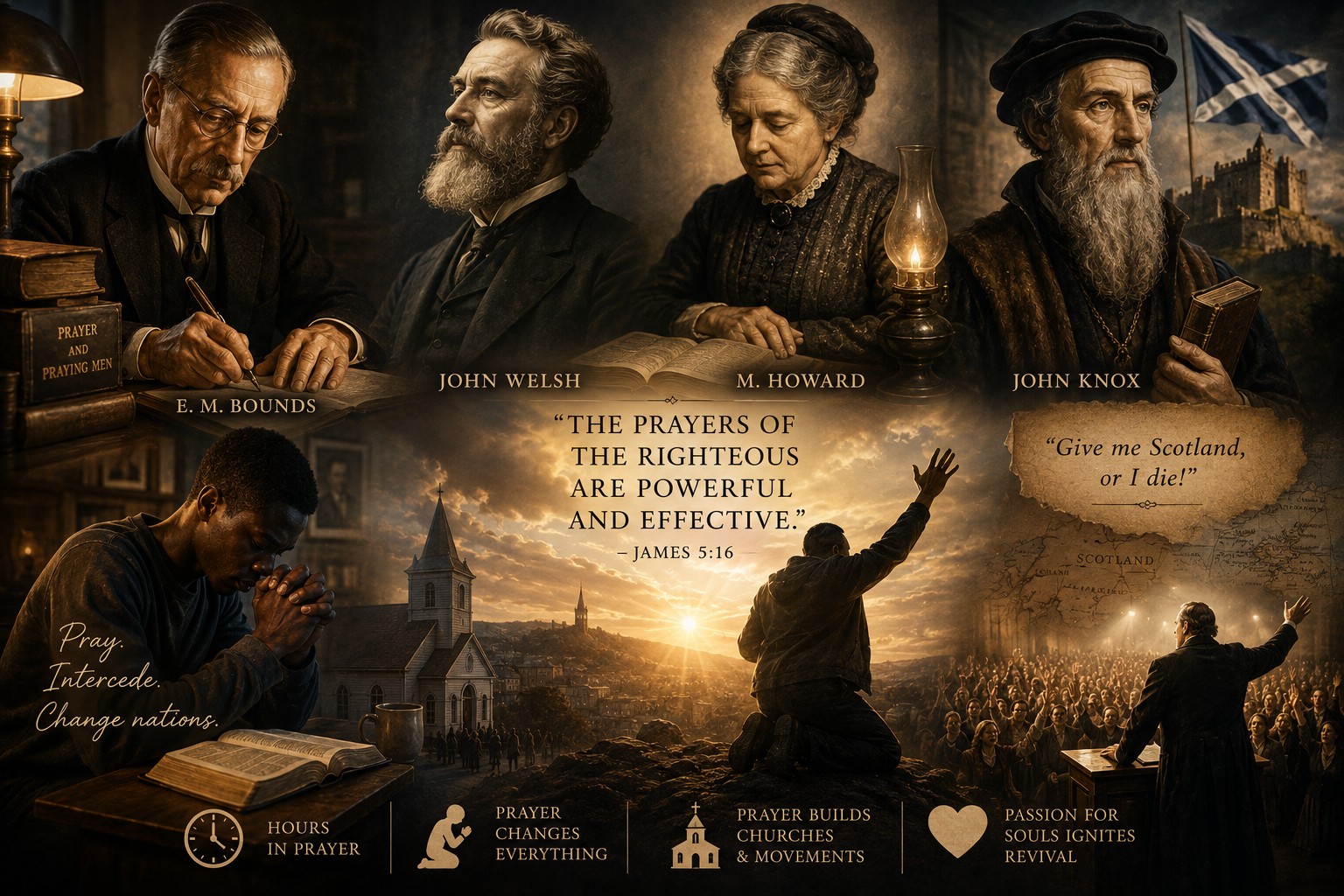
I read about a man called E. M. Bounds. His minimum daily prayer time was measured in hours. Hours! That was his minimum. He was a Methodist pastor, so if you are a Methodist, listen to me carefully—a Methodist pastor. He wrote many books. Only two were published before he died; the others were published after his death. Even today, apart from the Bible, if you want to understand prayer, his books are among those most frequently referenced by other writers on the subject. He became one of the great teachers of prayer. Go and look for his books. His name is E. M. Bounds.
A man called John Welsh also said that if he failed to spend several hours with God, he considered it a bad day. Some of you may be thinking, “You have already preached for almost two hours!” But go and read the book of Acts. The apostle Paul preached until someone fell asleep, fell down, and died—and Paul continued ministering. Eventually, the young man was restored to life. If you die, we will raise you back to life! Hallelujah! We will pray. I am coming to that. We will pray some intense minutes, and then I will prophesy to a few people. Are you enjoying this at all?
There was also a woman called M. Howard. She was a widow and therefore became single after her husband died. What are you doing with your singleness? This woman prayed for hours every day. She would wake up very early every morning and spend hours in prayer. When she finished, she would eat breakfast and then go and visit people. Afterwards, she would return and pray for several more hours. She would then visit someone else, come home for lunch, and once she had finished, she would pray again from the afternoon until evening—and sometimes throughout the entire night until the following day.
She was praying that Full Gospel churches would spread throughout the cities and towns around her. Before she died, those places were indeed filled with churches. That was an assignment. What is your assignment?
Students, what about all your friends who are living all kinds of lives? Will you put their names on your prayer list? When you wake up, mention them by name: “Mildred, your soul is not for the devil. I take you for Jesus Christ. I declare in the name of Jesus that you will not be lost. In the name of Jesus, I take all the students from UPS. I take all the students from Legon. I declare that the devil will not triumph over them. Father, we take their lives, their hearts, and their souls before You. We pray that they will love You, in the name of the Lord Jesus.”
And you continue doing that for days, months, and years. Every hour, every two hours, you are praying. The time you used to spend watching pointless things, you now use travailing in the Spirit: “Lord, touch their lives in the name of Jesus. May they not enjoy the pleasures of sin, in the name of Jesus.” As you are doing that in the Spirit, you are building something. You are releasing something. You are transacting in the spiritual realm.
And then there was John Knox. A famous statement attributed to a queen concerning John Knox says, “I fear the prayers of John Knox more than all the armies of Europe put together.” Why? Because this was the man who cried, “Give me Scotland, or I die!” That was his passion.
Last year, when I caught this fire, for three months I was praying for hours a day, and I said, “Lord, give me souls, or I die!” And the Lord looked at me and said, “Die!” So I stopped praying that prayer! I thought, “Why? John Knox prayed that prayer for years. You have prayed it for only three months, and you are already saying, ‘Give me souls or I die.’ Son, die!” So I stopped that particular prayer. I have never prayed it again. Hallelujah!
David Livingstone and Praying Payson
David Livingstone was one of the great missionaries sent to Africa. The man prayed before every missionary journey. One day, one of his servants went to look for him in his hut. When he entered, he discovered that Livingstone had died on his knees in prayer. Imagine dying on your knees before God.
There was also the story of another remarkable man of prayer. He prayed so much that his name became associated with prayer—Praying Payson. This man prayed until his knees became heavily calloused. Amazingly, the floor of his prayer room was made of wood, and he prayed in the same position for years. After he died, when people examined the room, they saw that his knees had actually worn grooves into the wooden floor. We are going to meet people like these in heaven.
You can change your family on your knees. You can change that marital issue on your knees. Will you change your conviction and begin to take the world, your husband, your family, your siblings, and your roommates before God in prayer?
David Brainerd’s Ministry to Native Americans
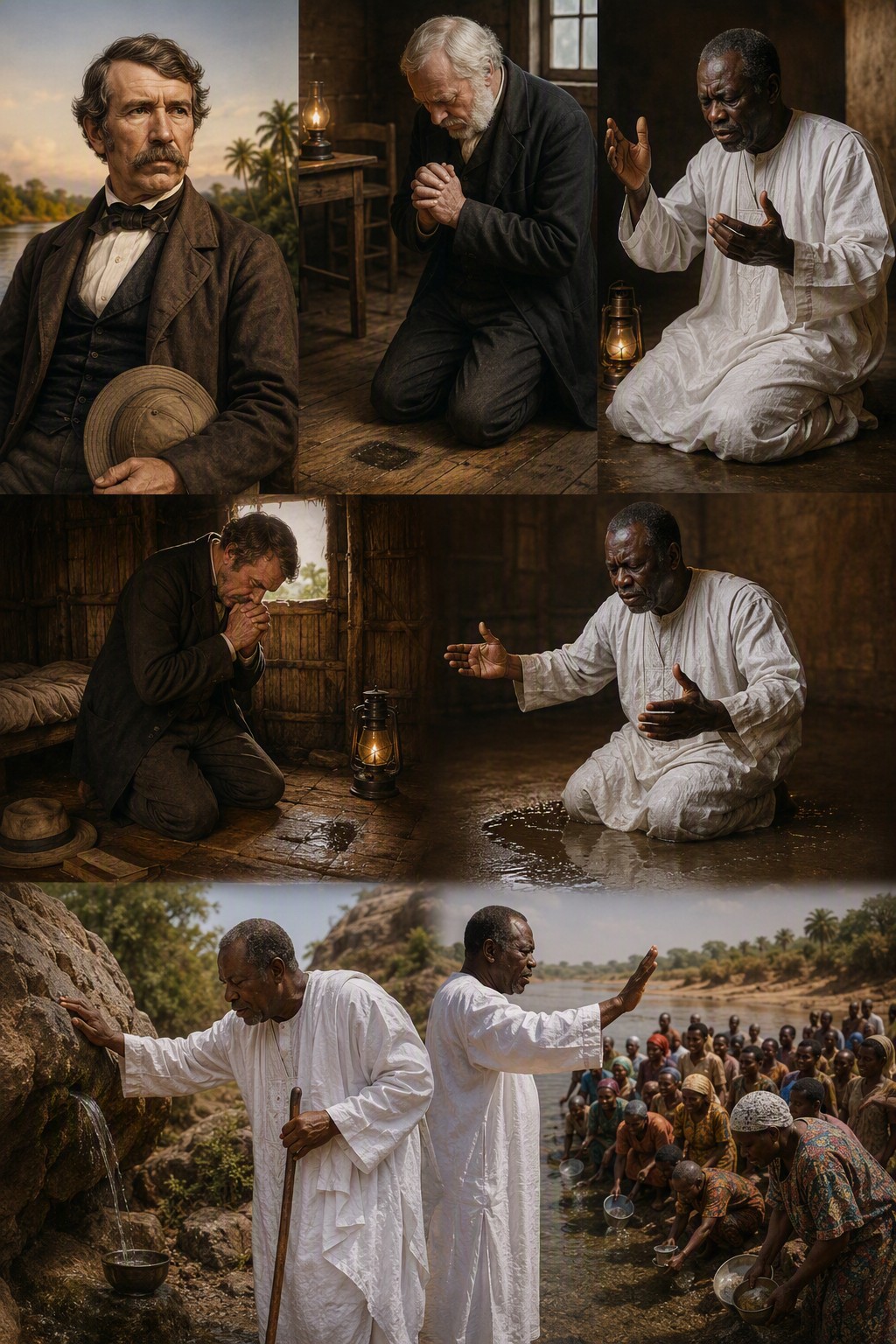
In his first programme, a drunkard served as his interpreter. Because he knew he could not trust a drunkard to interpret properly, he prayed all day. When the drunkard began to translate, the people heard his words as though they were coming through the Spirit. After he finished speaking at that meeting, there was an outpouring of the Holy Spirit. The whole place was filled with the glory of God, and people began giving their lives to Christ.
There were wicked people in India who wanted to kill him. They were told that this skinny man had entered the town and was in the forest, so they went there with clubs to kill him. When they approached his small hut, they saw him on his knees, groaning in the Spirit and praying for their salvation. Then something surprising happened. They saw a very venomous serpent crawling close to him while he was praying. The man was so deeply absorbed in prayer that he did not even know the serpent was there. He did not know that his enemies had come to kill him. He simply continued praying. The venomous serpent rose up, looked at him face to face, came close to his lips, and then turned around and went away. When those men saw this, they reasoned that for such a serpent to approach him, look at him, and then retreat, God must surely be with him. They even began to call him a god. That evening, when he conducted the programme, all of them gave their lives to Christ.
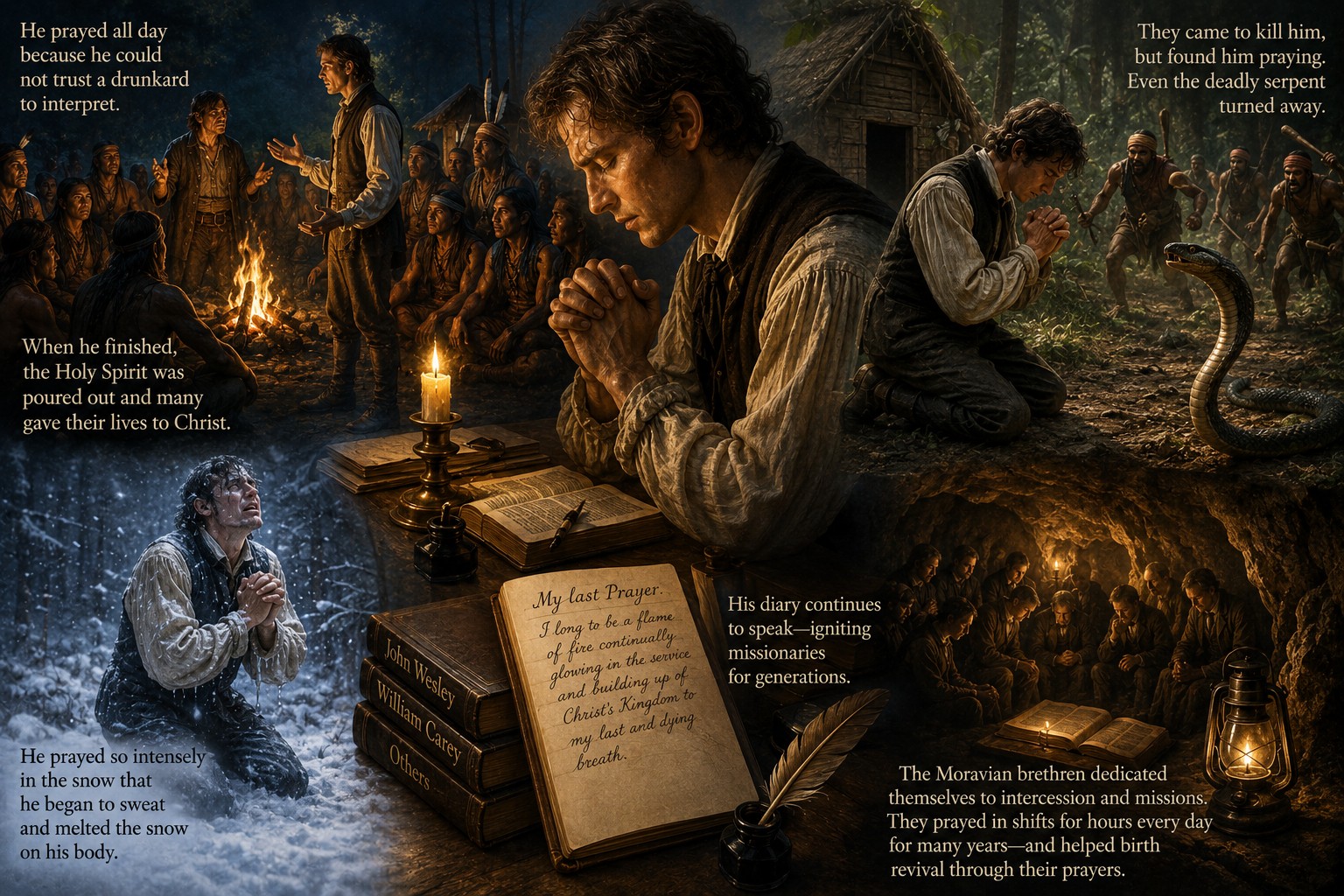
In fact, on one occasion it was snowing, and this man prayed so intensely in the snow that he began to sweat. His sweat melted the snow on his body. How can a person pray in the snow and sweat? His prayer must have been extraordinarily intense and powerful.
His last prayer before he died was: “I long to be a flame of fire continually glowing in the service and building up of Christ’s Kingdom to my last and dying breath.” His prayer was answered. Today, his diary continues to speak for him. John Wesley read his diary. William Carey read his diary, and others who read it were inspired to enter missionary work because of the zeal revealed in his prayer life.
Time will not permit me to speak about the Moravian brethren. These were men who dedicated themselves to intercession and missions. They went into a place of prayer and remained there for hours every day. They organised prayer shifts and prayed continually—hours a day, days a week, for many years. They were behind much of the revival we hear about today. Their prayers helped give birth to it—hours a day, for years.