
What Happens When Christians Sin?
Slawomir Gromadzki
Are Christians not forgiven until they confess sin?
Unfortunately, the idea that true believers become condemned and unsaved again whenever they commit new sins, and remain so until they confess them, has robbed many sincere believers of joy, peace, and assurance of salvation. But please do not misunderstand me, because I am not talking about unconverted actors, legalists, cheap-grace Christians, fake believers, or those who continue sinning against the Holy Spirit.
I am talking about genuine, born-again Christians who have given their hearts to God but who sometimes sin as a result of difficulties, discouragement, and temporarily weakened or wavering faith. Such Christians, even when they occasionally sin, constantly remain under the umbrella of Christ’s righteousness, and nothing—including the devil, sin, or the second death—can touch them! Because of this, they can enjoy constant peace with God and have the proper motivation to serve Him and confess their sins. They never do so because they are afraid to die, but because “God’s goodness—God’s love—leads them to repentance” (Romans 2:4).
Have you ever heard of a mother who becomes angry whenever her small child, who is learning to walk, falls and says, “I have had enough of you falling every time you try to walk! Get out of my house!”? No normal mother would treat her child, who is learning to walk, in this way. How, then, can we think that God, whose love is far superior to any mother’s love, rejects and condemns us every time we fall while learning to walk by the Spirit?

God knows that by nature we are accustomed to sinning and that we now need time to exercise and develop our faith and learn to trust and submit our will and mind to the Holy Spirit. For this reason, our loving God is patient and waits in hope that we will continue making progress in developing our faith and trust in His transforming power.
What happens when a true Christian sins?
Does this wonderful assurance disappear the moment a true Christian stumbles? Pastor Jack Sequeira addresses precisely this question when discussing Romans 7 and 8. He describes the converted Christian who genuinely wants to obey God but discovers the terrible strength of the sinful flesh and sometimes experiences defeat:
“A Christian who is struggling with the flesh and experiencing defeat does not stand condemned before God.” Saviour of the World, Chapter 9. (Jack Sequeira)
That is exactly the point of Romans 8:1. A true believer’s failure does not automatically transfer him from grace back under the condemnation of the law. His standing before God rests upon Christ and His righteousness, not upon a record of perfect performance.
Ellen White gives even more encouragement to Christians who are painfully aware of their failures. She says that we will often have to weep at the feet of Jesus because of our shortcomings, but we must not become discouraged. Even when overcome by the enemy, she says, we are “not cast off, not forsaken and rejected of God.” The Faith I Live By, p. 118.
“If any man sin, we have an advocate with the Father, Jesus Christ the righteous.” 1 John 2:1.
True believers are not condemned again when they sin
Let us say that you have already accepted God’s amazing gift of salvation and the history you have in Jesus with true faith, that you “have passed from death to life,” and that you are saved now. But unfortunately, as you rejoice and continue to live your daily Christian life, you notice that, in practice, your life is not yet holy and that you still disobey God from time to time. As a result, you become discouraged and start to doubt whether your conversion and faith are genuine.
In this case, what you need to know is that although your faith is genuine and you are truly converted, this does not mean that you will never sin. This is because the Holy Spirit’s work of renewing and transforming your character is an ongoing, constant, continual, and progressive process that will last until your death or the Second Coming of Jesus.
Of course, the Holy Spirit is able to change us immediately, but according to God’s wise plan, the effectiveness of the transforming work of the Holy Spirit in us depends on the strength and stability of our faith. Unfortunately, our faith is not like a law; it is not yet constant or stable. That is why, from time to time, especially when we go through painful experiences and become discouraged, the enemy of souls manages to weaken our faith, and as a result, we may fall again.
This, however, does not mean that we become unsaved again! No, because the Bible says that we have already died with Jesus and were punished for all our sins, including our future ones. It means that if you have truly accepted the history of salvation you have in Christ, then you have been freed from the condemnation of the law (Romans 7:6). Therefore, the law no longer has power over you. It cannot condemn or punish you, nor can it tell you again that the wages of your new sins is death (Romans 7:6; 8:1).
Freedom from condemnation of the law does not mean freedom from keeping the law as a standard of Christian living
This fact, however, does not mean that the law was nailed to the cross. No! The law is as holy as God is. It is immortal and therefore could not die! (Matthew 5:17–20; Romans 7:12, 14). God suffers every time we disobey His holy law. It is still His greatest desire that you submit your mind to the Holy Spirit and, through His power, stop breaking God’s Ten Holy Commandments!
But in order to achieve this goal, you must first understand and accept the wonderful freedom God has already granted you in Christ! It was not the law but you who were nailed with Jesus to the cross! (Romans 7:4). For this very reason—because you died and were already punished, according to the demands of this law, for all your sins, including future ones—the law no longer has any reason to trouble you! No law attempts to punish again a criminal who has already been punished!
Apart from that, because through our death with Christ we had the legal right to divorce the law (Romans 7:1–4), which was our first “husband,” we are now married to Jesus! And what is marriage? Marriage is the union of two people who become one. It means that we are now in Jesus, and He is in us. We are one with Him, and He is our holiness and our perfection!
“But by God’s doing you are in Christ Jesus, who became to us wisdom from God, and righteousness and holiness, and redemption” (1 Corinthians 1:30).
For this reason, whenever the holy law looks at us, it sees Christ in us and us in Christ. Therefore, it cannot condemn us anymore (Romans 8:1), because our Lord is always perfect, holy, and righteous in us, and we are regarded as holy in Him!
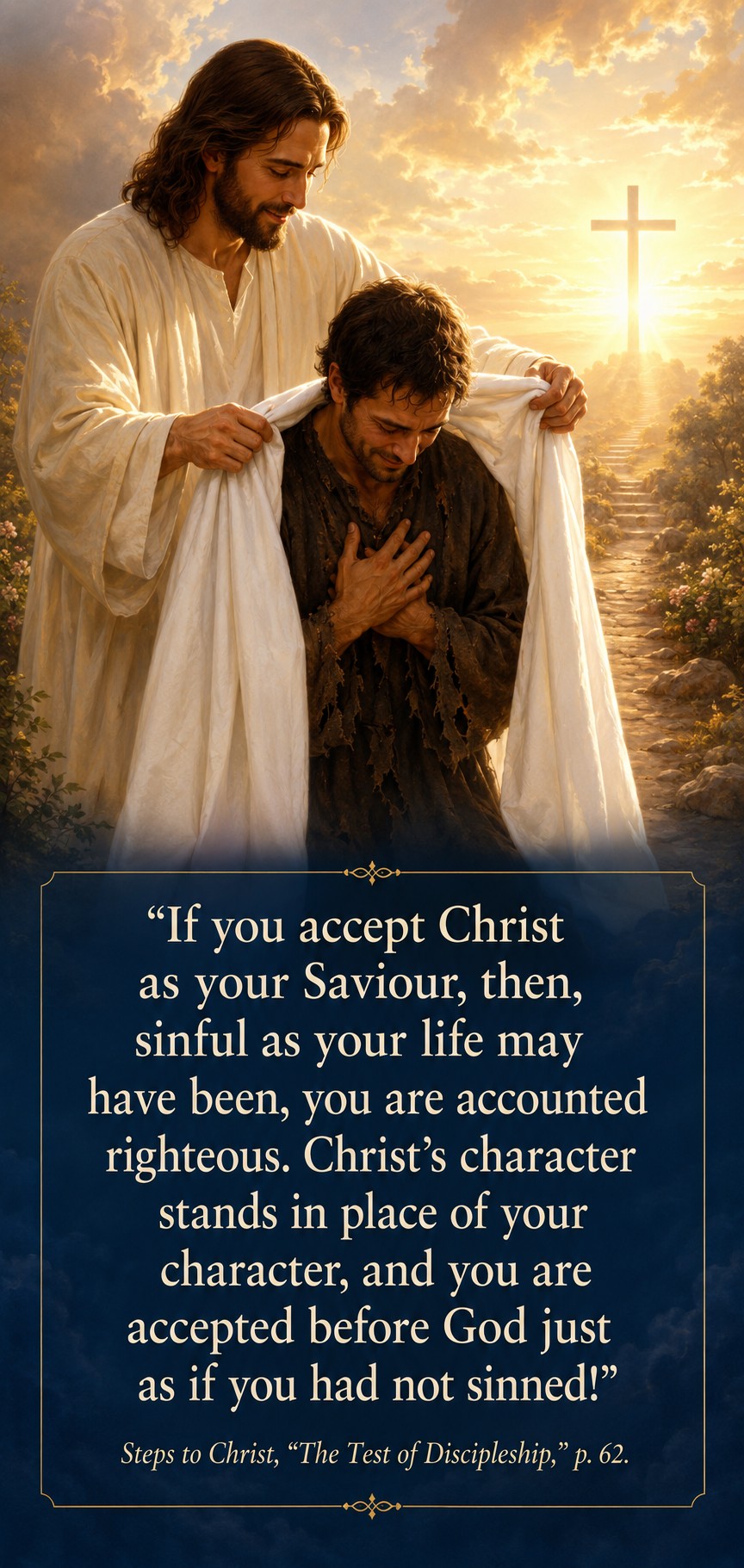
“If you accept Christ as your Saviour, then, sinful as your life may have been, you are accounted righteous. Christ’s character stands in place of your character, and you are accepted before God just as if you had not sinned!” (Steps to Christ, “The Test of Discipleship,” p. 62).
Cheap grace
The problem, however, begins when we—the disciples of Jesus—spend ten, twenty, thirty, or fifty years learning to live by the Spirit and obey God’s holy commandments without making any progress, while continuing to remain only babies in Christ who repeatedly come to God in tears, asking Him to change their diapers or nappies again and again!
Would you like to keep changing the nappies of a child for twenty, thirty, or fifty years? So, let us not use this wonderful truth of salvation in Christ to cover our unbelief, condone the repetition of the same sins, or excuse our carelessness and unwillingness to strengthen our faith through prayer, communion with God, and the study of His Word!
The wonderful good news that salvation is a free gift does not mean that, because we as believers are now constantly covered by Christ’s holiness and the law can therefore no longer condemn us (Romans 6:14; 7:6; 8:1), we are free to live according to the desires of our sinful natures.
In the JFB Commentary I’ve read an excellent comment which addresses the cheap grace Christians in the following way: “If the spirit which that dwells in us allows us to feel at ease under sin than the spirit which is in us does not come from Holy Spirit“. Such a careless attitude only proves that the person has not yet accepted God’s gift of salvation, has not yet experienced the new birth, and is therefore still deprived of the inward presence of the Holy Spirit and agape love.
Whatever problems we experience as Christians, they are never God’s fault; they are always the result of our unbelief, negligence, or carelessness.
Grace is never permission to sin
We must be careful here. Unfortunately, some Christians use this glorious truth of our freedom in Christ as an excuse for sinning. Some even argue that sin does not really matter because Jesus has already obeyed and died in our place.
That is not the Gospel. There is an enormous difference between a converted Christian who hates sin but sometimes falls and a person who deliberately cherishes sin and uses grace as an excuse to continue in it.
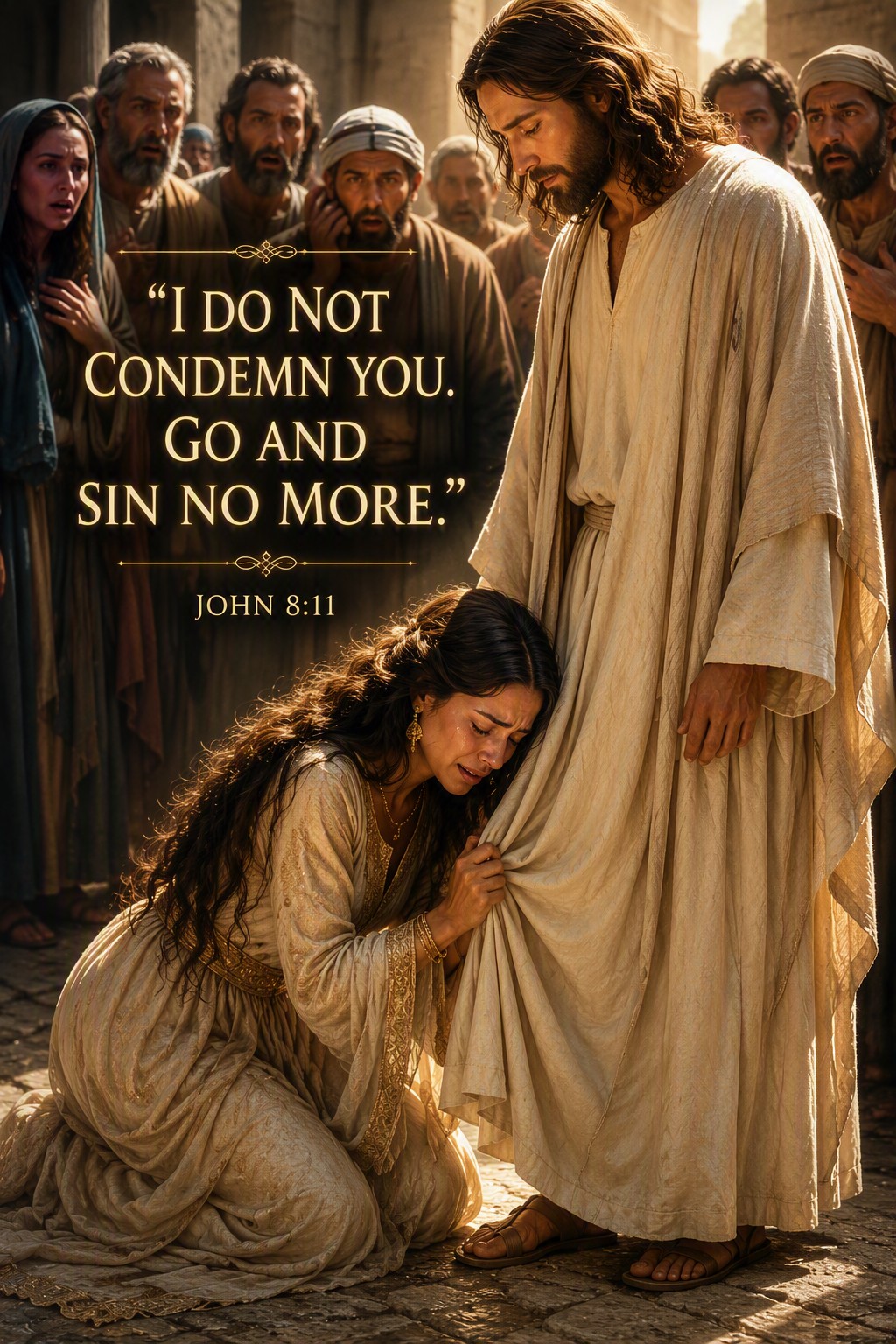
When Jesus saved the woman caught in adultery, He told her, “Neither do I condemn you,” but He also added, “Go and sin no more.” His forgiveness did not excuse or minimise her sin; it freed her from condemnation and opened before her a new life of purity and peace.
Ellen White gives a beautiful comments on these words:
“In astonishment she saw her accusers depart speechless and confounded; then those words of hope fell upon her ear, ‘Neither do I condemn thee: go, and sin no more.’ Her heart was melted, and she cast herself at the feet of Jesus, sobbing out her grateful love, and with bitter tears confessing her sins.
“This was to her the beginning of a new life, a life of purity and peace, devoted to the service of God. In the uplifting of this fallen soul, Jesus performed a greater miracle than in healing the most grievous physical disease; He cured the spiritual malady which is unto death everlasting. This penitent woman became one of His most steadfast followers. With self-sacrificing love and devotion she repaid His forgiving mercy.
“In His act of pardoning this woman and encouraging her to live a better life, the character of Jesus shines forth in the beauty of perfect righteousness. While He does not palliate sin, nor lessen the sense of guilt, He seeks not to condemn, but to save…. Christ hates the sin, but loves the sinner. This will be the spirit of all who follow Him.” The Desire of Ages, pp. 462–463.
“When we are clothed with the righteousness of Christ, we shall have no relish (enjoyment) for sin.” Selected Messages, vol. 1, p. 360.
“We may make mistakes, but we will hate the sin that caused the sufferings of the Son of God.” Selected Messages, vol. 1, p. 360.
The evidence that we are under grace is not that we become comfortable with sin. It is exactly the opposite. The more we understand grace, the more terrible sin becomes to us because we begin to understand what our sins did to Christ.
True reason believers should confess sins
This wonderful freedom we have in Christ was the only way God could deprive us of our selfish motivation for confessing our sins. If we do not experience this freedom, we will always tend to confess our wrongdoings out of fear of punishment or a desire for reward, and this kind of confession cannot be accepted by God.
Does this wonderful freedom we have in Jesus exempt us from confessing the sins we commit while being under grace? Of course not! But, why do we now confess our sins?
We still should and we always do confess our sins, but what is the reason we confess them now? Now we never do it for selfish reasons, because of fear of death or egocentric desire to make it to heaven! We don’t worry about our salvation anymore! So we confess our sins because with every sin we hurt God, increase the amount of sufferings Jesus went through, and we grieve Holy Spirit who dwells in us.
Pastor Jack Sequeira gives a beautiful explanation. Imagine that you are driving faster than the speed limit and suddenly see a police officer. Immediately you slow down. You may even feel sorry for what you have done. But why? Perhaps because you are frightened of receiving a fine. Then you arrive home and unintentionally hurt your husband or wife whom you deeply love. Immediately you are sorry again. But why are you sorry this time? Are you thinking, I had better apologise quickly or I will be punished? No! You are sorry because you have hurt someone you love.
Under grace, repentance and confession result from a love relationship with Christ. We are constantly aware of what our sins did to Christ on the cross—they killed Him there! This is extremely important. Under the condemnation of the law, I may confess because I am frightened: I have sinned! I am condemned! I am going to die!
But under grace my heart cries: Lord, what have I done? I have hurt the One who loves me! My sins caused Your suffering. You gave Your life for me, and yet I have sinned against You. Lord, forgive me, cleanse me and give me victory over this sin! That is a completely different motivation.
Serving God out of love for freedom vs slavery & compulsion – stubborn slave
Rom 2:4: “Do you despise the riches of God’s goodness, forbearance, and longsuffering, not knowing that the goodness of God leads you to repentance?”
Is it repentance that leads us to God’s goodness or God’s love revealed on the cross? No! It is God’s goodness, His great love revealed in Jesus on the cross that leads us to repentance!
There is a famous and true story about a stubborn slave who was bought at an auction by a rich man and the slave kept saying that he wouldn’t work for anyone? What happened when the man told that slave that he bought him to set him free? The slave knelt down and said: I will serve you for all my life!
There is a well-known story about a stubborn slave who was being sold at an auction. Although he was strong and capable, he repeatedly declared, “I will not work for anyone!” A wealthy man nevertheless bought him. Even after the auction, the slave defiantly insisted that he would never work for his new master.
But then the man removed his chains and said, “You are free. I did not buy you to make you my slave. I bought you to set you free.”
The slave could hardly believe what he was hearing. Overwhelmed by the kindness of the man who had paid the price for his freedom, he fell at his feet and cried, “Master, I will serve you for the rest of my life!”

And this is exactly how God deals with us, stubborn sinners. He first sets us free from the condemnation of the law (Romans 7:6). He first assures us that in Christ there is “no condemnation” (Romans 8:1). Then, when we begin to understand the greatness of His love and realise the enormous price He paid to set us free, our hearts are touched. With tears in our eyes, we confess our sins and willingly surrender ourselves to Him. We no longer serve God in order to earn His acceptance or salvation; we serve Him because He has already loved, forgiven and redeemed us. His love awakens love in us, and we desire to serve this wonderful God for the rest of our lives.
“For the love of Christ compels us.” 2 Corinthians 5:14.
But, if this conclusion is true why then Peter said “repent, and be baptized in the name of Jesus Christ for the remission of sins”? To whom Peter was addressing these words?
He was speaking to the Jews who rejected Jesus in spite of the fact that they saw His love, His miracles, and saw Him dying on the cross. That was why Peter told them: “You already saw Gods love revealed in the holy life and death of Jesus, and haven’t yet accepted Him as your Savior! Therefore, it is time for you now to repent!”
Do you remember what is the meaning of the Greek word repent? In Greek it is METANOIA which literally means “CHANGE OF MINFD”. So Peter told the Jews: “Change your mind-set, change your attitude toward Jesus, accept Him and His gift of salvation and you will be forgiven!”