
Need to Revise Commentary on Romans in SDA Bible Commentary
Slawomir Gromadzki
Arthur G. Maxwell and the Commentary on Romans
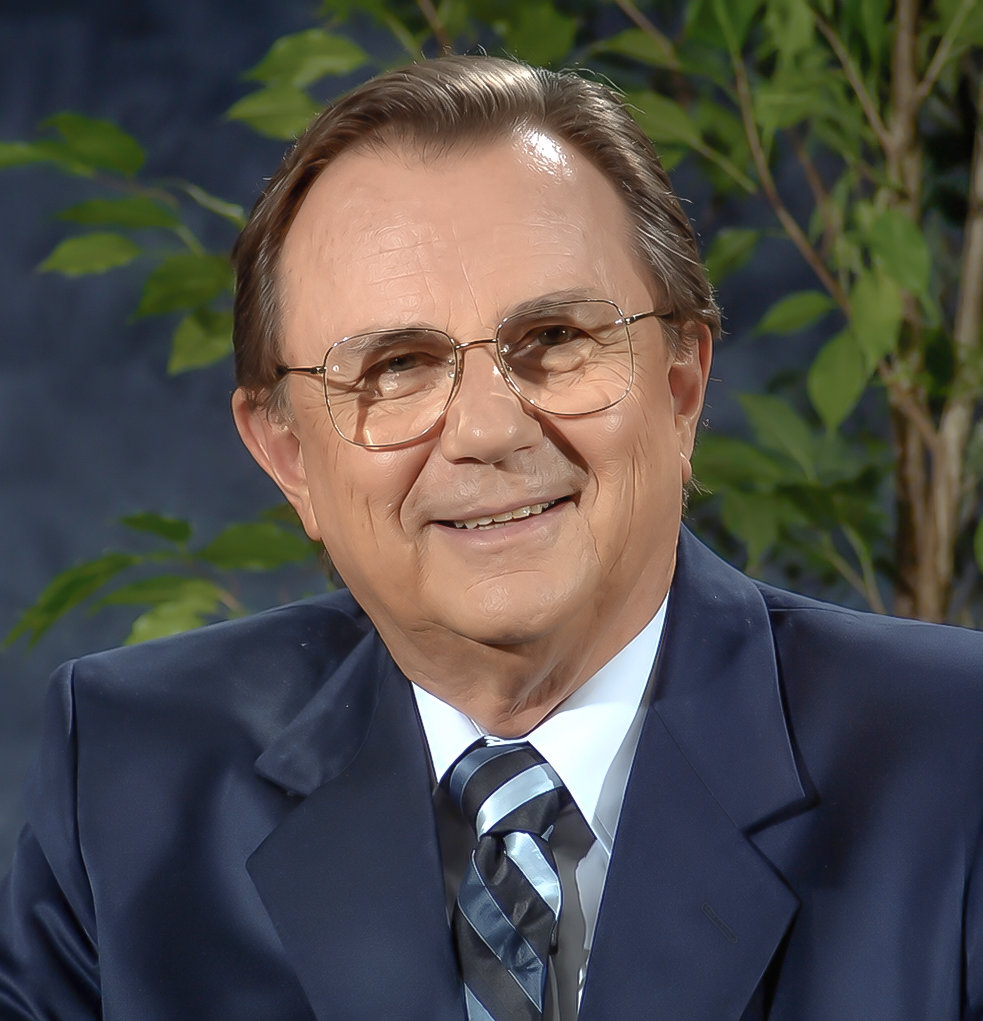
Arthur Graham Maxwell (1921–2010), better known as A. Graham Maxwell, was one of the most respected Seventh-day Adventist theologians of the twentieth century. He served for many years as Professor of New Testament at Loma Linda University and became widely known for his deep interest in the character of God, the gospel, and the writings of the apostle Paul. His books, lectures, and Bible studies have influenced generations of Adventist ministers, theologians, and church members.
According to Raymond F. Cottrell, Maxwell was connected with the commentary on Romans in the Seventh-day Adventist Bible Commentary. This is very important, because Romans is not a minor book. It is Paul’s most systematic explanation of the gospel, especially the relationship between Adam, Christ, sin, death, justification, the law, and the believer’s new life in Christ. (Raymond F. Cottrell, “The Untold Story of the Bible Commentary”)
The tragedy is that Maxwell’s comments on Romans 5:12–21, Romans 6:6 do not adequately bring out Paul’s central corporate truth. He explains these passages mainly in terms of the individual believer’s experience, but he fails to grasp the deeper objective truth that Paul is teaching: the whole human race was legally and representatively involved in Christ, the second Adam.
The Missed Key in Romans 5:14
The key verse in Romans 5 is Romans 5:14, where Paul says that Adam “is the figure of Him that was to come.” Adam was not merely the first sinner. He was the representative head of the old humanity. Therefore, when Adam sinned, the whole human race was involved in him. In the same way, Christ is not merely a good example, nor merely a substitute outside humanity. He is the second Adam, the Representative Head of the new humanity.
This means that Romans 5:18 and Romans 5:19 must be read corporately. Adam’s one offence brought condemnation upon all men, and Christ’s one righteous act brought the gift of justification to all men. This does not teach universalism, because the gift must be received by faith. But it does mean that the gospel begins with an objective act already accomplished in Christ before it becomes the subjective experience of the believer.
Maxwell’s weakness is that he does not clearly build his exposition of Romans on this foundation. His comments are practical and devotional, but they fail to rise to the full greatness of Paul’s argument. The result is that Romans becomes mainly a discussion of what happens in the believer, rather than first of all a proclamation of what God has already accomplished for the human race in Christ.
Romans 6:6 and the Old Man Crucified in Christ
Perhaps the clearest example of this weakness appears in Maxwell’s comment on Romans 6:6. Commenting on Paul’s words, “Knowing this, that our old man was crucified with Him,” Maxwell writes, “The reference is to the experience of the believer when he first accepted Christ, renounced his evil past, and died to sin. Contrasting his former with his present state, Paul felt that he was like another being and had undergone a change as complete as that of death. His old self had passed away. He now was a new man in Christ, and Christ dwelt in him (see 2 Cor. 5:17; Gal. 2:20). This passage emphasizes the fact that conversion and rebirth mean more than a mere change of profession and habits of life. They involve a radical change in the inner man, which can be wrought only by the regenerating Spirit of God.” (Seventh-day Adventist Bible Commentary, on Romans 6:6.)
With this interpretation, Maxwell completely misses Paul’s point. Paul does not say that our old man was crucified when we accepted Christ. The Greek verb translated “was crucified with” is in the aorist, pointing to a completed act. Paul is referring to what happened in Christ at the cross, not merely to the believer’s personal conversion experience.
Romans 6:6 must be read in the light of Romans 5. Paul has already shown that Christ is the second Adam, the Representative Head of humanity. Therefore, when Christ died, the old corporate humanity died in Him. Our “old man” was crucified with Christ, not because we first believed, but because God included humanity in Christ’s representative death.
Faith does not make this crucifixion happen. Faith accepts what God has already accomplished. Maxwell reverses Paul’s order. Instead of beginning with the objective event at Calvary and then explaining the believer’s experience as its consequence, he makes the believer’s conversion the event to which Paul is referring. As a result, the representative and corporate meaning of the cross almost disappears from his interpretation.
Paul first declares the historical fact: “our old man was crucified with Him.” Only afterwards does he draw the practical conclusion: “reckon ye also yourselves to be dead indeed unto sin.” Romans 6:11. We are not asked to crucify the old man. We are asked to believe and reckon as true what God has already accomplished in Christ.
Romans 7:4 and 7:6
Paul continues the same thought in Romans 7:4: “Ye also were made dead to the law by the body of Christ.” Romans 7:4. He says again in Romans 7:6 that “we have been delivered from the law, having died to that wherein we were held.” Romans 7:6.
In both verses Paul points to a death already accomplished through the body of Christ. The believer does not create this death by experience. The believer receives and enters into the meaning of Christ’s death by faith. Through Christ’s representative death, the old legal standing under Adam, sin, condemnation, and law was brought to an end.
Here again Maxwell does not adequately present the objective corporate reality. He moves too quickly to the believer’s personal experience and does not sufficiently show that Christian experience rests upon a finished historical act in Christ.

Heppenstall Saw the Principle in 2 Corinthians 5:14
This is why the contrast with Edward Heppenstall’s comment on 2 Corinthians 5:14 is so important. Paul says, “If one died for all, then all died.” 2 Corinthians 5:14.
Heppenstall recognised the representative meaning of this statement. Christ did not merely die instead of humanity as an outsider. He died as the Representative of the human race. Therefore, when Christ died, all died in Him. This is the same truth that unlocks Romans 5, Romans 6, and Romans 7.
Although Heppenstall was commenting on another epistle, his explanation expresses the very principle that Maxwell failed to apply consistently in Romans. Paul’s gospel is not merely that Christ died so that something may happen to us. It is that something already happened to us in Christ, our Representative.
W. W. Prescott’s Clearer Understanding
W. W. Prescott had already expressed this truth with remarkable clarity decades earlier. He wrote, “It was not that Jesus Christ came from outside, and simply stepped into our place as an outsider; but by joining Himself to us by birth, all humanity was brought together in the divine head, Jesus Christ. He suffered on the cross. Then it was the whole family in Jesus Christ that was crucified.” (W. W. Prescott, “The Word Became Flesh”)
Prescott also wrote, “What Christ did as head of this new family, we did in Him. He was our representative; He became flesh; He became we.” (W. W. Prescott, “The Divine-Human Family”)
This is exactly the truth that should have governed the commentary on Romans. Prescott understood that Christ’s death was not merely substitution from the outside. Christ identified Himself with humanity, became the second Adam, gathered the race into Himself, and carried the old humanity to the cross.
Jack Sequeira and the Recovery of Paul’s Corporate Gospel
Jack Sequeira later developed this representative understanding of Romans with exceptional clarity. His exposition of Romans shows that Paul’s argument begins with the objective gospel: all humanity was first ruined in Adam, and all humanity was legally redeemed in Christ. Only after establishing this does Paul explain justification by faith, sanctification, and the believer’s walk in the Spirit.
This is why Sequeira’s commentary on Romans is so important for Adventists today. He does not treat Romans 5 as an isolated passage, nor Romans 6 and 7 as merely individual Christian experience. He sees the flow of Paul’s thought. Romans 5 presents the two humanities, in Adam and in Christ. Romans 6 declares that the old man was crucified in Christ. Romans 7 shows that the believer has died to the law through the body of Christ. Romans 8 then presents the life of the Spirit flowing from this finished reality.
The Need for Revision
The Seventh-day Adventist Bible Commentary has served the church for many decades, and it should be respected for the enormous labour that went into it. Nevertheless, it is not inspired, and it should never be treated as though it cannot be corrected or improved. Romans is too important to be left with an exposition that fails to bring out Paul’s great corporate gospel in Christ.
For this reason, it is time for the Seventh-day Adventist Bible Commentary committee to gather again and thoroughly revise the commentary on Romans. Such a revision should give far greater attention to Paul’s doctrine of the two Adams, corporate humanity, universal legal justification, and the objective “in Christ” truth that stands at the heart of the everlasting gospel.
A revised commentary on Romans should carefully consider Jack Sequeira’s commentary on Romans, together with the representative theology of W. W. Prescott and the important insight expressed by Heppenstall on 2 Corinthians 5:14. This would not be a rejection of Adventist heritage, but a recovery of one of its most powerful gospel truths.
The time has come for Adventist scholarship to revisit Romans with fresh eyes and renewed faithfulness to Paul’s own argument. Romans must not be reduced to individual experience before the objective gospel has been proclaimed. The apostle’s message begins with what God has already accomplished in Christ for the entire human race. Only then can the believer’s experience of justification, sanctification, and victory be understood in its true gospel setting.
REAM MORE ON THIS SUBJECT HERE:
Contributors to the Seventh-day Adventist Bible Commentary
M. L. Andreasen (Leviticus; Hebrews), L. L. Caviness (Esther; Song of Solomon), O. H. Christensen (Joshua), Raymond F. Cottrell (Matthew, Mark, Luke, John 1–4; major introductory articles), Le Roy E. Froom (Daniel; Revelation – prophetic interpretation articles), R. Hammill (Judges), Louis Hardinge (Colossians), L. H. Hartin (Galatians), R. H. Hartwell (John and the Isle of Patmos), Edward E. Heppenstall (2 Corinthians), Earle Hilgert (Jeremiah 46–52; Lamentations; Daniel 10–12; John 5–6; Revelation 1–11; chronology and biblical criticism articles), Siegfried H. Horn (Genesis; Exodus 1–18; Ezra; Nehemiah; Daniel 1, 3–6; archaeology and chronology articles), W. T. Hyde (Proverbs; 1–3 John; Jude), T. H. Jemison (Philippians), Alger F. Johns (James), R. E. Loasby (Numbers; Deuteronomy; Ruth; Ecclesiastes; 1–2 Peter; Revelation 17–22), T. K. Ludgate (1 Corinthians), Frank Lewis Marsh (Science and Creation), Arthur G. Maxwell (Romans), E. J. McMurphy (Titus; Philemon), G. H. Minchin (Ephesians), W. G. C. Murdoch (Psalms 107–150; Daniel 2, 7–9), Don F. Neufeld (Ezekiel; John 7–21), Julia Neuffer (Biblical chronology articles), Norval F. Pease (Job), W. E. Read (Revelation 12–16), C. O. Smith (1–2 Thessalonians), W. F. Specht (Jeremiah 1–10), Edwin R. Thiele (2 Samuel; 1–2 Kings; 1–2 Chronicles; Isaiah), C. E. Weniger (Psalms 1–106; Poetry of the Bible), W. G. Wirth (Exodus 19–40; Jeremiah 11–45; Minor Prophets; 1–2 Timothy), Lynn H. Wood (1 Samuel; Between the Testaments; maps and illustrations), and Francis D. Yost (Acts; Jews of the First Christian Century; Early Christian Church; Medieval Church).