
Omega Deception: Ellen White’s Warning About Great Apostasy
Slawomir Gromadzki
Nearly ten years before her death, on December 4, 1905, Ellen White gave a solemn warning concerning a “great apostasy” that was already developing within her time and would continue growing stronger until the return of Christ. Significantly, her response to this danger was to urge Seventh-day Adventists to hold firmly to the foundational principles of their denominational faith—the faith that, she said, had been confirmed by the Holy Spirit throughout their earlier experience:
“One thing it is certain is soon to be realized,—the great apostasy, which is developing and increasing and waxing stronger, and will continue to do so until the Lord shall descend from heaven with a shout. We are to hold fast the first principles of our denominated faith, and go forward from strength to increased faith. Ever we are to keep the faith that has been substantiated by the Holy Spirit of God from the earlier events of our experience until the present time.” — Ellen G. White, Manuscript 111, 1905 (Ms 111, 1905), par. 1, December 4, 1905.
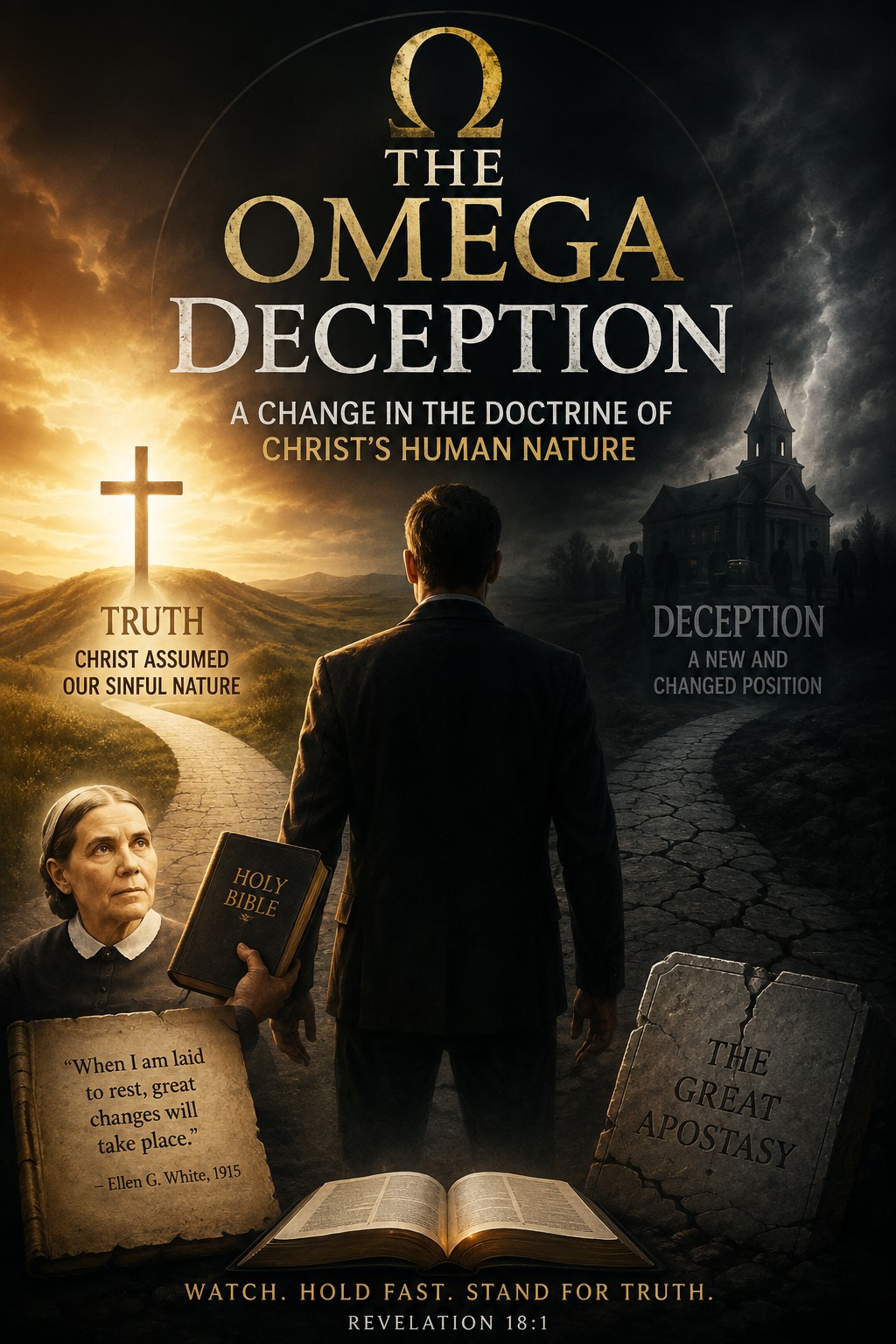
Her meaning becomes even clearer from the sentences that immediately follow. Ellen White speaks of the Holy Spirit having confirmed the truth “in the beginning, after the passing of the time,” and warns that people were “departing from the faith and giving heed to seducing spirits and doctrines of devils.” Later in the same manuscript she states that the previous fifty years had not invalidated “one jot or principle of our faith” established through their experience following 1844.
The implication of this warning is serious. If the “great apostasy” was to develop within the church while Adventists were commanded to “hold fast” the already established principles of their faith, it is reasonable to understand that Satan would seek to work through influential voices within the church—including ministers, theologians or leaders—to weaken, reinterpret or change one or more of those established truths.
One possible direction of such an apostasy would be an attempt to make Seventh-day Adventism more acceptable to, and theologically aligned with, the wider Christian world, including Roman Catholicism and fallen protestantism. For this reason, any significant change involving foundational truths—such as the gospel, the Sabbath, the heavenly sanctuary, the humanity of Christ, or the authority of the Spirit of Prophecy—should be expected and examined with the greatest care.
It is therefore clear that Adventists were not instructed to modify their established faith in order to gain wider acceptance, but to “hold fast” the principles that had been confirmed by the Holy Spirit.
Less than five months before her death, on February 24, 1915, Ellen White awoke from sleep, called her nurse to her side, and gave a solemn warning concerning what would happen after her death. Her words were preserved in Manuscript 1, 1915, officially titled “Testimony of Ellen G. White”:
“I tell you now, that when I am laid to rest, great changes will take place. I do not know when I shall be taken, but I desire to warn all against the devices of the devil. I want the people to know that I warned them fully before my death. I do not know especially what changes will take place, but Satan’s devices will be brought before the people. But they should watch every conceivable sin that Satan will try to immortalize.” [Letter sent out by W.C. White, Elmshaven, Feb. 24, 1915. – This document is not found on the EGW CD-Rom.]
Even Geoffrey J. Paxton, a non-Adventist Anglican theologian, leaves no doubt in his book The Shaking of Adventism (LINK) that, before 1950, our church held the view that Christ assumed sinful human nature, and that a change took place during the 1950s. Here are several passages from the book in which Paxton refers to this:
“Froom thought it was time for Adventism to move forward again by an uninhibited confession of Christ’s sinless human nature… It is important to note that Froom’s emphasis concerning 1888 was catholicity and not justification by faith. Thus, the first event of great significance in the contemporary period was a focusing on catholicity… Barnhouse and Martin were surprised and somewhat impressed at the answers they received on these aspects of theology Froom and Anderson denied that Adventism had fundamentally taught the sinful human nature of Christ. Froom said that such deviations belonged to what he called the ‘lunatic fringe‘ of the church. (9)”
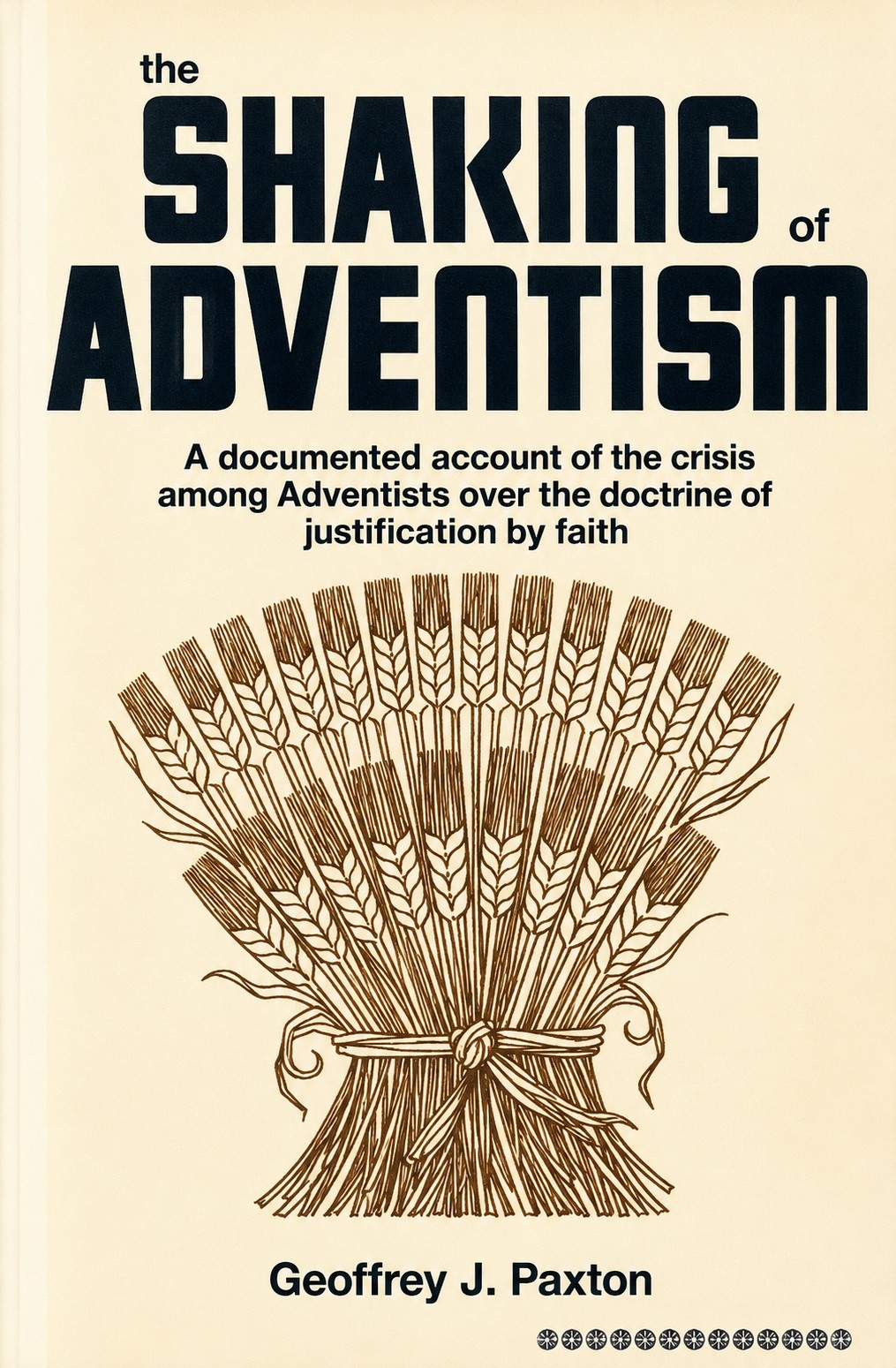
In footnote 9 of the same book, Paxton adds: “9. The historical facts will not support Froom’s alibi. Prior to the 1950’s almost all Adventist authors taught the sinful nature of Christ“.
The facts, therefore, are as follows: In 1915, the year of her death, Sister White warned us that after her death—or, as she wrote in another statement, “soon”—an apostasy would take place.
Other statements of hers indicate that this apostasy would be connected with a very important biblical truth. After all, what other teaching would the enemy of truth seek to attack in these last days?
Relatively soon after Ellen White’s death, our church changed its position regarding the previously widely accepted truth that Christ assumed our sinful nature. Regarding Christ’s humanity, Sister White wrote that it “is everything to us.”
Indisputable evidence confirming this change in the understanding of Christ’s human nature is presented in many books, including Professor Jean R. Zurcher’s Touched With Our Feelings (LINK), published in 2005 by the leading Adventist publishing house Pacific Press.

We know that the devil has always sought, and continues to seek, to persuade us to reject the truth concerning the heavenly sanctuary, the Spirit of Prophecy, the Sabbath, or the divinity of Christ and the Holy Spirit. Although he has achieved some success in these areas, this has involved individual people. With regard to none of these teachings, however, has he succeeded in bringing about changes as far-reaching as those that occurred in the case of the truth that the Saviour assumed sinful humanity. There can be no doubt that a significant majority of church leaders, pastors, and members identify with this new and changed position. Those who hold a different view most often, for reasons familiar to us, keep it to themselves.
When I think about this and ask the Lord what I should do about it all, my self-centred, egocentric nature tells me that, for the good of the church, it would be more convenient not to draw conclusions that go too far, not to expose myself to criticism, and not to protest—even in a spirit of love and mutual respect—because, after all, we must give the impression of being a united church that “has the testimony of Jesus,” which is the “Spirit of Prophecy.” The Spirit of Prophecy, however, seems to hold a somewhat different view:
“My message to you is this: No longer consent to listen without protest to the perversion of truth” Special Testimonies (Series B, No. 2, p. 15).
The same Anglican theologian, Geoffrey Paxton, challenges us in another of his books with the question contained in its title: “Will the Real Adventist Please Stand Up?”
RELATED ARTICLES
Shaking of Adventism (Paxton)
Humanity of Christ – History of the Changed View
Humanity of Christ (Ellen G. White)