
What Does It Mean to Be “In Christ”? (Gibson, Asscherick, Grasso)
What Does It Mean to Be “in Christ”?
The experience of baptism connects believers directly to a profound biblical reality. If the Apostle Paul were present today, he would remind us that through this act, we have all died as a consequence of having died. Our lives are now hidden with Christ in God, a state of existence that carries immense spiritual significance. The concept of being hidden brings to mind powerful moments from the Old Testament, such as Genesis 3 where Adam and Eve hid themselves from the presence of the Lord God among the trees of the garden after their fall. It also echoes the experience of Moses on top of the Sinai summit when he asked to see God’s glory. God responded by hiding Moses in the cleft of the rock, covering him with His hand so that Moses could only see His back and not His front. What Paul communicates through this imagery is a beautiful shift in how humanity relates to the Creator: God, as revealed in Christ, is not a God to hide from, but a God to hide in.
This perspective sets the stage for a deeper look into what it truly means to be in Christ according to the gospel. In this episode of Gospel Conversations, a Lightbearers podcast hosted by Angelo Grasso and featuring David Asscherick and Ty Gibson, the hosts explore this very motif. The foundation for this dialogue traces back to a previous discussion on the Holy Spirit that concluded in Revelation chapter 3. Specifically, Revelation 3:21 states that to the one who is victorious, Christ will give the right to sit with Him on His throne, just as He was victorious and sat down with His Father on His throne. While this verse highlights a future hope, an anticipation of a future experience where believers will sit on the throne with the Father and Christ, the gospel simultaneously emphasizes a present reality. As noted in the book of Ephesians, believers are already seated in heavenly places in Christ. Therefore, the gospel encompasses both an eternal promise for the future and a profound, current experience available right now.
The “In Christ” Motif Throughout the New Testament
The conversation naturally centers entirely on the meaning and depth of being in Christ. While this topic was touched upon briefly in previous seasons, the hosts emphasize the need for a dedicated, comprehensive exploration because the theological idea of incorporation is central to the entire Christian message. You cannot talk about the gospel for very long before running directly into this distinctly Pauline and biblical motif of being in the Messiah. It is an ambient, atmospheric truth that undergirds the New Testament. Returning to Revelation 3:21 provides an excellent starting point because it represents an eschatological promise made to the final church, the church of Laodicea. It stands out among all the promises to the seven churches because it positions believers not merely as subjects or citizens, but as co-regents with Christ on His throne. Because Jesus Himself spoke these words, the validity and authority of the promise are beyond doubt.
To understand how this future promise intersects with our present reality, one can look to Ephesians 1:20, which explains that God raised Christ from the dead and seated Him at His right hand in the heavenly realms. This concept of Christ being ascended and seated at the right hand of God is a major, undisputed theme throughout the New Testament and the book of Acts. However, Paul takes a remarkable theological turn in Ephesians chapter 2. Starting in verse 4, Paul writes that because of His great love for us, God, who is rich in mercy, made us alive with Christ even when we were dead in transgressions and sins, declaring that it is by grace we have been saved. Then, in verse 6, Paul explicitly states that God raised us up with Christ and seated us with Him in the heavenly realms in Christ Jesus. This realization is showstopping; while Revelation points to a future eschatological vision, Paul reveals that in a significant biblical sense, believers are already seated with Christ on the throne of God. Though we appear physically seated in our immediate surroundings, our true spiritual placement is already established in heavenly places.
This placement with Christ highlights a crucial element of the gospel: it has absolutely nothing to do with human effort or individual faithfulness, but relies entirely on the faithfulness of Christ. It is an accomplishment achieved completely without our involvement. This ties back to the historical reality that the ink of history is dry, meaning the holy history of Jesus is a finished event. We look back retrospectively on an artifact of history that took place 2,000 years ago, an event to which no one today can contribute anything. While the phrase “in Christ” or “in Him” appears occasionally in the writings of Peter, it is overwhelmingly a Pauline motif. It is not a prominent feature in the Gospels or the book of Acts, but the moment you enter the epistles of Paul, he runs with this truth continuously, using it to define the very baseline of Christian theology.
Already and Not Yet: Living in a New Reality
The tension between physically sitting in a studio and spiritually sitting in heavenly places is best understood through a well-known theological concept: the “already and not yet”. Though these exact technical terms are not found explicitly in the text of the Bible, theologians use them as helpful bookends to explain the “in Christ” framework. The concept dictates that we are already something in Christ that we are simultaneously in the process of becoming as we latch onto Him by faith. There are objective truths that have already been entirely accomplished in Christ, and there are subjective, experiential realities that gradually flower within us through exposure to His light. Just as a folded flower opens up step-by-step when exposed to the sun, our experiential reality opens up as the sunlight of Christ shines upon us.
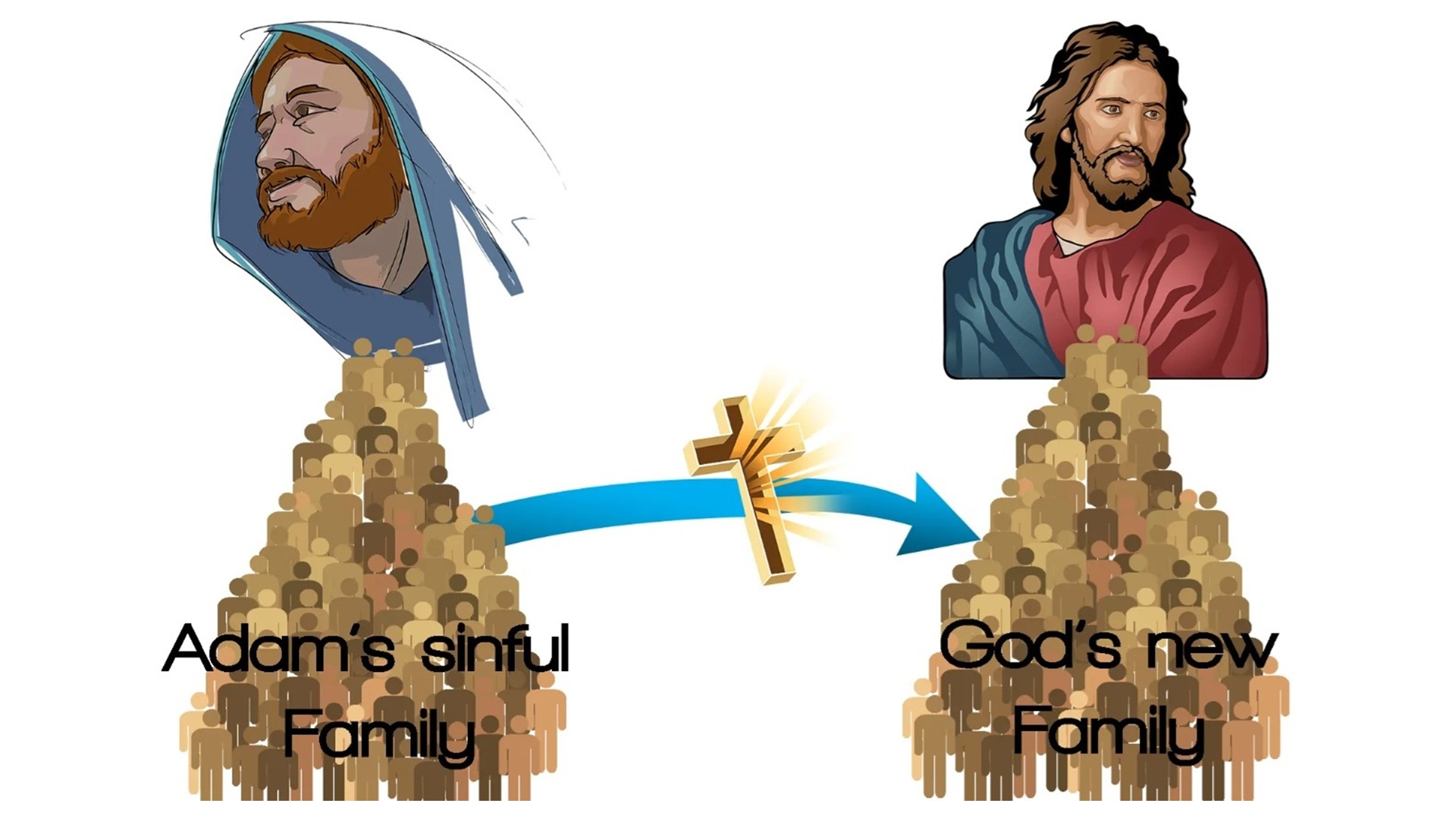
When looking at the grand narrative of scripture, the Bible can be distilled into two distinct stories being told, and every human being is asked to choose one. The first is the story of the first Adam, which is a narrative defined by the fall, guilt, shame, sin, moral failure, and disillusionment. Every human being is naturally the offspring of this one original man, impacted and inherited from a lineage that began the process from which all human insecurities and moral failures emerge. It is a story deeply rooted in inherited guilt and sin. The second story, however, centers on another Adam—the last Adam, or the eschatological Adam, who is Jesus Christ. His narrative is entirely different, defined by righteousness, innocence, holiness, and love. Biblical prophets and apostles actively call upon humanity to disassociate from the first Adam and to identify completely with the second. This act of consciously choosing the narrative of Christ as our definitive reference point is what the Bible calls faith.
Two Stories: Adam and Christ
Paul outlines this exact contrast explicitly in Romans chapter 5, which stands as one of the most dense and structurally profound sections in all of his writings. In Romans 5:18, he writes that through one man’s offense, judgment came to all men, resulting in condemnation. This one man is Adam, and through him, humanity was not only impacted but deeply implicated, as character inclinations, impulses, and moral identities are transmitted from generation to generation. Yet the verse continues by stating that in the same way, through one man’s righteous act, the free gift came to all men, resulting in justification of life. Paul solidifies this in verse 19, asserting that just as by one man’s disobedience many were made sinners, so also by one man’s obedience many will be made righteous.
This text underscores that these concepts are not arbitrary theological impositions forced upon the scripture, but insights that derive directly from Paul’s own words. Paul emphasizes that the tragedy inherited from Adam has been entirely superseded by what happened through Christ, using the phrase “much more” repeatedly throughout Romans 5 to demonstrate how grace superabounds over sin. By faith, an individual can be born again into this second story, participating directly in the accomplishments of Jesus. Paul speaks of Christ’s work as a singular event—the “Christ event”—encompassing His incarnation, life, death, resurrection, and ascension. Through this single, monumental act, a whole new humanity has been birthed into existence, represented by a beautiful new human in whom there is only innocence, love, and righteousness.
Baptism and Participating in Christ’s Death and Resurrection
The mechanism of entering into this new reality is unpacked in Romans 6:3, where Paul asks if we do not know that all who were baptized into Christ Jesus were baptized into His death. He continues by stating that we were buried with Him through baptism into death so that, just as Christ was raised from the dead through the glory of the Father, we too may live a new life. Here, the objective and subjective aspects of the gospel meet perfectly. While we are born into the reality of the first Adam without choice, Christ has established an entirely new reality that gives us the opportunity to actively choose life over death.
To understand how to live out this participation daily, Romans 6:11-12 instructs believers to count themselves dead to sin but alive to God in Christ Jesus, and commands them not to let sin reign in their mortal bodies to obey its evil desires. This nuance shows that because something is already true of us in Christ—an identity we signed up for at baptism—we must now reckon or see ourselves the way God sees us. From that belief, we are called to make moral choices and decisions that match what we see in Christ. This order is vital because human nature often obsesses merely over what to know and what to do. While right information and right actions are crucial, Paul always establishes a person’s identity in Christ before issuing commands on how to behave. The imperatives of the epistles are never given without a clear treatment of our “ways of being”. When a believer is insecure or unrooted in their identity, behavior modification becomes unnatural, tense, difficult, and devolves into legalistic striving.
Identity Before Behavior
The necessity of grounding behavior in identity is illustrated perfectly through everyday human relationships and experiences, such as rock climbing or parenting. In a recent conversation between David and a fellow pastor named Mike, the topic of sanctification and holiness arose. The immediate point that had to be established before discussing good behavior was identity. A person does not behave a certain way in order to become something; they behave a certain way because they already are something. For example, a man is a father or a husband by status, but he must continuously learn how to become a better father or husband; he is becoming who he already is.
Looking at the life of Jesus, at His baptism He received the ultimate affirmation of identity from the Father, who declared Him as His beloved Son in whom He was well pleased. Immediately afterward, Jesus entered the wilderness and was targeted by the enemy with temptations that specifically began with the word “if”—challenging Him with the phrase, “If you are the Son of God”. This demonstrates the core tactic of the enemy: to cut a person off at the level of identity. If the root of identity can be undermined, compromised behavior will inevitably follow. Jesus overthrew this strategy by knowing exactly who He was, refusing to succumb to the temptation to prove His status through independent action. This dynamic links back to Romans chapter 1, which identifies the root of sin as exchanging the truth of God for a lie. Humanity was created to be image-bearers, designed to experience worship and a co-reign with God, but abdicated this vocation. Idolatry occurs when we exchange this inherent identity for carved images, an act that fundamentally undermines our humanity and results in a cascade of immorality. The remedy is to remember who we are as living image-bearers, which eliminates the need to bow down to lesser things.
This framework of the “already and not yet” is precisely how Paul frames sanctification in 1 Corinthians 1:2, addressing the church as those who are sanctified in Christ Jesus and called to be saints. He looks back at what Christ accomplished to guide how believers move forward. If a person takes their eyes off Jesus and focuses exclusively on their own performance and steps, they will inevitably trip. In Christ, a believer is fully righteous and sanctified, yet they are simultaneously becoming righteous as they maintain a continuous connection to Him as their corporate head.
Your Life Is Hidden With Christ in God
Whenever Paul exhorts believers to turn away from immorality and walk in the fruit of the Spirit, he grounds the instruction in present and past historical realities. A premier example of this is found in Colossians chapter 3. Beginning in verse 1, Paul writes that if you were raised with Christ, you must seek those things which are above, where Christ is sitting at the right hand of God. Verse 2 tells believers to set their minds on things above, not on things of the earth, keeping their eyes riveted squarely on Jesus. Then, verse 3 delivers a profound truth: “For you died, and your life is hidden with Christ in God.”
The statement “you died” is a completed, past-tense reality tied to the crucifixion of Christ and realized personally through baptism. Through baptism, believers reenact the death, burial, and resurrection of Jesus. As a consequence of that death, our current, present-tense life is securely hidden with Christ in God. We are no longer like Adam and Eve hiding from God in fear; we are actively hiding in God for security. Moving to verse 4, Paul adds the future dimension: “When Christ who is our life appears, then you also will appear with him in glory.” In a matter of a few sentences, Paul takes care of the believer’s past, secures their present, and guarantees their future. Only after establishing this triple assurance does he write verse 5, which begins with the word “Therefore,” commanding them to put to death their earthly members, such as fornication, uncleanness, passion, and evil desires. Paul does not start with the moral demand; he reminds them of their story and identity first, exposing the enemy’s lie that they are powerless against sin. In Christ, believers are given back the original authority, agency, and co-regency intended in Eden, empowering them to subdue unrighteousness through the Spirit.
The Gospel as Healing for Shame and Failure
From a practical, psychological, and experiential standpoint, the gospel functions as the highest form of healing psychology ever introduced to human thought. When a person trapped in a state of shame and guilt attempts to improve, they find themselves completely depleted of the moral energy required to stand up, walk, or do good. A broken self-view actively compromises moral strength, leaving an individual feeling spiritually bankrupt. The gospel heals this dynamic by revealing that God loves us with a quality of love that regards us above our current structural condition, relating to us according to our potential in Christ rather than our current failures.
This restorative approach mirrors effective parenting. If a four-year-old child attempts to sweep the kitchen floor with a broom larger than his body, he will inevitably lack the dexterity to do it perfectly, likely leaving a mess larger than the one he started with. If the father enters, calls him a lame sweeper, and belittles his efforts, the child’s confidence is completely destroyed, ensuring he will refuse to participate the next time. If the father changes the story, overlooks the remaining crumbs, elevates the child’s confidence by praising his effort, and calls him a fabulous sweeper, the child will proudly embrace that identity. The father must overlook immediate deficiencies in order to heal those deficiencies over time. This is exactly how God relates to humanity; we are in Christ what we are not yet in ourselves.
This is why Paul can simultaneously address believers in 1 Corinthians 3:1 as “babes in Christ” and in 2 Corinthians 2:14 as “triumphant in Christ.” If you picture a full-grown moral silhouette of perfect Jesus—representing humanity as it was always intended to be—hidden inside that silhouette is the smaller silhouette of a babe. The babe has flaws, mistakes, and areas that require growth, yet the entire time, they remain securely inside the silhouette of Christ by faith. The mechanism for becoming imitators of God, as stated in Ephesians 5:1-2, is to do so “as dearly loved children.” Character is formed through attachment and imitation; a child forms an identity by discovering who their people are and what their people do. This desire for affirmation, celebration, and education continues throughout life, as seen when adult children still share their successes and seek guidance from their parents. God operates on this same premise of absolute security; because our salvation is not hanging in the balance at every turn, legalism is decimated, and we can safely receive His correction and guidance.
Baptism, Belonging, and God’s Acceptance
As Paul instructs believers to walk in love, he immediately frames it around a finished past event: “as Christ also has loved us and given himself for us, an offering and a sacrifice to God for a sweet-smelling aroma.” Believers operate from a premise of victory, not toward victory, because they are already triumphant in Christ. This reality points back to a mysterious, monumental occurrence at the baptism of Jesus in the Jordan River. As a true human being who grew in wisdom, stature, and favor, Jesus heard the voice of the Father break through heaven, declaring, “This is my beloved Son, in whom I am well pleased.” This moment served as a profound confirmation that buoyed Him up for His mission.
The baptism was the moment where Jesus chose to fully identify with broken humanity. Though John the Prophet protested out of a sense of unworthiness, Jesus insisted on the act to fulfill all righteousness. In turn, when a believer is baptized, they actively identify with the story of Jesus. By going into the water, being buried beneath it, and rising up to take a breath, the believer dramatizes and is incorporated into the life, death, and resurrection of Christ. Through this spiritual incorporation, the benediction originally spoken over Jesus is extended directly to us: in Christ, God looks at the believer and says, “This is my beloved son, this is my beloved daughter, in whom I am well pleased.”
A beautiful parallel to this benediction occurs in Matthew chapter 17 during the transfiguration. While the baptism represents the objective declaration of love over the race, the transfiguration adds a subjective instruction. As Peter was talking excessively about building tabernacles, the Father politely interrupted his speech, repeated the declaration of pleasure in His Son, and added a definitive command: “Listen to him.” This serves as a perpetual reminder for believers to stop their own frantic plotting and listen fully to the authority of Christ.
Jesus as the New Adam and the True Israel
The “in Christ” motif extends beyond Jesus serving as the new Adam; He simultaneously became the true corporate embodiment of Israel. The original covenant promise made to Abraham specified that through his descendants, a worldwide family would be created, and God would fix a broken world. The complication in this plan was that Israel, the very people chosen to announce God’s salvation, found themselves in desperate need of that exact same salvation. Throughout the Old Testament, the messengers constantly failed to live out the message they carried. When Jesus arrived, He systematically confronted the religious leaders to show them that they were fundamentally no different from the Gentiles or Samaritans they despised.
To see how Jesus perfectly fulfilled the role of Israel, one can trace the striking, deliberate structural contours that match the Old Testament narrative with the life of Christ. In both stories, a man named Joseph has prophetic dreams. Israel is led into Egypt to escape danger; Jesus is likewise taken into Egypt as an infant. Both accounts feature the horrific slaughter of male infants by a tyrant—Pharaoh in the Old Testament and Herod in the New Testament. Both remain in Egypt for a set time until God calls them out, a historical repetition that Matthew highlights using his favorite word, “fulfilled.” Just as Israel passed through the Red Sea, Jesus passes through the waters of baptism. Israel then entered the wilderness of Sin—a name meaning a swampy place or clay where one gets stuck—and was tested for 40 years; Jesus immediately entered the literal wilderness for 40 days to be tempted by the devil. Where Israel failed their test of identity and complained, Jesus triumphed over the enemy by quoting directly from Deuteronomy, the very book given to guide Israel through their wanderings.
Following the wilderness, Israel arrived at Mount Sinai to receive the Law; similarly, in Matthew 5, Jesus ascends the mountain to deliver the Sermon on the Mount. The original Lawgiver of Sinai becomes the definitive Law-explainer, stripping away human traditions to reveal the true heart of the covenant. Furthermore, whereas Israel was intended to go into the surrounding Gentile nations as an agent of healing, Jesus immediately descends the mountain in Matthew chapter 8 and heals a defiled, untouchable leper, followed by a hated Roman Centurion. He astounds His followers by declaring He has not found such great faith in all of Israel, announcing that many will come from the east and the west to sit down with Abraham, Isaac, and Jacob. Step by step, Jesus intentionally retraced the historical path of Israel, placing His feet in the exact spots where they had faltered. Where the first Adam and corporate Israel failed, Christ succeeded completely.
As New Testament theologian N.T. Wright notes, Israel was the lynchpin of God’s plan to save the world, but because Israel was unfaithful, a faithful Israelite was required to carry out the covenant. Christ provided that fidelity, and His death and resurrection effectively reconstituted the people of God. This reality shows that Jesus is not an outsider to the Jewish story, but its ultimate climax, just as He is the completion of the wider human story. In Ephesians 2, Paul reveals that Christ tore down the barrier between Jew and Gentile to create “one new man,” wrapping both narratives into His single, glorious person. The Old Testament and the New Testament ultimately tell the exact same story of Israel, but in the New Testament, it is lived out with flawless success in Christ. This structural consistency stands as a self-evident testimony to the inspiration of scripture; it sounds true because it resonates with the very purpose for which we were made. By choosing daily to walk in this accomplished reality, the objective, historical truths of the gospel become subjective, beautiful experiences within our own lives.