
A Solemn Warning from the Apostasy of D. M. Canright
Slawomir Gromadzki
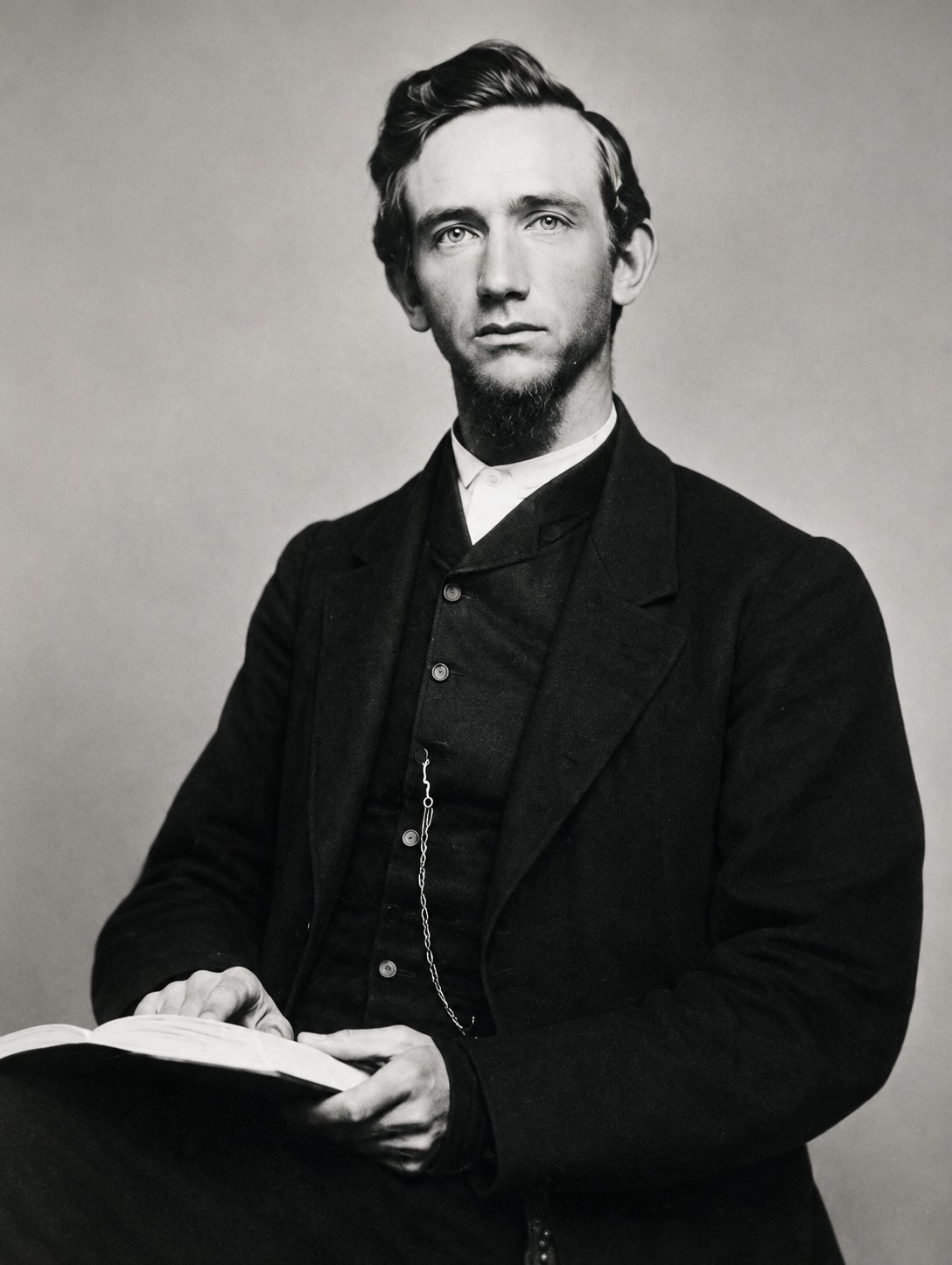
The apostasy of Dudley M. Canright stands as a solemn warning that great knowledge, exceptional ability and a position of influence in God’s work cannot protect anyone who allows pride, discouragement and persistent doubt to overcome faith.
D. M. Canright (1840–1919) joined the Adventist movement in 1859, was ordained in 1865 and served the Church for approximately twenty-two years as a minister, evangelist, writer, administrator and gifted public debater. He became one of Adventism’s most prominent preachers and leaders, served on the General Conference Executive Committee and was frequently chosen to defend the Sabbath and other Adventist teachings in public debates.
Yet the man who had once powerfully proclaimed these truths eventually abandoned them and became one of their fiercest opponents—a tragic history that reveals how far a gifted servant of God may fall when pride and cherished doubts are repeatedly permitted to silence conviction (Encyclopedia of Seventh-day Adventists).
Before permanently leaving the Seventh-day Adventist Church, D. M. Canright passed through a long and unstable period of discouragement, doubt and repeated withdrawal from the ministry. According to Adventist historian Jud Lake, he left the ministry three times between 1873 and 1884. The first crisis followed corrective counsel from Ellen White in 1873; the second occurred in 1880, when another strong testimony wounded his pride and he developed hard feelings towards her.
Canright later admitted that he had allowed “discouragement and doubts” to control him. Nevertheless, after examining Adventist doctrines again, consulting ministers from other denominations and speaking with James and Ellen White and G. I. Butler, he concluded that the arguments against the Adventist message were inadequate and returned to preaching. In 1881 he publicly reaffirmed his confidence in the message and expressed regret that he had allowed doubt to overcome him.
In the autumn of 1882, Canright withdrew from the ministry for the third and most serious time. He had become dissatisfied with Ellen White’s testimonies and was no longer fully in sympathy with important parts of the Adventist message. He abandoned preaching and spent approximately two years farming, although he remained a member of the Church. During this period, he acknowledged that his doubts and fears increased while his spiritual devotion declined.

In 1884, G. I. Butler invited him to attend Adventist meetings in Michigan, where they spent considerable time examining his objections, counselling and praying together. Canright concluded that several of his objections were mistaken and publicly confessed that his hard feelings towards Ellen White had affected his judgment.
In his remarkable confession, published in the Review and Herald on 7 October 1884, Canright declared that he had experienced “the most remarkable change” of his life. He stated that “light and faith” had returned, that he again believed the Adventist message and Ellen White’s testimonies, and that this change was “directly from heaven—the work of the Spirit of God.” He concluded: “I am fully satisfied that my own salvation and my usefulness in saving others depends upon my being connected with this people and this work.” Canright’s 1884 confession
Yet this renewed commitment lasted little more than two years. Personal grievances and doctrinal doubts arose again, and on 17 February 1887 Canright permanently withdrew from the Seventh-day Adventist Church. Soon afterwards, he and his family joined the Baptist Church.
Ellen White recognised D. M. Canright’s exceptional abilities as a powerful preacher, writer and public debater. She supported him, encouraged his ministry and repeatedly appealed to him when discouragement and doubt caused him to withdraw. However, she also warned that his desire for recognition, popularity and influence was becoming his great spiritual danger—a pattern resembling Lucifer’s syndrome of pride and self-exaltation.
After leaving Adventism, Canright began attacking the teachings he had defended for more than twenty years. Although the heavenly sanctuary became one of his major targets, historical evidence indicates that his principal doctrinal stumbling block was the continuing authority of the Ten Commandments and, consequently, the seventh-day Sabbath. He claimed that the Decalogue had been given only to Israel and was no longer binding upon Christians. This was a remarkable reversal for a man who had previously been one of Adventism’s most accomplished defenders of the Sabbath in public debates.
Canright also became one of Ellen White’s most determined opponents. Seventh-day Adventism Renounced contained a chapter attacking her prophetic ministry, and he later devoted an entire book, published shortly after his death in 1919, to challenging her writings.
The history of D. M. Canright is deeply tragic. A man who possessed exceptional gifts, held influential positions in the Church and powerfully defended the Adventist message eventually devoted those same abilities to opposing it. His experience provides a solemn warning that knowledge, talent and position cannot preserve a person who continually yields to discouragement, wounded pride and cherished doubt. Spiritual safety is found in humility, prayer, willingness to accept correction and continual submission to the Word and Spirit of God.
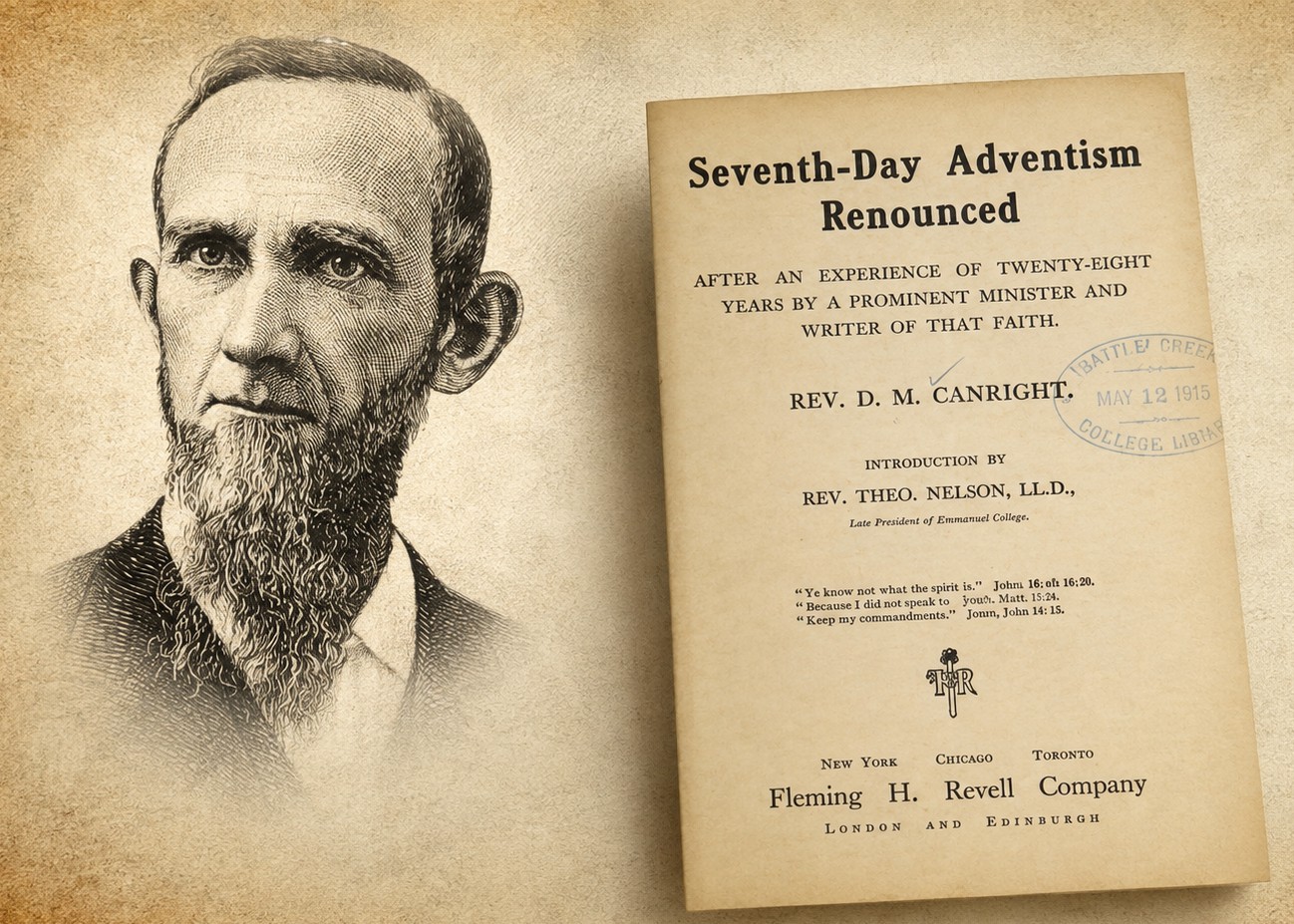
According to Carrie Johnson’s later personal account in “I Was Canright’s Secretary”, Canright remained inwardly conflicted after leaving. She reports that when he attended the Battle Creek Adventist Tabernacle, he sat near the front. When prayer was announced, he appeared to attempt to kneel but was unable to do so. In great distress he cried, “Don’t let me fall, brethren, don’t let me fall!” The deacons helped him outside, after which he walked away alone. At other times, Johnson personally heard him lament repeatedly: “I’m a lost man! I’m a lost man!” and “I am gone! Gone! Gone!”
Carrie Johnson believed that Canright was so controlled by an invisible evil power that, even when he inwardly wanted to write something different, he seemed compelled to dictate attacks against Ellen White and Adventist doctrines. Canright himself sometimes confessed, “What I want to say, I can’t.”
Other witnesses reported that Canright wept when meeting former Adventists and declared: “You have the truth… Remain true to your denomination.” He reportedly wished to return but believed that it was “too late.”
His tragic history is a solemn warning about repeatedly resisting conviction until pride and unbelief harden the heart.
Ellen White’s following appeal to D. M. Canright provides further evidence of the serious spiritual struggle caused by his pride, ambition, unbelief and resistance to divine counsel:
“Dear Brother, You have always desired power and popularity, and this constitutes one of the causes of your present situation. It is not the striving for honors and greatness that will make you great in the sight of God, but a humble and godly life. Our highest Example—Christ—the Man—did not greedily insist on being equal with God, but took upon Himself our nature and did not claim the title of professor, but lived as a humble carpenter, serving others. You have always been accompanied by the desire to perform some great work. But remember, it will take you a lifetime to repair what was destroyed in a moment of thoughtlessness and yielding to temptation. The path of return can be paved only by constant and persistent struggle, step by step. The road leading to heaven is too narrow for honor, wealth, and lofty ambition; too steep and rough for comfortable carriages. I do not expect any explanations of your conduct. Brother Stone urged me to listen to the contents of the letter you wrote to me, but I refused, because doubt, complaining, and unbelief are contagious. Had I made my mind a channel for that poisonous, devil-inspired stream, some of its suggestions might also have contaminated my own mind. If those suggestions had enough power to lead you to sell your birthright for a bowl of lentil soup—for friendship with the enemy of the Lord—then I do not wish to listen to anything connected with your doubts, and I hope you will not succeed in infecting other minds with them. It is not me whom you are betraying, but the Lord. The testimonies I presented to you truly come from Him. I am sorry that you have rejected the light given to you. One thing is certain: those among Seventh-day Adventists who place themselves under Satan’s banner will first abandon faith in the counsels and warnings contained in the Testimonies of the Spirit of Prophecy. I beg you to stop harassing those who still believe in the truth. For if you have chosen the world and those who are of the world, then remain with them. Do not poison the minds of others, making yourself a channel through which Satan leads souls to destruction. Resist the devil, if it is not yet forever too late. Brother Canright, for the sake of your soul, once again firmly grasp the hand of the Lord. I implore you… I am already too weary to continue this correspondence. I wish you well and pray that God may deliver you from the snares of Satan.” (Testimonies, vol. 3, pp. 304–329, August 12, 1873; vol. 5, pp. 516–520, 1886; vol. 5, pp. 571–573, 1887; vol. 5, pp. 621–628, April 20, 1887).
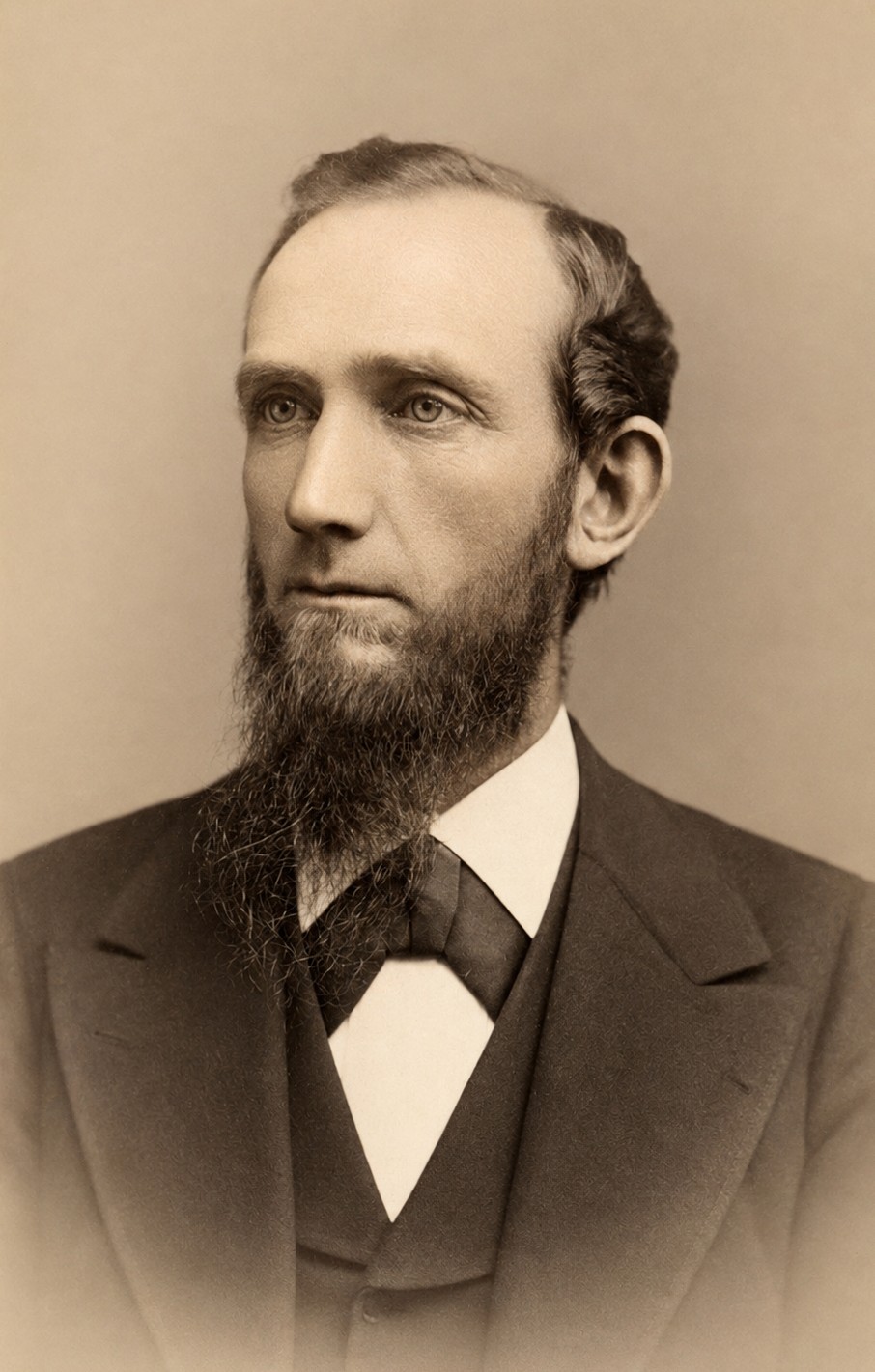
D. W. Reavis, who had been a lifelong friend of Canright, tells of his last interview with him: “I tried to get him to say to the workers there assembled just what he had said to me, assuring him that they would be glad to forgive all and to take him back in full confidence. I never heard any one weep and moan in such deep contrition as that once leading light in our message did. It was heartbreaking even to hear him, He said he wished he could come back to the fold as I suggested, but after long, heartbreaking moans and weeping, be said: ‘I would be glad to come back, but I can’t! It’s too late! I am forever gone! Gone!’ As he wept on my shoulder, he thanked me for all I had tried to do to save him from that sad hour. He said, ‘D. W. whatever you do, don’t ever fight the message’.” — D. W. Reavis, in “I Remember,” pages 119-120. Those who knew Canright personally described a deeply tragic decline. Carrie Johnson, who served as his secretary when he was seventy-two, testified that his finances had greatly diminished, income from his books had declined, and he was forced to supplement the small income from his “poor little farm” by selling religious and children’s books from door to door. By then he had lost his left eye through surgery. After seeing him in 1904, former General Conference president G. I. Butler described him as “a poor, seedy, used-up old man.” L. H. Christian, who visited Canright at his small farm in 1915, remembered him as “a discouraged, disappointed man.” His preaching influence had largely disappeared, and although the Baptists gave him the honorary title of pastor emeritus, it carried neither a pastoral position nor a salary.
His physical condition later became even more pitiful. In March 1916, he fell into the basement of a Baptist church that was being renovated and lay severely injured for nearly two days before being discovered. After several operations and months of intense suffering, one of his legs had to be amputated. Having already lost an eye, Canright was now severely physically disabled and confined to a wheelchair. He spent his final three years dependent upon his daughter’s care and died from a paralytic stroke on 12 May 1919. Court records reveal the poverty of his final years: his personal possessions were valued at only $75, his hospital bills remained unpaid, and the Battle Creek Sanitarium did not receive payment until nine years after treating him. His grave remained unmarked for twenty years because his estate lacked sufficient funds. Carrie Johnson therefore concluded that Canright “suffered much in his last years and died almost in obscurity”—a tragic end for a man who had once been one of the most gifted and influential preachers in the Seventh-day Adventist Church. Carrie Johnson, I Was Canright’s Secretary, pp. 77–82