Cities of Refuge: Finding True Security In Christ
Slawomir Gromadzki
Introduction
In Philippians 3:7-9, the Apostle Paul writes, “But whatever were gains to me I now consider loss for the sake of Christ. What is more, I consider everything a loss because of the surpassing worth of knowing Christ Jesus my Lord, for whose sake I have lost all things. I consider them garbage, that I may gain Christ and be found in him, not having a righteousness of my own that comes from the law, but that which is through faith in Christ — the righteousness that comes from God on the basis of faith.”
Paul speaks like someone who has fallen deeply in love. Why was Paul willing to suffer and die for Jesus? It was because he truly understood the wonderful, life-changing truth of salvation in Christ!
In Romans 8:1 Paul wrote that “there is now no condemnation for those who are in Christ Jesus.” The word “now” applies the moment we accept by faith the foundational truths laid out in the preceding chapters of Romans. But what does it really mean to be “in Christ”?
Understanding the Old Testament Shadow in Numbers 35
To gain a clearer understanding of Romans 8:1, we can turn to Numbers 35:9-28, where one of the most vital truths of the gospel is illustrated:
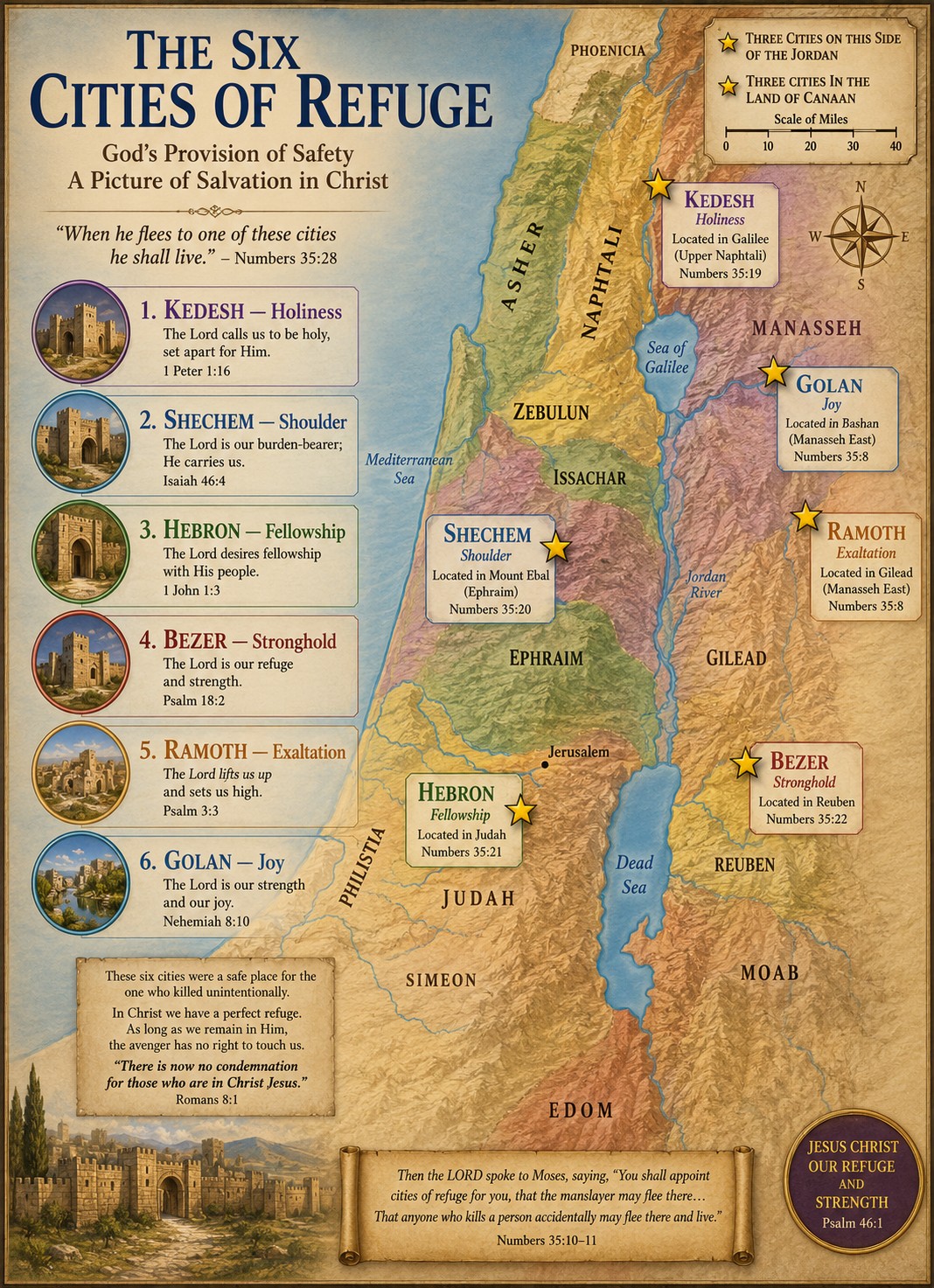
“Then the LORD spoke to Moses, saying, ‘Speak to the children of Israel, and say to them: When you cross the Jordan into the land of Canaan, then you shall appoint cities to be cities of refuge for you, that the manslayer who kills any person accidentally may flee there. They shall be cities of refuge for you from the avenger, that the manslayer may not die until he stands before the congregation in judgment. And of the cities which you give, you shall have six cities of refuge.
You shall appoint three cities on this side of the Jordan, and three cities you shall appoint in the land of Canaan, which will be cities of refuge. These six cities shall be for refuge for the children of Israel, for the stranger, and for the sojourner among them, that anyone who kills a person accidentally may flee there… then the congregation shall judge between the manslayer and the avenger of blood according to these judgments.
So the congregation shall deliver the manslayer from the hand of the avenger of blood, and the congregation shall return him to the city of refuge where he had fled, and he shall remain there until the death of the high priest who was anointed with the holy oil.
But if the manslayer at any time goes outside the limits of the city of refuge where he fled, and the avenger of blood finds him outside the limits of his city of refuge, and the avenger of blood kills the manslayer, he shall not be guilty of blood, because he should have remained in his city of refuge until the death of the high priest.
But after the death of the high priest the manslayer may return to the land of his possession.'” (Numbers 35:9-15, 24-28).
Gospel Principle of Abiding in the Cities of Refuge
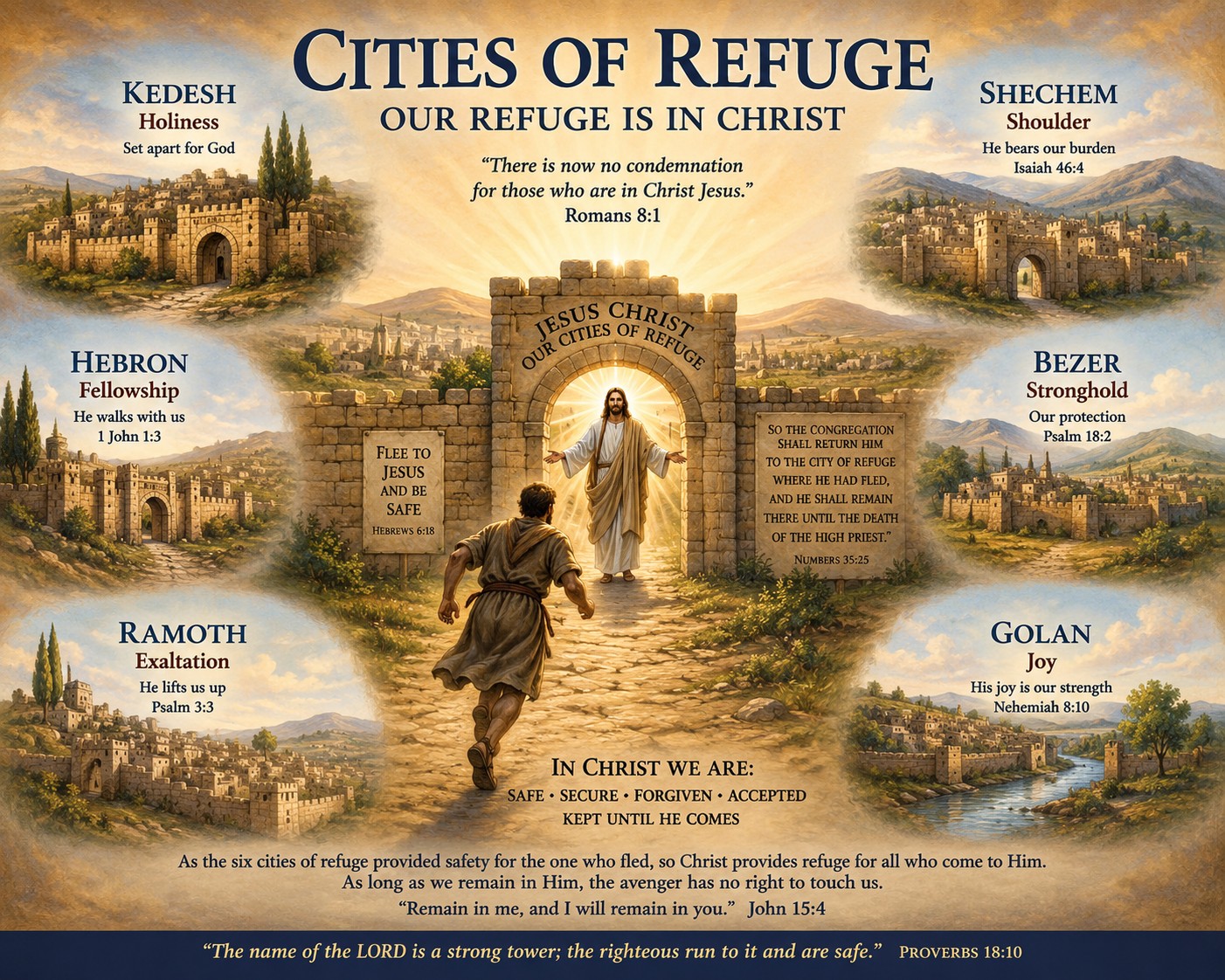
According to this chapter, the Lord commanded that if someone unintentionally killed another person, he could flee to one of the six cities of refuge and remain there until judgment. As long as he stayed inside the city, the avenger had no right to touch him, but if he stepped outside the city limits, the avenger had the right to kill him.
This sanctuary system contains a powerful principle of the gospel. The person who killed accidentally represents us as sinners, while the avenger of blood represents the devil, who seeks to destroy us. The city of refuge itself is a direct symbol of Jesus Christ, not of any earthly church.
If we are in Christ, the devil cannot touch us, but as soon as we step out of Christ, we leave ourselves exposed. These sanctuary cities demonstrate that our security is entirely in Christ. In Christ, humanity was given complete safety from condemnation, and our ongoing security relies on staying legally and practically sheltered in Him rather than relying on our own strength.
Entering and Abiding in Christ Through Faith
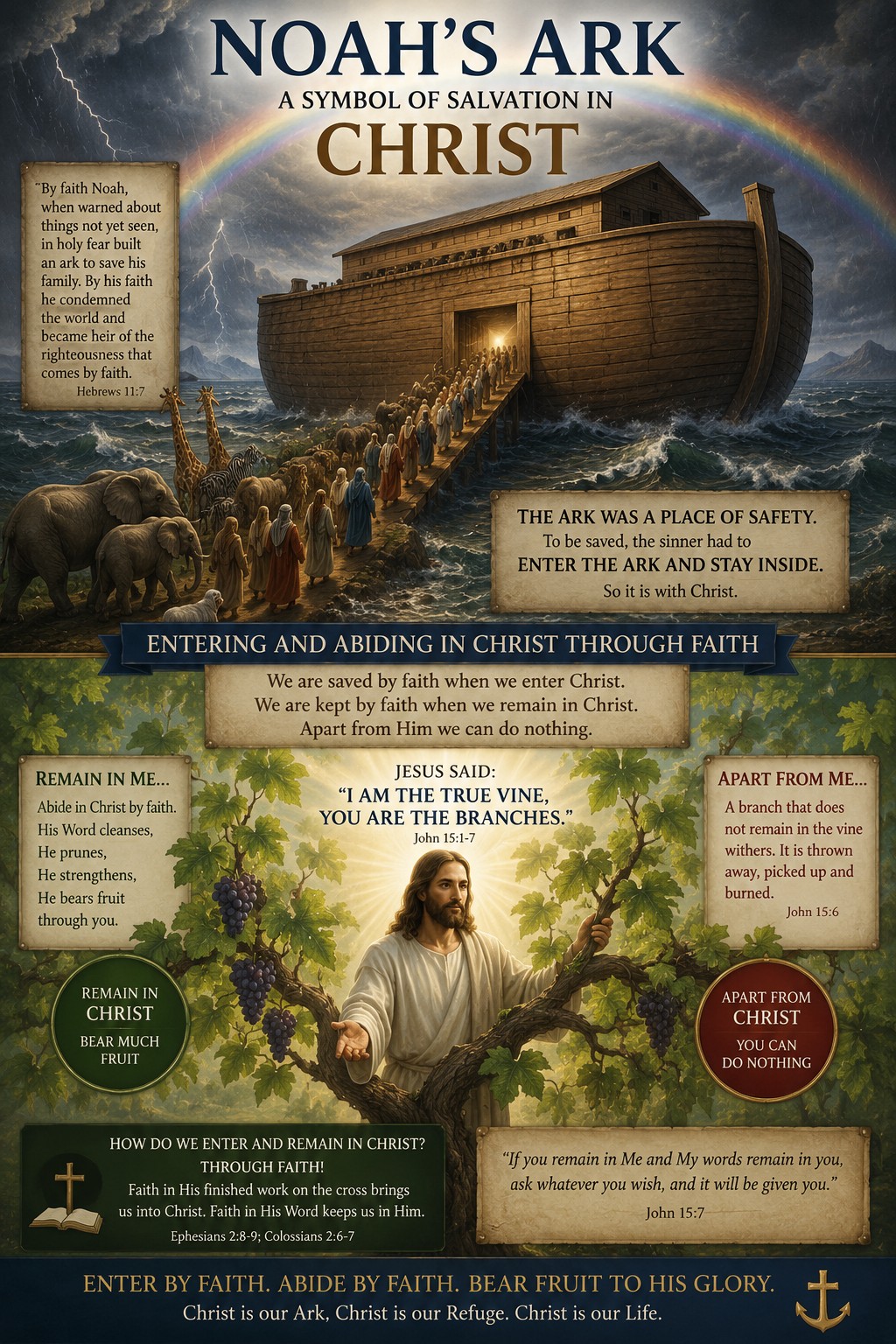
The Old Testament provides other powerful examples of the “in Christ” motif, such as Noah’s Ark during the flood. The Ark was a clear symbol of Jesus, where in order to be saved, the sinner had to enter the Ark and stay inside!
But how do we enter into Christ today and remain in Him? The answer is through faith!
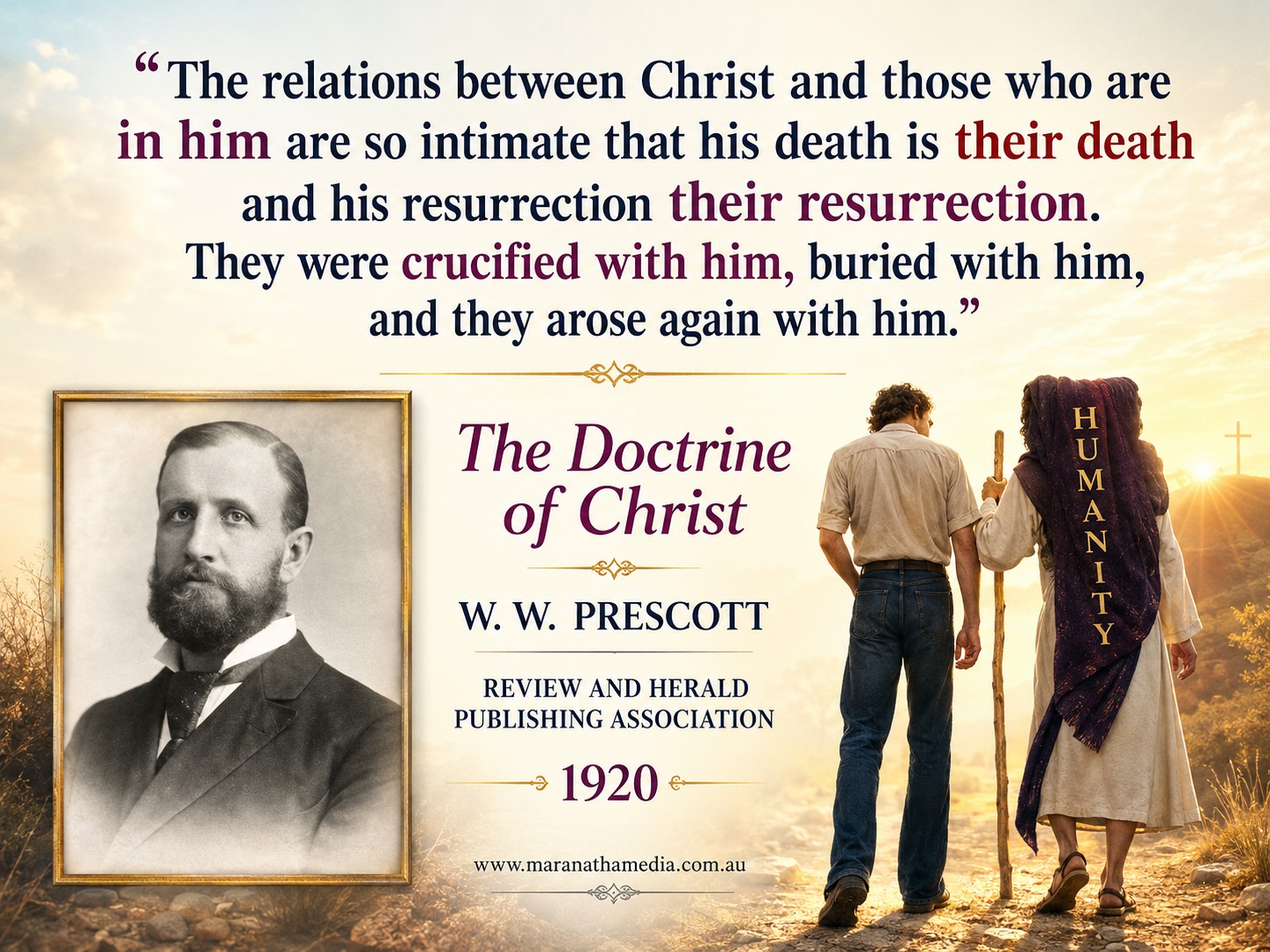
At Christ’s incarnation, God placed all sinners—the entire human race—in Christ. By taking our corporate, fallen human nature, Christ became the Representative of all humanity. Therefore, His perfect obedience and His death on the cross became our perfection and our death in Him.
However, as with any gift, we can benefit from it only by accepting it. God’s gift of placing us in His Son must be accepted through genuine faith. The evidence that we have accepted this gift is the new birth and the works of faith produced by the indwelling Holy Spirit.
After accepting this gift, all we need to do is remain in the Lord Jesus daily by faith.
Jesus used the vine metaphor in John 15:1-7:
“I am the true vine, and my Father is the gardener. He cuts off every branch in me that bears no fruit, while every branch that does bear fruit he prunes so that it will be even more fruitful. You are already clean because of the word I have spoken to you. Remain in me, and I will remain in you. No branch can bear fruit by itself; it must remain in the vine. Neither can you bear fruit unless you remain in me. I am the vine; you are the branches. If a man remains in me and I in him, he will bear much fruit; apart from me you can do nothing. If anyone does not remain in me, he is like a branch that is thrown away and withers; such branches are picked up, thrown into the fire and burned. If you remain in me and my words remain in you, ask whatever you wish, and it will be given you.” (John 15:1-7).
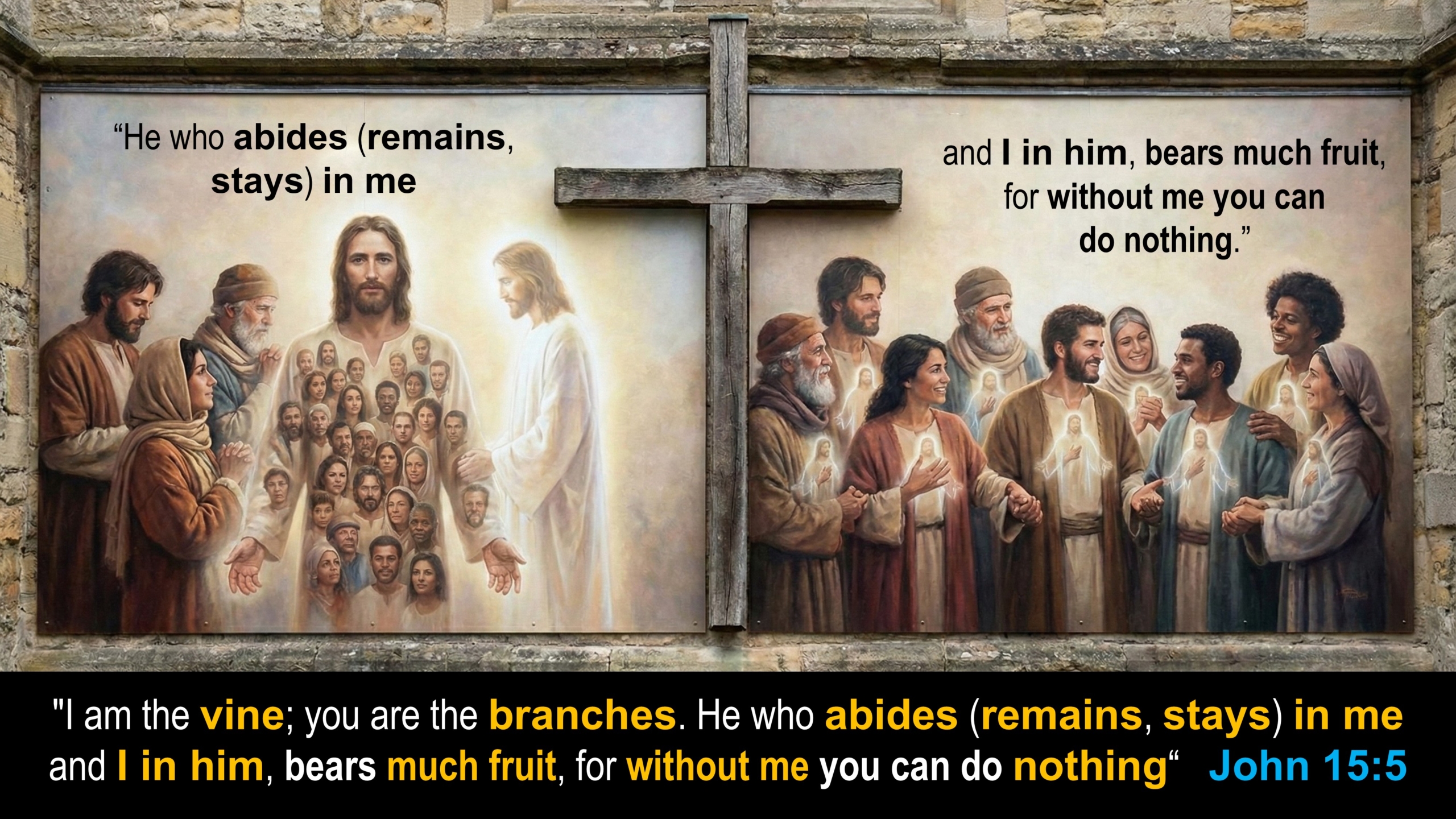
In this passage, Jesus Himself is the Vine, and we are the branches. Notice that all of humanity was legally included in Christ through His incarnation and cross, but only true believers receive the actual saving benefit through personal faith!
We do not need to struggle to place ourselves in Him; our role is simply to remain in Him and bear fruit.
As Jesus assured His disciples, they were already clean because of the word spoken to them (John 5:24), even though they were not yet practically perfect in their daily conduct. There is no justification and no sanctification apart from Christ! This is why the word “remain” is emphasized eight times in this short passage.
Death of the High Priest and Final Redemption
Finally, we arrive at the most vital aspect of the truth hidden in the cities of refuge: when could the sinner hiding in the city regain full freedom and return home?
Numbers 35:25 tells us: “So the congregation shall deliver the manslayer from the hand of the avenger of blood, and the congregation shall return him to the city of refuge where he had fled, and he shall remain there until the death of the high priest.”
The High Priest in the Old Testament was a direct shadow of Jesus Christ. The death of the High Priest pointed forward to the death of Christ on the cross, through which our ultimate freedom is secured (Galatians 3:13). As the old hymn beautifully expresses: “When from the dust of death I rise, To take my mansion in the skies, This all my hope—this all my plea, That Jesus lived and died for me!”
Remain in Christ or Perish Like Abner Who Died “Like a Fool”
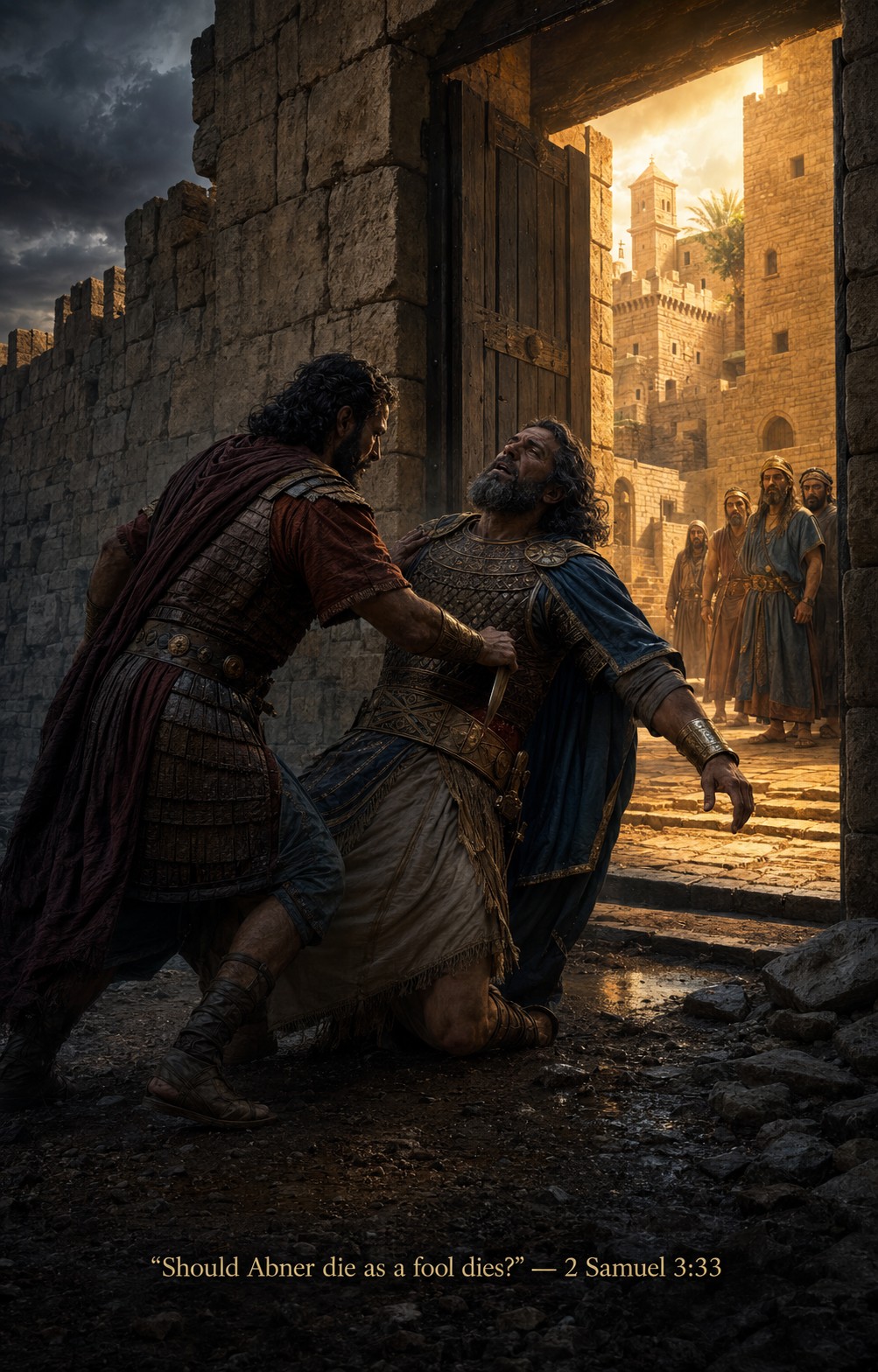
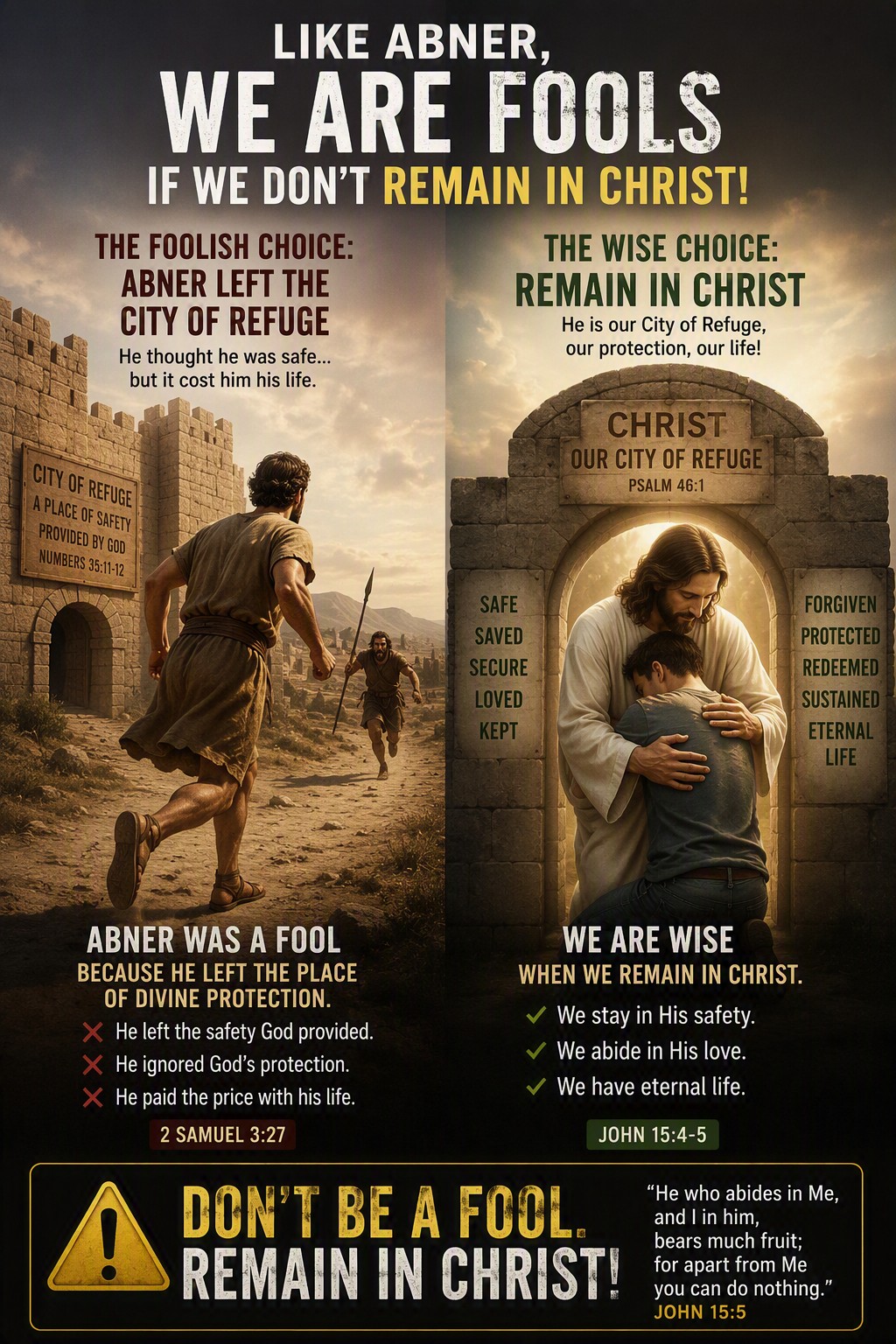
Here is what happened when a man slayer didn’t remain in the city of refuge. In 2 Samuel, a man named Abner killed a man named Asahel in a battle. Asahel’s brother was Joab, commander-in-chief of King David’s army. Now when Abner had returned to Hebron (city of refuge), Joab took him aside in the gate to speak with him privately, and there stabbed him in the stomach, so that he died for the blood of Asahel his brother (2 Samuel 3:27). Abner was killed by the avenger of blood, at the very gate of the city of refuge! But he was on the wrong side of the gate. “And the king sang a lament over Abner and said: ‘Should Abner die as a fool dies?’” (2 Samuel 3:33) If you do not remain (stay) the city of refuge (in Jesus), then you will die as a fool.
An unintentional manslayer fleeing the avenger of blood was safe strictly because of his location—being inside the gates of the designated city—and not because of his good deeds or character. Our salvation is similarly positional, meaning believers are safe from the condemnation of the law solely because they are in Christ.
Outside the refuge, the avenger of blood had the legal right to execute the fugitive, whereas inside, the fugitive possessed complete protection. It refers directly to Romans 8:1, which states that there is now no condemnation for those who are in Christ Jesus. Outside of Christ, a person stands exposed to the legal penalty of the law. In Christ, the believer resides in a position where the law’s death sentence has already been executed on Jesus, granting complete immunity from condemnation.
READ MORE ABOUT MEANING OF BEING IN CHRIST
Access to the Refuge and the Hebrew Names
These cities of refuge were strategically scattered throughout the land so that no one living within the borders was more than a half day’s journey from safety. The roads leading to them were always kept in excellent repair, complete with clear signposts along the highway so that a fleeing person would lose no time or make mistakes along the way.
In the exact same manner, Jesus Christ is not far from any one of us. God has made the way to Him as accessible as possible; the pathway is always open and well-maintained, with pointers everywhere directing us to Jesus, our Refuge.
As long as we abide in Him, we are completely safe from the accuser. If a person strays outside of Him, he faces the penalty, but in Him, there is absolute security, for “there is no condemnation for those who are in Christ Jesus.”
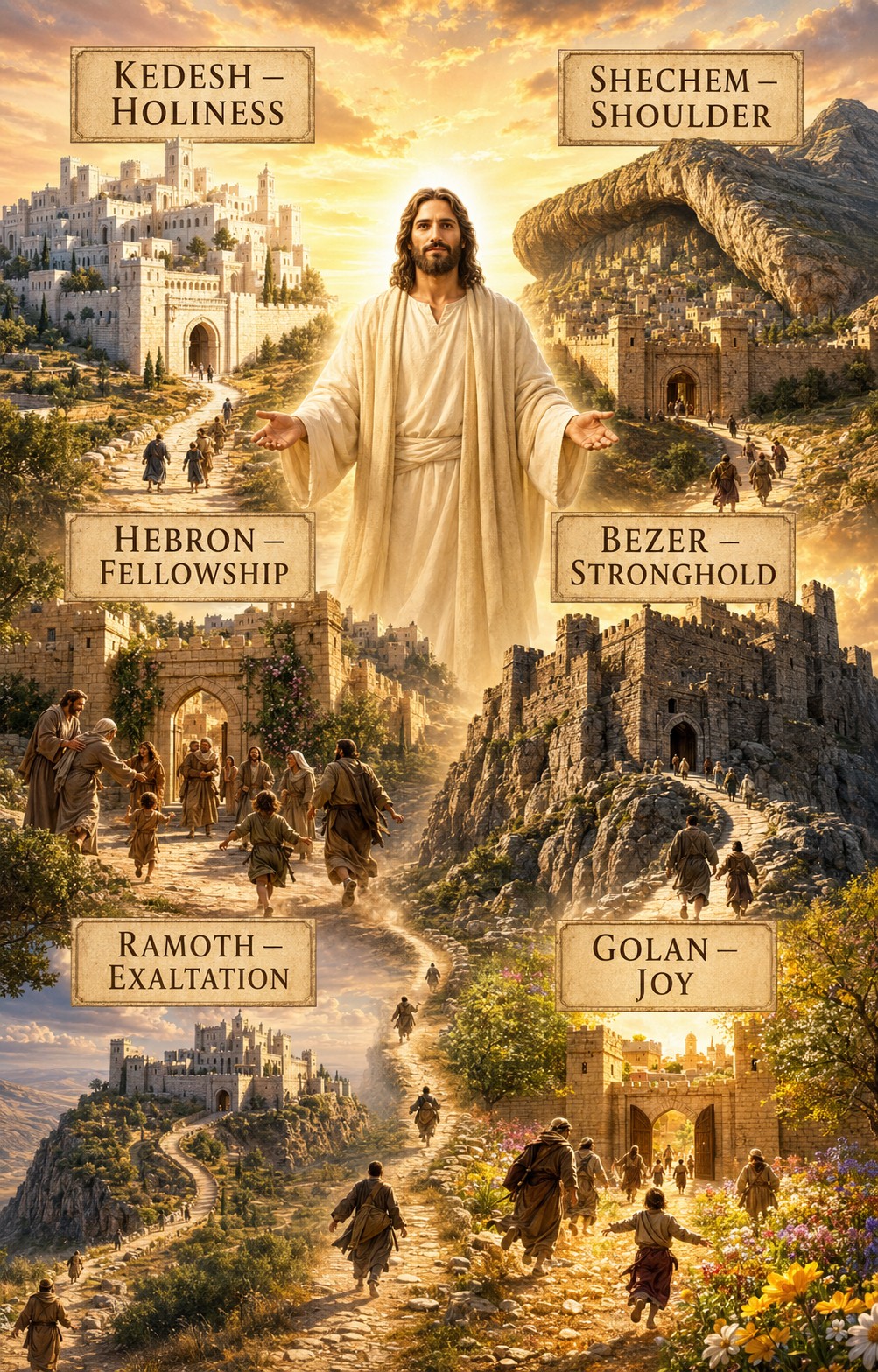
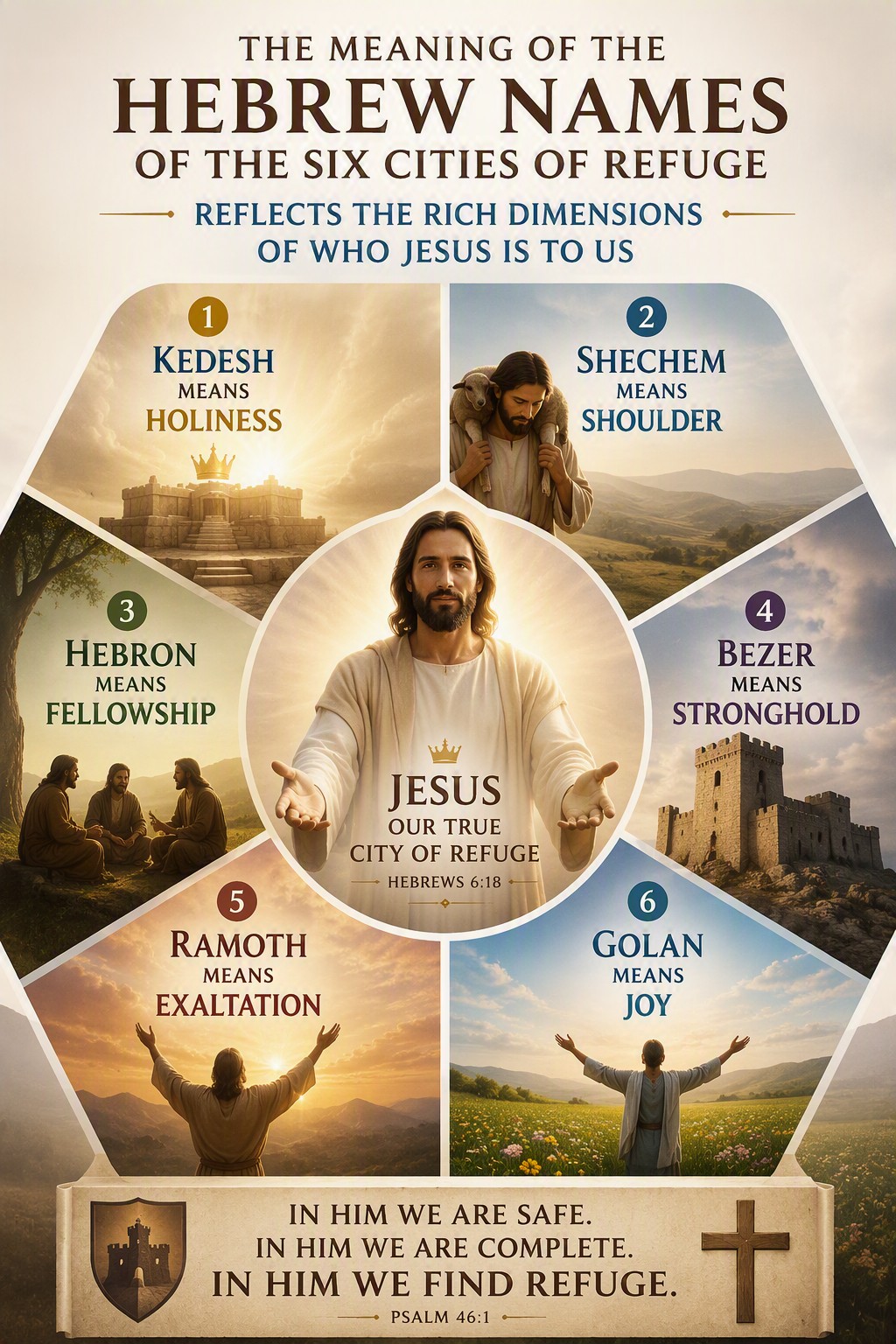
Furthermore, the meaning of the Hebrew names of these six cities reflects the rich dimensions of who Jesus is to us:
Kedesh means Holiness, Shechem means Shoulder, Hebron means Fellowship, Bezer means Stronghold, Ramoth means Exaltation, and Golan means Joy.
Summary
Exodus 21:12–13: “He who strikes a man so that he dies shall surely be put to death. However, if he did not lie in wait, but God delivered him into his hand, then I will appoint for you a place where he may flee.” (read also Joshua 20 and Numbers 35:9-24)
The 6 cities of refuge were given as places of refuge for those wo killed someone unintentionally (by accident) and were chased by the avenger of blood. They were spread evenly in Israel so that they were withing rich no matter the location.
1. According to Numbers 35:11, the appointed cities were the only locations wherein the manslayer could seek refuge and protection from the Avenger.
Christ is our only way to salvation and safety. Jesus Himself reveals in John 14:6 – “I am the way, the truth and the life and no one can come to the Father but (except) through me.”
2. They were priestly cities. They were cities of the Tribe of Levi, who mediated between God and the people. Once the High Priest in Israel died, you were set free and could return to your hometown.
As the manslayer was set free from the death sentence after the death of the hight priest, we are set free from condemnation and death because Christ, our high priest died for us and because we died with Him, accept this truth and are free from condemnation (Rom 6:6, Rom 8:1, 2 Cor 5:14).
In this sanctuary illustration, the manslayer represents the sinner liable to the penalty of the law, while the avenger of blood represents the execution of righteous judgment and the law. Being inside the city signifies being legally and spiritually positioned in Christ, and abiding in the city represents abiding in Christ through faith. Finally, the death of the High Priest points directly to the sacrificial death of Christ granting full liberty.
3. Once inside the city, you were safe from the avenger of blood, but you had to stay in the city to remain safe. When we accept our righteousness and death in Christ we are safe but we are safe as long as we remain in Him by faith.
And like the manslayer was safe as long as he was in the city and stayed there, God placed is in Christ and we must accept this wonderful fact and remain in Him to be safe (John 15:5).
The roads to the Cities of Refuge were kept clear and open to both Israelites and strangers. It can be compared this to the universal reach of the gospel, where through the incarnation and the cross, God strategically placed humanity legally in Christ, offering a fully prepared refuge that anyone can inhabit by faith.
“The cities of refuge were a sanctuary for the person who fled to them. As long as he remained within the city, he was safe from the avenger of blood. In the same way, Jesus Christ is our city of refuge. In Him we have sanctuary from the condemnation of the law.” (Jack Sequeira, Beyond Belief: The Good News of God’s Justice and Mercy).