True Christianity vs Islam, Catholicism & Other Religions
Slawomir Gromadzki
Every Human Religion Says “Do,” but the Gospel Says “Done”
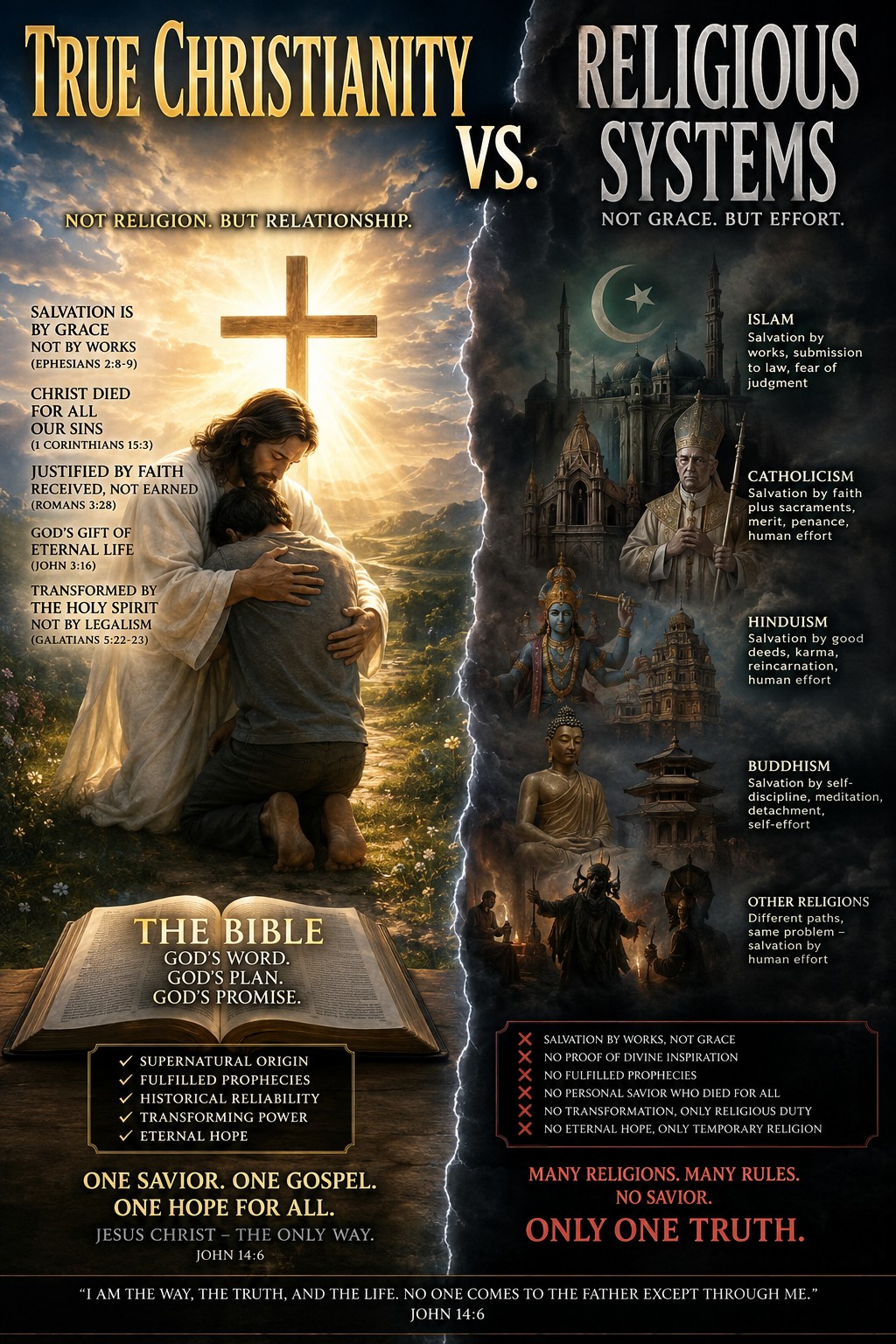
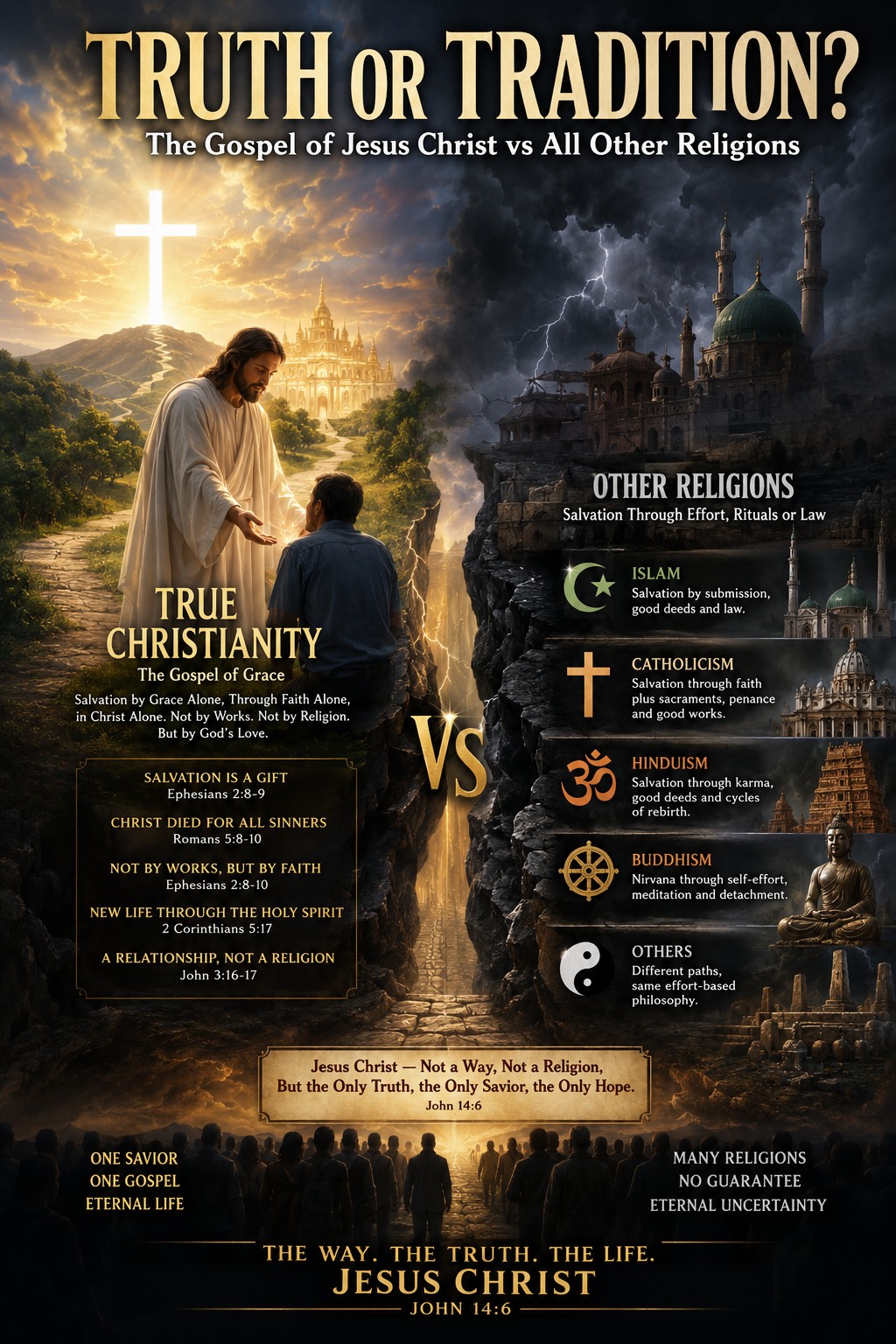
The world contains thousands of religions, denominations and spiritual philosophies. They may appear very different, yet most of them share one fundamental idea: human beings must somehow improve themselves, practise religious duties, accumulate merit, control their desires, perform good deeds in order to reach God, escape judgment or attain a better existence.
The methods may vary. One religion may require prayers, fasting, pilgrimage and submission to religious law. Another may emphasise sacraments, penance and meritorious works. Others teach meditation, self-discipline, karma, moral purification, enlightenment or repeated lives of gradual improvement. Yet beneath these differences lies the same basic principle of the “Babel tower”: humanity must climb upwards through its own religious effort.
Biblical Christianity begins with the opposite message. It declares that sinful humanity cannot climb up to God. We are spiritually helpless, morally fallen, naturally selfish, and incapable of producing the perfect righteousness required by a holy God to allow us to live forever without causing problems. Therefore, God Himself came down to us and identified Himself with us by taking the same sinful nature that we have (Romans 8:3; 2 Corinthians 5:21; Hebrews 4:14). He perfectly overcame sin on our behalf and carried our condemned nature to the cross, where it was put to death forever, thus providing forgiveness and salvation for all past, present, and future sinners.
All we have to do is accept this supreme gift of God’s self-sacrificing love. If the acceptance is genuine, it should lead to the “new birth” and a converted life through the presence of God’s Spirit in the believer, resulting in the gradual renewal of character and life.
This salvation, therefore, is God’s work from beginning to end. Our role is to accept, believe, surrender, and allow God to work in us.
The gospel is not the story of humanity searching for God. It is the story of God searching for lost humanity. It is not the announcement of what sinners must accomplish for their salvation. It is the good news of what God has already accomplished for every sinner through His Son. This is what makes biblical Christianity completely unique.
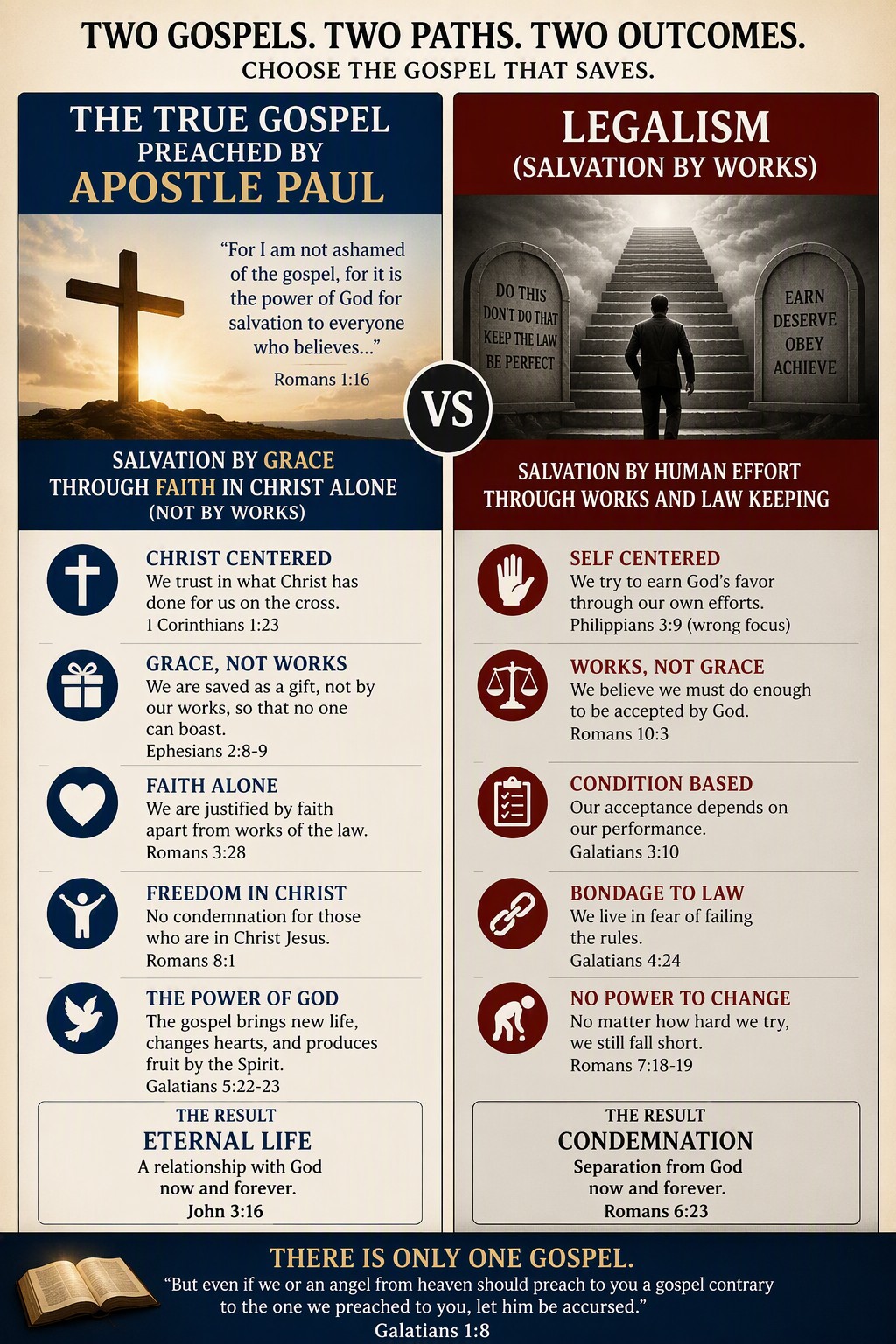
Human religion says: become good enough, and perhaps God will accept you. The true Biblical gospel says: you can never become good enough, so God has provided perfect righteousness for you in Jesus Christ.
Human religion says: obey in order to be accepted. The gospel says: receive God’s acceptance in Christ, and genuine obedience will follow. Human religion makes salvation depend on human achievement. The gospel makes salvation depend entirely on the finished work of Jesus Christ.
The apostle Paul explains this with unmistakable clarity: “For by grace you have been saved through faith, and that not of yourselves; it is the gift of God, not of works, lest anyone should boast” (Ephesians 2:8–9).
This does not mean that good works are unimportant. The very next verse says that believers are “created in Christ Jesus for good works” (Ephesians 2:10). The order, however, is crucial. Good works are not the root of salvation but its fruit. They do not cause God to save us; they provide evidence that we have received salvation by faith.
A tree does not become alive because it bears fruit. It bears fruit because it is alive. In the same way, genuine Christian obedience does not purchase salvation. It reveals that the Holy Spirit is living within the believer.
Paul calls this “faith working through love” (Galatians 5:6). True faith is never merely an intellectual agreement. It is a heartfelt surrender to Christ. When a sinner recognises his hopeless condition, abandons confidence in himself and accepts Christ’s gift, the Holy Spirit begins producing a new life. This life includes repentance, love, obedience and good works—but none of these becomes the price of salvation.
Salvation Was Accomplished Before We Asked for It
The gospel revealed especially in Romans and Galatians is far greater than the idea that Christ merely made salvation possible for those who would later earn or qualify for it. The Bible teaches that while the human race was still helpless, ungodly and hostile toward God, Christ acted on its behalf: “While we were still sinners, Christ died for us” (Romans 5:8). “When we were enemies we were reconciled to God through the death of His Son” (Romans 5:10). “God was in Christ reconciling the world to Himself, not imputing their trespasses to them” (2 Corinthians 5:19).
The initiative came entirely from God. Humanity did not persuade Him to become merciful. Christ did not die because sinners had first repented, reformed their lives or made themselves worthy. He died for us while we were still His enemies.
Through Adam’s sin, condemnation, corruption and death came upon the human family. Through Christ, the second Adam, God provided righteousness, reconciliation and life for that same human family. Paul writes that as one man’s offence brought condemnation, so Christ’s righteous act brought a verdict of justification and life extending to all humanity (Romans 5:18–19).
This does not teach that everyone will finally be saved regardless of personal choice (universalism). It teaches that in Christ God has provided a completed salvation for the whole human race, but this gift must be personally received by faith. A gift may be genuinely purchased and freely offered, yet still be rejected.
Faith does not create salvation. Faith accepts it.
God Himself Came to Save Us
No other religious message contains anything comparable to the incarnation of Jesus Christ. The eternal Son of God humbled Himself, entered the human family and became truly one of us. The Creator entered His own creation. The King of the universe became a servant. The Lawgiver placed Himself under the law. The One worshipped by angels became a helpless child: “He made Himself of no reputation (emptied Himself of His divine prerogatives), taking the form of a servant, and coming in the likeness of sinful men” (Philippians 2:7; Romans 8:3).
Jesus did not merely appear to be human. He entered the human condition weakened by the consequences of the Fall, yet He never committed a single sin. He identified Himself so completely with us that the Bible calls Him our Brother (Hebrews 2:11).
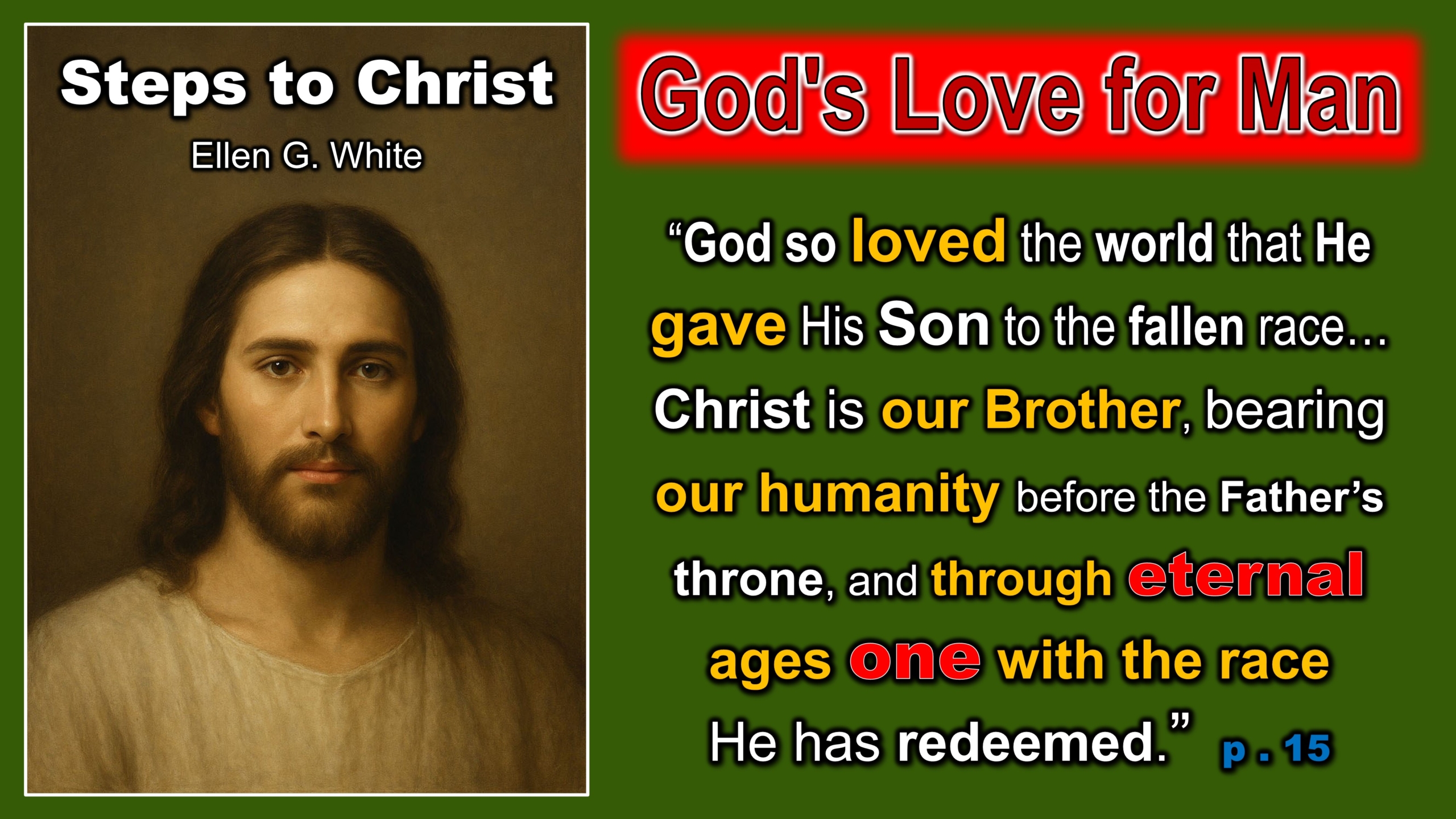
God did not send an angel to rescue us. He did not simply issue instructions from heaven. In His Son, God joined Himself to the human family (2 Cor. 5:19). Jesus became our relative, our Representative and the second Adam. He took humanity into Himself so that He could redeem it from within.
Christ met every temptation through dependence upon His Father and the power of the Holy Spirit. He developed a perfect human character and a righteousness completely free from sin. Christ’s perfect righteousness is offered to the sinner by faith.
No other religion proclaims that God Himself became a member of the condemned human family, fought the battle against sin in human flesh, achieved perfection on humanity’s behalf and then freely offered that perfect righteousness to sinners.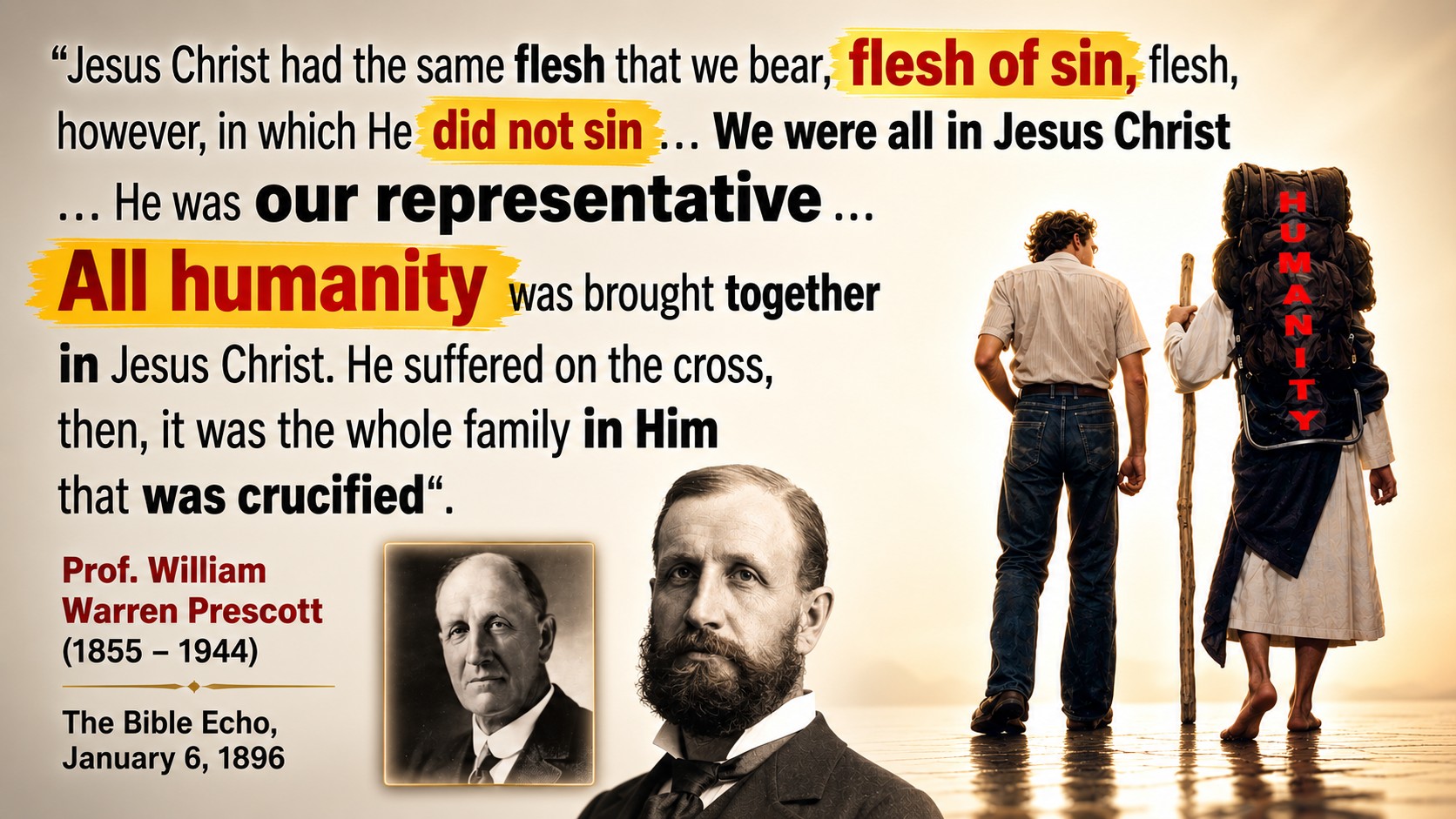
The Word of God makes it clear that all sinful human beings including you and me were already saved by God in Jesus two thousand years ago! It means that our salvation is an already accomplished and finished historic fact! We can’t improve on it and we can’t add anything to it. What we can do is accept it through sincere faith and say “thank you, Lord”.
“I tell you the truth, whoever hears my word and believes him who sent me has eternal life, will not be condemned; and he has crossed over from death to life” (John 5:24).
God already in His Son saved the whole world and forgave the sins of all sinners, not only past but also present and future ones! There is no text in the Bible that says that through the cross of Christ God forgave us only our past sins or the sins we committed before our conversion. That is why in Romans 2:4 Paul made it clear that it is “the goodness of God which leads us to repentance”. So, it is not our repentance that is supposed to lead us to God’s goodness, acceptance, and forgiveness, but it is God’s goodness, His great love revealed in saving us sinners through Jesus which comes first, and then when we experience this love it leads us to repentance!
There is a famous and true story about a stubborn slave who was bought at an auction by a rich man. Before and even after the slave was bought he kept on saying that he wouldn’t work for anyone. But as soon as the rich farmer who bought that stubborn slave told him that he paid for him not to force him to work for others but in order to set him free, then the same unwilling to work for others slave knelt down and said: ‘Sir, I will serve you for all my life!”
Likewise, also God deals with us in exactly the same way. He knew that by nature we tend to be proud, stubborn, self-righteous, and unwilling or even unable to live according to the principle of His self-sacrificing love. For this reason, therefore, He first paid for us with the precious blood of His Son (1Peter 1:18-19) and set us free from the condemnation (Romans 7:6; Romans 8:1). And only then, when we see this great love, we are touched, and we are willing to confess our sins and want to serve this wonderful God forever!
Besides, what is very important to God, now being saved we don’t serve Him and confess our sins out of fear anymore or in order to be saved, but because we have experienced His love and goodness. It means that now we are finally able to repeat the words of apostle Paul: “For to me, to live is Christ and to die is gain” (Philippians 1:21); “But God forbid that I should boast except in the cross of our Lord Jesus Christ, by whom the world has been crucified to me, and I to the world” (Galatians 6:14).
That is also the only way to the new birth experience, and true freedom from slavery to sin. If we first accept the historic fact of our salvation in Christ through genuine faith, then we experience the new birth, which means that from that time on Holy Spirit should dwell in us. And, although it doesn’t mean we are already free from our egocentric and corrupt nature, yet now the indwelling Holy Spirit can empower us, and enable us to control our old corrupt law of sin.
The Unique Message of Love Revealed in the Cross
The cross is not simply the death of a religious teacher or martyr. It is the supreme revelation of God’s character. Jesus did not die because He was unable to escape. He willingly gave Himself. “No one takes it from Me, but I lay it down of Myself” (John 10:18).
At the cross, Christ bore more than physical pain. Crucifixion was unimaginably cruel, but the nails, thorns, blood loss and suffocation were not the deepest source of His suffering. He was made sin and curse for us (Gal 3:13; 2 Cor. 5:21) and sins of the world were placed upon Him. He experienced the guilt, shame, condemnation and curse that belonged to fallen humanity. “Christ has redeemed us from the curse of the law, having become a curse for us” (Galatians 3:13). “He made Him who knew no sin to be sin for us, that we might become the righteousness of God in Him” (2 Corinthians 5:21).
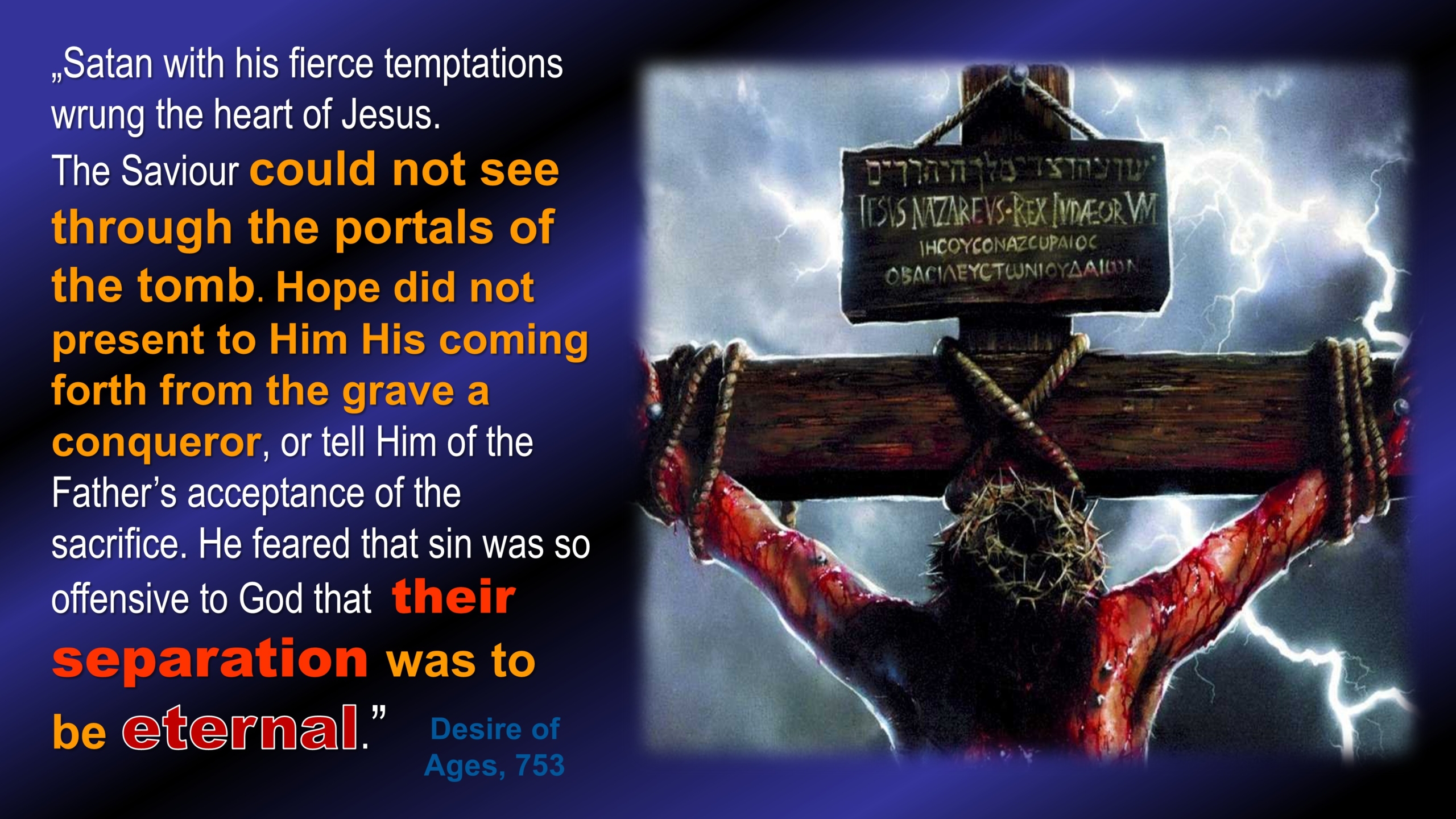
Jesus had lived from eternity in perfect unity with His Father. Yet on the cross, as He bore the sin of the world, He experienced the terrible darkness of separation. He cried, “My God, My God, why have You forsaken Me?” (Matthew 27:46). His heart was broken under the weight of human sin. From His human perspective, He could not see beyond the grave. He was willing to surrender everything—even His eternal existence—rather than abandon the human family He came to save.
This is the love revealed by the true God. The Father was not an unwilling judge persuaded by a compassionate Son. “God was in Christ reconciling the world to Himself” (2 Corinthians 5:19). The cross reveals the united love of the Father, Son and Holy Spirit.
God did not demand a sacrifice from someone else. He provided the sacrifice Himself. The Judge stepped down from the throne and accepted the judgment. The Lawgiver bore the curse of the broken law.
No system created by the human imagination could have invented a God like this. Human religion normally imagines people sacrificing for their gods. In the true biblical Christian gospel, God sacrifices Himself for humanity.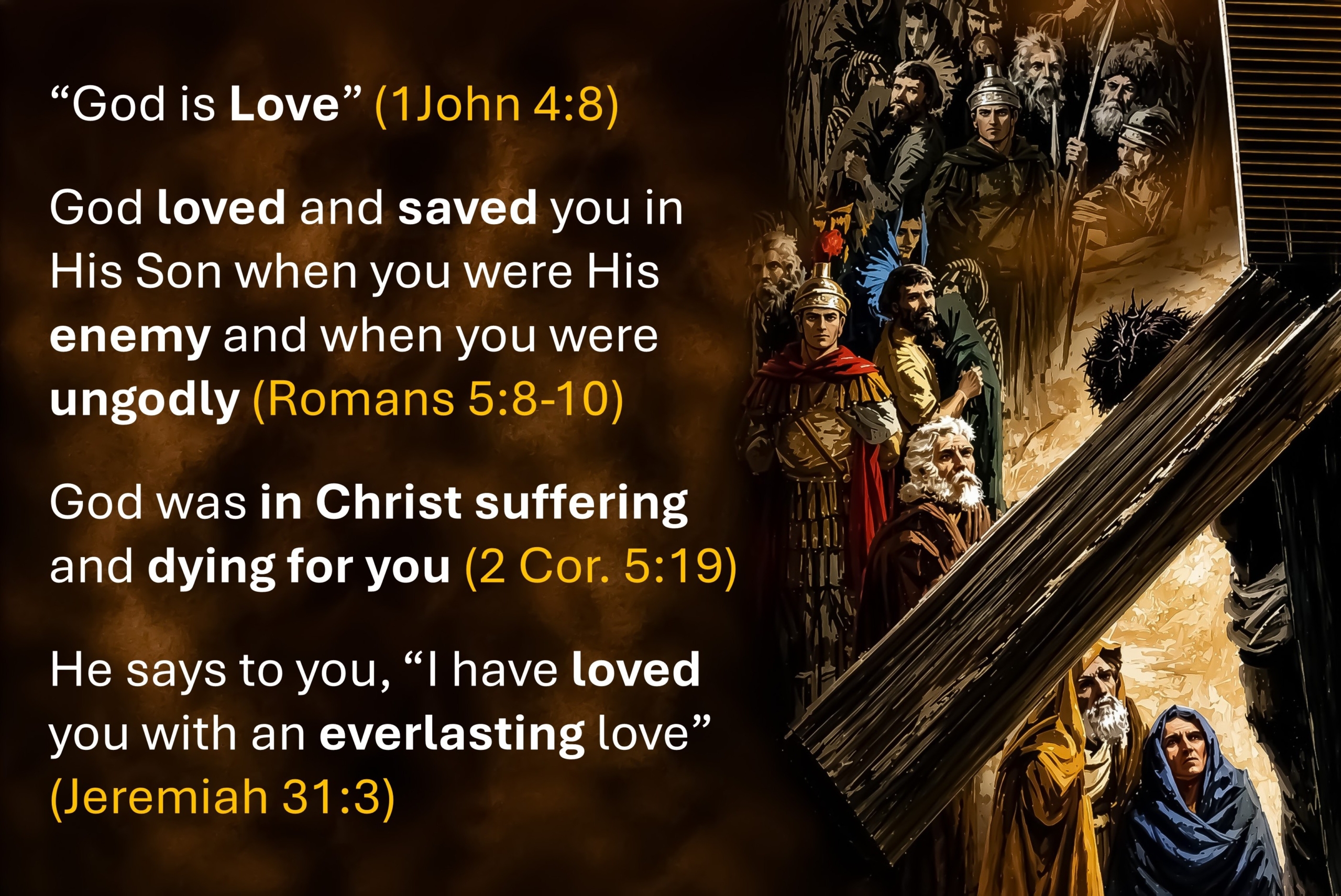
Biblical Christianity Must Not Be Confused with Religious Christianity
Not everything called Christianity represents the gospel of the Bible. Christian history contains persecution, political corruption, compulsory religion, exploitation, superstition and violence. Churches have often contradicted the teachings of Christ. Religious institutions have sometimes replaced God’s Word with human tradition and have turned salvation into a system of rituals, merit, penance or ecclesiastical control.
Whenever Christianity teaches people to earn divine acceptance through their own works, it abandons the gospel and returns to the same legalistic principle found in human religion. The apostle Paul warned that even a religious message using the name of Christ could become “another gospel” (Galatians 1:6–9).
Biblical Christianity therefore cannot be judged merely by the behaviour of everyone who has used the Christian name. It must be judged by Jesus Christ and the teaching of Scripture.
The Protestant Reformation recovered the great biblical truths that had been obscured: Scripture above human tradition, Christ as the only Mediator, salvation by grace alone and justification through faith rather than human merit.
The Reformers were not perfect, and Protestant nations did not always follow the Bible consistently. Nevertheless, placing Scripture in ordinary people’s hands had major social consequences. Because believers were encouraged to read the Bible personally, Protestant movements strongly promoted literacy and education. Economic historians continue to debate the exact causes of later economic development, but research has found that Protestant emphasis on Bible reading contributed to increased literacy and human capital, which in turn supported economic growth in parts of Europe where protestantism was accepted.
The Reformation also strengthened ideas of individual conscience, personal responsibility, vocation, disciplined work and accountability before God. These influences contributed to the development of schools, printing, charitable organisations, constitutional thought and wider public participation.
It would be inaccurate to claim that every Protestant society has always been morally superior, or that economic prosperity proves religious truth. Protestant countries have committed grave injustices, including exploitation, warfare and participation in slavery. But true born again Christians always oposed evil.
It is reasonable to observe that societies profoundly influenced by widespread Bible reading, education, freedom of conscience and personal responsibility often developed stronger educational and civic institutions than societies where religious knowledge remained controlled by a small elite. The important principle was not racial or national superiority but access to Scripture and the transforming influence of biblical truth when genuinely received.
Catholic Gospel Versus Biblical Gospel
Catholic scholars have failed to provide an acceptable gospel because they teach that God saves believing sinners by infusing them with His grace (power), thus enabling them to live righteous lives and qualifying them to be saved. But the problem is that in Catholicism, God fails to make sinful believers righteous because the religion is based on false gospel. As a result, according to the Catholic beliefs, God sends those Catholics whoe are not good enough to purgatory, where they are cleansed from their remaining sins.
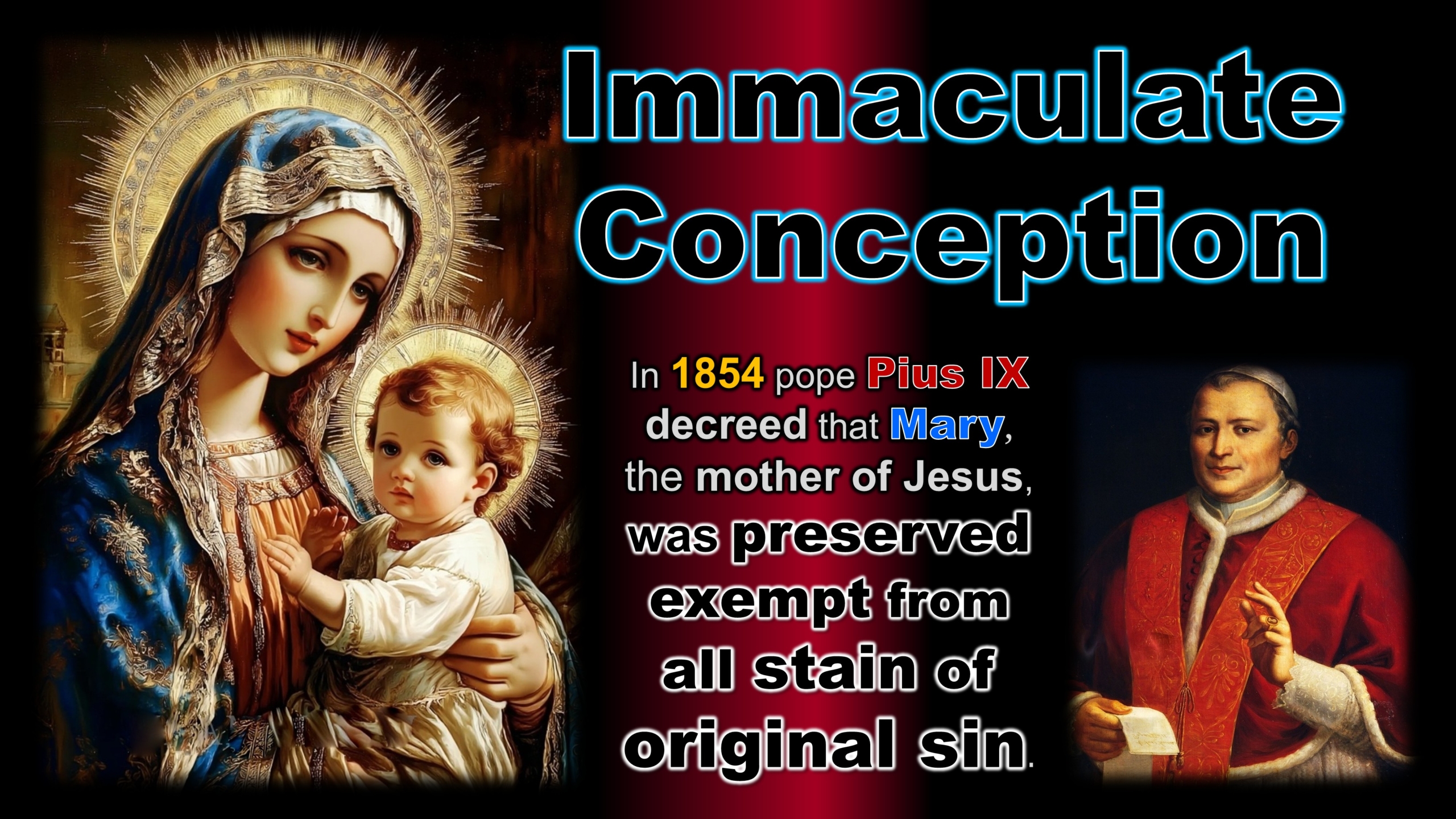
In addition, in the Catholic Church, believing sinners do not have direct access to Christ in heaven but have to reach Him through human intercessors: first, Catholic priests; then, those who used to be believing sinners but were regarded as saints after death; and then holy angels, and finally Mary, who, due to the unbiblical idea of Immaculate Conception, was free from the stain of original sin. And eventually, through Mary, they have access to Christ, who took a sinless human nature and died for them; and through Christ, they have access to God.
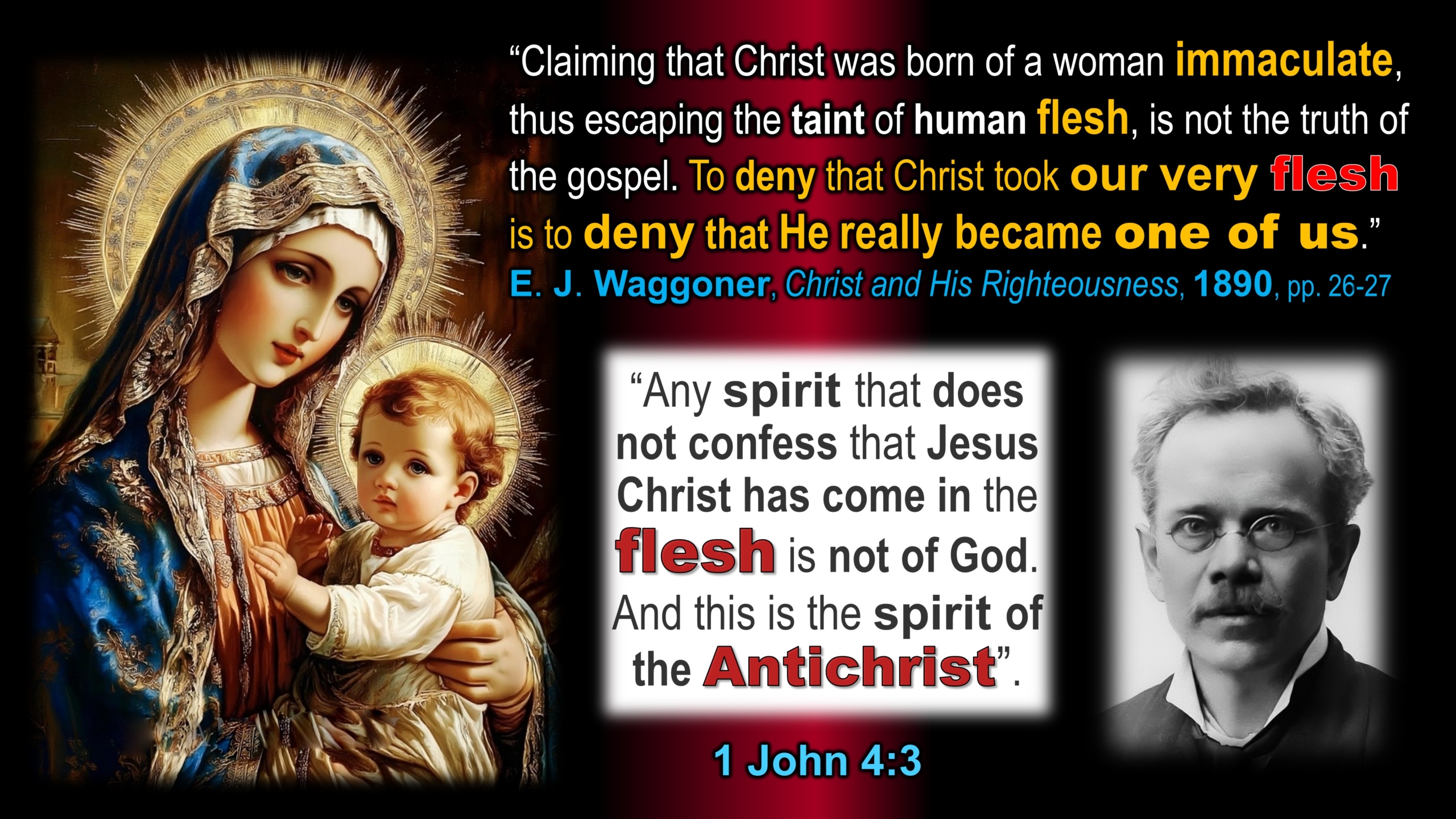
This, however, obscures the biblical truth that Christ alone is our heavenly Mediator: “There is one God and one mediator between God and mankind, the man Christ Jesus” (1 Timothy 2:5). Through Christ, every believer has direct access to God (Ephesians 2:18; Hebrews 4:14–16).
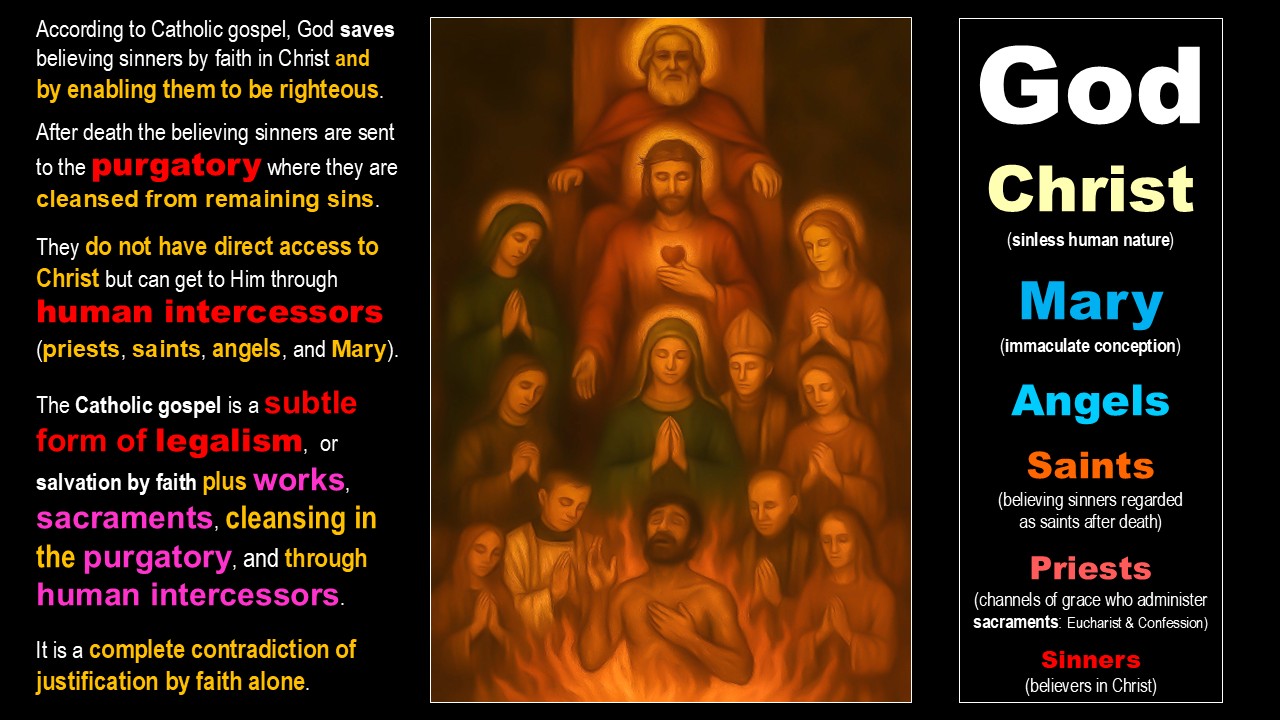
Therefore, the Catholic gospel is salvation by faith plus works, plus sacraments, plus purgatory, and through human intercessors. It completely contradicts Paul’s message of justification by faith alone.
The Catholic Council of Trent officially condemned justification by faith alone: “If anyone says that the sinner is justified by faith alone…let him be anathema [cursed]” (Council of Trent, Session VI, Canon 9). Canon 11 also condemns justification by “the sole imputation of the righteousness of Christ.”
These canons have never been revoked. Yet according to the inspired apostle Paul, those who formulated them—and anyone who continues to promote this false gospel—place themselves under God’s curse: “Even if we, or an angel from heaven, should preach a gospel other than the one we preached to you, let them be under God’s curse! As we have already said, so now I say again: If anybody is preaching to you a gospel other than what you accepted, let them be under God’s curse!” (Galatians 1:8–9).
The Council of Trent pronounced a curse upon those who teach justification by faith alone; but Scripture places the curse upon those who preach any gospel contrary to salvation by grace through faith in Jesus Christ. We must therefore follow the inspired Word of God rather than the decrees of men.
Catholicgospel contradicts inspired Paul: “For we maintain that a person is justified by faith apart from the works of the law” (Romans 3:28). “To the one who does not work but trusts God who justifies the ungodly, their faith is credited as righteousness” (Romans 4:5). “For it is by grace you have been saved, through faith…not by works” (Ephesians 2:8–9).
The biblical gospel declares that sinners are justified entirely by grace, through faith alone, solely because of Christ’s perfect life, sacrificial death and resurrection. Good works are the fruit of salvation, never the cause or basis of it.
How Sinners are Saved According to Islam
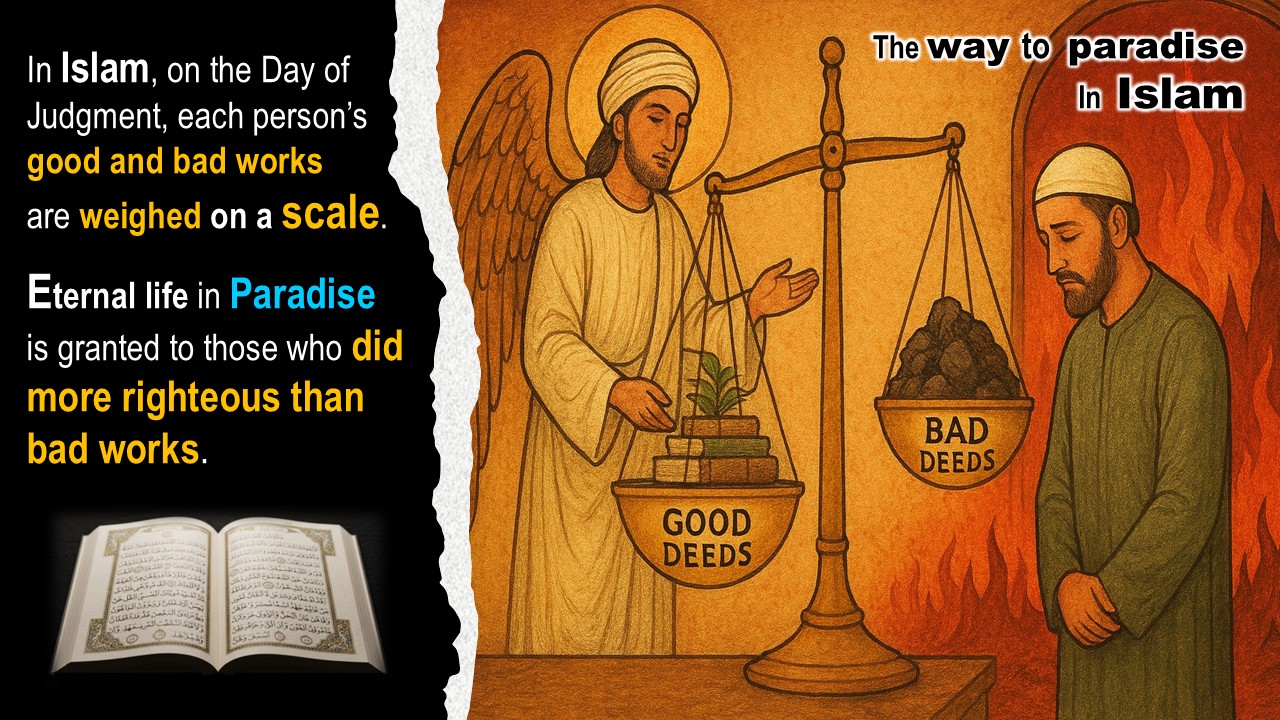
While Muslims attack the popular Christian gospel as unethical, Islam itself, like other non-Christian religions, teaches salvation based on human effort. In Islam, on the Day of Judgement, each person’s good and bad works are weighed on a scale. Paradise is granted to those whose good works outweigh their bad works. Those whose bad works outweigh their good deeds are condemned to suffering in hell.
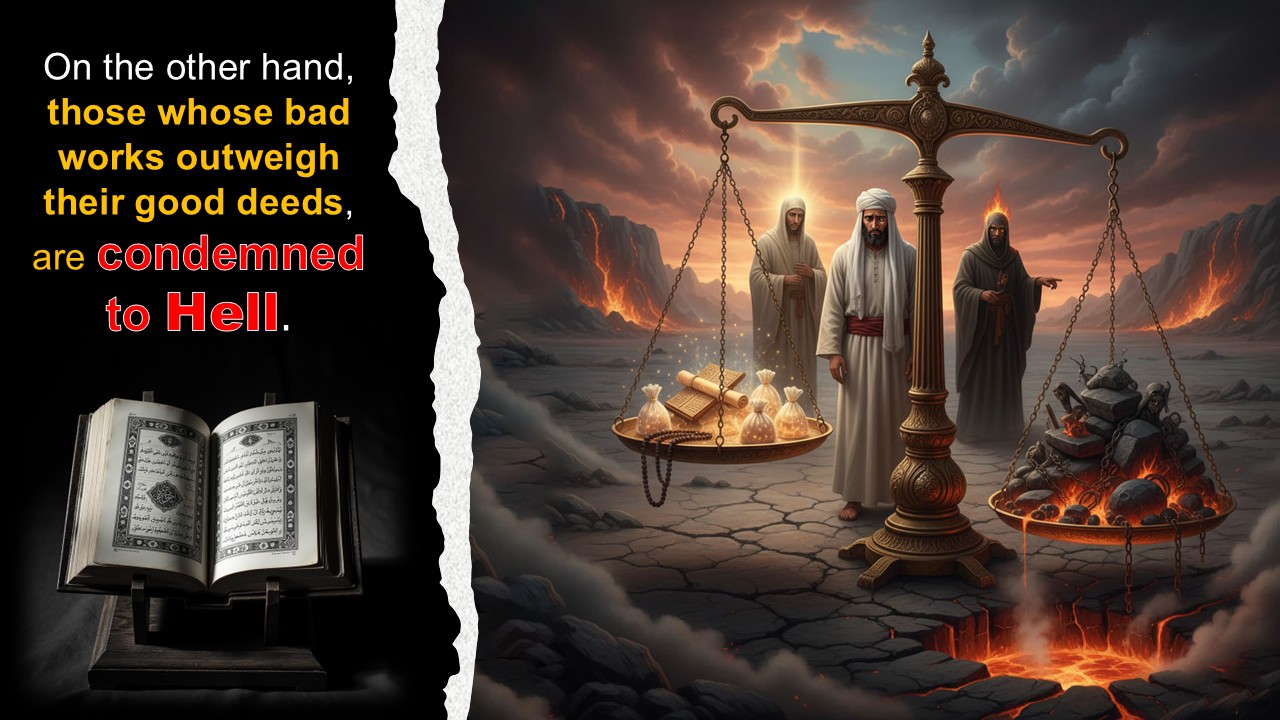
Islamic teaching also holds that sinful Muslims may eventually be released from hell and admitted into paradise. Hell therefore functions for them in a way similar to Catholic purgatory: temporary suffering purifies those who were not initially considered worthy of paradise.
However, those who reject Islam are condemned to eternal punishment. The Quran specifically condemns Christians who believe in the divinity of Christ and the Trinity (Quran 5:72–73). It classifies belief in the Trinity as the most serious sin.
The Islamic gospel is therefore similar to the Catholic gospel: both teach that salvation depends upon human effort, personal righteousness and religious works. Islam also contains an element resembling Catholic purgatory because sinful Muslims may suffer temporarily in hell before eventually being admitted into paradise. Both religions promote false ideas because they are inspired by the same source, the enemy of the true gospel and the love of God.
Both systems have also produced religious persecution. In the past, the papal Rome used inquisitions and political power to persecute, torture and execute Christians who rejected its authority and chose to follow the Bible. Today, Islamist terrorist organisations and certain governments continue to persecute, imprison and kill Christians.
In contrast, the true biblical gospel does not spread through force, persecution or terrorism. It proclaims salvation as God’s free gift, received by faith in Jesus Christ.
Why Religious Works Cannot Save
Good deeds cannot erase guilt. A person who commits a serious crime is not declared innocent merely because he later performs charitable acts. Future obedience does not cancel past disobedience.
Nor can naturally selfish, imperfect people produce perfect righteousness. Even our best actions are mixed with weakness, ignorance and selfish motivation. If salvation depended upon our performance, nobody could possess genuine assurance.
The legalistic heart is therefore caught between pride and despair. When it thinks it is succeeding, it becomes proud. When it recognises its failure, it becomes discouraged or terrified.
The gospel destroys both pride and despair. It destroys pride because salvation is entirely a gift. Nobody can boast before God. It destroys despair because salvation depends upon Christ’s perfect work rather than our unstable performance.
The believer’s assurance is not, “I have finally become good enough.” It is, “Christ is good enough, and I have accepted Him as my righteousness.”
This does not encourage careless living. The person who truly sees the cross cannot continue peacefully in deliberate rebellion. Grace does not merely pardon sin; it breaks sin’s power by revealing the immeasurable love of God. “The love of Christ compels us” (2 Corinthians 5:14). Fear may force temporary outward obedience. Only love can produce genuine holiness.
The Empty Tomb of Christ: Christianity’s Greatest Distinction
“What you don’t have in Buddhism and Islam, Confucianism, Shintoism, Taoism, and these other religions is an atonement. You don’t have a way of redemption offered by true Christianity, nor do you have a living Mediator. Buddha is dead, Confucius is dead, and Muhammad is dead. There is no resurrection in these other religions. Christianity has elements… that distinguish it from all other religions, and with that distinction comes the claim of Christ that He is the only true way to God.” — R. C. Sproul, Defending Your Faith (Ligonier Ministries)
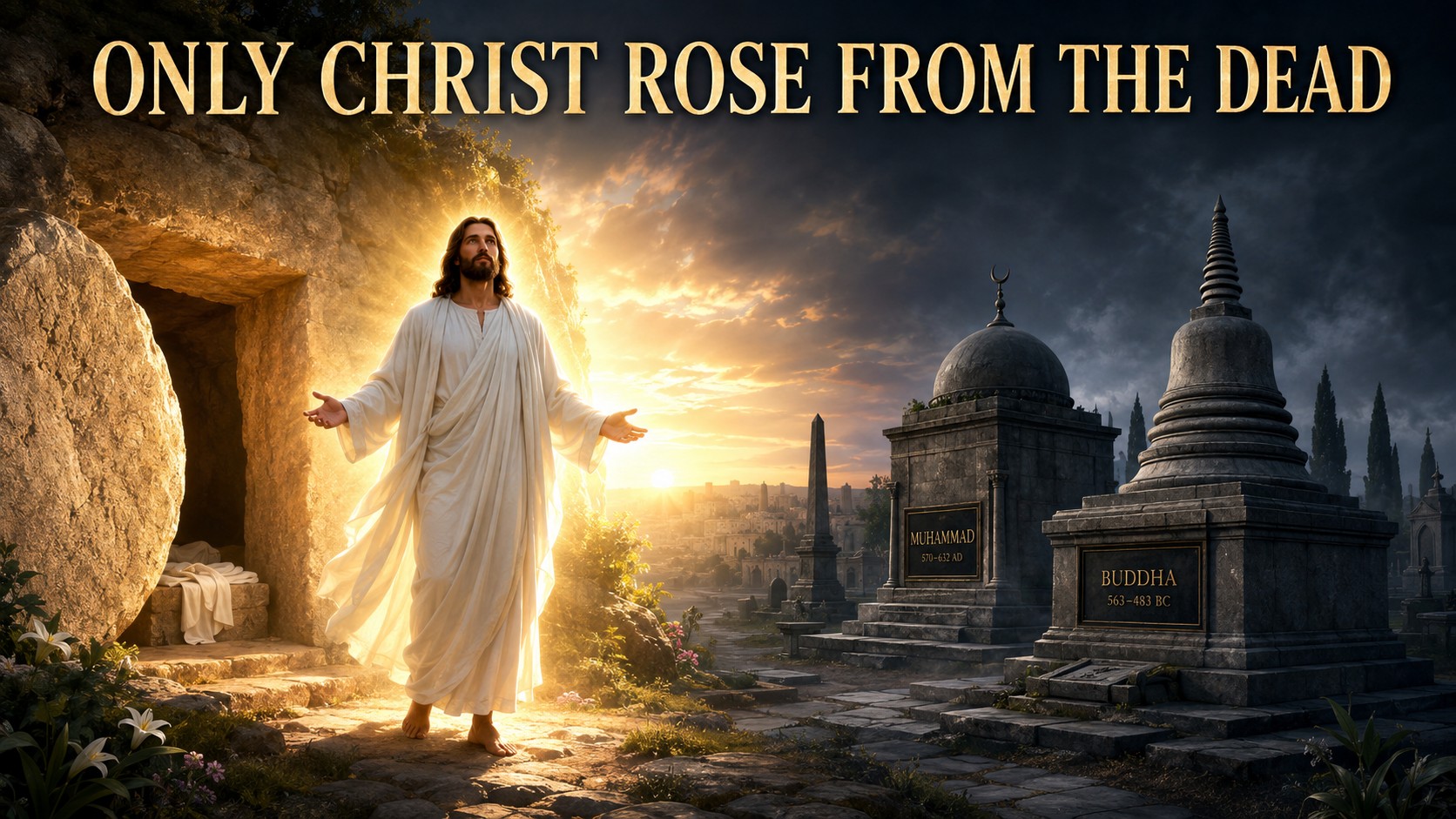
Christianity does not rest merely upon moral principles, philosophical ideas or mystical experiences. It rests upon events claimed to have occurred in public history. Jesus lived in first-century Judea. He was crucified under the Roman governor Pontius Pilate. His followers proclaimed that His tomb was empty and that He had appeared to them bodily alive.
Paul did not treat the resurrection as an optional metaphor. He said that if Christ had not risen, Christian faith would be empty and meaningless (1 Corinthians 15:14–19). That is an extraordinary admission. Christianity places itself at risk by connecting its truth to a historical event.
The earliest Christian proclamation did not arise centuries after Jesus. The apostle Paul preserved an early summary of the message he had himself received: Christ died for our sins, was buried, rose on the third day and appeared to many witnesses, including a gathering of more than five hundred people (1 Corinthians 15:3–8).
The resurrection transformed frightened disciples into courageous witnesses. They did not become wealthy or politically powerful through their testimony. They faced rejection, persecution and death. Something changed them from people hiding behind locked doors into people publicly declaring that Jesus had conquered death.
Other religions preserve the teachings of deceased founders whoose tombs are not empty. Christianity proclaims a living resurrected Saviour. The resurrection means that Christ’s sacrifice was accepted, death was defeated and eternal life became a reality. Jesus did not merely show humanity a path. He is Himself “the way, the truth, and the life” (John 14:6).
Only Bible Provides Evidence of Supernatural Inspiration
Many religious books claim spiritual authority. The Bible does something more: it repeatedly presents fulfilled prophecy as evidence that its Author knows the future.
The Bible stands alone among the world’s religious books in inviting people to test its divine origin through fulfilled prophecy. Hundreds of prophecies, recorded centuries before the events they describe, have been fulfilled with remarkable precision. These fulfilled prophecies provide powerful evidence that the Bible is the inspired Word of God and that Jesus Christ is the promised Messiah.
God declares: “I am God, and there is none like Me, declaring the end from the beginning, and from ancient times things that are not yet done” (Isaiah 46:9–10).
Biblical prophecy is not limited to vague statements that can be applied to almost any event. It contains interconnected predictions concerning nations, empires, cities and the Messiah.
Daniel 2 describes a succession of world empires beginning with Babylon and followed by Medo-Persia, Greece and Rome. Daniel 7 presents the same historical sequence through different symbols and adds further details concerning political and religious developments.
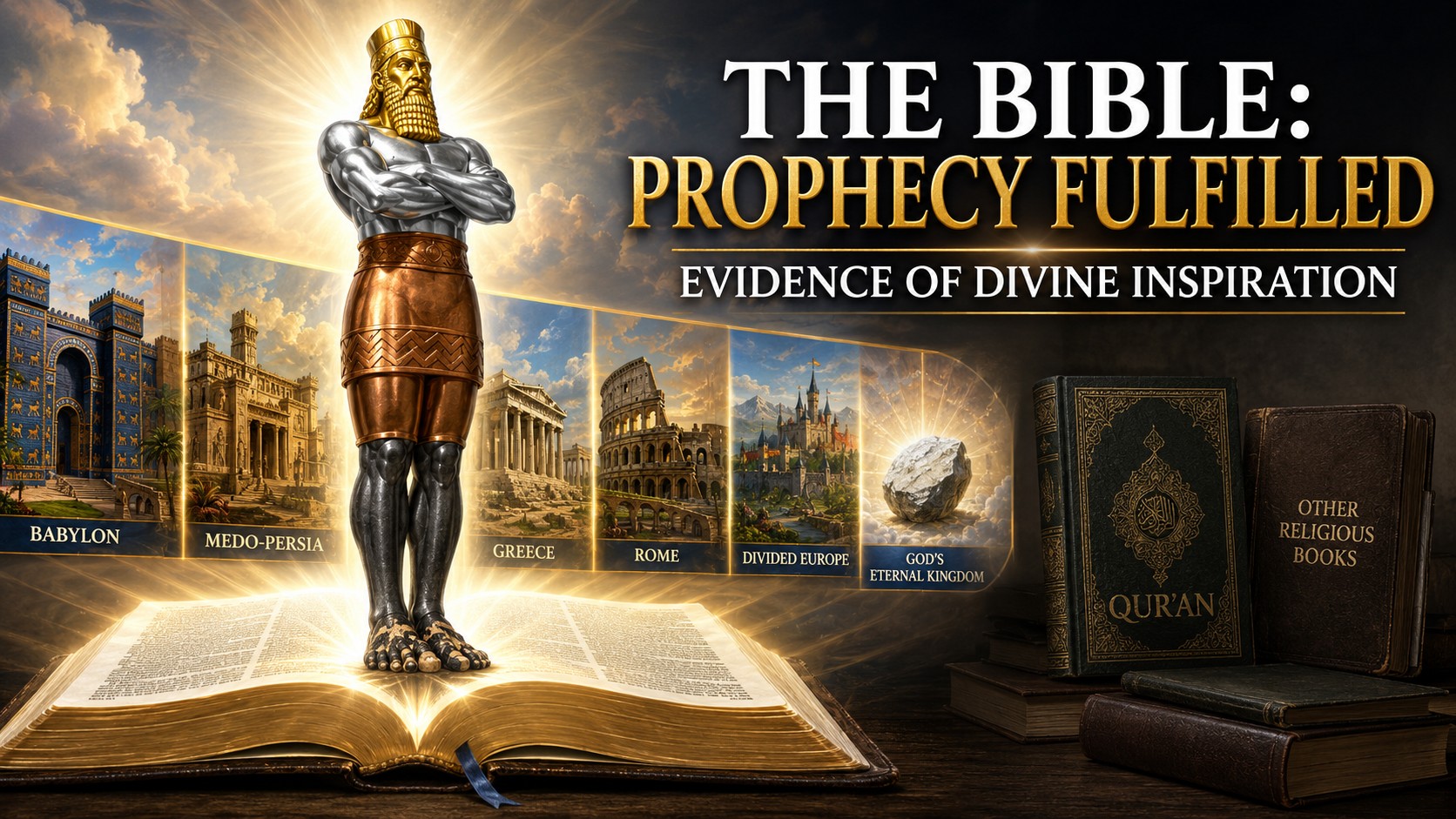
Daniel 8 identifies Medo-Persia and Greece by name before describing the rise of Greece and the division of its empire. Daniel 9 provides a remarkable prophetic timetable pointing toward the appearance and sacrificial death of the Messiah.
Psalm 22 written long time before Christ’s birth describes His suffering that strikingly resembles crucifixion, including mockery, pierced hands and feet and the division of clothing.
Micah foretold that the Messiah would come from Bethlehem. Zechariah described a king entering Jerusalem humbly upon a donkey. Other passages anticipated betrayal, rejection and the suffering of the promised Deliverer.
The Bible presents a unified prophetic framework extending across centuries of history. The Quran, Hindu scriptures, Buddhist writings and other sacred texts do not contain a comparable interconnected body of long-range, historically testable prophecy forming one continuous plan of redemption. Unlike the Bible, they simply do not provide any evidence of supernatural, divine inspiration.
Bible Is One Story Written Across Many Centuries
The Bible is not one book written by one person in a single generation. It is a collection written by many authors across different centuries, cultures, locations and circumstances.
Its writers included kings, shepherds, prophets, priests, fishermen, physicians and scholars. Some wrote in palaces, others in prisons, exile or wilderness. Yet from Genesis to Revelation, one great story runs through the whole collection: creation, freedom, rebellion, promise, incarnation, redemption, restoration and the final destruction of sin.
The sacrificial system of the Old Testament points forward to Christ. The prophets anticipate Him. The Gospels reveal Him. Romans and Galatians explain the meaning of His saving work. Revelation presents Him as the Lamb who triumphs over evil and restores the universe.
This unity is not superficial. The Bible develops interconnected themes—the promised Seed, covenant, sanctuary, sacrifice, priesthood, kingdom, judgment, resurrection and new creation—across generations of writers who could not have organised the whole structure by human cooperation.
The Bible is also unusually honest about its human characters. It records the drunkenness of Noah, the deception of Jacob, the adultery and murder of David, the fear of Elijah, the failures of the disciples and Peter’s denial of Christ. Its heroes are not presented as naturally righteous people who saved themselves. Their failures continually direct the reader away from human goodness and toward divine grace.
Biblical Christianity Explains Human Problem Better Than Other Religions
Most religious systems treat humanity’s problem as insufficient knowledge, poor behaviour, lack of discipline, bad karma, weak religious performance or failure to follow the correct path.
The Bible goes deeper. It says our problem is not simply that we commit wrong actions. Our very nature has been corrupted by self-centredness. “From within, out of the heart of men, proceed evil thoughts” (Mark 7:21).
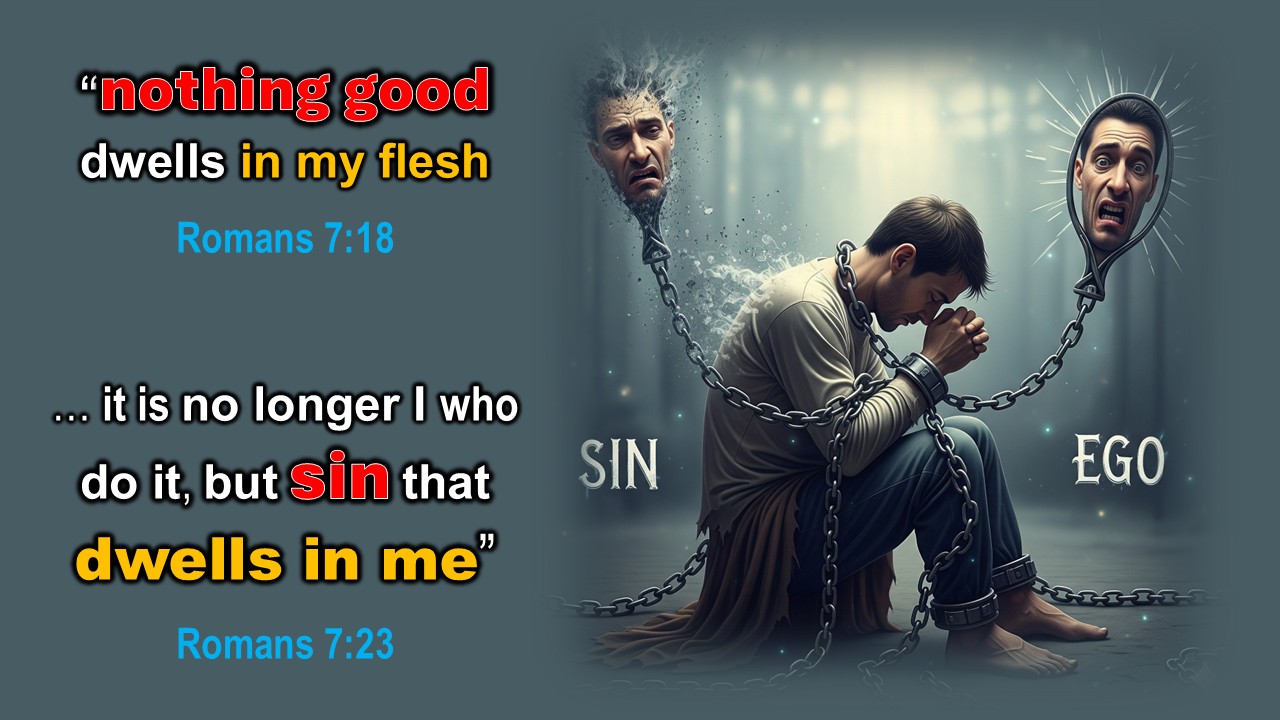
A selfish heart may perform impressive religious works for selfish reasons. People may pray to feel superior, give money to gain merit, practise discipline to prove their spiritual strength or obey religious laws out of fear. Outward religion cannot cure the inward condition.
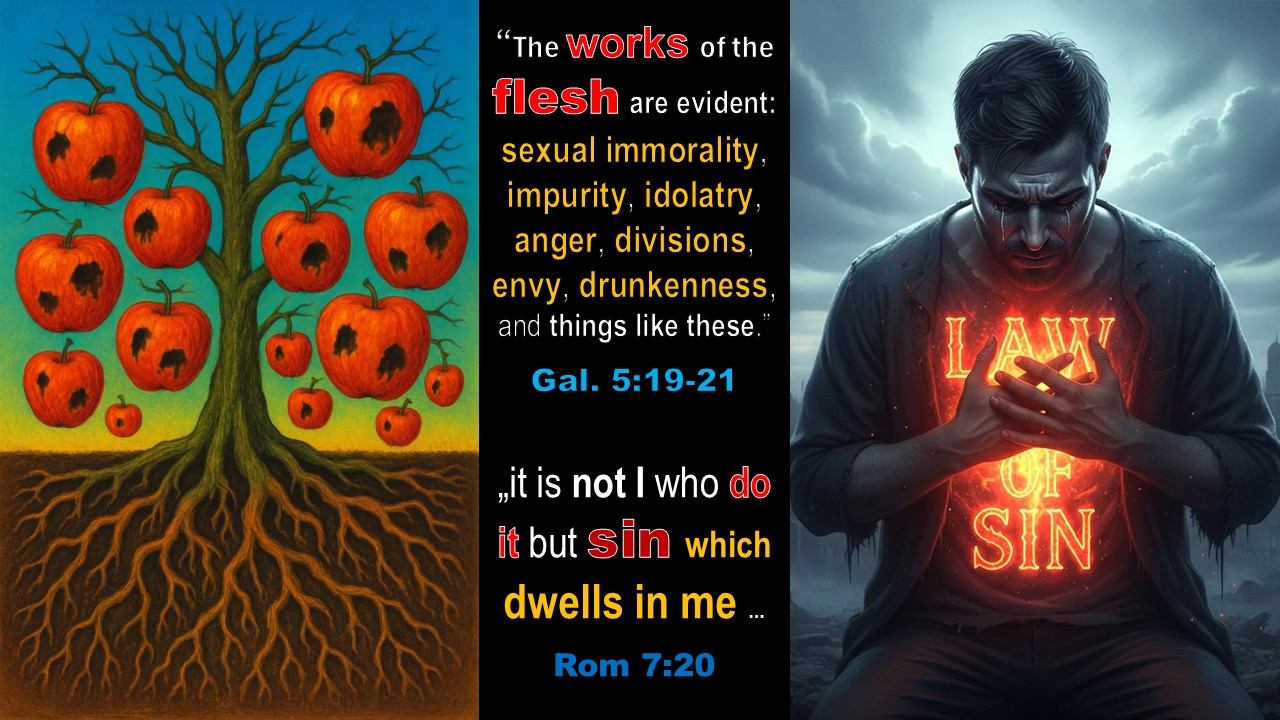
The gospel does not offer sinners a more demanding programme of self-improvement. It offers death and resurrection with Christ. “I have been crucified with Christ; it is no longer I who live, but Christ lives in me” (Galatians 2:20).
The sinner must recognise that no amount of religious effort can repair his fallen heart. He must accept God’s judgment upon the old life and receive a new life from Christ. This is conversion. It is not a superficial change of religious label. It is the surrender of self and the beginning of a new existence under the influence of the Holy Spirit.
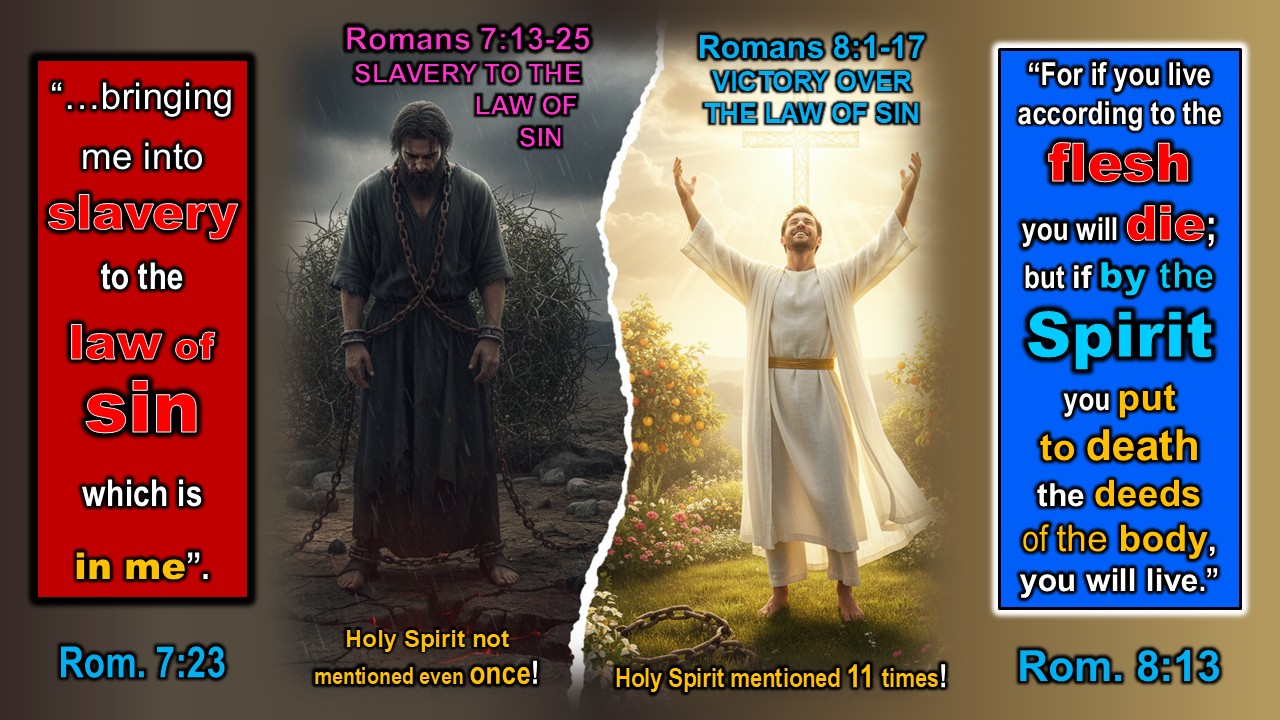
The Spirit then produces what human effort could never create: “love, joy, peace, longsuffering, kindness, goodness, faithfulness, gentleness, self-control” (Galatians 5:22–23). Religious legalism tries to control behaviour from the outside. The gospel transforms the heart from within.
Bible Has Transformed Millions of Lives
Historical evidence, prophecy and theological coherence matter greatly, but Christianity also makes itself visible through transformed lives.
Across centuries and cultures, millions of people have testified that meeting Christ through the Bible changed them profoundly. Addicts have found freedom. Violent people have become peaceful. The proud have become humble. The hopeless have found purpose. People consumed by guilt have discovered forgiveness. Enemies have reconciled. Selfish people have devoted their lives to serving others.
Not every professing Christian experiences such transformation, and not every dramatic testimony proves that a belief is true. People in other religions also report meaningful experiences and moral change.
Yet the global and continuing power of the gospel deserves serious consideration. The same message that transformed people in the Roman world continues to transform people in Africa, Asia, Europe, the Americas and the islands of the sea.
The gospel crosses barriers of race, class, language and nationality because it addresses the universal human problem of guilt, selfishness, suffering and death.
My own life is part of this testimony. I did not accept the Bible simply because someone told me to believe it. As I studied it, I became convinced by its fulfilled prophecies, its unity, its explanation of the great conflict between good and evil and, above all, its revelation of God’s character in Jesus Christ.
The Bible showed me a God far more loving than I had imagined—a God who did not abandon fallen humanity, but entered our condition, became our Brother, carried our guilt and gave Himself for us.
That truth did not merely change my religious opinions. It changed my understanding of God, salvation and life itself.
Millions of believers could tell different versions of the same story: they opened the Bible, encountered Christ and were never the same again.
READ ABOUT MY CONVERSION STORY
The Final Choice
Biblical Christianity does not invite people to believe blindly. It invites them to examine Jesus, the Scriptures, fulfilled prophecy, the resurrection, the gospel and the transforming influence of the Holy Spirit.
The cumulative evidence is powerful.
The Bible contains a prophetic structure unmatched by other religious writings.
Its many books form one coherent story of redemption.
Its central message is rooted in historical claims.
Its diagnosis of the human heart is painfully accurate.
Its gospel of grace is entirely different from systems of human merit.
Its revelation of God in Christ is morally and spiritually incomparable.
Its message has transformed millions of lives—including mine.
Above all, biblical Christianity reveals that salvation does not begin with humanity reaching toward God. It begins with God reaching toward humanity.
The eternal Son humbled Himself and entered our fallen world. He became flesh and blood, joined Himself to our family and called us His brothers and sisters. He faced our temptations without yielding to sin. He produced perfect righteousness on our behalf. He carried our guilt, accepted our curse and entered the darkness of death.
His heart was broken, but His love did not fail.
He rose from the grave and now offers His victory freely to every human being.
No religious ritual can improve upon that gift.
No human work can add to it.
No priest, saint, prophet, philosopher or institution can replace Him.
The sinner has only to recognise his helpless condition, stop trusting in his own goodness and receive Christ with genuine faith. The Holy Spirit will then begin transforming the life and producing works of faith motivated by love.
Those works will never become the basis of salvation. They will be the evidence that salvation has been received.
This is the gospel.
Not humanity climbing to heaven, but God coming down to rescue humanity.
Not salvation as a wage earned by good works, but eternal life as a gift.
Not fear-driven religion, but faith working through love.
Not uncertainty, but the assurance of Christ’s finished work.
Not merely a better philosophy, but a new life.
“Nor is there salvation in any other, for there is no other name under heaven given among men by which we must be saved” (Acts 4:12).