Slawomir Gromadzki
“Christ and Him Crucified”
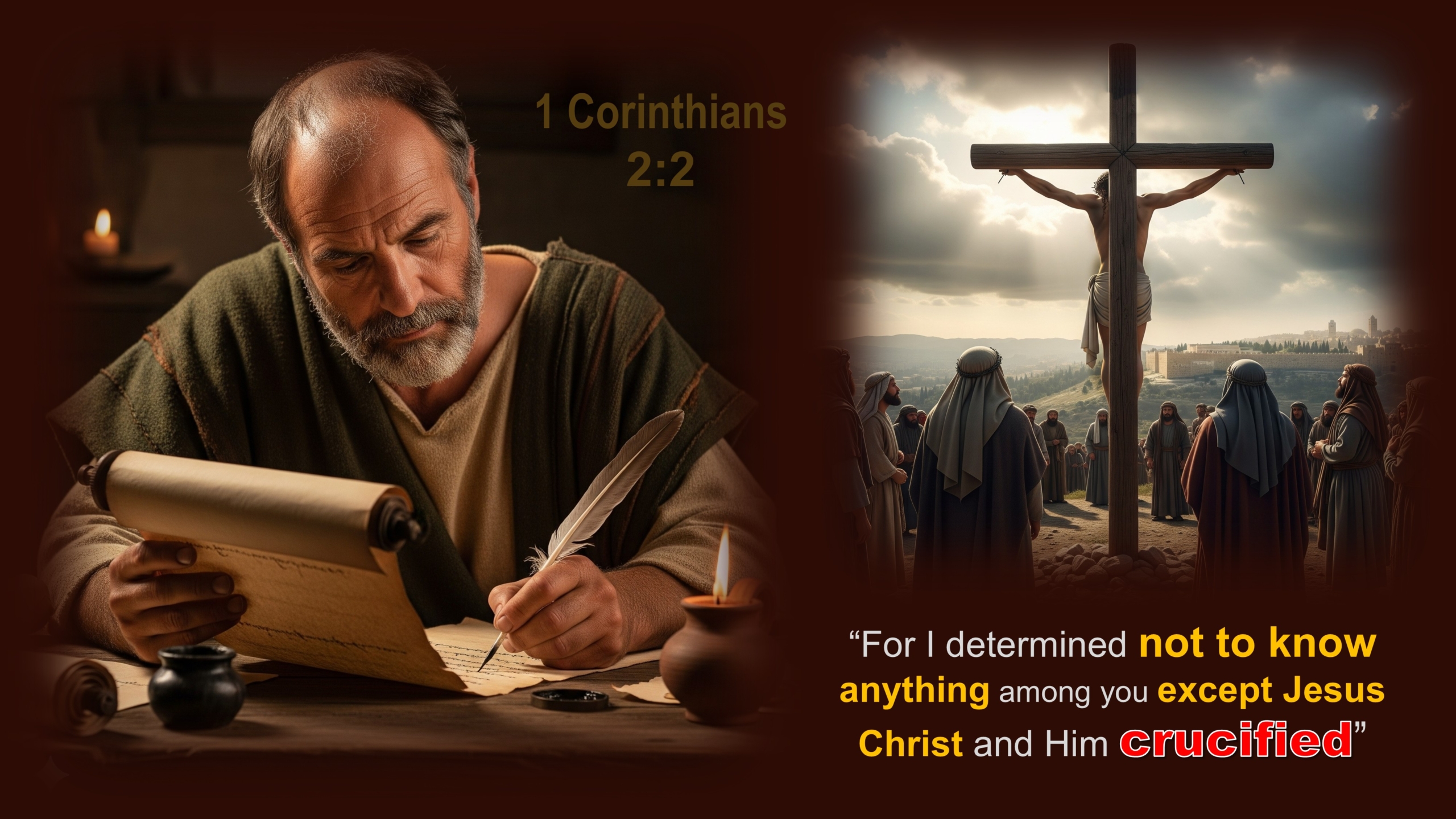
The subject of God’s great love revealed through the cross and death of Jesus is so vital that the Apostle Paul made it his singular, burning focus: “For I determined not to know anything among you except Jesus Christ and Him crucified” (1 Corinthians 2:2).
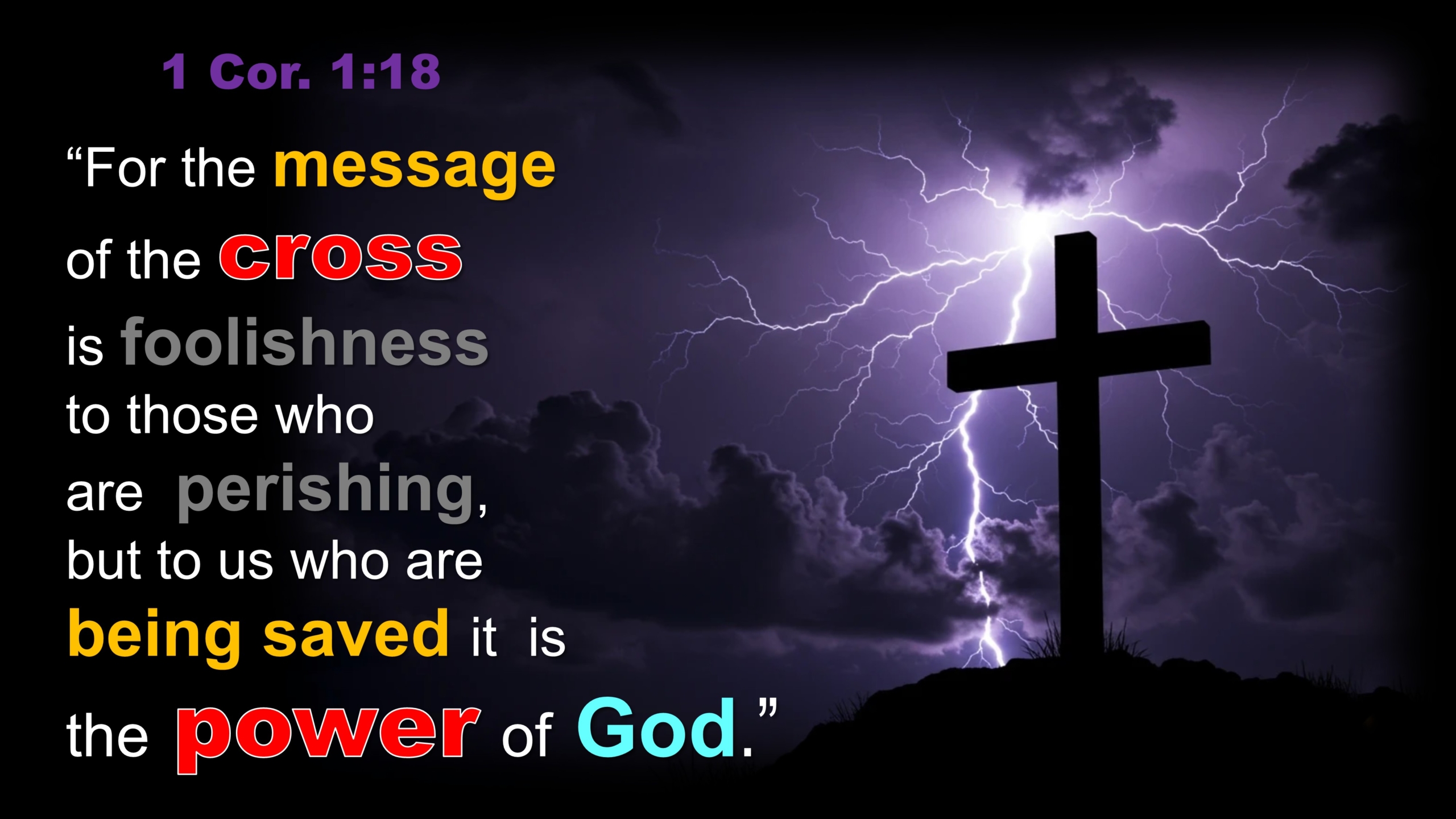
Paul preached the cross continuously because it was the sole anchor that made early Christians so dedicated, fearless, and willing to suffer or die for their Lord. Just as the Gospel itself is God’s power unto salvation for everyone who believes (Romans 1:16), the message of the cross carries a unique, supernatural potency: “For the message of the cross is foolishness to those who are perishing, but to us who are being saved it is the power of God” (1 Corinthians 1:18).
“The death of Christ on the cross of Calvary is our only hope in this world, and it will be our theme in the world to come… It is the greatest subject that can engage human mind.” Signs of the Times, December 30, 1889
Why Was Christ Crucified Outside Jerusalem?
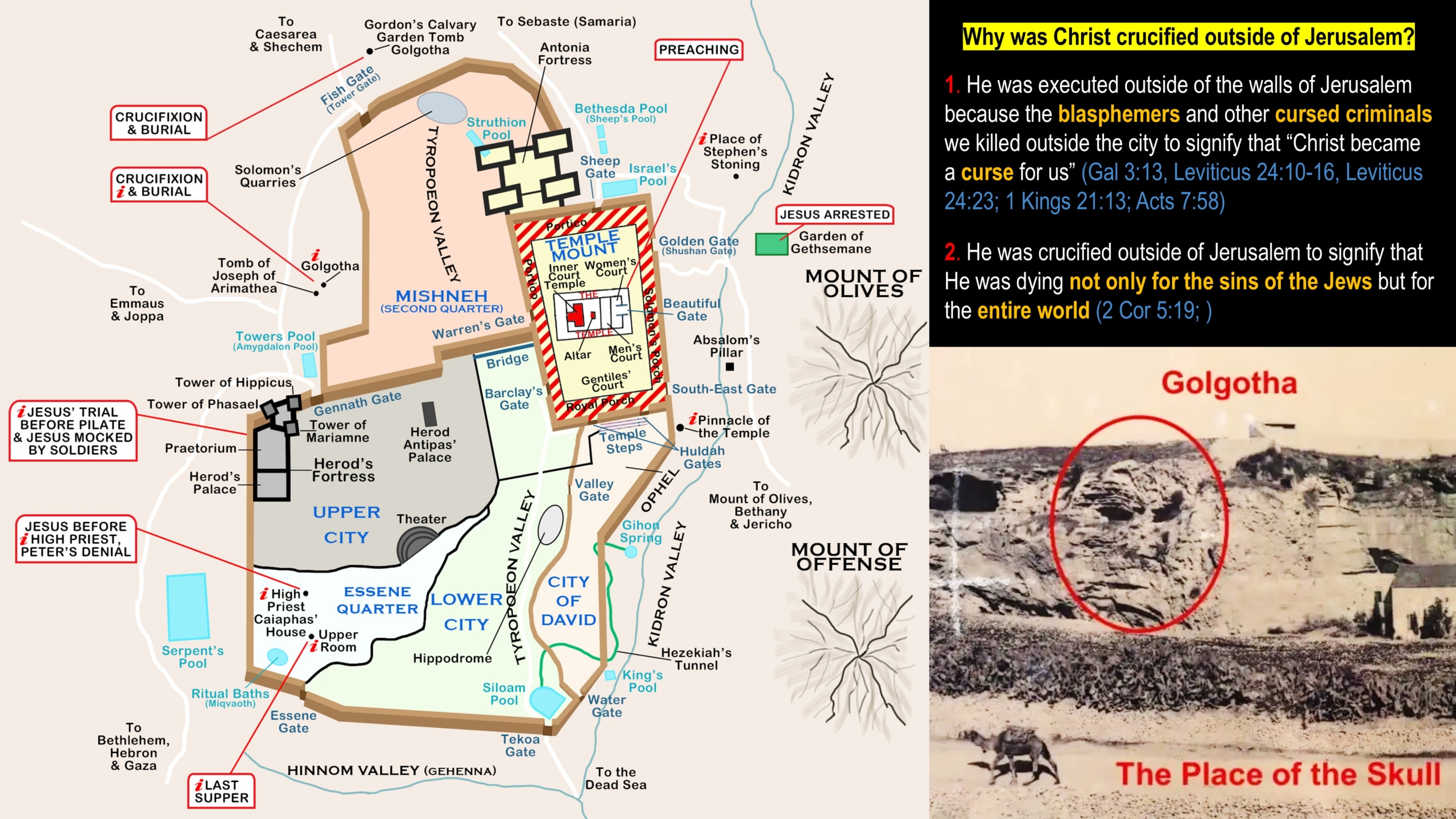
When we examine the historical, cultural, and biblical details of the crucifixion, we find profound spiritual meaning behind every single event. For instance, it was not by chance that Christ was executed outside the physical walls of Jerusalem.
Under biblical law, blasphemers and those condemned as cursed criminals were cast out and forced to die outside the camp to signify defilement. Jesus was brought outside the gate because He willingly “became a curse for us” (Galatians 3:13; see also Leviticus 24:10-16, Leviticus 24:23, 1 Kings 21:13, Acts 7:58).
Lepers, regarded as deeply unclean, were legally required to live isolated outside the city walls (Leviticus 13:46). Christ took our spiritual leprosy upon Himself, standing in our place outside the camp.
By dying outside the specific walls of Jerusalem, Jesus demonstrated that He was not dying exclusively for the Jews, nor just for a select group of believers, but to reconcile the entire world to God (2 Corinthians 5:19).
Understanding the Wages of Sin
To truly appreciate what Jesus accomplished on Calvary, we must understand the precise nature of the penalty He paid. Scripture plainly states that “the wages of sin is death” (Romans 6:23). But which death constitutes the true, ultimate penalty for sin? Is it the first death, which the Bible frequently compares to a temporary sleep? Or is it the second death?
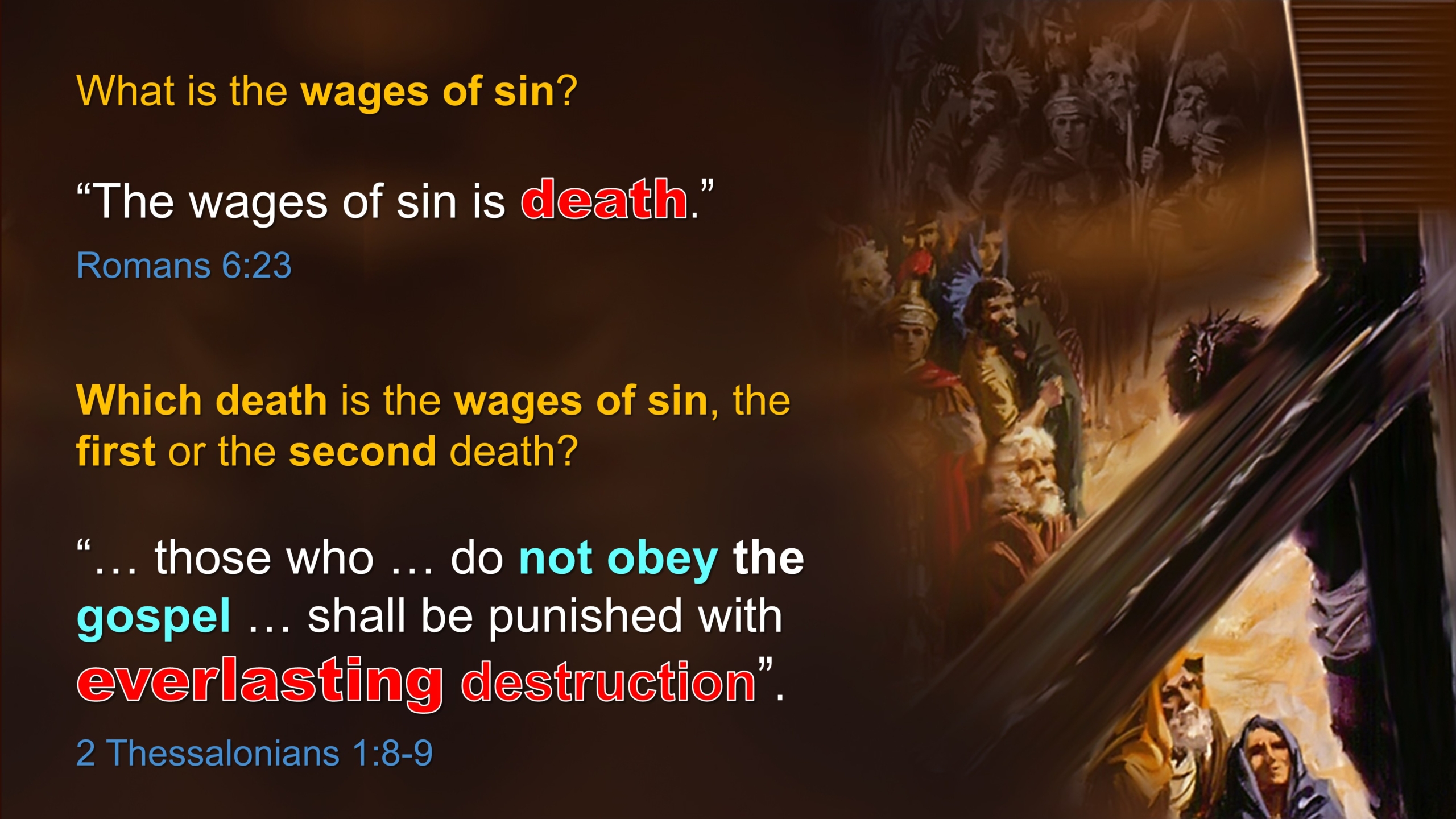
The Bible clarifies that those who reject the gospel “shall be punished with everlasting destruction from the presence of the Lord” (2 Thessalonians 1:8-9). This final judgment falls upon both open sinners who reject mercy and legalists who cling to the false, deceptive idea of salvation through their own human works. Because the ultimate penalty for sin is eternal death—total and irreversible destruction—Jesus had to experience the equivalent of the same penalty to save us.
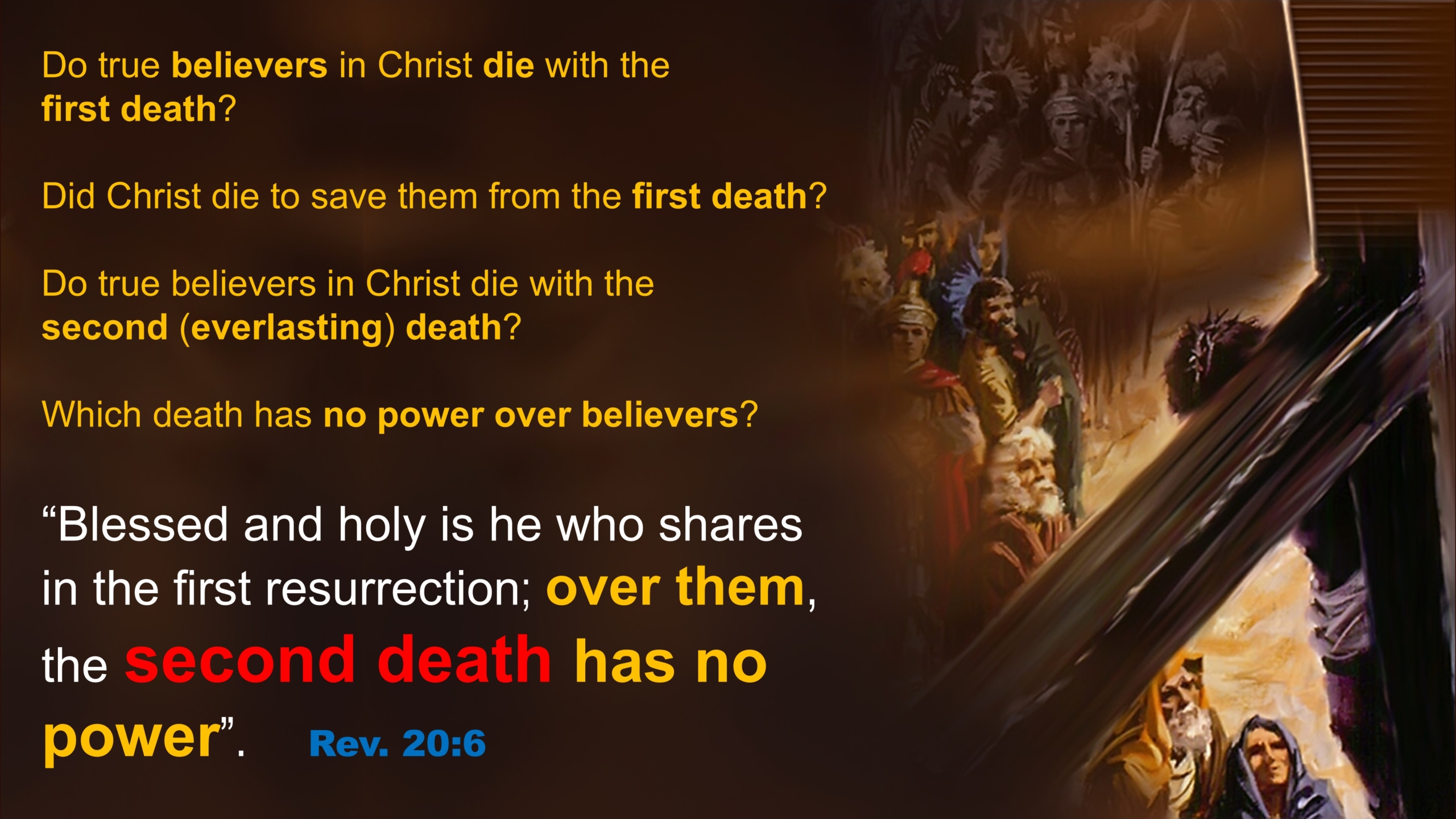
True believers will never have to face the second death because “Blessed and holy is he who shares in the first resurrection; over them, the second death has no power” (Revelation 20:6). It is not the first but the second (everlasting) death which doesn’t have power over believers in Christ! And the only reason the second death has no power over us is because someone else already endured it completely on our behalf. If Jesus had not fully experienced the equivalent of eternal death for us, the demands of the broken law would remain unsatisfied, and salvation would be impossible (Romans 3:26).
Gethsemane and Hematohydrosis
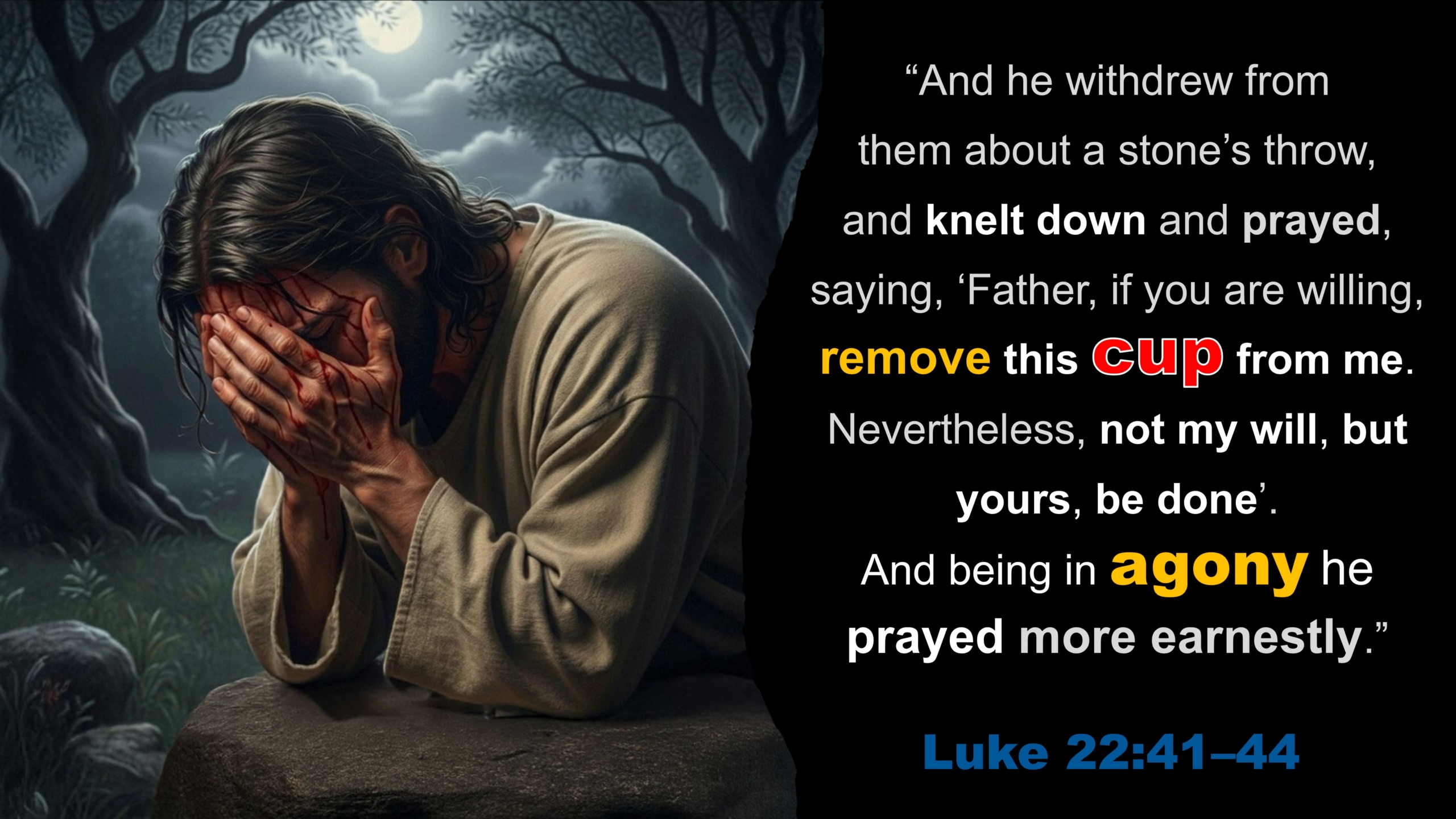
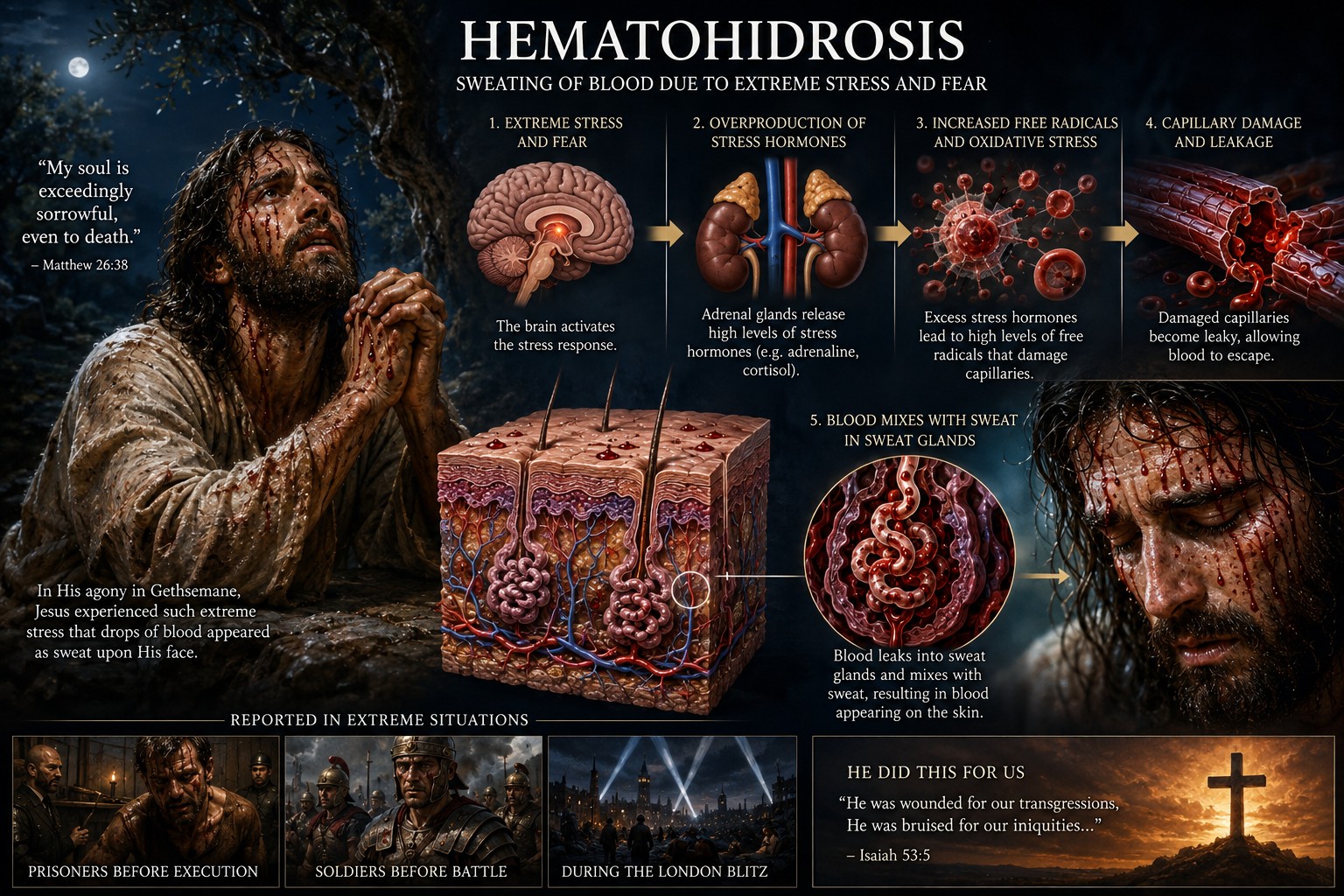
The agonizing reality of this penalty began to press upon Christ long before the nails pierced His hands. In the Garden of Gethsemane, He experienced such intense mental and spiritual agony that His sweat became like great drops of blood falling to the ground (Luke 22:44).
This rare medical condition, known as hematohidrosis, occurs only when a person faces extreme, overwhelming stress or a terrifying death. It has been seen in prisoners before execution, souldiers before battle, or occurred during the London Blitz.” When during the world war 2 German airplanes bombarded London some people expeienced hematohydrosis which means they started sweating blood because of extreme fear of death.

In hematohidrosis, extreme stress and fear lead to the overproduction of stress hormones (adrenaline and cortisol), which generate excessive amounts of free radicals that damage the smallest blood vessels, the capillaries, causing them to leak blood into the sweat glands and resulting in visible sweating with blood.
Why was Jesus so terrified? The Apostle Paul was not afraid of death; he boldly declared that he was ready to be bound and to die for the name of the Lord Jesus (Acts 21:13), looking forward to a crown of righteousness (2 Timothy 4:7-8). Jesus, however, was facing something infinitely worse than standard martyrdom. He pleaded with His Father to remove a mysterious cup: “Father, if you are willing, remove this cup from me. Nevertheless, not my will, but yours, be done” (Luke 22:42).
Meaning of Cup
According to Revelation 14:10 the “cup” is associated with the wrath of God, His indignation, tormenting with fire and brimstone (or hell fire)” clearly referring to eternal death and curse.
Also in Ezekiel 23:32–33 the “cup” refers to “horror” and “desolation”: “Thus says the Lord God: ‘You shall drink of your sister’s cup, … The cup of horror and desolation (isolation).”
The “cup” in the Bible symbolises the wrath of God that is to fall upon unrepentant sinners. This wrath is associated with horror, eternal separation from God, and eternal death in fire. In the book of Revelation, cup represents: “…the wine of the wrath of God, poured out full strength into the cup of His indignation.” Revelation 14:10
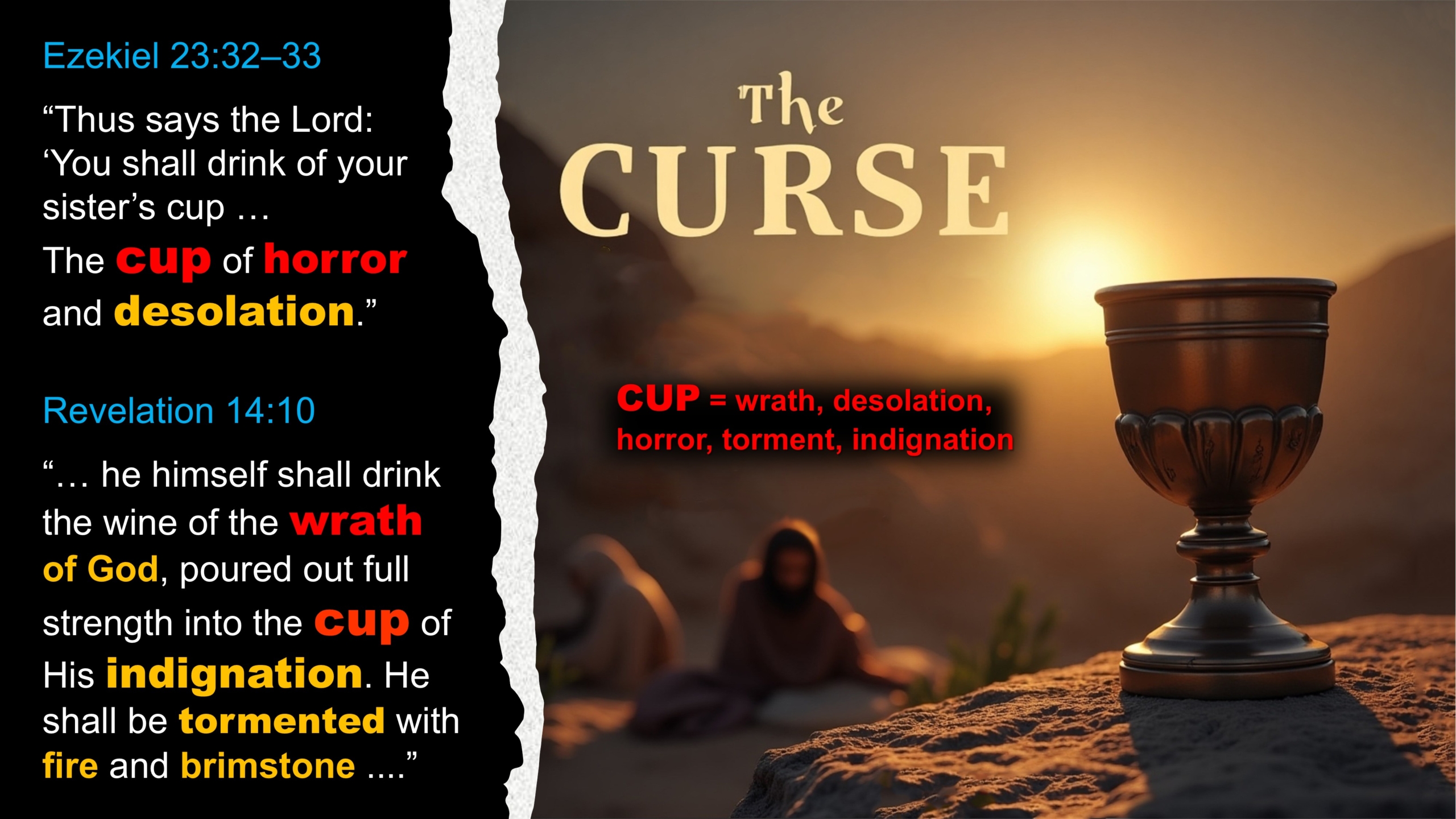
It was a cup filled with the absolute horror of desolation, condemnation, and total, eternal separation from His Father (Ezekiel 23:32-33). Every single detail of the crucifixion directly symbolized this curse.
Crown of Thorns
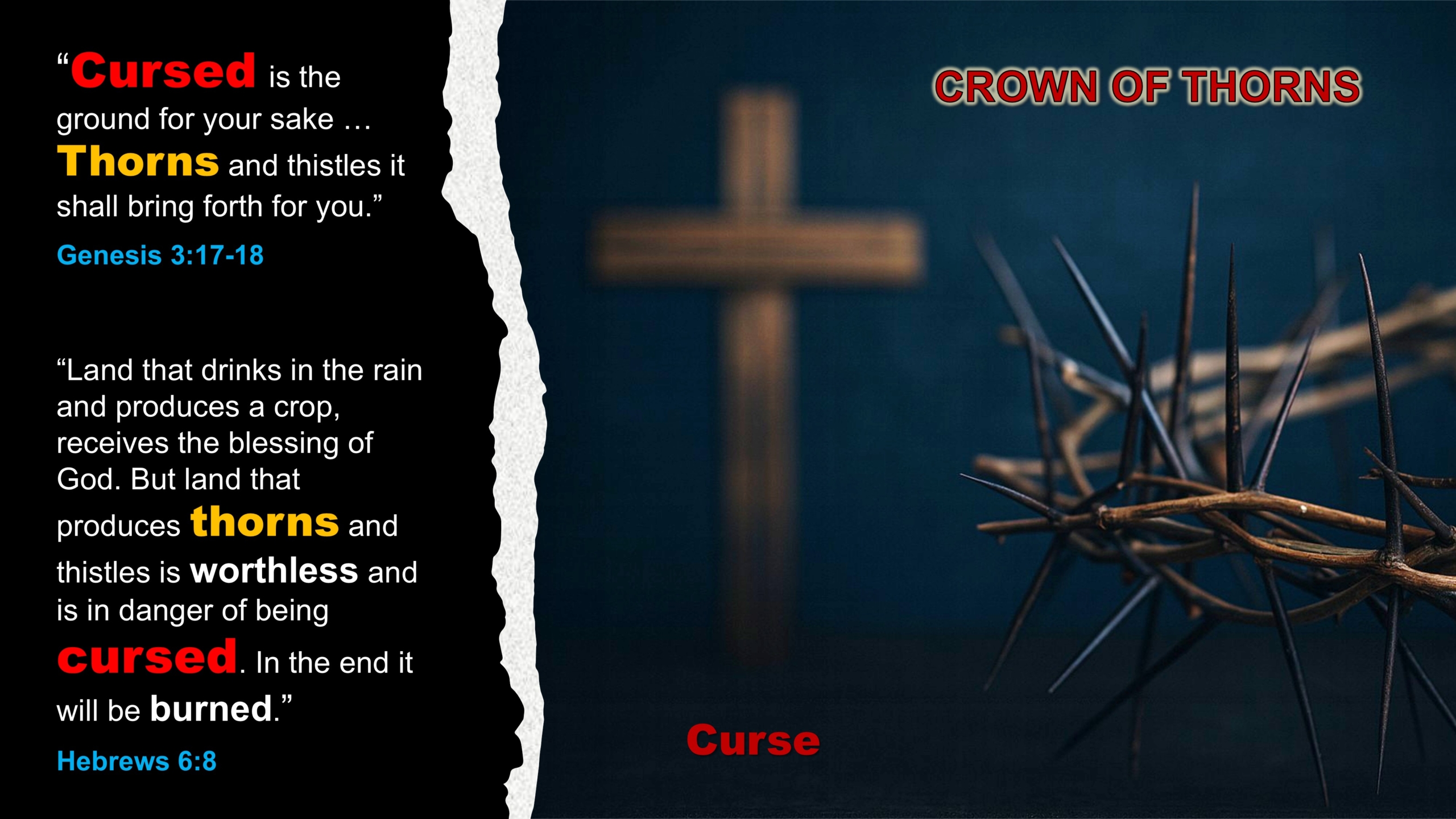
The Roman soldiers mockingly twisted a crown of thorns and pressed it into His brow. In Scripture, thorns are the definitive symbol of the curse brought upon the earth by sin (Genesis 3:17-18). Land that produces thorns is worthless, near to being cursed, and its ultimate end is to be burned (Hebrews 6:8).
Darkness
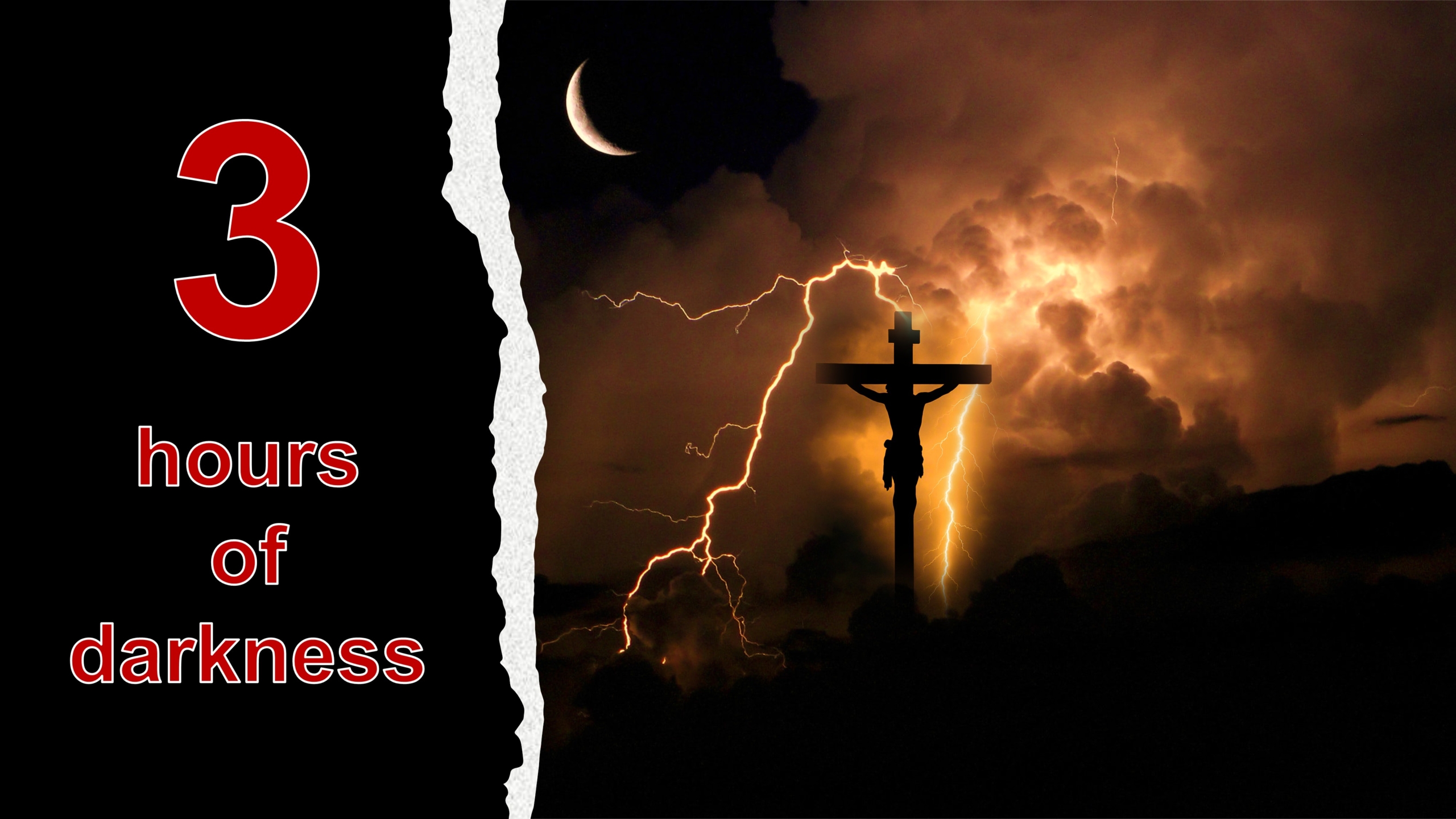
From noon until three o’clock, a thick, supernatural darkness covered the entire land (Matthew 27:45). This mirrored the “blackness of darkness forever” that is legally reserved for eternal judgment (Jude 13).

Split Rocks
When Jesus yielded up His spirit, the massive temple curtain tore in two and the earth shook so violently that the rocks split apart (Matthew 27:50-51).
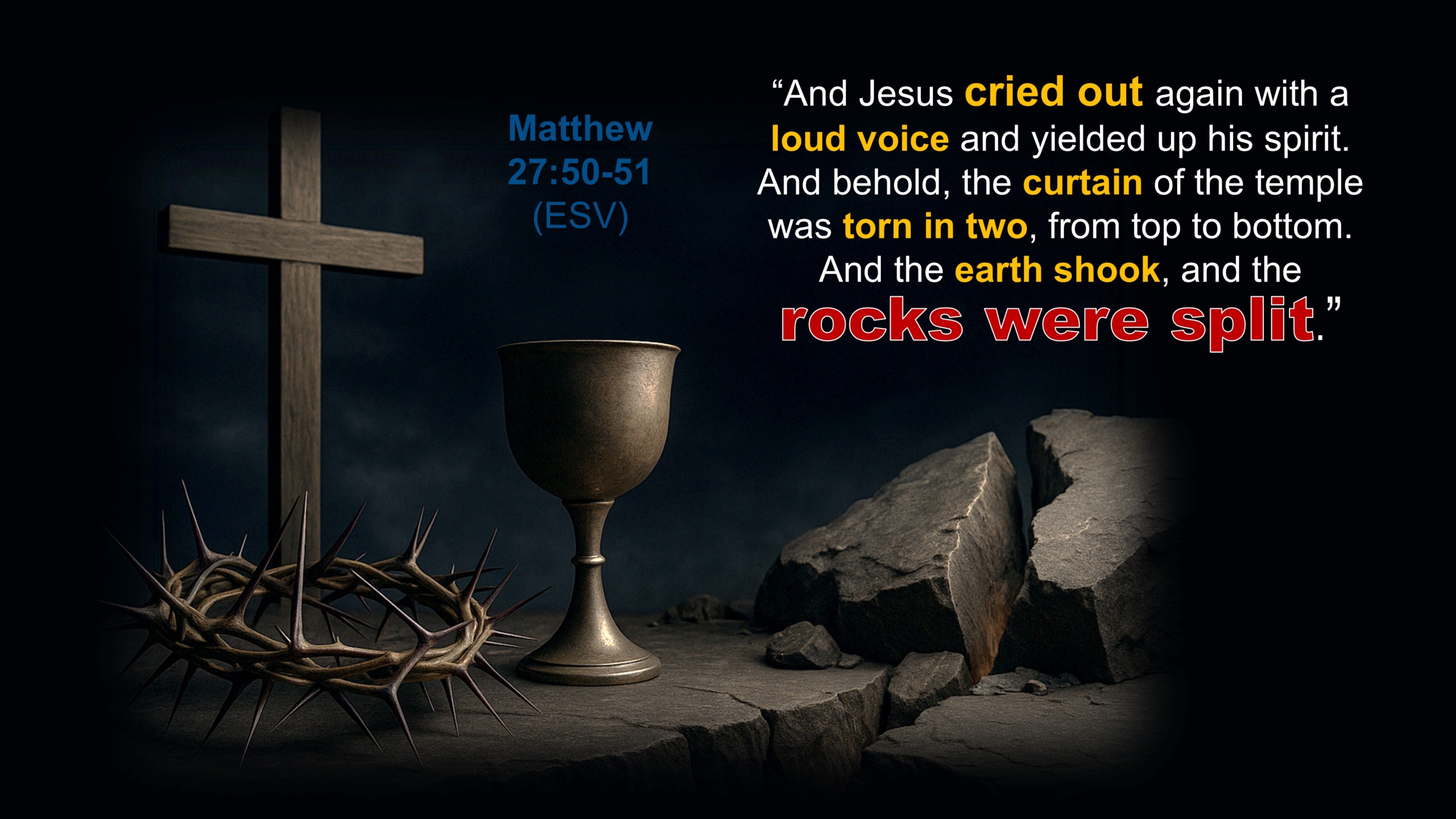
This physical tearing of the rocks represents the execution of ultimate divine judgment: “Who can stand before His indignation? And who can endure the fierceness of His anger? His fury is poured out like fire, and the rocks are thrown down by Him” (Nahum 1:6).
Was Paul More Brave Than Christ?
When looking at Christ in Gethsemane, a fascinating contrast emerges. On the surface, the Apostle Paul seemed to be braver than Christ. Paul wasn’t afraid of dying at all; he boldly declared that he was ready to be bound and to die for the name of the Lord Jesus (Acts 21:13), looking forward with absolute joy to a crown of righteousness (2 Timothy 4:7-8).
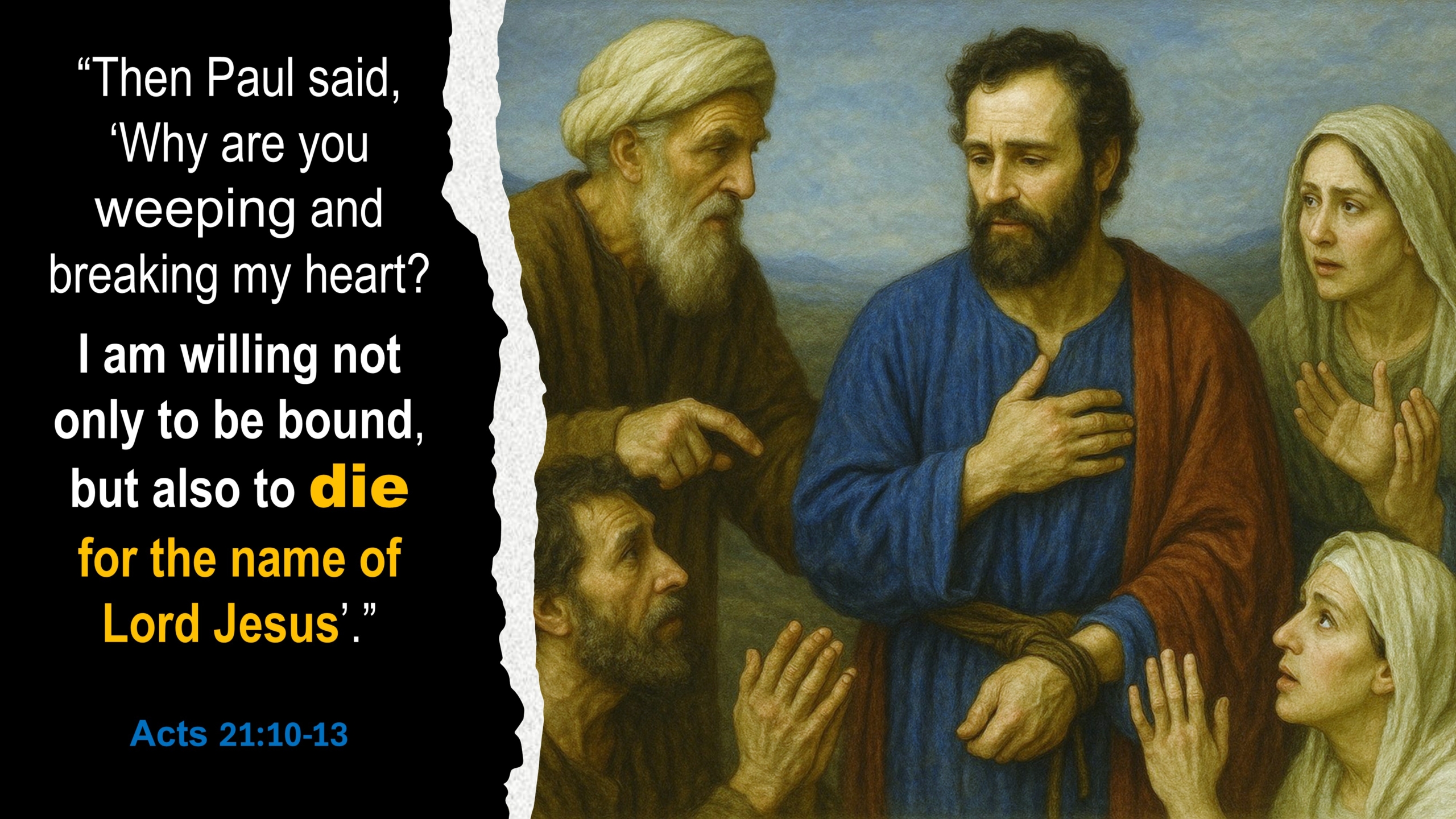
Why was Paul so completely unafraid of death while Jesus was sweating blood in sheer terror? Paul was not afraid of dying because he knew that for him to die was gain and to live was Christ, death for him it was only a short sleep but when Christ was facing death for our salvation he was agonising and extremally afraid because he was going to face the wages of sin, the curse, the wrath of God toward sin, the separation from His beloved father His greatest eternal love!

He pleaded with His Father to remove this mysterious cup: “Father, if you are willing, remove this cup from me. Nevertheless, not my will, but yours, be done” (Luke 22:42).
In Scripture, this cup represents: “…the wine of the wrath of God, poured out full strength into the cup of His indignation” (Revelation 14:10). It was a cup filled with the absolute horror of desolation, condemnation, and total separation from God (Ezekiel 23:32-33).
Sacrifice Born of Infinite Separation

While the Roman soldiers viewed the execution as a standard political crucifixion, a Jewish perspective reveals a deeper motive. What type of capital punishment was used by the Jews to execute those who were sentenced to death? They attempted to stone Jesus and Mary Magdalene, and they stoned Stephen. Why, then, did they demand that Pilate crucify Jesus instead of allowing them to stone Him? Many times they tried to kill Christ, and they killed Stephen. What form of capital punishment did they use? They always did it by stoning. Therefore, the question is, if they always punished those who were sentenced to death by stoning, why did they cry out to Pilate to crucify Christ?
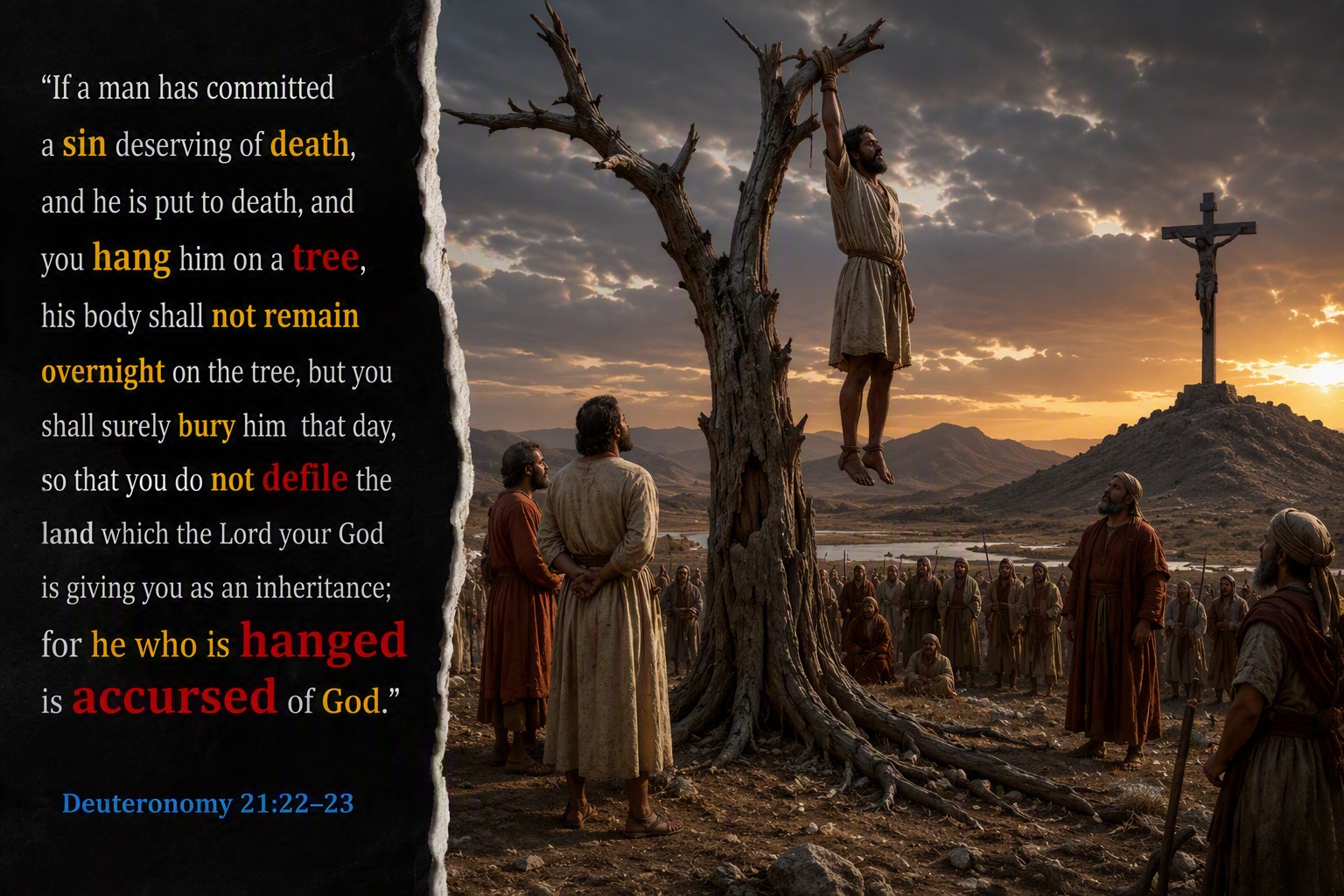
Well, they wanted Pilate to crucify Christ because they hated Him so much that they wanted something much worse than death for Him. They had in mind what Moses wrote in the Old Testament:
Deuteronomy 21:22–23 “If a man has committed a sin deserving of death, and he is put to death, and you hang him on a tree, his body shall not remain overnight on the tree, but you shall surely bury him that day, so that you do not defile the land which the Lord your God is giving you as an inheritance; for he who is hanged is accursed of God.”
The Jews hated Christ so much that they wanted Him to be hanged on a tree because they wanted Him to be cursed by God, which in their understanding was the same as eternal death. No wonder, then, that when Christ’s disciples—who were Jews—saw Him hanging on a tree, it was very difficult for them to continue believing in Him, because they remembered that text.
It is remarkable that, according to the Word of God, Jesus actually became such a curse for us. If someone asked me to choose only one verse from the Bible that is of the greatest value to me, to the entire human race, and to the universe, without any hesitation I would choose Galatians 3:13: “Christ redeemed us from the curse of the law (that is, from the second death), becoming a curse for us (experiencing the second death for us), for it is written, Cursed is every one who hangs on a tree.”

Seizing upon this intense vulnerability, Satan used the passing crowds, the mocking priests, and the thief to tempt Christ three distinct times to step down from the cross and save Himself (Matthew 27:39-44). “His strongest temptation was to save Himself and come down from the cross.” The Spirit of Prophecy, vol. 3, p. 159-160
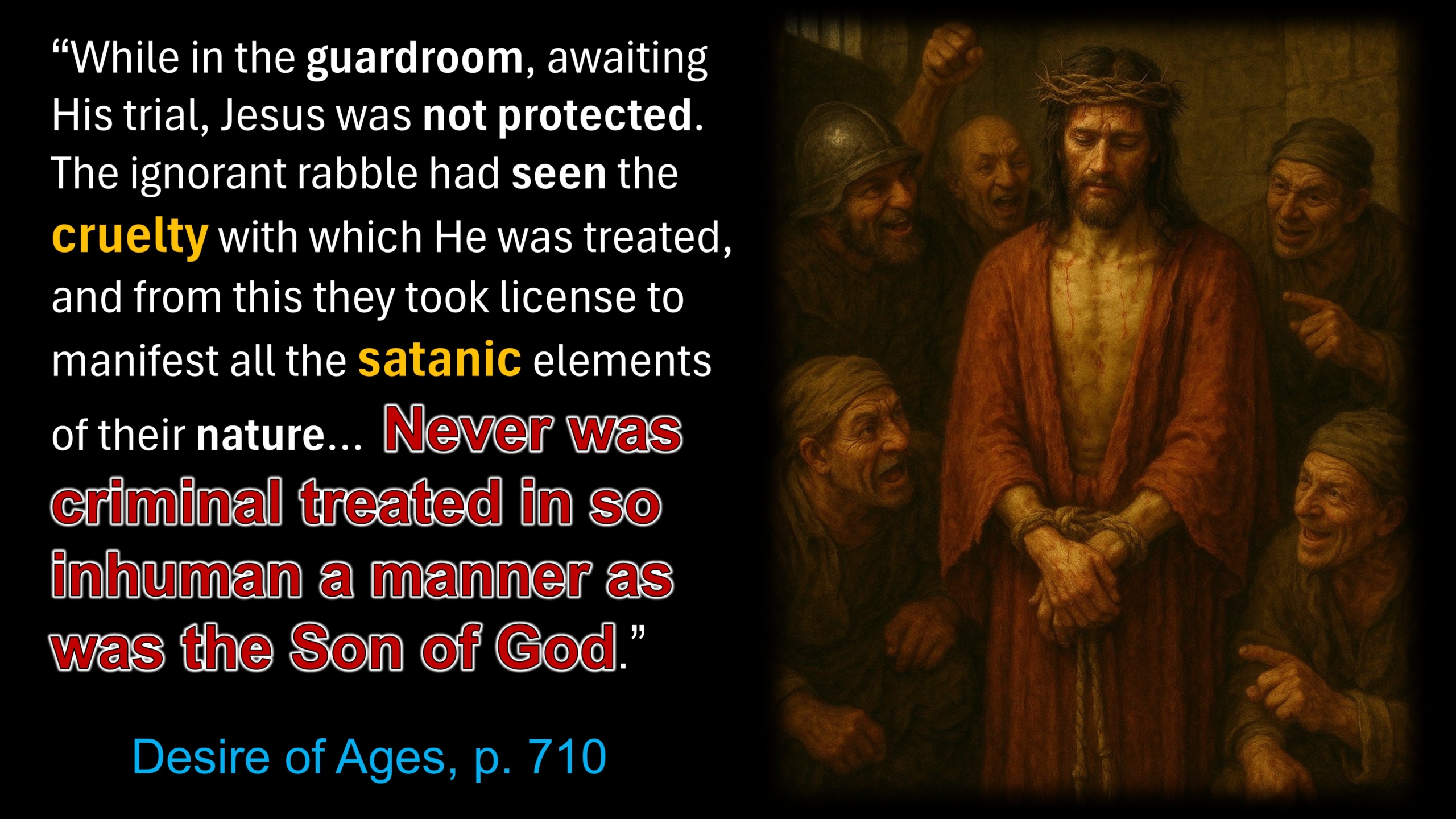
Yet, out of pure, unadulterated love, Jesus chose to accept eternal destruction for Himself so that He could guarantee eternal life for us. He suffered in direct proportion to the absolute perfection of His own holiness and His hatred of sin, enduring a trial by men who acted like cruel fiends, making His experience a perpetual, everlasting sacrifice.
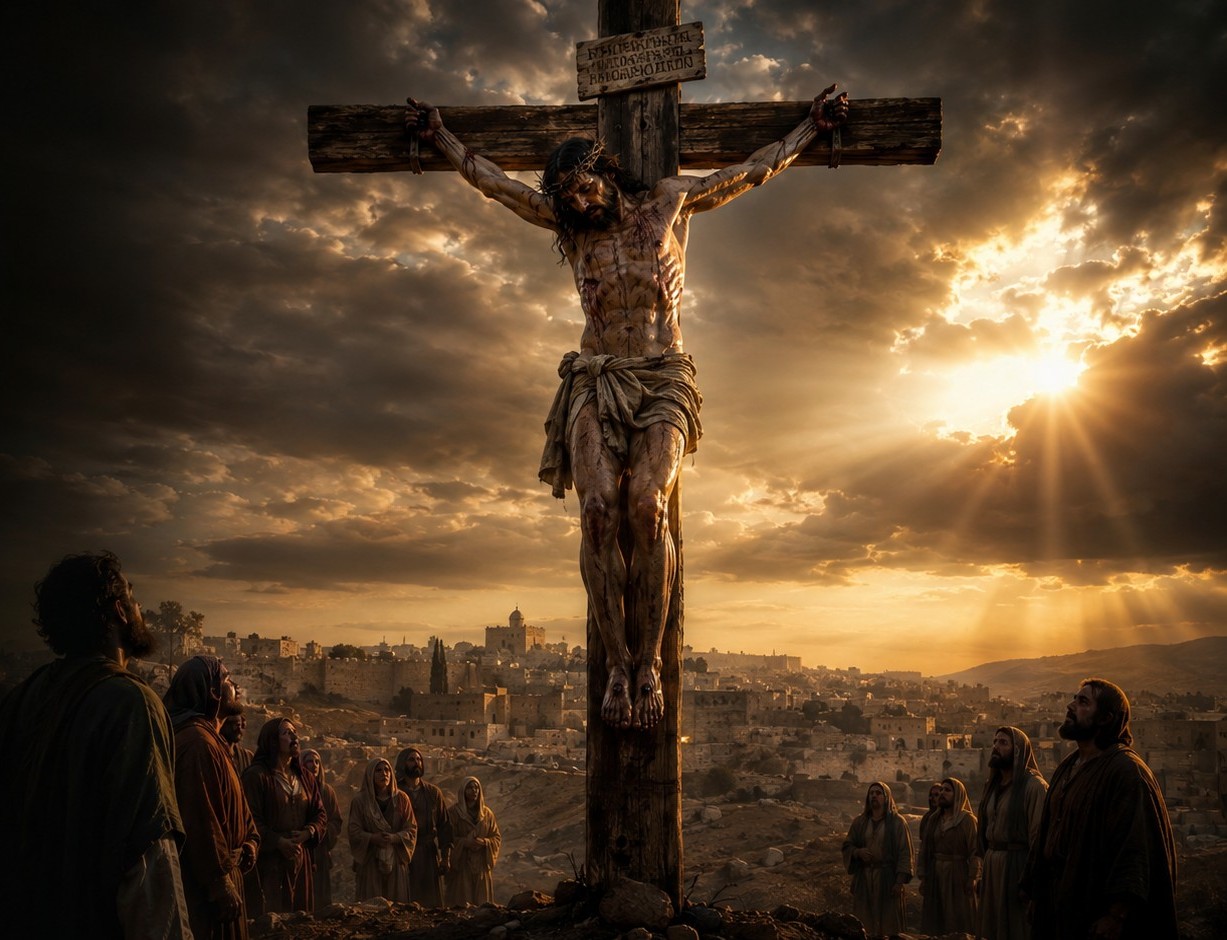
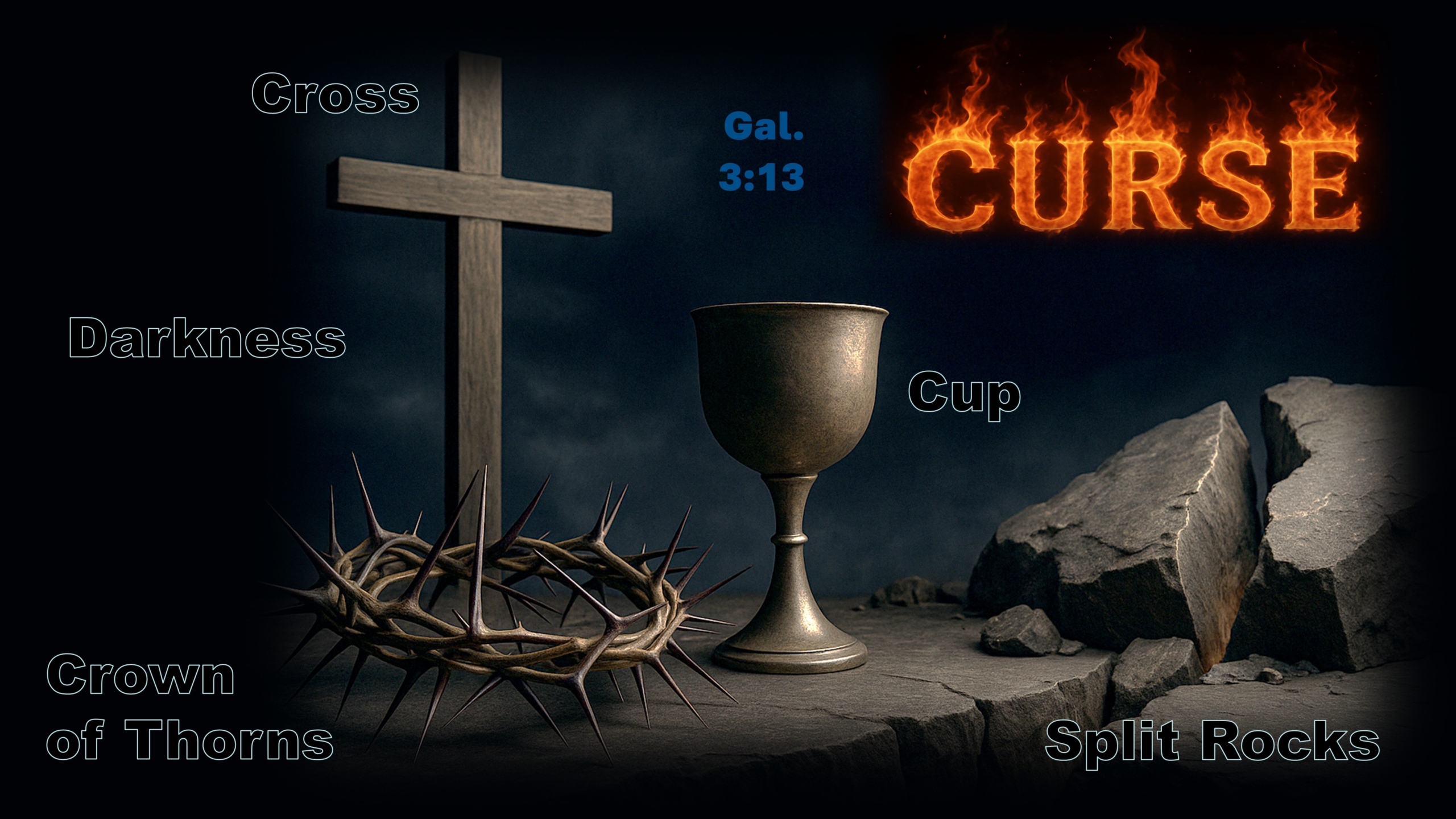
Five Symbols of Curse
The eevents asociated with the death of Christ is marked by a profound symbols that visually define the reality of the curse, perfectly reflecting the truth of Galatians 3:13. Every element of the scene carries immense spiritual significance: the wooden Cross upon which He hung, the suffocating supernatural Darkness, the cruel Crown of Thorns pressed into His brow, the bitter Cup of divine wrath He was asked to drink, and the violently Split Rocks that shattered under the weight of the moment. Together, these powerful symbols serve as a solemn summary of the ultimate penalty and curse that Christ willingly bore on our behalf.
How Could Christ Experience the Second Death When He Predicted His Own Resurrection?
But how could Christ go through the experience of the curse and the second death when He had already predicted His own resurrection?
There was a time, especially during that horrible, grave-like darkness, when Christ was so overwhelmed by the crushing weight of our guilt—becoming the curse of the law and being severed from His Father’s love—that His feelings told Him He was dying forever, and would never again enjoy the presence of His Father.
Desire of Ages (Chapter 78—Calvary) “The Saviour could not see through the portals of the tomb… He feared that sin was so offensive to God that their separation was to be eternal.” There was a time, especially during that horrible, grave-like darkness, when Christ was so overwhelmed by the horrible feelings of our guilt, becoming a curse of the law, and being separated from His Father’s love, that His feelings told Him that He was dying forever, and would never again enjoy the love of His .Father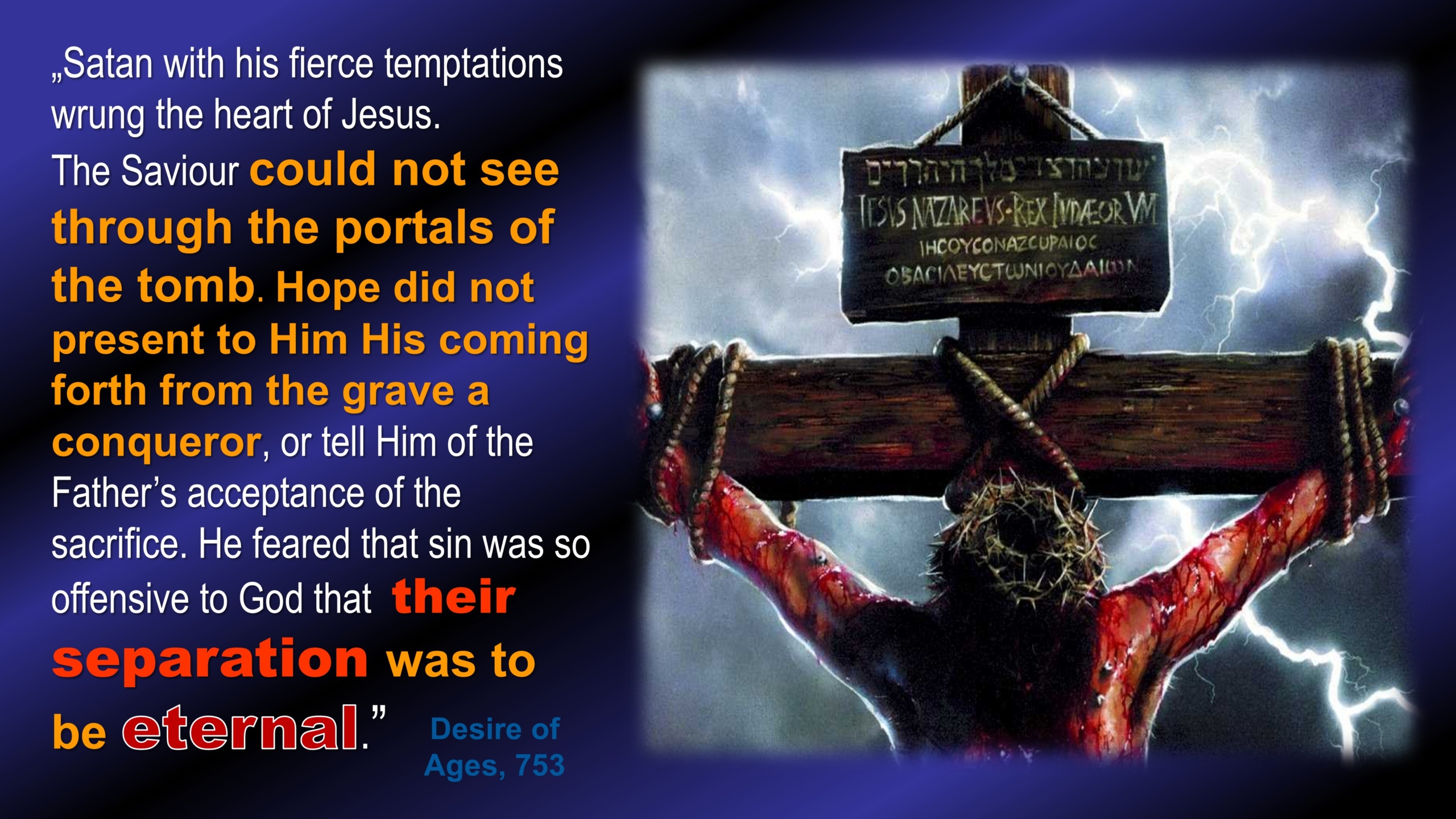
Three Temptations to Save Himself
Because Satan did not want Christ to die for us, he used human mediums to tempt Jesus three times to step down from the cross and save Himself. He did this first through the passersby (Matthew 27:39–40), who mocked Him saying, “If You are the Son of God, come down from the cross.” Next, he tempted Him through the rulers (Matthew 27:41–43), who sneered, “He saved others; Himself He cannot save. … Let Him now come down from the cross, and we will believe Him.” Finally, he used the thief crucified beside Him (Matthew 27:44; Luke 23:39), who said, “If You are the Christ, save Yourself and us.”

Was it easy for Christ to overcome this temptation?
Here is the answer: Since Christ did not step down from the cross—even while convinced that He was dying forever—it means He chose to accept eternal death and eternal separation from His Father’s love. He chose eternal death for Himself so that He could give eternal life to us!

Another powerful quote from the book, The Desire of Ages: “Christ suffered in proportion to the perfection of His holiness and His hatred of sin. His trial by men who acted as fiends (demons) was to Him a perpetual (everlasting) sacrifice.” The Desire of Ages, 700
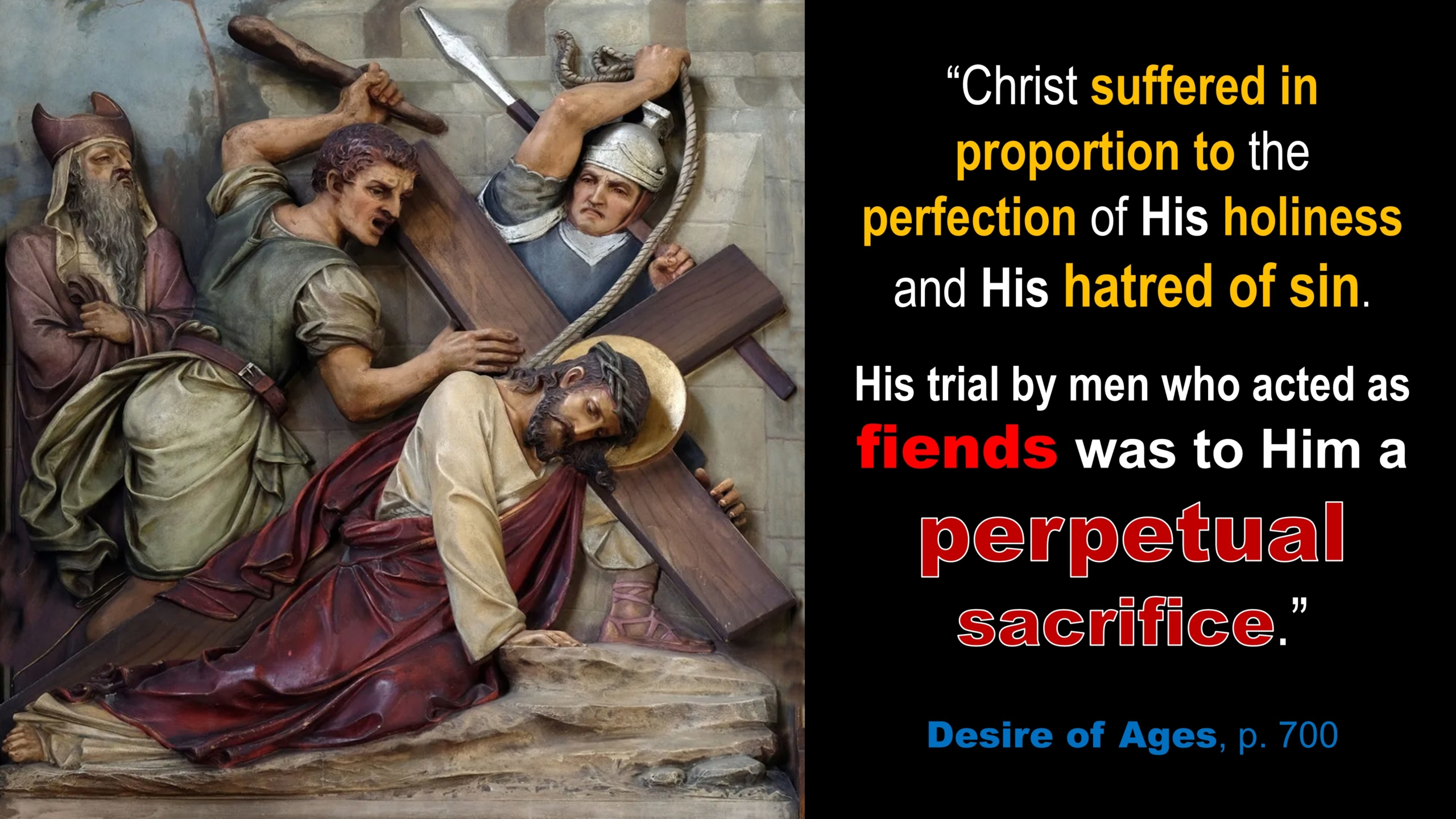
Do I understand these profound words? No, I wish I could, but I don’t. That is why we need eternity to study and make gradual progress in understanding the cross and sufferings of Christ. And the more we understand it, the more we will love and adore Him.
Why Did Christ Die So Quickly?
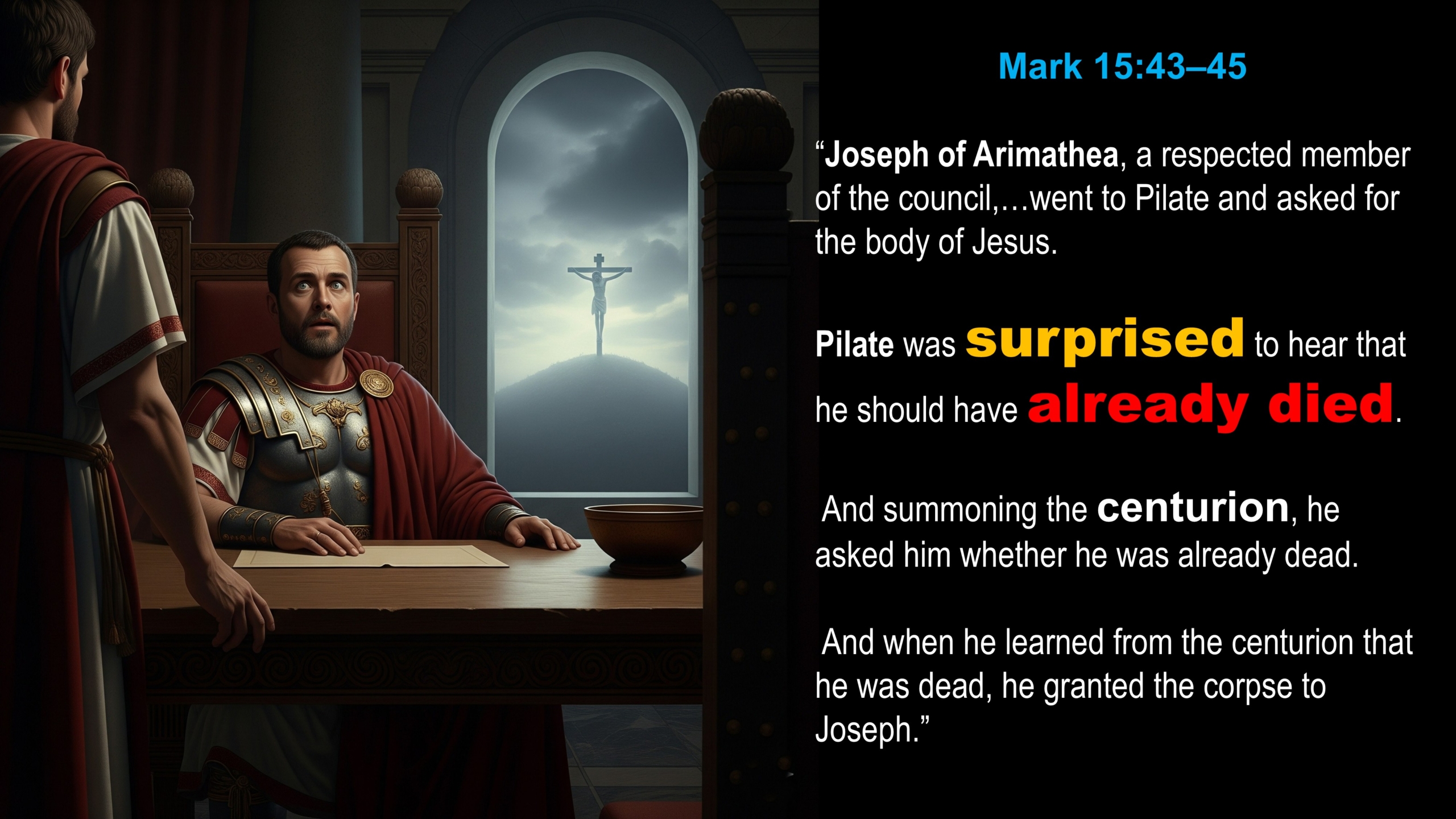
The death by crucifixion was a long lingering death which normally could take up to 7 days. But Christ died after only about 6 hours. That was the reason why when Joseph of Arimathea, came to Pilate asking for the
body of Christ, Pilate was amazed that Christ died so quickly that he asked the centurion to confirm it.
Why did Christ die so quickly? In John 19:34 we read that when one of the soldiers pierced Christ’s side with a spear, immediately “blood and water” came out.
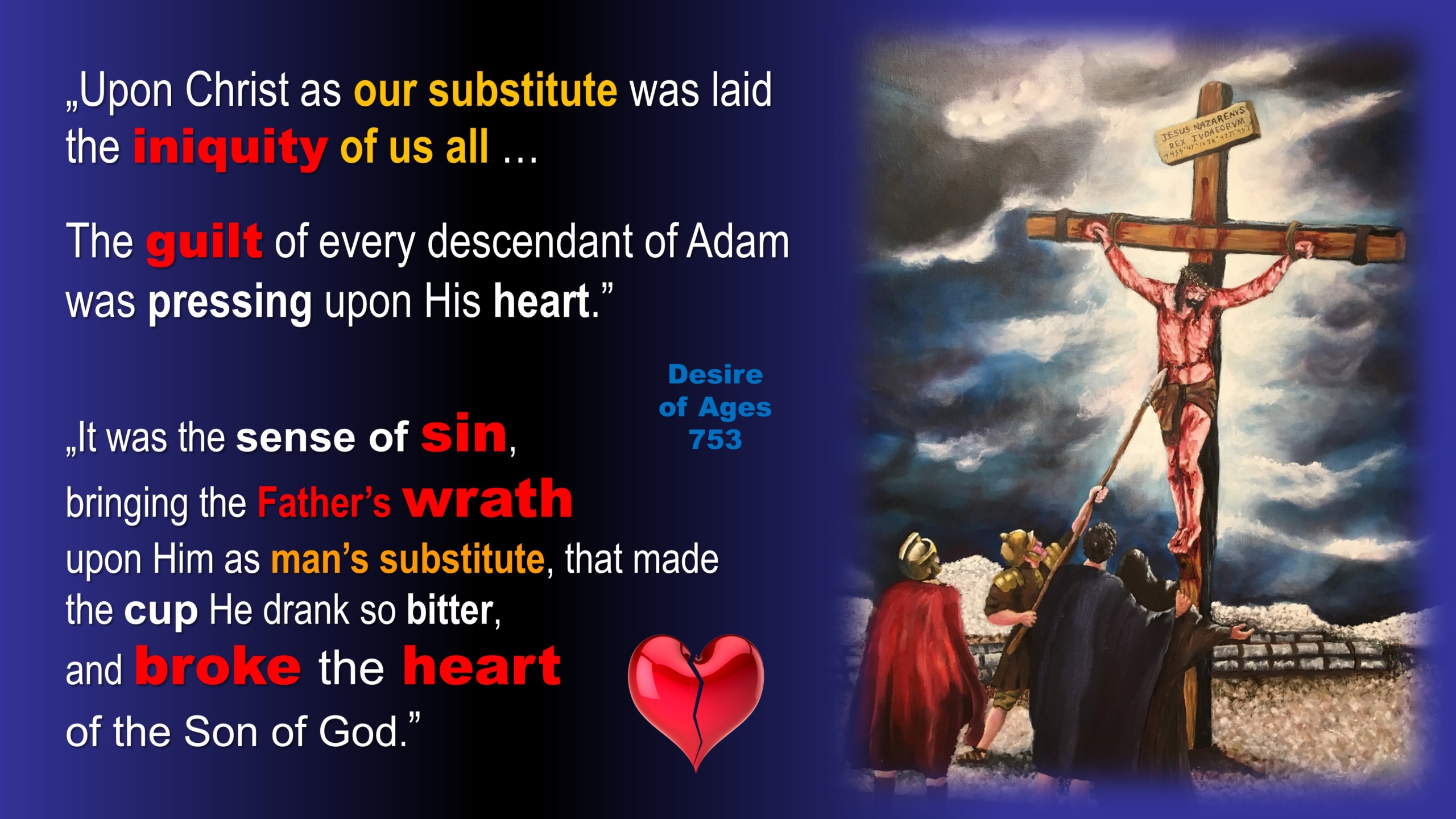
Jesus died quickly because His heart literally ruptured from spiritual and emotional agony. When the Roman soldier pierced His side, out poured a distinct separation of blood and water (John 19:34). “Upon Christ as our substitute was laid the iniquity of us all… The guilt of every descendant of Adam was pressing upon His heart. It was the sense of sin, bringing the Father’s wrath upon Him as man’s substitute, that made the cup He drank so bitter, and broke the heart of the Son of God.” The Desire of Ages, 753
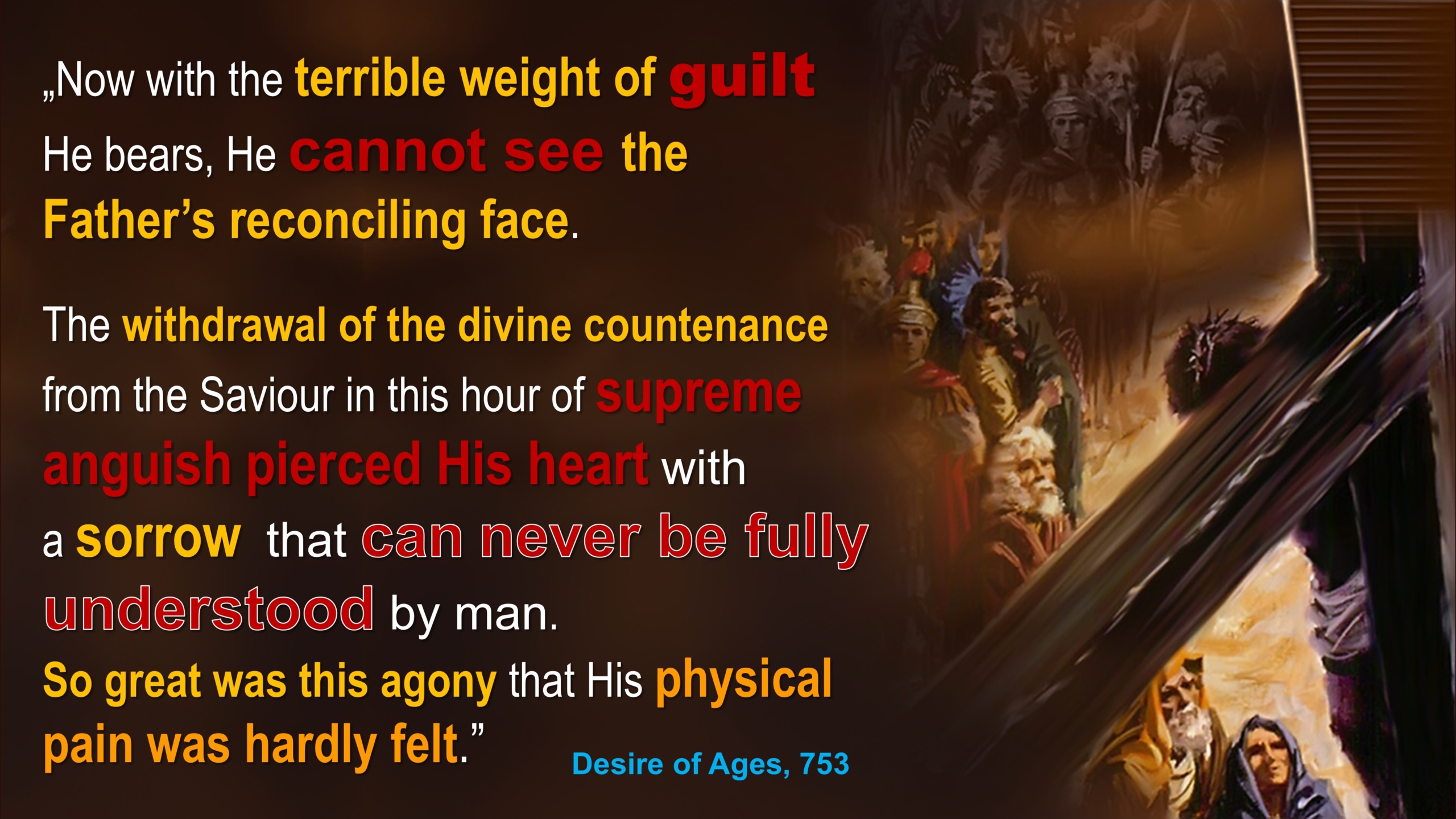
This profound mental agony was so intense that He barely felt the physical pain of the nails.
Personal Glimpse of Christ’s Anguish
Have you ever experienced the pain of being rejected by someone you loved more than life itself? If you have, you can understand a tiny glimpse of Christ’s suffering on the cross. A long time ago, when I was about 25, I fell in love with a beautiful girl so much that I completely lost my mind. She was a member of the same local SDA Church, and for a long time, I hoped that the Lord would have mercy on me. Unfortunately, one day I realized that my dream would never come true. As a result, I went through such horrible distress that I could physically feel the emotional pain. It lasted for the entire night and could not be compared to any physical pain—even though a few times in my life I have experienced unbearable physical pain for long periods. But that mental anguish was stronger than any physical pain, and I felt it for the whole night. Thank God, I survived that heartbreak, and later on, I even praised God for that experience because it helped me to understand a little better how devastating it must have been for Christ when He felt separated from His greatest love.

Why was the suffering Christ went through in Gethsemane and on the cross incomparably greater than mine? Because my human love for that girl was very tiny compared to the eternal divine agape love that existed between the Lord Jesus and His Father.
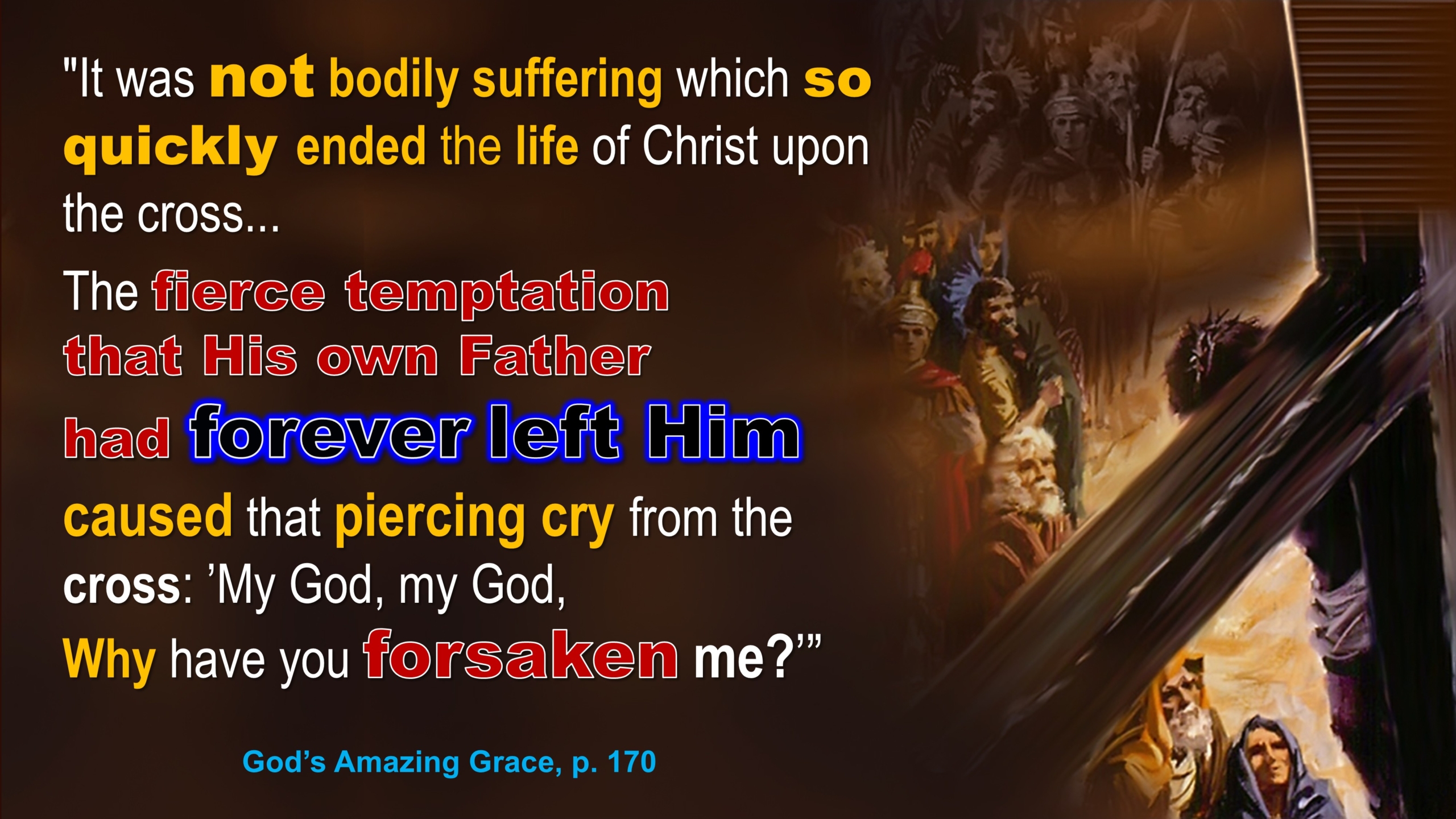
Why, Christ felt forsaken by His greatest, eternal love, His own Father and died out of the broken heart?
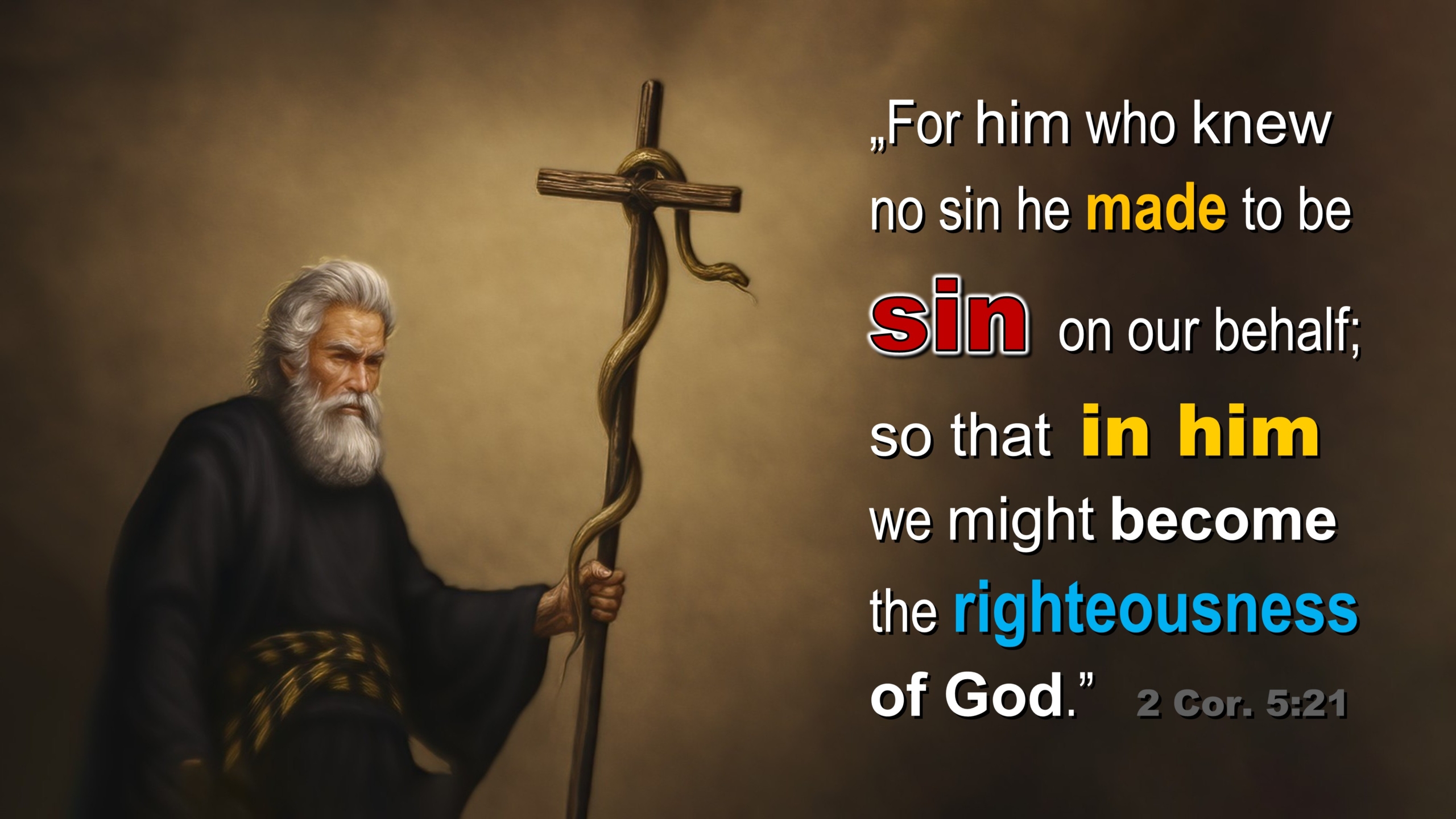
It was so because He “was made sin for us, so that we could be the righteousness of God in Him” (2 Cor. 5:21).
Where was God when Christ was dying for us?
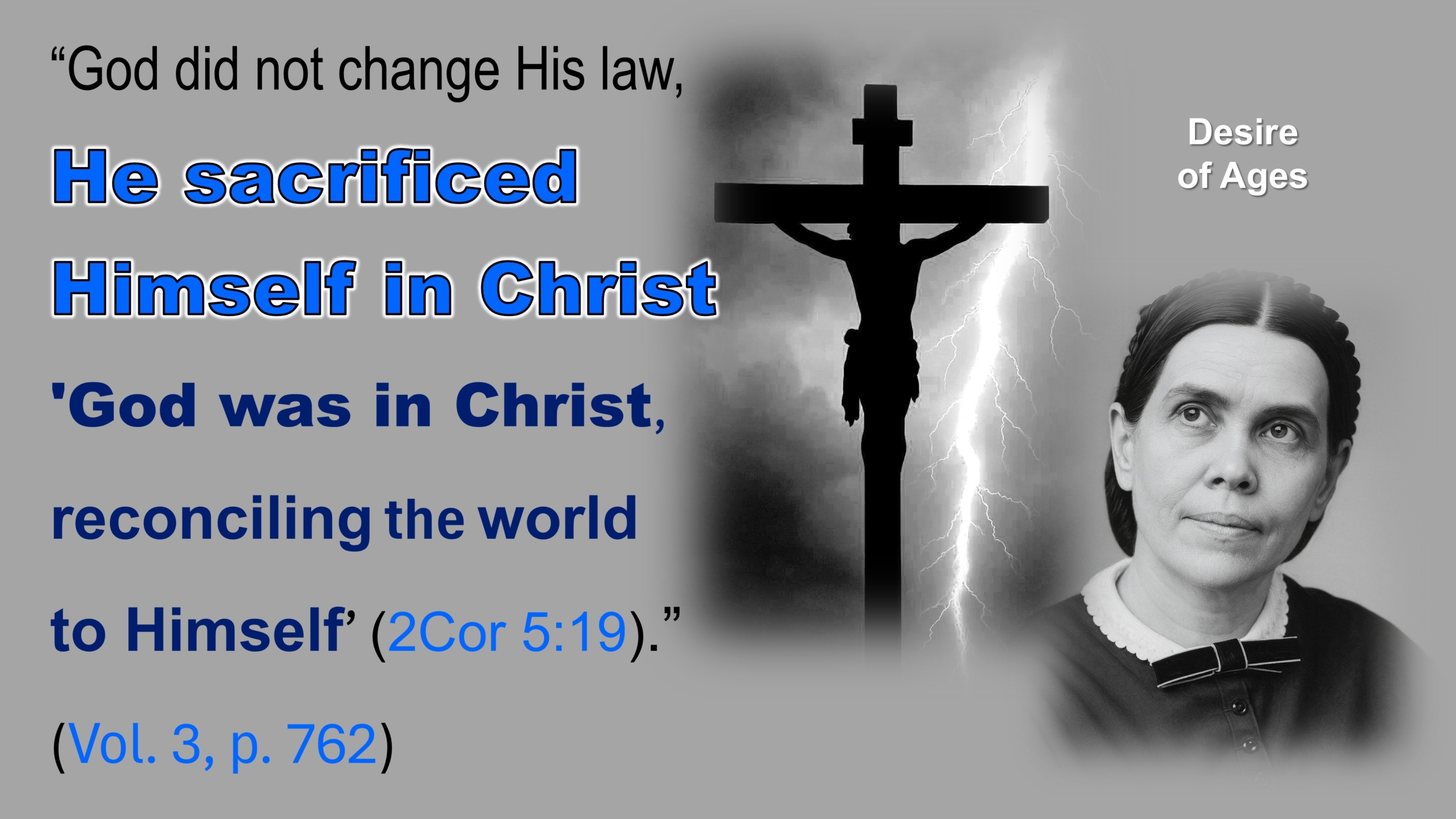
But was it only the Son of God who was dying for us and suffering? Where was God when Christ was dying for us? He was not a detached, cold spectator in heaven. The Bible explicitly states that “God was in Christ, reconciling the world to Himself” (2 Corinthians 5:19).

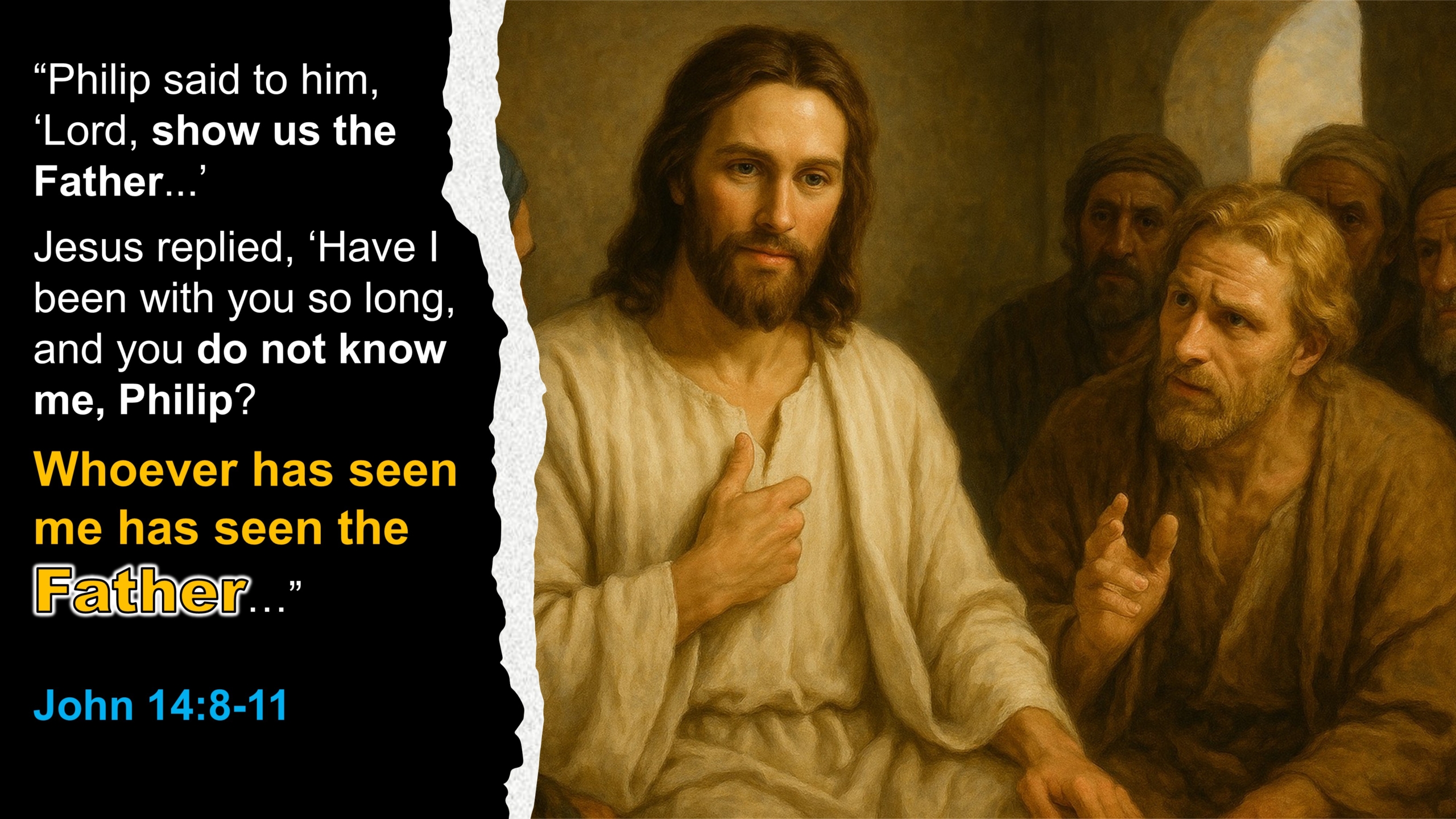
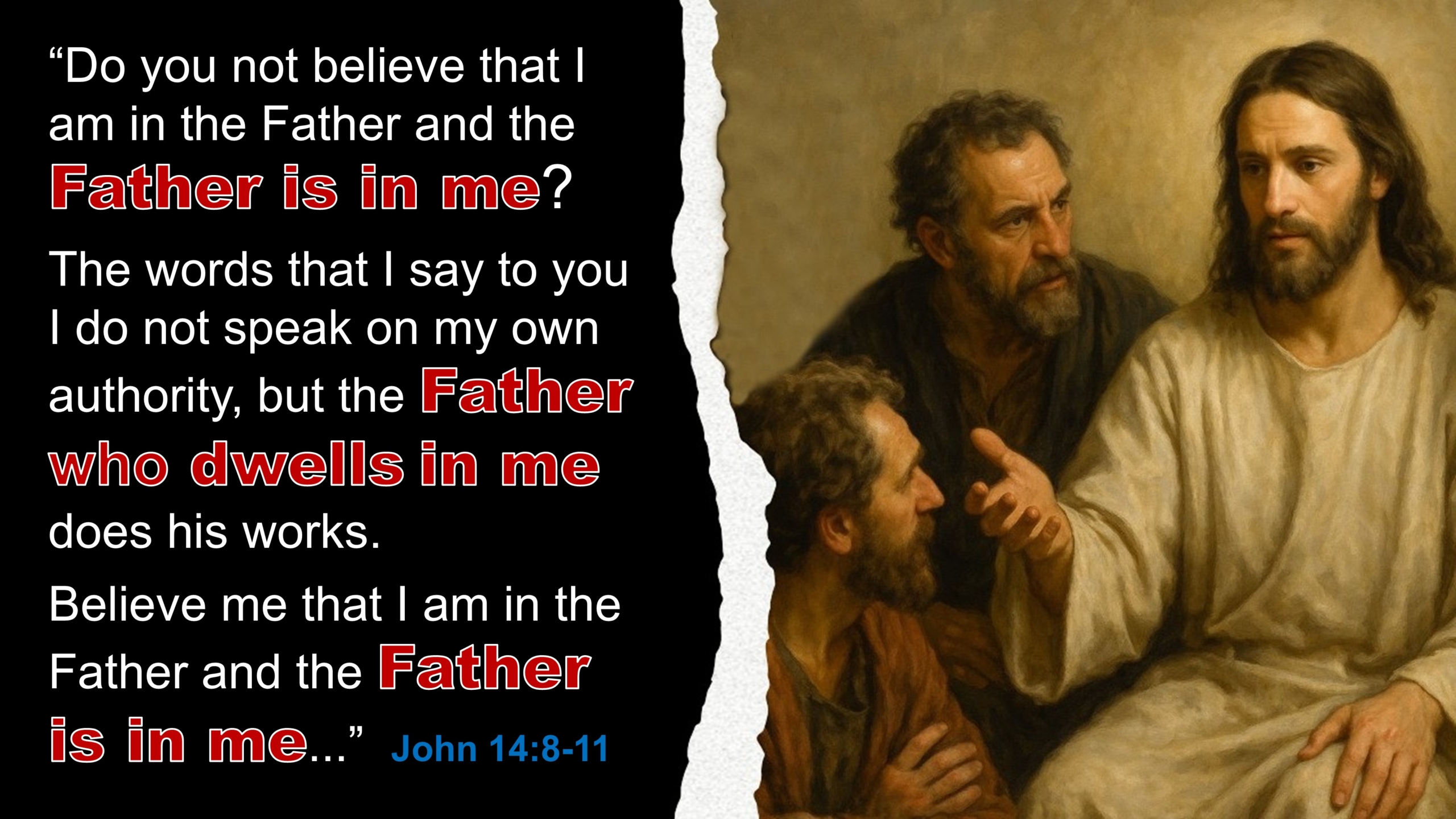
Because Jesus and the Father are perfectly one (John 14:8-11), the Father suffered with His Son: “The angels suffered with Christ. God Himself was crucified with Him, because Christ was one with the Father.” Bible Echo, August 6, 1894
God did not merely alter or set aside His law; He chose to satisfy it by sacrificing Himself in Christ.
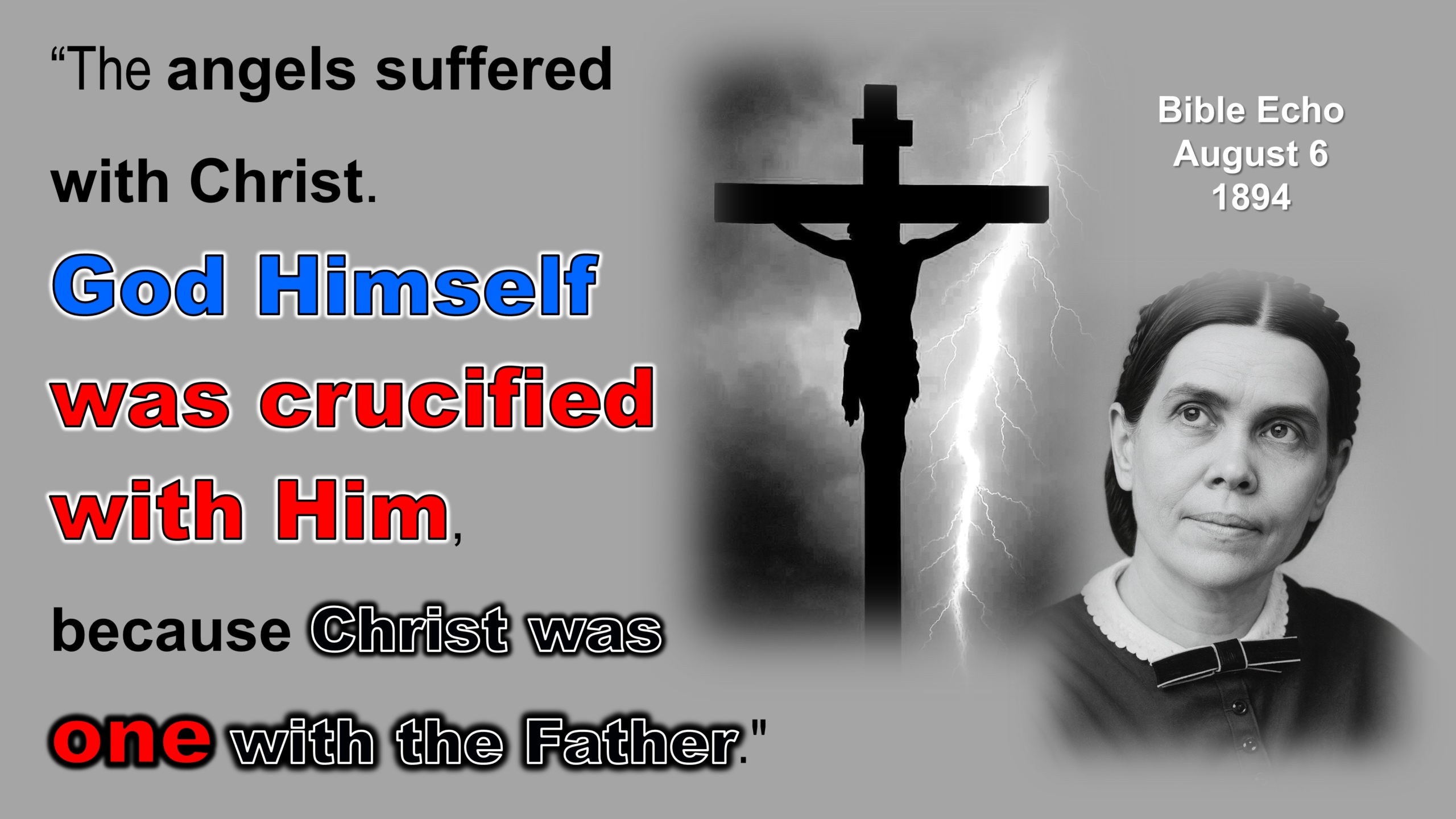
Where was God when Christ decided to die forever for us? God was in Christ experiencing the same for us! Ellen White understood the matter in the same way, as evidenced by what she wrote in her commentary on Mat. 27:45-46: “The angels suffered with Christ. God Himself was crucified with Him, because Christ was one with the Father.” (The Bible Echo, August 6, 1894).
Three-Quarks and Suffering of Triune God
Recently, I asked the Lord to let me understand better the tri-unity of God with reference to the cross of Christ, and I was directed to a very interesting quote. According to one physicist, “If quarks are forced into isolation, they decay in a micro-instant, as if they have no way to survive out of the relationship.”
What he suggests is that the three quarks forming one proton or one neutron can exist and survive only when they are together! If separated and forced to be alone, they die and cease to exist!
In addition, quarks cannot exist in isolation, and the strong force between them actually increases with distance. So trying to pull them apart does not weaken the bond—it strengthens it. If you try to separate quarks, the energy you input creates new quark-antiquark pairs instead of isolating one. This leads to a cascade of particles, known as a quark jet.

I find it very fascinating that in the nucleus of every atom, there are three created by God quarks (smallest particles) that make one proton or one neutron. All nucleons are three quark configurations. It proves that each quark needs two others to remain stable. Those three quarks are bound together by a powerful energy called by scientists “the gluon” or “the strong atomic force“.
“It was found that protons and neutrons are formed by three quarks. It has proved very difficult if not impossible to obtain an isolated quark. As you try to pull them out of the proton or neutron, it gets more and more difficult. Even stranger is the suggestion that if you could pull a quark out of a proton it would immediately form a quark-antiquark pair and leave you with a quark inside the proton and nothing outside! The reason why it is impossible to get a quark ‘on its own’ is that when you try to separate them from each other, the energy needed gets greater and greater. In fact when they ‘break apart’ the energy is sufficient to create two new antiquarks and these join to form pions and so the quarks ‘disappear’!” (source). It means that it could eventually lead to a Black Hole or outbreak tremendous amount of Energy!
I believe that God created protons and neutrons in this way to show us that like those three quarks bound together by the strong nuclear force make one proton or one neutron, also God the Father, God the Son and God the Holy Spirit are all bound together by the powerful everlasting Agape love thus making one Triune God.

The three Persons of the Godhead are one because they “permeate” each other (dwell in One Another). For instance, when One of Them suffers, Others feel the same. All three don’t have the beginning of their existence and are perfectly united in thoughts, power and love even though at the same time they are three separate Persons.
According to one physicist, “if quarks are forced into isolation, they decay in a micro-instant, as if they have no way to survive out of the relationship”. What he suggests is that the three quarks forming one proton or one neutron, can exist and survive only when they are together! If separated and forced to be alone they die and cease to exist!
Likewise, the three Persons of the Godhead greatly enjoy their eternal tri-union of love. Being alone would deprive God of the very purpose of His existence – the ability to love and to be loved. Therefore, being aware of this and knowing how great His love is, we can rightly assume that there was never a time when God was alone. He always (from everlasting times) had Someone Else to love and to be loved. This is how I see it and to me, it is another miracle of God and a wonderful truth.
It also helps us to understand why Jesus died of a broken heart when He was separated from the love of His Father, and I am sure that God the Father and the Holy Spirit experienced the same.
What caused that separation? Isaiah 59:2 “… your iniquities have separated you from God…” It is our sin that separated the Son from the Father! “For He made Him who knew no sin to be sin for us, that we might become the righteousness of God in Him” (2 Corinthians 5:21).
That is why the Bible says that the darkness lasted for how many hours? Three!
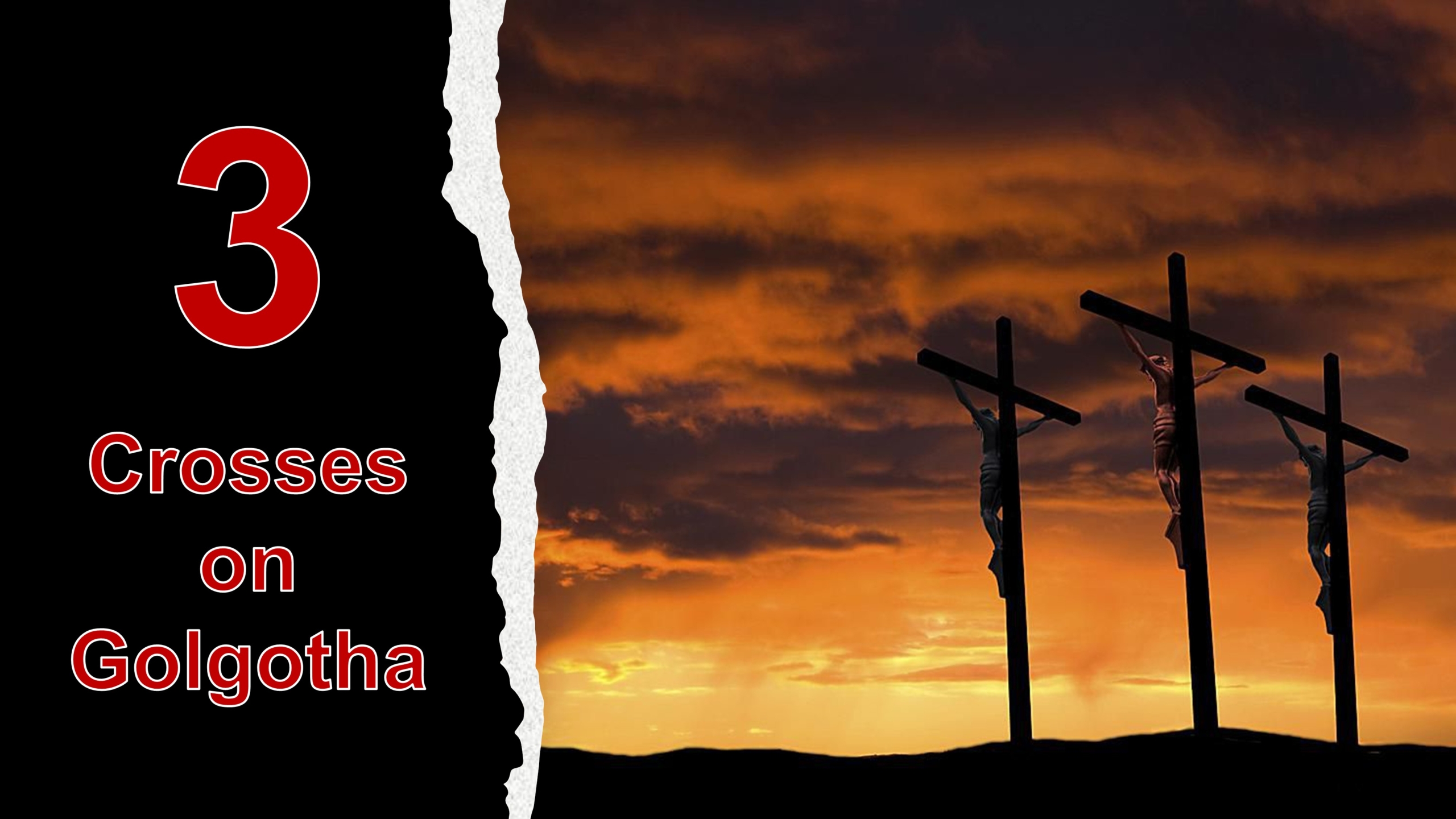
How many crosses were there on Golgotha? Three! In this way the isnspired Word of God helps us to realise that all Three Persons of the Godhead suffered and died for us!
How many times was Christ tempted to save Himself? Three!

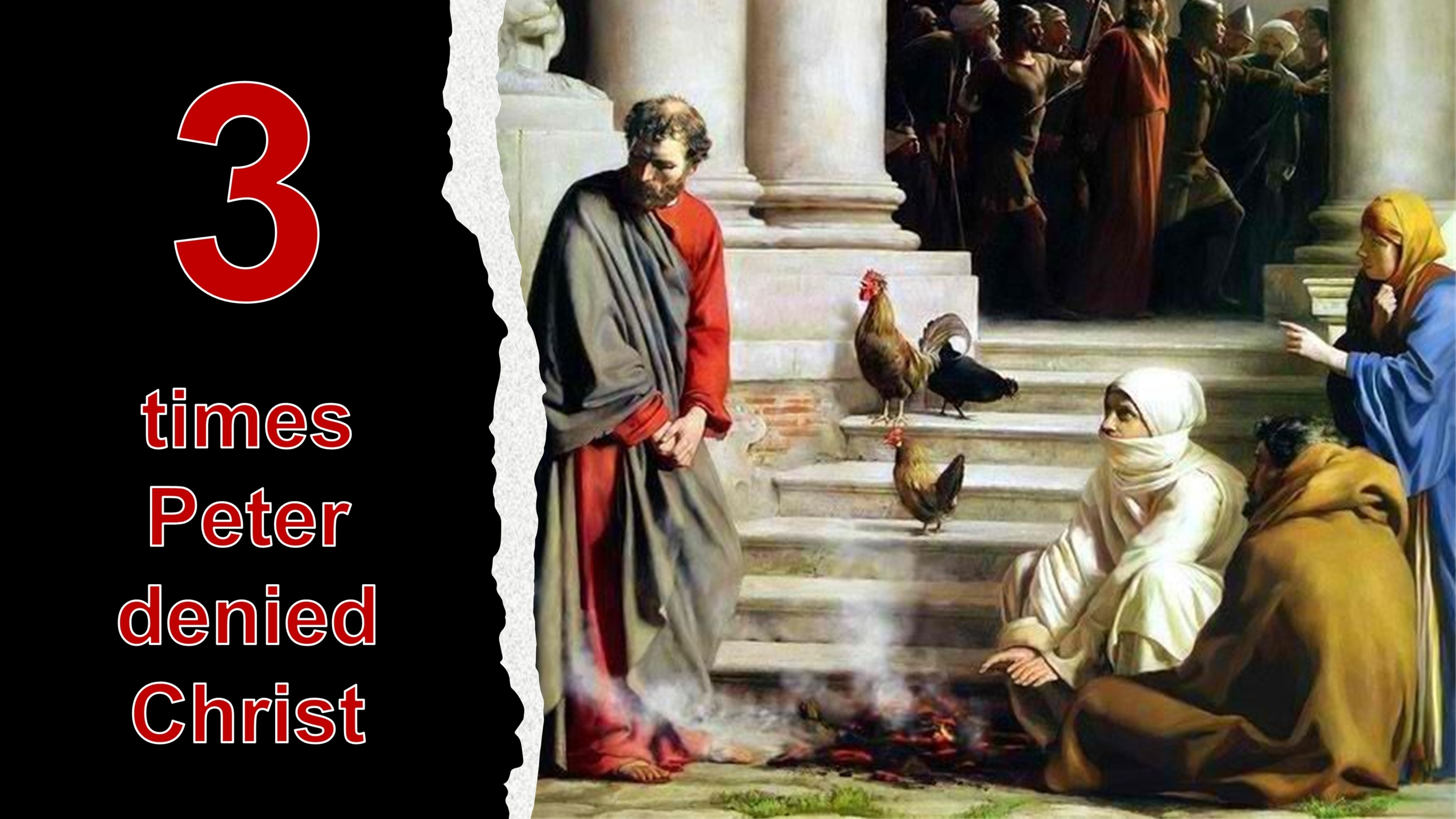
How many times did Peter deny Christ? Three!
How many times did Jesus fall under the heavy cross? Three!
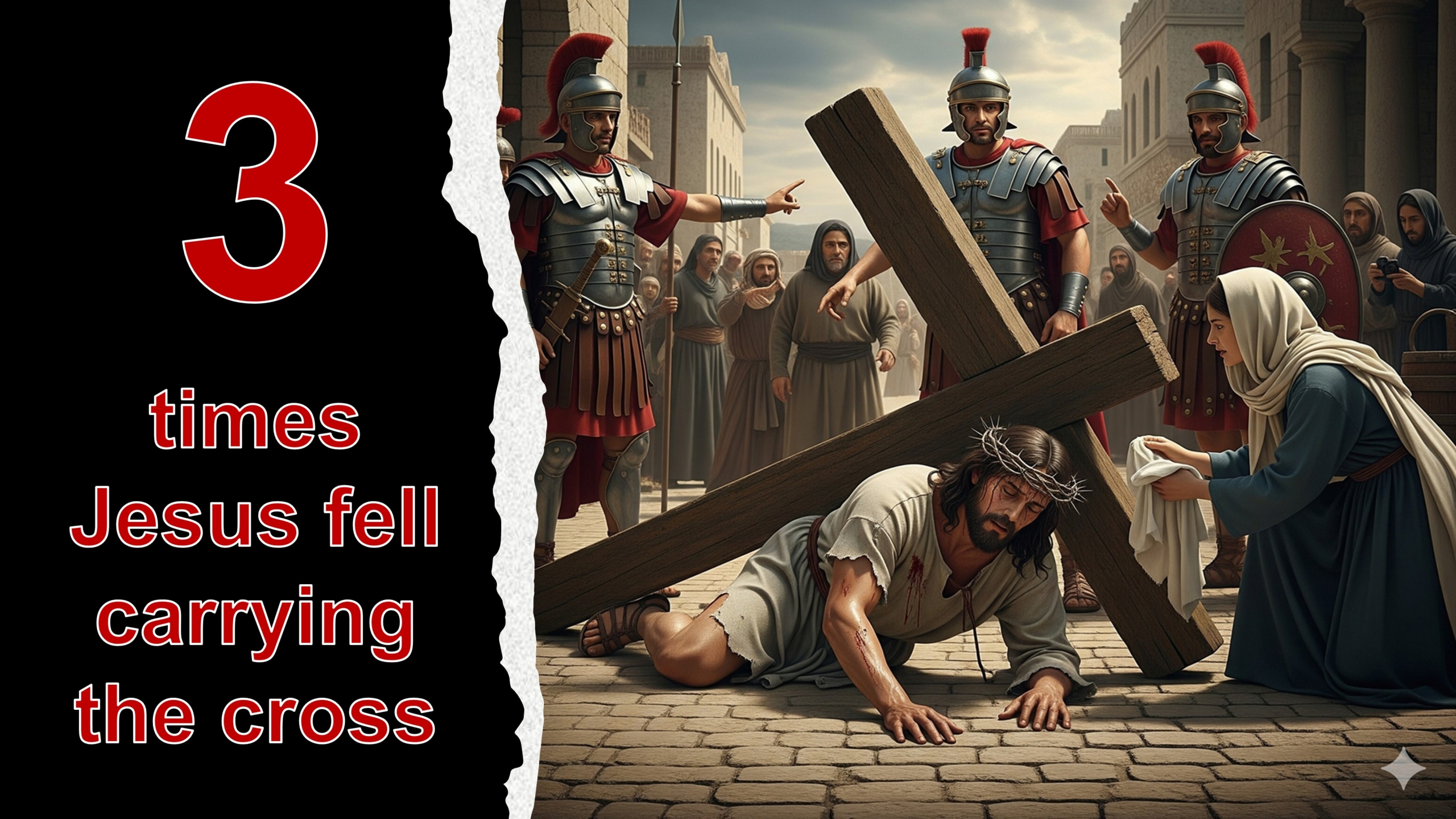
The Bible says that the darkness lasted for three hours? There where three crosses on Golgotha? How many times was Christ tempted to save Himself? Three! How many times did Peter deny Christ? Three! How many times did Jesus fall under the heavy cross? Three! How many days did Christ spend in the tomb? Three!
Is it a coincidence? No. What does it mean? Why the number three is associated with Christ’s death and sufferings?
In this way the isnspired Word of God helps us to realise that all Three Persons of the Godhead suffered and died for us. The number three is so deeply intertwined with the death and sufferings of Christ because it serves as a powerful testament to the Tri-unity of the Godhead. When Jesus hung on the cross, He was not suffering alone. God the Father and the Holy Spirit, together with God the Son, were all suffering and dying for us!
Because the three Persons of the Godhead perfectly permeate and dwell in one another, it was impossible for the Son to experience the agonizing separation of our sin without the Father and the Holy Spirit experiencing the same crushing grief.
The frequent appearance of the number three during those final hours—the three hours of darkness, the three crosses on Golgotha, the three temptations to step down, three denial by Peter, and the three days in the tomb—is a profound divine marker. It shows that the entire Triune God was fully poured out, suffering together in the ultimate sacrifice of everlasting Agape love to save humanity.
And just as the three quarks forming one proton or one neutron can exist and survive only when they are together, and when separated and forced to exist alone, they die and cease to exist, so also the Three Persons of the Godhead started dying as soon as They were separated by our sin.
And just as, in the case of separated quarks, the strong force between them actually increases with distance—meaning that trying to pull them apart does not weaken their bond but strengthens it, and the energy input creates new quark–antiquark pairs instead of isolating a single quark—likewise, the unimaginable suffering and pain caused by the separation of the Three Persons of the Godhead created an even stronger bond of eternal love between Them. In addition, it created a new everlasting bond of love between the Triune God and redeemed, glorified humankind!
Golden Flower

To truly grasp this level of utter self-sacrificing devotion, consider a historical account from Taiwan. Following ancient custom, parents arranged a marriage for their son, choosing a young bride named Golden Flower. When the wedding day finally arrived and the groom unveiled her face in private, he discovered she was not physically beautiful. Deeply upset and filled with pride, he completely rejected her.

For months, his parents pleaded with him, pointing out that Golden Flower was exceptionally humble, intelligent, hardworking, and a deeply devoted Christian. He eventually returned to the house but kept her hidden away from the world, refusing to acknowledge her. Years passed, and they had a daughter together.
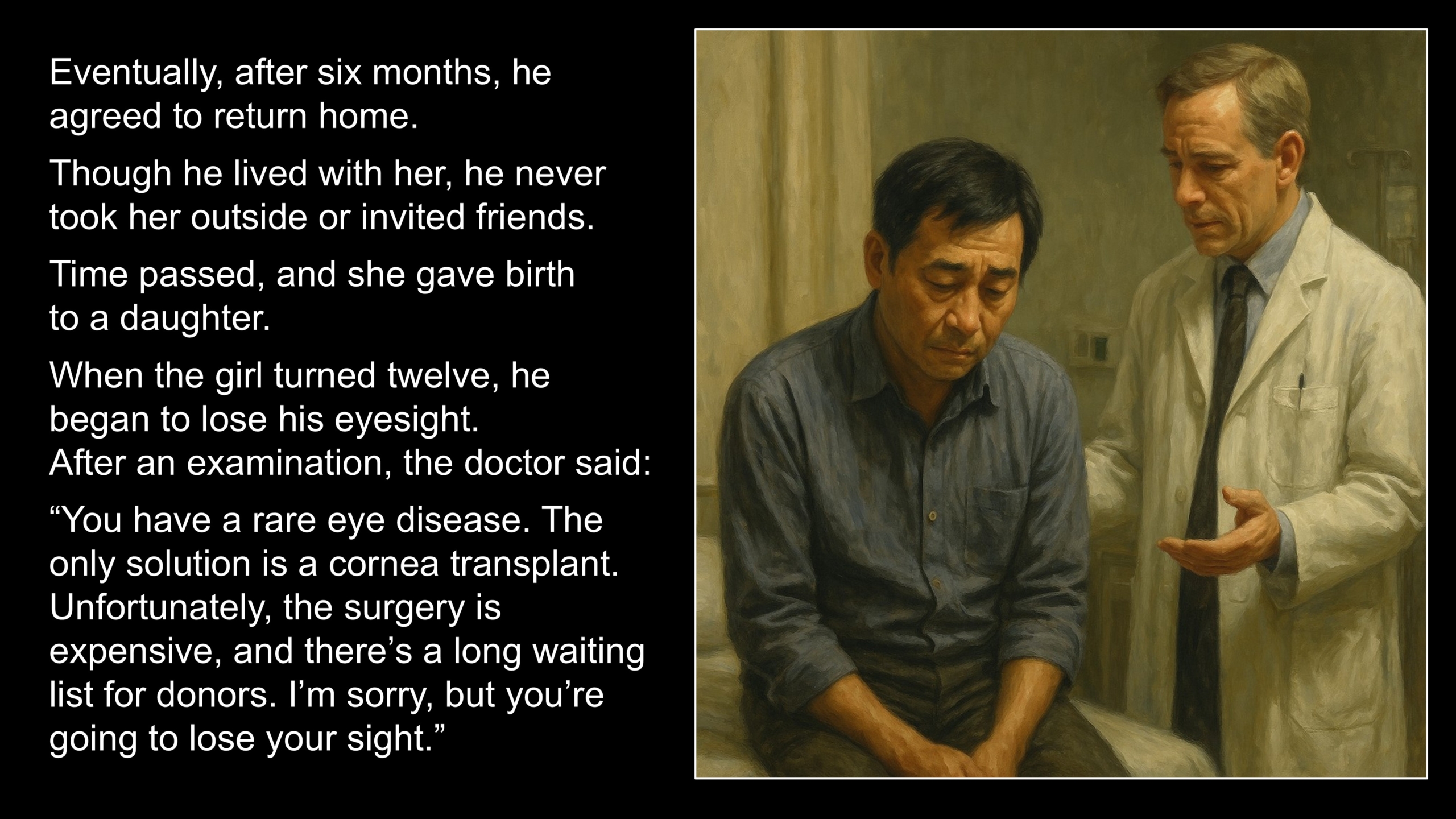
When their daughter turned twelve, the man began rapidly losing his eyesight due to a rare, aggressive disease. The medical specialists informed him that a cornea transplant was his only hope, but it was far too expensive and the waiting list was impossibly long. Hearing this, his wife quietly handed him her entire lifetime savings, which she had earned by secretly weaving baskets late into the night. Though he dismissively insisted that money alone could not buy a donor match, he received an unexpected phone call from the hospital just a few weeks later stating that perfect corneas had suddenly become available.

The surgery was a total success. When his daughter visited his bedside and asked if her mother could come see him, the man coldly refused, stating he did not want her presence in the hospital. Three weeks later, as he walked home with restored sight, he expressed a desire to visit the cemetery to honor the unknown person who had supposedly died and donated the corneas.

When they arrived home and his wife welcomed him, he felt a sudden wave of embarrassment and finally thanked her for the basket money. His wife began to cry softly, as it was the very first time he had ever shown her a shred of gratitude.
Suddenly, the daughter broke into uncontrollable tears and cried out, “Mom, you have to tell him! Tell him the truth! He doesn’t know you gave him your corneas!”
Stunned, the man turned and looked deeply into his wife’s eyes, only to realize that her corneas were gone. When he fell to his knees, weeping, and asked why she would do such a thing for someone who hated her, she softly replied, “Because you are my husband.”

Overwhelmed by her love, he knelt at her feet and called her by her true name, Golden Flower, for the very first time. 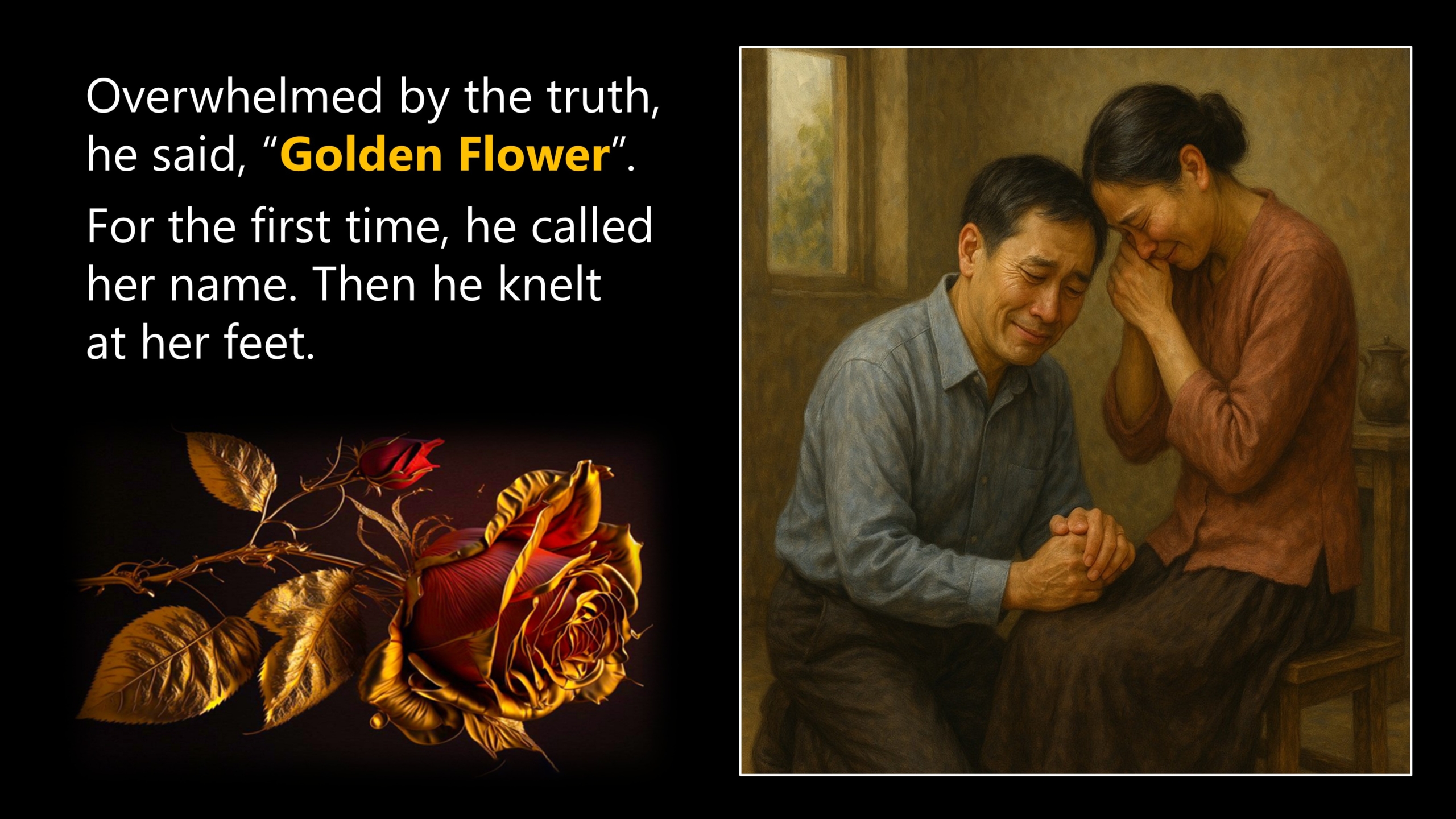
This beautiful human sacrifice is a faint reflection of the ultimate gift given to us by Jesus Christ. Out of endless love, the Son of God became sin and a curse for us, willing to say goodbye to His own eternal life in glory so that we could live forever.


Our Response to the Message of the Cross
Realizing the immense, cosmic magnitude of this sacrifice, our only natural response should be to fall to our knees in heartfelt gratitude. We must actively guard ourselves against any perverted, legalistic gospel that claims salvation is found through faith plus our own works of the law—a deception that Paul strictly and heavily condemned (Galatians 1:6-9). Instead, we must fully accept the restored, agape-focused everlasting Gospel.
Roger J. Morneau highlighted the transforming nature of this focus when he wrote that fixing the mind daily on Christ’s crucifixion completely broke Satan’s hold on him and on hundreds of hardened individuals. We are explicitly encouraged to do the same: “Spend a thoughtful hour each day in contemplation of the life of Christ… especially the closing scenes.” The Desire of Ages, 83

Let us close with this solemn, piercing appeal: “The Son of God gave all—life and love and suffering—for our redemption. And can it be that we, the unworthy objects of so great love, will withhold our hearts from Him? He became sin for the race! But what do we give up, when we give all? A sin-polluted heart, for Jesus to cleanse by His own blood! And yet men think it hard to give up all! I am ashamed to hear it, ashamed to write it.” Steps to Christ, Chapter 5
Let us follow the example of Mary Magdalene, who truly appreciated what Jesus did for her, surrendered her entire heart to Him, and chose to remain wherever Jesus was out of pure, unselfish love. Like Paul, may our ultimate, lifetime conviction always be: “God forbid that I should boast except in the cross of our Lord Jesus Christ, by whom the world has been crucified to me, and I to the world” (Galatians 6:14).