Transcript of the sermon preached by Sławomir Gromadzki at North Wembley Seventh-day Adventist Church.
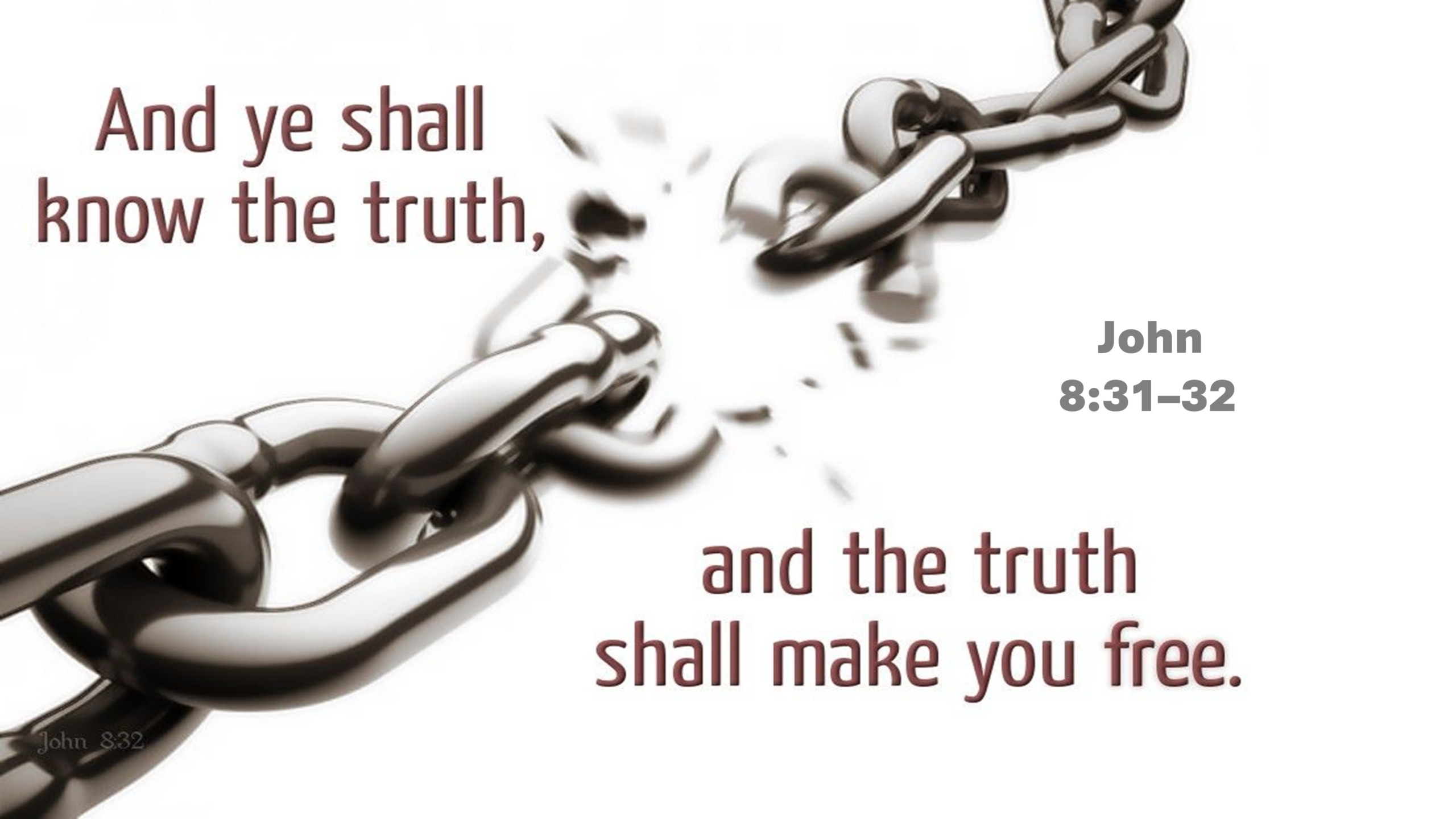
What is the most important truth in the Word of God?
We don’t have to guess, because the Lord Jesus himself says that if we abide in his word, we will know the truth and the truth will set us free. There is only one truth that can set us free from the slavery of sin, condemnation, death, and fear: it is the truth of the Gospel.
But in order to understand and appreciate the Gospel, first of all we need to understand the sad truth about sin and our hopeless, sinful condition.
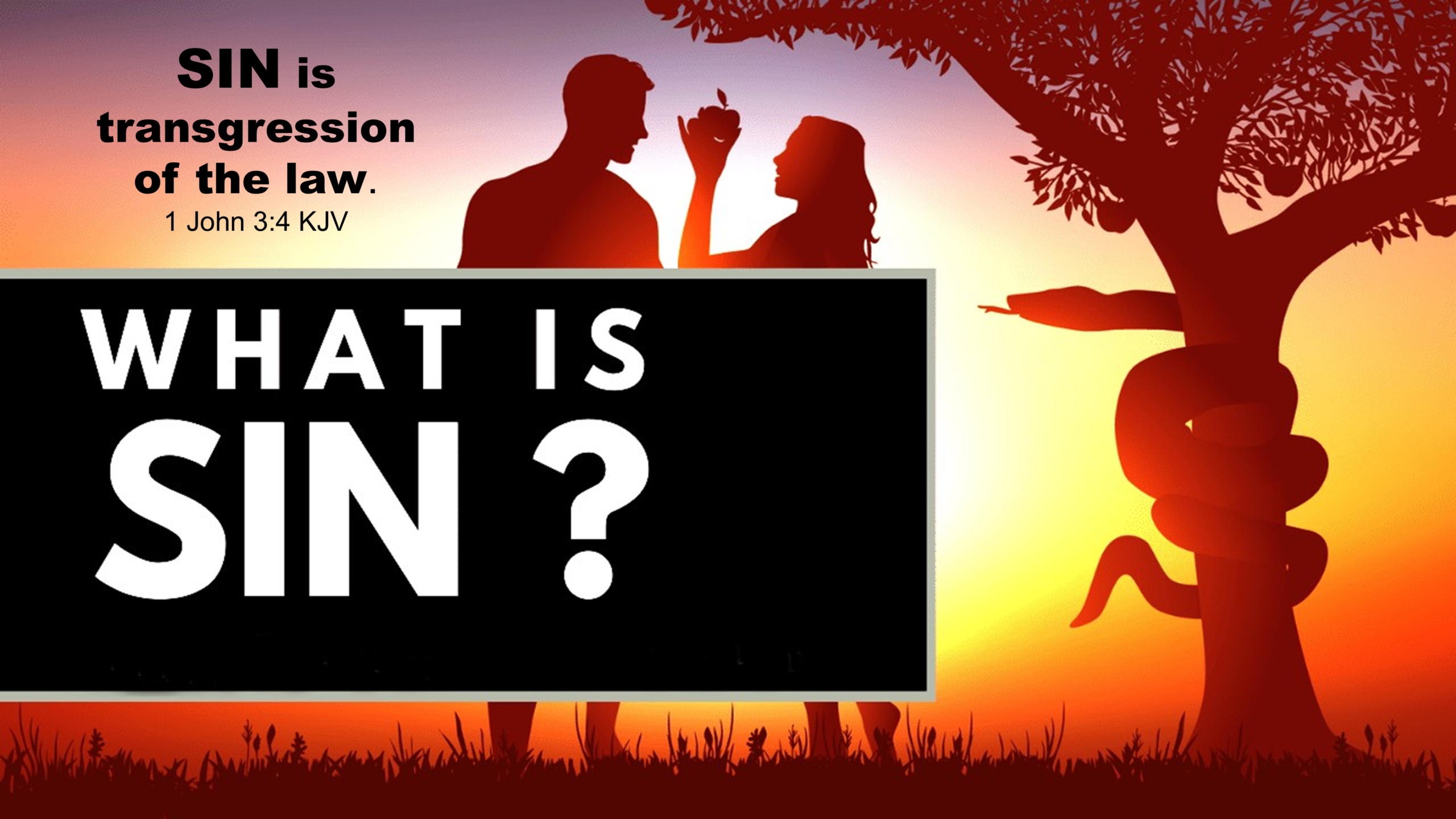
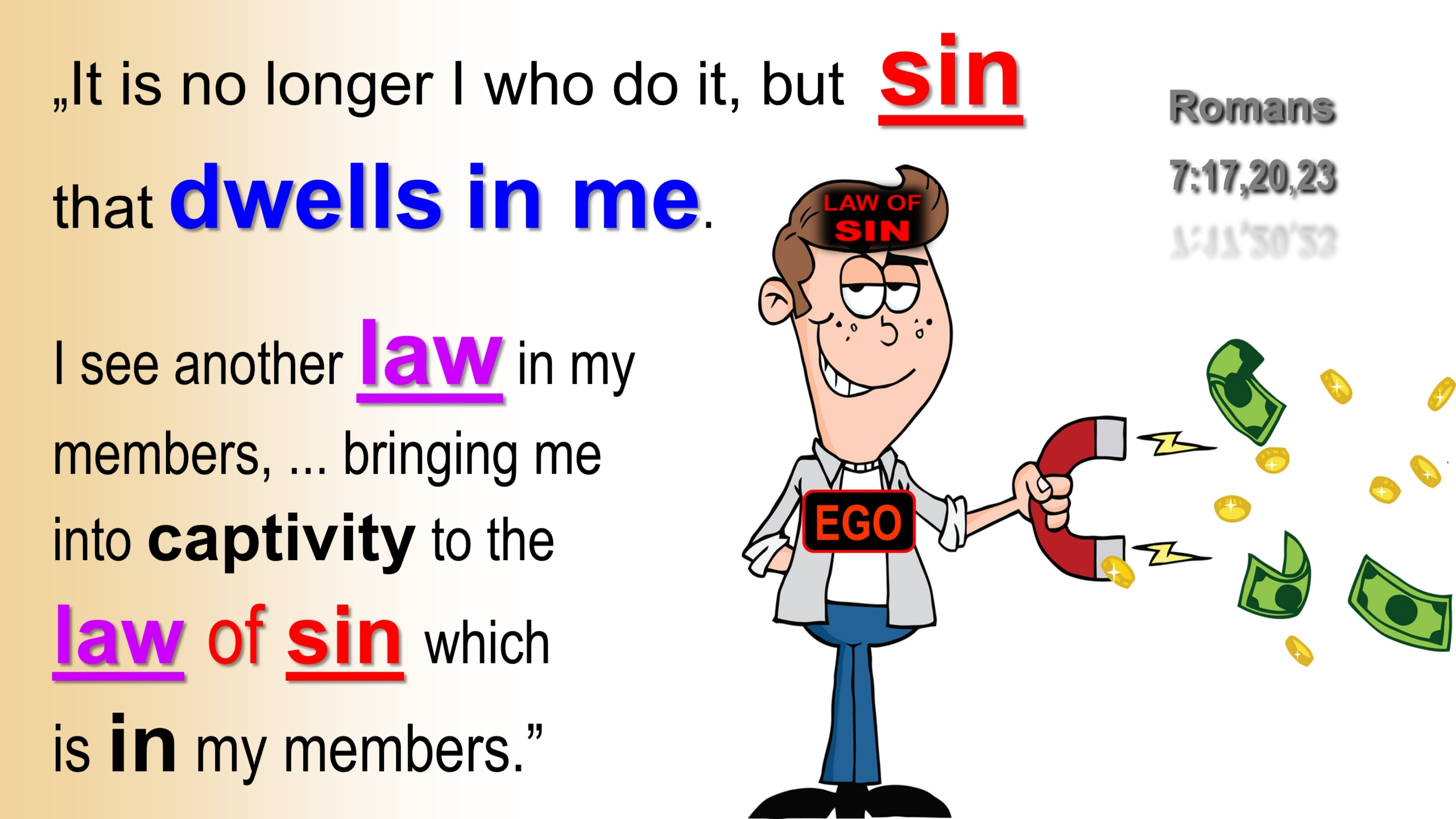
For most of us, the definition of sin is the transgression of the law. But our sins as transgressions of the law are only the rotten fruits of another sin—a sin which is inside us.
The Apostle Paul calls it “the law of sin and death.” He calls it a law because, like the law of gravity for instance, it is a constant force. It never ceases; all the time it is pulling us towards sin, selfishness, and pride. Our sins are only the fruit of what we have inside us.
When God created Adam and Eve, they were perfectly filled with the Holy Spirit and God’s unconditional, self-sacrificing agape love.
But when they sinned, they actually decided to choose a new way of life invented by Lucifer—a life not according to God’s unselfish agape love, but according to the egocentric, selfish love introduced by Lucifer, and a life independent from God. As soon as they sinned, the Holy Spirit and agape love disappeared, and Adam and Eve became darkness. They became spiritually dead, deprived of the internal presence of the Holy Spirit and God’s agape love.
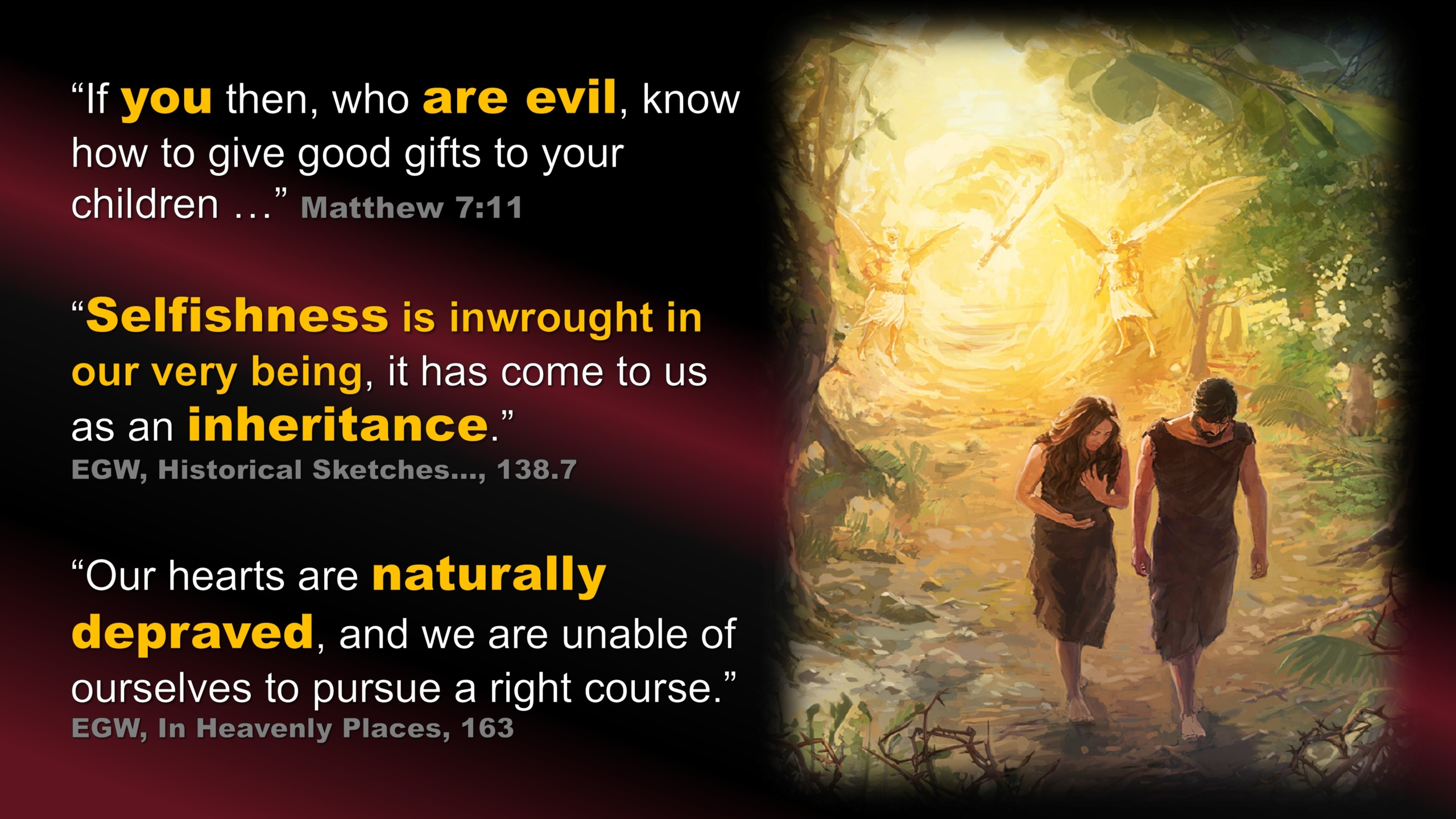
Because we are a multiplication or extension of their sinful life, we are born without agape love or the Holy Spirit; we are born spiritually dead, without the Holy Spirit in us and without agape love. We are born with something that was invented by Lucifer: natural selfishness. As soon as we appear in this world, the holy law of God condemns us to eternal death because it cannot allow anyone who is selfish to live forever, as eventually it would destroy the entire universe.
We adults, because we are ashamed of this natural selfishness which is in us, are very good at hiding it. But from small children, you can learn the truth. For example, if you have a group of small kids and you offer them something that is very attractive to them, but you give it to only one of them, what would happen?

You would trigger a civil war! Why is that so? Do we teach our children to be selfish? No, we teach them to be unselfish. So why are they egocentric? Because, like all of us, they are also born with this horrible law of sin, selfishness, and death.
Unfortunately, there are Christians—including some Seventh-day Adventists—who claim that we become sinners only when we start sinning. But when you look at an apple tree when there are no apples on it yet, does it mean that it’s not an apple tree? Of course it is an apple tree! Even though it doesn’t yet produce any apples, apples do not make the tree an apple tree; apples only confirm that it is an apple tree.
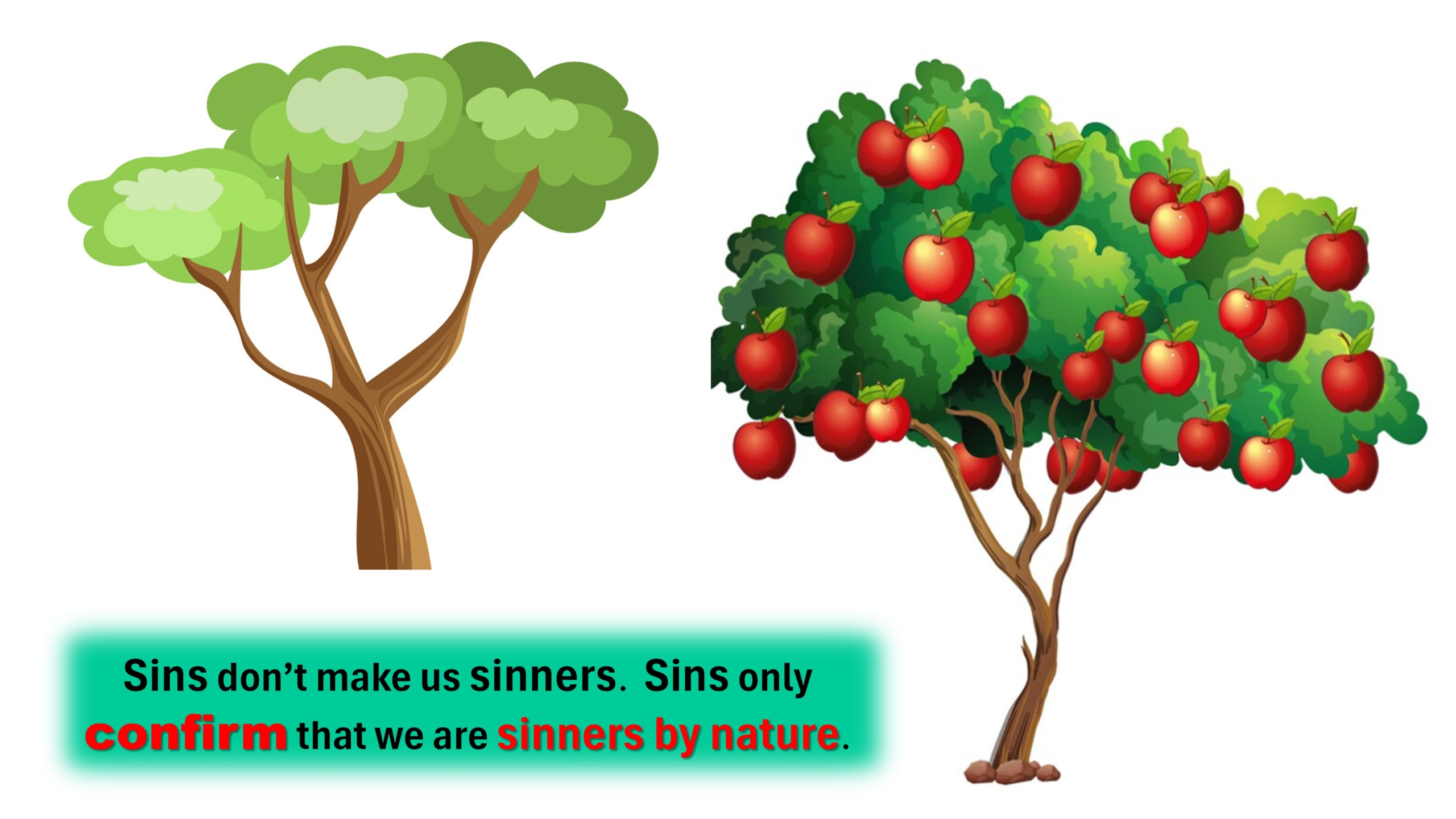
It is exactly the same in our case: our sins do not make us sinners; our sins only confirm that we are sinners. The matrix of sin, the factory of sin we are born with, is in us. We are born as darkness, spiritually dead, deprived of the Holy Spirit and agape love, and our only hope is in God and in Jesus Christ, our wonderful Savior.
Back in Poland, when my country was still under communism, I was distributing Bibles and our books—especially The Great Controversy, The Desire of Ages, and Steps to Christ—in the Polish mountains. I was living on the top of a mountain in a very small village of about four or five houses, in a house owned by my Seventh-day Adventist friends. In order to get there, I had to walk up the hill for about an hour from the nearest bus stop.

One day in wintertime, when sunsets were very early, I was coming back home after distributing the books. When I got off the bus, I was horrified to realize that I had forgotten to take my flashlight. After walking for about ten to fifteen minutes, it got so dark that I couldn’t see the way anymore. Actually, I couldn’t see anything at all; it was pitch black. I could see nothing. I got scared, of course, because I couldn’t sleep outside in wintertime—that would kill me—and the mountains could also be dangerous. I was already tired because I was carrying a big bag with books and a folding table.
In addition, my Adventist friend, in whose house I was staying, had told me that when he was walking the same way at night, something like a devil or a person jumped on him, and he had to fight with it. I knew that he was telling me the truth because he was serious and he didn’t have any mental health issues. But he could fight because he was much bigger and stronger than me; he was one of the best Judo fighters in Poland, and before he became a Seventh-day Adventist, he was even a bodyguard for the most popular singing group in Poland. But I was very easy prey, and I couldn’t even run in that horrible darkness.
So you can imagine: whenever I touched the branch of a tree while I was groping in the darkness, not knowing where I was going, I experienced almost a heart attack because I thought that the devil, or whatever it was, was about to jump on me.
My problem was that whenever I went through a stressful experience like that, I always got very discouraged and overwhelmed by feelings that God had abandoned me because he allowed something like that to happen.
After some time, I came to my senses and I realized that I couldn’t do anything to save myself from that horrible, scary, grave-like darkness, and my only hope was in God. So I humbled myself at last; I knelt on the snow and I started to pray. I really prayed at that time. And guess what happened?
Before that short, desperate prayer, I couldn’t see anything—I couldn’t see my fingers when I put them close to my eyes—but after the prayer, when I opened my eyes, I immediately saw the way!
So I stood up and I praised the Lord for the miracle of providing enough light so that I could see the path. I wasn’t yet sure it was the right way, but I knew that I could eventually get somewhere and ask for help.
When I walked for only about five to ten minutes, I noticed a light in the distance. When I got closer, it was the light of a house, and guess whose house it was? It was the house of my Adventist friends!
Then I understood that when I was discouraged and thought that God had abandoned me, it was all a lie, and I was deceiving myself with my feelings. The truth was that God was loving me and caring for me all the time. When I didn’t know where I was going, he was carrying me straight home; that’s why I got home so quickly.
God says: “I have loved you with an everlasting love, and therefore with loving kindness I have drawn you.” About agape, we read that agape never fails—the agape love of God never fails.
The Lord Jesus says to us: “Surely I am with you always, even until the end of the world.”
This experience also helped me to understand that I was like that darkness, and I couldn’t do anything to save myself; my hope was only in God.
But there is something worse than the darkness of sin: it is the black hole of legalism.

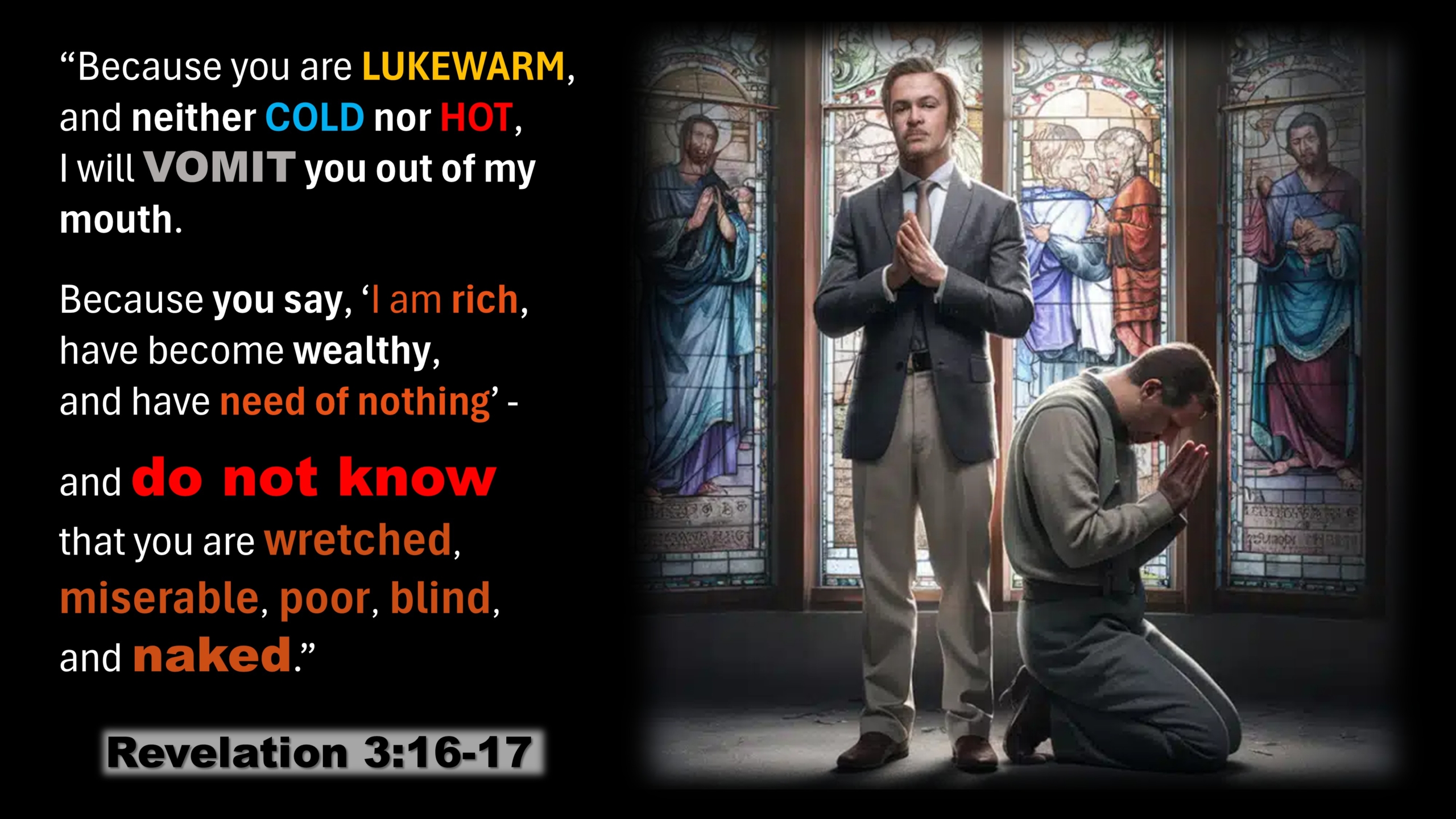
In the Book of Revelation chapter 3, the True Witness tells us that he is going to vomit not the cold, sinning members, but the lukewarm legalists. Why? Because the cold, sinning members still know something that legalists do not know: they know that they are wretched, poor, blind, and naked, and there is still hope for them.
How do I know that legalism stands for lukewarm Christianity?
I know about it because there are three Christian temperatures referring to three different spiritual conditions, and those three conditions refer to different types of Christian works.
There are three types of works in the New Testament:
Works of Faith: Referring to true Christians who have accepted justification by faith alone. They have experienced the new birth, and they allow the Holy Spirit and the Lord Jesus—the hope in us—to work in them. But those works do not contribute to their salvation; this is only proof that they have accepted the salvation that took place 2,000 years ago.
Works of the Flesh: Referring to those of us who haven’t yet learned to walk in the Spirit or live by the power of the Holy Spirit, and are still sinning. But at least they know that they are wretched, poor, blind, and naked, so there is still hope for them.
Works of the Law: You see, in the New Testament they didn’t use the word “legalism,” so it was substituted by the phrase “works of the law.”
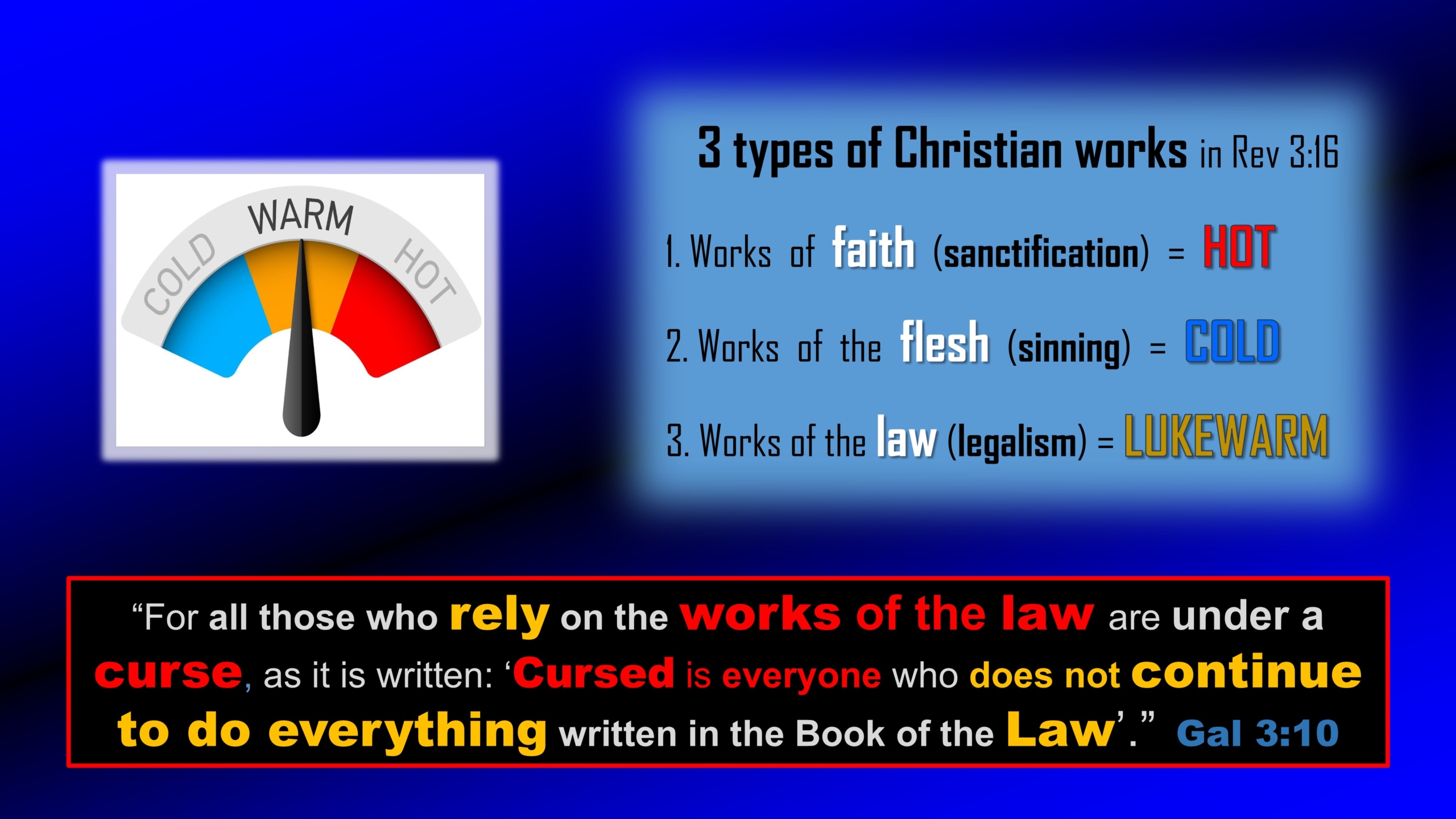
In Galatians 3:10, the Apostle Paul says that those who are of the works of the law—all legalists—are under a curse, the curse of eternal death. Why? He explains: because it is written, “Cursed is everyone who does not perfectly obey the law of God from birth till death,” including in mind and motivations. That is impossible for us to do. That’s why if we want to save ourselves through good deeds or works of the law, we are under a curse, because it is impossible. That’s why our only hope is the Lord Jesus. Works of the law stand for lukewarm, legalistic Christianity.
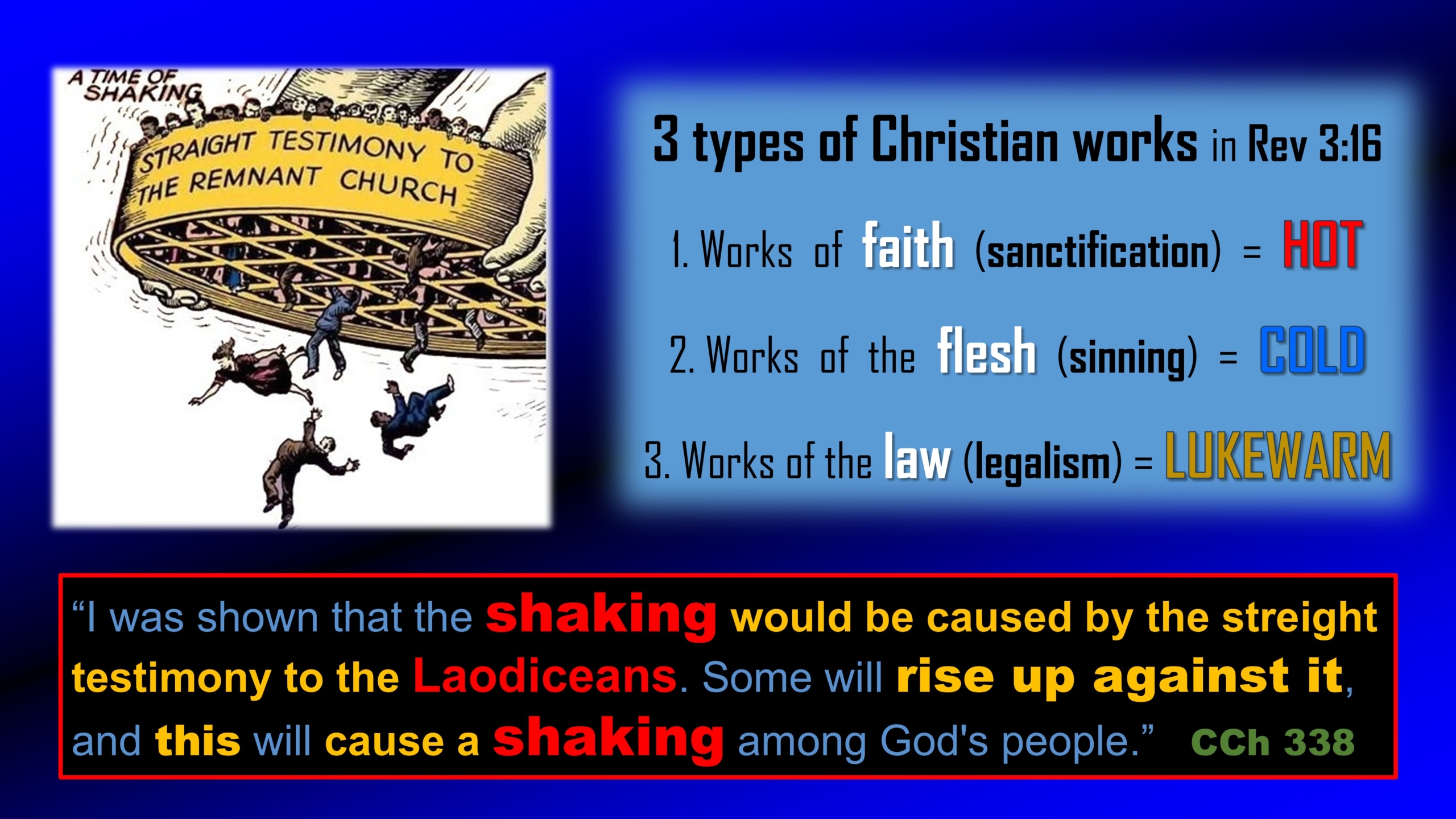
Please, dear brothers and sisters, I’m not saying that you are legalists; I think about myself when I study the third chapter of the Book of Revelation. But we need to treat it seriously and ask the Lord to show us the truth about ourselves, because Sister White says that rejection of this message to Laodicea is going to cause a shaking among us, and there are some of us who are going to reject it or even oppose it, and they will be shaken off forever, unfortunately. So it’s a very serious warning: “I was shown that the shaking would be caused by the straight testimony to the Laodiceans. Some will rise up against it, and this will cause a shaking among God’s people.”
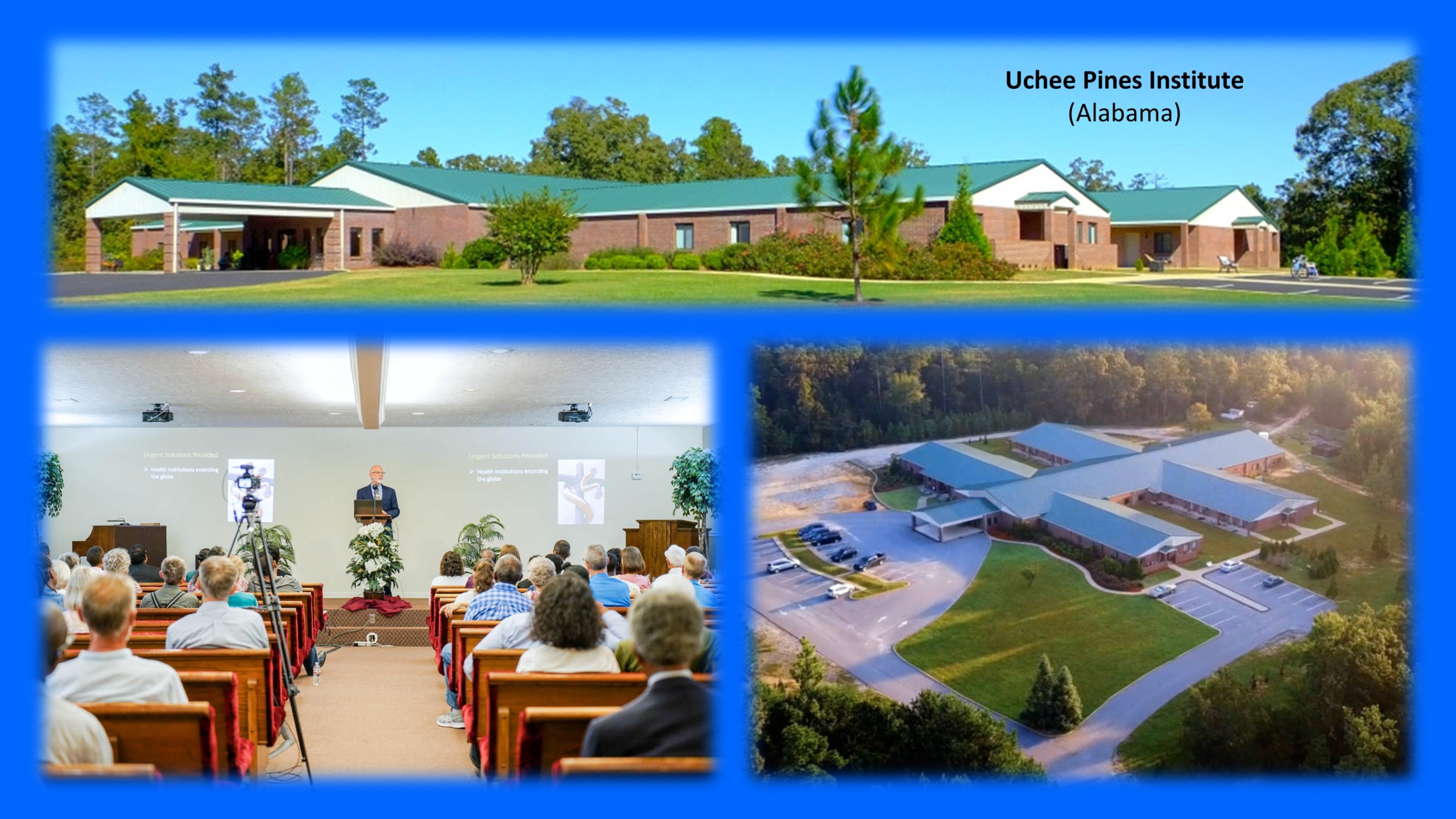
In 1989, I was invited by a self-supporting Seventh-day Adventist American institution to have a one-year health training program in America. After about eight months, we were invited by Dr. Agatha Thrash to her Uchee Pines Institute in Tennessee to have a short 7-day health training. At the same time, she and her husband, Dr. Calvin Thrash, invited Pastor Jack Sequeira. For seven days, he was preaching to us about the Gospel in the morning and in the evening, based on the book of Romans. I have to tell you that I never felt such a strong influence of the Holy Spirit, neither before nor after. It was as if the Holy Spirit was telling me, “Listen carefully, study it, and bring it back to your country, to Poland.”
Well, listening carefully and studying was very easy because I fell in love with this message from the beginning. But going back to Poland, which was under communism at that time and a very poor country, and leaving America—the country of milk and money—was a very hard thing for me to do. It was a struggle, but finally the Holy Spirit overcame the law of sin and selfishness in me, so I came back to Poland.
As soon as I returned, the Seventh-day Adventist churches in my country started inviting me to do health seminars. In about ten years, I visited almost every Seventh-day Adventist church in Poland, some of them repeatedly. But when they invited me to do health seminars, they also asked me to preach on Sabbath. Guess what I was preaching about? I was always preaching about Christ our righteousness, salvation through faith only in Jesus, the wonderful “in-Christ” motive I’m going to show you today, and the cross of Christ especially. Then I understood much better what Sister White meant when she said that the health message is the right arm of the Gospel, because it was so in my case.
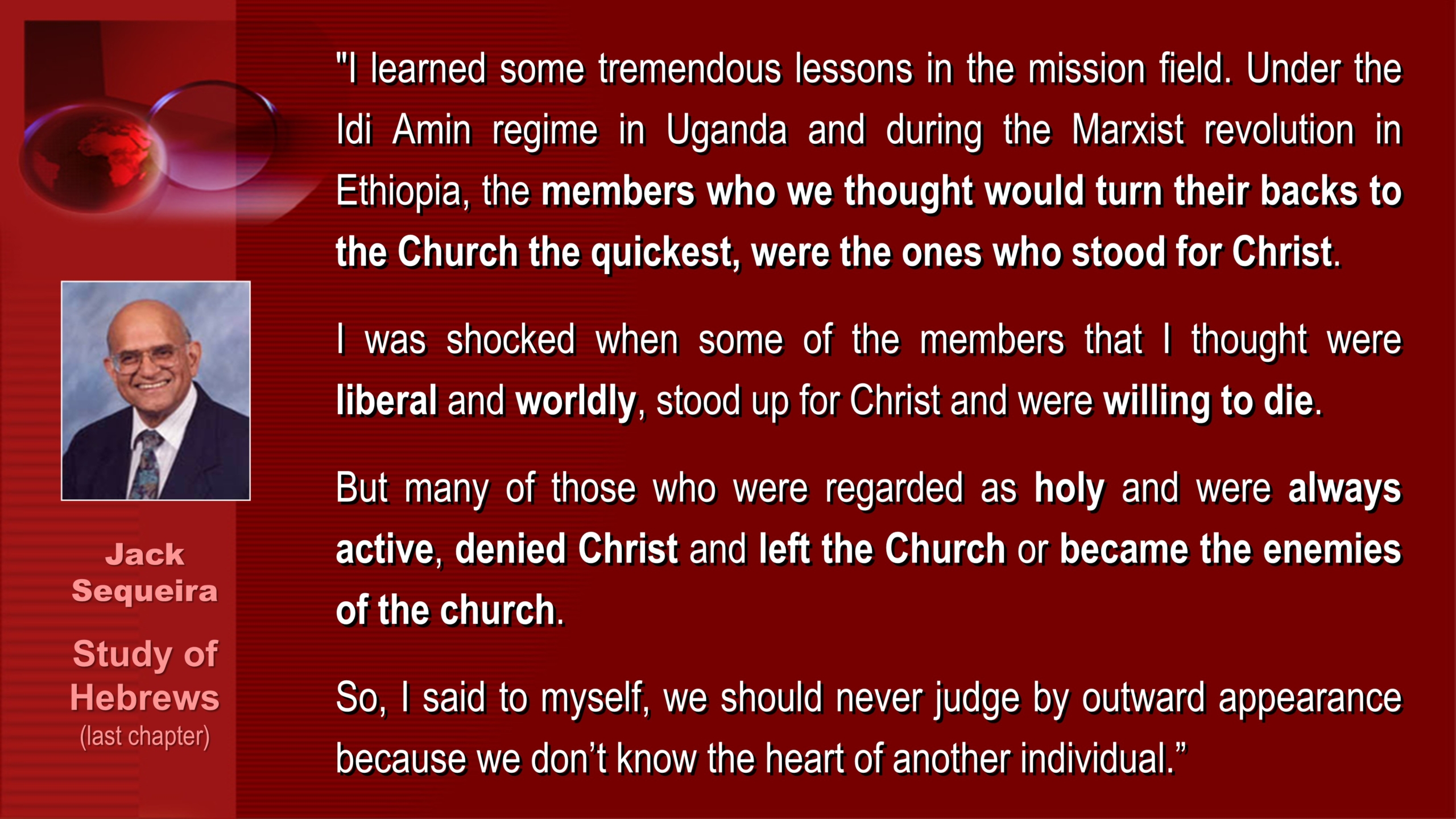
Now please listen to what Pastor Sequeira says concerning our thinking that if we are active in the church and have many good deeds, we are better than other members who are not so active:
“I learned some tremendous lessons in the mission field under the Idi Amin regime in Uganda and during the Marxist revolution in Ethiopia. The members who we thought would turn their backs to the church the quickest were the ones who stood for Christ. I was shocked when some of the members that I thought were liberal and worldly stood up for Christ and were willing to die, but many of those who were regarded as holy and were always active denied Christ and left the church or became enemies of the church. So I said to myself: We should never judge by outward appearance, because we don’t know the heart of another individual.”
The best way to fight against legalism—or tendencies to think that our good deeds and keeping of the law can contribute to our salvation or save us—is by understanding the wonderful truth of the Gospel.
According to the Gospel, salvation took place 2,000 years ago on the cross, and all we can do is accept this wonderful, historic fact in Jesus Christ and allow the Holy Spirit to do the rest: to live in us and produce works of faith.
One of the Bible verses that helps us to understand this wonderful truth is found in 2 Corinthians 5:14. In the fifth chapter of 2 Corinthians, there are at least five verses we should know by heart: verses 10, 14, 17, 19, and 21—wonderful verses.
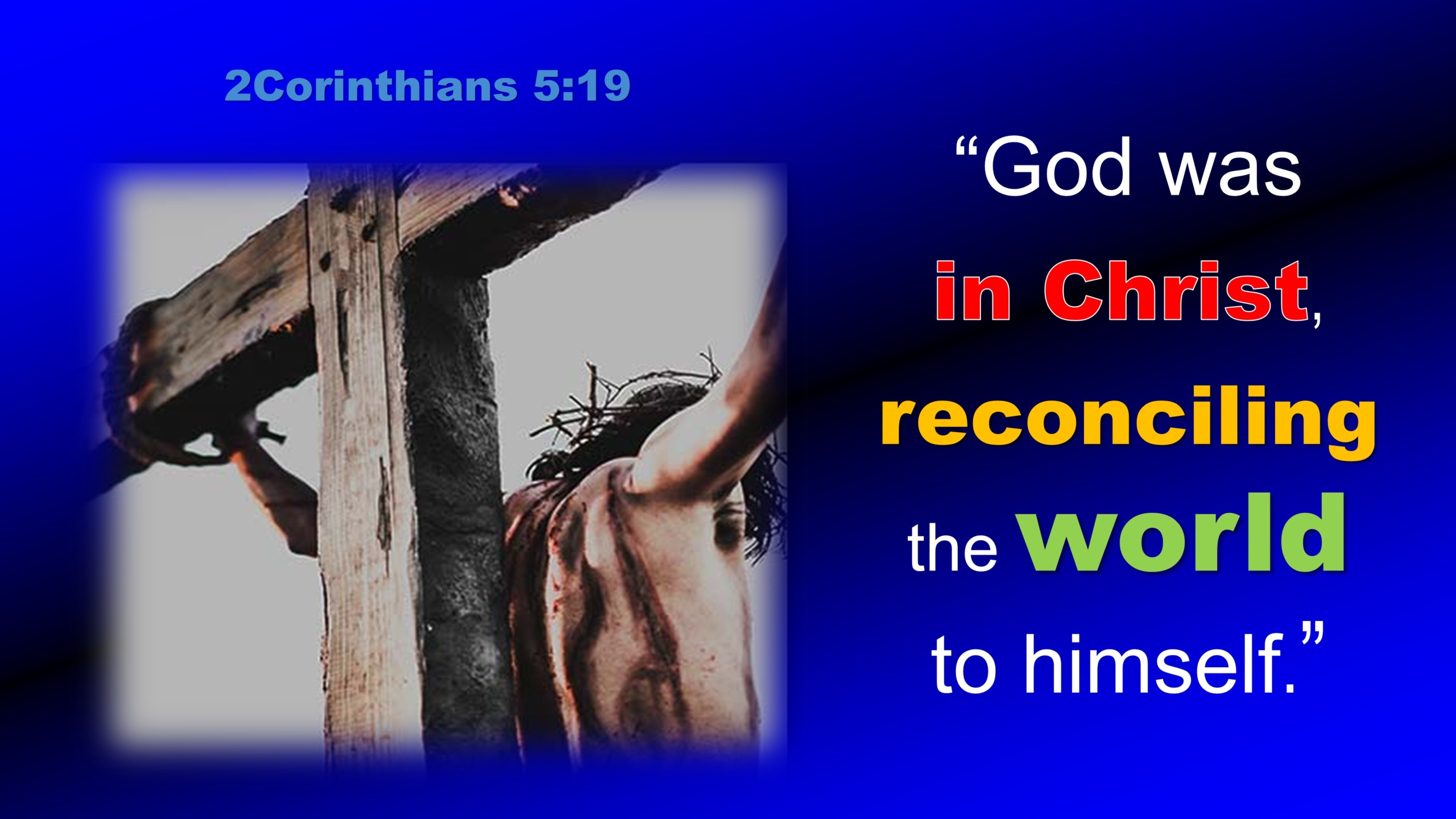
In verse 19, for instance, Paul says that God was in Christ reconciling the world to himself. When God was in Christ reconciling the world to himself 2,000 years ago, when Christ was dying on the cross for us, God reconciled the whole world to himself—not now, but then! So everything we can do is to accept and allow the Holy Spirit to prove that we are saved.
The Apostle Paul says the same truth using different words: “For the love of Christ compels us, constrains us, because we judge thus: that if One died for all, then all died.”
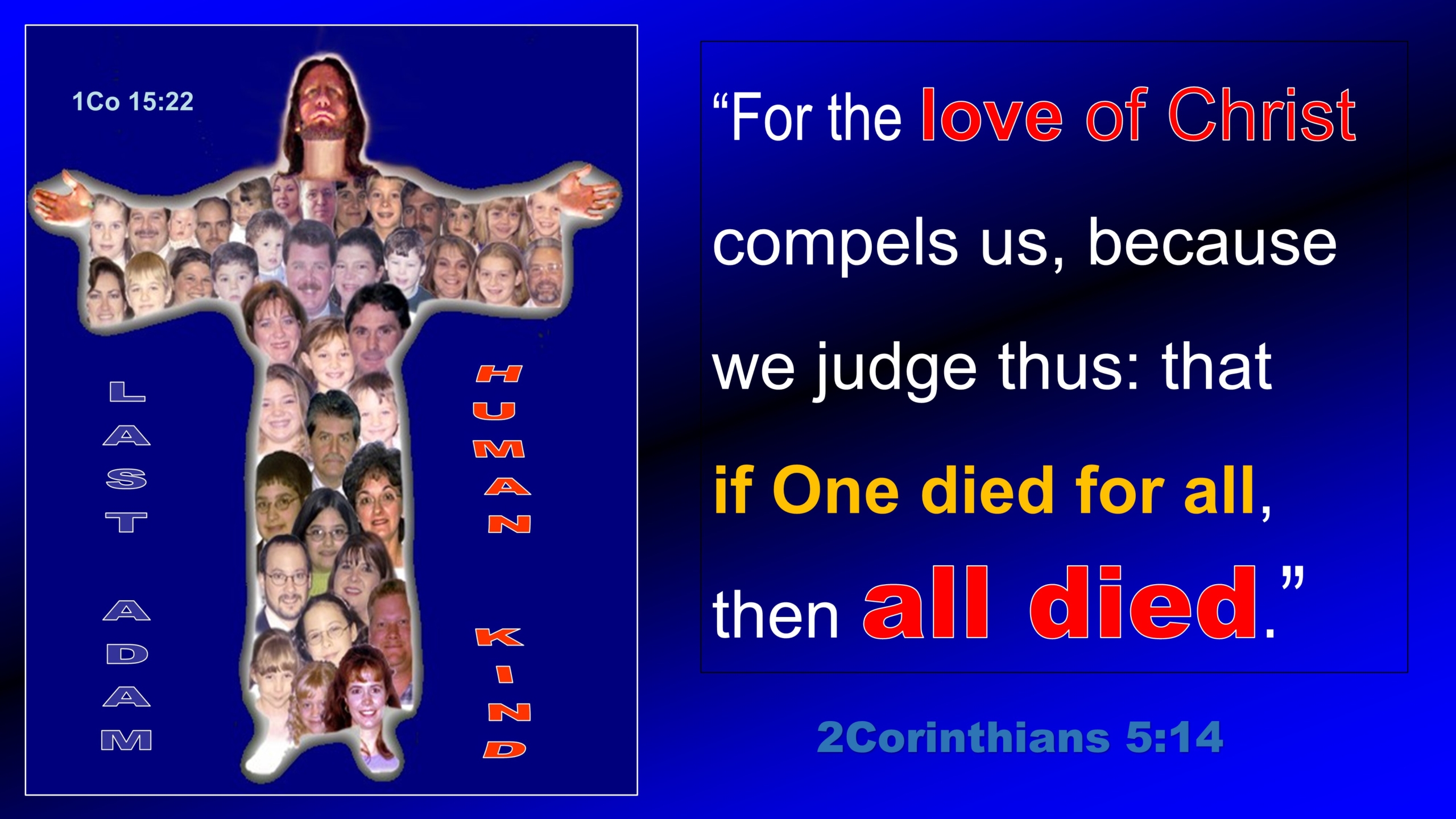
When Jesus died for all 2,000 years ago, all died when Jesus died. Do we need to die to sin every day? Yes, we do. But Paul is not talking about dying to sin here; he is talking about the historic fact of salvation in Jesus, so we cannot confuse those two things.
Now please listen to an interesting, very powerful commentary on the same verse we’ve just read, 2 Corinthians 5:14. The commentary comes from the Seventh-day Adventist Bible Commentary regarding 2 Corinthians 5:14 (I use the Seventh-day Adventist Bible Commentary with by far the best Bible software, called Logos Bible):
“When Christ died, the entire race died—not only believers, even the entire race, all sinners past, present, and future died.”
Who says this? The Seventh-day Adventist Bible Commentary, my favorite Bible commentary! I have about 50 of them in Logos Bible, but this one is my favorite. It doesn’t mean that it’s perfect, but it is the one I use most often:
“When Christ died, the entire race died with him. As he represented all men, so his death stood for the death of all; in him all men died.”
This is what the Apostle Paul says in 2 Corinthians 5:14; you cannot understand it in a different way.
“This does not, however, mean universal salvation…”
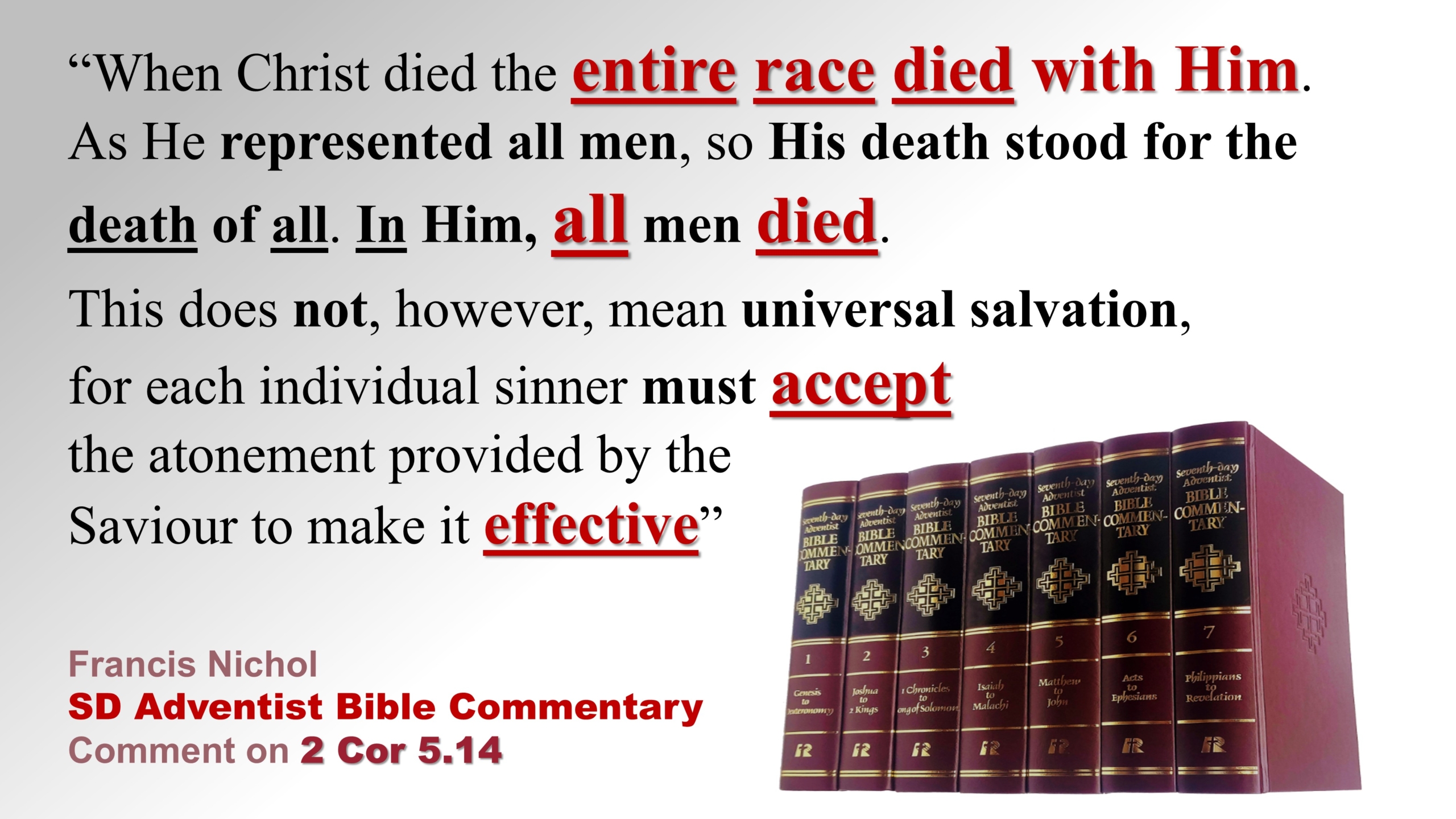
Universal salvation is a heresy—a wrong idea which teaches that eventually all sinners will be saved even if they reject the truth, which is not right. What we have from Adam is our inheritance; we have it whether we want it or not. But what we have in Christ is not an inheritance—it is a free gift! In order to enjoy a gift and benefit from it, you need to accept it, and you have to accept it with true, genuine faith.
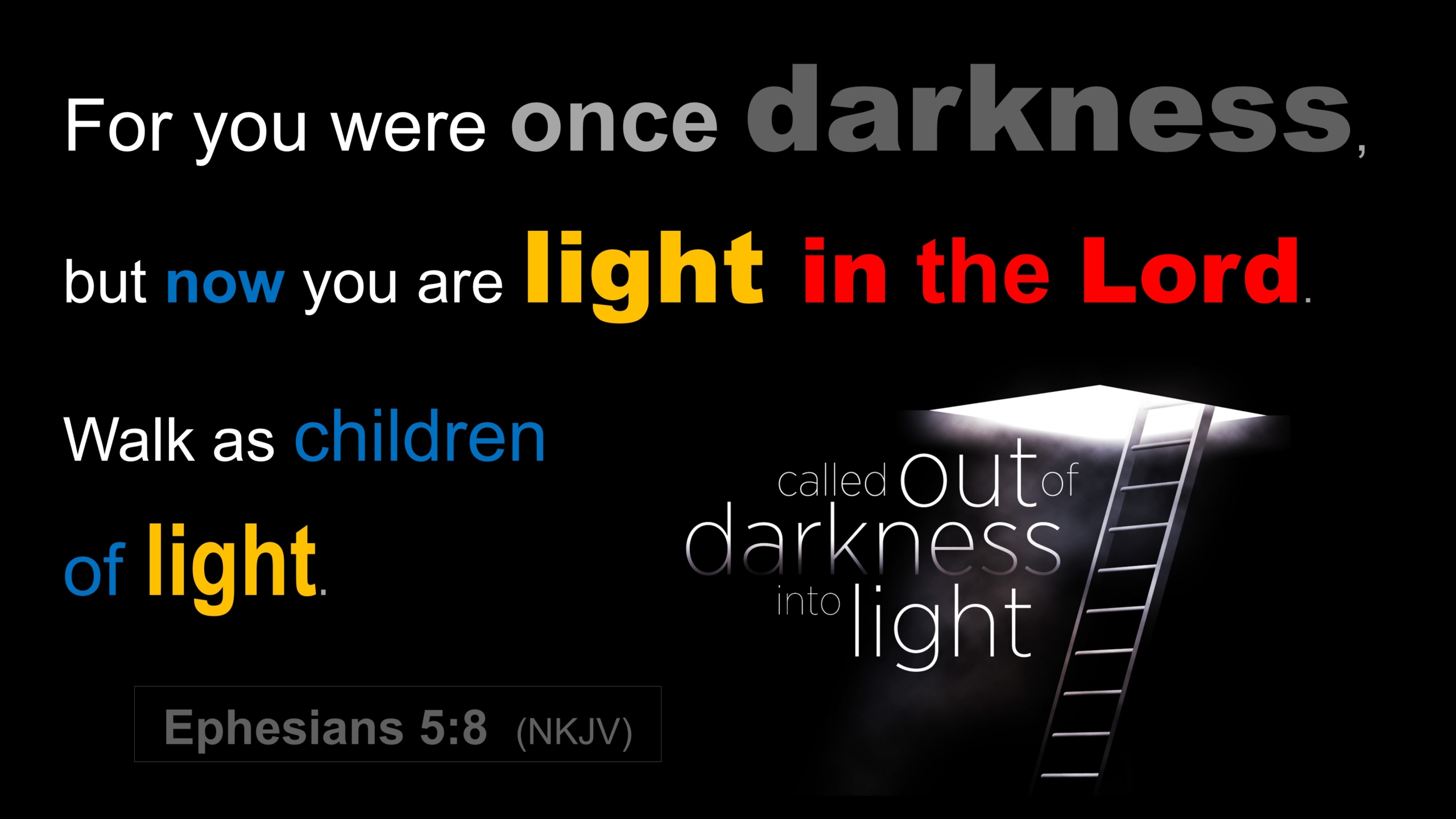
If you accept it, a miracle happens: the Holy Spirit leads us through the process of the new birth. Now we are spiritually alive, not spiritually dead. We are no longer darkness; we are light in the Lord.
The Holy Spirit and the Lord Jesus dwell in us to produce works of faith. But those works of faith don’t contribute to our salvation; we were already saved 2,000 years ago.
Those works of the Spirit in us prove that we have accepted salvation, demonstrate the power of the Gospel, and attract other sinners who are still in darkness to Christ in us, the hope of glory.
We need to understand it. I repeat it so many times because I want us to be brainwashed with this idea, because sometimes we are brainwashed with legalistic ideas that we have to do this and that—like, for instance, keeping the Sabbath: “You have to keep the Sabbath, because otherwise you won’t be saved.” That’s a lie. The Sabbath points to the finished salvation we already have in Jesus. The Sabbath is the memorial of salvation through faith alone! How can we say otherwise? That’s ridiculous—unlike Sunday, which is the memorial of salvation through works.
“This does not, however, mean universal salvation, for each individual sinner must accept the atonement provided by the Savior to make it effective.”
The Holy Spirit is not our savior; the Holy Spirit makes real in our lives what is already ours in Christ.
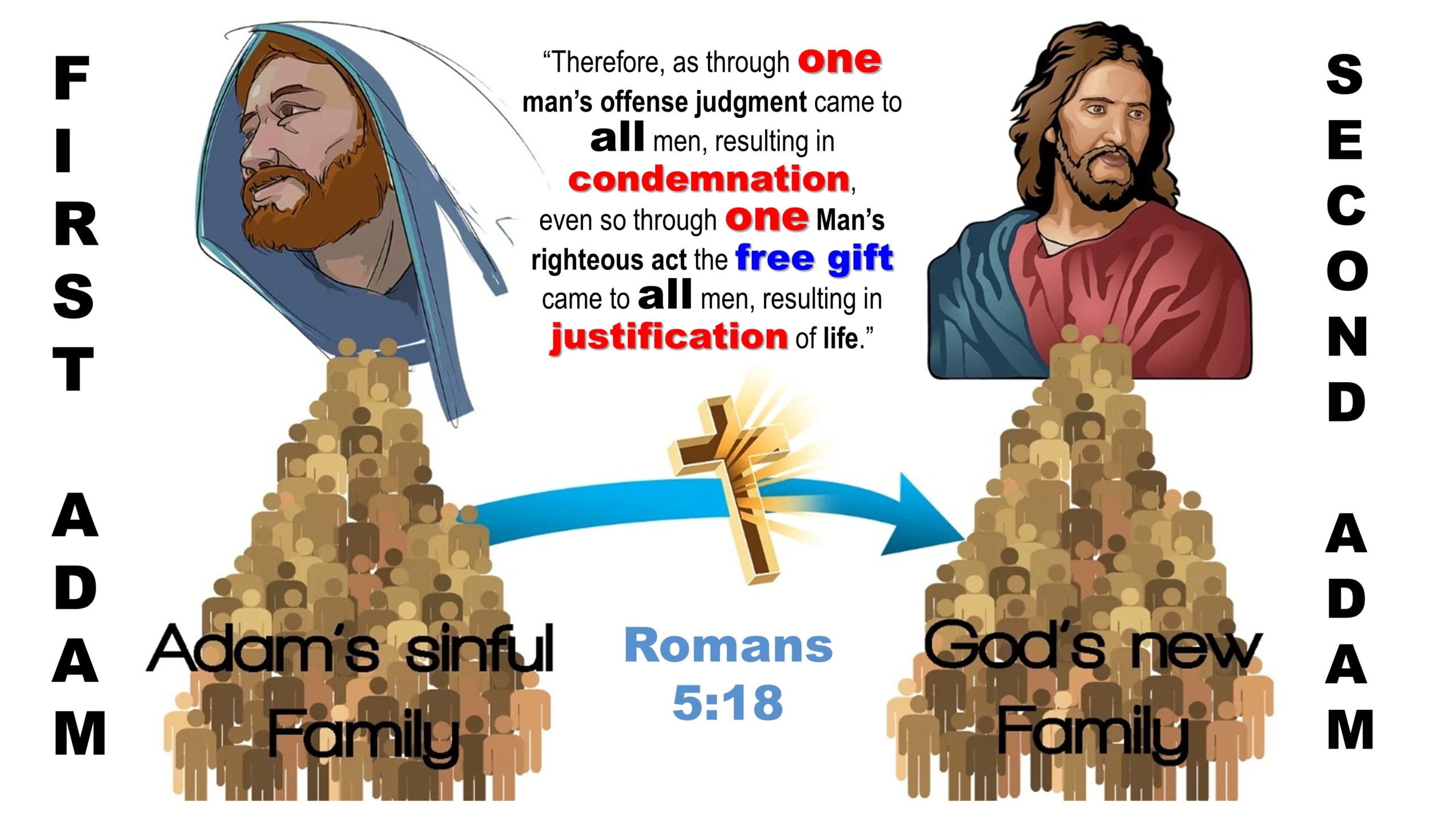
In Romans 5:12–21, the Apostle Paul tells us the same using different words. Please study at home Romans 5:12–21, one of the most difficult passages in the Word of God. Six times the Apostle Paul repeats the same truth in Romans 5:12–21.
He basically says the same thing: that we have to die and are condemned because of the sin of one man, Adam. Then he tells us a wonderful truth: that we can live forever and are justified because of the perfection in our representative flesh and death on the cross of one man, Jesus Christ.
Is Jesus called the “second Adam” by the Apostle Paul in 1 Corinthians 15:45? Yes. Why is he called the second Adam?
Because the Hebrew word Adam means humankind. The first Adam represented all of us, the entire humanity, and we have to bear the consequences of what he did. Jesus Christ is also humankind; he is the representative of all of us, and therefore what he did is ours.
Romans 5:18: “Therefore, as through one man’s offense judgment came to all men, resulting in condemnation, even so through one man’s righteous act”—through Christ’s perfect obedience in our representative flesh and his death on the cross—”the free gift came to all men, resulting in justification of life.” Please notice that it is a free gift. A free gift means we cannot pay for it with our good works. What can we do with a gift in order to enjoy it? Accept it with genuine faith!
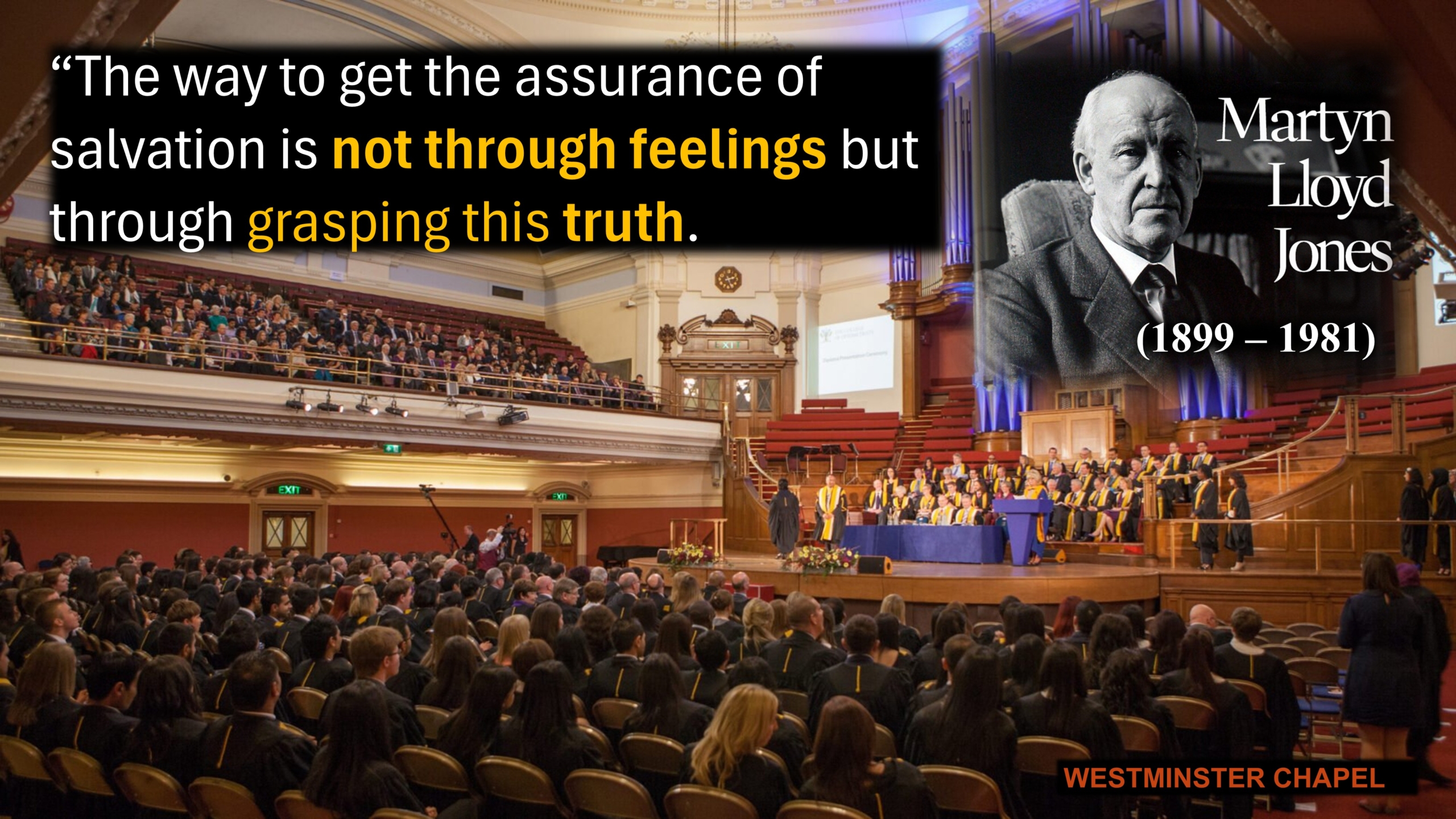
Martyn Lloyd-Jones was a famous preacher; he was the minister of Westminster Chapel here in London for about 30 years, and his Bible studies drew thousands of people, including many university and college students. Here is his comment from a sermon based solely on Romans 5:18—that’s how important this verse is:
“The way to get the assurance of salvation is not through feelings, but through grasping the truth. See yourself in Adam: though you had done nothing, you were declared a sinner. See yourself in Christ: though you had done nothing, you are declared righteous. That is the parallel,” he says. “So we get rid of all our actions; there is no boasting, no place for legalism.”
Are works important? Of course they are very important. God wants us to keep the Sabbath, to give tithes, to do everything we can to distribute good books and Bibles, and so on. But he doesn’t want us to think that all those things will contribute to our salvation. He wants us to do it out of love and appreciation that he already saved us in Christ.
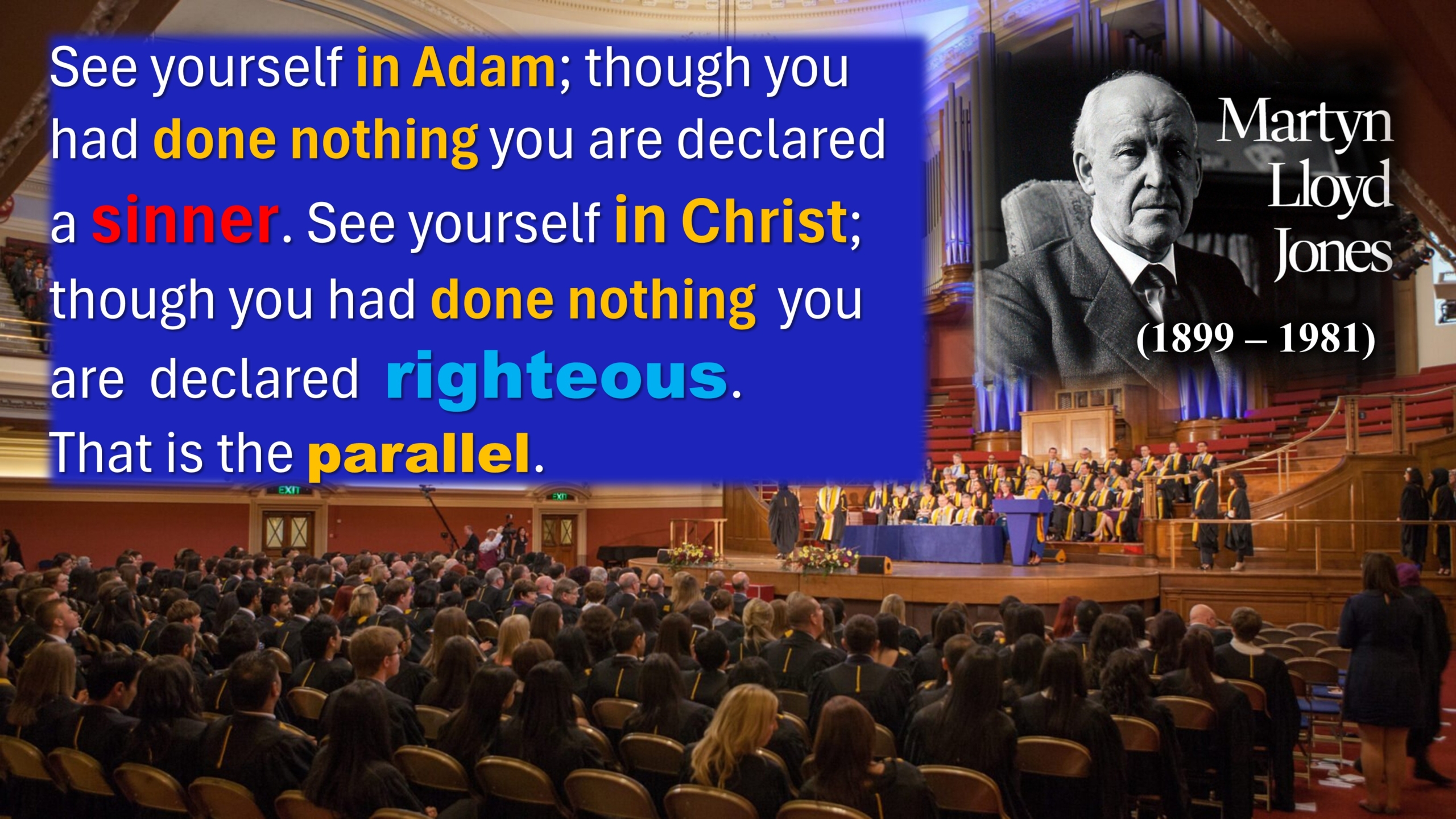
“See yourself in Christ: though you had done nothing, you are declared righteous. That is the parallel. And if I was put into Christ, I was crucified with him, I died with him, I am raised with him, and now I am in the heavenly places in Christ Jesus.”
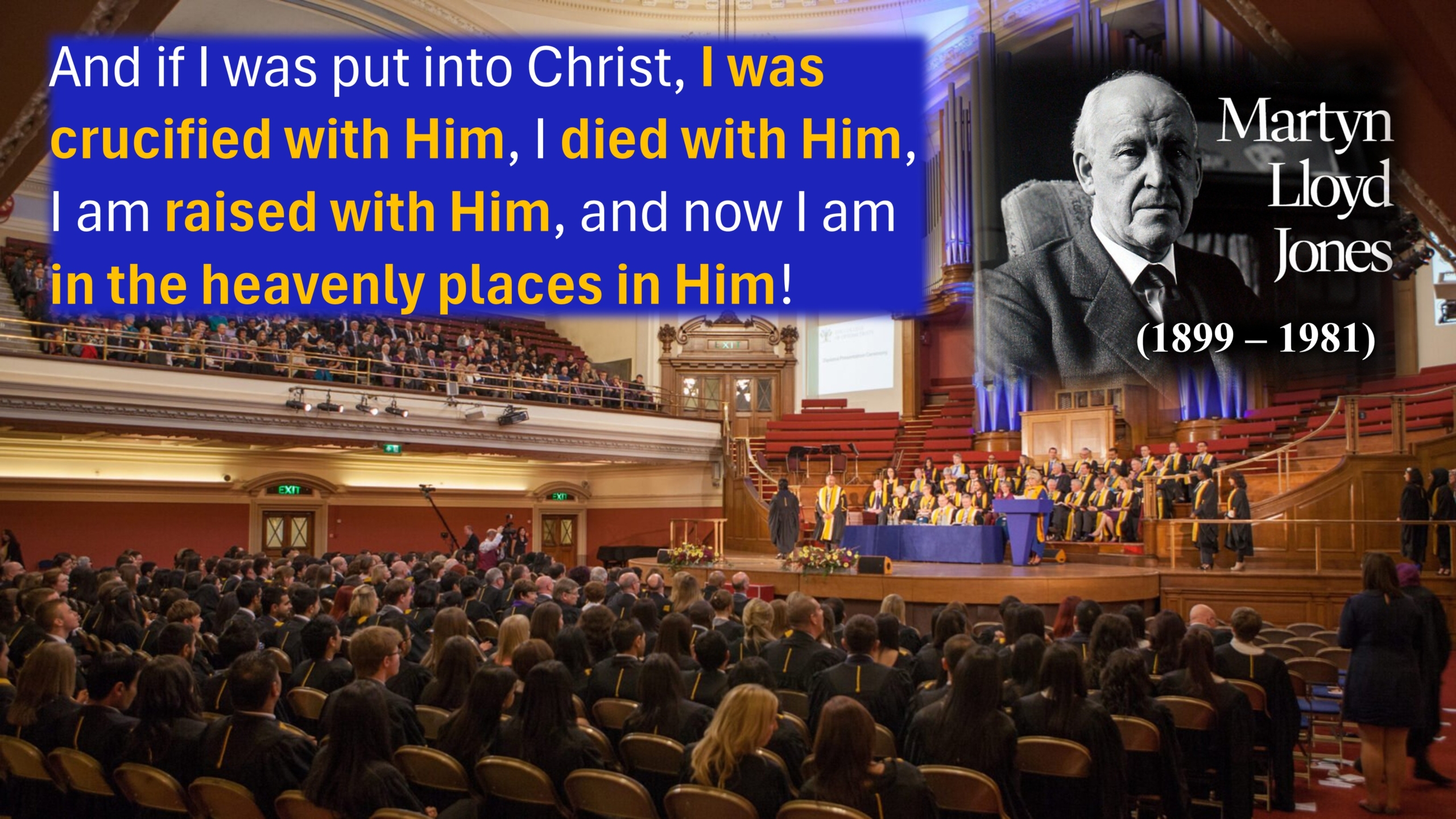
This is a quote from the Book of Ephesians. Remember the Sabbath School lessons from chapter 2, where the Apostle Paul says that we were raised together with Christ, and now we are in the heavenly places in Christ Jesus? You are here physically, but spiritually, if you are a believer, you are in heavenly places in Christ Jesus.
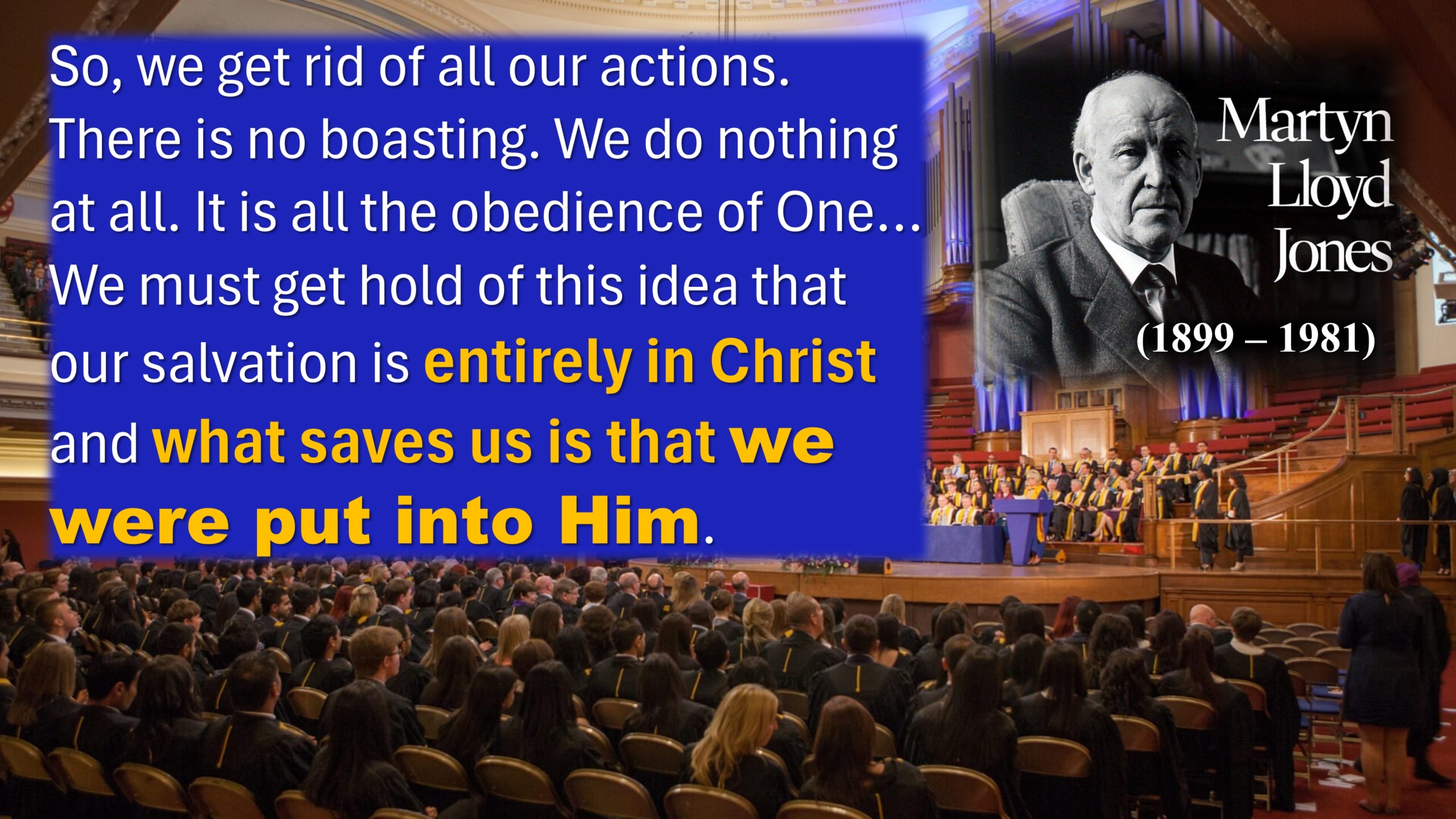
Please notice: although when the Lord Jesus lived and died here, the entire world—all sinners past, present, and future—were in him, now that he has resurrected to heaven and is in heavenly places, only true believers are in heavenly places in him.
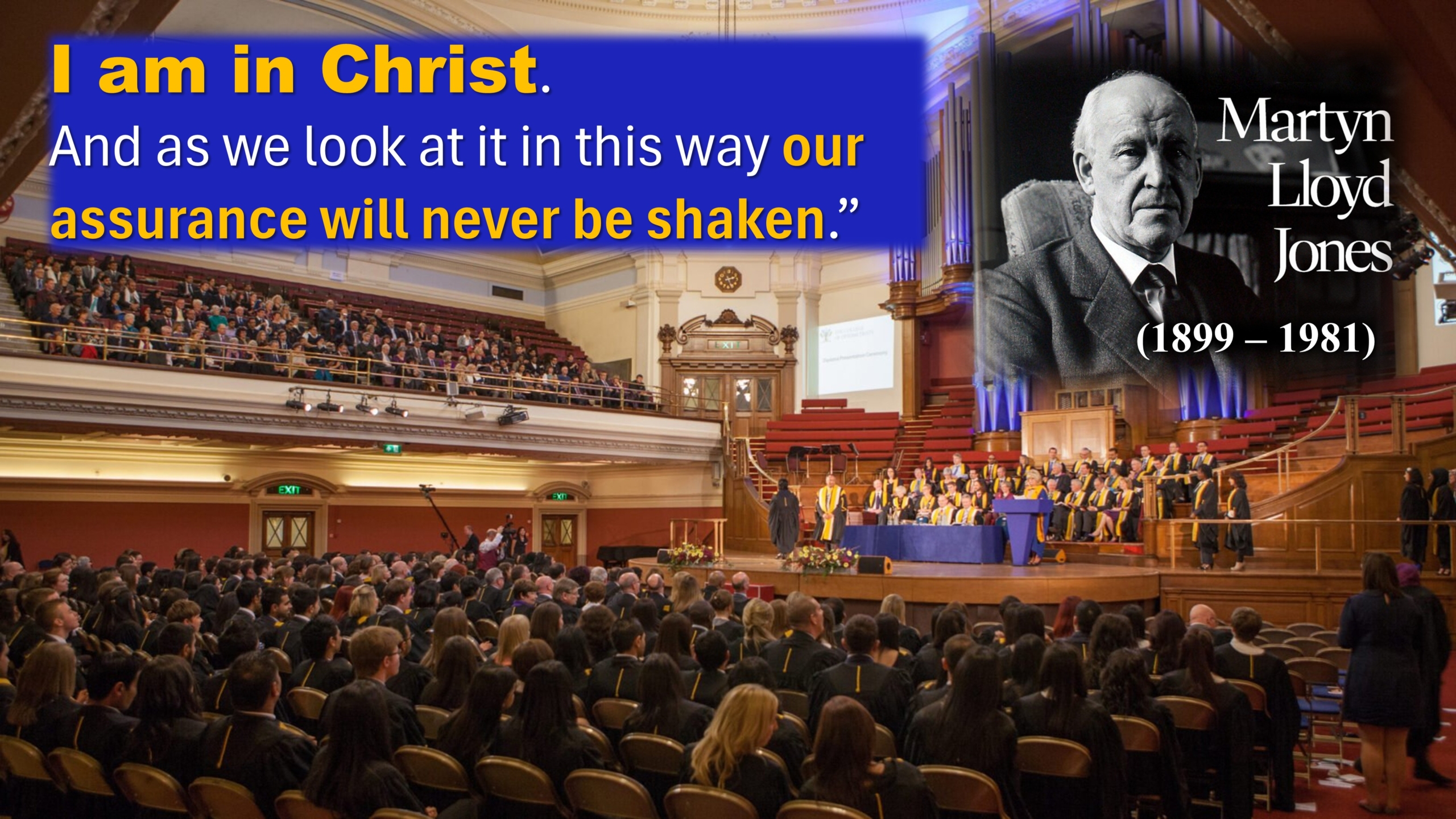
“I am in Christ, and as we look at it in this way, our assurance will never be shaken.”
Dietrich Bonhoeffer was one of the most talented theologians of the 20th century. During World War II, he was teaching theology in American universities, but he felt God wanted him to return to Germany to oppose Hitler, and he decided to do so. When his American friends learned about it, they came to him and said, “Don’t go back to Germany; Hitler will kill you!” But he said, “What can Hitler do to me?I already died in Christ.” He returned to Germany, opposed Hitler, was imprisoned by the Gestapo, and was later placed in a concentration camp. Only a few months before World War II was over, he was hanged by the Gestapo. The doctor who saw him dying said that he had never seen any man die with such peace and without fear.
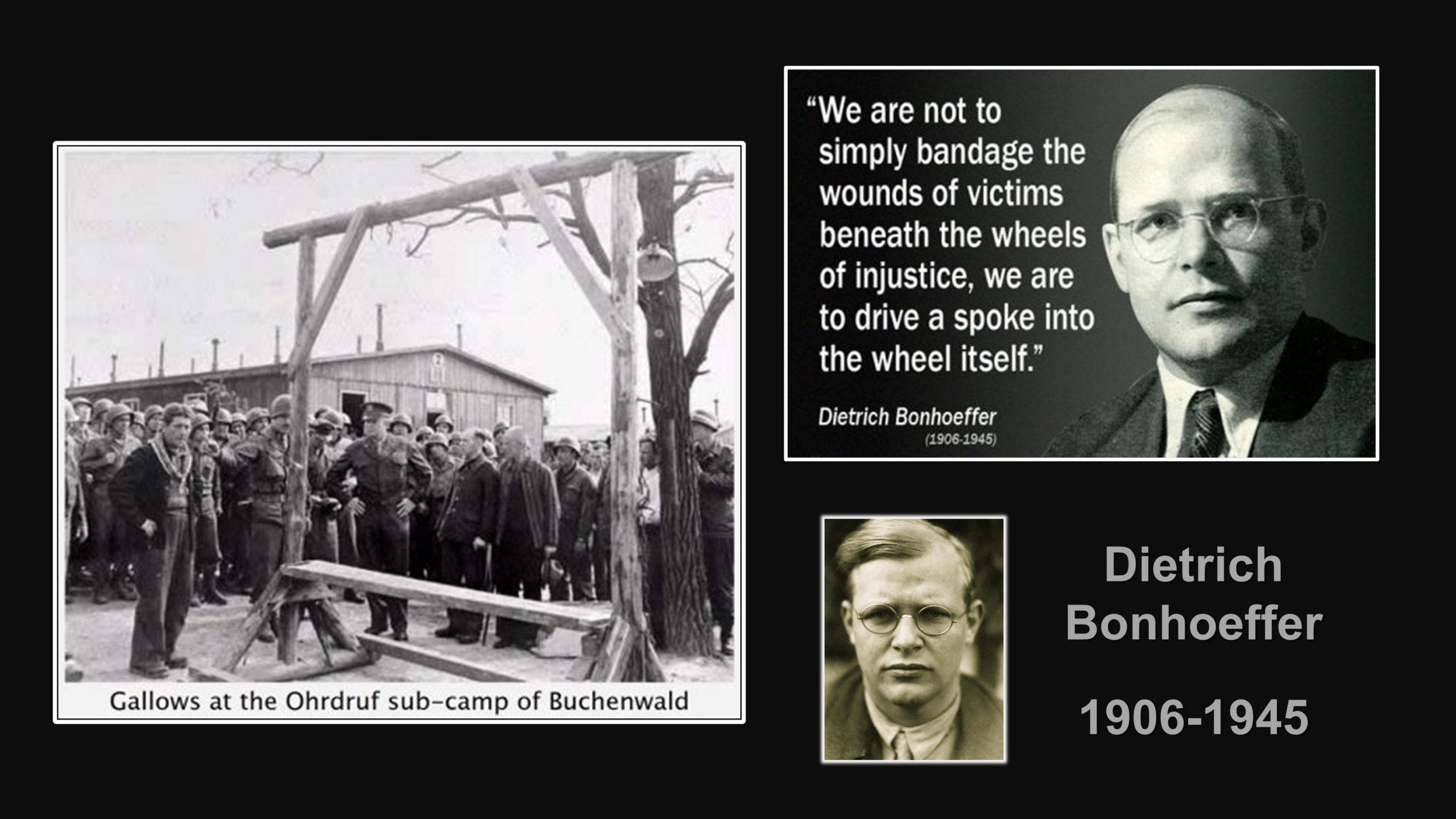
Here is a quote from Bonhoeffer’s book, Life Together:
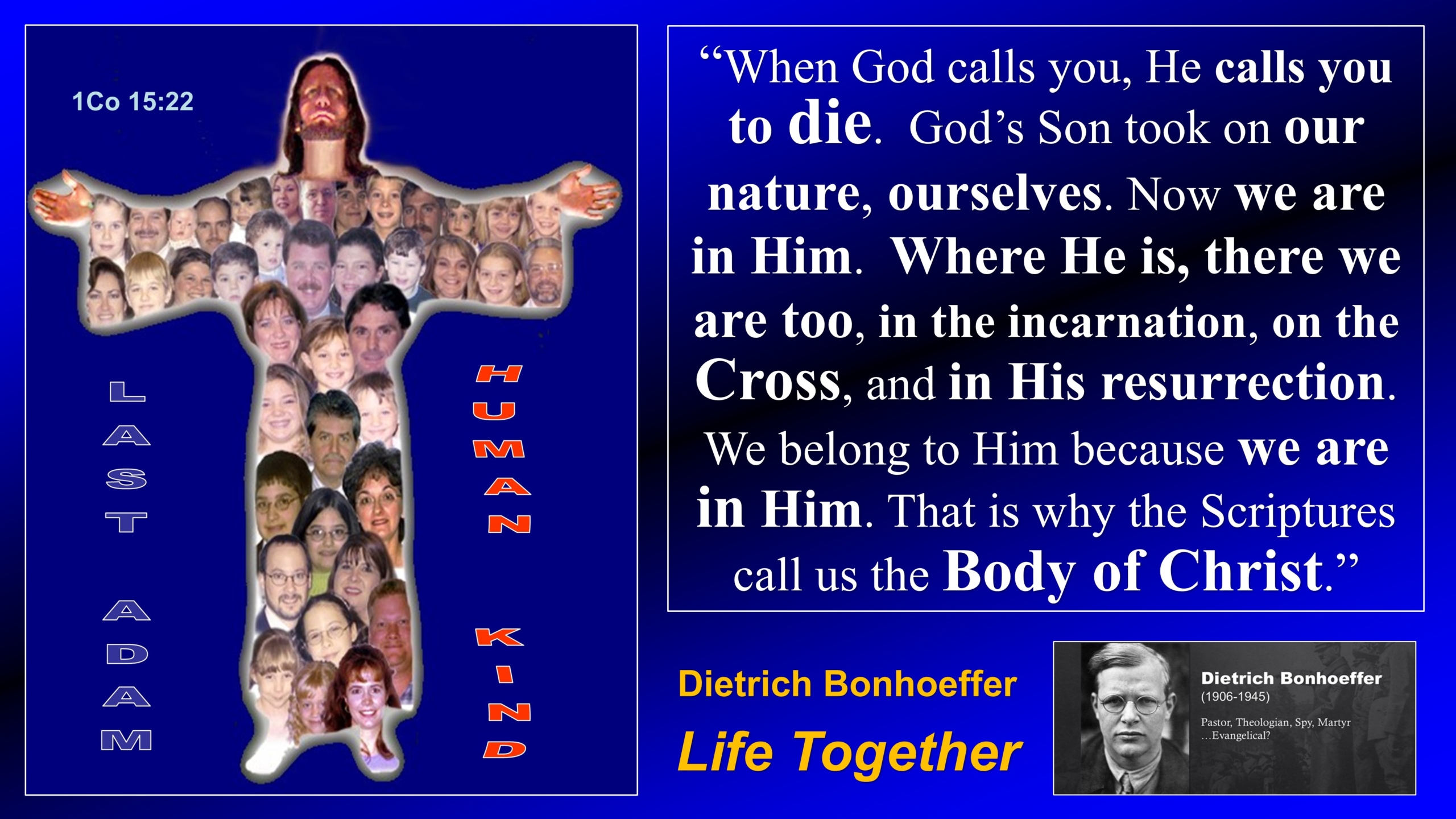
“When God calls you, he calls you to die. God’s Son took our nature…”
Is the the humanity Christ took important? Oh yes, it is! Sister White says that “the humanity of Jesus Christ is everything to us”, and she says that we should study it and understand it. If we have a wrong idea about the humanity of Jesus, we cannot properly understand the Gospel; we distort the Gospel and deprive it of its power and glory. The Apostle Paul says that is very dangerous, stating that if we preach a different gospel than he and other Apostles preached, “let him be accursed.” That’s a very serious warning.
“Now we are in him; where he is, there we are too—in the Incarnation, on the cross, and in his resurrection. We belong to him because we are in him. That is why the scriptures call us the body of Christ.”
As I told you, in 1989 I was invited to the Uchee Pines Institute, and together with other students, we were listening to Pastor Sequeira preaching to us on the Gospel. He once told us a very interesting story.
He said that when he was working as a missionary in Ethiopia, he was invited to do a week of prayer in one of the Adventist colleges there. After one of his sermons, a senior agriculture student by the name of Daud stood up and asked him if it was okay for him to go back to Egypt, join the army, carry guns, and kill the Jews. He was a Seventh-day Adventist, so Pastor Sequeira told him, “You already died 2,000 years ago in Christ, and now you are hidden in God with Christ according to Colossians, so obviously you shouldn’t kill anyone, including the Jews.”
But Daud was very stubborn and said, “No, I didn’t die in Christ, and I am alive.” So Pastor Sequeira gave him a few Bible verses to prove his point, but since he was still stubborn, the Pastor said, “Okay, Daud, but remember you’re not fighting with me, but with the Word of God.”
Soon after that, Daud was testing a tractor together with his instructor. When they were driving down the hill, suddenly the brakes stopped working and the tractor quickly increased speed. The instructor did the human thing: he jumped off the tractor, shouting at the same time for Daud to do the same. But Daud froze because of fear; he stayed in the tractor, which hit a tree, killing him.
After the accident, his body was taken to the hospital, and after careful examination, he was pronounced dead by two separate physicians. At the same time, the seminary students at the college, when they learned about the accident, were praying for Daud continuously. When a nurse came to cover his dead body, she noticed that one of his eyes blinked. She immediately called the physician, who came and noticed that his heart was still beating. In this way, God brought Daud back to life.
After a week or so, Pastor Sequeira went to the hospital to visit him. When he entered his room, Daud’s head was completely wrapped with bandages, with only his eyes and mouth open. Pastor Sequeira said, “Hi, Daud, how are you?” He said he would never forget his answer. The same Daud who previously refused to accept his death in Christ now said, “Daud is dead. You are now talking to a Christian!”
He learned the truth about his death in Christ in a very painful way.
After returning to Egypt, he refused to join the army or carry arms, and he had to flee from Egypt; he was accepted as a refugee by Sweden.

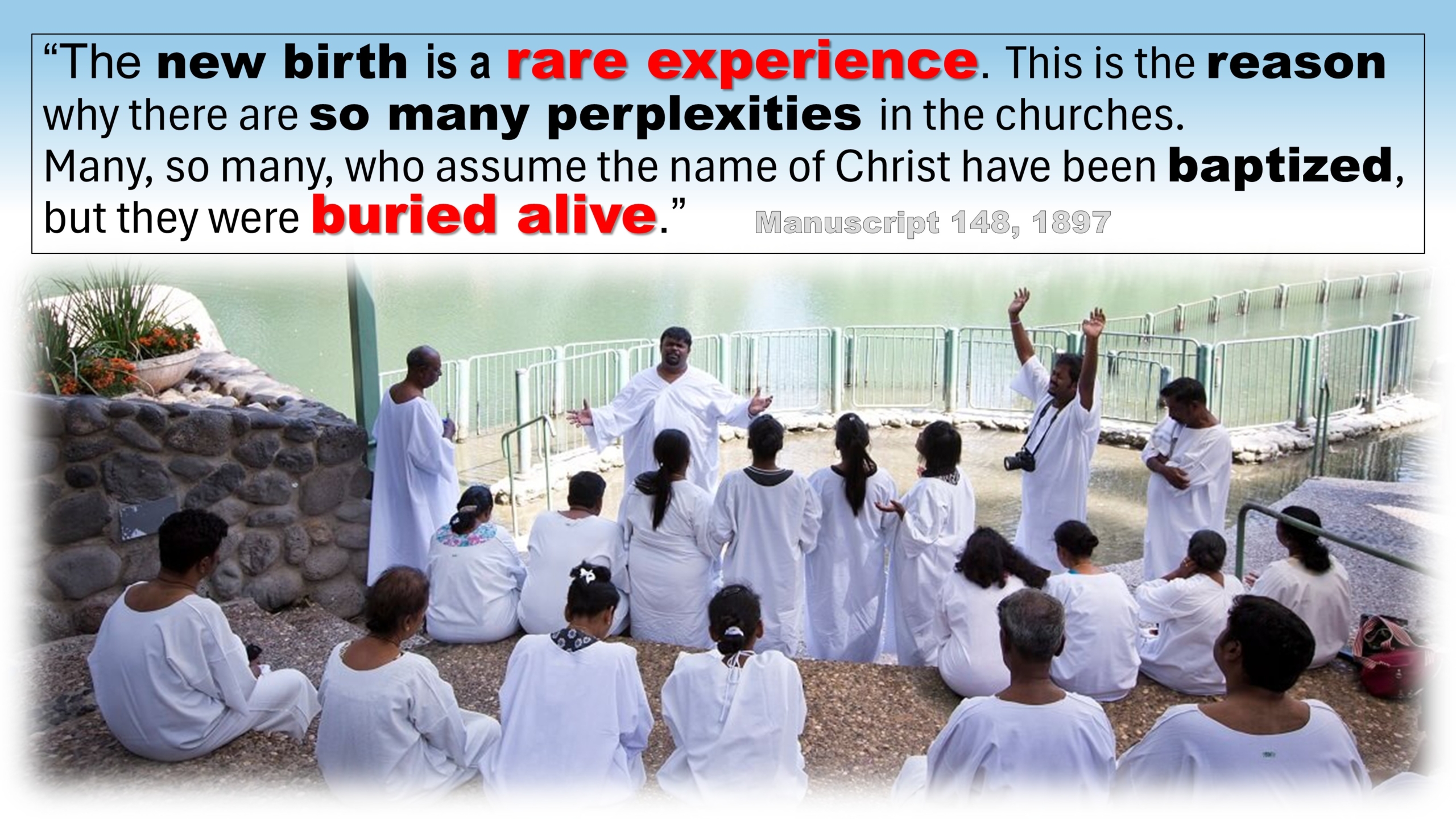
The new birth, Sister White says, is a rare experience. This is the reason why there are so many perplexities in the churches. So many who assume the name of Christ have been baptized, but were buried alive.
What is baptism? Baptism is a burial. When someone in this world dies, what do people do with the dead body? They bury it. Did we die in Jesus 2,000 years ago? So what is required now? A burial is required. What is baptism? It is the funeral service of the old self that died in Christ 2,000 years ago. Romans chapter 6 verse 6 tells us that our old man was crucified with Christ so that the body of sin might be done away with, that we should no longer be slaves of sin. You see, the true righteousness of God never condones sin; it leads to obedience—it is not cheap grace.
Is it legal to bury someone in this world who is not dead? No, it is a criminal offense; you would go to prison for life. Is it okay to spiritually bury someone through baptism who does not know that he died in Christ and hasn’t accepted death in Christ? It is also an offense; it is not right. Did you know, brothers and sisters, that you died with Jesus 2,000 years ago? When you were baptized, if you didn’t know, does it mean that you need to be baptized again? No, it means you should accept the truth.
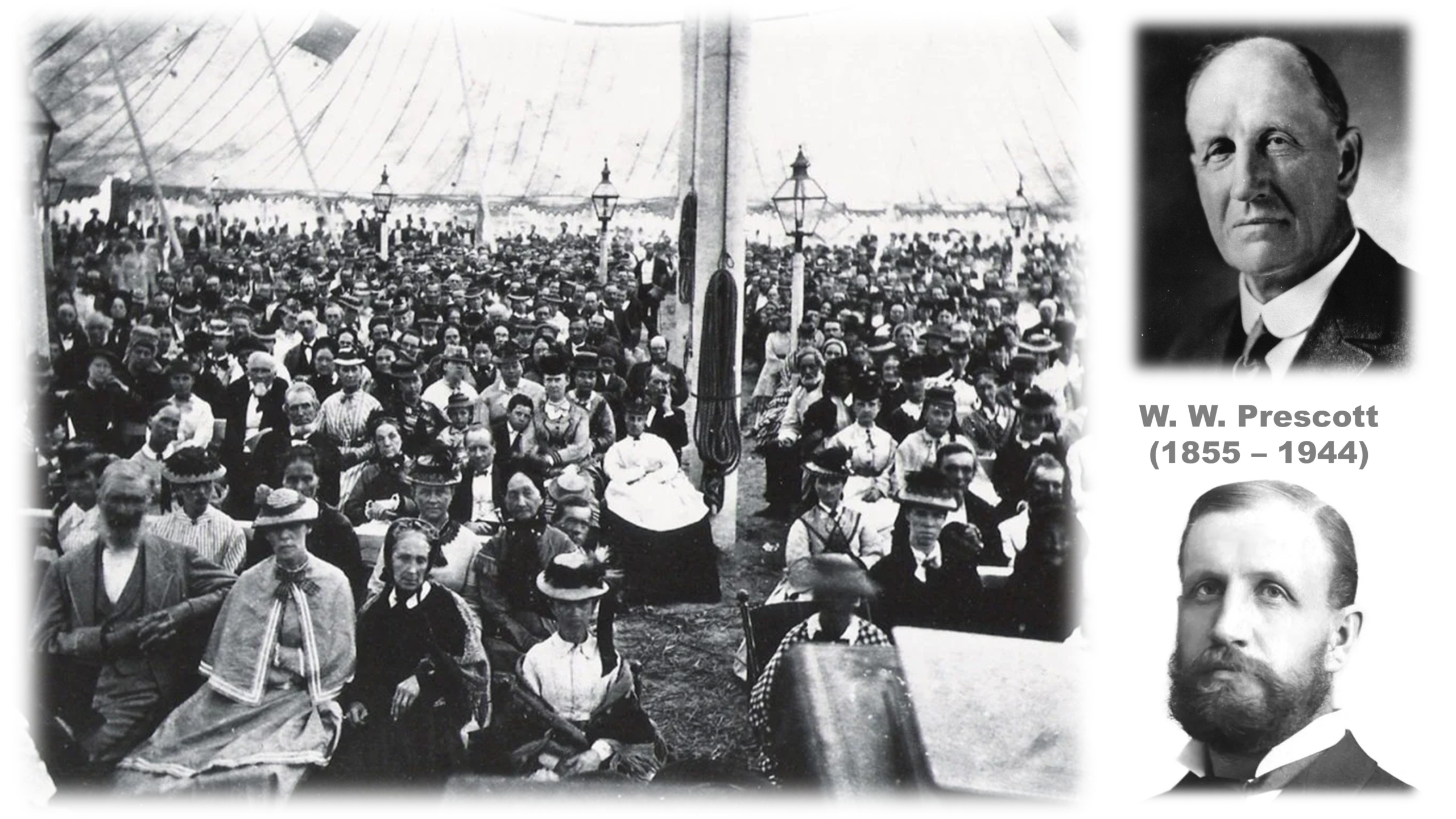
William Warren Prescott was one of the best theologians we ever had. The quote I am going to share with you comes from a sermon he preached in Armidale, Australia, in 1895. Ellen White was present there, and she was very excited listening to him. After that, she wrote a letter to her son Willie, saying that the tent was packed and the people were listening spellbound. She said Professor Prescott experienced the outpouring of the Holy Spirit, and truth was separated from error.
Here is a short quote from this sermon (you can find the whole sermon in Bible Echo):
“Jesus Christ had the same flesh that we bear—flesh of sin.”
Is the humanity of Jesus important for us? Yes, it is the foundation of the Gospel. We need to be very careful what we understand regarding the humanity of Christ.
“We were all in Jesus Christ; he was our representative. All humanity was brought together in Jesus Christ.”
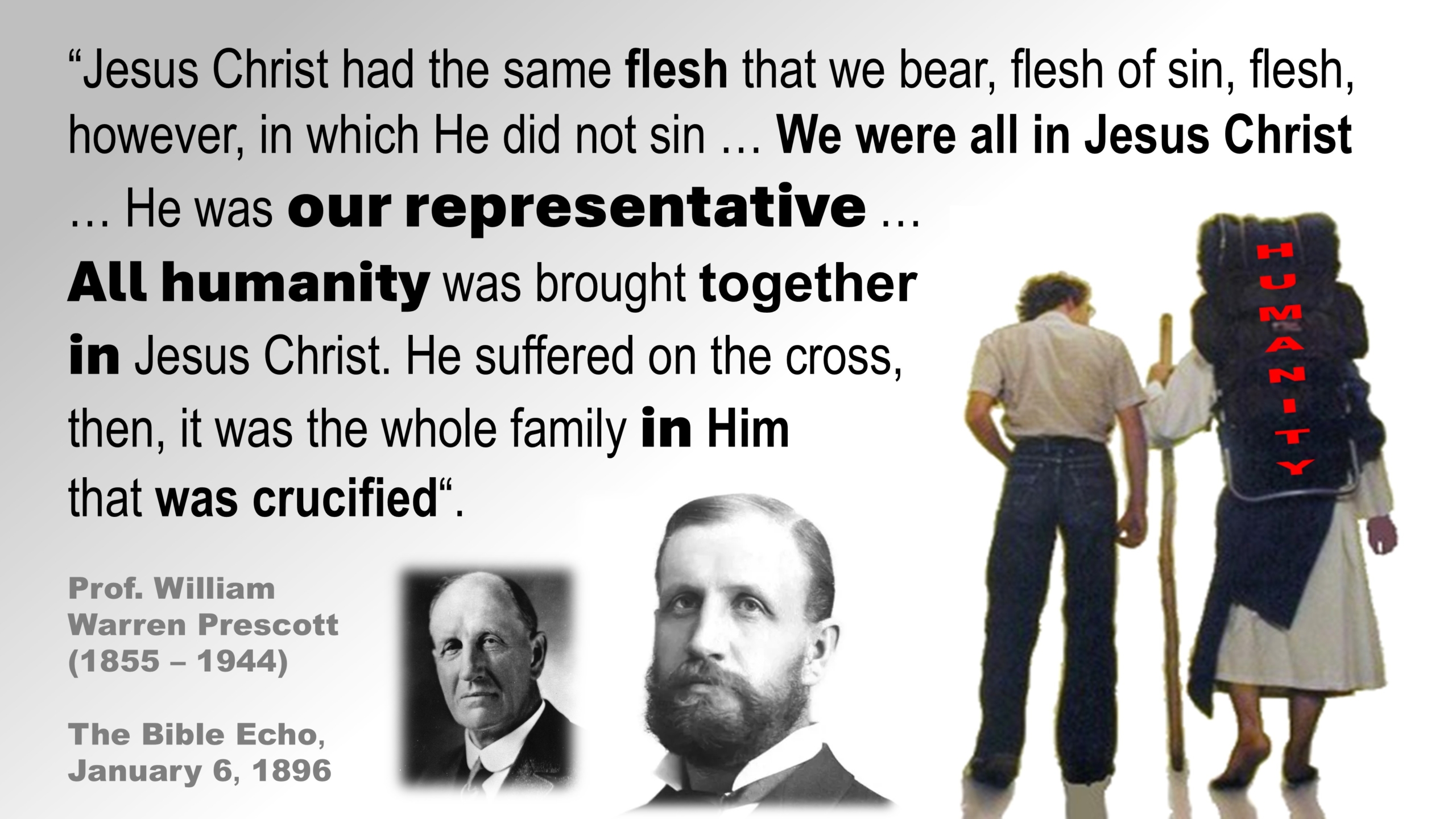
Notice those theologians say the same thing using different words: “All humanity was brought together in Jesus Christ. He suffered on the cross; then it was the whole family in him that was crucified.”
I’m sure that you remember the famous sprinter Usain Bolt. Any brothers and sisters from Jamaica here? Oh yes, half of the church, probably Jamaicans! May I ask you a question: How did you and all Jamaican people feel when you saw him winning the gold medals in Beijing or here in London, or when he broke that insane world record in Berlin?

You were proud, you were extremely happy, and many of you had tears in your eyes! But let me ask you a question: How come you were so proud and happy with tears in your eyes, even though it wasn’t you physically who broke that record or won the Olympic medals? Why were you so proud and happy?
Yes, sister, amen! Because Usain Bolt was your fellow citizen, he was your brother, he was the representative of entire Jamaica, of the entire country, and his victory was your victory! It was your victory!

I use this example to help you understand better. It is an amazing truth, because some people may say, “How could I be in Christ 2,000 years ago when I wasn’t alive at that time?”
We were not physically alive at that time, but what was alive? Our condemned “bios” life—our fallen nature was alive at that time. Jesus took them, and He was qualified to be the representative of all of us, entire humankind, because He became our brother in the flesh.
Christ came to play a life-and-death game with Satan and his team, with sin and death. He overcame sin in our representative flesh—he never sinned—and scored the first goal. Then he experienced the second death on the cross, but he resurrected. He overcame death on our behalf, and therefore, because he was our representative, our brother in the flesh, our family, we can say that his victory is our victory, that we won! This is what the Bible says.
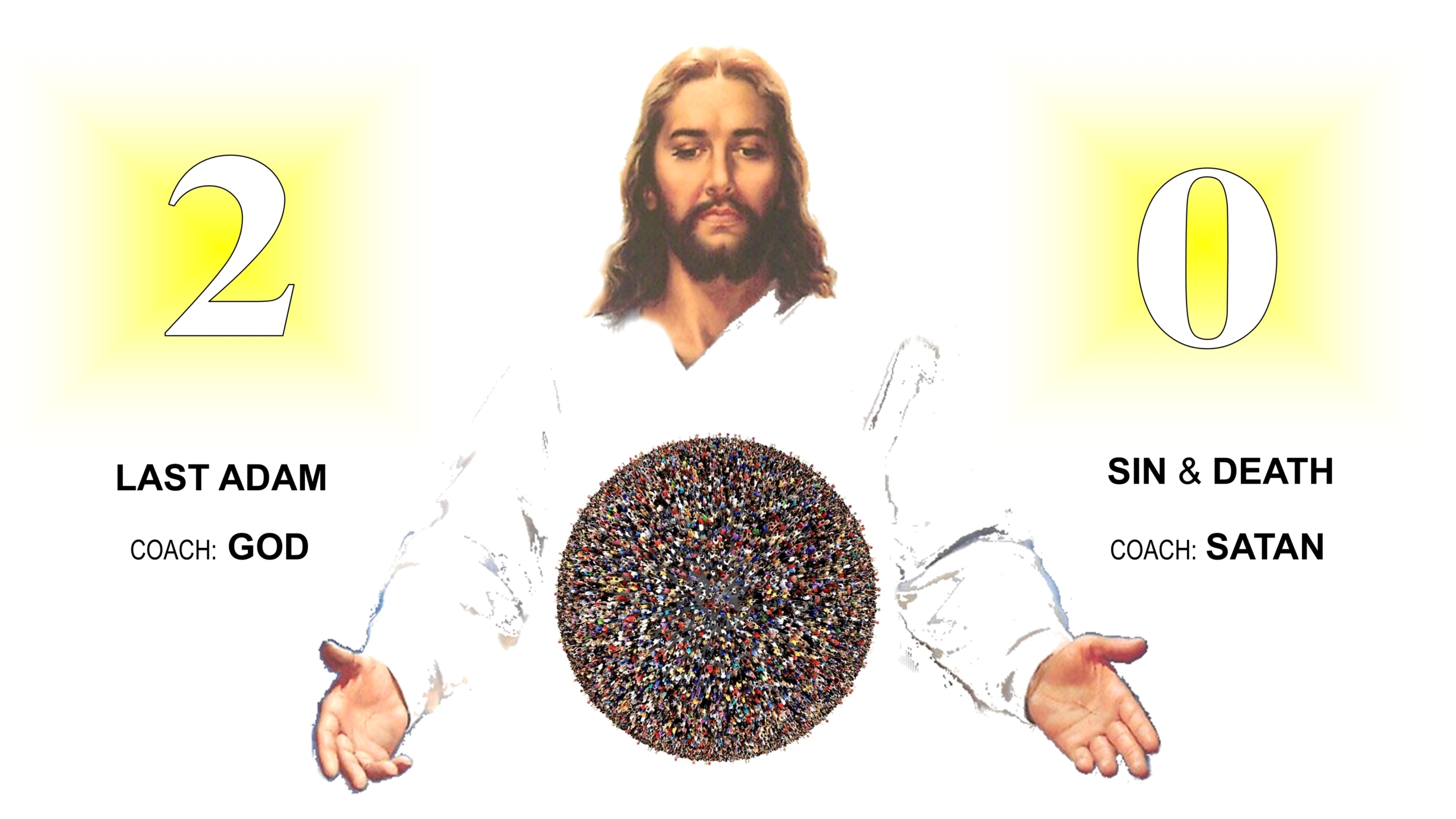
Now, the most important, most vital part of the Gospel is, of course, the cross of Christ and the death of Christ.
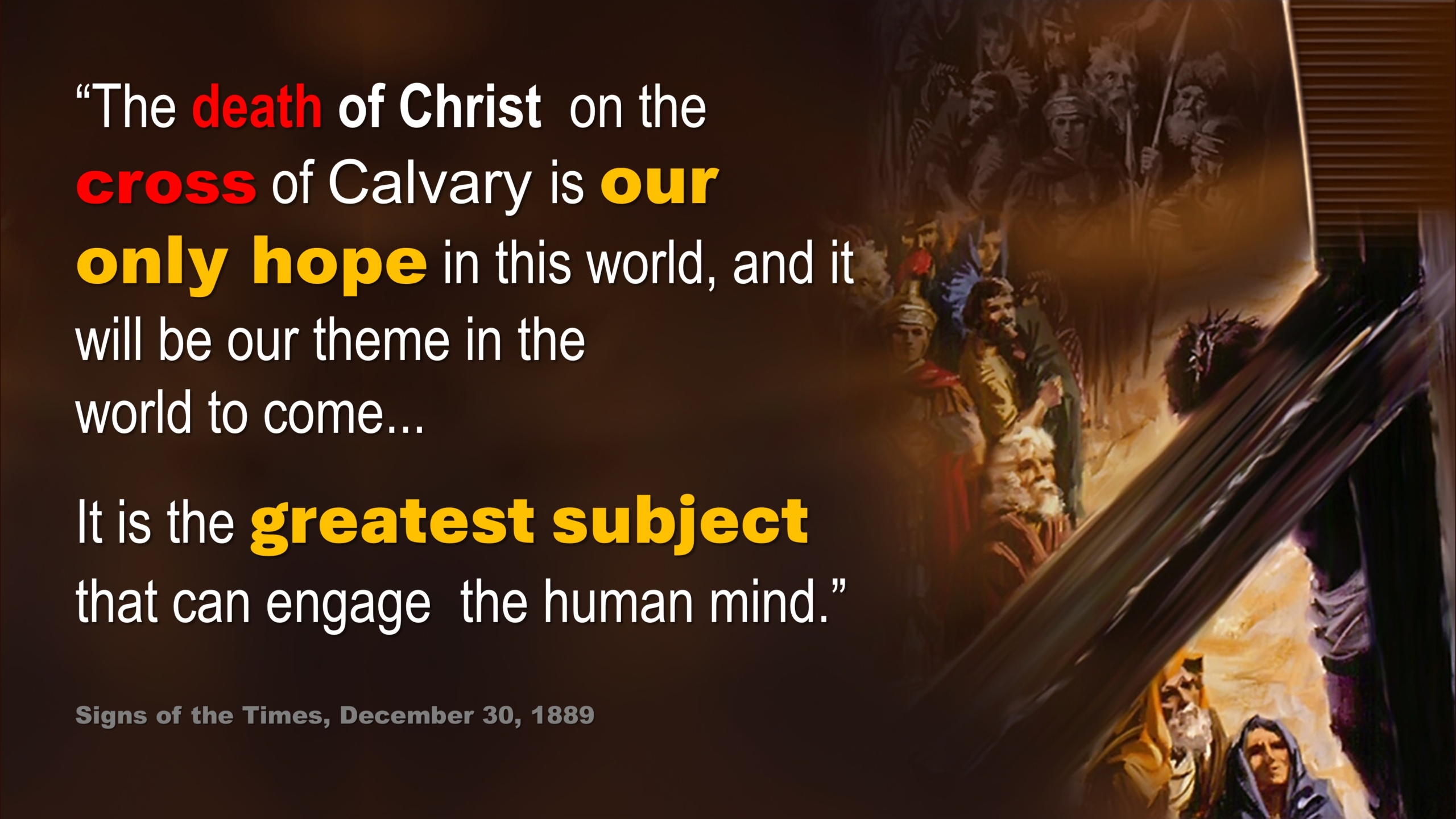
But because it is the most holy and most important of all subjects, it requires a separate study. So before we finish, let me summarize what we have learned today:
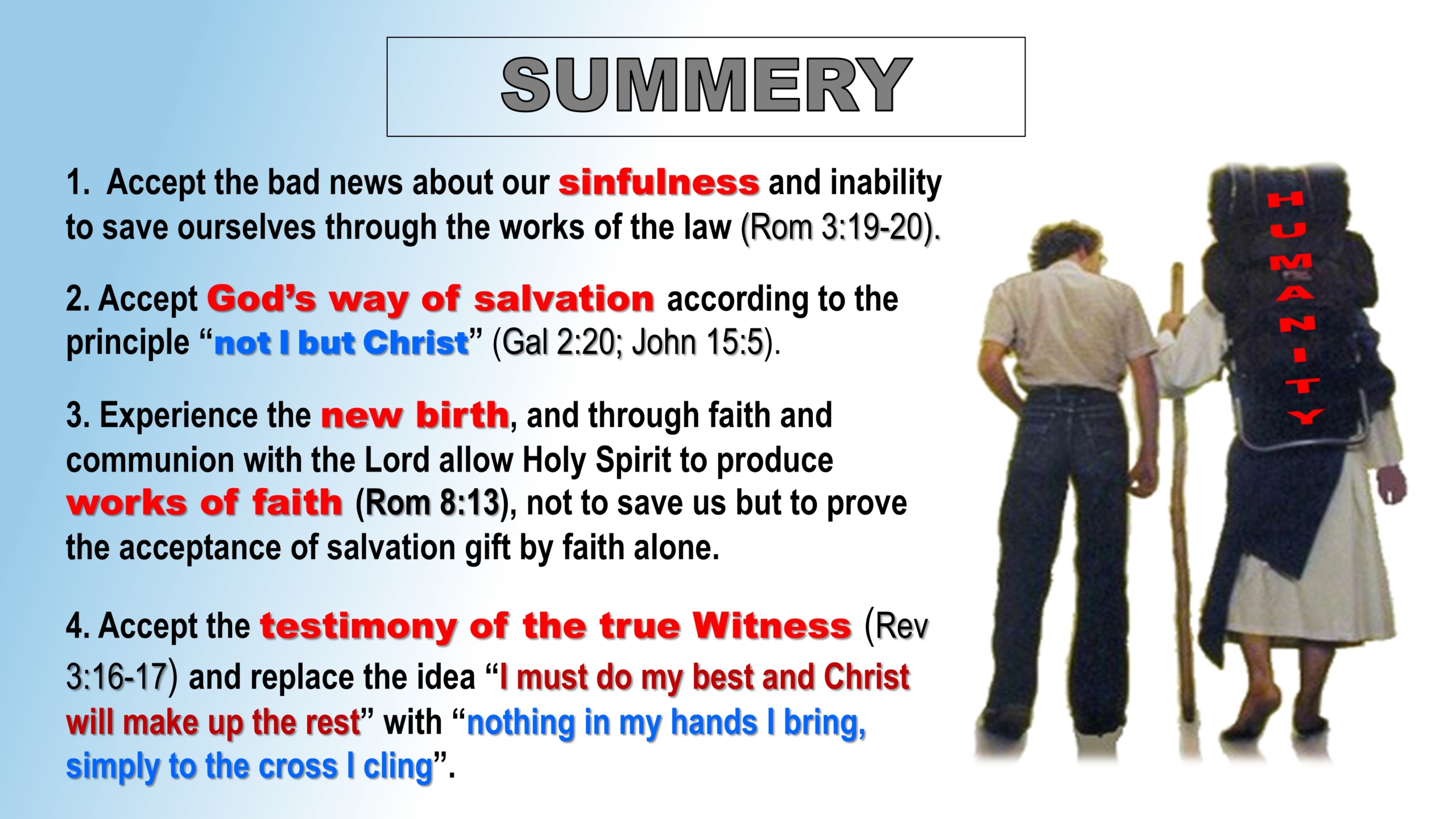
In order to accept the Gospel, enjoy it, and appreciate the wonderful truth, we need to accept the bad news about our sinfulness and inability to save ourselves through the works of the law.
In Romans 3:19–20, Paul says, “For by the works of the law no flesh shall be justified in God’s sight, because through the law is the knowledge of sin.”
The law was given to us especially to prove our sinfulness, to keep us in prison until we see Christ. Accepting that, the law lets us go, and we are no longer under the law, but under grace. Lord Jesus leads us through the process of conversion, the new birth, provides us with the internal presence of the Holy Spirit and himself, and leads us back to the law, keeping the law in us if we truly believe and have communion with him.
We need to accept God’s way of salvation according to the key principle of the Gospel: Not I, but Christ, regarding both justification and sanctification.
This principle is found, for instance, in Galatians 2:20, where Paul says, “I have been crucified with Christ 2,000 years ago, and this is my salvation. Now, because I am born from the Spirit, Christ lives in me.”
Who provides sanctification? Not I, but Christ in me, if I am a born-again Christian. So this is the principle: Not I, but Christ.
We are to experience the new birth, and through faith and communion with the Lord, allow the Holy Spirit to produce works of faith.
Please remember Romans 8:13: “If we live according to the flesh, we will die; but if by the Spirit we overcome the deeds of the flesh, we shall live.” Apostle Paul says: Who is to overcome the deeds of the flesh in us? Not us—it is the Holy Spirit! What is our duty as Christians who are born from the Spirit? To have constant communion with him, to surrender everything to him every day, allowing him to dwell in us, and to claim God’s promises—like the promise of the Holy Spirit—with faith, thanksgiving, and praising God for fulfilling his promises.
We are to accept the testimony of the True Witness from Revelation 3:16–17, and replace the foolish idea according to which “I must do my best and Christ will make up the rest” with the wonderful true saying: “Nothing in my hands I bring, simply to the cross I cling.”
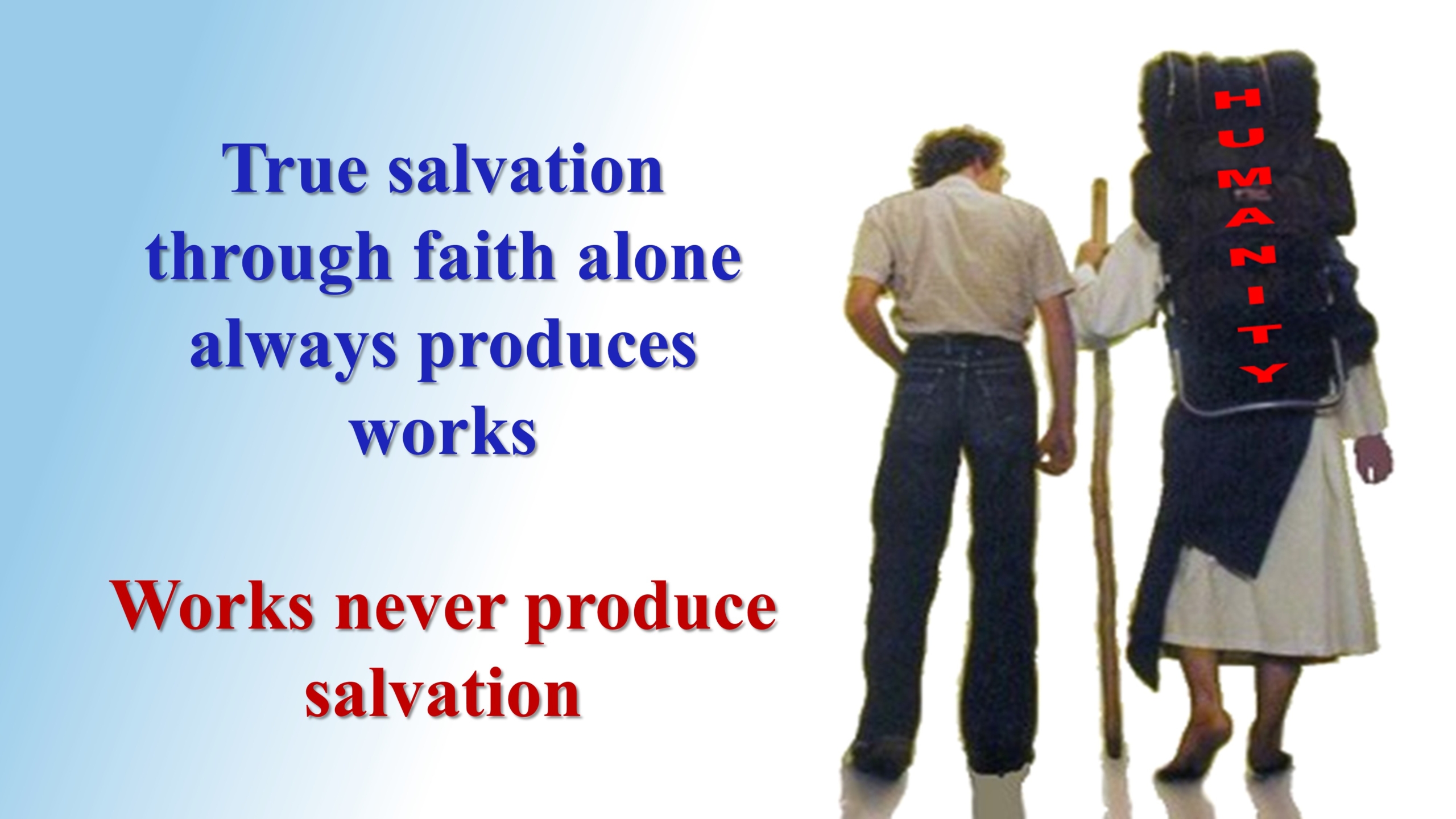
True salvation through faith alone always produces works; works never produce salvation.
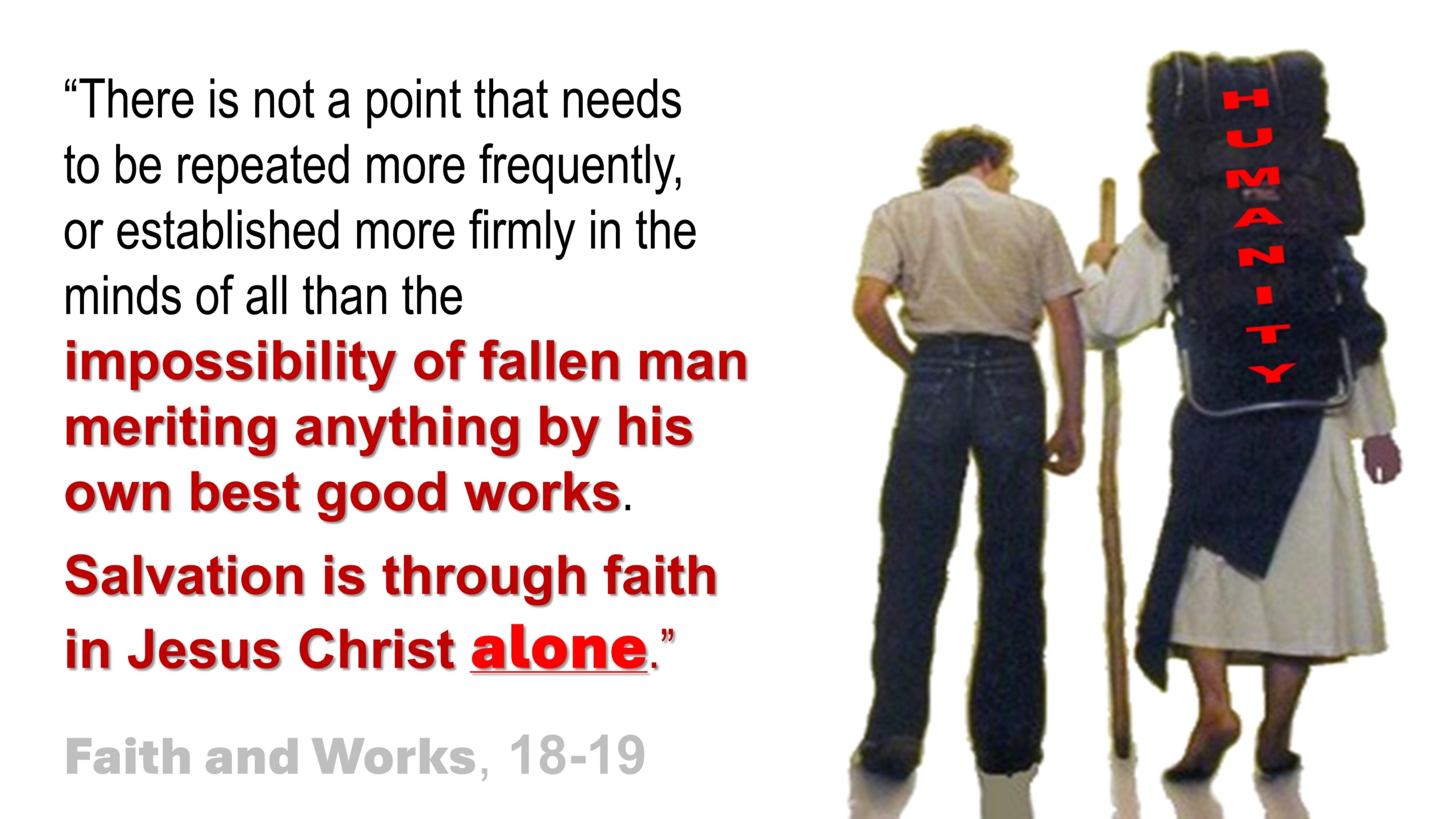
Before I finish, the last quote from the Spirit of Prophecy: “There is not a point that needs to be repeated more frequently or established more firmly in the minds of all than the impossibility of fallen man meriting anything by his own best good works. Salvation is through faith in Jesus Christ alone.” Amen.
Let us pray.
Dear Heavenly Father, we come to you now with contrite hearts, knowing that there is no one who does good—not even one—for all have sinned and fall short of the glory of God. We want to express our gratitude that, although we are so sinful and so insignificant in this universe, and although you at the same time are so holy, so powerful, so great—beyond any imagination—the Creator of the entire universe and countless lives, yet you gave us this incredible, mind-boggling right to become your children: “For to those who received him, he gave the right to become children of God, to those who believe in his name.” “Behold what manner of love the Father has bestowed upon us, that we should be called the children of God.”
We thank you, Heavenly Father, for all this, and that it is so easy to have this right to become your children: everything we need to do is to accept your Son’s perfect righteousness in our representative flesh and his death on the cross on our behalf. But today we also ask that we may understand and remember that all those who are of the works of the flesh—all legalists—are under the curse of eternal death, for it is written: “Cursed is everyone who does not continue in all things which are written in the book of the law.” This means that if we want to be saved by our works, we would have to be perfect from birth to death, including in our thoughts, emotions, and motivations, which is impossible for us. That’s why the only hope for salvation is only in our wonderful Jesus Christ, our Savior.
We also want to thank you for his sufferings, especially during that last night when he was constantly beaten, mocked, ridiculed, tormented, and when he was flogged almost to death, and he was willing to hang on the cross, the symbol of eternal separation and curse. When he was hanging on the cross, feeling that he was separated, and that separation was to be eternal, and he was tempted three times to step down from the cross, he didn’t do it because he decided to say goodbye to eternal life so that we could live.
Let this incredible, agape, self-sacrificing, eternal love always motivate us to follow Lord Jesus wherever he goes, and to repeat after the Apostle Paul: “I count all things lost for the excellence of the knowledge of Christ Jesus my Lord, for whom I have suffered the loss of all things, and count them as rubbish, that I may gain Christ and be found in him, not having my own righteousness, which is from the law, but that which is through faith in Christ.”
Amen.