
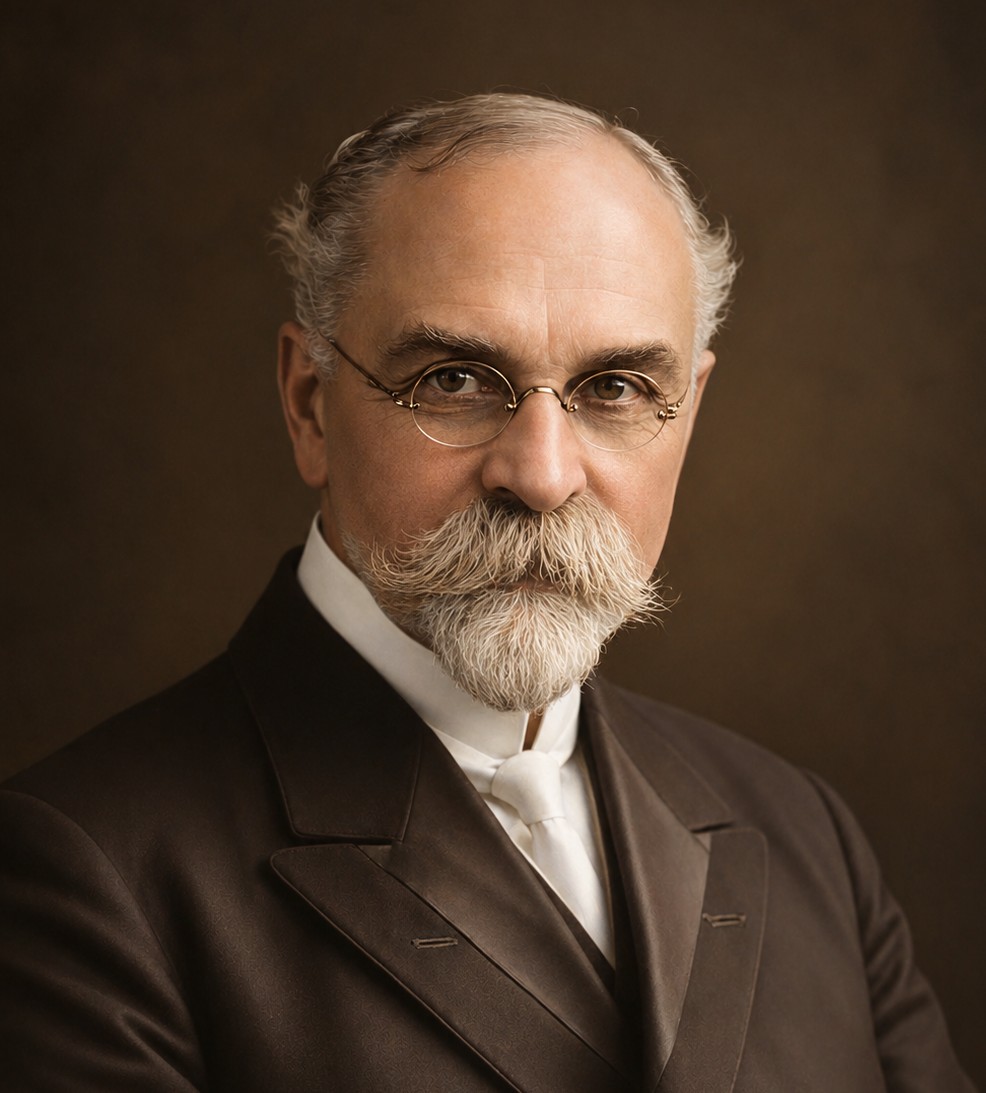
Arthur G. Daniells
Christ Our Righteousness
A Study of the Principles of Righteousness by Faith as Set Forth in the Word of God and the Writings of the Spirit of Prophecy. By Arthur G. Daniells. The Ministerial Association of Seventh-day Adventists, Takoma Park, Washington, D.C. 1926
About Author
Arthur Grosvenor Daniells (28 September 1858 – 18 April 1935) was one of the most influential leaders in Seventh-day Adventist history, serving as General Conference President from 1901 to 1922—the longest tenure in that office.He worked closely with both James and Ellen G. White, serving as their secretary for a time and maintaining a close personal relationship with Ellen White throughout much of her ministry, making him a firsthand witness to many of the church’s formative developments.
His classic book Christ Our Righteousness (1926) remains one of the most significant Adventist works on righteousness by faith, drawing extensively from Scripture and Ellen White’s writings to explain the 1888 message and call the church back to a Christ-centred understanding of the gospel. It has profoundly influenced generations of Adventist pastors, theologians, and church members. (encyclopedia.adventist.org)
Jesus is going from door to door, standing in front of every soul-temple, proclaiming, ‘I stand at the door, and knock.’ As a heavenly merchantman, He opens His treasures, and cries, “Buy of Me gold tried in the fire, that thou mayest be rich; and white raiment, that thou mayest be clothed, and that the shame of thy nakedness do not appear.’ … Open your doors, says the great Merchantman, the possessor of spiritual riches, and transact your business with Me. It is I, your Redeemer, who counsels you to buy of Me.” Mrs. E. G. White
The Waiting One
(This poem appeared in the Review and Herald of July 31, 1888, the year in which the message of “Righteous by Faith” came so clearly and decidedly to God’s people. The spirit of that solemn message evidently called forth these beautiful stanzas.)
“”BEHOLD, I stand at the door, and knock!’ Hearest thou, Heart, that voice most sweet? Wilt thou not up and undo the lock And make a space for His holy feet? What? thou art weary and sick with woe. And wilt not arise for the Stranger so?
“But, Heart, He’s the Great Physician, true, He beareth a cordial for every smart. And ah! He has come for His pity of you. Rouse thee a moment, my poor, faint Heart. Let thee die? O Heart! canst thou say it o’er When the Great Physician is at the door?
“Listen, my Heart. Do you hear Him weep? Oh! His soul is exceedingly grieved for thee. He has forded the rivers so wide and deep. And the dangers about Him were sore to see. And, O my Heart! His dear hands and brow Are blood-stained, and wounded, and bleeding now.
“What? wilt thou not believe it, Heart? Sayest thou none ever cared for thee? Oh! whisper it low, for no crueler dart Could so pierce to His tender soul, I see. Oh! could I but tell thee what grief befell, For the love that He bore thee, unutterable.
“Let Him in, my Heart, let me still persuade; He will robe thee in beauty like His, divine. He will free thee out of this prison’s shade. And take thee into His courts to shine. Leaning on Him, thy Beloved, thou’lt go To His gardens of spice, where the lilies grow.
“Slowly my Heart to the door has crept, Her weak hand pushes aside the lock. She looks in the eyes that for her have wept, And kisses the hands that so long did knock. She weeps at His feet till her soul is mild, And she clings to Him now, like a trusting child.
“Oh, how He loves her! How sweet the tryst! Her sickness is over, her robe is white. She findeth her all in all in Christ, And her prison is flooding with holy light. And she sits at the board, and she sups His wine, And feasts in the love of her Lord divine.
“”Oh! how could I leave Thee outside so long?’ She weeps as she thinks of His tender love; But He freely forgives her bitter wrong. And makes here to be a partaker of His own sweet nature, and seals her His By many a pledge of deep tenderness.”
Foreword
AT a meeting of the members of the Ministerial Association Advisory Council, held in Des Moines, Iowa, Oct. 22, 1924, it was– “Voted, That Elder Daniells be asked to arrange for a compilation of the writings of Mrs. E. G. White on the subject of Justification by Faith.” This official request voiced a desire that had long been felt and often expressed by many of our workers and people, entire union conferences having gone on record as requesting such a production. With the co-operation of my associates in the office of the Ministerial Association, I undertook the task designated. In harmony with the primary purpose of providing a “compilation of the writings of Mrs. E. G. White on the subject,” exhaustive research was made through all the writings of the spirit of prophecy as held in trust by us as a people, in bound volumes and also in printed articles appearing in the files of our denominational papers, covering a period of twenty-five years from 1887 to 1912. So vast was the field of study opened up, so marvelous and illuminating the hidden gems of truth which came to light, that I became amazed and awed at the solemn obligation resting upon me, of rescuing these gems from their obscurity, and placing them, in a cluster of brilliancy and beauty, where they would win rightful recognition and acceptance in the glorious finishing of the work intrusted to the remnant church. Seeking advice and counsel from my colleagues, I sent out advance sections of the manuscript for careful reading and suggestion. The response from fellow laborers in all sections of the North American field has been of a most encouraging and appreciative nature, and urgency in completing the work has been emphasized. A suggestion made by a number of fellow ministers has led to the preparation of a chapter on the subject of righteousness by faith from the Bible standpoint as an introduction to the compilation from the writings of the spirit of prophecy. This, it is believed, will give Scriptural authority and permanence to the theme which is of such vital importance to God’s people at this time.
The Word of God clearly portrays the way of righteousness by faith; the writings of the spirit of prophecy greatly amplify and elucidate the subject. In our blindness and dullness of heart, we have wandered far out of the way, and for many years have been failing to appropriate this sublime truth. But all the while our great Leader has been calling His people to come into line on this great fundamental of the gospel,–receiving by faith the imputed righteousness of Christ for sins that are past, and the imparted righteousness of Christ for revealing the divine nature in human flesh. In order to make this compilation of the greatest value, it seemed necessary to do more than merely bring together a long series of miscellaneous, detached statements. Appropriate arrangement and combination were necessary, and the chronological order was important; also, the circumstances and issues concerning which particular statements were made, should be rightly understood. Unless these considerations were recognized, the compilation might prove confusing and wearisome. A careful, connected study of the writings of the spirit of prophecy regarding the subject of righteousness by faith, has led to the settled conviction that the instruction given presents two aspects: primarily, the great, amazing fact that by faith in the Son of God, sinners may receive the righteousness of God; and secondarily, the purpose and providence of God in sending the specific message of receiving the righteousness of God by faith to His people assembled in General Conference in the city of Minneapolis, Minnesota, in the year 1888. This latter aspect cannot be disregarded by Seventh-day Adventists without missing a most important lesson that the Lord designed to teach us. It is this conviction that has made it seem necessary to include in the compilation the instruction given concerning the experiences and developments connected with and following the Minneapolis Conference. The major portion of our membership today has been raised up since these experiences came to us. They are unacquainted with them; but they need the message; also the lessons which those experiences were designed to teach. Hence the necessity of reproducing a portion, at least, of the instruction then given, and accompanying the same with a brief explanation of what took place. Those who have full confidence in the gift of the spirit of prophecy to the remnant church will place great value upon the compilation of statements herein furnished. Only a few of them have ever been reproduced since they first appeared in the columns of the Review and Herald. The most of them dropped out of sight with the current number of the Review in which they appeared. In no other document have all of these been brought together in systematic and chronological form, as here presented. May these messages do their appointed work in the lives of all who read these pages. Wondrous is the blessing Heaven is waiting to bestow! A.G.D.
“CLAD IN THE ARMOR OF CHRIST’S RIGHTEOUSNESS, THE CHURCH IS TO ENTER UPON HER FINAL CONFLICT.” Mrs. E. G. White
“ON CHRIST’S CORONATION DAY HE WILL NOT ACKNOWLEDGE AS HIS ANY WHO BEAR SPOT OR WRINKLE OR ANY SUCH THING. BUT TO HIS FAITHFUL ONES HE WILL GIVE CROWNS OF IMMORTAL GLORY. THOSE WHO WOULD NOT THAT HE SHOULD REIGN OVER THEM WILL SEE HIM SURROUNDED BY THE ARMY OF THE RE- DEEMED, EACH OF WHOM BEARS THE SIGN, THE LORD OUR RIGHTEOUSNESS.” Mrs. E. G. White
Part I: The Enunciation in Scripture
“The righteous Lord loveth righteousness.” Ps. 11:7.
“There is no unrighteousness in Him.” Ps. 92:15.
“Awake to righteousness, and sin not.” 1 Cor. 15:34.
Chapter One: Christ Our Righteousness
CHRIST our righteousness is the one sublime message set forth in the Sacred Scriptures. However varied the forms and phrases in which this message may be unfolded and presented, yet always, from every point of the circle, the central commanding theme is, Christ our righteousness. The account of creation reveals the marvelous wisdom and power of Christ, by whom all things were created. Col. 1:14-16. The sin of the first Adam, with all its awful consequences, is related in order that Christ, the last Adam, may be hailed as Redeemer and restorer. Rom. 5:12-21. Death with all its terrors is set before us, that Christ may be exalted and glorified as the Life-giver. 1 Cor. 15:22. The disappointments, sorrows, and tragedies of this life are recounted, that Christ may be sought as the great comforter and deliverer. John 16:33. Our sinful, corrupt natures are presented in lurid colors, that Christ may be appealed to for cleansing, and may in very deed be unto us “the Lord our righteousness.” Thus it is throughout the Sacred Volume,–every phase of truth unfolded, points in some way to Christ as our righteousness. But righteousness as a distinct, well-defined subject of vital importance, occupies a large place in the Word of God. Its source, its nature, the possibility of its being obtained by sinners, and the conditions upon which it may be secured, are set forth in great clearness in that original, authoritative textbook on righteousness. Of the source of righteousness, we read: “O Lord, righteousness belongeth unto Thee.” Dan. 9:7. “The Lord is righteous in all His ways.” Ps. 145:17. “Thy righteousness is like the great mountains.” Ps. 36:6. “Thy righteousness is an everlasting righteousness.” Ps. 119:142. “The righteous Lord loveth righteousness.” Ps. 11:7. “There is no unrighteousness in Him.” Ps. 92:15.
Regarding the nature of righteousness, the Scriptures are most explicit. It is set forth as the very opposite of sin, and is associated with holiness, or godliness. “Awake to righteousness, and sin not.” 1 Cor. 15:34. “That ye put away, as concerning your former manner of life, the old man, which waxeth corrupt after the lusts of deceit; and that ye be renewed in the spirit of your mind, and put on the new man, which after God hath been created in righteousness and holiness of truth.” Eph. 4:22-24, R.V. “The fruit of the Spirit is in all goodness and righteousness, godliness, faith, love, patience, meekness.” 1 Tim. 6:11. “All unrighteousness is sin.” 1 John 5:17. Perhaps the finest and most inspiring statement regarding righteousness in all the Word of God is the following concerning Christ: “Thou hast loved righteousness, and hated iniquity; therefore God, even Thy God, hath anointed Thee with the oil of gladness above Thy fellows.” Heb. 1:9. This places righteousness as the antithesis, the direct opposite, of iniquity or sin. Thus the Word declares that God is the source of righteousness, and that it is one of His divine, holy attributes.
The supreme question regarding the righteousness of God, the question of the deepest interest and consequence to us, is our personal relation to that righteousness. Is righteousness in any degree inherent in human nature? If so how may it be cultivated and developed? If not, is there any way of obtaining it? If so, by what means, and when? To the mind untaught and unenlightened by the Word of God, this is a great, dark, baffling problem. In endeavoring to solve it, man has surely “sought out many inventions.” But uncertainty and confusion regarding our relation to the righteousness of God are quite unnecessary, for the true situation is clearly stated in the Scriptures of Truth. The Scriptures declare that “all have sinned, and come short of the glory of God” (Rom. 3:23); that we are “carnal, sold under sin” (Rom. 7:14); that “there is none righteous, no, not one” (Rom. 3:10); that in our flesh there “dwelleth no good thing” (Rom. 7:18); and finally, that we are “filled with all unrighteousness” (Rom. 1:29). This clearly answers the question as to whether righteousness is in any degree inherent in human nature. It is not. On the contrary, human nature is filled with unrighteousness.
But in this same Word we find the good, glad news that God has provided a way by which we may be cleansed from our unrighteousness, and be clothed and filled with His perfect righteousness. We find that this provision was made and revealed to Adam as soon as he fell from his high and holy estate. This merciful provision has been understood and laid hold of by fallen, unrighteous men and women from the very beginning of the fierce, unequal conflict with sin. This we learn from the following testimonies recorded in the Scriptures: 1. In one of His sermons, Christ refers to the second son of Adam, and speaks of him as “righteous Abel.” Matt. 23:35. And Paul declares that Abel “obtained witness that he was righteous.” Heb. 11:4. 2. “The Lord said unto Noah, Come thou and all thy house into the ark; for thee have I seen righteous before Me in this generation.” Gen. 7:1. Again: “Noah was a just man and perfect in his generations, and Noah walked with God.” Gen. 6:9. 3. “Abraham believed God, and it was counted unto him for righteousness.” Rom. 4:3. 4. “And delivered righteous Lot, sore distressed by the lascivious life of the wicked (for that righteous man dwelling among them, in seeing and hearing, vexed his righteous soul from day to day with their lawless deeds).” 2 Peter 2:7, 8, R.V. 5. Of Zacharias and Elisabeth, living just before the birth of Christ, it is said: “They were both righteous before God, walking in all the commandments and ordinances of the Lord blameless.” Luke 1:6. The apostle Paul declares that the Gentiles to whom he had preached had “attained to righteousness.” Rom. 9:30; 6:17-22. Thus it is seen that from the promise made to Adam, to the close of apostolic times, there were men and women all along the way who laid hold of the righteousness of God and had the evidence that their lives were pleasing to Him.
Upon What Conditions?
How was this accomplished? Upon what conditions was this wonderful transaction wrought? Was it because the times and conditions in which these men and women lived were favorable to righteousness? Or was it due to the special and superior qualities inherent in those who reached the high table-lands of godliness? All the records of the times and of individuals give a negative answer. They were people with natures like our own, and their environment “vexed” their righteous souls from day to day. 2 Peter 2:7, 8. They obtained the priceless blessing of righteousness in the one way, the only way, it has been possible for any human being to secure it since Adam sinned. The way of being made righteous is given great prominence in the New Testament. The clearest and fullest exposition is found in the epistle of Paul to the Romans. At the very beginning of his argument the apostle declares: “I am not ashamed of the gospel of Christ: for it is the power of God unto salvation to every one that believeth…. For therein is the righteousness of God revealed from faith to faith: as it is written, The just shall live by faith.” Rom. 1:16, 17.
It is the gospel that reveals to men the perfect righteousness of God. The gospel also reveals the way that righteousness may be obtained by sinful men, namely, by faith. This is presented at greater length in the following statement: “By the deeds [the works] of the law there shall no flesh be justified [accounted righteous] in His sight: for by the law is the knowledge of sin. But now the righteousness of God without the law [works of the law] is manifested, being witnessed [approved, accepted] by the law and the prophets; even the righteousness of God which is by faith of Jesus Christ unto all and upon all them that believe.” Rom. 3:20-22.
In the first part of this statement, the apostle shows the part which the law takes in the problem of justification. “By the law is the knowledge of sin.” The knowledge of sin; not the deliverance from sin. The law points out sin. In so doing it declares the whole world to be guilty before God. Romans 3. But the law cannot deliver from sin. No effort of the sinner to obey the law can cancel his guilt or bring to him the righteousness of God. That righteousness, Paul declares, is “by faith of Jesus Christ: … whom God hath set forth to be a propitiation [an atoning sacrifice] through faith in His blood, to declare His righteousness for the remission of sins that are past, through the forbearance of God.” Rom. 3:22-25.
It is through faith in the blood of Christ that all the sins of the believer are canceled and the righteousness of God is put in their place to the believer’s account. O, what a marvelous transaction! What a manifestation of divine love and grace! Here is a man born in sin. As Paul says, he is “filled with all unrighteousness.” His inheritance of evil is the worst imaginable. His environment is at the lowest depths known to the wicked. In some way the love of God shining from the cross of Calvary reaches that man’s heart. He yields, repents, confesses, and by faith claims Christ as his Saviour. The instant that is done, he is accepted as a child of God. His sins are all forgiven, his guilt is canceled, he is accounted righteous, and stands approved, justified, before the divine law. And this amazing, miraculous change may take place in one short hour. This is righteousness by faith. Having made these clear, forceful statements as to the way of being made righteous, the apostle then illustrates the truth declared by a concrete case. He takes the experience of Abraham as an example.
“What shall we say then that Abraham our father, as pertaining to the flesh, hath found?” Rom. 4:1. Anticipating his answer, we reply: Abraham had found righteousness. But how–by what method? Paul tells us: “If Abraham were justified [accounted righteous] by works, he hath whereof to glory; but not before God.” Rom. 4:2. Made righteous by works is a suggestion, a proposal,–if such a thing could be. Is that the way by which to obtain righteousness? “What saith the scripture? Abraham believed God, and it [his belief] was counted unto him for righteousness.” Rom. 4:3. This statement settles forever the way by which Abraham obtained God’s righteousness. It was not by works; it was by faith.
Abraham’s Way the Only Way
Having settled the question as to how Abraham secured the righteousness of God, Paul proceeds to show that that is the only way any one else can obtain righteousness. “To him that worketh not, but believeth on Him that justifieth the ungodly, his faith is counted for righteousness.” Rom. 4:5. What kindness! What great compassion! The Lord, who is “righteous in all His ways,” offers His own perfect righteousness to any and every poor, weak, helpless, hopeless sinner who will believe what He says. Read it again: “To him that worketh not, but believeth on Him, … his faith is counted for righteousness.” So important, so fundamental is this way of righteousness that the apostle goes on through this entire chapter to restate and repeat and press home to all what he has made so clear in few words. Here are some of his statements: “Even as David also describeth the blessedness of the man, unto whom God imputeth righteousness without works.” Rom. 4:6. “We say that faith was reckoned to Abraham for righteousness.” Rom. 4:9 “And being fully persuaded that, what He had promised, He was able also to perform. And therefore it was imputed to him for righteousness. Now it was not written for his sake alone, that it was imputed to him; but for us also, to whom it shall be imputed, if we believe on Him that raised up Jesus our Lord from the dead; who was delivered for our offenses [sins], and was raised again for our justification [righteousness].” Rom. 4:21-25. This clear-cut, positive statement reveals to every lost soul for all time the only way from sin and guilt and condemnation to righteousness and deliverance from condemnation and death. With this agree all the other statements of the Scriptures regarding this great problem of being made righteous.
The three words, “righteousness by faith,” express the most wonderful transaction in this material world which the human intellect can grasp. They express the greatest gift that God, in His infinite plenitude, could bestow upon mankind. The great fact expressed by this phrase of three words, has been studied, expounded, and rejoiced in by millions during the past ages, and it is still the theme of the most sublime interest and importance to the human family. Reviewing these statements, we find: That the law of God demands righteousness from all who are under its jurisdiction. But through transgression all have made themselves incapable of rendering the righteousness which the law demands. What, then, is the sinner to do? His transgression of God’s righteous law has made him unrighteous. This has brought him under the condemnation of that law. Being condemned, the penalty of his transgression must be paid. The penalty is death. He owes a debt that demands his life. He is under a condemnation that he can never remove. He is facing a penalty he can never escape. What can he do? Is there any way out of this dark, hopeless situation? Yes, there is.
“The righteousness of God without the law is manifested, being witnessed [approved and accepted] by the law and the prophets; even the righteousness of God which is by faith of Jesus Christ unto all and upon all them that believe.” Rom. 3:21, 22. This reveals the way of meeting the demands of the law, and emphatically states that the only way of doing so is “by faith.” To the natural, unilluminated mind, this solution of the dark problem is a mystery. The law requires obedience; it demands righteous deeds in the activities of life. How can such demands be met by faith instead of by works? The answer is given in plain words: “Being justified freely by His grace through the redemption that is in Christ Jesus: whom God hath set forth to be a propitiation [an atoning sacrifice] through faith in His blood, to declare His righteousness for the remission of sins that are past, through the forbearance of God.” Rom. 3:24, 25. What a marvelous solution of the awful problem of sin! Only our infinite, all-wise, and compassionate Father could and would provide such a solution. Only inspired writings could reveal it. And this way of making a sinner righteous is found only in the untainted gospel of Christ.
By faith he [the sinner, who has so grievously wronged and offended God] can bring to God the merits of Christ, and the Lord places the obedience of His Son to the sinner’s account. Christ’s righteousness is accepted in place of man’s failure.” Review and Herald, Nov. 4, 1890
Christ came to this world as our Redeemer. He became our substitute. He took our place in the conflict with Satan and sin. He was tempted in all points as we are, but never sinned. He loved righteousness and hated iniquity. His life of perfect obedience met the highest demands of the law. And O, the wonder and the marvel of it is that God accepts Christ’s righteousness in the place of our failure, our unrighteousness! In this divine transaction, “God receives, pardons, justifies, … and loves him [the sinner] as He loves His son.” Ibid. No wonder Paul proclaimed to the whole world that it was the love of Christ which constrained him in his arduous labors, and that he counted it a great privilege and joy to suffer the loss of all things, that he might gain Christ and stand clothed in His righteousness, which is imputed to the sinner through faith. Thus is explained just how faith takes the place of works and is accounted righteousness. This wonderful truth should be perfectly clear to every believer; and it must become personal experience. It should enable us to cease from our own works, efforts, and struggles, and to enter into calm, trusting, living faith in the merits, the obedience, the righteousness of Christ. These we may present to God in the place of our failures. We should joyfully accept the pardon and justification granted, and should now experience the peace and joy which such a marvelous transaction is able to bring to our hearts. “Therefore being justified [accounted righteous] by faith, we have peace with God through our Lord Jesus Christ.” Rom. 5:1.
Many Have Missed the Way
How strange and how sad that this simple, beautiful way of righteousness seems so hard for the natural, carnal heart to find and accept! It was a great sorrow to Paul that Israel, his kinsmen according to the flesh, missed the way so fatally. He said: “Israel, which followed after the law of righteousness, hath not attained to the law of righteousness. Wherefore? Because they sought it not by faith, but as it were by the works of the law.” Rom. 9:31, 32. On the other hand, “the Gentiles, which followed not after righteousness, have attained to righteousness, even the righteousness which is of faith.” Rom. 9:30. And now the apostle reveals the real secret of Israel‘s failure: “For they being ignorant of God’s righteousness, and going about to establish their own righteousness, have not submitted themselves unto the righteousness of God. For Christ is the end of the law [the one to whom the law points] for righteousness to every one that believeth.” Rom. 10:3, 4. Finally, the apostle closes his exposition of this sublime theme with these assuring words: “But what saith it? The word is nigh thee, even in thy mouth, and in thy heart: that is, the word of faith, which we preach; that if thou shalt confess with thy mouth the Lord Jesus, and shalt believe in thine heart that God hath raised Him from the dead, thou shalt be saved. For with the heart man believeth unto righteousness; and with the mouth confession is made unto salvation.” Rom. 10:8-10.
“Righteousness by faith” is not a theory. People may hold a theory about it, and at the same time be “ignorant of God’s righteousness and going about to establish their own righteousness.” “Righteousness by faith” is a transaction, an experience. It is a submitting unto “the righteousness of God.” It is a change of standing before God and His law. It is a regeneration, a new birth. Without this change there can be no hope for the sinner, for he will remain under the condemnation of God’s changeless, holy law; its terrible penalty will still hang over his head. How very essential it thus appears that we come to know, by clear, positive experience, that this great, vital transaction called “righteousness by faith” has been wrought in our hearts and lives by the power of God. Only then can we truly pray our Lord’s prayer, addressing, “Our Father, who art in heaven, hallowed be Thy name.”
This name is hallowed by the angels of heaven, by the inhabitants of unfallen worlds. When you pray, ‘Hallowed be Thy name,’ you ask that it may be hallowed in this world, hallowed in you. God has acknowledged you before men and angels as His child; pray that you may do no dishonor to the ‘worthy name by which ye are called.’ God sends you into the world as His representatives. In every act of life you are to make manifest the name of God. This petition calls upon you to possess His character. You cannot hallow His name, you cannot represent Him to the world, unless in life and character you represent the very life and character of God. This you can do only through the acceptance of the grace and righteousness of Christ.” “Thoughts from the Mount of Blessing,” page 158
Part II: The Witness of the Spirit of Prophecy
Urge them to give their attention to securing the richest gift that can be given to mortal man.–the robe of Christ’s righteousness.” “Testimonies,” Vol. IX, page 114. p. 34, par. 1
Chapter Two: A Message of Supreme Importance
NEARLY forty years ago (in 1888) there came to the Seventh-day Adventist Church a very definite awakening message. It was designated at the time as “the message of Righteousness by Faith.” Both the message itself and the manner of its coming made a deep and lasting impression upon the minds of ministers and people, and the lapse of time has not erased that impression from memory. To this day, many of those who heard the message when it came are deeply interested in it and concerned regarding it. All these long years they have held a firm conviction, and cherished a fond hope, that some day this message would be given great prominence among us, and in the church which they believed it was sent by the Lord to accomplish. Among the influences which have led to this conviction is the divine witness borne to the proclamation of the message of Righteousness by Faith as it was set forth at the time of the General Conference held in the city of Minneapolis, Minn., in the year 1888. From the very first, the spirit of prophecy placed the seal of approval upon the message and its presentation at that time. In the plainest and most positive language we were told that the Lord was leading and impelling men to proclaim this definite message of Righteousness by Faith. Of that epochal Conference, and the men who gave the specific message, it is declared:
The Lord in His great mercy sent a most precious message to His people. This message was to bring more prominently before the world the uplifted Saviour, the sacrifice for the sins of the whole world. It presented justification through faith in the Surety; it invited the people to receive the righteousness of Christ, which is made manifest in obedience to all the commandments of God. Many had lost sight of Jesus. They needed to have their eyes directed to His divine person, His merits, and His changeless love for the human family. All power is given into His hands, that He may dispense rich gifts unto men, imparting the priceless gift of His own righteousness to the helpless human agent. This is the message that God commanded to be given to the world. It is the third angel’s message, which is to be proclaimed with a loud voice, and attended with the outpouring of His Spirit in a large measure.” “Testimonies to Ministers,” pages 91, 92
Every sentence in this comprehensive statement is worthy of most careful study. Let us briefly analyze it: 1. A Most Precious Message.–“The Lord in His great mercy sent a most precious message to His people.” 2. The Object.–“This message was to bring more prominently before the world the uplifted Saviour, the sacrifice for the sins of the whole world.” 3. The Scope.– a. “It presented justification through faith in the Surety.” b. “It invited the people to receive the righteousness of Christ, which is made manifest in obedience to all the commandments of God.” 4. The Need.– a. “Many had lost sight of Jesus.” b. “They needed to have their eyes directed to His divine person, His merits, and His changeless love for the human family.” 5. The Resources.– a. “All power is given into His hands,” b. “That He May dispense rich gifts unto men,” c. “Imparting the priceless gift of His own righteousness to the helpless human agent.” 6. Extent.–“This is the message that God commanded to be given to the world.” 7. What It Really Is.–“It is the third angel’s message, which is to be proclaimed with a loud voice, and attended with the outpouring of His Spirit in a large measure.” It is difficult to conceive how there could be any misunderstanding or uncertainty regarding the heavenly indorsement of this message. It clearly stated that the Lord sent the message, and that He led the minds of the men who were so deeply engrossed by it and who proclaimed it with such earnestness.
It should be borne in mind at this time that the course taken by the messengers in subsequent years has nothing to do with the positive statement, oft repeated, that they were led by the Lord to declare this fundamental truth of the gospel to His people at that particular time. Not only was it in the purpose of God to set this message of Righteousness by Faith before His church; it was to be given to the world. And finally, it is declared to be the “third angel’s message, which is to be proclaimed with a loud voice, and attended with the outpouring of His Spirit in a large measure.” It is evident that the application of this message was not limited to the time of the Minneapolis Conference, but that its application extends to the close of time; and consequently it is of greater significance to the church at the present time than it could have been in 1888. The nearer we approach the great day of God, the more imperative will be the need of the soul-cleansing work which that message was sent to do. Surely we have every reason for a new, more earnest, whole-hearted study and proclamation of that message.
God’s messages and providences are always great with meaning. They are always necessary for the accomplishment of the particular work with which they are connected. He orders them for the fulfilment of His purposes. They cannot be set aside. They cannot fail. Sooner or later they will be understood, accepted, and given their proper place. Therefore it must be expected that the message of Righteousness by Faith which came so definitely to the church in 1888, will be accorded a dominant place in the closing period of the great movement with which we are connected.
Chapter Three: Preparatory Messages
THE BIBLE account of God’s dealings with His people is full of most helpful instruction for the remnant church. It shows that through the centuries He has had but one unchangeable, eternal purpose. He has allowed nothing to defeat that purpose. In all the crises and developments that have arisen, He has been in control. He has foreseen the perils lurking along the way, and has sent warnings to His people to guard and protect them. When they have needed messages to awaken, inspire, and regenerate them, He has raised up messengers to give the messages. The great exodus movement from Egypt to Canaan, the history of Samuel and Israel, of David and the kingdom he was chosen to establish, and the tragic experiences of Jeremiah in the kingdom of Judah, and its overthrow and captivity,–all are illustrations of this.
In the records of these great crises we find that God’s messages to the people were of a twofold character: First, they pointed out the deceptions into which His people were being led, and warned them of the serious results which would come unless they returned to Him; second, they revealed most clearly just what was needed to help them, and gave assurance that He would not only supply all their needs, but would also inspire and empower them to lay hold of the proffered help if they would but choose it with the whole heart. Nothing was lacking on the Lord’s side to meet fully every deception and peril by which Satan sought to ruin the people and the cause. The developments and experiences connected with the coming of the message of Righteousness by Faith, in 1888, bear striking similarity to the experiences which came to the people of God in olden times. It is well to give most careful consideration to the messages of the spirit of prophecy just preceding the Minneapolis Conference of 1888.
The Messages of 1888
The testimonies of the spirit of prophecy which were received during the year 1887 gave warning of danger. They named again and again a specific evil, a deception into which the church was falling. That deception was pointed out as the fatal mistake of drifting into formalism; the substitution of forms, ceremonies, doctrines, machinery, and activities for that heart experience which comes alone through fellowship with Christ Jesus our Lord. Throughout the entire year this specific danger was kept before ministers and people by messages which appeared in the Review and Herald. In order that the seriousness of the situation at that time may be realized and the warnings better understood, we quote a few paragraphs, giving the date of publication:
-
“It is possible to be a formal, partial believer, and yet be found wanting, and lose eternal life. It is possible to practise some of the Bible injunctions, and be regarded as a Christian, and yet perish because you are lacking in essential qualifications that constitute Christian character.” Review and Herald, Jan. 11, 1887
-
Two weeks later another message declares: “The observance of external forms will never meet the great want of the human soul. A mere profession of Christ is not enough to prepare one to stand the test of the judgment.” Review and Herald, Jan. 25, 1887
-
Three weeks following this it was clearly stated: “There is too much formality in the church. Souls are perishing for light and knowledge. We should be so connected with the Source of light that we can be channels of light to the world. … Those who profess to be guided by the Word of God, may be familiar with the evidences of their faith, and yet be like the pretentious fig tree, which flaunted its foliage in the face of the world, but when searched by the Master, was found destitute of fruit.” Review and Herald, Feb. 15, 1887
-
Two weeks thereafter came another of like import: “The Lord Jesus, on the Mount of Olives, plainly stated that ‘because iniquity shall abound, the love of many shall wax cold.’ He speaks of a class who have fallen from a high state of spirituality. Let such utterances as these come home with solemn, searching power to our hearts…. A formal round of religious services is kept up; but where is the love of Jesus? Spirituality is dying…. Shall we meet the mind of the Spirit of God? Shall we dwell more upon practical godliness, and far less upon mechanical arrangements?” Written March 1, 1887; appears in “Testimonies,” Vol. V, pages 538, 539
On and on throughout the entire year messages continued to come telling us that formality was coming into the church; that we were trusting too much in forms, ceremonies, theories, mechanical arrangements and a constant round of activities. Of course these messages were true, and they should have made a profound impression. But formalism is most deceptive and ruinous. It is the hidden, unsuspected rock upon which, through the centuries, the church has so often been well-nigh wrecked. Paul warns us that the “form of godliness” without the power of God will be one of the perils of the last days, and admonishes us to turn away from the deceptive, bewitching thing. Over and over again, and through various channels, God sends warnings to His church to escape the peril of formalism. It was precisely this perilous deception against which the spirit of prophecy gave repeated warning in 1887; and it was to save us from its full results that the message of Righteousness by Faith was sent to us.
This movement is of God. It is destined to triumph gloriously. Its organization is heaven-indited; its departments are the wheels within the wheels, all skilfully linked together, but they are incomplete and partial without the Spirit within the wheels giving power and speedy results. These wheels are composed of men and women. God baptizes men and women rather than movements; and when men receive the power of the Spirit into their lives, then the beautiful machinery moves speedily forward on its appointed task. This must be realized individually before it can be realized collectively. How imperative, then, our need of God’s provision! But not alone came the warnings against the substitution of theories, forms, activities, and the machinery of organization. With these warnings came a direct, powerful, positive message telling exactly what should be done to save us from the situation into which we were drifting. The entire message cannot be reproduced here because of its length. It appears in full in the Appendix. (See Appendix, pages 146-152.) However, a few excerpts will convey some idea of its serious import, and of the hope it held out to the church if the instruction were heeded:
Greatest and Most Urgent Need
A revival of true godliness among us is the greatest and most urgent of all our needs. To seek this should be our first work. There must be earnest effort to obtain the blessing of the Lord, not because God is not willing to bestow His blessing upon us, but because we are unprepared to receive it. There are persons in the church who are not converted, and who will not unite in earnest, prevailing prayer. We must enter upon the work individually. We must pray more, and talk less. Iniquity abounds, and the people must be taught not to be satisfied with a form of godliness without the spirit and power. … We have far more to fear from within than from without. The hindrances to strength and success are far greater from the church itself than from the world. There is nothing that Satan fears so much as that the people of God shall clear the way by removing every hindrance, so that the Lord can pour out His Spirit upon a languishing church and an impenitent congregation. If Satan had his way, there would never be another awakening, great or small, to the end of time. But we are not ignorant of his devices. It is possible to resist his power. When the way is prepared for the Spirit of God, the blessing will come. Satan can no more hinder a shower of blessing from descending upon God’s people than he can close the windows of heaven that rain cannot come upon the earth. Wicked men and devils cannot hinder the work of God, or shut out His presence from the assemblies of His people, if they will, with subdued, contrite hearts, confess and put away their sins, and in faith claim His promises. Every temptation, every opposing influence, whether open or secret, may be successfully resisted, ‘not by might, nor by power, but by My Spirit, saith the Lord of hosts.’ What is our condition in this fearful and solemn time? Alas, what pride is prevailing in the church, what hypocrisy, what deception, what love of dress, frivolity, and amusement, what desire for the supremacy! All these sins have clouded the mind, so that eternal things have not been discerned.” Review and Herald, March 22, 1887
What a solemn message, and yet how full of tender, helpful counsel! What hope is held before the church if she will but sincerely heed it! How sad that this great message passed with the annual files of the Review, to lie buried so long! Is it not time to bring again this message clearly and forcefully to the attention of the church, as Ezra brought forth the forgotten book of the law of Moses and read the instruction it contained to Israel?
Remedy to Be Applied
As the year closed, a message came, pointing clearly and positively to the only remedy for the evils so earnestly and repeatedly set before us during the entire year. That remedy, we are told, is union with Christ Jesus the Lord.
There is a wide difference between a pretended union and a real connection with Christ by faith. A profession of religion places men in the church, but this does not prove that they have a vital connection with the living Vine…. When this intimacy of connection and communion is formed, our sins are laid upon Christ, His righteousness is imputed to us. He was made sin for us, that we might be made the righteousness of God in Him. The power of evil is so identified with human nature that no man can overcome except by union with Christ. Through this union we receive moral and spiritual power. If we have the Spirit of Christ, we shall bring forth the fruit of righteousness. A union with Christ by living faith is enduring; every other union must perish. Christ first chose us, paying an infinite price for our redemption; and the true believer chooses Christ as first and last, and best in everything. But this union costs us something. It is a relation of utter dependence, to be entered into by a proud being. All who form this union must feel their need of the atoning blood of Christ. They must have a change of heart. They must submit their own will to the will of God. There will be a struggle with outward and internal obstacles. There must be a painful work of detachment, as well as a work of attachment. Pride, selfishness, vanity, worldliness–sin in all its forms–must be overcome, if we would enter into a union with Christ. The reason why many find the Christian life so deplorably hard, why they are so fickle, so variable, is, they try to attach themselves to Christ without first detaching themselves from these cherished idols.” Review and Herald, Dec. 13, 1887
This message takes us into the very heart of the gospel–union with Christ. No man can overcome sin except by this union. By union with Christ, our sins are laid upon Him and His righteousness is imputed to us. This is reality, not form nor ceremony. It is not church membership, nor assent of the intellect to theory and dogma. Union with Christ is a satisfying reality in all that pertains to the Christian life. In this lies our security. This was our great need in 1887, and to lead us into that experience the Lord sent the message of Righteousness by Faith.
PREPARATORY MESSAGES
The Messages of 1888
As we pass into year 1888, the positive, remedial messages which began in 1887 were continued, growing in clarity and force, as will be observed. The true way is clearly set forth,–the only way that gives genuine sincerity, reality, and victory. This true way is through fellowship with our risen Lord. Note the following ringing words:
Only True Way
Without the presence of Jesus in the heart, religious service is only dead, cold formalism. The longing desire for communion with God soon ceases when the Spirit of God is grieved from us; but when Christ is in us the hope of glory, we are constantly directed to think and act in reference to the glory of God.” Review and Herald, April 17, 1888
We should study the life of our Redeemer, for He is the only perfect example for men. We should contemplate the infinite sacrifice of Calvary, and behold the exceeding sinfulness of sin and the righteousness of the law. You will come from a concentrated study of the theme of redemption strengthened and ennobled. Your comprehension of the character of God will be deepened; and with the whole plan of salvation clearly defined in your mind, you will be better able to fulfil your divine commission. From a sense of thorough conviction, you can then testify to men of the immutable character of the law manifested by the death of Christ on the cross, the malignant nature of sin, and the righteousness of God in justifying the believer in Jesus on condition of his future obedience to the statutes of God’s government in heaven and earth.” Review and Herald, April 24, 1888
Our Redeemer, His atoning sacrifice for us, the malignant nature of sin, the righteousness of Christ to be received by faith,–in the serious contemplation and full acceptance of these vital truths of the gospel are to be found pardon, justification, peace, joy, and victory.
Startling Message
Following the pointing out of the only true way, there came a startling message that must have been designed of the Lord to lead His people to sense their peril and step quickly into the way of security:
The solemn question should come home to every member of our churches, How are we standing before God, as the professed followers of Jesus Christ? Is our light shining forth to the world in clear, steady rays? Have we, as a people solemnly dedicated to God, preserved our union with the Source of all light? Are not the symptoms of decay and declension painfully visible in the midst of the Christian churches of today? Spiritual death has come upon the people that should be manifesting life and zeal, purity and consecration, by the most earnest devotion to the cause of truth. The facts concerning the real condition of the professed people of God, speak more loudly than their profession, and make it evident that some power has cut the cable that anchored them to the Eternal Rock, and that they are drifting away to sea, without chart or compass.” Review and Herald, July 24, 1888
Some power, it is declared, had cut the cable that anchored the church to the Eternal Rock, and its members were drifting away to sea without chart or compass. What situation could be more alarming than this? What more convincing reason could be given to show the need of turning with all the heart to Him who alone is able to hold us fast?
Back to Safe Anchorage
Next came a message telling just what was necessary in order to repair the cable the enemy had cut, and thus bring us back to safe anchorage. Read it with care:
It is not enough to be familiar with the arguments of the truth alone. You must meet the people through the life that is in Jesus. Your work will be made wholly successful if Jesus is abiding with you, for He has said, ‘Without Me ye can do nothing.’ Jesus stands knocking, knocking at the door of your hearts, and yet, for all this, some say continually, ‘I cannot find Him.’ Why not? He says, ‘I stand here knocking.’ Why do you not open the door, and say, ‘Come in, dear Lord’? I am so glad for these simple directions as to the way to find Jesus. If it were not for them, I should not know how to find Him whose presence I desire so much. Open the door now, and empty the soul-temple of the buyers and sellers, and invite the Lord to come in. Say to Him, ‘I will love Thee with all my soul. I will work the works of righteousness. I will obey the law of God.’ Then you will feel the peaceful presence of Jesus.” Review and Herald, Aug. 28, 1888
Climax of the Preparatory Messages
Just a few weeks before the General Conference assembled at Minneapolis, the Lord sent the following message as an impressive climax to all the instruction that had been coming on this one great theme month after month for nearly two years:
What is the work of the minister of the gospel? It is to rightly divide the word of truth; not to invent a new gospel, but to rightly divide the gospel already committed to them. They cannot rely upon old sermons to present to their congregations; for these set discourses may not be appropriate to meet the occasion or the wants of the people. There are subjects that are sadly neglected, that should be largely dwelt upon. The burden of our message should be the mission and life of Jesus Christ. Let there be a dwelling upon the humiliation, self-denial, meekness, and lowliness of Christ, that proud and selfish hearts may see the difference between themselves and the Pattern, and my be humbled. Show to your hearers Jesus in His condescension to save fallen man. Show them that He who was their surety had to take human nature, and carry it through the darkness and the fearfulness of the malediction of His Father, because of man’s transgression of His law; for the Saviour was found in fashion as a man. Describe, if human language can, the humiliation of the Son of God, and think not that you have reached the climax, when you see Him exchanging the throne of light and glory which He had with the Father, for humanity. He came forth from heaven to earth; and while on earth, He bore from heaven to earth; and while on earth, He bore the curse of God as surety for the fallen race. He was not obliged to do this. He chose to bear the wrath of God, which man had incurred through disobedience to the divine law. He chose to endure the cruel mockings, the deridings, the scourging, and the crucifixion. ‘And being found in fashion as a man, He humbled Himself, and became obedient unto death;’ but the manner of His death was an astonishment to the universe, for it was ‘even the death of the cross.’ Christ was not insensible to ignominy and disgrace. He felt it all most bitterly. He felt it as much more deeply and acutely than we can feel suffering, as His nature was more exalted, and pure, and holy than that of the sinful race for whom He suffered. He was the Majesty of heaven; He was equal with the Father. He was the commander of the hosts of angels, yet He died for man the death that was, above all others, clothed with ignominy and reproach. O that the haughty hearts of men might realize this! O that they might enter into the meaning of redemption, and seek to learn the meekness and lowliness of Jesus.” Review and Herald, Sept. 11, 1888
This instruction is directed especially to ministers–the teachers in Israel: 1. They were to rightly divide the word of truth. 2. They were not to invent a new gospel, but to rightly set forth the gospel already committed to them. 3. They were not to continue to preach their “old sermons” to the people, as these “set discourses” might not be appropriate to meet the wants of the people. Christ. 4. They were to dwell largely upon subjects that had been sadly neglected. 5. The burden of their message should be the mission and life of Jesus Christ. The concluding paragraph furnishes a comprehensive outline of this sublime theme–the mission and life of Christ.
In Retrospect
At this distance it does seem as if all these direct, clear-cut, solemn messages should have made a more profound impression upon the minds of all the ministers. It would seem that they would have been fully prepared to listen to and drink in the timely, inspiring message of revival, reformation, and recovery that was presented with such clearness and in such sincere earnestness by the messengers whom the Lord raised up to deliver the message. The appropriation of the perfect righteousness of Christ by deceived, sinful hearts, was the remedy the Lord sent. It was just what was needed. Who can tell what would have come to the church and the cause of God if that message of Righteousness by Faith had been fully and whole-heartedly received by all at that time? And who can estimate the loss that has been sustained by the failure of many to receive that message? Eternity alone will reveal the whole truth regarding this matter.
Chapter Four: The Message Set Forth at the Minneapolis Conference
THE message of Righteousness by Faith came clearly and fully into the open at the General Conference held at Minneapolis, Minn., in November, 1888. It was made the one great subject of study in the devotional part of the Conference. It would seem that the presentation of the subject had been anticipated, and that there was an understanding that it would receive a thorough discussion in the Conference. At any rate, that was what took place. The message was not received alike by all who attended the Conference; in fact, there was serious difference of opinion concerning it among the leaders. This division of opinion may be classified as follows:
Class 1.–Those who saw great light in it and gladly accepted it; who believed it to be a most essential phase of the gospel, and felt that it should be given great emphasis in all efforts to save the lost. To this class the message appeared to be the real secret of a victorious life in the conflict with sin, and that the great truth of being made righteous by faith in the Son of God was the most pressing need of the remnant church in preparing for translation at the second advent.
Class 2.–There were some, however, who felt uncertain about the “new teaching,” as they termed it. They seemed unable to grasp it. They could not reach a conclusion. As a result, their minds were thrown into a state of perplexity and confusion. They neither accepted nor rejected the message at the time.
Class 3.–But there were others who were decidedly opposed to the presentation of the message. They claimed that the truth of righteousness by faith had been recognized by our people from the very first, and this was true theoretically. For this reason they saw no occasion for placing such great stress and emphasis upon the subject as was being done by its advocates. Furthermore, they feared that the emphasis upon this theme of righteousness by faith would cast a shadow upon the doctrines that had been given such prominence from the beginning of our denominational history; and since they looked upon the preaching of those distinctive doctrines as the secret of the power and growth of our movement, they were fearful that if these doctrines were overshadowed by any teaching or message whatsoever, our cause would lose its distinctive character and force. Because of these fears, they felt in duty bound to safeguard both cause and people by decided opposition.
This difference of views among the leaders led to serious results. It created controversy, and a degree of estrangement which was most unfortunate. But through the intervening years there has been steadily developing the desire and hope–yes, the belief–that some day the message of Righteousness by Faith would shine forth in all its inherent worth, glory, and power, and receive full recognition. And during this same time, misapprehension and opposition have been disappearing. With many, there is now a pressing conviction that this message of Righteousness by Faith should be studied, taught, and stressed to the fullest extent that its importance demands.
No complete report of the presentation and discussion of the message of Righteousness by Faith at the Minneapolis Conference was published. Oral reports were given by those in attendance. But through subsequent writings of the spirit of prophecy, information is furnished regarding the developments in connection with the giving of the message and its reception and also its rejection, and it is quite necessary to become familiar with this inspired information in order to understand better our present situation. It would be far more agreeable to eliminate some of the statements given by the spirit of prophecy regarding the attitude of some of the leaders toward the message and the messengers. But this cannot be done without giving only a partial presentation of the situation which developed at the Conference, thus leaving the question in more or less of mystery.
Source From Which the Message Came
It became necessary for positive assurance to be given that the message of Righteousness and Justification by Faith that came at that time was by the direct leading of God, because of the confusion that had resulted by the opposition raised against it. The statements which follow should remove all question of doubt regarding the source of the message set forth at the Minneapolis Conference:
The present message–Justification by Faith–is a message from God; it bears the divine credentials, for its fruit is unto holiness.” Review and Herald, Sept. 3, 1889
Messages bearing the divine credentials have been sent to God’s people; the glory, the majesty, the righteousness of Christ, full of goodness and truth, have been presented; the fulness of the Godhead in Jesus Christ has been set forth among us with beauty and loveliness, to charm all whose hearts are not closed with prejudice. We know that God has wrought among us. We have seen souls turned from sin to righteousness; we have seen faith revived in the hearts of the contrite ones.” Review and Herald, May 27, 1890
Its Varied Reception
As previously stated, some who attended the Minneapolis Conference received the message of Righteousness by Faith with great satisfaction. It was to them a message of life. It gave them a new appreciation of Christ, a new vision of His great sacrifice on the cross. It brought to their hearts peace and joy and hope. It was the supreme element needed to prepare a people to meet God. These individuals returned to their churches with a new unction to preach the gospel of salvation from sin, and to help their brethren to accept by faith the righteousness of Christ as revealed in the gospel. Sister White herself took a very active, earnest part in this work, and reported through the Review some of her experiences. For example:
We thank the Lord with all the heart that we have precious light to present before the people, and we rejoice that we have a message for this time which is present truth. The tidings that Christ is our righteousness has brought relief to many, many souls, and God says to His people, ‘Go forward.’ The message to the Laodicean church is applicable to our condition. How plainly is pictured the position of those who think they have all the truth, who take pride in their knowledge of the Word of God, while its sanctifying power has not been felt in their lives. The fervor of the love of God is wanting in their hearts, but it is this very fervor of love that makes God’s people the light of the world. In every meeting since the General Conference, souls have eagerly accepted the precious message of the righteousness of Christ. We thank God that there are souls who realize that they are in need of something which they do not possess,–gold of faith and love, white raiment of Christ’s righteousness, eye-salve of spiritual discernment. If you possess these precious gifts, the temple of the human soul will not be like a desecrated shrine. Brethren and sisters, I call upon you in the name of Jesus Christ of Nazareth, to work where God works. Now is the day of gracious opportunity and privilege.” Review and Herald, July 23, 1889
Eight months later this word from her pen appeared: “I have traveled from place to place, attending meetings where the message of the righteousness of Christ was preached. I considered it a privilege to stand by the side of my brethren, and give my testimony with the message for the time; and I saw that the power of God attended the message wherever it was spoken.” Review and Herald, March 18, 1890
Of a meeting in South Lancaster she stated: “I have never seen a revival work go forward with such thoroughness, and yet remain so free from all undue excitement. There was no urging or inviting. The people were not called forward, but there was a solemn realization that Christ came not to call the righteous, but sinners, to repentance. The honest in heart were ready to confess their sins, and to bring forth fruit to God by repentance and restoration, as far as it lay in their power. We seemed to breathe in the very atmosphere of heaven. Angels were indeed hovering around. Friday evening, the social service began at five, and it was not closed until nine…. There were many who testified that as the searching truths had been presented, they had been convicted in the light of the law as transgressors. They had been trusting in their own righteousness. Now they saw it as filthy rags, in comparison with the righteousness of Christ, which is alone acceptable to God. While they had not been open transgressors, they saw themselves depraved and degraded in heart. They had substituted other gods in the place of their heavenly Father. They had struggled to refrain from sin, but had trusted in their own strength. We should go to Jesus just as we are, confessing our sins, and cast our helpless souls upon our compassionate Redeemer. This subdues the pride of the heart, and is a crucifixion of self.” Review and Herald, March 5, 1889
What a mighty revival of true godliness, what a restoration of spiritual life, what a cleansing from sin, what a baptism of the Spirit, and what a manifestation of divine power for the finishing of the work in our own lives and in the world, might have come to the people of God if all our ministers had gone forth from that Conference as did this loyal, obedient servant of the Lord!
The Opposition
How sad, how deeply regrettable, it is that this message of righteousness in Christ should, at the time of its coming, have met with opposition on the part of earnest, well-meaning men in the cause of God! The message has never been received, nor proclaimed, nor given free course as it should have been in order to convey to the church the measureless blessings that were wrapped within it. The seriousness of exerting such an influence is indicated through the reproofs that were given. These words of reproof and admonition should receive most thoughtful consideration at this time:
God has raised up men to meet the necessity of this time who will ‘cry aloud and spare not,’ who will lift up their ‘voice like a trumpet, and show My people their transgression, and the house of Jacob their sins.’ Their work is not only to proclaim the law, but to preach the truth for this time,–the Lord our righteousness. But there are those who see no necessity for a special work at this time. While God is working to arouse the people, they seek to turn aside the message of warning, reproof, and entreaty. Their influence tends to quiet the fears of the people, and to prevent them from awaking to the solemnity of this time. Those who are doing this, are giving the trumpet an uncertain sound. They ought to be awake to the situation, but they have become ensnared by the enemy.” Review and Herald, Aug. 13, 1889
Mark the serious indictment which follows: “You will meet with those who will say, ‘You are too much excited over the matter. You are too much in earnest. You should not be reaching for the righteousness of Christ, and making so much of that. You should preach the law.’ As a people we have preached the law until we are as dry as the hills of Gilboa, that had neither dew nor rain. We must preach Christ in the law, and there will be sap and nourishment in the preaching that will be as food to the famishing flock of God. We must not trust in our own merits at all, but in the merits of Jesus of Nazareth.” Review and Herald, March 11, 1890
Note also the serious implication in the following statements: “Some of our brethren are not receiving the message of God upon this subject. They appear to be anxious that none of our ministers shall depart from their former manner of teaching the good old doctrines. We inquire, Is it not time that fresh light should come to the people of God, to awaken them to greater earnestness and zeal? The exceeding great and precious promises given us in the Holy Scriptures have been lost sight of to a great extent, just as the enemy of all righteousness designed that they should be. He has cast his own dark shadow between us and our God, that we may not see the true character of God.” Review and Herald, April 1, 1890
God has sent to His people testimonies of truth and righteousness, and they are called to lift up Jesus, and to exalt His righteousness. Those whom God has sent with a message are only men, but what is the character of the message which they bear? Will you dare to turn from, or make light of, the warnings, because God did not consult you as to what would be preferred? God calls men who will speak, who will cry aloud and spare not. God has raised up His messengers to do His work for this time. Some have turned from the message of the righteousness of Christ to criticize the men.” Review and Herald, May 27, 1890
The Lord has sent a message to arouse His people to repent, and do their first works; but how has His message been received? While some have heeded it, others have cast contempt and reproach on the message and the messenger. Spiritually deadened, humility and childlike simplicity gone, a mechanical, formal profession of faith has taken the place of love and devotion. Is this mournful condition of things to continue? Is the lamp of God’s love to go out in darkness?” Review and Herald, Extra, Dec. 23, 1890
Lest we miss the force of these heart-searching messages, let us recount the salient points: 1. God raised up men to meet the necessity of the time. 2. Some sought to turn aside the message, and to prevent an awakening among the people. 3. Such person were ensnared by the enemy, and gave the trumpet an uncertain sound. 4. These men declared that the law should be preached,–not the righteousness of Christ. 5. The exhortation is to preach Christ in the law. 6. Some were fearful of a departure from the former manner of preaching the good old doctrines. 7. God raised up men to herald the message of Righteousness by Faith. 8. The challenge: “Will you dare to turn from, or make light of, the warnings?” 9. The twofold result of rejecting the message: a. Deadening of spirituality. b. Influx of a mechanical, formal profession of faith. 10. The climatic question: “Is this mournful condition of things to continue?” Verily it is a sobering resume!
Results of Division of Opinion
The division and conflict which arose among the leaders because of the opposition to the message of righteousness in Christ, produced a very unfavorable reaction. The rank and file of the people were confused and did not know what to do. Concerning this reaction, we read:
If our brethren were all laborers together with God, they would not doubt but that the message He has sent us during these last two years is from heaven. Our young men look to our older brethren, and as they see that they do not accept the message, but treat it as though it were of no consequence, it influences those who are ignorant of the Scriptures to reject the light. These men who refuse to receive truth, interpose themselves between the people and the light. But there is no excuse for any one’s refusing the light, for it has been plainly revealed. There is no need of any one’s being in ignorance. … Instead of pressing your weight against the chariot of truth that is being pulled up an inclined road, you should work with all the energy you can summon to push it on.” Review and Herald, March 18, 1890
For nearly two years, we have been urging the people to come up and accept the light and the truth concerning the righteousness of Christ, and they do not know whether to come and take hold of this precious truth or not. They are bound about with their own ideas. They do not let the Saviour in.” Review and Herald, March 11, 1890
Some have turned from the message of the righteousness of Christ to criticize the men. … The third angel’s message will not be comprehended, the light which will lighten the earth with its glory will be called a false light, by those who refuse to walk in its advancing glory. The work that might have been done, will be left undone by the rejecters of truth, because of their unbelief. We entreat of you who oppose the light of truth, to stand out of the way of God’s people. Let Heaven-sent light shine forth upon them in clear and steady rays.” Review and Herald, May 27, 1890
There is sadness in heaven over the spiritual blindness of many of our brethren. … The Lord has raised up messengers and endued them with His Spirit, and has said, ‘Cry aloud, spare not, lift up thy voice like a trumpet, and show My people their transgression, and the house of Jacob their sins.’ Let no run the risk of interposing himself between the people and the message of Heaven. The message of God will come to the people; and if there were no voice among men to give it, the very stones would cry out. I call upon every minister to seek the Lord, to put away pride, to put away strife after supremacy, and humble the heart before God. It is the coldness of heart, the unbelief of those who ought to have faith, that keeps the churches in feebleness.” Review and Herald, July 26, 1892
The solemn import of these heaven-indited words should not be missed. Mark well these crystal-clear statements: 1. The message of 1888-90 was from heaven. 2. Its rejection by some of the more experienced brethren led the younger men into uncertainty and confusion. 3. Those who rejected the message, interposed themselves between the people and the light. 4. There is no excuse; the light has been plainly revealed. 5. The reason men are slow to take hold of this precious truth is because they are bound about with their own ideas. 6. The course of some has been to turn from the message to criticize the messengers. 7. Those who refuse to walk in this advancing light, will be unable to comprehend the third angel’s message. 8. Those who refuse to walk in this heavenly light, that is to lighten the earth with its glory, will call it a “false light.” 9. As a result of their unbelief, important work will be left undone. 10. Solemn entreaty to those who oppose the light to “stand out of the way” of the people. 11. Such spiritual blindness causes “sadness in heaven.” 12. The positive assurance that God “raised up messengers and endued them with His Spirit.” 13. If there had been no human voice lifted to give the message, the very stones would have cried out. 14. The call to every minister to humble the heart before God in order that spiritual strength may come to the church. Surely comment on such solemn warnings and entreaties would be superfluous.
Fundamental Principles Involved
Back of the opposition is revealed the shrewd plotting of that master-mind of evil, the enemy of all righteousness. The very fact of his determination to neutralize the message and its inevitable effects, is evidence of its great value and importance; and how terrible must be the results of any victory of his in defeating it! Concerning Satan’s shrewd planning, we are given plain warning:
The enemy of man and God is not willing that this truth [justification by faith] should be clearly presented; for he knows that if the people receive it fully, his power will be broken. If he can control minds so that doubt and unbelief and darkness shall compose the experience of those who claim to be the children of God, he can overcome them with temptation.” Review and Herald, Sept. 3, 1889
Our present position is interesting and perilous. The danger of refusing light from heaven should make us watchful unto prayer, lest we should any of us have an evil heart of unbelief. When the Lamb of God was crucified on Calvary, the death knell of Satan was sounded; and if the enemy of truth and righteousness can obliterate from the mind the thought that it is necessary to depend upon the righteousness of Christ for salvation, he will do it. If Satan can succeed in leading man to place value upon his own works as works of merit and righteousness, he knows that he can overcome him by his temptations, and make him his victim and prey. Lift up Jesus before the people. Strike the door-posts with the blood of Calvary’s Lamb, and you are safe.” Review and Herald, Sept. 3, 1889
Once more let us summarize these statements, because of their far-reaching importance: 1. It is Satan who is unwilling that the truth of righteousness by faith shall be presented. 2. The reason is that, if this truth is fully received by the people, his power will be broken. 3. If Satan can throw about the people doubt and unbelief, he can overcome them through temptation. 4. It is Satan’s endeavor to obliterate from the mind that it is necessary to depend upon the righteousness of Christ for salvation. 5. If Satan can lead men to depend upon their own works for righteousness, he knows they will be his victims. 6. Therefore the call is sounded: Lift up the crucified Saviour, and place your trust in His blood. What a challenge to prayer is here presented! How we should seek God in humility for the anointing of the heavenly eyesalve! Only by the full acceptance and appropriation of these glorious provisions can a people be prepared to stand without spot or wrinkle before a holy God at His coming. Only thus may His commandments be truly kept, and only by this divine power can the church finish its great commission.
Chapter Five: Message of 1888 Marks a New Era in the Proclamation of the Third Angel’s Message
CAREFUL study of the instruction given by the spirit of prophecy leads to the deep conviction that the coming of the message of Righteousness by Faith at the Minneapolis Conference was a signal providence of God,– a providence designed to initiate the beginning of a new era in the finishing of His work. The following statement, written just four years after the Minneapolis Conference in 1888, affords basis for this conclusion:
The time of test is just upon us, for the loud cry of the third angel has already begun in the revelation of the righteousness of Christ, the sin-pardoning Redeemer. This is the beginning of the light of the angel whose glory shall fill the whole earth.” Review and Herald, Nov. 22. 1892
Almost alarming in character are the statements in the foregoing paragraph. They have a very important bearing on the work Seventh-day Adventists are carrying forward, and therefore are of the greatest interest to all who are connected with the work of proclaiming the third angel’s message. Let us reread the paragraph from an analytical standpoint: 1. The time of test is just upon us. 2. The loud cry of the third angel has already begun. 3. It began in the revelation of the righteousness of Christ (the message of 1888). 4. This marks the beginning of the light of the angel whose glory shall fill the whole earth. The events mentioned in this paragraph are the same as those brought to view in Revelation 18:1, 2: “After these things I saw another angel come down from heaven, having great power; and the earth was lightened with his glory. And he cried mightily with a strong voice, saying, Babylon the great is fallen, is fallen, and is become the habitation of devils, and the hold of every foul spirit, and a cage of every unclean and hateful bird.” The explanation of this scripture, as given by the spirit of prophecy, should be carefully noted:
I saw angels hurrying to and fro in heaven, descending to the earth, and again ascending to heaven, preparing for the fulfilment of some important event. Then I saw another mighty angel commissioned to descend to the earth, to unite his voice with the third angel, and give power and force to his message. Great power and glory were imparted to the angel, and as he descended, the earth was lightened with his glory. The light which attended this angel penetrated everywhere, as he cried mightily, with a strong voice…. The work of this angel comes in at the right time to join in the last great work of the third angel’s message, as it swells to a loud cry. And the people of God are thus prepared to stand in the hour of temptation, which they are soon to meet. I saw a great light resting upon them, and they united to fearlessly proclaim the third angel’s message.” “Early Writings,” page 277
The panorama of events presented in the foregoing paragraph is so extensive and so full of meaning that it may be helpful to note each event separately: 1. A mighty angel comes down from heaven to earth. 2. The work of this angel is: a. To unite his voice with the third angel. b. To give power and force to the third angel’s message. 3. Great power and glory were imparted to this angel: a. The earth was lightened with his glory. b. The light penetrated everywhere. 4. The work of this mighty angel comes in at just the right time to join in the last great work of the third angel’s message. 5. As a result of the coming of this mighty angel, the message swells into a loud cry. 6. The power attending this mighty angel prepares the people of God to stand in the hour of trial. 7. This preparation is recognized by heaven in the bestowal of “a great light” to rest upon God’s people. 8. The culmination of all these events is a united people, fearlessly proclaiming the third angel’s message. Inseparably connected with this program of great events is the visitation of the “latter rain” upon the remnant church. Note the following paragraph:
While the work of salvation is closing, trouble will be coming on the earth, and the nations will be angry, yet held in check so as not to prevent the work of the third angel. At that time the ‘latter rain,’ or refreshing from the presence of the Lord, will come, to give power to the loud voice of the third angel, and prepare the saints to stand in the period when the seven last plagues shall be poured out.” “Early Writings,” pages 85, 86
This places the latter rain visitation with the loud cry, the revelation of the righteousness of Christ, and the flooding of the earth with the light of the third angel’s message. This is a program of truly thrilling events. It was outlined by the spirit of prophecy at the very beginning of our movement. And then, to awaken and arouse us to its serious import, a most solemn and impressive message regarding the same events was given us following the memorable Conference of 1888. The following vital statements taken from that message will give emphasis to the subject under consideration: 1. An Eventful Period of Time. “The days in which we live are eventful and full of peril. The signs of coming of the end are thickening around us, and events are to come to pass that will be of a more terrible character than any the world has yet witnessed.” 2. The “Loud Cry” Begins. “The time of test is just upon us, for the loud cry of the third angel has already begun in the revelation of the righteousness of Christ, the sin-pardoning Redeemer. This is the beginning of the light of the angel whose glory shall fill the whole earth.” 3. The Essential Preparation to Stand in the Time of Trouble. “If you would stand through the time of trouble, you must know Christ and appropriate the gift of His righteousness, which He imputes to the repentant sinner.” 4. The Message to Be Preached. “A work is to be accomplished in the earth similar to that which took place at the outpouring of the Holy Spirit in the days of the early disciples, when they preached Jesus and Him crucified. Many will be converted in a day; for the message will go with power.”
The theme that attracts the heart of the sinner is Christ, and Him crucified. On the cross of Calvary, Jesus stands revealed to the world in unparalleled love. Present Him thus to the hungering multitudes, and the light of His love will win men from darkness to light, from transgression to obedience and true holiness. Beholding Jesus upon the cross of Calvary arouses the conscience to the heinous character of sin as nothing else can do.” “Christ has not been presented in connection with the law as a faithful and merciful High Priest, who was in all points tempted like as we are, yet without sin. He has not been lifted up before the sinner as the divine sacrifice. His work as sacrifice, substitute, and surety, has been only coldly and casually dwelt upon; but this is what the sinner needs to know. It is Christ in His fulness as a sin-pardoning Saviour, that the sinner must see; for the unparalleled love of Christ, through the agency of the Holy Spirit, will bring conviction and conversion to the hardened heart.” 5. The Power That Gives Efficiency to the Preaching. “The work of the Holy Spirit is immeasurably great. It is from this source that power and efficiency come to the worker for God; and the Holy Spirit is the Comforter, as the personal presence of Christ to the soul.” “When the earth is lightened with the glory of God, we shall see a work similar to that which was wrought when the disciples, filled with the Holy Spirit, proclaimed the power of a risen Saviour.” “The revelation of Christ by the Holy Spirit brought to them [the disciples] a realizing sense of His power and majesty, and they stretched forth their hands unto Him by faith, saying, ‘I believe.’ Thus it was in the time of the early rain; but the latter rain will be more abundant. The Saviour of men will be glorified, and the earth will be lightened with the bright shining of the beams of His righteousness.”–
The foregoing five quotations are from the Review and Herald, Nov. 22 and 29, 1892; article entitled, “The Perils and Privileges of the Last Days.” (See Appendix, page 158-165.) It will be seen that all these events are associated together to be in operation at the same time. Placed in their natural order, they stand as follows: 1. The revelation and appropriation by faith of the righteous of Christ. 2. The bestowal of the latter rain. 3. The impartation of great power to the receivers. 4. The swelling of the third angel’s message into the “loud cry.” 5, The enlightening of the earth with the “bright shining of the beams of righteousness.” It is evident that the beginning, or opening, of all these events, is at the same time. The appearance of one is a signal for all to appear.
And now mark the positive declaration: “The loud cry of the third angel has already begun in the revelation of the righteousness of Christ, the sin-pardoning Redeemer. This is the beginning of the light of the angel whose glory shall fill the whole earth.” Review and Herald, Nov. 22, 1892
This was declared in 1892. What marked the fresh, or new, revelation of the righteousness of Christ and the beginning of the loud cry? As the statement itself points out, it was “the revelation of the righteousness of Christ” as set forth at the Minneapolis Conference. Now these important manifestations are ordained of God for finishing of His work in the earth. When they began, they marked the starting point for that closing work. That place, that hour, was reached in 1888. This is a tremendous conclusion, but what other conclusion can be reached with all the statements before us? Why should this conclusion be thought incredible? We believe the statements to be true. We have looked for their fulfilment. Our waiting for the fulfilment has been anxious and long. The fulfilment will be witnessed by some one. Why may we not see it and be in it. Should we not seek most seriously and earnestly to know what may be hindering and fulfilment in all its power? And why should we not pray for a yearning desire to co-operate fully with the Lord in hastening His work to its close?
Chapter Six: Third Angel’s Message in Verity
A SERIOUS question arose in the minds of some who heard the message of Righteousness by Faith presented at the Minneapolis Conference, as to the relation that message bore to the third angel’s message. In their perplexity, a number wrote to Mrs. E. G. White for an expression of her views on this question. Regarding this inquiry and her reply, we have her published statement, as follows:
Several have written to me, inquiring if the message of justification by faith is the third angel’s message, and I have answered, ‘It is the third angel’s message in verity.'” Review and Herald, April 1, 1890
There is more in this statement than a brief, clear, positive answer to a question. It has a deep, vital meaning. It sounds a serious warning, and makes an intelligent, earnest appeal to every believer in the third angel’s message. Let us give the statement careful study. Justification by faith, it is affirmed, is “the third angel’s message in verity.” The words “in verity” mean, in fact, in reality, in very truth. That means that the message of Justification by Faith and the third angel’s message are the same in purpose, in scope, and in results. Justification by faith is God’s way of saving sinners; His way of convicting sinners of their guilt, their condemnation, and their utterly undone and lost condition. It is also God’s way of canceling their guilt, delivering them from the condemnation of His divine law, and giving them a new and right standing before Him and His holy law. Justification by faith is God’s way of changing weak, sinful, defeated men and women into strong, righteous, victorious Christians.
Now if it be true that justification by faith is “the third angel’s message in verity,”–in fact, in realty,–it must be that the genuine understanding and appropriation of the third angel’s message is designed to do for and in those who receive it, the full work of justification by faith. That this is its purpose, is evident from the following considerations: 1. The great threefold message of Revelation 14, which we designate by the term “the third angel’s message,” is declared to be “the everlasting gospel.” Rev. 14:6. 2. The message makes the solemn announcement that the “hour of His judgment is come.” 3. It admonishes all who are to meet God at His great tribunal, to be judged by His righteous law, to “fear God, and give glory to Him,” and to “worship Him that made heaven, and earth.” Verse 7. 4. The result, or fruitage, of this message of warning and admonition is the development of a people of whom it is declared: “Here is the patience of the saints: here are they that keep the commandments of God, and the faith of Jesus.” Verse 12.
In all this we have the facts of justification by faith. The message is the gospel of salvation from sin, condemnation, and death. The judgment brings men and women face face with the law of righteousness, by which they are to be tried. Because of their guilt and condemnation, they are warned to fear and worship God. This involves conviction of guilt, repentance, confession, and renunciation. This is the ground of forgiveness, cleansing, and justification. Those who enter into this experience have had wrought into their characters the sweet, beautiful grace of patience, in an age of all-pervading irritability and fiery temper, which is destroying the peace, happiness, and safety of the human race. What is that but justification by faith? The word declares that, “being justified by faith, we have peace with God through our Lord Jesus Christ.” Rom. 5:1.
But more still, these believers “keep the commandments of God.” They have experienced the marvelous change from hating and transgressing the law of God to loving and keeping its righteous precepts. Their standing before the law has been changed. Their guilt has been canceled; their condemnation has been removed and the death sentence has been annulled. Having accepted Christ as Saviour, they have received His righteousness and His life. This wondrous transformation can be wrought only by the grace and power of God, and it is wrought for those only who lay hold of Christ as their substitute, their surety, their Redeemer. Therefore, it is said that they “keep the faith of Jesus.” This reveals the secret of their rich, deep experience. They laid hold of the faith of Jesus,–that faith by which He triumphed over the powers of darkness.
When the sinner believes that Christ is his personal saviour, then, according to His unfailing promises, God pardons his sin, and justifies him freely. The repentant soul realizes that his justification comes because Christ, as his substitute and surety, has died for him, is his atonement and righteousness.” Review and Herald, Nov. 4, 1890
As already pointed out, we find in the experiences of those who triumph in the third angel’s message all the facts of justification by faith. For this reason, it is quite true that justification by faith is “the third angel’s message in verity.” And here it may be well to call attention to the fact that both justification by faith and the third angel’s message are the gospel of Christ in verity. This is made apparent by a statement from the apostle Paul, who declares that the “gospel of Christ … is the power of God unto salvation to every one that believeth…. For therein is the righteousness of God revealed from faith to faith.” Rom. 1:16, 17. The facts here presented are these: 1. The gospel is a manifestation of God’s power at work, delivering sinners from their sins and planting in them His own righteousness. 2. But this is done for those only who believe. 3. This is the purpose of both the message of justification by faith and the third angel’s message. 4. And this is the purpose of both the message of justification by faith and the third angel’s message.
What, then, is the important lesson to be gained from the statement we have had under examination? What is the warning it sounds? Plainly the following: That all who accept the third angel’s message should enter into the experience of justification by faith. They should have Christ revealed to and in them. They should know by personal experience the work of regeneration. They should have the fullest assurance that they have been born anew, from above, and that they have passed from death unto life. They should know that their guilt has been canceled, that they have been delivered from the condemnation of the law, and are thus ready to appear before the judgment seat of Christ. They should know by victorious experience that they have laid hold of, and are being kept by, “the faith of Jesus,” and that by this faith they are empowered to keep the commandments of God. To fail to enter into this experience will be to miss the real, vital, redeeming virtue of the third angel’s message. Unless this experience is gained, the believer will have only the theory, the doctrines, the forms and activities, of the message. That will prove a fatal and awful mistake. The theory, the doctrines, even the most earnest activities of the message, cannot save from sin, nor prepare the heart to meet God in judgment.
It is regarding the danger of making this fatal mistake that we are warned. Formalism,–having “the form of knowledge and of the truth in the law,” without having a living experience in Christ, is the hidden rock that has wrecked untold thousands of professed followers of Christ. It is against this danger that we are seriously warned. But there is more than warning in this statement. There is appeal also,–an earnest, winsome appeal to enter into fellowship with Christ Jesus our Lord. There is a call to the highest table-lands of Christian experience. There is assurance that when justified by faith we shall have peace with God, and shall be able continually to rejoice in hope of the glory of God. There is promise that we shall not be put to shame by defeat in our conflict with sin, because the love of God has been shed abroad in our hearts by the Holy Spirit which has been given unto us. Rom. 5:1-5. O that we had all listened as we should to both warning and appeal as they came to us in that seemingly strange, yet impressive way at the Conference of 1888! What uncertainty would have been removed, what wanderings and defeats and losses would have been prevented! What light and blessing and triumph and progress would have come to us! But thanks be unto Him who loves us with an everlasting love, it is not too late even now to respond with the whole heart to both warning and appeal, and receive the great benefits provided.
Part III: A Study of the Scope of the Subject
A small key may open a very complex lock and a very large door, and that door itself may lead into a vast building with priceless stores of wealth and beauty.” Pierson
Chapter Seven: Fundamental, All-Embracing Truth
IN PART II the subject of Righteousness by Faith has been dealt with largely in its historical aspect,–the time, the place, and the manner in which the Lord chose to bring His people face face with this vital, fundamental truth of the gospel for the purpose of adding strength, power, and expansion to the proclamation of the third angel’s message which had been so signally intrusted to them. We now come to an analysis of the subject in its broad aspects, as it is presented in the writings of the spirit of prophecy. The Minneapolis Conference adjourned with the minds of the delegates in more or less uncertainty and confusion regarding the message of Righteousness by Faith that had been set forth. But the presentation of this vital truth, with all the agitation, discussion, and perplexity it occasioned, was not in vain by any means. It started new thought and study regarding the great theme of justification by faith, and led many into a better, richer appreciation of the Saviour as their substitute and surety. Among the greatest of all the blessings that have followed that meeting has been the abundant instruction which the Lord has sent to His people through the spirit of prophecy regarding our Lord and Saviour Jesus Christ and how to live His life by faith. This instruction is truly illuminating.
It is worthy of note that since the Minneapolis Conference there have come to us, through the spirit of prophecy, the following volumes of instruction: “Steps to Christ,” in 1892. “Thoughts From the Mount of Blessing,” in 1896. “The Desire of Ages,” in 1898. “Christ’s Object Lessons,” in 1900. “The Ministry of Healing,” in 1905. “The Acts of the Apostles,” in 1911. It is well known to all who have read these books that the great dominant theme is Christ,–His victorious life in humanity, His atoning sacrifice on the cross, and how He now may be made unto us poor mortals, wisdom, righteousness, sanctification, and redemption. Besides these intensely spiritual books, scores and scores of messages have been sent to us through the Review and Herald, which contains the clearest and most helpful instruction regarding the subject of righteousness by faith. All this is of priceless value to the church. It throws a flood of light upon the great problem of redemption in all its phases.
In studying further into the subject of righteousness by faith, as set forth in the spirit of prophecy, it is important that there should be a clear understanding of its scope. This is not a doctrine of limited intent or of minor consequence. It is not a subject with which one may or may not be familiar and fare as well. Righteousness by Faith, in its larger meaning, embraces every vital, fundamental truth of the gospel. It begins with man’s moral standing when created, and deals with– 1. The law by which man is to live. 2. Transgression of that law. 3. Penalty for transgression. 4. Problem of redemption. 5. Love of Father and Son which made redemption possible. 6. Justice in accepting a substitute. 7. Nature of the atonement. 8. Incarnation. 9. Sinless life of Christ. 10. Vicarious death of the Son of God. 11. Burial, resurrection, and ascension. 12. The Father’s assurance of a satisfactory substitution. 13. The coming of the Holy Spirit. 14. Ministry of Jesus in the heavenly sanctuary. 15. The part required of the sinner in order to be redeemed. 16. Nature of faith, repentance, confession, obedience. 17. Meaning and experience of regeneration, justification, and sanctification. 18. Need and place of the Holy Spirit and Word of God in making real to men what was made possible on the cross. 19. Victory over sin through the indwelling Christ. 20. Place of works in the life of the believer. 21. Place of prayer in receiving and holding the righteousness of Christ. 22. The culmination and deliverance in the return of the Redeemer. This is the great sweep of truth embraced in the short phrase “righteousness by faith.” “A small key,” says Pierson, “may open a very complex lock and a very large door, and that door itself may lead into a vast building with priceless stores of wealth and beauty.” The brief phrase, “righteousness by faith,” opens the door to all the priceless stores of the wealth and glory of the gospel in Christ Jesus our Lord. It is worth while to note at this point some of the expressions found in the writings of the spirit of prophecy which serve to introduce or provide appropriate framework for this beautiful truth.
It Bears the Divine Credentials
The present message, justification by faith, is a message from God; it bears the divine credentials, for its fruit is unto holiness.” Review and Herald, Sept. 3, 1889
A Precious Thought
The thought that the righteousness of Christ is imputed to us, not because of any merit on our part, but as a free gift from God, seemed a precious thought.” Review and Herald, Sept. 3, 1889
It Is Sweetest Melodies
The sweetest melodies that come from human lips,–justification by faith, and the righteousness of Christ.” Review and Herald, April 4, 1895
It Is a Pure White Pearl
The righteousness of Christ, as a pure white pearl, has no defect, no stain, no guilt. This righteousness may be ours.” Review and Herald, Aug. 8, 1899
In its truest sense, righteousness by faith is not a theory; it is an experience, a vital change which takes place in the believer in Christ. It gives the sinner a new standing before God. It is the essence of Christianity, for we read: “The sum and substance of the whole matter of Christian grace and experience is contained in believing on Christ, in knowing God and His Son whom He hath sent.” “Religion means the abiding of Christ in the heart, and where He is, the soul goes on in spiritual activity, ever growing in grace, ever going on to perfection.”--Review and Herald, May 24, 1892. To lose sight of this wonderful, fundamental, all-embracing truth is to miss that which is vital in the plan of redemption.
Chapter Eight: The Deadly Peril of Formalism
INTERWOVEN all through the instruction given by the spirit of prophecy regarding the great importance of receiving, experiencing, and proclaiming the gracious truth of righteousness by faith, we find impressive warnings concerning the great peril of formalism. Righteousness by faith is not formalism. The two are direct opposites. Righteousness by faith is an experience, a reality. It involves a complete transformation of the life. He who has entered into his new life has experienced deep contrition, and has made sincere, heartfelt confession and repudiation of sin. With his divine Lord, he has come to love righteousness and hate iniquity. And being justified–accounted righteous by faith–he has peace with God. He is a new creature; old things have passed away, all things have become new.
Formalism is vastly different. It is of the head, and deals with externals. It stops with the theory of religion. It goes no deeper than the form and the pretense. Hence it is like salt without savor. It is a joyless, loveless religion, for it does not bring peace, assurance, and victory. Formalism springs from and thrives in the natural heart, where it has its root. It is one of those subtle, all-pervading evils which the Redeemer came to uproot and eliminate from the human heart. A Christian writer of modern times has referred to this subtle peril as follows:
The gospel of externalism is dear to the human heart. It may take the form of culture and moralities; or of ‘services’ and sacraments and churchly order; or of orthodoxy and philanthropy. These and such things make themselves our idols; and trust in them takes the place of faith in the living Christ. It is not enough that the eyes of our heart should have once seen the Lord, that we should in other days have experienced ‘the renewing of the Holy Ghost.’ It is possible to forget, possible to ‘remove from Him that called us in the grace of Christ.’ With little change in the form of our religious life, its inward reality of joy in God, of conscious sonship. of fellowship in the Spirit, may be utterly departed. The gospel of formalism will spring up and flourish on the most evangelical soil, and in the most strictly Pauline churches. Let it be banned and barred out never so completely; it knows how to find entrance, under the simplest modes of worship and the soundest doctrine. The serried defense of Articles and confessions constructed against it will not prevent its entrance, and may even prove its cover and intrenchment. Nothing avails, as the apostle says, but a constant ‘new creation.’ The life of God in human souls is sustained by the energy of His Spirit, perpetually renewed, ever proceeding from the Father and the Son. ‘The life that I live in the flesh, I live by the faith of the Son of God, who loved me and gave Himself for Me.’ This is the true orthodoxy. The vitality of his personal faith in Christ kept Paul safe from error, faithful in will and intellect to the one gospel.” G. G. Findlay, in his exposition of “The Epistle to the Galatians” (Expositor’s Bible), pages 42, 43
The warnings of the spirit of prophecy deal with this peril in its many phases, as the following extracts clearly indicate:
Formalism in Preaching
Scores of men have preached the word when they themselves had not faith in it, and did not obey its teachings. They were unconverted, unsanctified, unholy. But if we would stand the test, piety must be brought into the life. What we want is inspiration from the cross of Calvary. Then God will open eyes to see that we are not to expect to do any work for the Master successfully, unless we connect with Christ. If we are indeed laborers together with God, we shall not have a dead scientific religion, but our hearts will be infused with a living power, even the Spirit of Jesus.” Review and Herald, Jan. 31, 1893
Many present the doctrines and theories of our faith; but their presentation is as salt without favor; for the Holy Spirit is not working through their faithless ministry. They have not opened the heart to receive the grace of Christ; they know not the operation of the Spirit; they are as meal without leaven; for there is no working principle in all their labor, and they fail to win souls to Christ. They do not appropriate the righteousness of Christ; it is a robe unworn by them, a fulness unknown, a fountain untouched.” Review and Herald, Nov. 29, 1892
Ministers are wanted who feel the necessity of being laborers together with God, who will go forth to bring the people up in spiritual knowledge to the full measure of Christ. Ministers are wanted who will educate themselves by solemn, reverential communion with God in the closet, so that they shall be men of power in prayer. Piety is degenerating into a dead form, and it is necessary to strengthen the things that remain that are ready to die.” Review and Herald, May 24, 1892
A man may preach pleasing, entertaining sermons, yet be far from Christ as regards religious experience. He may be exalted to the pinnacle of human greatness, yet never have experienced the inward work of grace that transforms the character. Such a one is deceived by his connection and familiarity with the sacred truths of the gospel, which have reached the intellect, but have not been brought into the inner sanctuary of the soul. We must have more than an intellectual belief in the truth.” Review and Herald, Feb. 14, 1899
Could we now leave the cold, traditional sentiments which hinder our advancement, we would view the work of saving souls in an altogether different light.” Review and Herald, May 6, 1890
Theory of Truth Is Not Sufficient
Our doctrines may be correct; we may hate false doctrine, and may not receive those who are not true to principle; we may labor with untiring energy; but even this is not sufficient…. A belief in the theory of the truth is not enough. To present this theory to unbelievers does not constitute you a witness for Christ.” Review and Herald, Feb. 3, 1891
The trouble with our work has been that we have been content to present a cold theory of the truth.” Review and Herald, May 28, 1889
How much more power would attend the preaching of the word today, if men dwelt less upon the theories and arguments of men, and far more upon the lessons of Christ, and upon practical godliness.” Review and Herald, Jan. 7, 1890
Only Way Truth Becomes of Value to the Soul
The truth is of no value to any soul unless it is brought into the inner sanctuary, and sanctifies the soul. Piety will degenerate, and religion become a shallow sentimentalism, unless the plowshare of truth is made to go deep into the fallow ground of the heart.” Review and Herald, May 24, 1892
A theoretical knowledge of the truth is essential. But the knowledge of the greatest truth will not save us; our knowledge must be practical…. The truth must be brought into their hearts, sanctifying and cleansing them from all earthliness and sensuality in the most private life. The soul temple must be cleansed.” Review and Herald, May 24, 1887
The greatest deception of the human mind in Christ’s day was, that a mere assent to the truth constitutes righteousness. In all human experience a theoretical knowledge of the truth has been proved to be insufficient for the saving of the soul. It does not bring forth the fruits of righteousness. A jealous regard for what is termed theological truth, often accompanies a hatred of genuine truth as made manifest in life. The darkest chapters of history are burdened with the record of crimes committed by bigoted religionists. The Pharisees claimed to be children of Abraham, and boasted of their possession of the oracles of God; yet these advantages did not preserve them from selfishness, malignity, greed for gain, and the basest hypocrisy. They thought themselves the greatest religionists of the world, but their so-called orthodoxy led them to crucify the Lord of glory. The same danger still exists. Many take it for granted that they are Christians, simply because they subscribe to certain theological tenets. But they have not brought the truth into practical life. They have not believed and loved it, therefore they have not received the power and grace that come through sanctification of the truth. Men may profess faith in the truth; but if it does not make them sincere, kind, patient, forbearing, heavenly minded, it is a curse to its possessors, and through their influence it is a curse to the world.” “The Desire of Ages,” pages 309, 310
The tremendous issues of eternity demand of us something besides an imaginary religion,–a religion of words and forms, where the truth is kept in the outer court, to be admired as we admire a beautiful flower; they demand something more than a religion of feeling, which distrusts God when trials and difficulties come. Holiness does not consist in profession, but in lifting the cross, doing the will of God.” Review and Herald, May 21, 1908. p. 100, par. 3, [CHRIST]
In the lives of many of those whose names are on the church books there has been no genuine change. The truth has been kept in the outer court. There has been no genuine conversion, no positive work of grace done in the heart. Their desire to do God’s will is based upon their own inclination, not upon the deep conviction of the Holy Spirit. Their conduct is not brought into harmony with the law of God. They profess to accept Christ as their Saviour, but they do not believe that He will give them power to overcome their sins. They have not a personal acquaintance with a living Saviour, and their characters reveal many blemishes.” Review and Herald, July 7, 1904
Our hope is to be constantly strengthened by the knowledge that Christ is our righteousness…. The meager views which so many have had of the exalted character and office of Christ have narrowed their religious experience, and have greatly hindered their progress in the divine life. Personal religion among us as a people is at a low ebb. There is much form, much machinery, much tongue religion; but something deeper and more solid must be brought into our religious experience…. What we need is to know God and the power of His love, as revealed in Christ, by an experimental knowledge…. Through the merits of Christ, through His righteousness, which by faith is imputed unto us, we are to attain to the perfection of Christian character.” “Testimonies,” Vol. V, pages 742-744 (written in 1890)
Cold, Legal Religion — A Christless Religion
A cold, legal religion can never lead souls to Christ; for it is a loveless, Christless religion.” Review and Herald, March 20, 1894
The saving salt is the pure first love, the love of Jesus, the gold tried in the fire. When this is left out of the religious experience, Jesus is not there; the light, the sunshine of His presence, is not there. What, then, is the religion worth?–Just as much as the salt that has lost its savor. It is a loveless religion. Then there is an effort to supply the lack by busy activity, a zeal that is Christless.” Review and Herald, Feb. 9, 1892
Formal Religion Devoid of Saving Faith
High pretensions, forms, and ceremonies, however imposing, do not make the heart good and the character pure. True love for God is an active principle, a purifying agency. The Jewish nation had occupied the highest position; they had built walls great and high to inclose themselves from association with the heathen world; they had represented themselves as the special, loyal people who were favored of God. But Christ presented their religion as devoid of saving faith.” Review and Herald, April 30, 1895
To subscribe the name to a church creed is not of the least value to any one if the heart is not truly changed…. Men may be church members, and may apparently work earnestly, performing a round of duties from year to year, and yet be unconverted.” Review and Herald, Feb. 14, 1899
There is a form of religion which is nothing more than selfishness. It takes pleasure in worldly enjoyment. It is satisfied with contemplating the religion of Christ, and knows nothing of its saving power. Those who possess this religion regard sin lightly because they do not know Jesus. While in this condition they estimate duty very lightly.” Review and Herald, May 21, 1908
There is a form of religion which is nothing more than selfishness. It takes pleasure in worldly enjoyment. It is satisfied with contemplating the religion of Christ, and knows nothing of its saving power. Those who possess this religion regard sin lightly because they do not know Jesus. While in this condition they estimate duty very lightly.” Review and Herald, May 21, 1908
It is painful to see the unbelief that exists in the hearts of many of God’s professed followers. We have the most precious truths ever committed to mortals, and the faith of those who have received these truths should correspond to their greatness and value.” Review and Herald, March 5, 1889
There are many who do not feel averse to suffering, but they do not exercise simple, living faith. They say they do not know what it means to take God at His word. They have a religion of outward forms and observances.” Review and Herald, March 5, 1889
All who assume the ornaments of the sanctuary, but are not clothed with Christ’s righteousness, will appear in the shame of their own nakedness.” “Testimonies,” Vol. V, page 81
The five foolish virgins had lamps (this means a knowledge of Scripture
Here is the continuation of the text from that point onward, formatted according to your instructions:
“The five foolish virgins had lamps (this means a knowledge of the Scripture truth), but they had not the grace of Christ. Day by day they went through a round of ceremonies and external duties, but their service was lifeless, devoid of the righteousness of Christ. The Sun of Righteousness did not shine in their hearts and minds, and they had not the love of the truth which conforms to the life and character, the image and superscription, of Christ. The oil of grace was not mingled with their endeavors. Their religion was a dry husk without the true kernel. They held fast to forms of doctrines, but they were deceived in their Christian life, full of self-righteousness, and failing to learn lessons in the school of Christ, which, if practiced, would have made them wise unto salvation.”
Review and Herald, March 27, 1894.
Danger in Depending Upon Human Plans and Methods
“While we are incased in self-righteousness, and trust in ceremonies, and depend on rigid rules, we cannot do the work for this time.”
Review and Herald, May 6, 1890.
“The observance of external forms will never meet the great want of the human soul. A mere profession of Christ is not enough to prepare one to stand the test of the judgment.”
Review and Herald, Jan. 25, 1887.
“Let us not forget that as activity increases, and we become successful in doing the work that must be accomplished, there is danger of our trusting in human plans and methods. There will be a tendency to pray less, and to have less faith.”
Review and Herald, July 4, 1893.
“Spiritual things have not been discerned. Appearance and machinery have been exalted as of power, while the virtues of true goodness, noble piety, and heart holiness, have been made a secondary consideration. That which should have been made first has been made last and of least importance.”
Review and Herald, Feb. 27, 1894.
“When fastings and prayers are practiced in a self-justifying spirit, they are abominable to God. The solemn assembly for worship, the round of religious ceremonies, the external humiliation, the imposed sacrifice, all proclaim to the world the testimony that the doer of these things considers himself righteous. These things call attention to the observer of rigorous duties, saying, This man is entitled to heaven. But it is all a deception. Works will not buy for us an entrance into heaven. Faith in Christ will be the means whereby the right spirit and motive will actuate the believer, and all goodness and heavenly-mindedness will proceed from him who looks unto Jesus, the author and finisher of his faith.”
Review and Herald, March 20, 1894.
“There are many who seem to imagine that outside observances are sufficient for salvation; but formalism, rigorous attendance on religious exercises, will fail to bring the peace of God which passeth understanding. It is Jesus alone who can give us peace.”
Review and Herald, Nov. 18, 1890.
“Those who have not a daily experience in the things of God will not move wisely. They may have a legal religion, a form of godliness, there may be an appearance of light in the church; all the machinery much of it human invention may appear to be working well, and yet the church may be as destitute of the grace of God as were the hills of Gilboa of dew and rain.”
Review and Herald, Jan. 31, 1893.
Chapter Nine – The Great Truth Lost Sight Of
That such a fundamental, all-embracing truth as imputed righteousness—justification by faith—should be lost sight of by many professing godliness and entrusted with Heaven’s final message to a dying world, seems incredible; but such, we are plainly told, is a fact.
“The doctrine of justification by faith has been lost sight of by many who have professed to believe the third angel‘s message.”
Review and Herald, Aug. 13, 1889.
“There is not one in one hundred who understands for himself the Bible truth on this subject justification by faith that is so necessary to our present and eternal welfare.”
Review and Herald, Sept. 3, 1889.
“For the last twenty years a subtle, unconsecrated influence has been leading men to look to men, to bind up with men, to neglect their heavenly Companion. Many have turned away from Christ. They have failed to appreciate the One who declares, ‘Lo, I am with you alway, even unto the end of the world.’ Let us do all in our power to redeem the past.”
Review and Herald, Feb. 18, 1904.
Twenty years back from 1904 would just take in the sweep of the message of Righteousness by Faith in 1888, with the preparatory messages which immediately preceded it. What do you say, fellow workers? Shall we not do all in our power to redeem the past? It may be that in returning from the feast we have left Jesus behind, and it becomes necessary for us to seek Him sorrowing, as did Joseph and Mary on their journey homeward from Jerusalem. We are told that:
“The reason why our preachers accomplish so little is that they do not walk with God. He is a day’s journey from most of them.”
Testimonies, Vol. I, p. 434.
It is an individual matter. Let us pause and consider: Is the Saviour a living, abiding presence in my life? or is He a day’s journey distant, and are my life and work the result of the memory of His presence?
The searching warning sent through the Spirit of prophecy regarding the large number of Seventh-day Adventists who had lost sight of the “doctrine of justification by faith,” was written in 1889. What change time has made in the proportion of our people who did not at that time hold to or understand this precious truth, none will attempt to say; but we do know that every believer in the third angel’s message at this time should have a clear conception of the doctrine of justification by faith and a well-grounded experience in the great transaction.
What It Means to Lose Sight of Such a Truth
To lose sight of this precious truth of justification by faith is to miss the supreme purpose of the gospel, which must prove disastrous to the individual, no matter how well meaning and earnest he may be regarding doctrines, ceremonies, activities, and anything and everything else relating to religion. The warning is clearly given by the servant of the Lord:
“Unless divine power is brought into the experience of the people of God, false theories and erroneous ideas will take minds captive, Christ and His righteousness will be dropped out of the experience of many, and their faith will be without power or life. Such will not have a daily living experience of the love of God in the heart; and if they do not zealously repent, they will be among those who are represented by the Laodiceans, who will be spewed out of the mouth of God.”
Review and Herald, Sept. 3, 1889.
To a lamentable degree, God’s people failed to bring the divine power into their experience, and the result predicted has been seen:
-
False theories and erroneous ideas have taken minds captive.
-
Christ and His righteousness have been dropped out of the experience of many.
-
The faith of many is without power or life.
-
There is not a living daily experience of the love of God in the heart.
Still further, we are told that much has been lost to the cause of God by the failure to gain that living experience of divine power—Righteousness by Faith:
“The people of God have lost much by not maintaining the simplicity of the truth as it is in Jesus. This simplicity has been crowded out, and forms and ceremonies and a round of busy activities in mechanical work have taken its place. Pride and lukewarmness have made the professed people of God an offense in His sight. Boastful self-sufficiency and complacent self-righteousness have masked and concealed the beggary and nakedness of the soul; but with God all things are naked and manifest.”
Review and Herald, Aug. 7, 1894.
Thus has been brought about widespread and fatal deception:
“What is it that constitutes the wretchedness, the nakedness, of those who feel rich and increased with goods? It is the want of the righteousness of Christ. In their own righteousness they are represented as clothed with filthy rags, and yet in this condition they flatter themselves that they are clothed upon with Christ’s righteousness. Could deception be greater?”
Review and Herald, Aug. 7, 1894.
Martin Luther Feared This Great Truth Would Become Defaced
The fear that the doctrine of justification by faith—so dear to his heart and through which the great Reformation was brought about—of being lost sight of, seems to have been dominant in the mind of Luther as he caught a vision of future events to occur in the world. We read:
“If the article of justification be once lost, then is all true Christian doctrine lost…… He then that strayeth from this ‘Christian righteousness,’ must needs fall into the ‘righteousness of the law;’ that is to say, when he hath lost Christ, he must fall into the confidence of his own works. For if we neglect the article of justification, we lose it altogether. Therefore most necessary it is, chiefly, and above all things, that we teach and repeat this article continually. Yea, though we learn it and understand it well, yet is there none that taketh hold of it perfectly, or believeth it with his heart. Therefore I fear lest this doctrine will be defaced and darkened again, when we are dead. For the world must be replenished with horrible darkness and errors, before the latter day come.”
Luther on Galatians, pp. 136, 148, 149, 402.
As God called Luther from the midnight darkness of the sixteenth century, and placed in his hands this torch of truth—”THE JUST SHALL LIVE BY FAITH,” so will God ever have His standard-bearers to uphold this fundamental basis of salvation in connection with “present truth” in the various stages of the proclamation of the last gospel message in all the world. It is therefore timely that we, today, give this vital truth most earnest, thorough study. It should be just as clearly understood as to how a sinner may be transformed into a saint, as we have been taught to understand how Adam, a sinless man, became a sinner. Justification by faith should be as clear to our minds as the teaching regarding the law, the Sabbath, the coming of the Lord, and every other doctrine revealed in the Scriptures. But it is not so understood by many; and because it is neither appreciated nor experienced as it should be, there is failure on the part of such to present it in their teaching.
This failure was recognized and clearly pointed out back in 1889, for we read:
“The ministers have not presented Christ in His fullness to the people, either in the churches or in new fields, and the people have not an intelligent faith. They have not been instructed as they should have been, that Christ is unto them both salvation and righteousness.”
Review and Herald, Sept. 3, 1889.
Duty of Ministers to Present the Message of Righteousness by Faith
The following paragraphs furnish most excellent and appropriate counsel to ministers and other gospel workers, clearly pointing out the sad fact that the center of attraction, Jesus, has been made secondary by many, while theories and arguments have been given first place. What a mistake!
“Laborers in the cause of truth should present the righteousness of Christ, not as new light, but as precious light that has for a time been lost sight of by the people. We are to accept Christ as our personal Saviour, and He imputes unto us the righteousness of God in Christ.”
Review and Herald, March 20, 1894.
“Do not allow your minds to be diverted from the all-important theme of the righteousness of Christ by the study of theories. Do not imagine that the performance of ceremonies, the observance of outward forms, will make you an heir of heaven. We want to keep the mind steadfastly to the point for which we are working; for it is now the day of the Lord’s preparation, and we should yield our hearts to God, that they may be softened and subdued by the Holy Spirit.”
Review and Herald, April 5, 1892.
“The great center of attraction, Jesus Christ, must not be left out of the third angel’s message. By many who have been engaged in the work for this time, Christ has been made secondary, and theories and arguments have had the first place.”
Review and Herald, March 20, 1894.
“The mystery of the incarnation of Christ, the account of His sufferings, His crucifixion, His resurrection, and His ascension, open to all humanity the marvelous love of God. This imparts a power to the truth.”
Review and Herald, June 18, 1895.
“The small churches have been presented to me as so destitute of spiritual food that they are ready to die, and God says to you, ‘Be watchful, and strengthen the things which remain, that are ready to die; for I have not found thy works perfect before God.'”
Review and Herald, March 4, 1890.
“The message of the righteousness of Christ must be proclaimed from one end of the earth to the other to prepare the way of the Lord. This is the glory of God, which closes the work of the third angel.”
Review and Herald, Nov. 22, 1892.
“The thought that the righteousness of Christ is imputed to us, not because of any merit on our part, but as a free gift from God, is a precious thought. The enemy of God and man is not willing that this truth should be clearly presented; for he knows that if the people receive it fully, his power will be broken.”
Review and Herald, Sept. 3, 1889.
“If we can have the regular, systematic, and well-defined instruction that we need upon the subject of justification by faith, it will be of more value to our ministers and people than anything else that can be brought into our conferences.”
Review and Herald, Jan. 21, 1890.
“Let the message of justification by faith be sounded through all our churches. Let the minds of the people be directed to the Lamb of God, which taketh away the sin of the world. Let us look to Him, and live.”
Review and Herald, March 4, 1890.
“The work of the gospel is to reveal Christ to the world, to show that He is able to save to the uttermost all that come unto God by Him. Let the message be given, ‘Behold the Lamb of God, which taketh away the sin of the world.'”
Review and Herald, Jan. 24, 1893.
“The soul must be emptied of self, that Christ may take possession of the heart. The truth must be received in the love of it, and then it will sanctify the soul. We want to know the truth as it is in Jesus. We want to know what it is to be a partaker of the divine nature, having escaped the corruption that is in the world through lust.”
Review and Herald, June 18, 1895.
“When the church shall clothe herself with the robe of Christ’s righteousness, withdrawing from all alliance with the world, there will be seen the dawning of a bright and glorious day. Her light will go forth as a lamp that burneth, and the glory of the Lord will be her rereward.”
Review and Herald, Jan. 21, 1890.
Chapter Ten – The Message of 1888
The year 1888 marks a most important epoch in the history of the Seventh-day Adventist movement. At the General Conference held in Minneapolis, Minnesota, in the autumn of that year, there was given a new and distinct impetus to the proclamation of the third angel’s message.
This was brought about by the presentation of the message of “Righteousness by Faith,” or “Justification by Faith.” It was not a new doctrine, but rather the revival of a great truth that had been largely lost sight of by many who were engaged in the work for this time. It was the presentation of Christ in His fullness as a personal, all-sufficient Saviour, and the imputation of His righteousness to the believer as a free gift from God.
Purpose of the Message
The purpose of this message was to bring divine power into the experience of the people of God, to lift them out of the cold formalism and self-righteousness into which many had fallen, and to prepare them for the reception of the Latter Rain and the loud cry of the third angel’s message.
We are told that:
“The Lord in His great mercy sent a most precious message to His people through Elders Waggoner and Jones. This message was to bring more prominently before the world the uplifted Saviour, the sacrifice for the sins of the whole world. It presented justification through faith in the Surety; it invited the people to receive the righteousness of Christ, which is made manifest in obedience to all the commandments of God.”
Testimonies to Ministers, p. 91.
“Many had lost sight of Jesus. They needed to have their eyes directed to His divine person, His merits, and His changeless love for the human family. All power is given into His hands, that He may dispense rich gifts unto men, imparting the priceless gift of His own righteousness to the helpless human agent. This is the message that God commanded to be given to the world. It is the third angel’s message, which should be proclaimed with a loud voice, and attended with the outpouring of His Spirit in a large measure.”
Testimonies to Ministers, p. 92.
The reception of this message was designed to work a radical transformation in the life and experience of every believer, changing a legal, formal religion into a living, powerful reality through the indwelling of Christ in the heart.
Manner of Its Reception
While many received the message with joy and experienced its transforming power in their own lives, it is a matter of sad historical record that there was also a spirit of opposition and rejection manifested by some. The fear that the emphasis on faith and the righteousness of Christ would lead to a relaxation of obedience to the law and the Sabbath, caused some to look upon the message with suspicion.
Regarding this, the servant of the Lord wrote:
“The righteousness of Christ was not presented as a new light, but as precious light that had for a time been lost sight of by the people. But instead of receiving it with open hearts, there was a spirit of resistance manifested by some, which grieved the Spirit of God.”
Review and Herald, March 20, 1894.
“Some have felt or expressed fear that the doctrine of justification by faith would do away with the law, but there is no ground for such fear. On the contrary, it establishes the law, for it is only through faith in Christ that the heart can be brought into harmony with its precepts.”
Review and Herald, Sept. 3, 1889.
The failure on the part of many to fully receive and appropriate this message resulted in a delay in the completion of the work and the coming of the Lord. The decades that have passed since 1888 bear witness to the fact that the full power of the message has not yet been realized in the church as a whole.
Message to Be Revived
The message of 1888 has not lost its significance or its power. It is still the message for this time, and must be revived and proclaimed with increasing power until the work is finished.
“The message of the righteousness of Christ must be proclaimed from one end of the earth to the other to prepare the way of the Lord. This is the glory of God, which closes the work of the third angel.”
Review and Herald, Nov. 22, 1892.
“Let the message of justification by faith be sounded through all our churches. Let the minds of the people be directed to the Lamb of God, which taketh away the sin of the world.”
Review and Herald, March 4, 1890.
Chapter Eleven – The Latter Rain and the Loud Cry
The revival of the message of Righteousness by Faith is inseparably connected with the outpouring of the Holy Spirit in the Latter Rain, which lightens the earth with the glory of the third angel. This is the power that will carry the final warning to every nation, kindred, tongue, and people.
“The great work of the gospel is not to close with less manifestation of the power of God than marked its opening. The prophecies which were fulfilled in the outpouring of the Former Rain at the opening of the gospel, are again to be fulfilled in the Latter Rain at its close.”
The Great Controversy, p. 611.
“As the members of the body of Christ approach the period of their last conflict, ‘the time of Jacob’s trouble,’ they will grow up into Christ, and will share largely in His Spirit. As the third message swells into a loud cry, and as great power and glory attend the closing work, the faithful people of God will share in that glory. It is the Latter Rain which revives and strengthens them to pass through the time of trouble.”
Testimonies, Vol. I, p. 353.
Preparation for the Outpouring
The Latter Rain cannot come upon a church that is lukewarm, self-righteous, or secure in mere forms and ceremonies. There must be a deep heart-searching, a putting away of sin, and an individual appropriation of the righteousness of Christ before the power of God can be safely entrusted to His people.
“I saw that none could share the ‘refreshing’ unless they obtain the victory over every besetment, over pride, selfishness, love of the world, and over every wrong word and action. We should, therefore, be drawing nearer and nearer to the Lord, and be earnestly seeking that preparation necessary to enable us to stand in the battle in the day of the Lord.”
Early Writings, p. 71.
“A revival of true godliness among us is the greatest and most urgent of all our needs. To seek this should be our first work. There must be earnest effort to obtain the blessing of the Lord, not because God is not willing to bestow His blessing upon us, but because we are unprepared to receive it. Our heavenly Father is more willing to give His Holy Spirit to them that ask Him, than are earthly parents to give good gifts to their children. But it is our work, by confession, humiliation, repentance, and earnest prayer, to fulfill the conditions upon which God has promised to grant us His blessing.”
Review and Herald, March 22, 1887.
The oil must be in our vessels with our lamps. The grace of Christ must be a living reality within, transforming the character, if we are to reflect the light when the glory of God arises upon His people.
Effect of the Loud Cry
When the Holy Spirit is poured out in full measure, the theories and arguments that once seemed powerless will be invested with divine authority. The truth will go forth with a compelling power that cannot be resisted by honest hearts.
“The message will be carried not so much by argument as by the deep conviction of the Spirit of God. The arguments have been presented. The seed has been sown, and now it will spring up and bear fruit. The publications distributed by the missionary workers have exerted their influence, yet many whose minds were impressed have been prevented from fully comprehending the truth or from yielding obedience. Now the rays of light penetrate everywhere, the truth is seen in its clearness, and the honest children of God sever the bands which have held them. Family connections, church relations, are powerless to stay them now. Truth is dearer than all besides. Notwithstanding the agencies combined against the truth, a large number take their stand upon the Lord’s side.”
The Great Controversy, p. 612.
“The time of test is just before us, for the loud cry of the third angel has already begun in the revelation of the righteousness of Christ, the sin-pardoning Redeemer. This is the beginning of the light of the angel whose glory shall fill the whole earth.”
Review and Herald, Nov. 22, 1892.
Chapter Twelve – The Final Triumph of the Message
The movement symbolized by the third angel will not end in defeat or disappointment. Though it may meet with fierce opposition from without and unfaithfulness from within, the purpose of God will be accomplished, and a people will be prepared to meet their returning King.
“The work is soon to close. The members of the church militant who have proved faithful will become the church triumphant.”
Review and Herald, Jan. 24, 1893.
“God will have a people upon the earth to maintain the Bible and the Bible only as the standard of all doctrines and the basis of all reforms. The opinions of learned men, the deductions of science, the creeds or decisions of ecclesiastical councils, as numerous and discordant as are the churches which they represent, the voice of the majority—not one nor all of these should be regarded as evidence for or against any point of religious faith. Before accepting any doctrine or precept, we should demand a plain ‘Thus saith the Lord’ in its support.”
The Great Controversy, p. 595.
Clothed in the Garments of Salvation
The final company standing upon Mount Zion will not boast of their own works, their strict compliance with rules, or their flawless organization. Their song of victory is a song of praise to the Lamb, and their garments are white because they have been washed in His blood.
“I will greatly rejoice in the Lord, my soul shall be joyful in my God; for he hath clothed me with the garments of salvation, he hath covered me with the robe of righteousness, as a bridegroom decketh himself with ornaments, and as a bride adorneth herself with her jewels.”
Isaiah 61:10.
“Let us be glad and rejoice, and give honor to him: for the marriage of the Lamb is come, and his wife hath made herself ready. And to her was granted that she should be arrayed in fine linen, clean and white: for the fine linen is the righteousness of saints.”
Revelation 19:7, 8.
The long delay will be over. The message of Righteousness by Faith, fully received, experienced, and proclaimed, will have done its work. The character of Christ will be perfectly reproduced in His people, and He will come to claim them as His own.
Chapter Thirteen – The Call to Individual Experience
The grand truths of justification and sanctification by faith are not merely doctrines to be intellectually assented to or logically defended; they must become a living, breathing reality in the personal life of every believer. It is not enough to know the theory of the third angel’s message; we must know the power of the indwelling Christ.
“It is not enough to believe about Christ; we must believe in Him. The only faith that will benefit us is that which embraces Him as a personal Saviour, which appropriates His merits to ourselves. Many hold faith as an opinion. Saving faith is a transaction by which those who receive Christ join themselves in covenant relation with God. Genuine faith is life. A living faith means an increase of vigor, a confiding trust, by which the soul becomes a conquering power.”
The Desire of Ages, p. 347.
“The Lord expects His people to have an individual experience, to know for themselves what constitutes true godliness and heart holiness. We cannot depend upon the experience of another for our salvation. We must know Christ for ourselves, we must watch and pray, we must look into the mirror of God’s law and see our defects, and then we must wash our robes of character in the blood of the Lamb, that they may be white and spotless.”
Review and Herald, Nov. 18, 1890.
Looking Unto Jesus
The secret of spiritual victory and the maintaining of a living experience lies in keeping the eye of faith fixed continually upon the Saviour. When we look to ourselves, we see only weakness and failure; but when we look to Him, we see infinite strength and righteousness.
“When the mind is occupied with self, it is turned away from Christ, the source of strength and life. Hence it is Satan’s constant effort to keep the attention diverted from the Saviour, and thus prevent the union and communion of the soul with Christ. The pleasures of the world, life’s cares and perplexities and sorrows, the faults of others, or your own faults and imperfections—to any or all of these he will seek to divert the mind. Do not be misled by his devices.”
Steps to Christ, p. 71.
“Let the mind dwell upon the matchless charms of the Saviour. Behold the Lamb of God, which taketh away the sin of the world. As you look, you will be transformed into the same image. The love of Christ will constrain you, and your life will bear fruit to the glory of God.”
Review and Herald, March 20, 1894.
Conclusion – The Final Appeal
We have traced the rise of the great advent movement, the development of the message, the danger of falling into cold formalism, and the wonderful remedy provided in the message of Righteousness by Faith. The question that remains for each one of us is an individual one: What will we do with this message?
Shall we allow the message of 1888 to remain a matter of mere history, or shall we let it become a living reality in our lives today? Shall we continue to trust in our own works, our forms, and our human plans, or shall we cast ourselves unreservedly upon the merits and righteousness of Jesus Christ?
“The night is far spent, the day is at hand: let us therefore cast off the works of darkness, and let us put on the armor of light.”
Romans 13:12.
“The time has come when the church must arise and shine, because her light is come, and the glory of the Lord is risen upon her. Let us no longer delay the coming of our King. Let us receive the precious gift of His righteousness, let us be filled with His Spirit, and let us go forth to lighten the earth with His glory.”
Review and Herald, Nov. 22, 1892.
The work is about to close. The final conflict is just before us. Let us make sure that our feet are planted firmly upon the Rock of Ages, and that we are clothed in that white robe which alone can endure the scrutiny of the Judgment.
“Even so, come, Lord Jesus.”
Revelation 22:20.
This completes the study and compilation of the historical text on Christ Our Righteousness and the Message of 1888.