
Slawomir Gromadzki
True health is about far more than just the food on your plate; it is a complete harmony of body, mind, and spirit. In her extensive health writings, Ellen G. White shares a beautiful, common-sense approach to well-being that connects our daily physical habits directly with our spiritual life.
Modern science continues to confirm these principles in remarkable ways. In fact, noted physicians like Dr. Agatha Thrash have written that Ellen White’s deep insights into physiology and lifestyle medicine had to be divinely inspired. Writing in the 19th century—a time when medical knowledge was incredibly limited and often dangerous—she managed to pen thousands of pages on health without making a single scientific mistake.
This guide organizes her timeless advice into clear, scannable sections. It begins with the most important foundations—like peace of mind, faith, and spiritual healing—and moves into practical lifestyle habits like nutrition, meal timing, exercise, and outdoor work. Whether you are looking to simplify your diet, find lifestyle balance, or deepen your trust in God, these insights offer a clear roadmap to a healthier, happier life.
Christ – Perfect Example of Spiritual, Mental, & Physical Health
“During His ministry Jesus lived to a great degree an outdoor life. His journeys from place to place were made on foot, and much of His teaching was given in the open air.” — The Ministry of Healing, p. 52.
“The Saviour’s life on earth was a life of communion with nature and with God.” — The Ministry of Healing, p. 51.
“Yet His was a life of health. Physically as well as spiritually He was represented by the sacrificial lamb, ‘without blemish and without spot.’” — The Ministry of Healing, p. 51.
“Jesus had always traveled on foot…” — The Desire of Ages, p. 569.
“He took exercise in performing varied tasks in harmony with His developing physical strength.” — My Life Today, p. 131.
“He did not use His physical powers recklessly, but gave them such exercise as would keep them in health, that He might do the best work in every line.” — Education, p. 221.

Foundations of Health Reform
“Our bodies are Christ’s purchased property, and we are not at liberty to do with them as we please. All who understand the laws of health should realize their obligation to obey these laws, which God has established in their being.” Counsels on Diet and Foods, p. 16
“It is as truly a sin to violate the laws of our being as it is to break the ten commandments. To do either is to break God’s laws.” — Counsels on Diet and Foods, p. 17
“Medical missionary work is the right arm of the gospel. It is necessary to the advancement of the cause of God.” Counsels on Health, p. 20
“The health reform, I was shown, is a part of the third angel’s message and is just as closely connected with it as are the arm and hand with the human body.” Testimonies for the Church, Vol. 1, p. 486
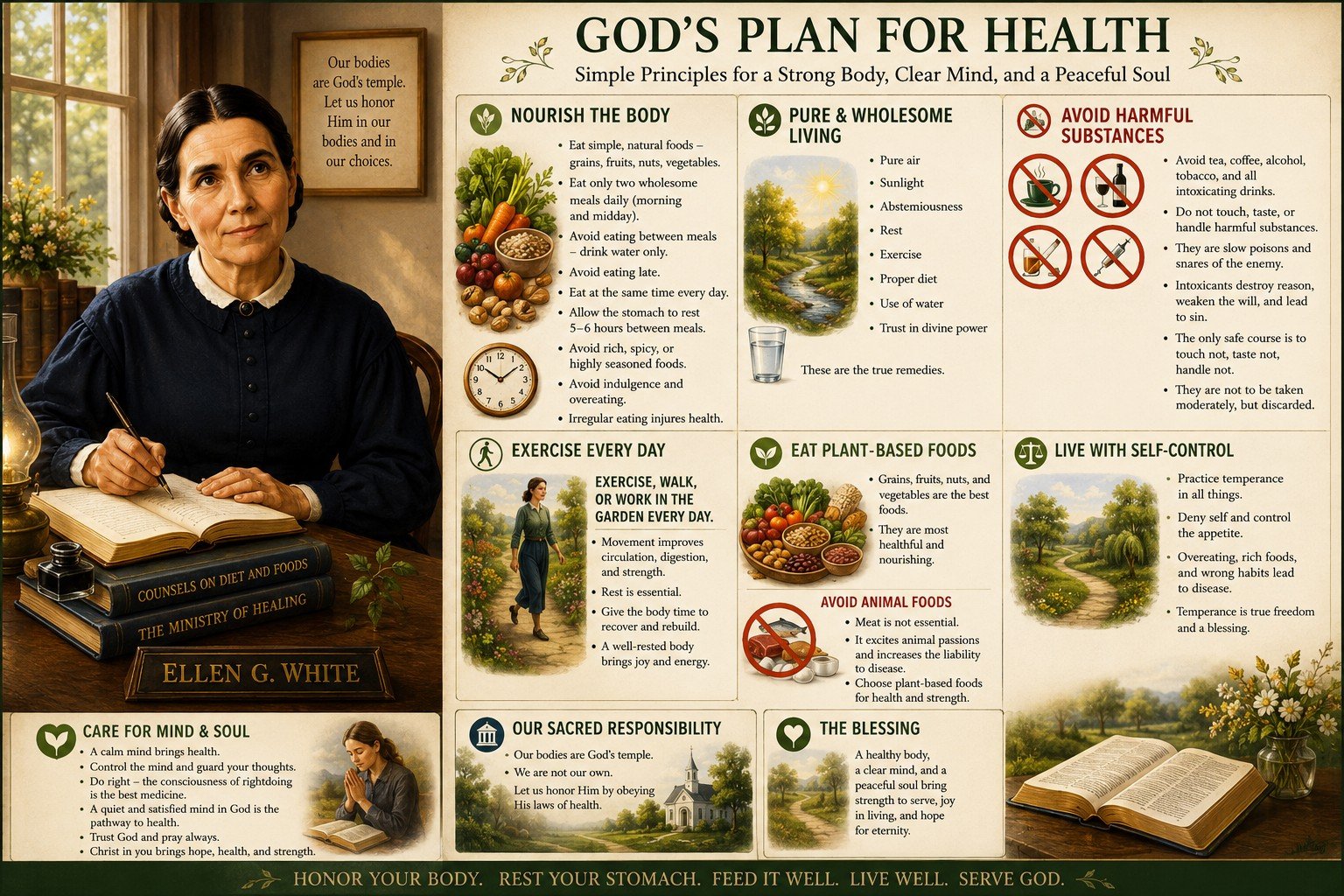
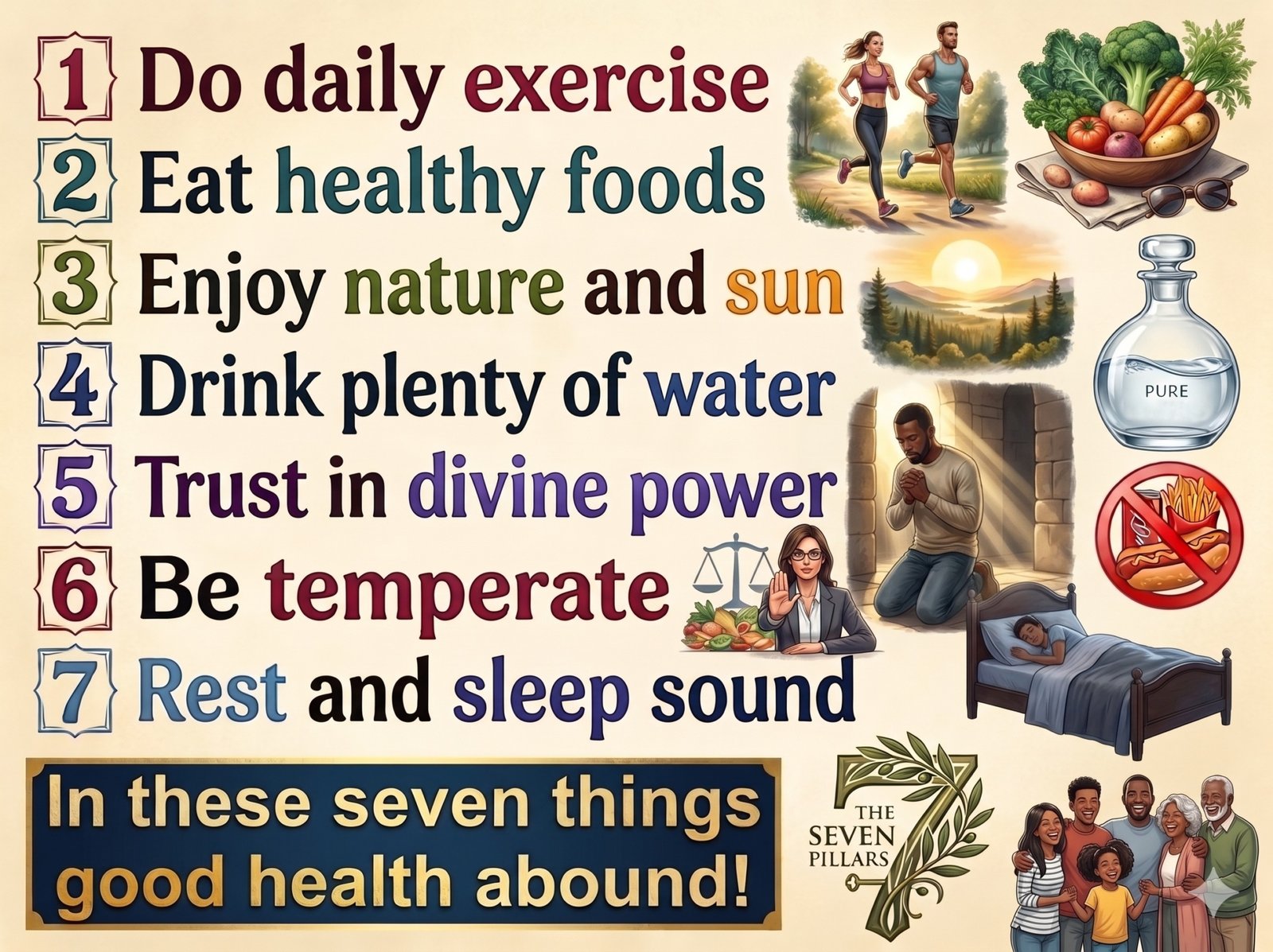
“Pure air, sunlight, abstemiousness, rest, exercise, proper diet, the use of water, trust in divine power—these are the true remedies.” The Ministry of Healing, p. 127
“The work of health reform is the Lord’s means for lessening suffering in our world and for purifying His church… This work bears the signature of heaven…” — Testimonies for the Church, Vol. 9, p. 112
“If the church would manifest a greater interest in the reforms through which God Himself is seeking to fit them for His coming, their influence would be far greater than it now is.” — Counsels on Health, p. 453
“The light which God has given upon health reform cannot be trifled with without injury to those who attempt it; and no man can hope to succeed in the work of God while, by precept and example, he acts in opposition to the light which God has sent.” — Counsels on Health, p. 562
“It is the Lord’s design that the restoring influence of health reform shall be a part of the last great effort to proclaim the gospel message.” Medical Ministry, p. 259
“The right hand is used to open doors through which the body may find entrance. This is the part the medical missionary work is to act.” Testimonies for the Church, Vol. 6, p. 293
“The medical missionary work is God’s means of lessening suffering in our world and of purifying His church. It is the right hand of the gospel.” Medical Ministry, p. 238
“Health reform is to be presented, and health institutions are to be established, in connection with the proclamation of the third angel’s message.” Counsels on Health, p. 516
“Medical missionary work brings to humanity the gospel of release from suffering. It is the pioneer work of the gospel.” Medical Ministry, p. 239
Divine Healing vs. Presumption
“In many cases of prayer for the healing of the sick, that which is called faith is nothing less than presumption. Many bring disease upon themselves by disregarding the laws of health. If God worked a miracle in restoring their health, He would be encouraging sin. It is labor lost to teach people to look to God as a healer unless they are taught also to lay aside unhealthy practices.” Counsels on Health, p. 373
“To those who desire prayer for their restoration to health, it should be made plain that the violation of God’s law, either natural or spiritual, is sin, and that in order for them to receive His blessing, sin must be confessed and forsaken.” The Ministry of Healing, p. 228
“Those who seek healing by prayer should not neglect to make use of the remedial agencies within their reach. It is not a denial of faith to use such remedies as God has provided to alleviate pain and to aid nature in her work of restoration.” — The Ministry of Healing, p. 231
“There are conditions to the fulfillment of God’s promises, and prayer can never take the place of duty.” — Christ’s Object Lessons, p. 143
“Many suffer in consequence of transgression. They have not followed the principles of health in eating, drinking, or dressing. Others have disregarded the laws of life by their habits of eating and working, and the result is a violation of the laws of life. Repentance alone will not cure them. God requires them to cease doing evil and learn to do well.” — Counsels on Health, p. 37
“The Lord does not work a miracle to preserve persons in health who are taking a sure course to make themselves sick, by their careless inattention to the laws of health.” — Counsels on Health, p. 504
“God will not work a miracle to keep those from sickness who have no care for themselves, but are continually violating the laws of health and make no efforts to prevent disease.” Medical Ministry, 13
“Those who persist in transgression, and yet seek health through prayer, insult their Creator.” — Counsels on Health, p. 504
“We cannot expect the Lord to work a miracle to restore us to health while we continually violate the laws of health.” — Healthful Living, p. 18
“Prayer is not intended to take the place of effort. We are to cooperate with God in caring for the body He has given us.” — Counsels on Health, adapted from pp. 90–91
“God will not interpose to preserve from the effects of the violation of nature’s laws those who are indulging appetite, gratifying selfish desires, and abusing their physical, mental, and moral powers.” — Patriarchs and Prophets, p. 562
Prayer & Health
“The Savior was a tireless worker, and His life was full of activity. Yet He spent much time in prayer. He communed with His Father, receiving fresh supplies of grace and strength. He would often go away into a solitary place, and spend the entire night in prayer to God. After these seasons of communion, He would return to His labor with a fresh supply of strength and energy, prepared to meet the trials and temptations of the day.” Medical Ministry, page 192

“Prayer is the breath of the soul. It is the secret of spiritual power. No other means of grace can be substituted, and the health of the soul be preserved. Prayer brings the heart into immediate contact with the Well-spring of life, and strengthens the sinew and muscle of the religious experience.” — Gospel Workers, p. 254
“When Christ is in the heart it will be noticeable; you will be full of joy, and your physical, mental, and spiritual health will be improved. Christ will be the strength of your life, and the peace of God will keep your hearts and minds.” — The Review and Herald, June 21, 1892
“A calm, trustful spirit in God is conducive to health of body and clarity of mind. Let the soul rest in God. Let the prayers go up to Him in faith, and the peace that passeth all understanding will sustain you in physical, mental, and spiritual vigor.” — Counsel on Health, p. 362
“Morning and evening our hearts should ascend to God in earnest prayer for His blessing. The Lord is a tower of strength to His people, and He will grant them physical strength and mental vigor in response to the prayer of faith.” — Testimonies for the Church, Vol. 4, p. 559
False Healings Through Satanic Power
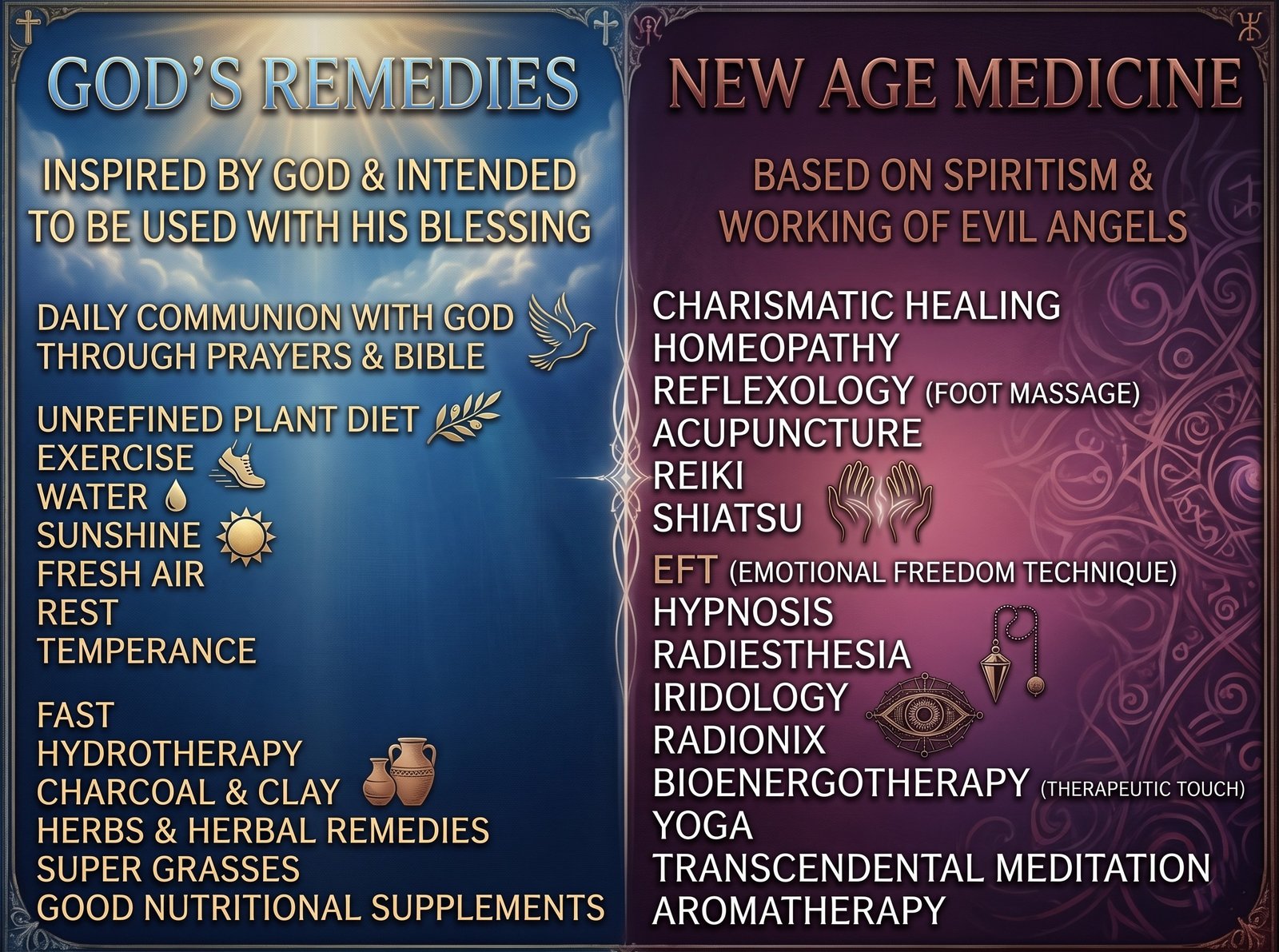
Read About New Age Medicine
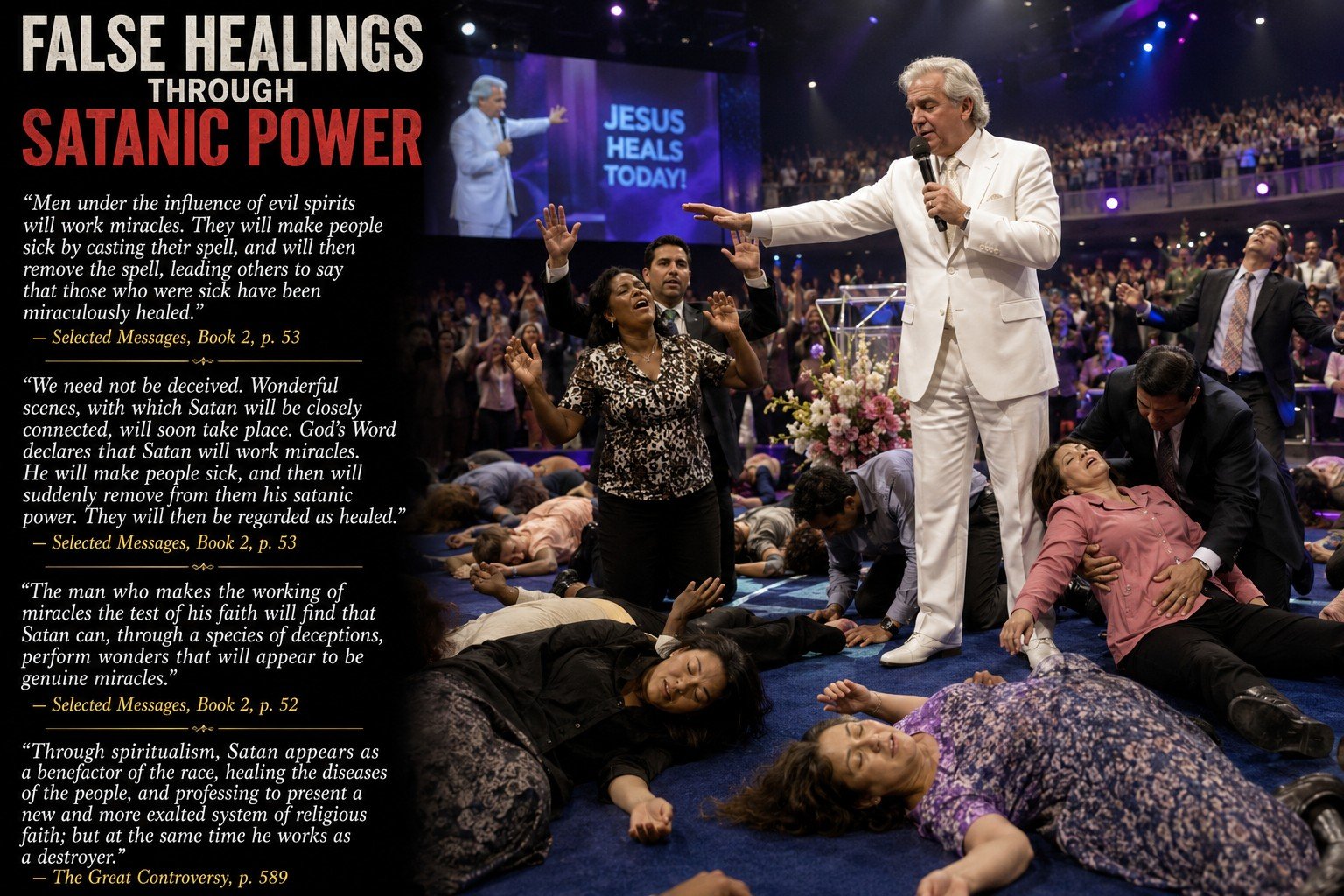
“Men under the influence of evil spirits will work miracles. They will make people sick by casting their spell, and will then remove the spell, leading others to say that those who were sick have been miraculously healed.” — Selected Messages, Book 2, p. 53
“We need not be deceived. Wonderful scenes, with which Satan will be closely connected, will soon take place. God’s Word declares that Satan will work miracles. He will make people sick, and then will suddenly remove from them his satanic power. They will then be regarded as healed.” — Selected Messages, Book 2, p. 53
“God’s servants today could not work by means of miracles, because spurious works of healing, claiming to be divine, will be wrought. The sick will be healed before us. Miracles will be performed in our sight. Are we prepared for the trial which awaits us when the lying wonders of Satan shall be more fully exhibited?” Questions and Answers About Miracles and the End of Time – Elder’s Digest, 2001 Fourth Quarter
Truth About Homeopathy
“So closely will the counterfeit resemble the true that it will be impossible to distinguish between them except by the Holy Scriptures. By their testimony every statement and every miracle must be tested.” The Great Controversy, p. 593
“The man who makes the working of miracles the test of his faith will find that Satan can, through a species of deceptions, perform wonders that will appear to be genuine miracles.” — Selected Messages, Book 2, p. 52
“Through spiritualism, Satan appears as a benefactor of the race, healing the diseases of the people, and professing to present a new and more exalted system of religious faith; but at the same time he works as a destroyer.” — The Great Controversy, p. 589
“Cut away from yourselves everything that savors of hypnotism, the science by which satanic agencies work.” Selected Messages, book 2, p. 350
Is Charismatic Movement In Evangelical And Catholic Church From God?
God’s Healing
“God’s miracles do not always bear the outward semblance of miracles. Often they are brought about in a way which looks like the natural course of events. When we pray for the sick, we also work for them. We answer our own prayers by using the remedies within our reach… Natural means, used in accordance with God’s will, bring about supernatural results.” Ellen G. White Comments, The Seventh-day Adventist Bible Commentary, vol. 7, 938, 939
“To those who desire prayer for their restoration to health, it should be made plain that the violation of God’s law, either natural or spiritual, is sin, and that in order for them to receive His blessing, sin must be confessed and forsaken.” The Ministry of Healing, p. 228
“God will not work a miracle to keep those from sickness who have no care for themselves, but are continually violating the laws of health and make no efforts to prevent disease.” Medical Ministry, 13
“The Lord’s promise, ‘They shall lay hands on the sick, and they shall recover’ (Mark 16:18) is just as trustworthy now as in the days of the apostles. It presents the privilege of God’s children, and our faith should lay hold of all that it embraces.” The Ministry of Healing, p. 226
“God’s servants today could not work by means of miracles, because spurious works of healing, claiming to be divine, will be wrought. The sick will be healed before us. Miracles will be performed in our sight. Are we prepared for the trial which awaits us when the lying wonders of Satan shall be more fully exhibited?” Questions and Answers About Miracles and the End of Time – Elder’s Digest, 2001 Fourth Quarter
“I was thinking that it was my last speech. All at once, I felt a power come upon me, like a shock of electricity. It passed through my body and up to my head. The people said that they plainly saw the blood mounting to my lips, ears, cheeks, and forehead. Before that large number of people, I was healed, and the praise of God was in my heart and came from my lips in clear tones. A miracle was wrought before that large congregation. I then took my place among the speakers, and bore a testimony such as they had never heard. It was as if one had been raised from the dead.” The Review and Herald, August 19, 1909
“After I had anointed her with oil we prayed over her, and she was healed every whit and fell prostrate by the power of God.” — about Sister Meade, Pastoral Ministry, p. 247
“Brother Baker was healed and he glorified God with a loud voice; he had a baptism of the Holy Ghost.” — Letter 8, 1851
“The brethren prayed over me and I was healed and taken off in vision.” — Letter 8, 1851
“I was healed in answer to prayer, else I should not have been alive today.” — Manuscript Releases, vol. 5, p. 402
“We prayed for him. I laid my hands on his head, and said, ‘Father Andrews, the Lord Jesus maketh thee whole.’ He was healed instantly.” — Selected Messages, Book 1, also cited in The Position of ‘The Bible, and the Bible Only’
“No human power can save the sick, but, through the prayer of faith, the Mighty Healer has fulfilled His promise…” — Manuscript Releases, vol. 8, p. 268
“Sister White has never claimed to heal the sick. It is Christ who has healed in every instance…” — Manuscript Releases, vol. 8, p. 269

Influence of Faith and Mindset on Health
“Many are suffering from ailments of the soul far more than from diseases of the body, and will find no relief until they shall come to Christ.” The Desire of Ages, p. 824
„Few realize the power that the mind has over the body. A great deal of the sickness which afflicts humanity has its origin in the mind and can only be cured by restoring the mind to health… The mind needs to be controlled, for it has the most powerful influence upon the health. The imagination often brings severe forms of disease. Many die of diseases which are mostly imaginary. They bring upon themselves actual disease by the influence of the imagination… Thousands are sick and dying around us who might get well and live if they would, but their imagination holds them. They fear that they will be made worse if they labor or exercise, when this is just the change they need to make them well. Without this they never can improve. They should exercise the power of the will, engage in useful employment, and forget that they have aching backs, joints, or heads.” Mind, Character and Personality
„If your mind is convinced that a bath will injure you, the mental impression is communicated to all the nerves of the body. The nerves control the circulation of the blood, and the good effects of the bath are lost. All this happens because the blood is prevented by the mind and will from flowing readily and from coming to stimulate and promote the circulation.”
“It is the will of God that each one of us should rest in the fullness of His love and have a constant assurance of our acceptance with Him. We should not walk in darkness or doubt, wondering if we are truly children of God. His promises are sure, and we may take Him at His word, rejoicing always in the certainty of His grace.” The Signs of the Times, January 2, 1893
“A person whose mind is quiet and satisfied in God is in the pathway to health.” Testimonies for the Church,Fcoffee Vol. 1, p. 566
“Christ in them the hope of glory will be health to the body and strength to the soul.” Testimonies for the Church, Vol. 1, p. 566
“The mind needs to be controlled, for the imagination often brings severe forms of disease.” Testimonies for the Church, Vol. 1, p. 702

“Grief, anxiety, discontent, remorse, guilt, distrust, all tend to break down the life forces and to invite decay and death. Courage, hope, faith, sympathy, love, promote health and prolong life. A contented mind, a cheerful spirit, is health to the body and strength to the soul.” The Ministry of Healing, p. 241
“The consciousness of rightdoing is the best medicine for diseased bodies and minds. To have a consciousness that the eyes of the Lord are upon us and His ears open to our prayers is a satisfaction indeed. To know that we have a never-failing Friend is a privilege which words can never express.” Testimonies for the Church, Vol. 1, p. 502
“Sympathy and a desire to do good to others bring a satisfaction that sends a warm thrill through the whole system, quickening the blood and giving tone to physical and mental health.” Counsels on Health, p. 627
Sunshine – God’s Healing Remedy
Long before scientists discovered vitamin D and began to understand its importance for immunity, bone health, mood, muscle function, and disease prevention, Ellen G. White repeatedly emphasized the health benefits of sunshine. Writing in the nineteenth century, she described sunlight as one of God’s great natural remedies, essential for maintaining health and recovering from disease.
Today, modern research confirms that regular exposure to sunlight helps the body produce vitamin D, supports the immune system, strengthens bones, improves mood, regulates sleep, and contributes to overall well-being. Remarkably, more than a century earlier, Ellen White was already encouraging people to seek abundant sunlight and warning against depriving themselves of its blessings.

“This is one of nature’s most healing agencies. It is a very simple remedy to sit or lie in the sunshine…” The Ministry of Healing, p. 275.
“The sick should be educated to have confidence in nature’s great blessings which God has provided; and the most effective remedies for disease are pure soft water, the blessed God-given sunshine…” Medical Ministry, p. 223.
“Nature is God’s physician. The pure air, the glad sunshine… are health-giving, life-giving.” The Ministry of Healing, p. 263.
“Go out into the light and warmth of the glorious sun, you pale and sickly ones, and share with vegetation its life-giving, health-dealing power.” The Ministry of Healing, p. 275.
“Exercise, and a free and abundant use of the air and sunlight, … would give life and strength to the emaciated.” Testimonies for the Church, Vol. 2, p. 531.
“There are but few who realize that, in order to enjoy health and cheerfulness, they must have an abundance of sunlight, pure air, and physical exercise.” The Health Reformer, April 1871.
“Perfect cleanliness, plenty of sunlight, careful attention to sanitation in every detail of the home life, are essential to freedom from disease and to the cheerfulness and vigor of the inmates of the home.” The Ministry of Healing, p. 276.
“The sunlight is a blessing. Let all enjoy as much of it as possible.” Testimonies for the Church, Vol. 2, p. 527.
“Pure air, sunlight, abstemiousness, rest, exercise, proper diet, the use of water, trust in divine power—these are the true remedies.” The Ministry of Healing, p. 127.
“Let your judgment be convinced that exercise, sunlight, and air are the blessings which Heaven has provided to make the sick well and to keep in health those who are not sick.” Testimonies for the Church, Vol. 2, p. 527.
“In the building of houses it is especially important to secure thorough ventilation and plenty of sunlight.” The Ministry of Healing, p. 274.
“The rooms occupied by the sick should, if possible, have the sunlight shining into them during some portion of every day.” The Ministry of Healing, p. 274.
“Those who have the aged to provide for should remember that these especially need warm, comfortable rooms and plenty of sunlight.” The Ministry of Healing, p. 275.
“Do not close your blinds and have your windows draped with one or two curtains to shut out the beautiful sun that bears health and cheerfulness in its bright beams.” The Health Reformer, April 1871.

DO PROPER EXPOSURES TO THE SUN CONTRIBUTE TO SKIN CANCER?
Unfortunately, public health warnings about skin cancer have caused a rise in Vitamin D deficiency through lack of sunlight. For a very long time scientists as well as medical professionals and NHS brainwashed people suggesting that sun can cause skin cancer. In this way they effectively scared majority of people out of the sun which resulted in the widespread and huge vitamin D deficiency. The truth, however is that only an unwise and prolonged sunbaths can probably contribute to the development of a skin cancer, especially in those who often use stimulants and whose diet includes a lot of animal and refined products. The sun, if used properly, always was and still is a healing agent for our body and not something to be avoided. Avoiding sun is much more harmful than prolonged sun exposures.
Contrary to what media and sunscreen makers dictate, there is a decrease in the rates of malignant melanoma among people who live in regions of strong UVB exposure! There are almost one thousand references in the medical literature demonstrating the effectiveness of vitamin D – in both preventing and treating cancer. Sunscreens, on the other hand, contribute to cancer because they contain carcinogens and because they do not allow sun to make vitamin D which fights with cancer.
According to Marco Torres, “The sunscreen industry makes money by selling products that actually contain cancer-causing chemicals. It then donates a portion of that money to the cancer industry through non-profit groups like Cancer Societies which, in turn, run heart-breaking public service ads and charity events urging people to donate and use sunscreen to prevent cancer.” (January 20, 2015, Waking Times)

Sunlight, Modern Science, and Ellen White – Dr. Roger Seheult (VIDEO)
Besides, it is not UVB but UVA which is responsible for causing cancerous mutations that may lead to malignant melanoma (skin cancer). UVA can also break down the vitamin D formed in our skin as a result of outdoor UVB exposure. The fact is however, that skin cancer has been increasing even among the indoor workers simply because unlike UVB, UVA is able to pass through glass. On the other hand, according to the current scientific research, vitamin D3 (which we should have mostly from the sun exposure), is regarded as one of the most effective factors protecting us against cancer including melanoma.
Depending on the portion of body parts exposed, the color of your skin and the strength of the UV rays, the duration of sunlight that you should allow your skin to receive is different. People should ideally seek to receive 10,000 to 20,000 IU of D3 from sun exposure assuming 60% of the body is exposed to the sun.
Intentionally sun bath no less than 3 times per week according to the following recommendations based on your skin color.
- Light skin = 15-20 minutes daily
- Medium Skin = 25-30 minutes daily
- Dark Skin = 40-45 minutes daily
To prevent possible carcinogenic activity in your skin before and after sun exposure, use moisturizers like coconut oil and aloe vera gel.
Read: How Vitamin D Stops Cancer Stem Cells
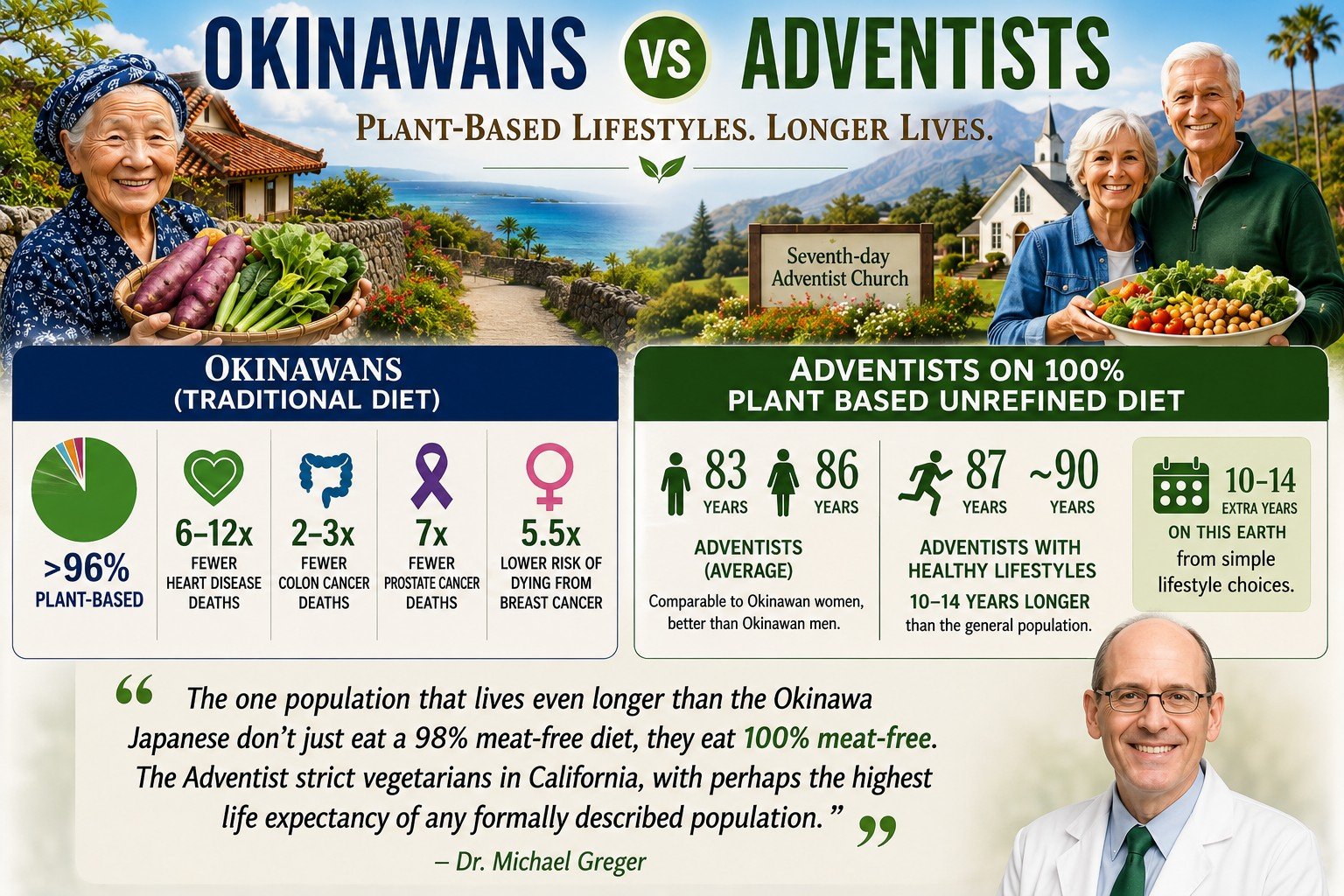
Read About Okinawans vs Adventists
“If Seventh-day Adventists practiced what they professed to believe, if they were sincere health reformers, they would indeed be a spectacle to the world, to angels, and to men.” Counsels on Health, p. 575, May, 1902
Sabbath Rest and Health
“In giving the Sabbath, God considered man’s spiritual and physical health.” — Testimonies to Ministers, p. 136.
“The Sabbath is not intended to be a period of useless inactivity… man is to leave the occupations of his daily life, and devote those sacred hours to healthful rest, to worship, and to holy deeds.” — The Desire of Ages, p. 207.
“The Sabbath calls our thoughts to nature, and brings us into communion with the Creator.” — The Desire of Ages, p. 281.
“The Sabbath points them to the works of creation… it tells of peace restored through the Saviour.” — The Desire of Ages, pp. 288–289.
“Great blessings are enfolded in the observance of the Sabbath, and God desires that the Sabbath day shall be to us a day of joy.” — Testimonies for the Church, vol. 6, p. 349.
Research on Sabbath as a holistic health practice reported that Sabbath observance promoted transformation, renewal, and wellbeing, especially as intentional weekly rest.
Research specifically on Sabbath keeping found positive links with health and wellbeing. A Loma Linda University–linked study, Sabbath Keeping and Its Relationships to Health and Well-Being, examined Sabbath keeping as a specific religious practice and its relationship to physical and mental health.
Andrews University research also examined Sabbath-keeping experiences, need satisfaction, and overall wellbeing among Seventh-day Adventist church members.
Read About Sabbath Keeping Bees And Sabbath Instinct

Diet and Nutrition
“Grains, fruits, nuts, and vegetables constitute the diet chosen for us by our Creator. These foods, prepared in as simple and natural a manner as possible, are the most healthful and nourishing.” The Ministry of Healing, p. 296
“Many are suffering, and many are going into the grave, because of the indulgence of appetite. They eat what suits their perverted taste, thus weakening the digestive organs and injuring their power to assimilate the food that is to sustain life.” Testimonies for the Church, Vol. 9, p. 112
“Those who are in a position where it is possible to secure a vegetarian diet, but who choose to follow their own preferences… will gradually grow careless of the instruction the Lord has given regarding other phases of the present truth and lose their perception of what is truth.” — General Conference Bulletin, June 2, 1909
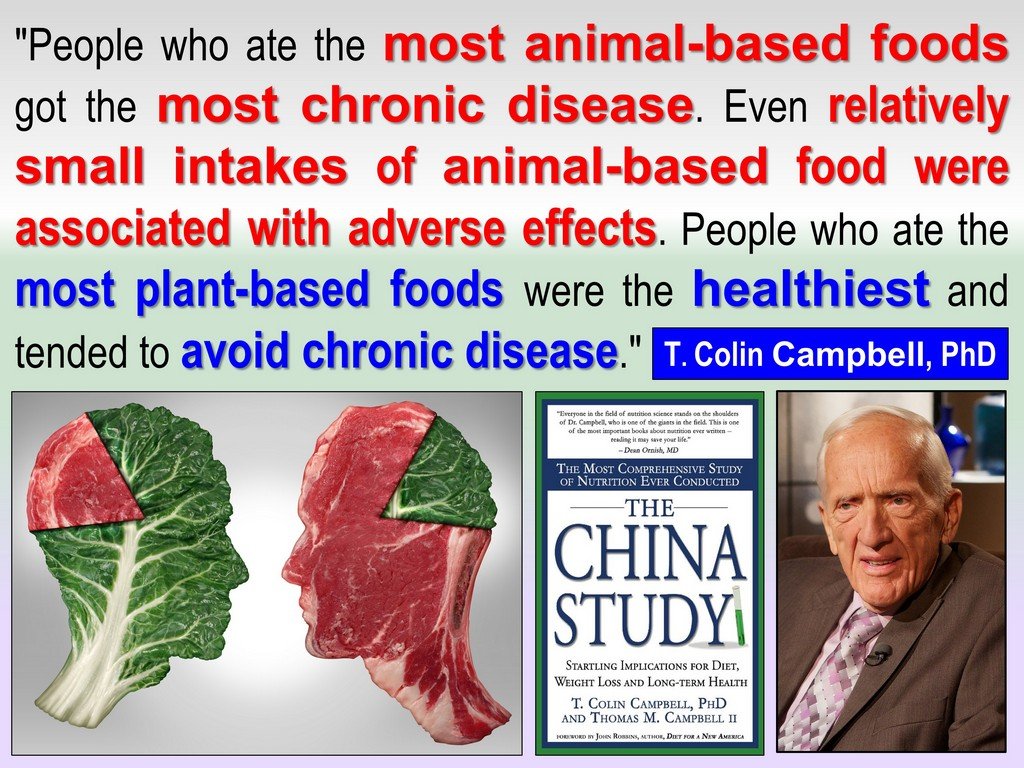
Two Meals a Day Instead of Three
“Our plain food, eaten twice a day, is enjoyed with a keen relish. We have no meat, cake, or any rich food upon our table… We breakfast at seven, and take our dinner at one…I have within eight months lost twenty-five pound of flesh. I am better without it. I have more strength than I have realized for years.” Ellen G. White, Spiritual Gifts, 1864, Vol. 4, p. 154
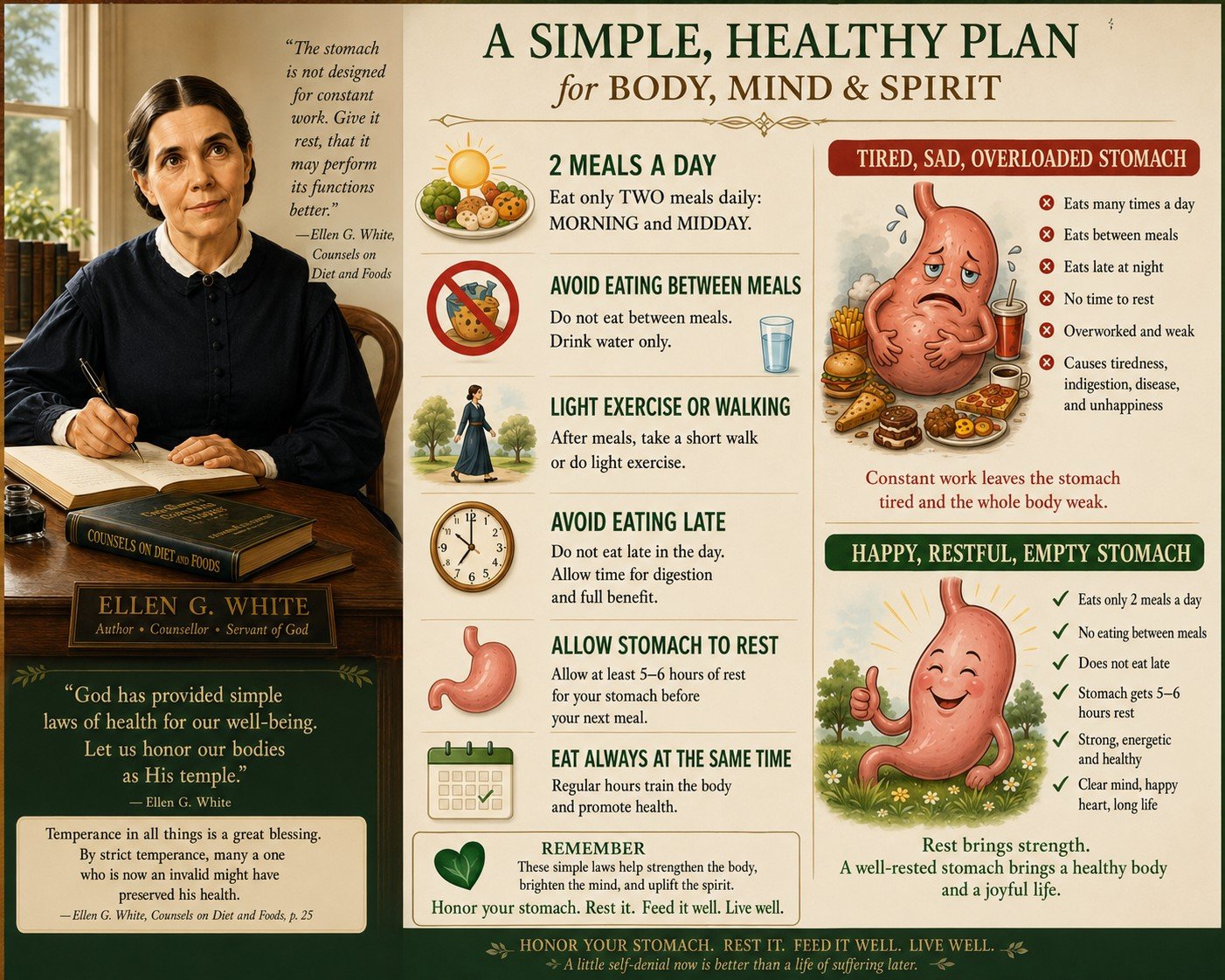
“In many cases the faintness that leads to a desire for food is felt because the digestive organs have been too severely taxed during the day. After disposing of one meal, the digestive organs need rest. At least five or six hours should intervene between the meals; and most persons who give the plan a trial, will find that two meals a day are better than three.” The Ministry of Healing, p. 304, 1905
“It is quite a common custom with people of the world to eat three times a day, besides eating at irregular intervals between meals; and the last meal is generally the most hearty, and is often taken just before retiring. This is reversing the natural order; a hearty meal should never be taken so late in the day. Should these persons change their practice, and eat but two meals a day, and nothing between meals, not even an apple, a nut, or any kind of fruit, the result would be seen in a good appetite and greatly improved health.” The Review and Herald, July 29, 1884 Counsels on Diet and Foods, p. 181
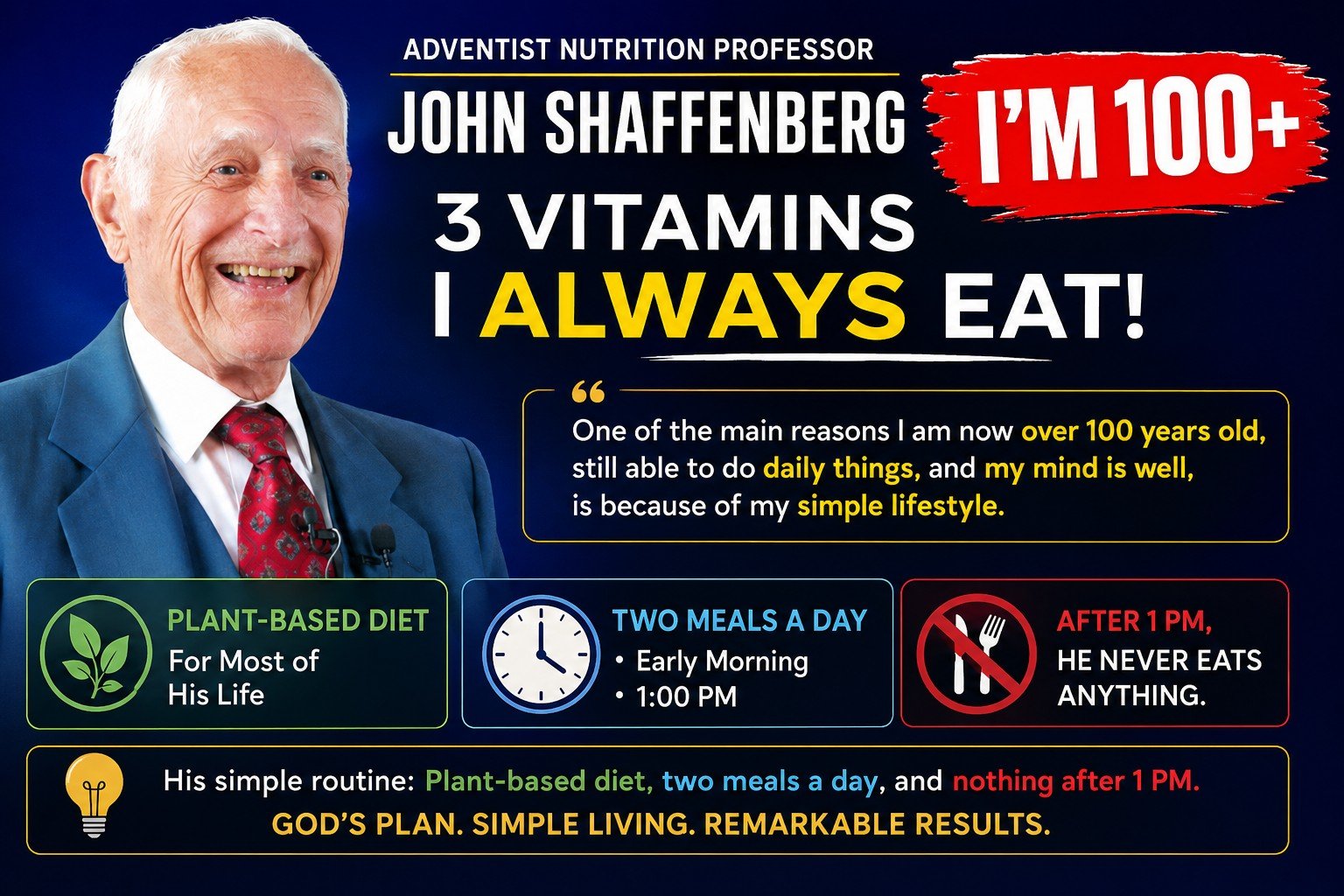
In 1990 I had the privilege of participating in a nutritional training program which took place in New York. It was conducted by John A. Scharffenberg, M.D., MPH, Professor of Nutrition at Loma Linda University.
Even then, Dr. Scharffenberg impressed people not only with his knowledge, but also with his energy, clarity of mind, physical fitness, and practical lifestyle. Now, 36 yeears later, after reaching more than 100 years of age, he still remains mentally sharp, physically active, independent, and able to lecture and perform daily activities.
As a lifelong member of the Seventh-day Adventist Church, his diet and lifestyle were strongly influenced by the health principles promoted in the writings of Ellen G. White. Dr. Scharffenberg has repeatedly emphasized that one of the major reasons for his exceptional health and longevity — besides, regular prayers, studying the Bible, attending Church, regular exercise and a plant-based diet — has been his lifelong habit of eating only two meals a day.
For most of his life he ate breakfast early in the morning and the second meal around 1 PM. After that, he did not eat anything else for the rest of the day and avoided snacking between meals.
This practice closely reflects Ellen White’s counsels written more than a century ago: “Our plain food, eaten twice a day, is enjoyed with a keen relish. We have no meat, cake, or any rich food upon our table… We breakfast at seven, and take our dinner at one…I have within eight months lost twenty-five pound of flesh. I am better without it. I have more strength than I have realized for years.” Ellen G. White, Spiritual Gifts, 1864, Vol. 4, p. 154
For many Adventists, the life of Professor Scharffenberg provides a remarkable practical example that implementing these inspired principles of healthful living — regularity in eating, avoiding late meals, exercise, temperance, and a simple plant-based diet — may contribute greatly to physical health, mental clarity, vitality, and longevity.
Fasting
Ellen White explains: “Their faith must be strengthened by fervent prayer and fasting, and humiliation of heart. They must be emptied of self, and be filled with the Spirit and power of God.” Ellen G. White, The Desire of Ages, p. 431.
“In many cases of sickness, the very best remedy is for the patient to fast for a meal or two, that the overworked organs of digestion may have an opportunity to rest.” — The Ministry of Healing, p. 235.
“Many times a short period of entire abstinence from food, followed by simple, moderate eating, has led to recovery through nature’s own recuperative effort.” — The Ministry of Healing, p. 235.
“For certain things fasting and prayer are recommended and appropriate. In the hand of God they are a means of cleansing the heart and promoting a receptive frame of mind. We obtain answers to our prayers because we humble our souls before God.” — Medical Ministry, p. 283.
“With heart-searching, confession of sin, and earnest prayer, and often fasting for a time, they should entreat that God would especially help them.” — Testimonies for the Church, vol. 1, p. 624.
“They should set aside days for fasting and prayer. Entire abstinence from food may not be required, but they should eat sparingly of the most simple food.” — The Review and Herald, February 11, 1904; Counsels on Diet and Foods, p. 188.
“Often we fasted, that we might be better fitted to understand the truth.” — The Review and Herald, July 26, 1892; Counsels on Diet and Foods, p. 187.
“The true fasting which should be recommended to all, is abstinence from every stimulating kind of food, and the proper use of wholesome simple food, which God has provided in abundance.” — Medical Ministry, p. 283.
Eating Between Meals and Irregularity
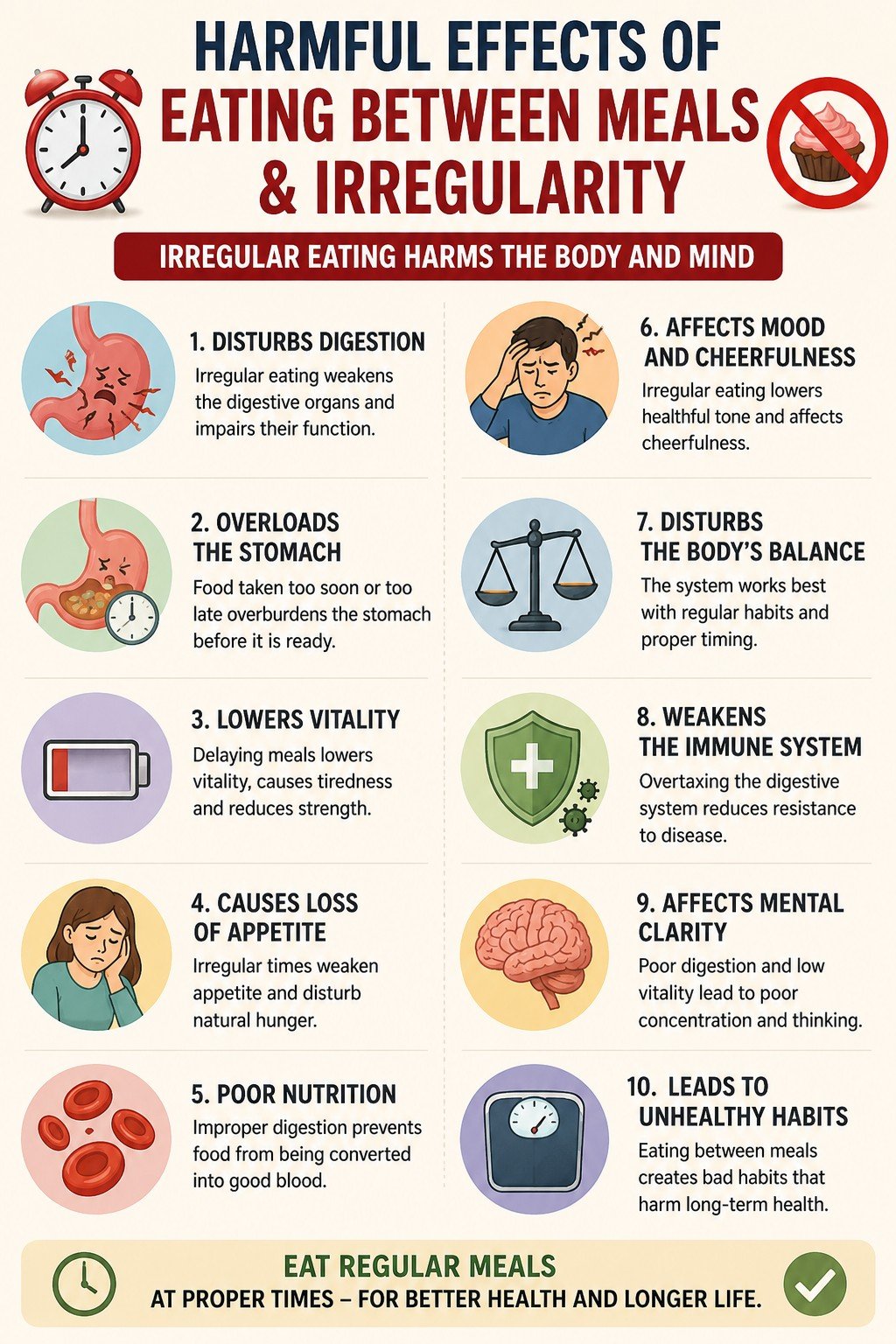
“Irregularity in eating destroys the healthful tone of the digestive organs, to the detriment of health and cheerfulness.” The Ministry of Healing, p. 304
“There should be a specified time for each meal. At this time, let everyone eat what the system requires, and then take nothing more until the next meal. There are many who eat when the system needs no food, at irregular intervals, and between meals, because they have not sufficient strength of will to resist inclination.” The Ministry of Healing, pp. 303, 304
“In no case should the meals be irregular. If dinner is eaten an hour or two before the usual time, the stomach is unprepared for the new burden; for it has not yet disposed of the food eaten at the previous meal, and has not vital force for new work. Thus the system is overtaxed. Neither should the meals be delayed one or two hours, to suit circumstances. The stomach calls for food at the time it is accustomed to receive it. If that time is delayed, the vitality of the system decreases, and finally reaches so low an ebb that the appetite is entirely gone. If food is then taken, the stomach is unable to properly care for it. The food cannot be converted into good blood.” Counsels on Diet and Foods, p. 179
“I am astonished to learn that, after all the light that has been given in this place, many of you eat between meals! You should never let a morsel pass your lips between your regular meals. Eat what you ought, but eat it at one meal, and then wait until the next.” Testimonies for the Church, Vol. 2, p. 373, 1869
Eating Before Bed and Late Suppers
“For persons of sedentary habits, late suppers are particularly harmful. With them the disturbance created is often the beginning of disease that ends in death.” Counsels on Diet and Foods, p. 173
“Many indulge in the pernicious habit of eating just before sleeping hours. They may have taken three regular meals; yet because they feel a sense of faintness, as though hungry, will eat a lunch or fourth meal. By indulging this wrong practice, it has become a habit, and they feel as though they could not sleep without taking a lunch before retiring. In many cases, the cause of this faintness is because the digestive organs have been already too severely taxed through the day in disposing of unwholesome food forced upon the stomach too frequently, and in too great quantities. The digestive organs thus taxed become weary, and need a period of entire rest from labor to recover their exhausted energies.” Counsels on Diet and Foods, p. 174
“With many, the poor, tired stomach may complain of weariness in vain. More food is forced upon it, which sets the digestive organs in motion, again to perform the same round of labor through the sleeping hours. The sleep of such is generally disturbed with unpleasant dreams, and in the morning they awake unrefreshed.” How to Live, Vol. 1, pp. 55-57, 1865 Counsels on Diet and Foods, p. 174
“The stomach, when we lie down to rest, should have its work all done, that it may enjoy rest. The work of digestion should not be carried on through any period of the sleeping hours. After the stomach, which has been overtaxed, has performed its task, it becomes exhausted, which causes faintness. Here many are deceived, and think that it is the want of food which produces such feelings, and without giving the stomach time to rest, they take more food, which for the time removes the faintness. And the more the appetite is indulged, the more will be its clamors for gratification….The remedy such require, is to eat less frequently and less liberally, and be satisfied with plain, simple food, eating twice, or, at most, three times a day. The stomach must have its regular periods for labor and rest; hence eating irregularly and between meals, is a most pernicious violation of the laws of health. With regular habits, and proper food, the stomach will gradually recover.” Counsels on Diet and Foods, p. 175
Avoiding Meat
“When meat was discarded, a variety of cakes, puddings, and pies took its place. This was not correct. … I suffered keen hunger. I had been a great meat eater. But when faint, I placed my arms across my stomach, and said: ‘I will not taste a morsel. I will eat simple food or I will not eat at all.’ Bread was distasteful to me. I rarely could eat a small piece. I could relish some kinds of fruit, but very little food.” — Counsels on Diet and Foods, p. 482
“I battled with my poor stomach, and would not yield to its clamors. I said to my stomach: ‘You may wait until you can eat bread.’” — Manuscript Releases, Vol. 12, p. 286
“Meat is not essential for health or strength. . . . Its use excites the animal passions to intense activity and strengthens the lower propensities. When the animal propensities are increased, the intellectual and moral powers are decreased.” — Counsels on Diet and Foods, p. 396
“The liability to take disease is increased tenfold by meat eating.” — Testimonies for the Church, Vol. 2, p. 64
“Those who use flesh foods little know what they are eating. Often if they could see the animals when living and know the quality of the meat they eat, they would turn from it with loathing. People are continually eating flesh that is filled with tuberculosis and cancerous germs. Tuberculosis, cancer, and other fatal diseases are thus communicated.” — The Ministry of Healing, p. 313
“Flesh food is injurious to health, and whatever affects the body has a corresponding effect on the mind and the soul.” — The Ministry of Healing, p. 315
“Is it not time that all should aim to dispense with flesh foods? How can those who are seeking to become pure, refined, and holy, that they may have the companionship of heavenly angels, continue to use as food anything that has so harmful an effect on soul and body?” — The Ministry of Healing, p. 317
“Among those who are waiting for the coming of the Lord, meat eating will eventually be done away; flesh will cease to form a part of their diet.” — Counsels on Diet and Foods, p. 380
“I cannot think that in the practice of flesh eating we are in harmony with the light which God has been pleased to give us.” — Counsels on Diet and Foods, p. 380
“Let not any of our ministers set an evil example in the eating of flesh meat. Let them and their families live up to the light of health reform. Let not our ministers animalize their own nature and the nature of their children.” — Counsels on Diet and Foods, p. 399
“Will any who are ministers of the gospel, proclaiming the most solemn truth ever given to mortals, set an example in returning to the flesh-pots of Egypt?” — Counsels on Diet and Foods, p. 399
“It is just as much sin to violate the laws of our being as to break one of the ten commandments.” — Testimonies for the Church, Vol. 2, p. 70
Read: The Truth About Meat

Discarding Eggs, Milk, Cheese, and Butter
“Let the diet reform be progressive. Let the people be taught how to prepare food without the use of milk or butter. Tell them that the time will soon come when there will be no safety in using eggs, milk, cream, or butter, because disease in animals is increasing in proportion to the increase of wickedness among men.” — Counsels on Diet and Foods, p. 356
“The light given me is that it will not be very long before we shall have to give up using any animal food. Even milk will have to be discarded.” — Counsels on Diet and Foods, p. 357 (m.egwwritings.org)
“As disease in animals increases, the use of milk and eggs will become more and more unsafe.” — The Ministry of Healing, p. 320 (m.egwwritings.org)
“Disease is accumulating rapidly among animals, and the time will soon come when animal food will be discarded by many besides Seventh-day Adventists.” — Counsels on Diet and Foods, p. 357 (m.egwwritings.org)
“The Lord will teach His people how to prepare food without the use of milk and butter. God will give His people ability and tact to prepare wholesome recipes.” — Counsels on Diet and Foods, p. 357 (m.egwwritings.org)
“Cheese should never be introduced into the stomach.” — Counsels on Diet and Foods, p. 368 (m.egwwritings.org)
“Butter is less harmful when eaten on cold bread than when used in cooking; but, as a rule, it is better to dispense with it altogether.” — The Ministry of Healing, p. 302 (m.egwwritings.org)
Read More About Dairy
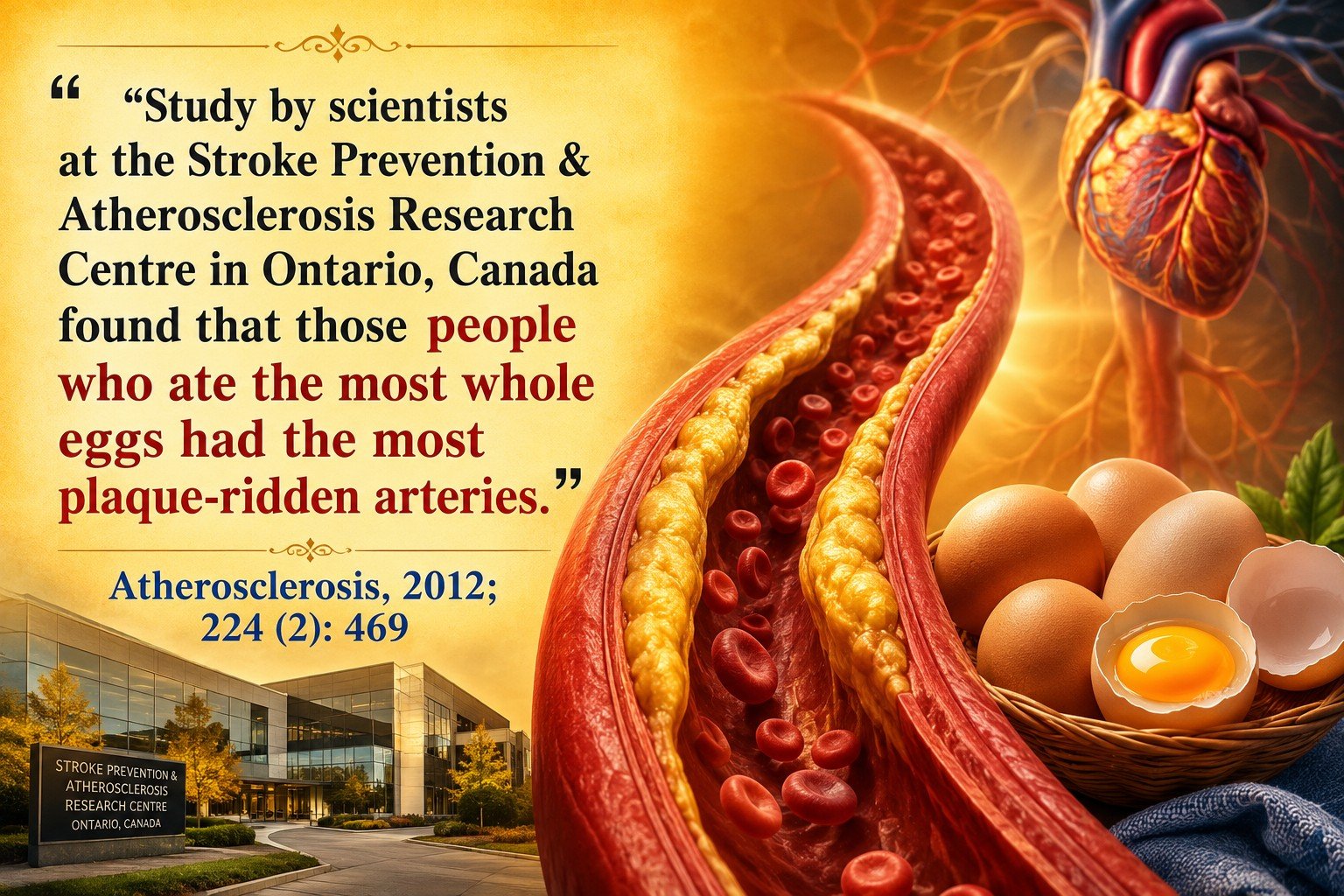
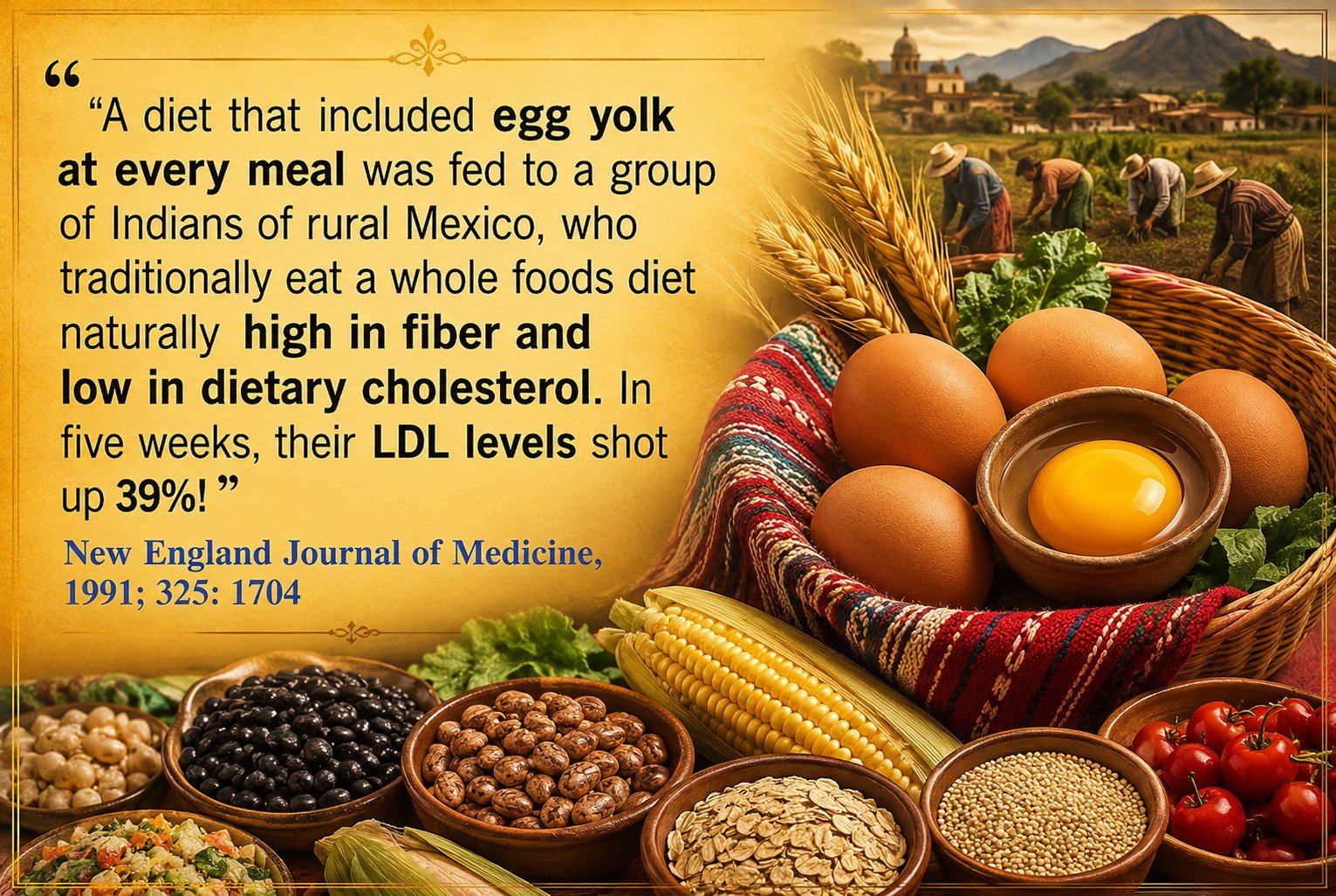
Truth About Eggs & Cholesterol
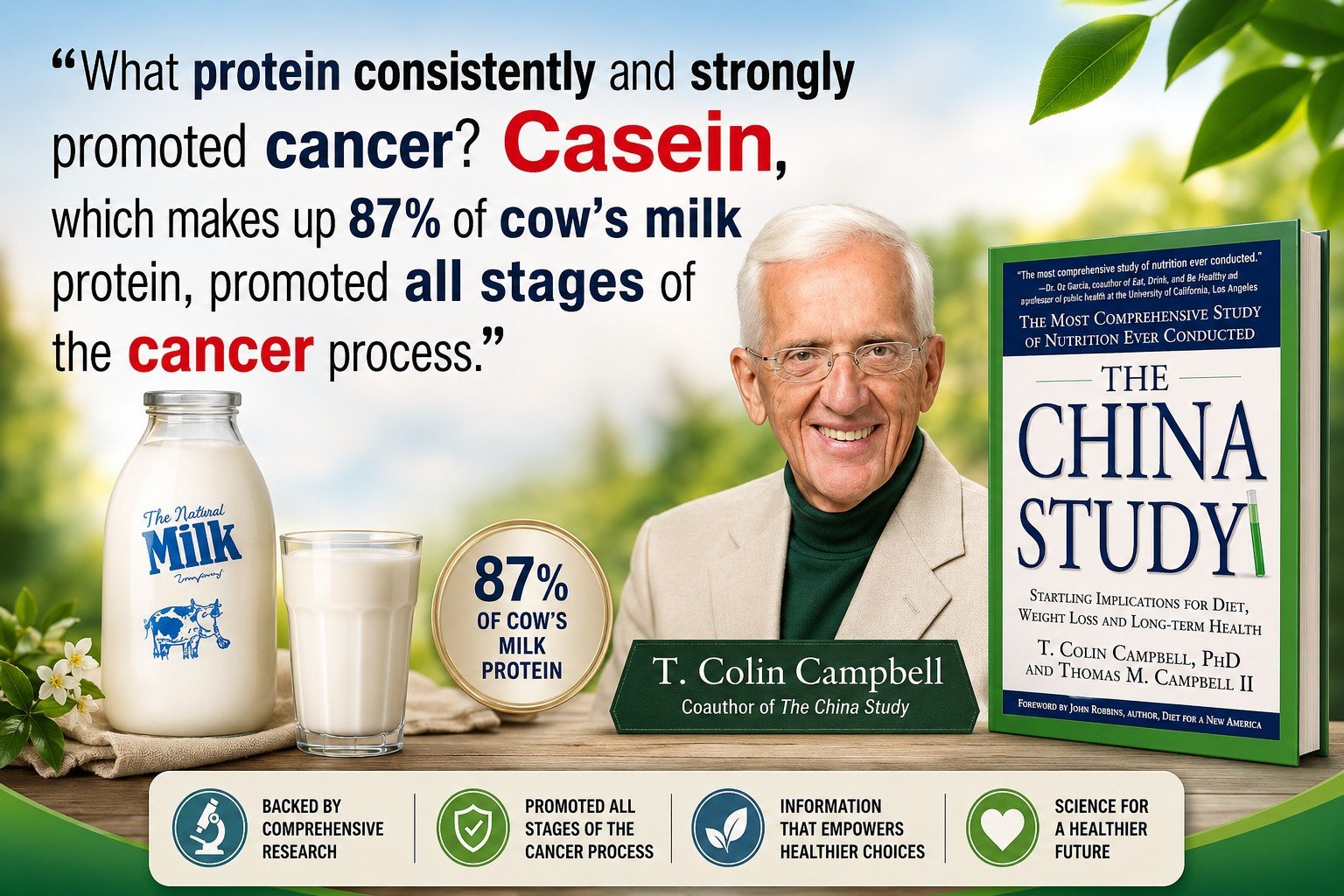
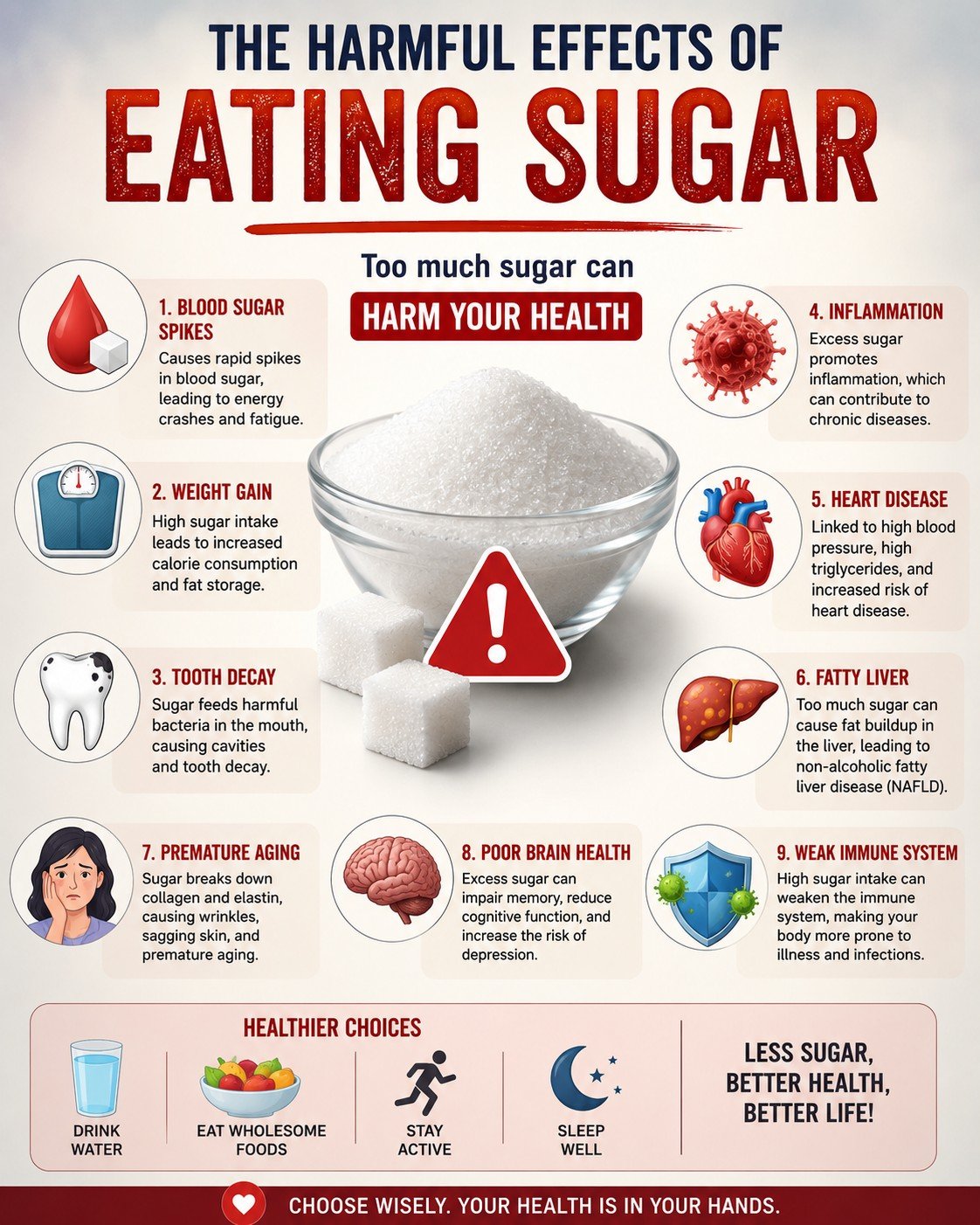
Sugar
“Far too much sugar is ordinarily used in food. Cakes, sweet puddings, pastries, jellies, jams, are active causes of indigestion.” — The Ministry of Healing, p. 301.
“Sugar is not good for the stomach. It causes fermentation, and this clouds the brain and brings peevishness into the disposition.” — Counsels on Diet and Foods, p. 327.
“The less exciting the food, the better. Condiments, spices, rich cakes, pies, and an abundance of sugar should not be eaten.” — Counsels on Diet and Foods, p. 335.
“Rich cakes, pies, puddings, and highly seasoned foods create a diseased condition of the stomach.” — Testimonies for the Church, Vol. 2, p. 369.
“Many mothers make a mistake in allowing the palate of their children to be educated to love highly seasoned food and sweetmeats.” — Christian Temperance and Bible Hygiene, p. 47.
“Sweet cakes, candies, and pastries are prepared and placed before children, and thus tempt them to become epicures.” — Counsels on Diet and Foods, p. 355.

“An unhealthy craving is created for sweet things.” — Counsels on Diet and Foods, p. 154.
“Simple food, free from spices and grease and all kinds of sweet cakes, will prove a blessing.” — Counsels on Diet and Foods, p. 314.
“Sugar is not good for the stomach. It causes fermentation, and this clouds the brain and brings peevishness into the disposition.” — Counsels on Diet and Foods, p. 327.
“Hot biscuit raised with soda or baking powder should never appear upon our tables. Such compounds are unfit for the stomach.” — Counsels on Diet and Foods, p. 316
“The free use of sugar in any form tends to clog the system and is not infrequently a cause of disease.” — Counsels on Diet and Foods, p. 327
Read About Sugar Addiction & Cravings
Sugar, Milk & Eggs
“Especially harmful are the custards and puddings in which milk, eggs, and sugar are largely used. The free use of milk and sugar taken together should be avoided.” — The Ministry of Healing, p. 302.
“Sugar and milk combined are liable to cause fermentation in the stomach.” — Counsels on Diet and Foods, p. 113.
“The less rich the food placed upon our tables, the better it will be for us.” — Counsels on Diet and Foods, p. 314.
“Rich cakes, pies, and puddings are detrimental to health.” — Counsels on Diet and Foods, p. 333.
“Many die of disease caused wholly by meat eating and the use of rich desserts and sweet cakes.” — Counsels on Diet and Foods, p. 373.
“From the light given me, sugar, when largely used, is more injurious than meat.” Counsels on Diet and Foods, p. 328
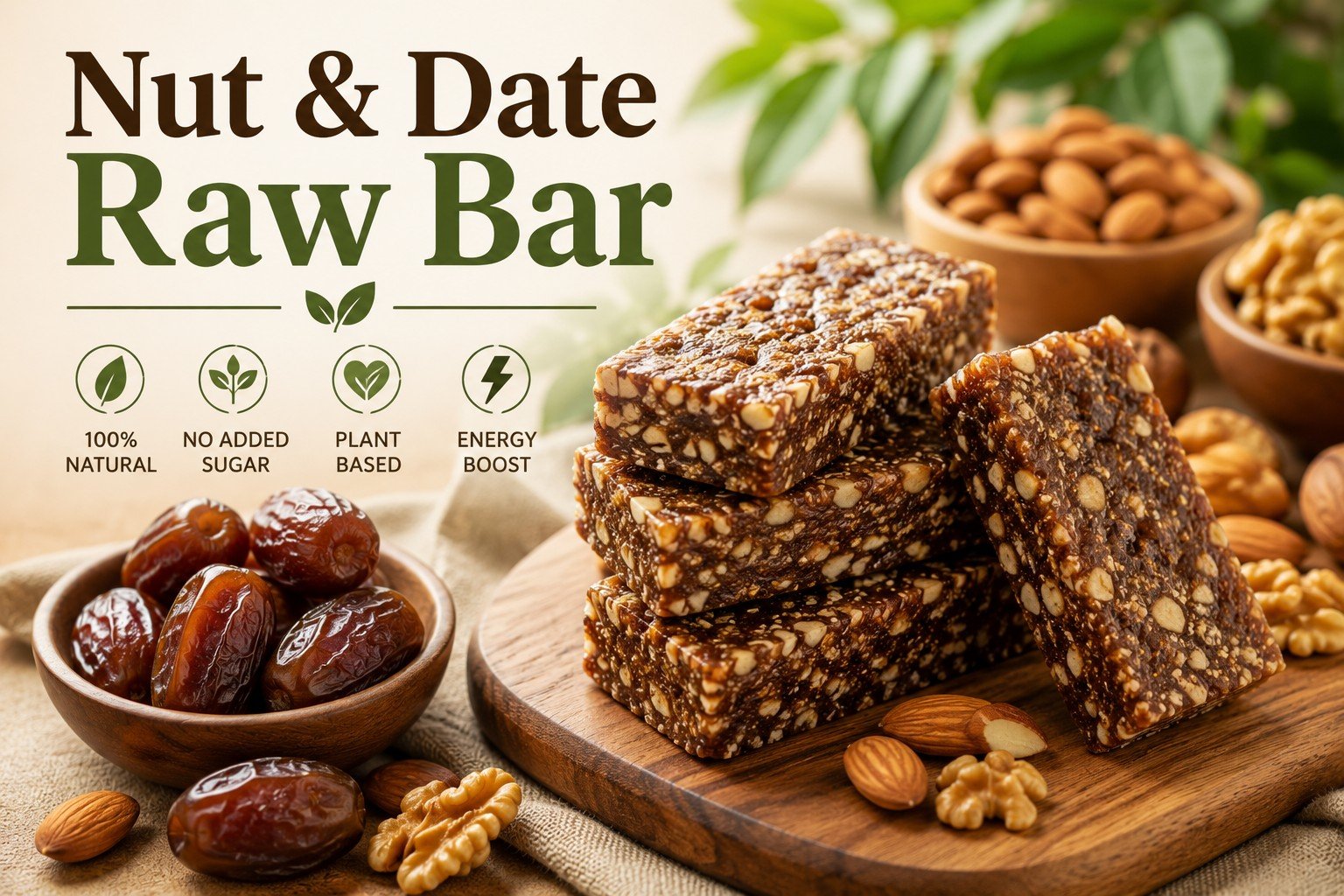
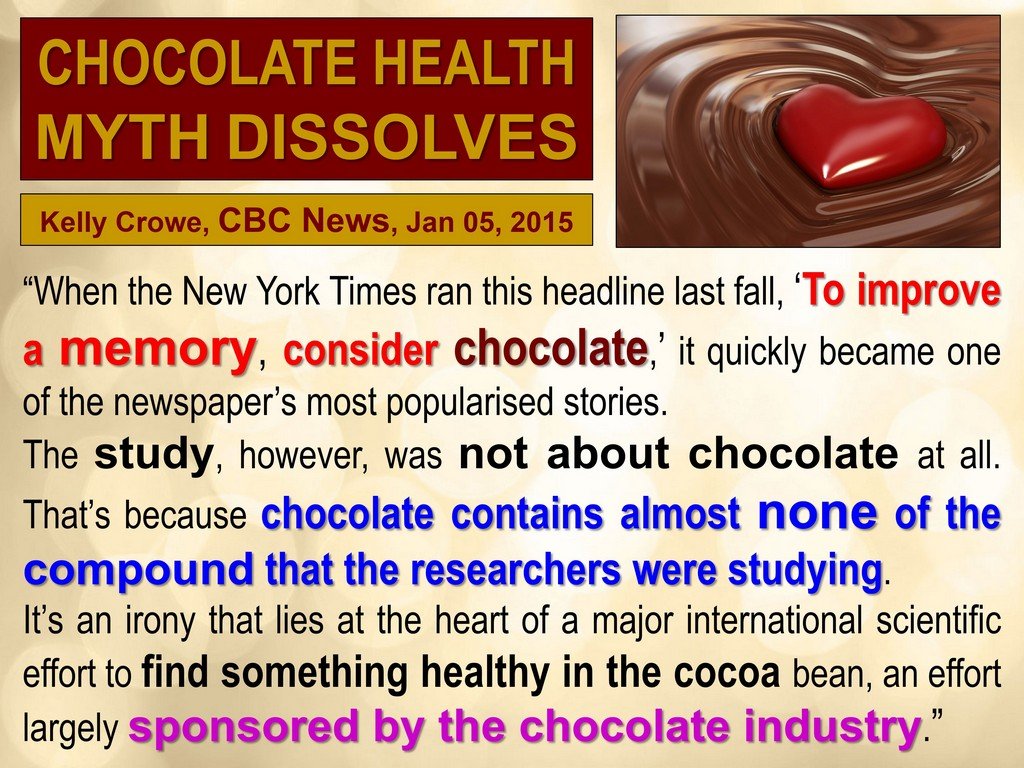
Chocolate
“Chocolate, tea, and coffee are all harmful. They contain ingredients which are injurious to the stomach.” — Manuscript 44, 1903
“The use of chocolate is not beneficial to the health. It is stimulating, and afterward leaves a reaction.” — Letter 123, 1901
“Parents should not permit their children to use tea, coffee, chocolate, cocoa, or any other stimulating substances.” — The Health Reformer, September 1871
“Tea, coffee, and chocolate create an appetite for stronger stimulants.” — Review and Herald, July 29, 1884
“The less exciting the food, the better. Condiments, spices, tea, coffee, and chocolate should be avoided.” — Counsels on Diet and Foods, p. 339
Read: Bitter Truth About Chocolate
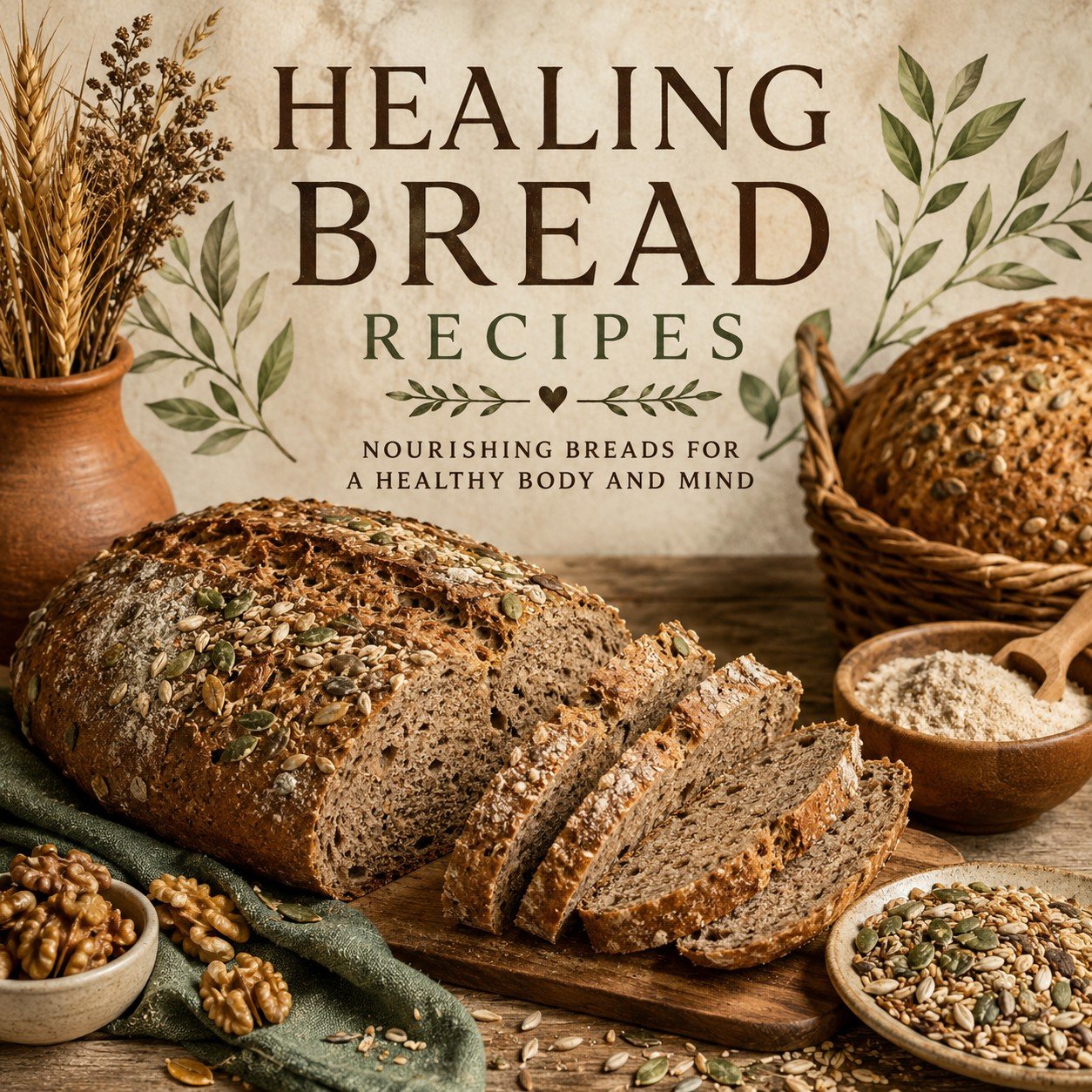
Bread
“Fine-flour bread cannot impart to the system the nourishment that you will find in the whole-wheat bread. The common use of fine-flour bread is a great cause of constipation and other difficulties.” Counsels on Diet and Foods, p. 320
“Bread should be made from the whole grain. The finer-flour bread cannot impart to the system the nourishment that you can obtain from the use of unbolted wheat flour.” — Counsels on Diet and Foods, p. 320
“The use of highly refined flour is never healthful. The objection to the use of white bread is not always understood. In this bread there is lacking the very elements necessary for the nourishment of the system.” — Counsels on Diet and Foods, p. 320
“In the making of graham bread the greatest care should be taken to have it sweet and thoroughly baked.” — Counsels on Diet and Foods, p. 319
“Zwieback, or twice-baked bread, is one of the most easily digested and most palatable articles of diet.” — The Ministry of Healing, p. 301
“Good brown bread, made from unbolted wheat flour, is the best food we can use.” — Counsels on Diet and Foods, p. 315
“There is more religion in a good loaf of bread than many think.” — Counsels on Diet and Foods, p. 346
NOTE
Today it is wise to reduce or avoid modern wheat, especially refined white wheat flour, because many natural-health writers argue that modern wheat has been heavily hybridized, processed, and often exposed to agricultural chemicals. A better choice for bread is organis wholemeal rye or organic spelt flour, while the daily diet should include a variety of whole grains and pseudo-grains such as barley, millet, oats, buckwheat, quinoa, and amaranth.
Spices and Condiments
“Under this head comes a large variety of articles that, altogether taken into the stomach, irritate it, inflame the blood, and excite the nervous system… Spices at first irritate the tender coating of the stomach, but finally destroy the natural sensitiveness of this delicate membrane. The blood becomes inflamed, the animal propensities are aroused, while the moral and intellectual powers are weakened.” Counsels on Diet and Foods, p. 339
“I was in such severe pain I called for cayenne pepper and obtained some relief…” — Letter 353, 1905 (20LtMs, Lt 353, 1905, par. 3).
“Condiments are injurious in their nature. Mustard, pepper, spices, pickles, and other things of a like character, irritate the stomach and make the blood feverish and impure.” — The Ministry of Healing, p. 325.
“Spices at first irritate the tender coating of the stomach, but finally destroy the natural sensitiveness of this delicate membrane.” — Counsels on Diet and Foods, p. 341.
“Food should be prepared in as simple a manner as possible, free from condiments and spices.” — Review and Herald, Nov. 6, 1883; Counsels on Diet and Foods, p. 339.
NOTE ON CAYENNE PEPPER
EGW’s own example shows that cayenne may have been used medicinally in an emergency, but this does not prove that she approved its regular use as a table spice or daily condiment.
Dr. Agatha Thrash/Uchee Pines-style Adventist health teaching classifies cayenne pepper among “irritating, stimulating, harmful” spices, together with chili powder, mustard, and black/white pepper. Jethro Kloss, however, strongly praised cayenne as a powerful natural remedy, so Adventists have not been united on this point.
Modern science is also mixed: Cayenne pepper may have medicinal benefits especially topical pain relief and possible gastric protective effects in certain doses, but high doses can cause burning, reflux, nausea, gastrointestinal discomfort, and possible gastric mucosal damage.
So the safest position is to asume that Cayenne may have limited medicinal use, but it should not be promoted as a regular hot food seasoning, because it falls under the principle of avoiding irritating condiments and spices.
Stimulants and Intoxicants

“Tea and coffee drinking is a sin, an injurious indulgence, which, like other evils, injures the soul. These darling idols create an excitement, a morbid action of the nervous system…” — Manuscript 44, 1896; Counsels on Diet and Foods, p. 425.
“Tea and coffee drinking is a sin, an injurious indulgence, which, like other evils, implements the mind and heart. . . . It is a slow poison.” Testimonies for the Church, Vol. 3, p. 569
“Tea and coffee drinking is a sin, an injurious indulgence, which, like other evils, injures the soul.” — Counsels on Diet and Foods, p. 425
“Tea is poisonous to the system. Christians should let it alone.” Ellen G. White, Counsels on Diet and Foods, p. 421
“Diseases of every stripe and type have been brought upon human beings by the use of tea and coffee and narcotics, opium and tobacco.” Ellen G. White, Counsels on Diet and Foods, p. 421
“Tea acts as a stimulant, and to a certain extent produces intoxication… With continual use, the abuser of the nervous system will experience headaches, wakefulness, palpitation of the heart, indigestion, trembling, and many other evils, for they wear away the life forces.” Ellen G. White, Counsels on Diet and Foods, p. 422
“Tea, coffee, tobacco, and alcohol we must present as sinful indulgences… Tea, coffee, tobacco, beer, wine, and all spirituous liquors—are not to be taken moderately, but discarded.” Selected Messages, Book 3, p. 287, 1881
“The only safe course is to touch not, taste not, handle not, tea, coffee, wines, tobacco, opium, and alcoholic drinks.” Testimonies for the Church, Vol. 3, p. 488
“The use of intoxicating liquor dethrones the reason, and hardens the heart against every pure and holy influence.” The Review and Herald, May 8, 1894
“Liquor drinking is a device of the enemy to bring man into his power, to lead him to commit acts that will cause him to lose his soul.” Temperance, p. 30
“The man who has formed the habit of using intoxicants is in a terrible condition. His brain is diseased, his will power is weakened. So far as his own strength is concerned, his appetite is uncontrollable. He cannot be reasoned with or persuaded to deny himself.” The Ministry of Healing, p. 172
“No man who uses intoxicating liquor can be a consistent Christian. He cannot be a growing Christian. His perception is blurred, his sensibilities are deadened, and he cannot discern between sacred and common things.” Temperance, p. 45
“The moderate use of intoxicating drinks is the school in which men are receiving an education for the drunkard’s career.” The Review and Herald, March 25, 1884
“The drunkard is a slave to a perverted appetite. He has bartered his manhood for that which makes him a demon.” Temperance, p. 24
“Wine is a mocker, strong drink is raging; and whosoever is deceived thereby is not wise. . . . Every drop of liquid poison is a step in the way of ruin.” Temperance, p. 32
“Under the influence of intoxicating liquor, men are led to do things which, if they were in their right mind, they would never think of doing.” Testimonies for the Church, Vol. 5, p. 441
“The intemperate man has no place in the kingdom of God. He has disqualified himself for the society of the pure and the holy.” Temperance, p. 149
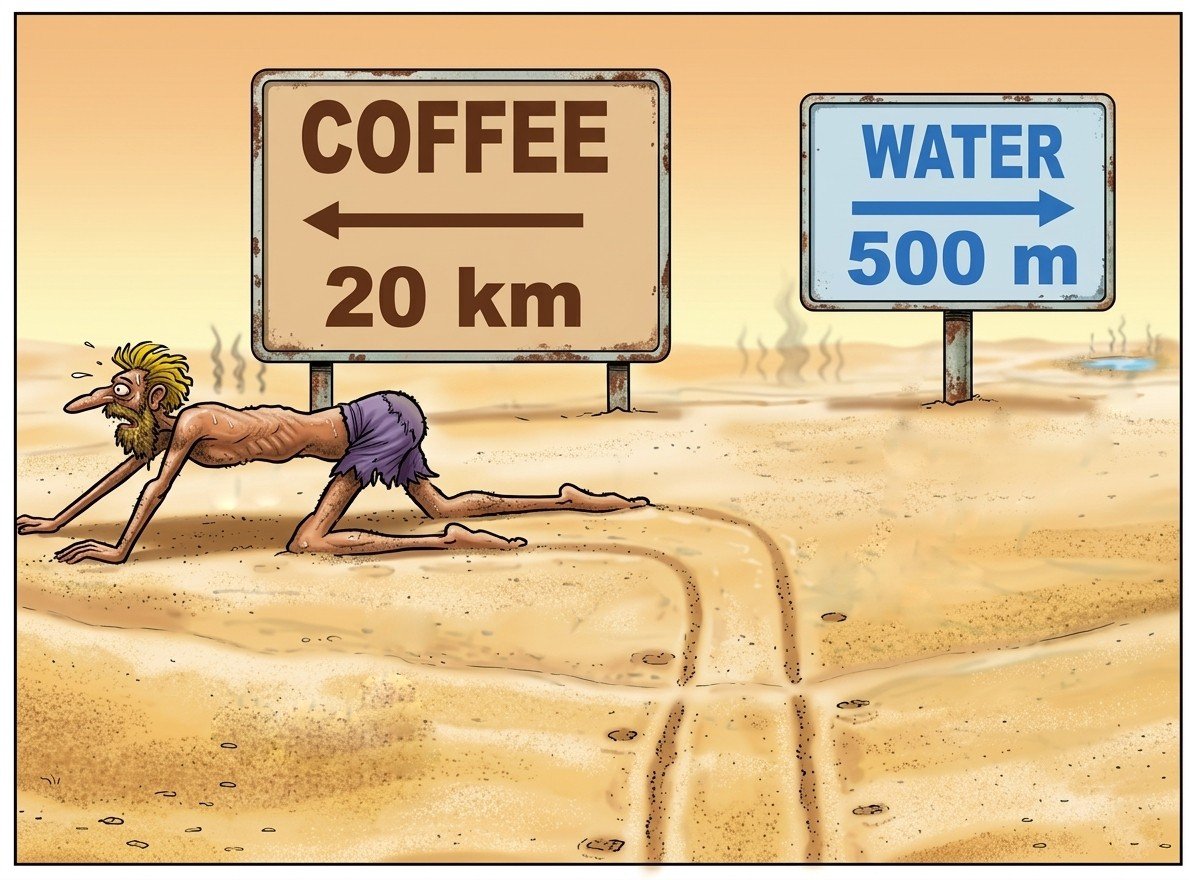
NOTE:
Substances, such as caffeine, that can damage chromosomes can also increase the risk of cancer. Bladder cancer in women is over two times more likely to occur if a woman drinks only one cup of coffee per day. Coffee, tea, and chocolate all contain methylxanthines and a large part of their effects on the brain are the result of the presence of these substances.
The article “Trigonelline Is a Novel Phytoestrogen in Coffee Beans”, by Allred et al, concludes that trigonelline found in coffee “stimulates the growth of estrogen-dependent breast tumors“.
Dr. McDoughal doesn’t hesitate to express his negative opinion about methylxanthines in his book “The McDougall Plan”: “Some of the most popular drugs consumed by people of affluent western nations are found in coffee beans, tea leaves, and cocoa beans (chocolate) all of which contain methylxanthines (caffeine, theophylline, and theobromine). In 90% of women with fibrocystic disease, these breast tumours disappear in two to six months when methylxanthines are eliminated from the diet. Cancer of the bladder also has been related to methylxanthines. All three of the methylxanthines can stimulate growth of breast cells, causing painful enlargement of breast tissue and lumps. This condition is known as fibrocystic disease.”
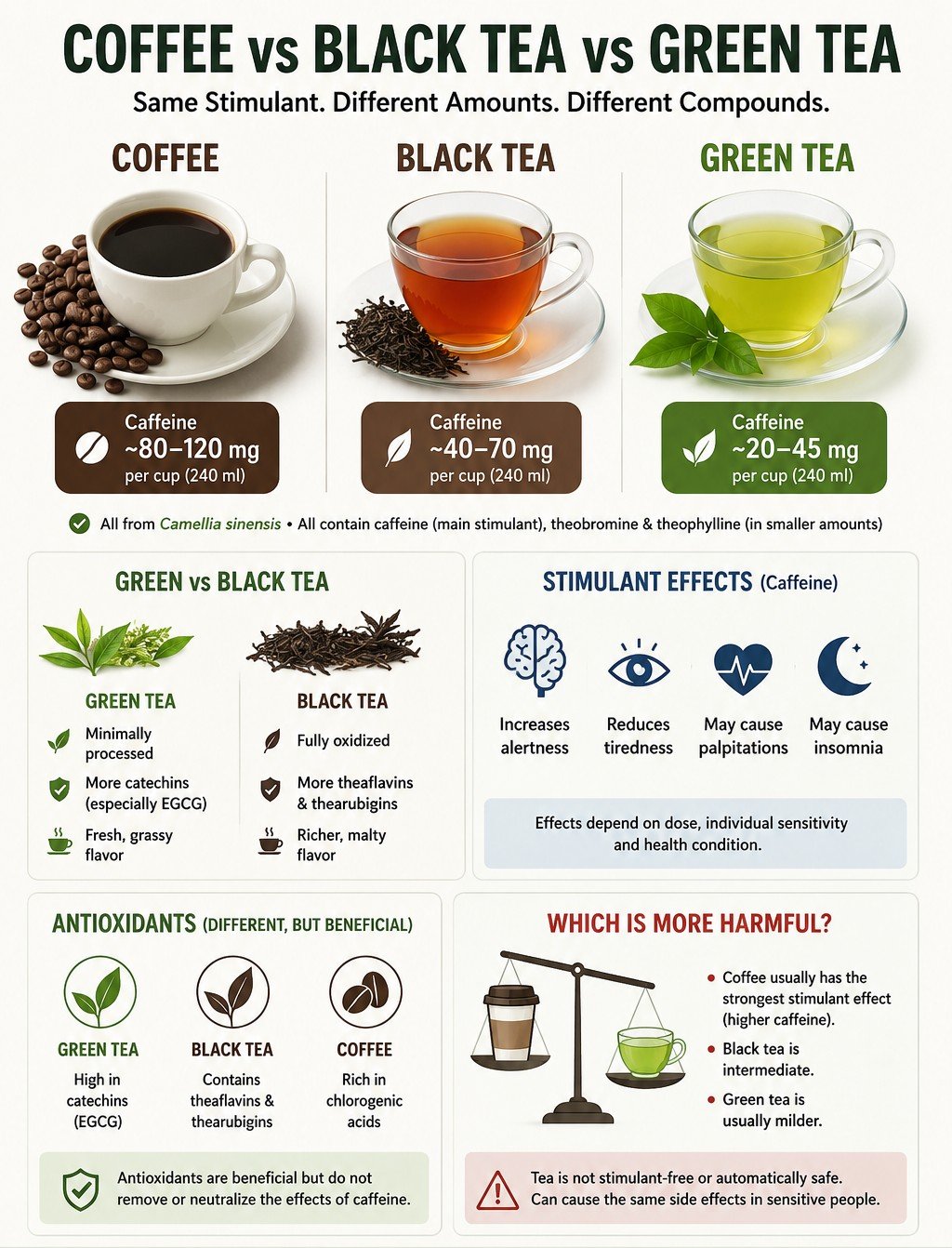
Coffee, Black Tea and Green Tea: What Is the Difference?
They Contain the Same Principal Stimulant
Coffee, black tea and green tea all naturally contain caffeine, a stimulant drug belonging to the methylxanthine family. The caffeine in tea was formerly called “theine,” but it is chemically the same substance as the caffeine found in coffee. Both teas also contain smaller quantities of the related stimulant alkaloids theobromine and theophylline. Scientific analysis confirms that caffeine is normally the most abundant stimulant alkaloid in both green and black tea. (PubMed)
Coffee Usually Contains More Caffeine
Coffee normally produces a stronger stimulant effect because it generally contains more caffeine per cup. EFSA uses average values of approximately 100 mg of caffeine in a cup of coffee and 50 mg in a cup of tea, although the amount varies greatly according to the product, serving size and brewing method. Laboratory studies have found approximately 14–61 mg of caffeine per serving of green or black tea, while brewed coffee frequently contains more than 100 mg per cup. However, a strongly brewed tea can sometimes contain as much caffeine as a weaker coffee. (PubMed)
Difference Between Green and Black Tea
Green and black tea come from the same plant, Camellia sinensis. Green tea is heated soon after harvesting, which limits oxidation and preserves more catechins, particularly EGCG. Black tea undergoes greater oxidation, during which many catechins are converted into theaflavins and thearubigins. Therefore, green tea generally contains more catechins, while black tea contains more oxidised antioxidant compounds. The caffeine content cannot be determined simply by the colour of the tea, because some green teas may contain more caffeine than certain black teas. (PubMed)
Effects of Their Stimulant Alkaloids
Caffeine stimulates the central nervous system, temporarily reducing tiredness and increasing alertness. It can also cause sleeplessness, nervousness, anxiety, trembling, headaches, digestive irritation, increased blood pressure or palpitations, especially in sensitive people or when consumed in larger amounts. Regular use can lead to tolerance and physical dependence, and sudden withdrawal may cause headaches, tiredness and irritability. The caffeine from tea is absorbed and processed in essentially the same way as caffeine from coffee. (NCBI)
Which Is More Harmful?
Coffee generally has the strongest immediate stimulant effect because it usually supplies the largest dose of caffeine. Black tea is commonly intermediate, while green tea is often milder, although actual caffeine levels vary considerably. Therefore, coffee is usually more likely to cause caffeine-related adverse effects, but green and black tea are not stimulant-free or automatically harmless. People who suffer from insomnia, anxiety, heart palpitations, uncontrolled high blood pressure or strong sensitivity to caffeine may react adversely even to tea.
Antioxidants Do Not Neutralise Caffeine
Coffee and tea contain beneficial polyphenols and antioxidants. Green tea is particularly rich in catechins, black tea provides theaflavins and thearubigins, and coffee contains chlorogenic acids. However, the presence of these beneficial compounds does not remove, neutralise or cancel the pharmacological effects of caffeine and the other stimulant alkaloids. A substance can contain useful nutrients or antioxidants while still producing unwanted effects in susceptible individuals. The overall effect depends on the amount consumed, individual sensitivity, health condition and frequency of use.
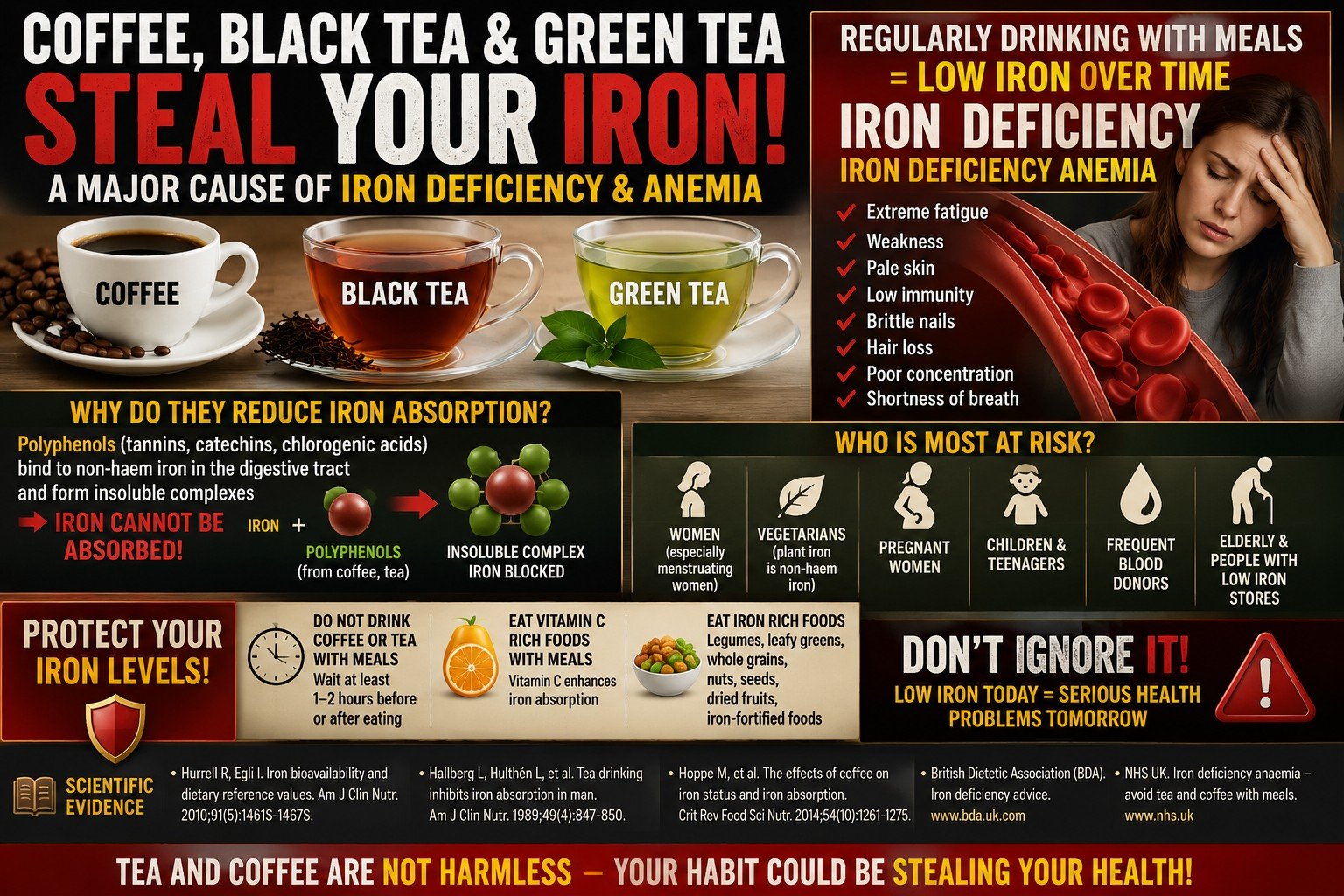
Coffee, Green Tea and Black Tea Can Be a Major Cause of Iron Deficiency
Coffee, green tea and black tea can markedly reduce the absorption of non-haem iron when consumed with or shortly before or after meals leading to iron-deficincy anaemia. This effect is caused mainly by their polyphenols, which bind to iron in the digestive tract and make it much less available for absorption.
Numerous studies have shown that regular consumption of tea or coffee with meals can significantly lower iron absorption and, over time, contribute to iron deficiency and iron-deficiency anaemia, particularly in women of child-bearing age, vegetarians, children, pregnant women and people whose iron stores are already low.
Liquids with Meals
“Ice water or ice lemonade, taken with meals, will arrest digestion until the system has imparted sufficient warmth to the stomach to enable it to take up its work again…The more liquid there is taken into the stomach with the meals, the more difficult it is for the food to digest; for the liquid must first be absorbed.” Counsels on Diet and Foods, p. 106
“Food should not be washed down; no drink is needed with meals. Eat slowly, and allow the saliva to mingle with the food. The more liquid there is taken into the stomach with the meals, the more difficult it is for the food to digest; for the liquid must first be absorbed.” Counsels on Diet and Foods, p. 106
Olives & Olive Oil
“Olives may be so prepared as to be eaten with good results. The oil as eaten in the olive may be used in the place of animal oil or fat of any kind.” — Counsels on Diet and Foods, p. 359
“Olive oil, properly used, is wholesome and health-giving.” — Letter 37, 1901
“When properly prepared, olives, like nuts, supply the place of butter and flesh meats.” — The Ministry of Healing, p. 298
“Oil as used in the countries where olives are grown is far preferable to animal fats.” — Counsels on Diet and Foods, p. 368
Use of Water
“In health and in sickness, pure water is one of heaven’s choicest blessings. Its proper use promotes health.” — The Ministry of Healing, p. 237.
“There are many ways of practicing the healing art, but there is only one way that Heaven approves. God’s remedies are the simple agencies of nature, that will not tax or debilitate the system through their powerful properties. Pure air and water, cleanliness, a proper diet, purity of life, and a firm trust in God, are remedies for the want of which thousands are dying; yet these remedies are going out of date because their skillful use requires work that the people do not appreciate.” Counsels on Health, p. 323
“Pure air, sunlight, abstemiousness, rest, exercise, proper diet, the use of water, trust in divine power—these are the true remedies.” The Ministry of Healing, p. 127
“Thousands have died for want of pure water and pure air, who might have lived. … If they would become enlightened, and let medicine alone, and accustom themselves to outdoor exercise, and to air in their houses, summer and winter, and use soft water for drinking and bathing purposes, they would be comparatively well and happy instead of dragging out a miserable existence.” — Counsels on Health, p. 55; How to Live, Part 4, p. 55.
“Pure air, sunlight, abstemiousness, rest, exercise, proper diet, the use of water, trust in divine power — these are the true remedies.” — The Ministry of Healing, p. 127.
“Water treatments, wisely and skillfully given, may be the means of saving many lives.” — Counsels on Health, p. 61.
“Thousands have died for want of pure water and pure air, who might have lived. … These blessings they need in order to become well. If they would become enlightened, and let medicine alone, and accustom themselves to outdoor exercise, and to air in their houses, summer and winter, and use soft water for drinking and bathing purposes, they would be comparatively well and happy instead of dragging out a miserable existence.” — Spiritual Gifts, Vol. 4a, p. 144
The following long quotation comes from the 1865 health reform book: Health; or, How to Live (1865) edited by James White (the husband of Ellen White) specifically from the section: The Quality of Water to Be Used” The exact reference for your quotation is: Health; or, How to Live, Vol. 4, pp. 123–124 (1865):
„On no single point is there need of enlightenment more than on this, of the superior quality of soft over hard water as a hygienic agent. Not only is hard water productive in many instances of diseased kidneys, irritation of the bladder, mucous dyspepsia, and scrofulous development, but as I have said before, its effects on the skin are to leave it rough, causing it to put on a dry, scaly appearance, making it to crack – and its effects on the mucous membrane are even worse, creating an irritation of that texture, serving to introduce dyspeptic conditions, sore throat, nasal catarrh, inactivity of the liver, costiveness, piles, and headache.
Persons using it as a daily drink, never mingling it with anything else, would be marked over whole districts of country by habitual constipation, by dry skin, by shrivelled muscle, and are therefore, as if by instinct, led to avoid its use. I have known persons taking hygienic treatment for constipation of the bowels, whom physicians had utterly failed to cure by any hydropathic appliance, and have been compelled to resort to medicines, immediately relieved on the use of pure soft water as a drink. But this is only half its value. Its power as a solvent, as well as a tonic, its gentle and invigorating effect on free mucous surfaces, thus indirectly securing the health of all the senses, whose niceties of action depend on the health of the mucous tissue, are evidences of its advantage as a hygienic agent.

The animals might teach us on this point. Horsemen, who study the natural conditions of their horses, and seek to preserve their health, are very particular in procuring soft water for them to drink, they having been taught that the taste of the horse is so perfect and nice in this matter, as to cause him even when thirsty, to refuse to drink at hard-water springs, and go for miles till he can find soft water. Besides, horsemen say that the remote effects of hard water as a drink for the horse, are, that instead of a glossy, sleek appearance of the hair which the horse shows when in the habit of drinking soft water, there arises a staring, dry, and apparently half-deadened condition of the hair and skin, making the grooming of the animal doubly difficult.
I should advise every family who may read this lecture, and who use hard water either for drink or for culinary purposes, to take measures immediately to supply themselves with soft water in abundant quantities; and if it can only be obtained by being caught in reservoirs as it falls from the clouds, to filter it before it is used. Filtered rain-water is perfectly unobjectionable as a drink; and an expenditure of from five to twenty dollars in the purchase of a filter, would secure to any family in this land the means of purifying all the water they might need for drink and for cooking purposes.”
NOTE
People today eat refined junk food and as a result they are deficient in magnesium or calcium but instead of improving their diet they try to get these minerals by drinking hard water. The problem, however, is that water is not supposed to nourish our body but cleanse it. It is the healthy unrefined diet which is to provide us with all essential nutrients, including minerals. These minerals found in healthy foods are organic and therefore well tolerated by the body and absorbed. Unfortunately, the minerals such as calcium carbonate, found in hard water, can’t nurish us as they are not organic and foreign to our bdoy.
For this reason, the water you drink shouldn’t be hard (high in inorganic minerals) but as soft as possible (the lower in harmful inorganic minerals the better). The minerals your body need must be organic and they are found in unrefined healthy foods such as fresh vegetables, fresh fruits, whole greins, pulses, nuts and seeds. It means that water you drink every day must be as low in minerals as possible (soft water) because minerals in water are inorganic and are not beneficial but harmful. Especially dangerous is calcium carbonate as it contributes to kidney stones, hardening of arteries and heart attacks or strokes, arthritis and constipation. For this reason the best water to drink is distilled water as destilation not only removes all contaminants, such as heavy metals, hormones, antibiotica, dioxines, etc. but it is the only method which gets rid of inorganic minerals including harmful calcium carbonate.
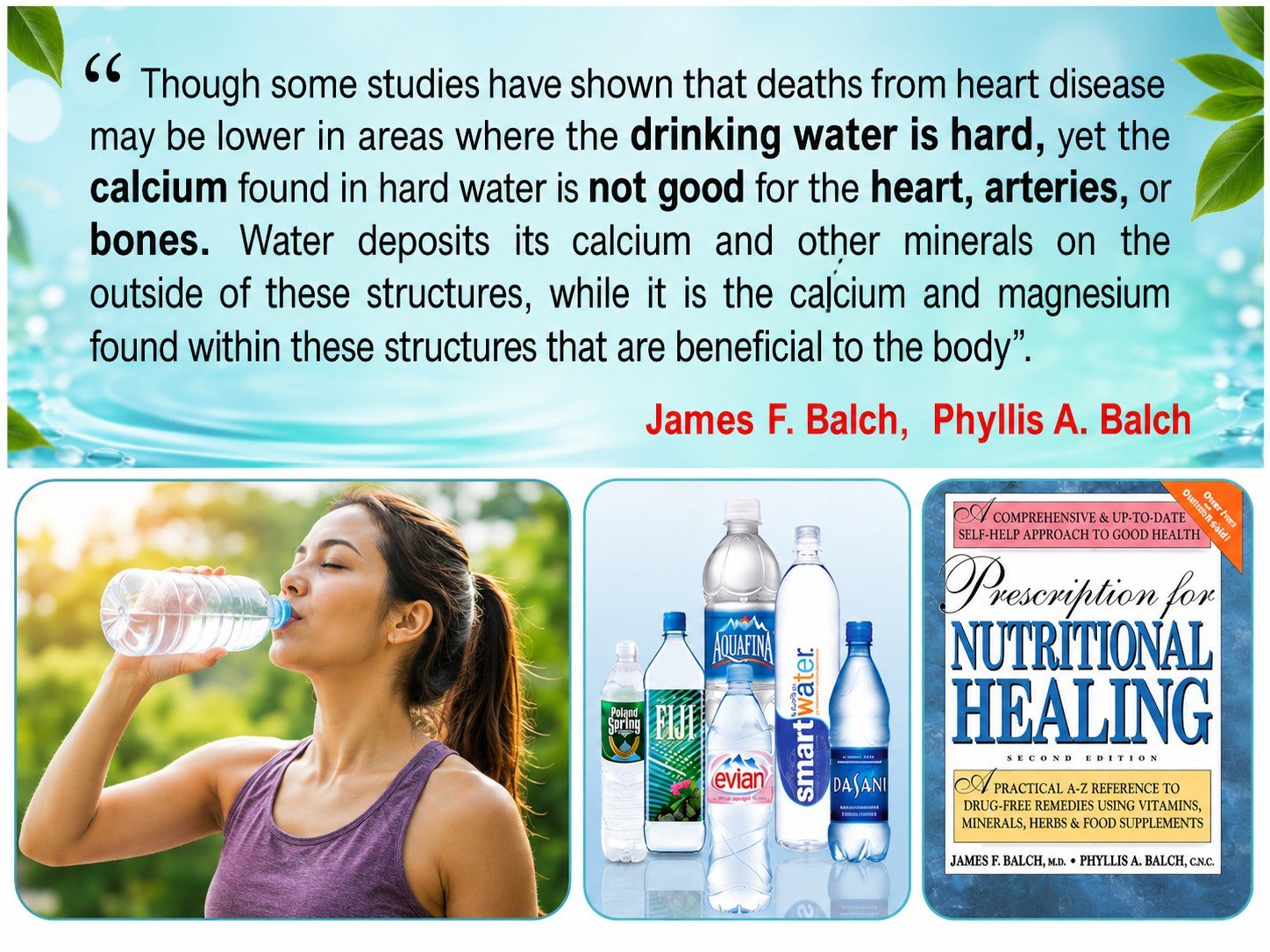
What’s the difference between organic and inorganic calcium? It has to do with the natural life circle. The earth’s crust contains inorganic calcium, found in rocks. This inorganic calcium, magnesium and other minerals are absorbed by plants which are able to do what we can’t, they convert those inorganic minerals into organic ones our cells are able to absorb and use. For this reason in order to get beneficial organic calcium we are not supposed to drink water with inorganic calcium or consume chalk, limestone, oyster shell, egg shell, bone meal as it is dangerous and harmful.
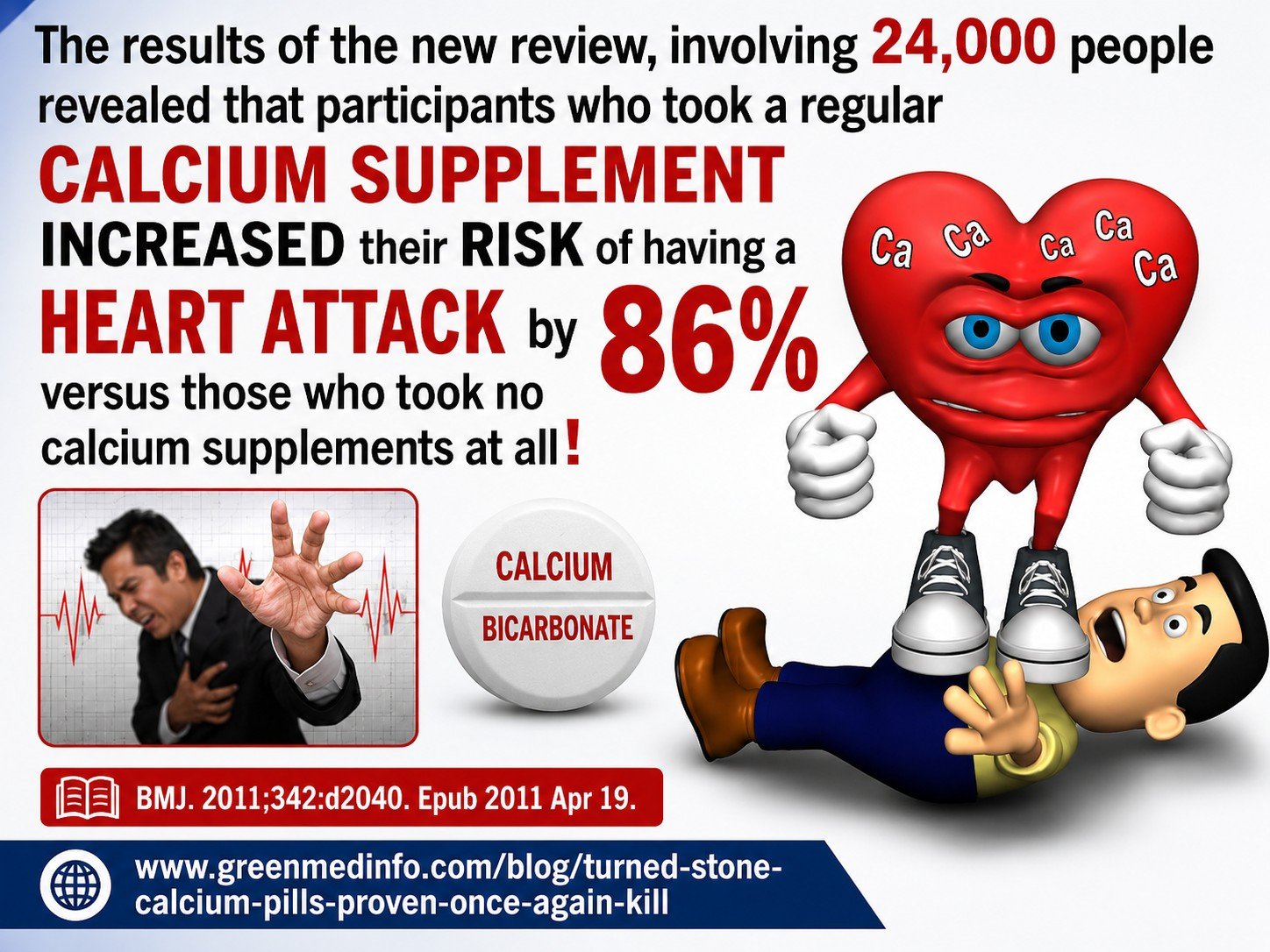
According to the statement by Greenmedinfo (based on scientific studies), „Growing evidence suggests that inorganic calcium ingestion in the form of Calcium Carbonate (chalk, limestone, oyster shell, egg shell, bone meal) is not a biologically appropriate form of calcium for human metabolism and is associated with calcification of soft tissue, osteoarthritis, constipation, kidney stones, hypertension and various other side effects of poorly utilized calcium.”
For the same reason we are to avoid water with inorganic minerals. And a simple conclusion is that since distilled water is completely free from harmful inorganic material it should be regarded as the best option. We can’t be benefited by calcium from rocks because the cells don’t recognize it as a viable life-giving element.
If you feel you need calcium supplements try taking chelated calcium. Chelation makes calcium more organic by bounding calcium molecule to an amino-acid. As a result our cells can use it because they recognize it as a food. Calcium citrate seems to be a good example of chelated (organic) form of calcium supplement: „Calcium as found in chelated form, e.g. calcium citrate, or in its natural state as food, is much more readily absorbed and utilized in the body, and is safe.”
Read More about What Water to Drink
Hydrotherapy/Water-Treatment
“There are many ways in which water can be applied to relieve pain and check disease.” — The Ministry of Healing, p. 237.
“The external application of water is one of the easiest and most satisfactory ways of regulating the circulation of the blood.” — The Ministry of Healing, p. 237.
“Water treatments, wisely and skillfully given, may be the means of saving many lives.” — Counsels on Health, p. 61.
“Fever cases can be managed successfully if water treatments are properly used.” — Medical Ministry, p. 223.
“If, when they are suffering from disease, they would only assist nature in her efforts by the use of pure, soft water, much suffering would be prevented.” — Healthful Living, p. 223.
“Many have never learned by experience the beneficial effects of the proper use of water, and they are afraid of it.” — The Ministry of Healing, p. 237.
“The skin should be carefully and thoroughly cleansed, that the pores may do their work in freeing the body from impurities.” — The Ministry of Healing, p. 276.
“Many have never learned by experience the beneficial effects of the proper use of water, and they are afraid of it.” — The Ministry of Healing, p. 237.
“The daily bath is as favorable to health as to cleanliness.” — Child Guidance, p. 107.
“The skin should be carefully and thoroughly cleansed, that the pores may do their work in freeing the body from impurities.” — The Ministry of Healing, p. 276.
“Pure air, sunlight, abstemiousness, rest, exercise, proper diet, the use of water, trust in divine power — these are the true remedies.” — The Ministry of Healing, p. 127.
“Thousands have died for want of pure water and pure air, who might have lived.” — Counsels on Health, p. 55.
“Teach the people that restorative power is not in drugs, but in nature.” — The Ministry of Healing, p. 127.
Physical Activity (Exercise)
“Inactivity is a fruitful cause of disease. Exercise quickens and equalizes the circulation of the blood.” — The Ministry of Healing, p. 237.
“The more we exercise, the better will be the circulation of the blood.” — Testimonies for the Church, vol. 2, p. 525.
“Brisk, yet not violent, exercise in the open air, with cheerfulness of spirits, will promote the circulation, giving a healthy glow to the skin and sending the blood, vitalized by the pure air, to the extremities.” — Testimonies for the Church, vol. 2, p. 530.

“There is no exercise that can take the place of walking. By it the circulation of the blood is greatly improved. Walking, in all cases where it is possible, is the best remedy for diseased bodies.” — Testimonies for the Church, vol. 3, p. 78.
“For invalids, exercise is invaluable. It is a powerful agent in the recovery of health.” — The Ministry of Healing, p. 239.
“The whole system will be strengthened by exercise in the open air.” — Testimonies for the Church, vol. 3, p. 78.
“Exercise gives new life and strength to every part of the body.” — The Review and Herald, May 13, 1884.
“The exercise gained in useful labor is one of the best means of recreation for body and mind.” — Education, p. 215.
“Exercise will aid the work of digestion. To walk out after a meal, hold the head erect, put back the shoulders, and exercise moderately, will be a great benefit. The mind will be diverted from self to the beauties of nature. The less the attention is called to the stomach after a meal, the better.” Counsels on Health, p. 54
“Exercise is important to digestion, and to a healthy condition of body and mind. You need physical exercise…Healthy, active exercise is what you need. This will invigorate the mind. Neither study nor violent exercise should be engaged in immediately after a full meal.” Counsels on Diet and Foods, p. 103
“Physical labor will not prevent the cultivation of the intellect. Far from it.” — Education, p. 215.
Gardening and Land Cultivation
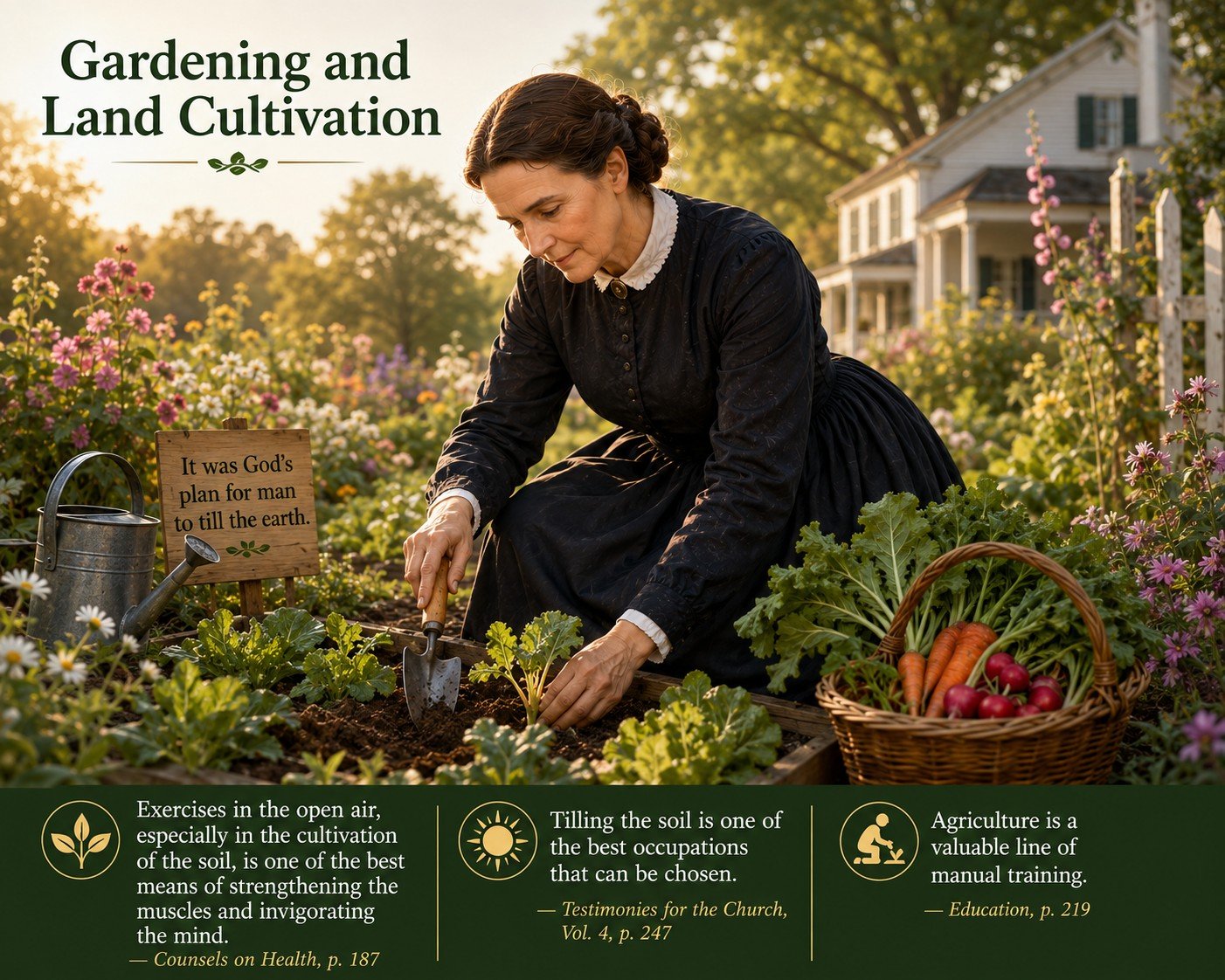
“No line of manual training is more valuable than agriculture. A greater effort should be made to create and to encourage an interest in agricultural pursuits. Let the teacher call attention to what the Bible says about agriculture: that it was God’s plan for man to till the earth; that the first man, the ruler of the whole world, was given a garden to cultivate; and that many of the world’s great men, its real nobility, have been tillers of the soil.” Education, p. 219
“The cultivation of the soil will prove a wonderful benefit to the health. The work in the open air, the exercise of the muscles, and the diversion of the mind to the beauties of nature, will give new life and vigor. Tilling the soil is one of the best occupations that can be chosen, for it keeps the worker in direct contact with nature and provides a highly productive form of physical exercise.” Testimonies for the Church, Vol. 4, p. 247
“Exercises in the open air, especially in the cultivation of the soil, is one of the best means of strengthening the muscles, invigorating the mind, and keeping the health of both body and soul in a sound condition.” Counsels on Health, p. 187
Contact With Nature
“The sick, shut within four walls, look out on houses and pavements, with perhaps not even a glimpse of blue sky or sunshine, of grass or flower or tree. Shut up in this way, they brood over their suffering and sorrow and become a prey to their own sad thoughts. The pure air, the glad sunshine, the flowers and trees, and outdoor exercise amid these surroundings, are health- and life-giving. Outdoor life is the only remedy that many need. It has a wonderful power to heal diseases caused by the excitements and excesses of fashionable life, a life that weakens and destroys the powers of body, mind, and soul. How glad would they be to sit in the open air, rejoice in the sunshine, and breathe the fragrance of tree and flower.” Ministry of Healing
Country Living
“The pure air and sunlight, the verdure and flowers and trees and orchards, and outdoor exercise amid these surroundings, are health-giving, life-giving.” — The Ministry of Healing, p. 366.
“Nothing tends more to restore health and happiness than to live amid attractive country surroundings.” — The Ministry of Healing, p. 367.
“The sick may do almost everything better in the open air than within doors.” — Medical Ministry, p. 232.
“The atmosphere of rooms that have not been freely ventilated becomes poisonous.” — The Ministry of Healing, p. 274.
“The lungs should be allowed the greatest freedom possible; their capacity develops by free action.” — The Ministry of Healing, p. 272.
“There is healing in the balm of pine, the fragrance of cedar and fir.” — The Ministry of Healing, p. 264.
“Nature is God’s physician.” — Signs of the Times, March 30, 1882.
“Pure air, sunlight, abstemiousness, rest, exercise, proper diet, the use of water, trust in divine power — these are the true remedies.” — The Ministry of Healing, p. 127.
“The earth has blessings hidden in her depths for those who have courage and will and perseverance to gather her treasures.” — Education, p. 219.
“Families and institutions should learn to do more in the cultivation of the soil.” — Country Living, p. 16.
“Again and again the Lord has instructed that our people are to take their families away from the cities, into the country.” — Country Living, p. 24.
Competitive Sports
“The low, common pleasure-parties, gatherings for amusement, match games, and football sports, are a species of idolatry, producing the same fruit as did the idolatrous feasts of the heathen.” Fundamentals of Christian Education, p. 222
At the absolute pinnacle of the spiritual awakening, in the spring of 1893, a subtle deception entered Battle Creek College under the guise of “healthy exercise.” The Michigan League of Football was organized, and the Adventist youth were mindlessly invited to join. Within a mere two months, the spiritual fire that had consumed the campus vanished.
By May 1893, the president of the college, W. W. Prescott, wrote letters to Ellen White in deep anguish, confessing that the spiritual condition of the college was worse than he had ever known it before. The revival had died. Nobody cared about God anymore.
Responding from Australia, Ellen White laid the blame squarely at the feet of this new idol:
“Has not the playing of games been educating and training after Satan’s direction, to lead to the possession of his attributes? What if the students could see Jesus, the Man of Calvary, looking upon them in sorrow, as was represented to me? Things are certainly receiving a wrong mold in Battle Creek, and they are counteracting the work of the divine power which has been graciously bestowed.” Letter 46, 1893

Though a powerful month of repentance and deep reformation followed in December 1893—where believers surrendered their jewelry, fur coats, and earthly possessions at the altar—the fascination with sports proved to be a recurring plague. By 1894 and 1895, the spirit of competition returned via intramural games, pitting the college against the academy, and drawing the mockery of the local secular newspapers.
The compromise was so systemic that when Edward A. Sutherland took over leadership in 1897, his first act of radical reformation was to literally plow up the football field and plant a vegetable garden. Ultimately, to save the youth from the toxic sports culture of Battle Creek, the school had to be physically uprooted and moved to the rural farmlands of Berrien Springs, Michigan (founding Emmanuel Missionary College, now Andrews University). It was a school built explicitly to fight the culture of sports.
A Modern Golden Calf When the ancient Israelites grew tired of waiting for Moses to come down from the mountain, they built a golden calf. Ellen White explicitly links modern sports to this act of idolatrous rebellion:
“A mistake has been made in the education of the youth in Battle Creek… Amusements are doing more to counteract the working of the Holy Spirit than anything else, and the Lord is grieved… Like the inhabitants of the old world, they are following the imagination of their own hearts. Like the Israelites who made a golden calf, they have sat down to eat and drink, and rose up to play.” The Review and Herald, June 13, 1893
“Oh, how my heart has been pained to see that the precious light given in Battle Creek at the last General Conference was not so cherished that every lamp was kept trimmed and burning, supplied with the oil of grace… Among the youth, the passion for football games and other kind of kindred selfish gratifications have been misleading in their influence. Watchfulness and prayer and daily consecration to God have not been maintained.” Letter 47, 1893
Deliberate Diversion of God’s Funds The commercialism inherent in sports—even at an amateur level where people obsess over buying expensive rackets or specialized shoes to “beat their neighbor”—is a direct theft from the cause of present truth:
“The context of the school has changed… The money expended for garments to make a pleasing display in these matches is so much means directly diverted from the treasury of God, which should be used to send the truth to those in darkness… The dynamic power of the Holy Spirit has been quenched.” Letter 51a, 1893
Read more about Competitive Sports
Herbs and Natural Remedies
“There are many ways of practicing the healing art, but there is only one way that Heaven approves. God’s remedies are the simple agencies of nature, that will not tax or debilitate the system through their powerful properties. Pure air and water, cleanliness, a proper diet, purity of life, and a firm trust in God, are remedies for the want of which thousands are dying; yet these remedies are going out of date because their skillful use requires work that the people do not appreciate.” Counsels on Health, p. 323
“The Lord has provided simple herbs of the field that can be used to recover the health of the sick, without resorting to those poisonous preparations that undermine the constitution and leave behind a train of evils that are worse than the disease itself.” Medical Ministry, p. 230
Drugs And Poisonous Medicines

“Drug medication should be discarded.” — Selected Messages, Book 2, p. 281.
“Drugs never cure disease. They only change the form and location.” — The Ministry of Healing, p. 126.
“Every poisonous preparation in the vegetable and mineral kingdoms, taken into the system, will leave its wretched influence.” — Healthful Living, p. 246.
“The use of drugs has resulted in far more harm than good, and if sick persons had lived without them, nature would have done much better.” — Spiritual Gifts, Vol. 4a, p. 133.
“Poisonous drugs do not cure disease. They may change the difficulty, but tenfold greater evils may appear in the future.” — Spiritual Gifts, Vol. 4a, p. 134.
“Nature alone possesses restorative powers.” — Counsels on Health, p. 90.
“The true method for healing the sick is to tell them of the herbs that grow for the benefit of man.” — Selected Messages, Book 2, p. 289.
“There are many simple herbs which, if our nurses would learn the value of, they could use in the place of drugs, and find very effective.” — Selected Messages, Book 2, p. 294.
“The Lord has provided antidotes for diseases in simple plants, and these can be used by faith, with no denial of faith; for by using the blessings provided by God for our benefit, we are cooperating with Him.” — Selected Messages, Book 2, p. 291.
“Pure air, sunlight, abstemiousness, rest, exercise, proper diet, the use of water, trust in divine power — these are the true remedies.” — The Ministry of Healing, p. 127.
“A practice that is laying the foundation of a vast amount of disease and of even more serious evils is the free use of poisonous drugs.” — The Ministry of Healing, p. 126.
NOTE
Conventional medicine—especially the widespread reliance on prescription drugs and other treatments that may cause serious adverse effects—is not part of the right arm of the gospel or the Adventist health message. Many medications are associated with significant side effects, some of which can be severe or even life-threatening. According to the National Vital Statistics Reports, “Conventional Medical Care Kills More People than Heart Disease or Cancer” (January 11, 2012, Volume 60).
To be fair, modern medicine has also saved countless lives through emergency care, surgery, and other life-saving interventions. Many medical procedures and medications have an important place, especially in emergencies, acute illnesses, trauma, and certain serious conditions. The real problem is not that conventional medicine has no value, but that it often focuses primarily on treating symptoms and diseases rather than addressing their root causes.
Would it not make more sense for health-care systems to encourage people to use medications when genuinely necessary, while at the same time helping them improve their diet, lifestyle, exercise habits, stress management, sleep, and spiritual well-being? Should not herbal remedies, natural therapies, and evidence-based nutritional supplements also receive greater attention as part of a more comprehensive approach to health?
In many cases, medications may be necessary for a period of time, but the ultimate goal should be to help people regain health to the point where their dependence on drugs can be reduced whenever safely possible under proper medical supervision.
Unfortunately, the influence of large pharmaceutical corporations and the enormous profits generated by the pharmaceutical industry play a significant role in shaping and controlling modern health-care priorities.







-
Counsels on Diet and Foods: eBook
-
Ministry of Healing: eBook
-
Medical Missionary Manual: eBook
-
Use of Drugs in the Care of the Sick: eBook
-
Relation of Diet to Health and Morals: 1
-
Relation of Diet to Health and Morals: 2
-
Herbs in Rational Therapy
-
Dress Reform
- Country Living EBook