Written by Slawek Gromadzki
SABBATH-KEEPING BEES & SABBATH INSTINCT
Some time ago back in Poland, I had the privilege to translate a series of health lectures by an American physician, Dr Sang Lee who shared with us a mind-boggling discovery about Sabbath-keeping bees. Later on, he repeated the same story on 3abn TV.

On the basis of his studies and observations he was inspired to believe that when in the beginning God created a perfect world, Adam and Eve as well as all the animals, He gave them something he called a Sabbath rest instinct. It means that not only Adam and Eve but also all animals instinctively, or naturally, rested on each seventh-day Sabbath according to God’s own example (Genesis 2:1-3) and His commandment (Exodus 20:8-11). Unfortunately, when sin appeared on Earth, it introduced pain and death with associated fears and chronic stress, thus leading to a gradual eradication of that natural Sabbath instinct.
Nevertheless, Dr Lee believed that in spite of this negative effect of sin, in some animals especially those that managed to live in a peaceful, free from dangers and pollution environment this Sabbath instinct could had been preserved.
He said that some time ago he was invited to Brazil in order to present a health seminar for a group of Adventist pastors. And when during one of them he spoke about the Sabbath instinct idea, one of those Brazilian pastors told him that he knew a certain beekeeper from the Amazon rainforest whose bees never worked on Sabbath!

When Dr Lee heard that news he got very excited because although he had suspected that there could be some still existing species that managed to preserve the Sabbath instinct yet he never found any proof for that. So, he was exceedingly happy and grateful to God that his assumption was now proved to be correct.
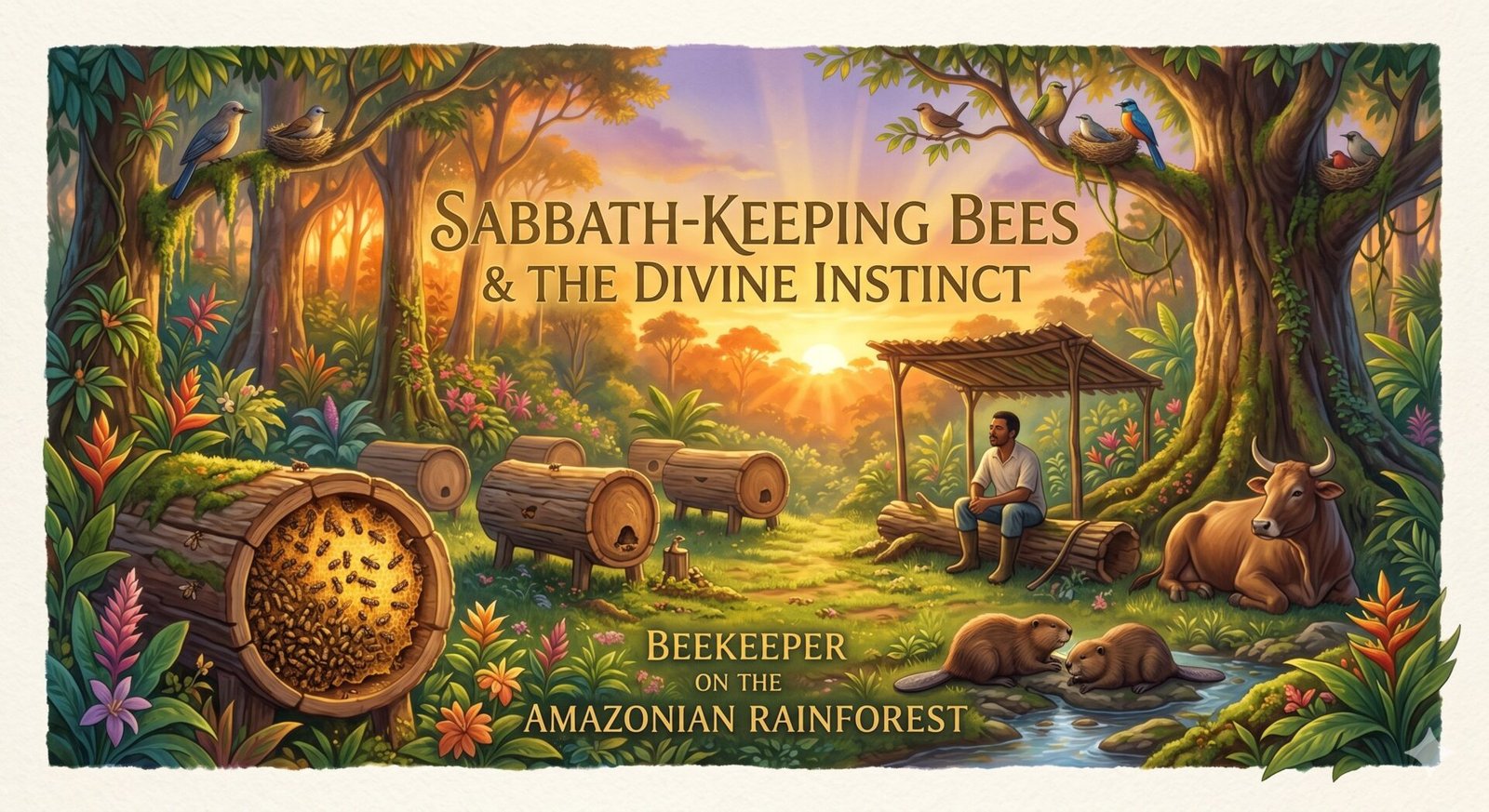
Together with that pastor they got into a car and drove to the centre of the Amazon rainforest to see that fascinating phenomenon. When they arrived, they met the beekeeper who appeared to be a very kind and humble man who was living in surrounded by a beautiful nature house without glass windows and ate only fresh, unprocessed plant food straight from his garden. He led a very simple way of life, and with his kindness and innocent appearance, he immediately aroused sympathy and trust.

When Dr Lee arrived there it was still Sabbath so he wanted to see with his own eyes that the bees were really resting. And sure enough, although there were many hives in that apiary, there were no bees seen around in the field. He was very excited about it and wanted to learn as much as possible, so he told the pastor to ask the beekeeper to open one of the beehives so that he could see if the bees were there. The beehives were made of empty tree stumps and on the top, they were sealed with a lump of clay. Encouraged by the beekeeper Dr Lee put his ear to one of the holes made in the clay, and when he did that he could hear a clear buzzing noise made by bees inside the hive. It was amazing that none of them was trying to get outside although it was a very sunny and bright day with plenty of colorful flowers around.
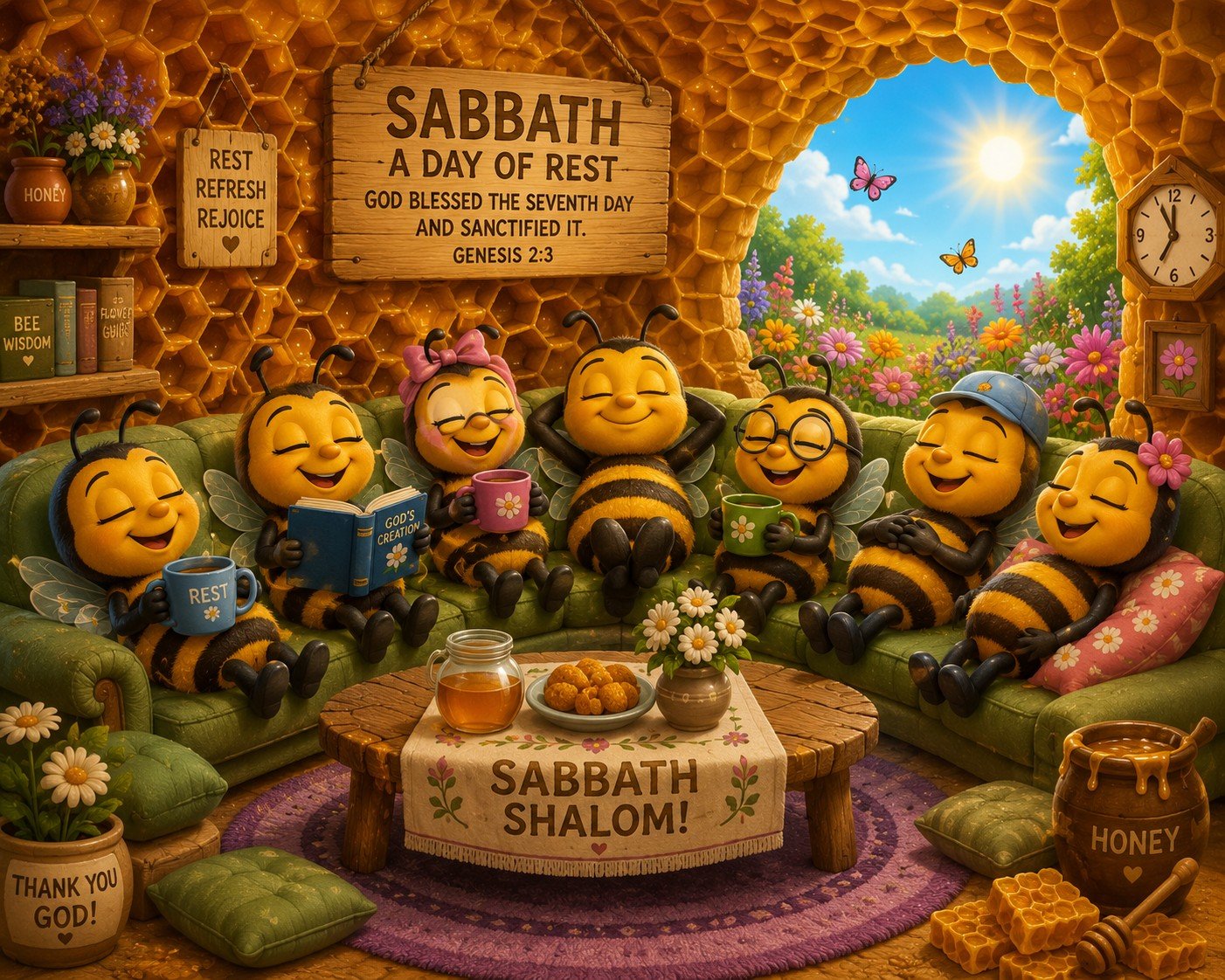
Then Dr Lee asked that man when the bees stop working and start their Sabbath rest. The answer he received made him even more thrilled as the beekeeper answered that the bees always stop working exactly at the sunset every Friday. It was so amazing! Bees keeping the fourth commandment and resting on every Sabbath beginning from the sunset on Friday, exactly as the Lord commanded in His Word (Leviticus 23:32; Genesis 1:5,14; Mark 1:32; Matthew 28:1).
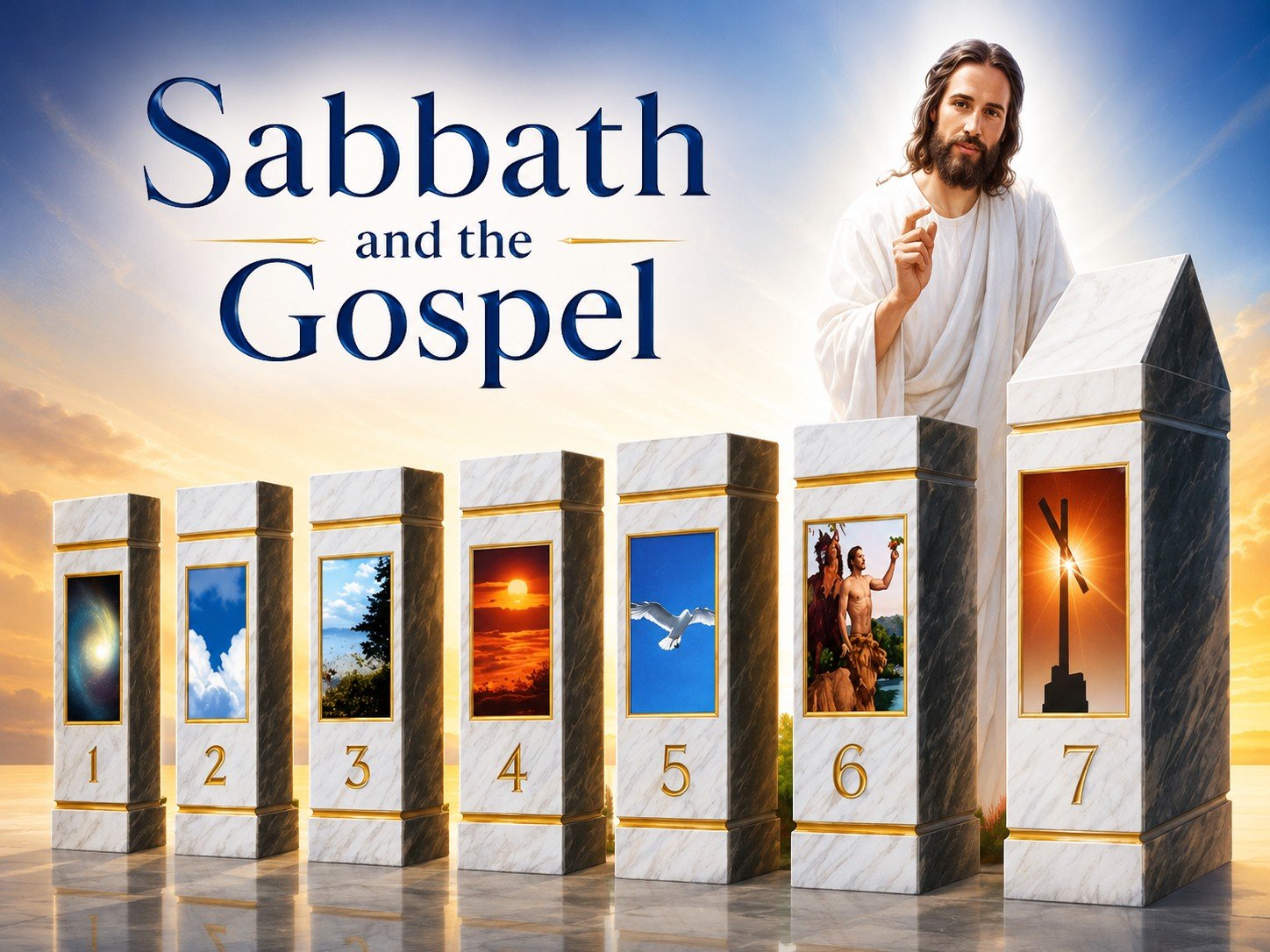
Intending to demonstrate that nothing could stop the obedient insects from observing the Sabbath rest, the keeper made a large opening in the clay part of the hive. Through that opening, Dr Lee could now see thousands of bees resting in the hive, and in spite of the disturbing noise and damage they kept on staying there. Only a few of them came outside but returned after a very short time.

It was such an incredible experience o see the bees remaining in hives throughout the entire Sabbath, although there were so many flowers outside and so much work they normally love to do.
Dr Lee was also told that if someone wanted to move these hives, it could be done only after sunset on Friday, as otherwise, it would cause a big problem.
The next day, on Sunday, Dr Lee visited that place again in order to check if the bees were working this time. And he wasn’t disappointed as all the same insects were very busy in the field collecting pollen and working very hard all the time.
That Sunday, Dr Lee wanted to take some of those extraordinary Sabbath-keeping bees with him, so the keeper started catching them for him doing it with his bare hands and encouraging also Dr Lee to do the same. He explained there was no reason to be afraid because the bees were stingless! That was another amazing discovery about those unique bees. Apart from keeping the Sabbath commandment, they were stingless!

In the meantime, Dr Lee called his friend in America asking him to do some research and find more information about those unbelievable bees. And his friend found out that the species was known to entomologists. Although they did not recognize their amazing Sabbath-keeping abilities yet they provided information about stingless bees from the Melipona species in Central and South America that maintained a weekly work cycle. The honey produced by them is very expensive in Brazil because it has exceptional taste and medicinal properties. Dr Lee was given some of that unique honey and shared it with his mother, telling her that it was a special sweet gift from God produced by His friendly stingless and Sabbath-keeping bees!

Normally, bees develop stings because they need them to defend themselves. However, since they lived in a safe, peaceful and clean environment, which was more like the one God created in the beginning, there was no need to develop stings. And because from generation to generation they were living in that very friendly stress-free environment they also managed to retain that amazing encoded by God natural Sabbath rest instinct. Other animals lost the same instinct, simply because they were constantly under the influence of fear and powerful stress, which has been known to cause the gradual eradication of certain natural reflexes.
Later on, when Dr Lee came back to the place where he was teaching the same group of Brazilian pastors, one of them remembered that when he was a child often after attending the Church on Sabbath his father took him for a walk and showed him Sabbath-keeping birds. Every day the birds were very busy building and rebuilding their nests, but on Sabbath, they never worked! Below I have also included a link to a very interesting video about beavers that seem to keep the fourth commandment by resting on every Sabbath.
Obviously, as sincere Bible students and believers, we don’t need any extra-biblical evidence to support the validity of the Sabbath commandment because the authority of the Word of God is more than enough for us. However, it is so exciting to know about the existence of some animal species that seem to be a living proof that Sabbath rest instinct really exists and therefore it had to be encoded in the beginning in all living creatures including us.
However, the fact that some animals still seem to rest on Sabbath shouldn’t surprise us so much because as a matter of fact, the fourth Biblical commandment embraces not only men but also animals: “Remember the Sabbath day, to keep it holy. Six days you shall labour and do all your work, but the seventh day is the Sabbath of the Lord your God. In it you shall do no work: you, nor your son, nor your daughter, nor your male servant, nor your female servant, nor your animals, nor your stranger who is within your gates. For in six days the Lord made the heavens and the earth, the sea, and all that is in them, and rested on the seventh day. Therefore the Lord blessed the Sabbath day and made it holy” (Exodus 20:8-11).
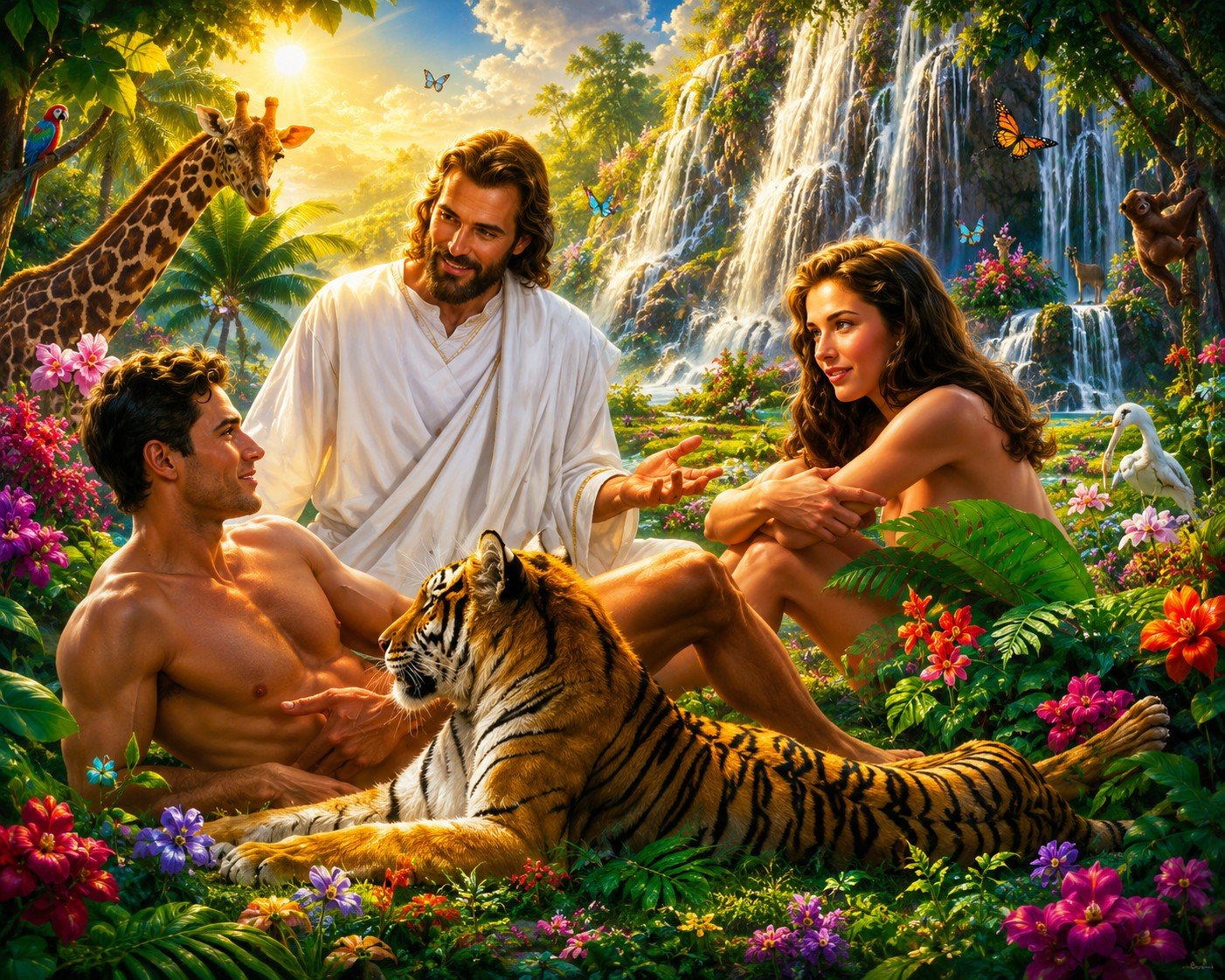
It is so thrilling to find some evidence that something like Sabbath instinct really seems to exist. It means that in the beginning, not only animals but also humans were created with it. And, although it was lost as a result of sin, we may pray to the loving God to restore it in us, because this weekly rest is an essential element of life and a special time of regeneration and healing for the spirit, soul (mind) and the body. For this reason, the Son of God performed more healing miracles on the Sabbath day than on any other day of the week. It was so because Sabbath also points to the final restoration and perfect redemption of sinful humankind which we can experience only through faith in Christ. Keeping the Sabbath doesn’t contribute to this gift of eternal life and salvation but by keeping this day holy we give evidence that we have already accepted this supreme gift of eternal life through believing in God’s Son and that we rest in Him. By keeping the Sabbath holy and resting on this special day, we manifest that we have accepted this finished and perfect salvation in Christ and that we, at last, ceased from our own works (from trying to gain salvation and eternal life by our own good works). And, this is exactly what Apostle Paul meant in Hebrews 4:9-10 : “There remains, then, a Sabbath rest for the people of God; for anyone who enters God’s rest also ceased from his own works”. On the other hand, if we know all this and keep on refusing to rest on every Sabbath we may give evidence that we haven’t yet accepted God’s supreme gift of eternal rest and salvation in His Son (read more on Sabbath and the Gospel). For Paul, the Sabbath of the fourth commandment was a memorial of salvation by faith alone. And, keeping it was an outward sign showing that salvation by faith in Jesus Christ alone has been already accepted.
SUMMERY
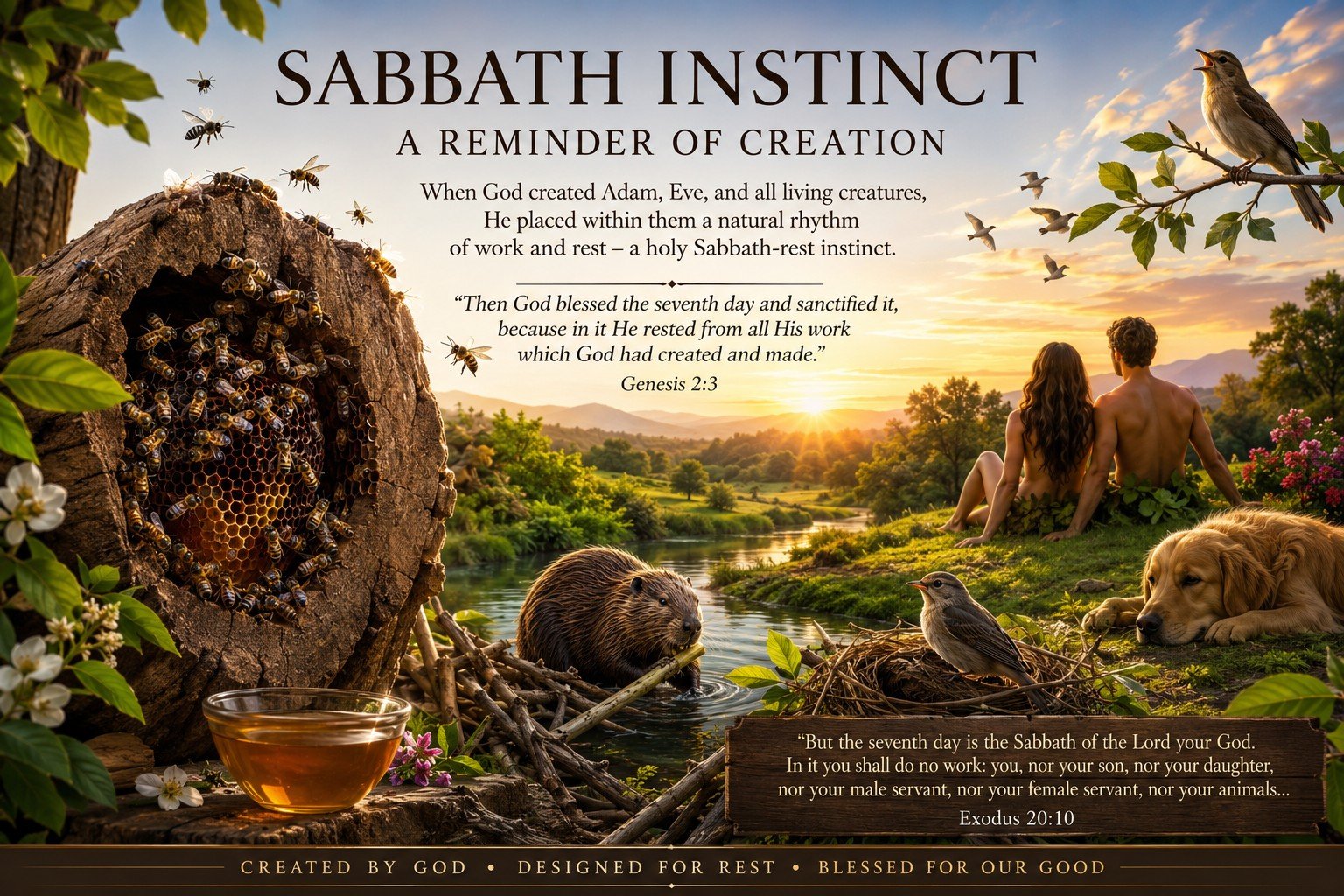
What makes the testimony about Sabbath-keeping bees, birds, beavers, and other animals even more fascinating is the fact that modern science has discovered the existence of biological rhythms that follow an approximately seven-day cycle. These rhythms are called “circaseptan rhythms.” They have been observed in living organisms at different levels, including humans, animals, plants, insects, fish, birds, and mammals. This is very interesting because the seven-day week does not come from the sun, moon, or stars in the same way as the day, month, or year. According to Scripture, it comes directly from Creation itself, when God worked six days and rested on the seventh day.
“Then God blessed the seventh day and sanctified it, because in it He rested from all His work which God had created and made” (Genesis 2:3).
From a Biblical point of view, this is extremely meaningful. It suggests that the seven-day rhythm is not merely a human tradition or religious invention, but may be deeply connected with the way life was originally designed by the Creator. When God created Adam, Eve, and all living creatures in a perfect world, He may have placed within them a natural rhythm of work and rest — a holy Sabbath-rest instinct, harmonising all creation with His own example.
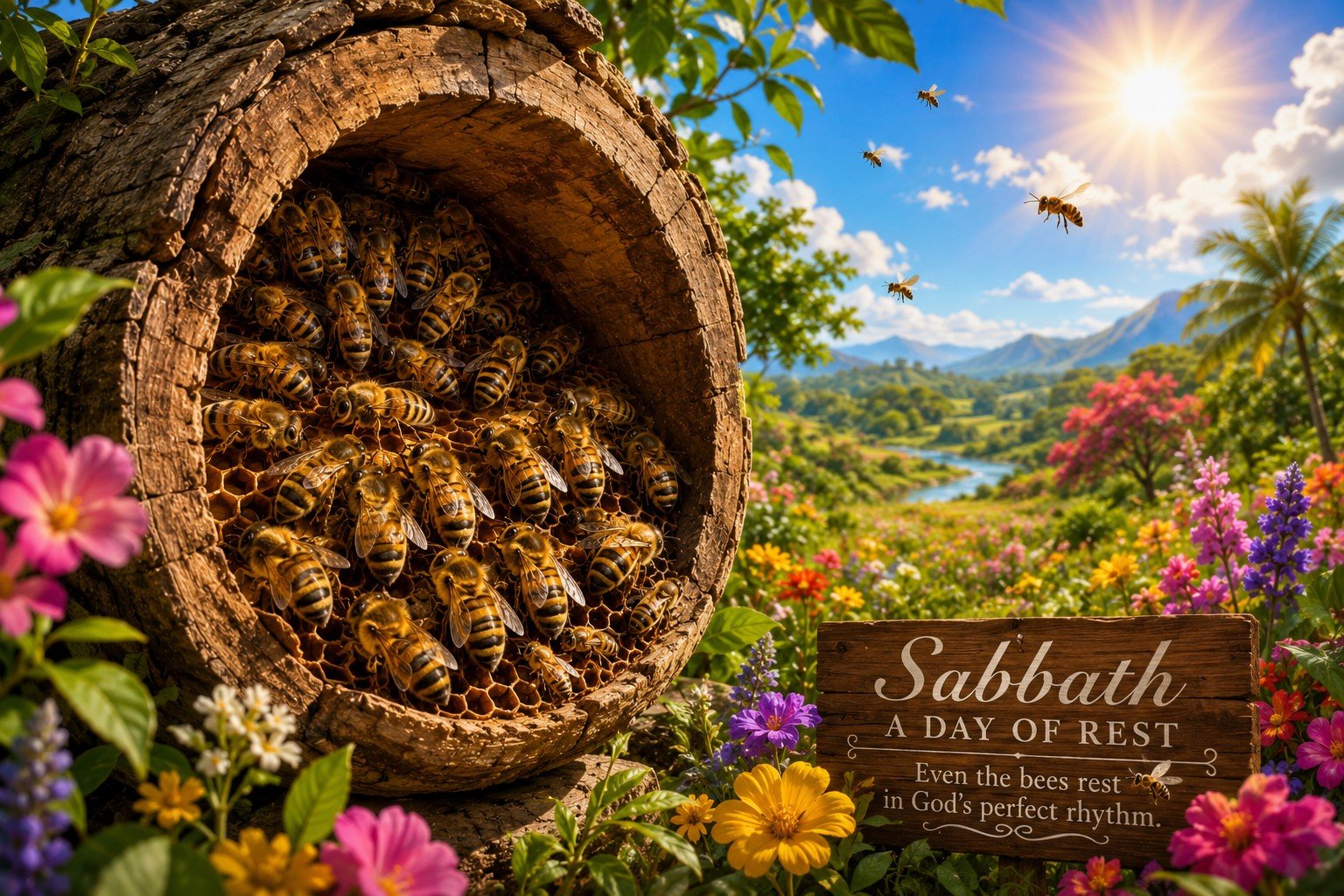
Of course, we must be honest and say that the reports about Sabbath-keeping bees, birds, beavers, oxen, and dogs are mainly testimonies and observations, not yet fully verified by controlled scientific studies. However, they should not be dismissed lightly. They fit beautifully with the Biblical teaching that the Sabbath was made at Creation, before sin entered the world, and that even animals were included in the fourth commandment:
“But the seventh day is the Sabbath of the Lord your God. In it you shall do no work: you, nor your son, nor your daughter, nor your male servant, nor your female servant, nor your cattle” (Exodus 20:10).
It is also important to remember that sin did not only damage human beings. It affected the whole creation. Fear, violence, death, hunger, danger, pollution, and constant stress became part of life on Earth. The Bible says:
“For we know that the whole creation groans and labours with birth pangs together until now” (Romans 8:22).
It is therefore reasonable to believe that under such sinful and stressful conditions, the original peaceful instincts placed by God in humans and animals became weakened, distorted, or almost completely erased.
Modern science confirms that chronic stress can deeply affect the body, brain, behaviour, memory, sleep, hormonal balance, and many natural functions. Long-term stress can disturb normal biological rhythms and even alter instinctive patterns of behaviour. In the light of this, it is not difficult to imagine that thousands of years of fear-filled existence in a sinful world could gradually weaken the original Sabbath-rest instinct in both humans and animals.
This may explain why most people and animals no longer show any clear natural desire to rest on the seventh day. Yet, in some special cases — especially among animals living in quiet, simple, less polluted, less threatening environments — traces of that original Creation rhythm may still remain. The peaceful stingless bees of the Amazon, the birds that reportedly stop nest-building on Sabbath, the beavers that seem to rest on Saturday, and similar accounts may be small but beautiful reminders of the harmony that once existed in Eden.
Interestingly, the stingless bees mentioned in Dr Sang Lee’s testimony also fit well with what is known about native stingless bees of Central and South America. Melipona and other stingless bees are real, gentle, highly valued bees, especially in Brazil and Amazon regions. Their honey is prized for its unique flavour and special properties, and these bees are known for their peaceful behaviour and importance in pollination.
Therefore, while we should avoid making claims that go beyond available evidence, these testimonies are still deeply encouraging. They do not prove the Sabbath by themselves, because the Sabbath already rests on the authority of God’s Word. But they may serve as beautiful signs in nature, whispering that the Creator’s seventh-day rhythm was once woven into all life. And if some animals still seem to retain a faint memory of that holy rhythm, how much more should we, created in the image of God, ask Him to restore in us the joy, peace, and blessing of true Sabbath rest.
“There remains therefore a rest for the people of God. For he who has entered His rest has himself also ceased from his works as God did from His” (Hebrews 4:9-10).
RELATED VIDEOS & ARTICLES
-
BEAVERS THAT REST ON SATURDAY (VIDEO)
-
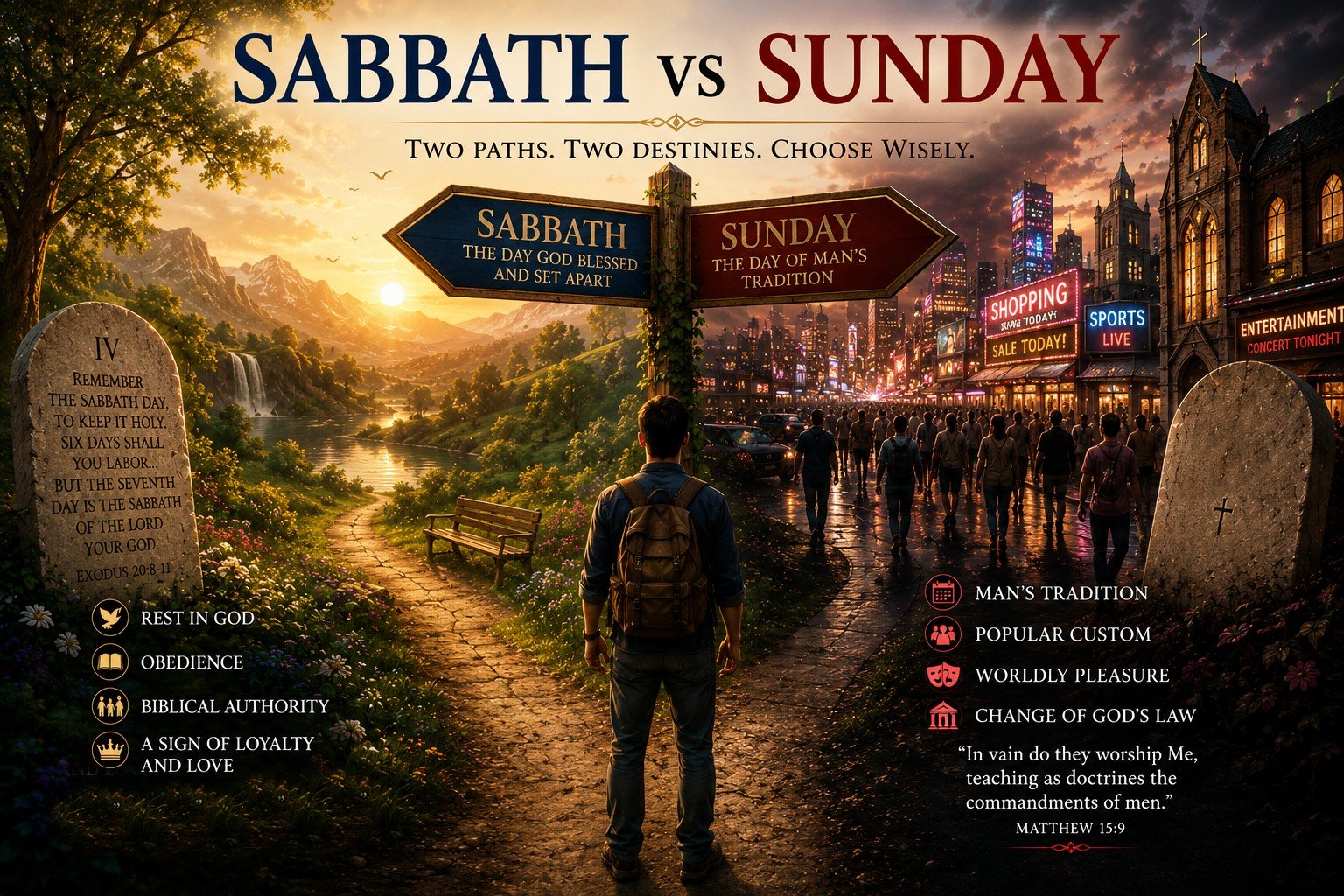
SABBATH VS SUNDAY
-
THE ADVENTIST DOG
-
A SATURDAY RESTING OX STORY (VIDEO)
-
DO BIRDS TAKE A SABBATH REST?
-
SABBATH AND THE GOSPEL
-
TWO KEY EVANGELICAL ARGUMENTS AGAINST SABBATH