
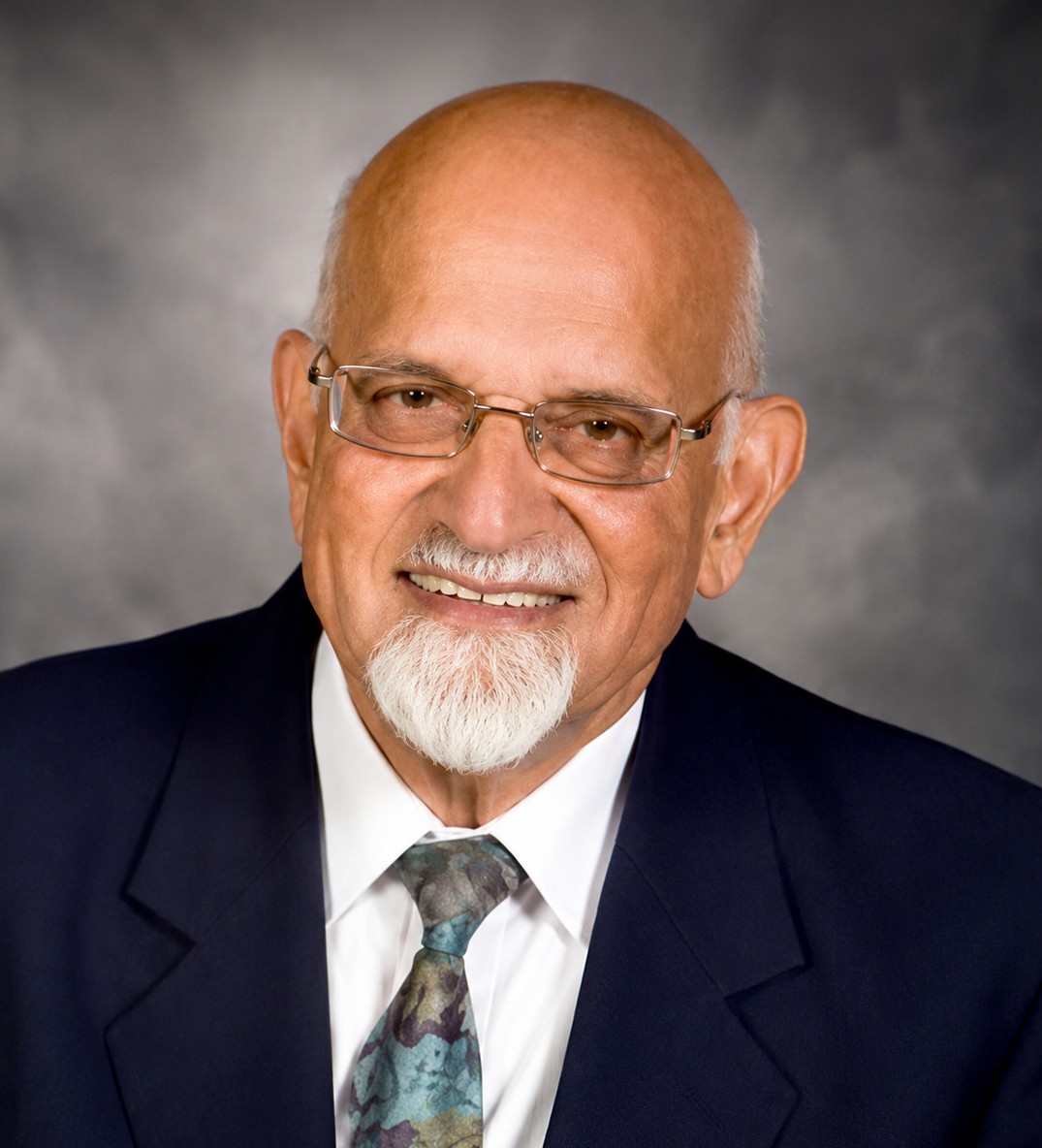
My Personal Experience with Pastor Sequeira
In 1990, I had the privilege of attending a series of lectures presented by Pastor Jack Sequeira at the health centre in the United States directed by Dr Agatha Thrash. Although I did not fully understand everything I heard at the time, I clearly sensed the powerful influence of the Holy Spirit, impressing upon my heart that this was a message God had given to His people. I became convinced that, if properly understood and accepted, it could bring genuine revival and prepare God’s church for the outpouring of the Holy Spirit.
Those meetings profoundly shaped my spiritual life and the direction of my ministry. For over three decades, I have continued to study and share this message through sermons, literature and websites, first in Poland and later in the United Kingdom. It is my sincere hope that others will also study it carefully and prayerfully, experience its transforming power, and faithfully share the wonderful truth of God’s love revealed in Jesus Christ, His life and cross.
This article presents Pastor Sequeira’s remarkable personal experiences, while a comprehensive account of his life and ministry can be found in the separate article [LINK].
About Pastor Sequeira
Pastor E. H. “Jack” Sequeira (1932–2022) was a devoted and faithful Seventh-day Adventist pastor, theologian, author, and evangelist. After studying at Newbold College and later completing a Master’s degree in Systematic Theology at Andrews University, he served for seventeen years as a missionary in Uganda, Kenya, and Ethiopia. In 1972, he and his family were expelled from Uganda by Idi Amin’s regime, losing almost everything they owned. They continued their missionary work in Ethiopia until 1982, when they relocated to the United States. Pastor Sequeira later shared that, because of the restrictions imposed by Ethiopia’s communist government, his family had to leave most of their possessions behind. However, in what he regarded as a remarkable answer to prayer and God’s providence, their belongings were eventually released and shipped to the United States. He later served as senior pastor of the Capital Memorial Seventh-day Adventist Church in Washington, D.C. Even after retirement, he continued preaching the everlasting gospel and the righteousness of Christ throughout the world, blessing thousands of lives through his sermons, books, and Bible seminars.
Inspired by the biblical truths I heard, I purchased dozens of Pastor Sequeira’s audio cassettes together with several of his commentaries on the book of Romans. After carefully studying these materials, I prepared a series of lectures entitled “The Truth as It Is in Christ”.
Pastor Jack Sequeira repeatedly risked his life while standing for the truth in Uganda under Idi Amin as well as in countries ruled by communist governments and religious leaders such, as Abuna (patriarch of the Ethiopian Orthodox Church) who tried to kill pastor Sequeira for not submitting to his demand to refuse holding an evangelistic crusade. As a result of that blessed and protected by God effort, seventy students were baptised and joined the Seventh Day Adventist Church.
Pastor Sequeira’s Christian experience is blessed with numerous extraordinary stories proving God’s inspiration, guidance and protection while with regards to his opponents, such as Angel Manuel Rodriguez (ex director of BRI), no such evidence is available.
When Apostle Paul was accused by false brothers (legalistic Judeo-Christians) of being a self-appointed apostle and proclaiming heresies, to prove he was called and guided by God, Paul often denied those accusations by telling Christians how miraculously God protected him whenever he risked his life proclaiming the gospel. The same is true with regard to Elder Sequeira, who also risked his life while proclaiming the fully recovered everlasting gospel and was always protected by God.
Unfortunately, as two thousand years ago some Judaizers attacked Paul and the gospel he preached also today pastor Sequeira and the gospel he proclaims is opposed by some Adventists (modern Judaizers) such as Angel M. Rodriguez and BRI, Larry J. Kane, or Colin and Russell Standish.
Below I have included some of the remarkable experiences Pastor Sequeira shared in his sermons and lectures—experiences that have encouraged and strengthened the faith of countless believers around the world.
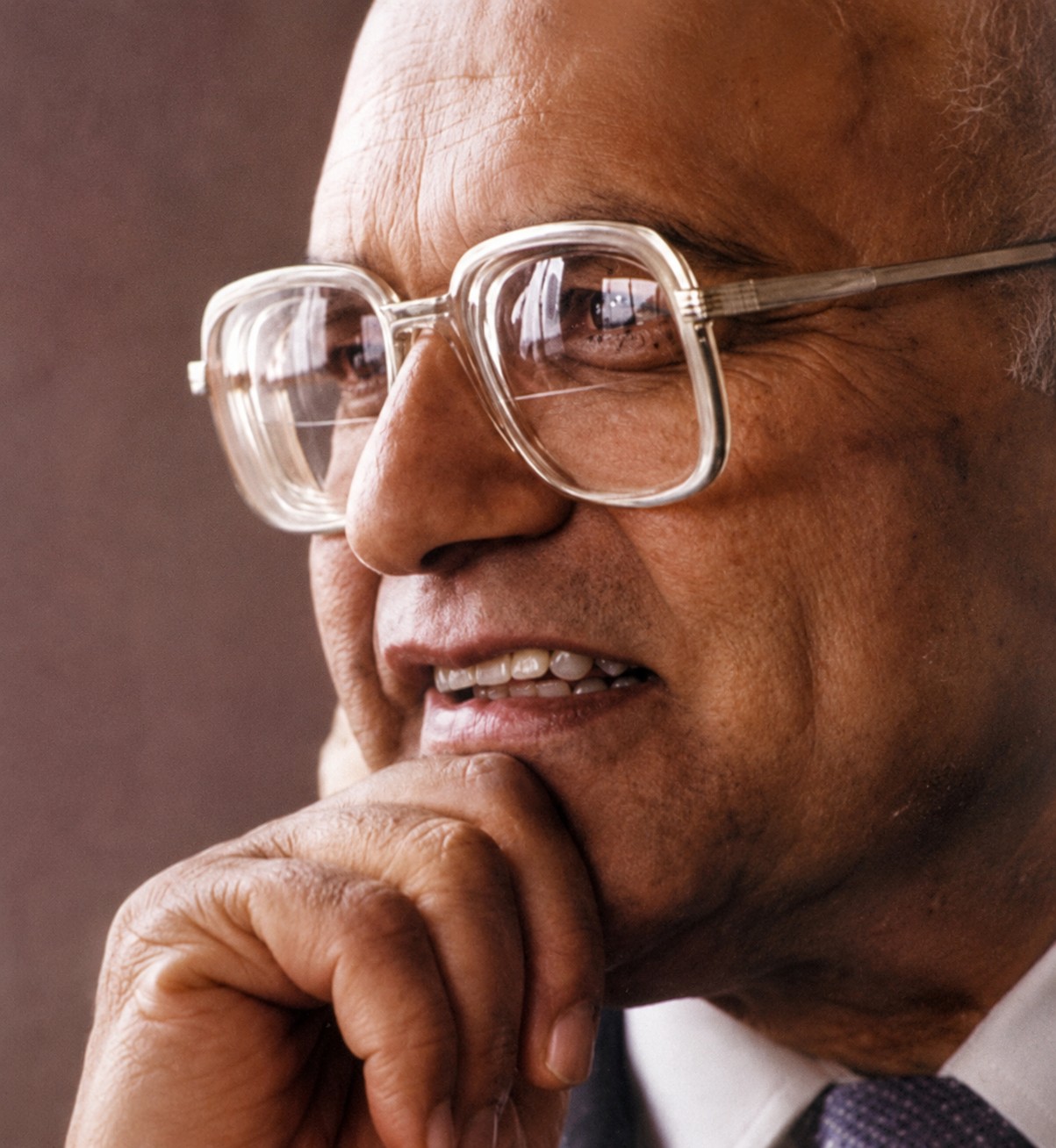
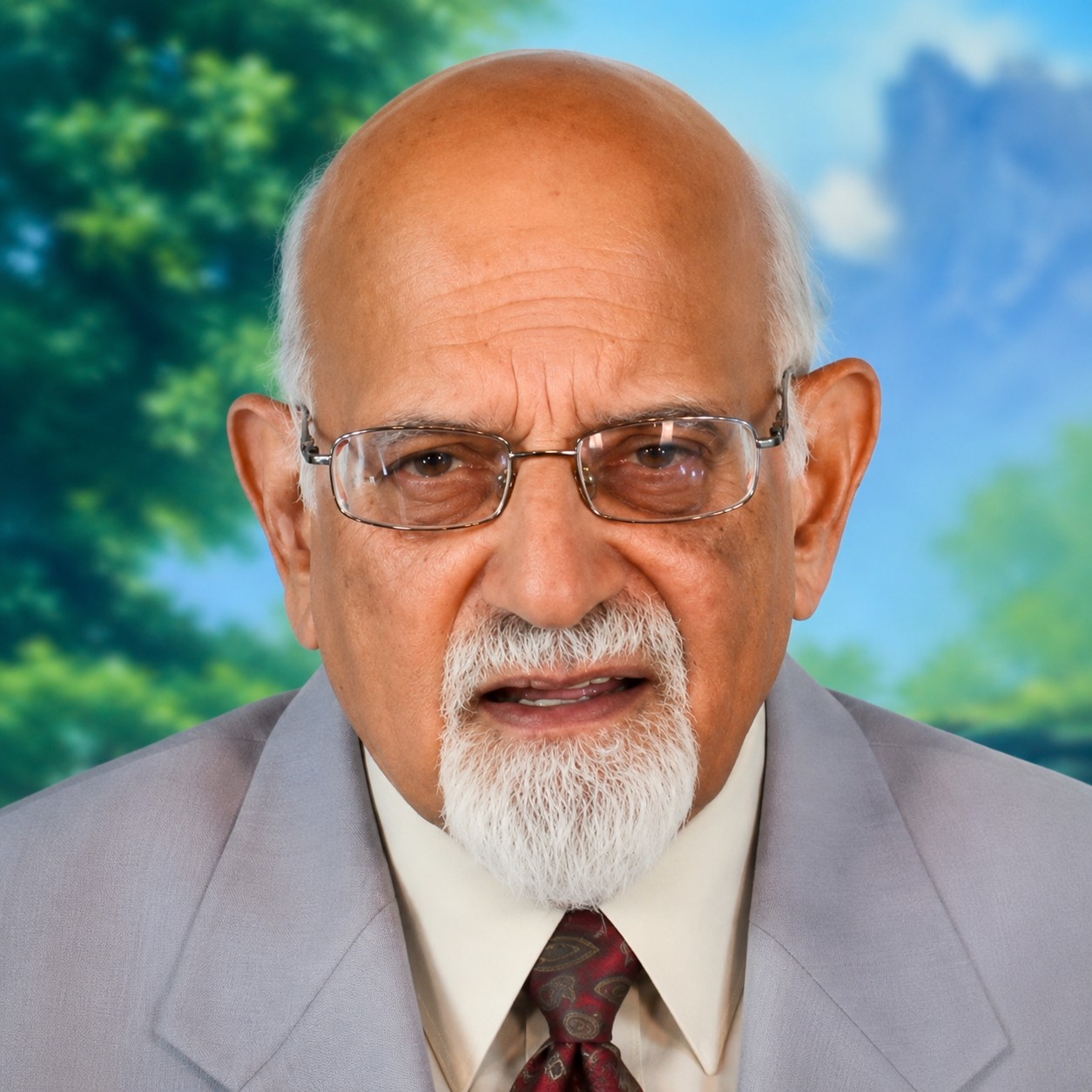
Pastor E. H. “Jack” Sequeira (1932–2022)
Facing Idi Amin’s Guard Squad in Uganda
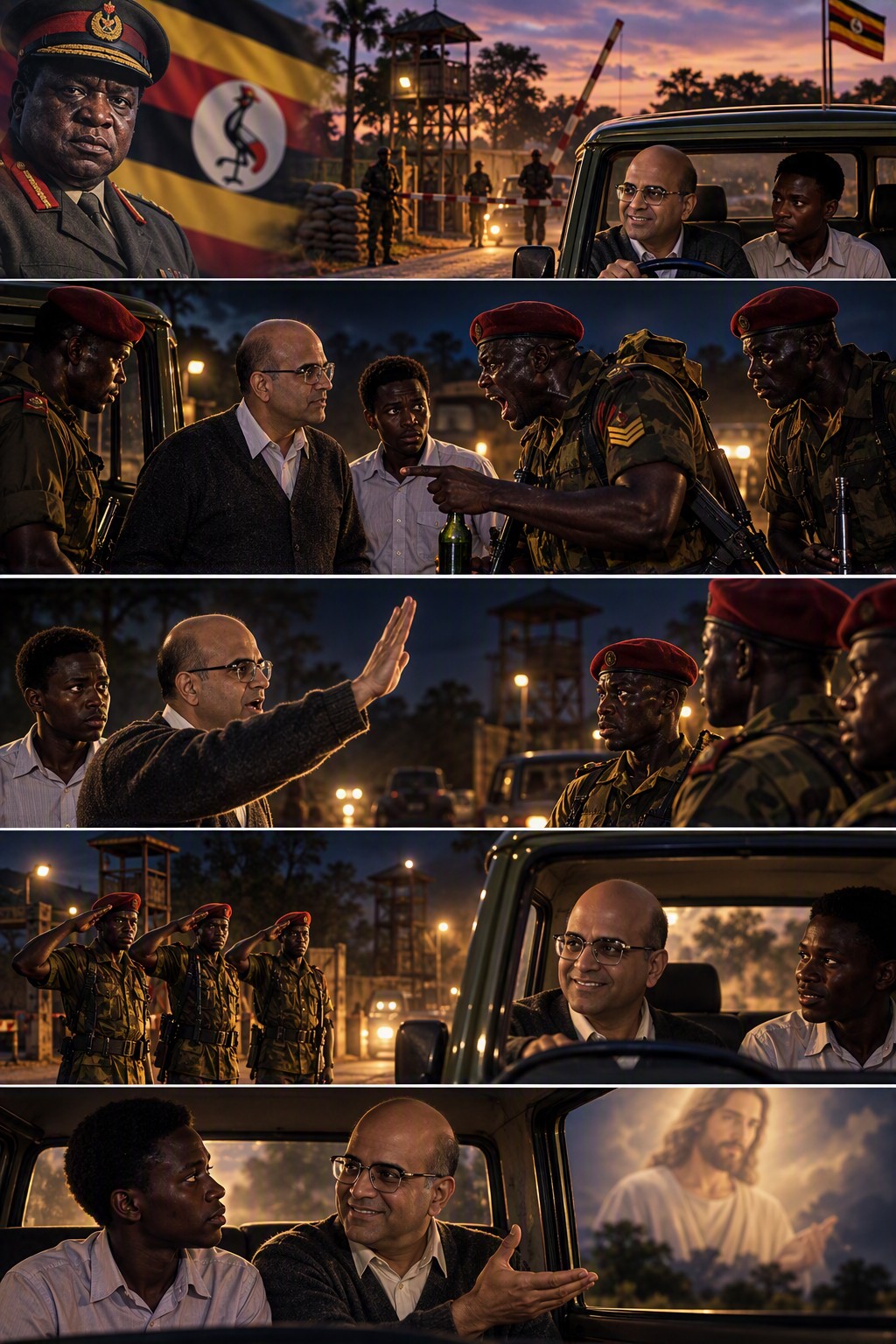
During one of the sermons he preached in London, pastor Sequeira shared an interesting experience from the time when he was serving as principal of the Seventh-day Adventist Theological Seminary in Uganda, during the years when the country came under the dictatorial rule of Idi Amin. Because of his bizarre and irrational ideas, some people jokingly referred to him as “Idiot Amin.”
One day, after an electrical fault, the fuses at the seminary blew, leaving the entire school without electricity. They had to travel to a town to obtain replacement fuses. However, the only route passed through one of Idi Amin’s military bases, where the soldiers were notorious for being drunk, violent, and unpredictable. They would sometimes kill innocent travellers and steal their vehicles.
Pastor Sequeira felt it would not be right, as principal, to send someone else on such a dangerous journey. Instead, he decided to go himself, taking with him a student who spoke the local language.
As they drove through the military base that evening, three drunk soldiers stopped their vehicle. Shouting aggressively, they dragged them out of the car. The frightened student tried to explain who they were, but the senior-ranking soldier ordered the others to shoot him.
At that very moment, Brother Sequeira suddenly said something he had never intended to say. In a loud, commanding voice he shouted, “Attention!” Immediately, all three soldiers snapped to attention.
Then he said, “What is the meaning of this? Don’t you know who I am? I don’t want you stopping us again when we come back.”
With that, they calmly got back into the vehicle and drove on. Once they were safely back in the car, the student, still trembling with fear and utterly astonished, asked, “Brother, why did you speak to them like that?”
Pastor Sequeira replied, “I never intended to say those words. Do you remember what the Lord Jesus said? “When they arrest you, do not worry about what to say or how to say it. At that time you will be given what to say, for it will not be you speaking, but the Spirit of your Father speaking through you.” I believe that is exactly what happened. The Holy Spirit gave me the very words I needed at that moment.
Some time later, as they were returning through the same military base, those very same three soldiers were standing in a line, as straight as ramrods, at attention. As Brother Sequeira drove past, they all saluted him.
Conversion of Rebellious Students (Persecution, Power of Gospel)
Story as told by Pastor Jack Sequeira in one of his sermons:
“Toward the end of my stay at Andrews University, one of my friends directed my attention to the message of justification by faith which the Lord gave to His people in 1888. That truth made an enormous impression on me, so much so that from that time on I devoted most of my time to everything that could help me understand it better, praying that the Lord would also help me proclaim this wonderful truth. In 1973, shortly after completing my studies at Andrews University, I went to Ethiopia. Only a few days after my arrival, the president of the church in that country telephoned me and told me that Adventists owned a college in Ethiopia, but because of financial difficulties they had been forced to admit students who were not Adventists. This led to the point where non-Adventists made up as much as 75 percent of all the students at that college. The parents of these students were very wealthy. Unfortunately, the young people were especially unruly and rebellious, and at times even dangerous to those around them. For this reason they had previously been expelled from government schools. So their parents sent them to our school in the hope that perhaps Adventists would be able to change them. But these young people had no intention of changing and showed hostility toward everything connected with religion. Because of this, during a Week of Prayer, they even openly rebelled. They overturned two cars belonging to the school and three motorcycles and set them on fire. They did not want anyone to force them to attend worship services or Bible lectures. After this incident, the administration decided to close the school for a time. Shortly afterward, however, the government forced the school leadership to reopen it and even to readmit those rebellious students—the same ones who had burned the cars and motorcycles. The principal and the teachers then wondered whether it might be better to cancel the Week of Prayer. Finally, however, they said, ‘This is an Adventist school, and we cannot give up the Week of Prayer. This time, however, we will ask one of the national ministers to lead the meetings, not a foreigner, since previously the main speaker had been a pastor from Canada. When our own man speaks,’ they said, ‘they certainly will not harm him.’ So a speaker was chosen, but two days before the Week of Prayer began, that man changed his mind because he feared that this time his car would be burned. In this situation the church president desperately looked for someone who would replace him. The rebellious youth were so dangerous that no one wanted to take such a risk. Finally he contacted me, asking me to conduct the meetings. Before I gave him an answer, I prayed: ‘Lord, You said in Romans that the gospel is Your power. Please show now that this is true. You have allowed me to know this wonderful truth; now let me test its power on these rebellious young people.’ Immediately after that telephone conversation I boarded a plane, and shortly afterward I arrived in Addis Ababa. Several missionaries were waiting for me at the airport, and they told me I had acted unwisely by agreeing to do this. I replied, ‘Yes, you are right. It does indeed look like an unwise decision. So I have one request: if you have to bury me, remember that I like gladiolas.’ Finally I reached the college. I did not yet know that five leaders of those unruly young people had prepared a pile of stones in front of the church in order to stone me if they did not like what I said. When the service began, all five sat in the front row directly in front of the pulpit, looking me straight in the eyes. And so I began a series of sermons on the gospel from the book of Romans. But thanks be to God, I was able to speak without interruption. On the third day something extraordinary happened. One of those five leaders came up to me and said, ‘This is the most wonderful news I have ever heard!’ Some time later all five were baptized and joined our church, and the chief leader of those rebellious youth even graduated from Andrews University and now works in the church as a minister.”
This encouraging experience confirms even more strongly that what the apostle Paul wrote in Romans 1:16 is true: “For I am not ashamed of the gospel of Christ: for it is the power of God unto salvation to every one that believeth.” — Romans 1:16. Some believe that in order to restore order and raise the level of morality—whether in the family, the state, or even the church—it is necessary to introduce more prohibitions, commands, and stricter laws. But such a method has more in common with communism and dictatorship than with Christianity. This goal cannot be achieved by any compulsion, external improvement of behavior, or superficial growth in morality forced by fear of punishment. Only the gospel can accomplish it—the gospel that is the power of God, the gospel whose acceptance leads to being born of the Spirit.
The Seventh-day Pentecostal Church (Sabbath)
If we present the Sabbath only in the light of the law, it is not surprising that many sincere Evangelical Christians struggle to accept it. The Sabbath can be fully understood only in the light of the gospel. Among Adventist theologians, Pastor Jack Sequeira was one of the strongest advocates of presenting the Sabbath as part of the gospel of righteousness by faith. While preaching in London, he shared a remarkable experience from Ethiopia. A Pentecostal pastor once asked him, “Jack, how is it possible that you preach the gospel so beautifully and still keep the Sabbath?” Sequeira replied, “Would you like me to answer that question privately, or in front of your whole congregation?” The pastor chose the second option.
As a result, Sequeira was invited to present a series of Bible studies on the Sabbath to approximately 800 members of one of the largest Pentecostal churches in Addis Ababa. Instead of presenting the Sabbath merely as a commandment, he showed that it is God’s sign of righteousness by faith and a memorial of Christ’s finished work of redemption.
The result was extraordinary. The entire congregation accepted the seventh-day Sabbath and chn=anged the name of their Church to the “Seventh-day Pentecostal Church.”
The story beautifully illustrates an important truth: when the Sabbath is presented in the light of the gospel, sincere Christians often see it in a completely different way.
Dahud, Egyptian SDA (Dying In Christ)
In 1990 I was invited for a one year-long health training to America and we were also invited by Dr Agatha Thrash to the Uchi Pines institute in Tennessee, where she invited Pastor Jack Sequeira and for 7 days twice a day we could listen to him explaining the gospel on the basis of the book of Romans.
And when he was dealing with the passages of Romans where Paul stated that we all died with Christ, Pastor Sequeira told us that when he was working as a missionary in Ethiopia, he was invited to preach during the week of prayer in an Adventist college.
And one day, after he finished preaching, a senior student from Egypt whose name was Dahoud (Da’ud), asked pastor Sequeira if it was OK for him to join Egyptian army and fight against Israel. So, Pastor answered that he shouldn’t carry arms and kill others because he died in Christ and was hidden with Christ in God.
But Dahoud said, no I am not dead and will join the army. So, Pastor gave him few Bible verses to prove he died with and in Christ. But since Dahoud disagreed again, pastor Sequeira said, OK Dahoud, but remember you are not opposing me but the Word of God.
Soon after that, Dahoud was testing a tractor with his instructor and when they were driving down the hill, the breaks stopped working, and the tractor hit a big tree. Dahoud was taken to the hospital and after careful examination was pronounced dead by two physicians.
However, at the same time a group of students from the seminary school were praying for him. And when the nurse came to cover the body of the dead Dahoud she noticed that his eye blinked so she quickly called the doctor and he managed to detect a faint heart beat so Dahoud was brought back to life by God.
When pastor Sequeira was told that Dahoud was alive, he came to the hospital to visit him after a week or so. And when he came, Dahoud was lying on the bed with his head almost completely covered with bandages except his eyes and mouth.
So, pastor Sequeira said, Hi Dahoud, how are you? And he said he would never forget Dahoud’s answer. When pastor asked, how are you, the same Dahoud who previously refused to accept the truth about his death in Christ, said “Dahoud is dead. You are now talking to a Christian.” He learned the truth in a very painful way.
8,000 Adventist Youth Imprisoned by Idi Amin (Sabbath, Persecution, Legalism, Lack of Assurance of Salvation, Doubts About God’s Love)
If we base our salvation on our own righteousness and on what level of Christianity we represent, and not on Christ, then it may turn out that in the time of trial, lacking the assurance of salvation or the conviction that Christ is our righteousness, we will deny Him, just as Peter did.
We will deny Him because, focusing on ourselves and not on Christ, it will seem to us that we are not yet good and righteous enough to be able to die with the conviction that we will certainly find ourselves among the saved.
In reference to this, Pastor Jack Sequeira relates a very sad experience that took place in Uganda during the bloody rule of dictator Idi Amin.
At that time, there was a large dynamic group of young Seventh-day Adventists in that country, numbering up to 8,000 people.
Idi Amin hated Christians, and one Friday he ordered his army to surround these 8,000 young Adventists.
The soldiers then presented them with an ultimatum: either the next day, on Sabbath, they would go to work, or they would all be shot.
Additionally, they ordered them to utter blasphemies against God and Christ.
What do you think, how many of those 8,000 young people preferred to lose their lives rather than deny Christ and insult God?
It may be hard to believe, but out of those 8,000 young Adventists, only one young man refused to perform work on the Sabbath and did not utter blasphemy against God and Christ!
Only one person! When after 2 years the communists released all these young people, our pastors tried to find out why, except for one person, everyone broke the fourth commandment and denied Christ?
As a result of many conversations conducted, it turned out that it was so because each of them thought that if they lost their life at that moment, they would not find themselves among the saved.
All these young people did not feel good enough, righteous enough, to have the assurance of salvation.
Feelings told them that if they died then, with such a level of sanctification they could not be saved.
They were afraid to die for Christ because back then everyone – except that one – did not understand the gospel.
Additionally, it seemed to them that by denying Christ they committed the unpardonable sin.
When, however, Pastor Sequeira was later asked to present to them the message of salvation solely through faith in Christ based on the Letter to the Romans, and when they understood how great God’s love is, and that Christ does not reject them despite the fact that they denied Him, then those same young Adventists were completely transformed.
Shortly thereafter, a time of trial came upon them again, and when they were presented with the same ultimatum, then out of those several thousand young people, not even one person denied Christ, and many of them died a martyr’s death with a song on their lips and full assurance of salvation.
Among them was also a young girl, to whom a soldier said: “If you do not go to work tomorrow, I will kill you!”.
To which she replied with a smile on her face: “You can kill my body, but you cannot take away the eternal life that the Lord Jesus gave me”.
Irritated by her stubbornness, the soldier threw her to the ground and jumped on her, breaking her spine.
This brave girl survived this experience, but since then she has been paralyzed.
She still, however, enjoys inner peace, and her paralysis constitutes for many people a testimony of faith and the power of the gospel – the truth and love of God, which brought her freedom not only from sin and death, but also from the fear of death.
As for that young Adventist who previously was the only one among 8,000 who did not deny Christ, God protected him from death, and he currently works in Sweden as a doctor.
This sad experience shows how important a proper understanding and acceptance of the truth that is in Christ is, how essential it is to rely solely on the righteousness of the Savior in striving for salvation.
According to what the Word of God says, we too will one day face persecution, and some of us even death. And when that time comes, feelings will then tell us that we are not yet good enough to die, possessing at the same time the assurance of salvation.
But if we focus on Christ, His love, and His righteousness, which is imputed to us through faith, then even when we face death, the Holy Spirit will remind us that indeed “there is therefore now no condemnation to them which are in Christ Jesus,” the Holy Spirit will remind us of the words of Jesus Christ from the Gospel of John 5:24: “Verily, verily, I say unto you, He that heareth my word, and believeth on him that sent me, hath everlasting life, and shall not come into condemnation; but is passed from death unto life.” John 5:24
If, therefore, we look not at ourselves but at Christ and believe God’s promises, then we will never deny our Savior, we will not dishonor God, and no decree, not even a death decree, will force us to work on the Sabbath.
Ten Young Pastors Left Hartland
Pastor Sequeira was once invited by Hartland leaders for a public discussion. As a result of that debate, ten young pastors changed their views and couldn’t identify themselves anymore with Hartland’s teachings as they realised that their leaders were opposing the truth of the gospel using Bible verses and Ellen White quotes out of context instead of proving their point in a systematic biblical way. The above video is the best example of how they manipulate the Bible and the writings of Ellen White. Read or watch Sequeira’s seminars on Romans and you will see a huge difference.
Manuel Rodrigues Didin’t Allow Sequeira Preach at Camp Meeting
Unfortunately, Adventists who try to share either the message associated with the in Christ motif or His true incarnation often experience opposition or even hostility. One of them is Pastor Jack Sequeira who by the grace of God has been travelling all over America and the world proclaiming the good news of the gospel including its three most vital aspects (Christ’s experience of second death, His true incarnation and the universal salvation in Him). And during those years the SDA Biblical Research Institute (especially its former director – Angel Manuel Rodriguez) desperately tried to silence him. For example, on one occasion the pastor of the Spencerville SDA Church in Washington DC, who was Sequeira’s predecessor at the Capital Memorial Church (also Washington DC), asked him to be the main speaker at the annual Spencerville’s camp meeting because he wanted “his people to hear the true gospel”. The Spencerville Church, however, is attended by most of the GC brethren, including A. M. Rodrigues. Therefore, when everything was already arranged and elder Sequeira was supposed to be the main speaker at that camp meeting, Rodriguez, using his position, forced the Spencerville pastor to choose another speaker. When he asked for the reason, Rodriguez only explained he couldn’t allow Sequeira to speak there because he preached federalism. But when pastor Sequeira was told about that humiliating news and asked for a meeting with Rodriguez and the pastor of the Spencerville Church (to witness the conversation) Rodriguez refused to give him the opportunity to defend himself and his teachings.
It is true that we are not to allow heresies and false ideas to undermine the fundamental truths found in the Word of God but no one, including the leaders of the Church, has the right to threaten or deprive our pastors or members of the freedom of expressing their beliefs without proving that their ideas can’t be sustained by the Word of God. The Lord never gave leaders, pastors and men like A. M. Rodriguez authority to use their position in order to silence members because the ideas they try to share do not match their own preconceived understanding!
Using the authority of his position Angel M. Rodriguez committed the very same sin of the violation of religious freedom. He dared to deprive thousands of Adventists of the opportunity to hear the most wonderful message of the gospel of freedom that could had been presented to them by the SDA ordained Pastor (Jack Sequeira) who repeatedly risked his life while standing for the truth in Uganda under Idi Amin as well as in countries ruled by communist governments and religious leaders such as Abuna (patriarch of the Ethiopian Orthodox Church) who tried to kill pastor Sequeira for not submitting to his demand to refuse to hold an evangelistic crusade. As a result of that blessed and protected by God effort, seventy students were baptised and joined the Seventh Day Adventist Church.
Pastor Sequeira’s Christian experience is blessed with numerous extraordinary stories proving God’s inspiration, guidance and protection while with regard` to Angel Manuel Rodriguez no such evidence is available.
When Apostle Paul was accused by false brothers (legalistic Judeo-Christians) of being a self-appointed apostle and proclaiming heresies, to prove he was called and guided by God Paul often denied those accusations by telling Christians how miraculously God protected him whenever he risked his life proclaiming the gospel. The same is true with regards to elder Sequeira who also risked his life while proclaiming the fully recovered everlasting gospel and was always protected by God.
Unfortunately, like two thousand years ago some Judaizers attacked Paul and the gospel he preached also today pastor Sequeira and the gospel he proclaims is opposed by some Adventists (modern Judaizers) such as Angel M. Rodriguez, Larry J. Kane, or Colin and Russell Standish.
Confrontation with the Abun and Monks
…
My Personal Faith Journey
By E.H. “Jack” Sequeira
For some time now individuals and organizations have made verbal and written public statements about me, and my theology. Many of these statements contain error and falsehood. True and good journalism always checks for accuracy when writing about someone else. Since this has not been done, the purpose of this paper is to set the record straight.
Let me start with my historical background. My parents originated from Goa, a Portuguese enclave on the west coast of India. They migrated to the British Colony of Kenya, East Africa, in 1913. My father worked in Nairobi (capital of Kenya) as an accountant for the British Government. It was here that I was born in 1932. Four years later my parents moved to Mombasa, the main port of Kenya and the second largest city of the country.
This is where I grew up and, being devout, my parents raised me as a staunch Roman Catholic. I served as an altar boy in my younger years. My elementary and high school education was completed in Catholic schools.
In the early 1950s, the Mau Mau uprising by one of the largest tribes, the Kikuyu, took place in Kenya. Their home area in the highlands of Kenya was taken over by English settlers and the Kikuyu fought for independence under the leadership of Jomo Kenyatta, who later became the first president of Kenya.
At that time, the British Government introduced national service and I moved to Nairobi to do my two years’ service. Having finished my national service, I remained in Nairobi working as an architect.
Across from the home where I was living was a Seventh-day Adventist missionary, Robert Wieland and his family. He was the president of the Central Kenya Field. Since public transportation was not very reliable in those days, one of his burdens was to help the African pastors with reliable means of transportation. Many pastors were in charge of eight to ten churches. Elder Wieland would buy wrecked motorcycles from insurance companies and fix them for the workers.
One of my hobbies at that time was racing motorcycles. It was this that led Elder Wieland to come to me for help in the above project. We became good friends, but not once did he bring up the subject of religion. I, however, had learnt some of the beliefs of Seventh-day Adventists from my landlady’s daughter, who was a member of the SDA church.
However, in 1957, the Central Seventh-day Adventist Church in Nairobi planned an evangelistic effort. My landlady, a Presbyterian, wanted to attend these meetings, at the request of her SDA daughter who had moved to the U.K. for graduate studies. She went to Elder Wieland, requesting that he take her to the meetings. Being wise, Elder Wieland came to me with the request that I take her. He knew that, as a staunch stnt∫ zagorzały Roman Catholic, I would not attend these meetings on my own.
As a result, I sat at the back of the church and listened to Elder Dale Ringering, the evangelist, for some three weeks. It was the first time in my life I was exposed to the prophecies and truths of the Bible. As a Catholic, I had not even seen a Bible, let alone read one. The Holy Spirit convicted me, and, as a result, I decided to join the Adventist church. This required that I go through a series of baptismal classes before I could be baptized.
The missionary who gave me these baptismal studies was the late Elder Joe Hunt. Twice a week I rode two miles to his home on my motorcycle. I could not understand, at that time, why Elder Wieland was unable to give me these studies, since he lived right across the road from where I lived. However, on the day Elder Wieland was baptizing his son Bob, Elder Joe Hunt requested him to baptize me at the same time, since my baptism studies were completed and Elder Wieland was already in the baptistry.
Many years later I learned why Elder Wieland was unable to study with me. His manuscript on “1888 Re-examined,” co-authored by Elder Don Short, was rejected by the GC [General Conference] Committee and, as a result, Wieland was black-listed by the missionaries of the East African Union. Consequently, Elder Wieland was not allowed to study with me, lest he influenced me with his “strange beliefs on 1888.” So the accusation often made that my theology was influenced by Wieland on the 1888 message is entirely false, even though we both came to the same conclusion regarding the 1888 message independently.
Not long after I became a Seventh-day Adventist, I discovered that I had moved from one form of legalism (salvation by human effort), the Roman Catholic Church, to another form of legalism, the Seventh-day Adventist denomination. Both churches had given me no assurance of salvation, unless I met all the requirements of God (which I was failing to accomplish, no matter how hard I tried). This is a common problem, even today, among our members.
Six months after my conversion to the Seventh-day Adventist church, I was entitled to a three months home leave from work, a rule established by the British Government for non-Africans living in Kenya allowing them to visit their original homeland. Since I had never lived in India, I decided to ride my motorcycle from Nairobi to London. This was in 1958.
Just before I left, the youth director of the East African Union, Elder Bob Osmunson, handed me a Youth Instructor magazine with the words that he was convinced God had called me to the gospel ministry. This issue had an article on Newbold College in England and he encouraged me to attend it, that is, if I made it to England on a motorcycle. Needless to say, being an introvert, I fought against his suggestion. But all through my journey I could not escape the idea that God called me to the gospel ministry.
introvert – (psychology) a person who is more concerned with his own thoughts and feelings than with other people or happenings outside him. Introverts are more reserved, less outgoing, and less sociable. They are not necessarily asocial, but they tend to have smaller circles of friends, and are less likely to thrive on making new social contacts.
So, when I arrived in the U.K., two months later, I finally decided to study for the ministry. After serving as a literature evangelist for a year, I attended Newbold College for four years (Fall of 1959 to the Spring of 1963) and graduated with a B.A. degree in theology. During my four years at Newbold College, I made many promises to God, especially at the end of the Weeks of Prayer. But all these promises were like “ropes of sand.” Hence, I graduated with a B.A. degree in theology but with no peace or assurance of salvation.
After graduation I married my wife, Jean, and the East African Union recommended we come to the U.S., where I could study for my M.A. degree in theology (in order to qualify for a work permit in East Africa). I hoped that Andrews University would give me the assurance of salvation for which I was desperately looking. Unfortunately, this did not happen (I don’t think it was the fault of the professors). As a result, I graduated in 1965 with an M.A. degree in Systematic Theology but still no peace or assurance of salvation in my heart.
I came to the conclusion that maybe serving God in the mission field would bring that to me. But five years of mission service in Uganda brought me no consolation. However, it was at this time, I believe, God stepped in. Here are the circumstances.
In 1969, the British Parliament cancelled all British Passports issued in the colonies. Since this is what I had, it meant I became stateless. As a result, the Uganda Government under Milton Obote cancelled my work permit. This left me a refugee, without a country or a job, and no country at that time was willing to accept me. Only the U.S. Embassy in Kampala was willing to give me a green card. As a result, the Afro-Mideast Division decided to send me back to Andrews University to study for another degree, while at the same time setting the wheels in motion towards obtaining my U.S. citizenship.
During my mission service in Uganda, I heard, for the first time, about the 1888 Message on Righteousness by Faith from some African pastors who had been taught by Elder Robert Wieland. But no one could tell me the substance of this message, since, they said, it was withdrawn because the church had rejected it. That was no help to me. So I decided to research the 1888 message while at Andrews University studying for my M.Div.
As a result, I did an in-depth study of what E.J. Waggoner and A.T. Jones taught, along with what Ellen G. White had to say about the 1888 message. At last my eyes were opened to the fact that what God was requiring from me for salvation was actually accomplished for me in Christ over two thousand years ago. That was indeed exceedingly good news.
My only problem, however, was that these two men used the proof text method to prove their points, a common practice among SDAs. Consequently, I was not absolutely sure their messages were exegetically correct. But I did return to Uganda with peace and assurance of salvation.
Not long after I returned to Uganda, the country experienced a coup under Idi Amin, the brutal dictator, and he became the new ruler of the country. Being a Muslim, he was anti-Christian, as well as against the Asian community, who were the business people of the country. Consequently, in 1972 he deported all the Asians from Uganda, even though many of them were second- and third-generation citizens of Uganda. My family and I were among the eighty thousand deportees.
As a result, we landed in Beruit, the headquarters of the Afro-Mideast Division. It was finally decided by the Division to assign me to Ethiopia. Waiting for a work permit to Ethiopia took about three months, which gave me time to do an exegetical study at the Middle East College Library on the two main books Waggoner and Jones used to proclaim the 1888 message, Paul’s Epistles to the Romans and Galatians.
Exegesis [Greek exègeisthai – to interpret] To interpret a text by way of thorough analysis of its content. In its most basic Bible-relevant meaning, exegesis means finding out what the Spirit originally was saying in the Bible passage through its author.
Exegesis is what comes out of the Bible, as against what gets read into it. (Of course, the ways we use to find out from the Bible are often merely ways to put something into it ‘between the lines’. In a more theological setting, exegesis means what comes from the use of certain methods of studying the Bible. The main types are :
- historical (using the form, word choices, editing work, historical context, main themes, and so on, to find what it meant back when it was written or when it happened),
- canonical (treating the Bible as an whole document designed to be what a specific community lives by),
- symbolic/allegorical (figuring out what each character and event represents),
- rational (thinking it through using logic and deductive technique).
“Exegesis…is an act of love. It means loving the one who speaks the words enough to want to get the words right. It is respecting the words enough to use every means we have to get the words right. Exegesis is loving God enough to stop and listen carefully.” — Eugene Peterson, in Theology Today
I discovered that, even though these two men did take a few of the texts they used out of context, they were absolutely correct on the whole in their presentations on Christ our Righteousness and the doctrine of Righteousness by Faith. This is what sealed my convictions on the 1888 message and completely transformed my ministry.
Ever since then (1973), my total ministry changed and I have been mainly presenting this incredible good news of salvation in Christ to our Seventh-day Adventists members, many of whom have no assurance of salvation. This has continued even after my official retirement in 2001. As a result, many have written to thank me for opening their eyes to such good news, and consequently are still members of the Adventist Church today.
However, as those who have heard me know, my presentations are based on the Word of God, especially the writings of the apostle Paul, and not on the teachings of Waggoner and Jones. Therefore, I would appreciate if those who disagree or oppose my teachings would follow Christ’s instructions in Matthew 18 and take time to discuss their differences exegetically from the Scriptures. As sincere Christians, before saying or writing negatively about me, or my theology, would it not be more Christlike to take these steps?