Slawomir Gromadzki
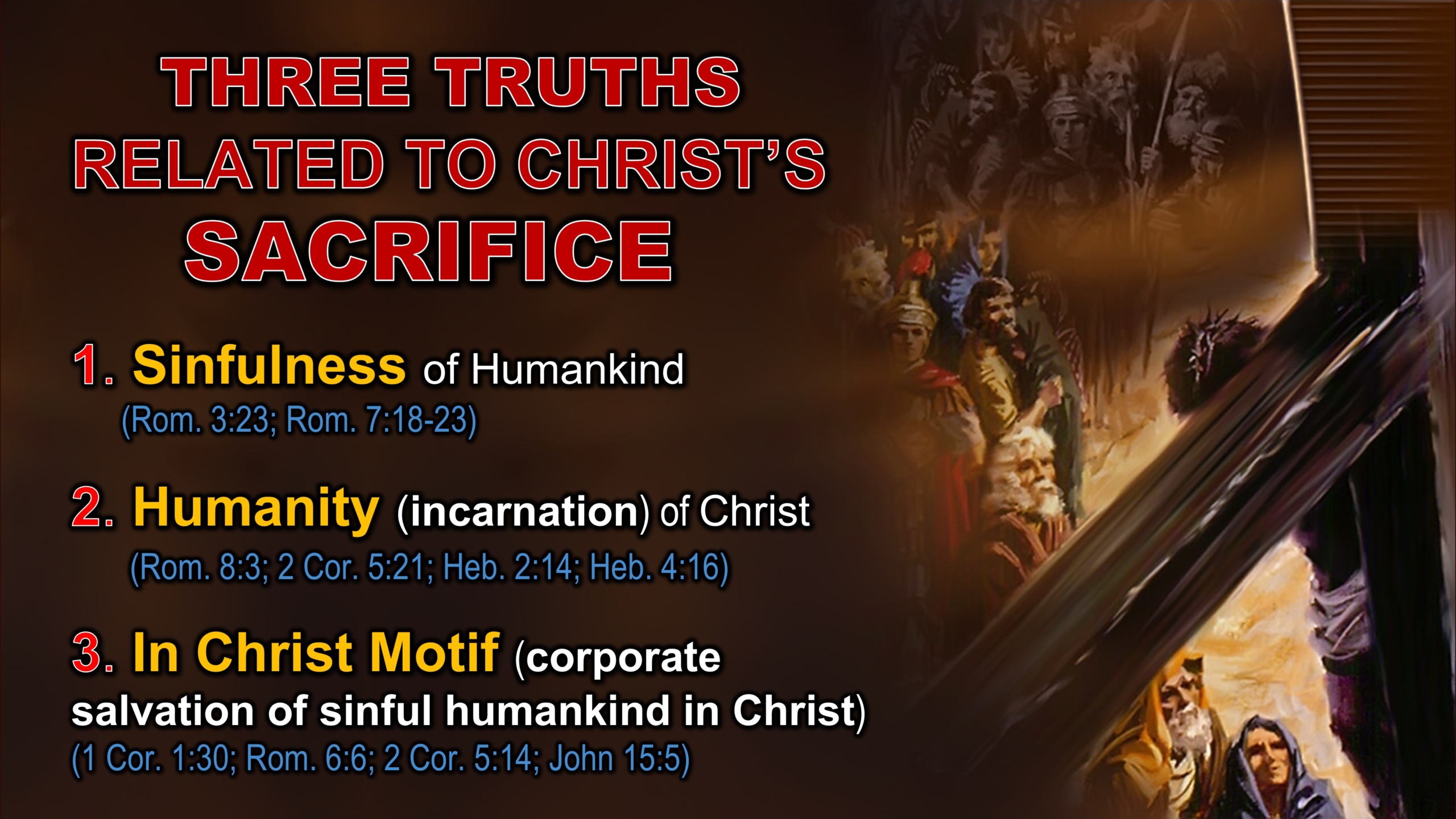
There are three vital truths that are closely related to Christ’s Sacrifice, and without a proper understanding of them, it is impossible to grasp the true meaning of Christ’s sacrifice:
The first one is our sinfulness, the second is the incarnation of the Son of God, and the third is the “in Christ” motif.
First, we must make sure we understand and accept the sad truth that through the sin of Adam and Eve, Satan injected into us something apostle Paul calls “the law of sin and death”.
It is an introduced by Lucifer evil force which is constantly pooling us toward sin, selfishness, pride and death.
In Romans 5:12, Paul tells us that this “sin entered the world by one man’s offence”, which means that this singular sin, or the law of sin entered the world and us through the sin of Adam.
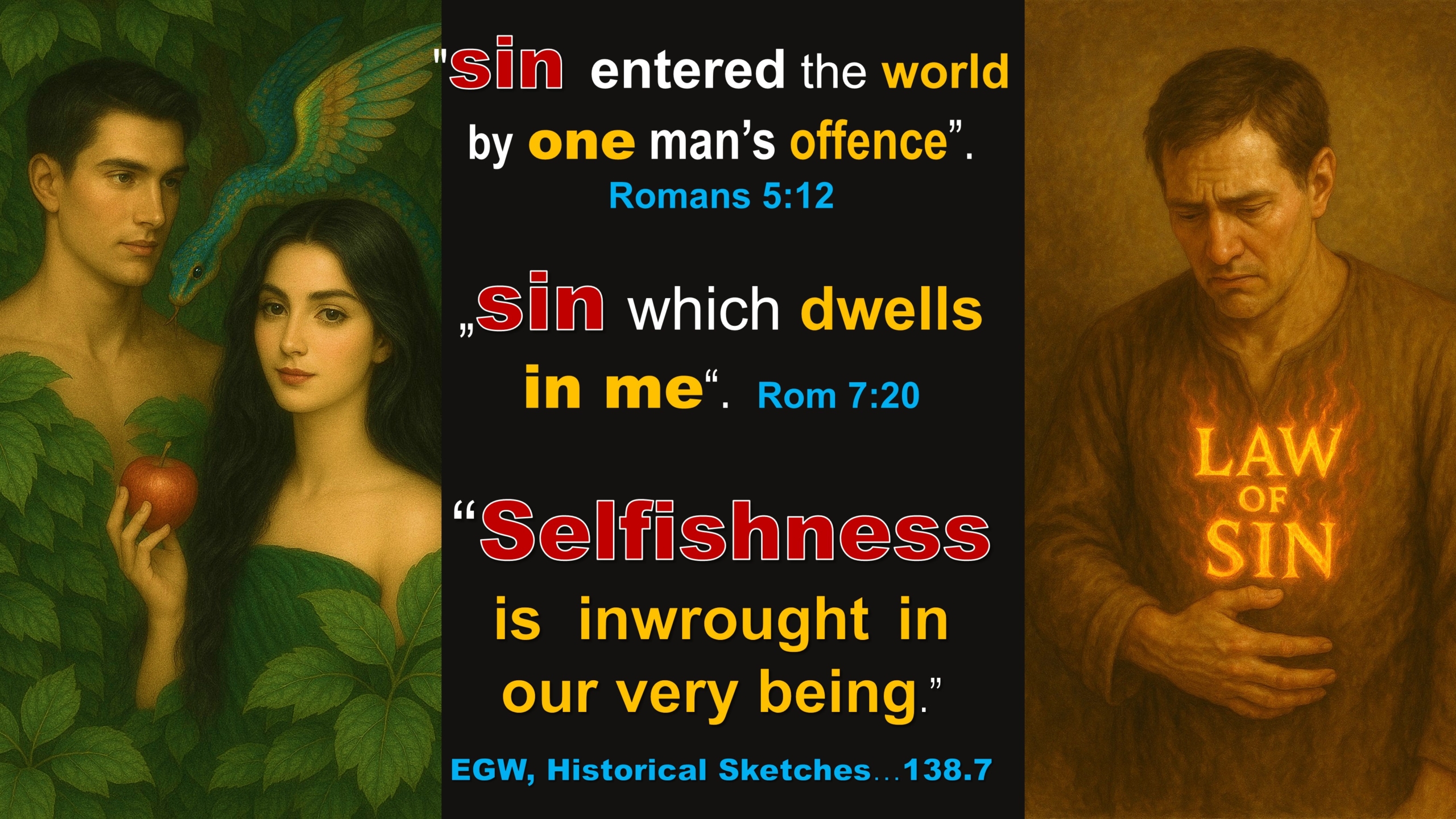
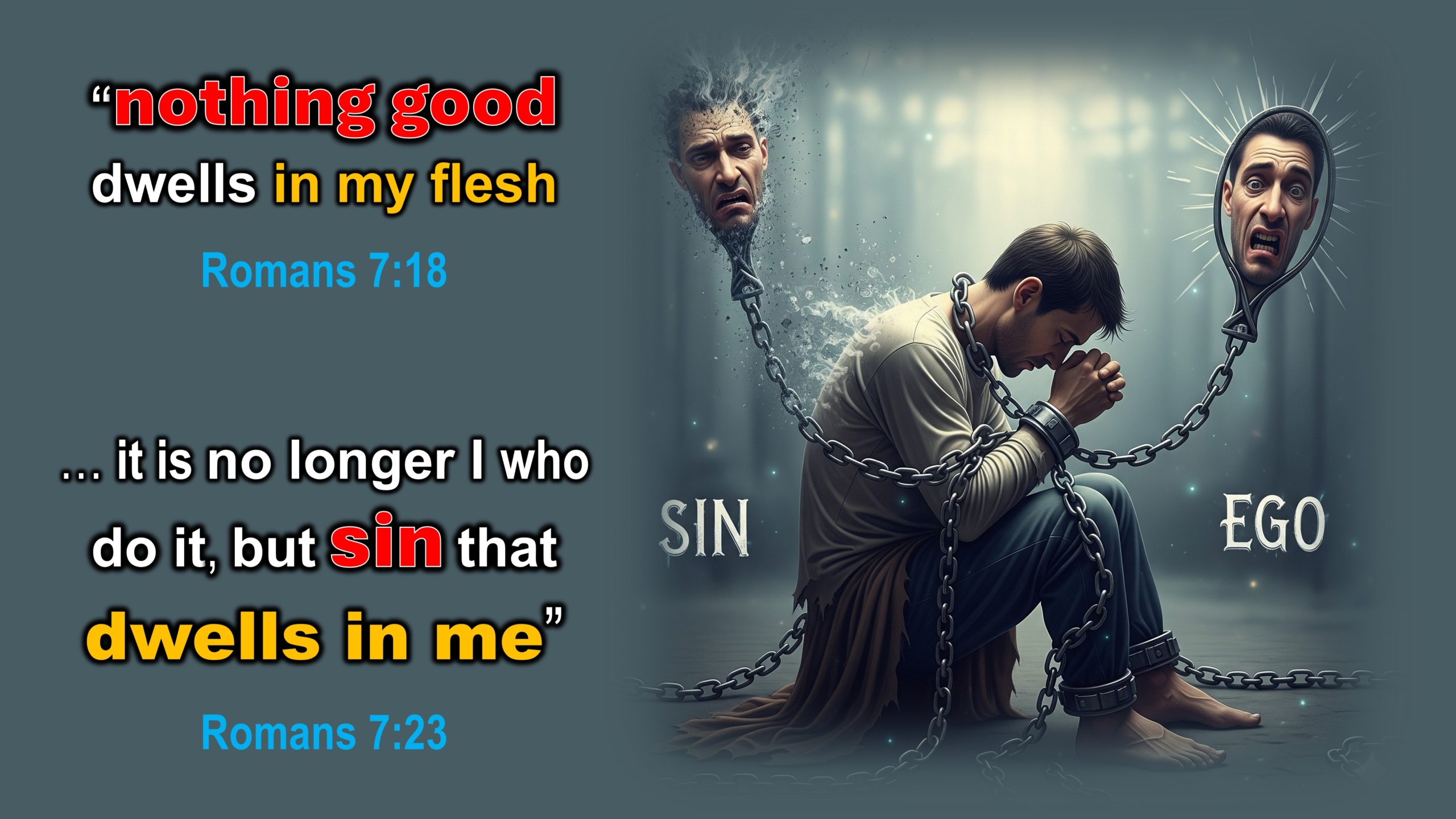
In Romans seven, apostle Paul says, “…nothing good dwells in my flesh” (in my fallen human nature), referring to the law of sin in us.
And in verse 23, he adds, “it is no longer I who do it, (who breaks God’s law), but sin that dwells in me…”.
Unfortunately, there are many Christians who use Romans 7:13-25 to justify their sinful life. They say that if apostle Paul was unable to overcome the law of sin, then how can I do it?! And as a result, they continue living in sin allowing the law of sin to dominate their Christian life.
But, in Romans 7:13-25 Paul is only pretending to be an immature Christian who makes a typical mistake and tries to overcome the law of sin using his own strength but not God’s power.
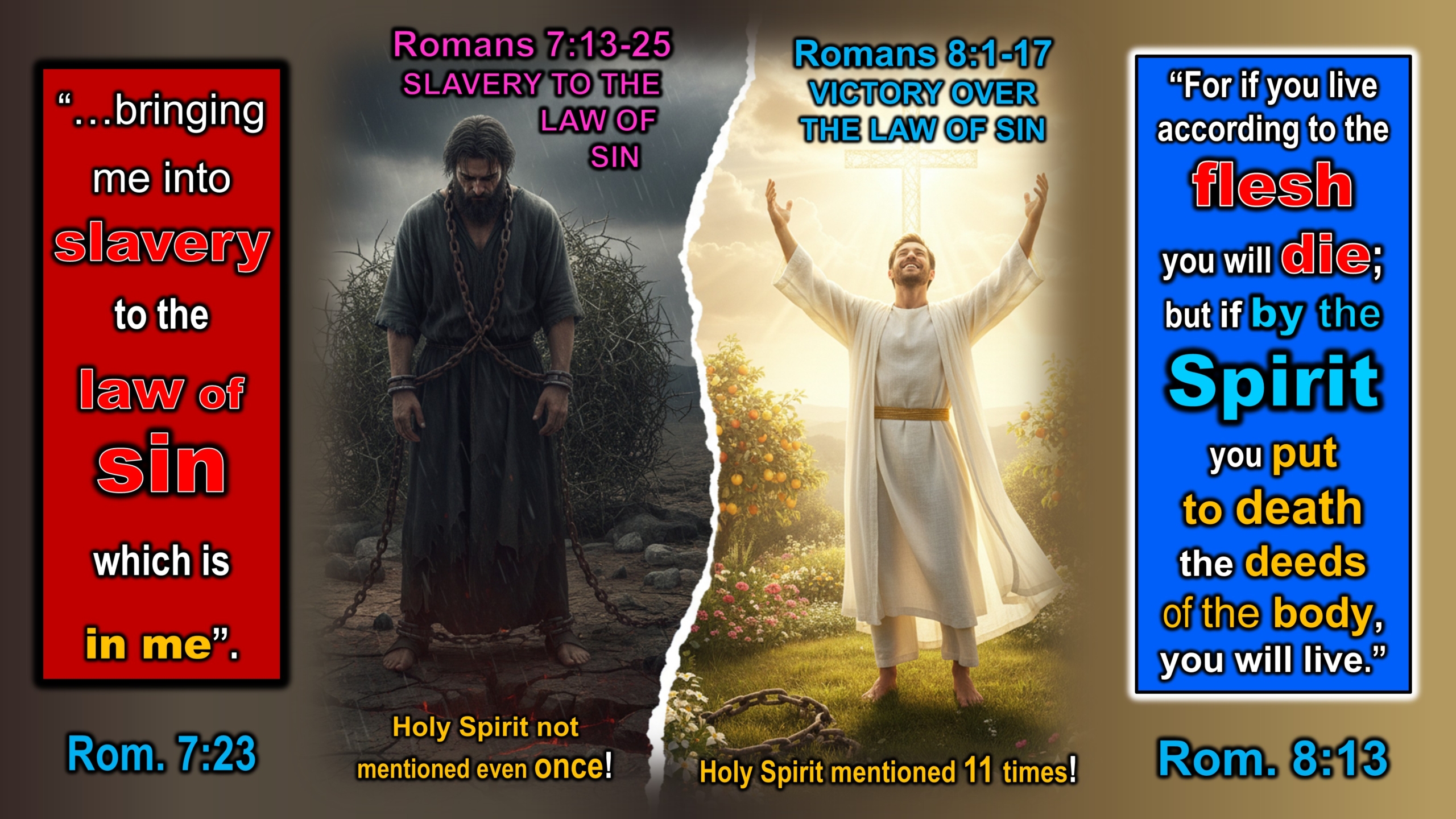
However, in the very next chapter, in Romans 8, the same Paul gains victory over the law of sin, because now he is a mature Christian, and he does it not by his own strength but by the power of the indwelling Holy Spirit and by faith.
And that is the reason why in Rom 8:2, he says “For the law of the Spirit of life in Christ Jesus has made me free from law of sin and death.”
Also in Romans 8:13 he adds, “if you live according to the flesh, you will die, but, if by the Spirit you put to death the works of the body, you will live.“
How do I know that in Rom 7 Paul tries to overcome sin by his own strength and in Rom 8 by Holy Spirit?
Well, because in Romans 7 he never mentions Holy Spirit even once, and in Romans 8, where he gains victory over law of sin, he mentions Holy Spirit 11 times in just 17 verses!
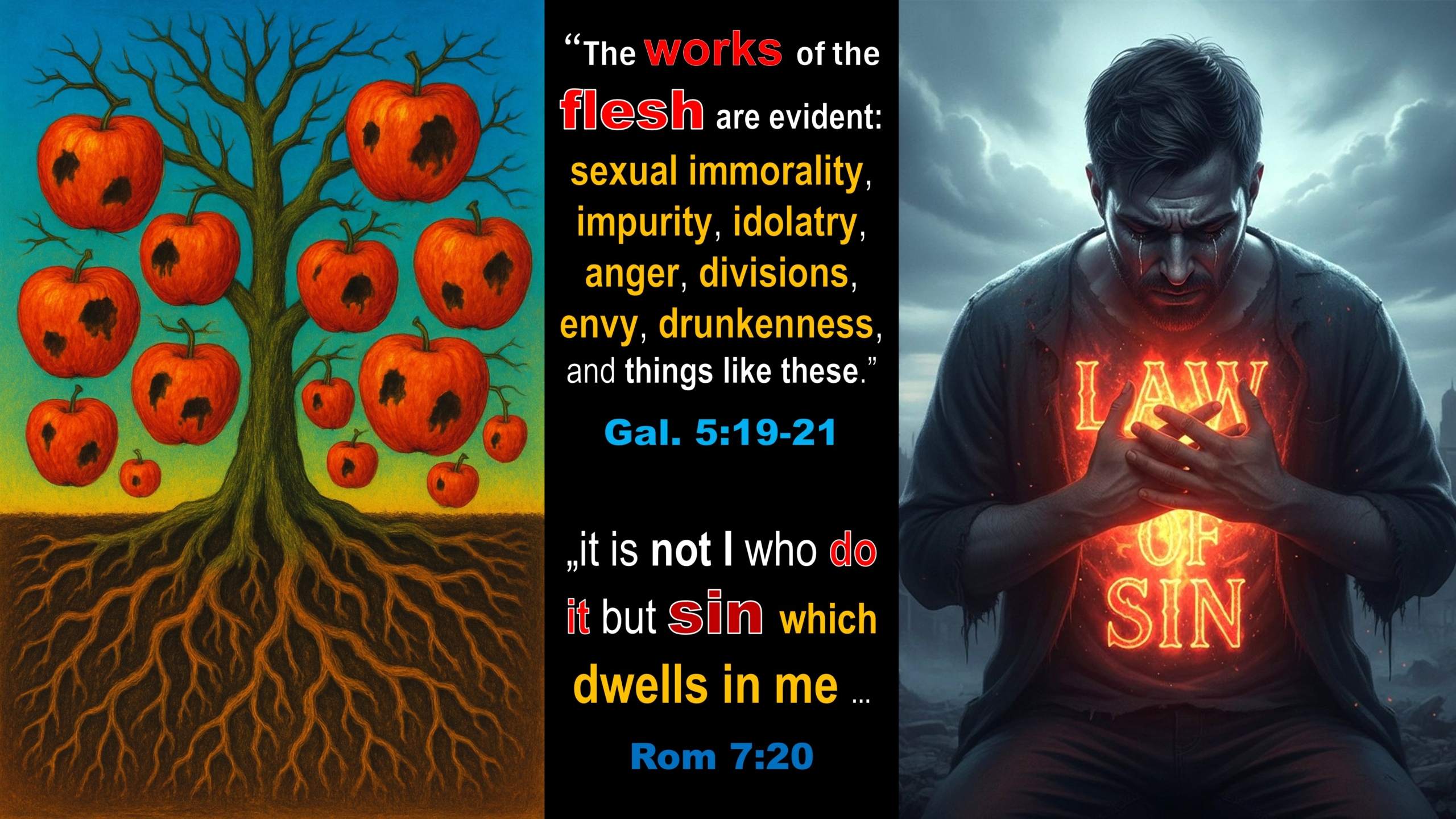
So, coming back to our main subject, this singular sin in us, or the law of sin, is the root of our sin problem, and the key cause all our plural sins. It is like a bad tree producing rotten fruits.
For this reason, in Galatians 5, Paul says that “the works of the flesh, or the fruits of the law of sin working in us, are evident: sexual immorality, impurity, idolatry, anger, divisions, envy, drunkenness, and things like these.” It means that it is the flesh, or our sinful nature, including the law of sin, that produces all those sins.
It is interesting that Paul calls this singular sin which works in us, a law of sin.
Why des he call it a law?
He calls it a law, because like, for instance, the law of gravity, it is a constant, never seizing force, all the time it is pulling us toward sin, selfishness and pride.
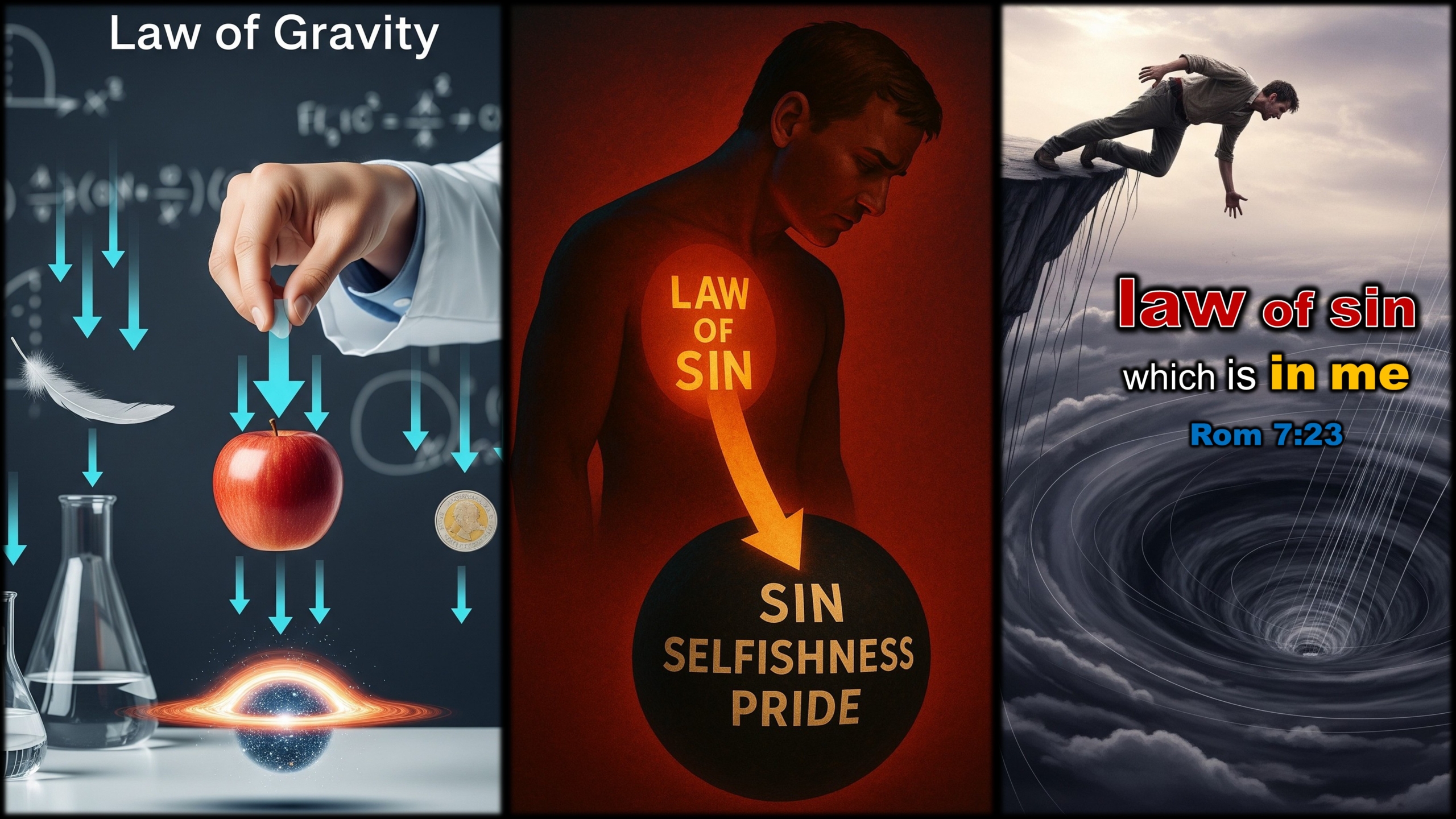
For this reason, we can’t overcome it using our will power because it is not a law it is not a constant force. In order to defeat this constant force in us which works all the time, we need another law, “the law of the Spirit of life” found in Romas 8:2.
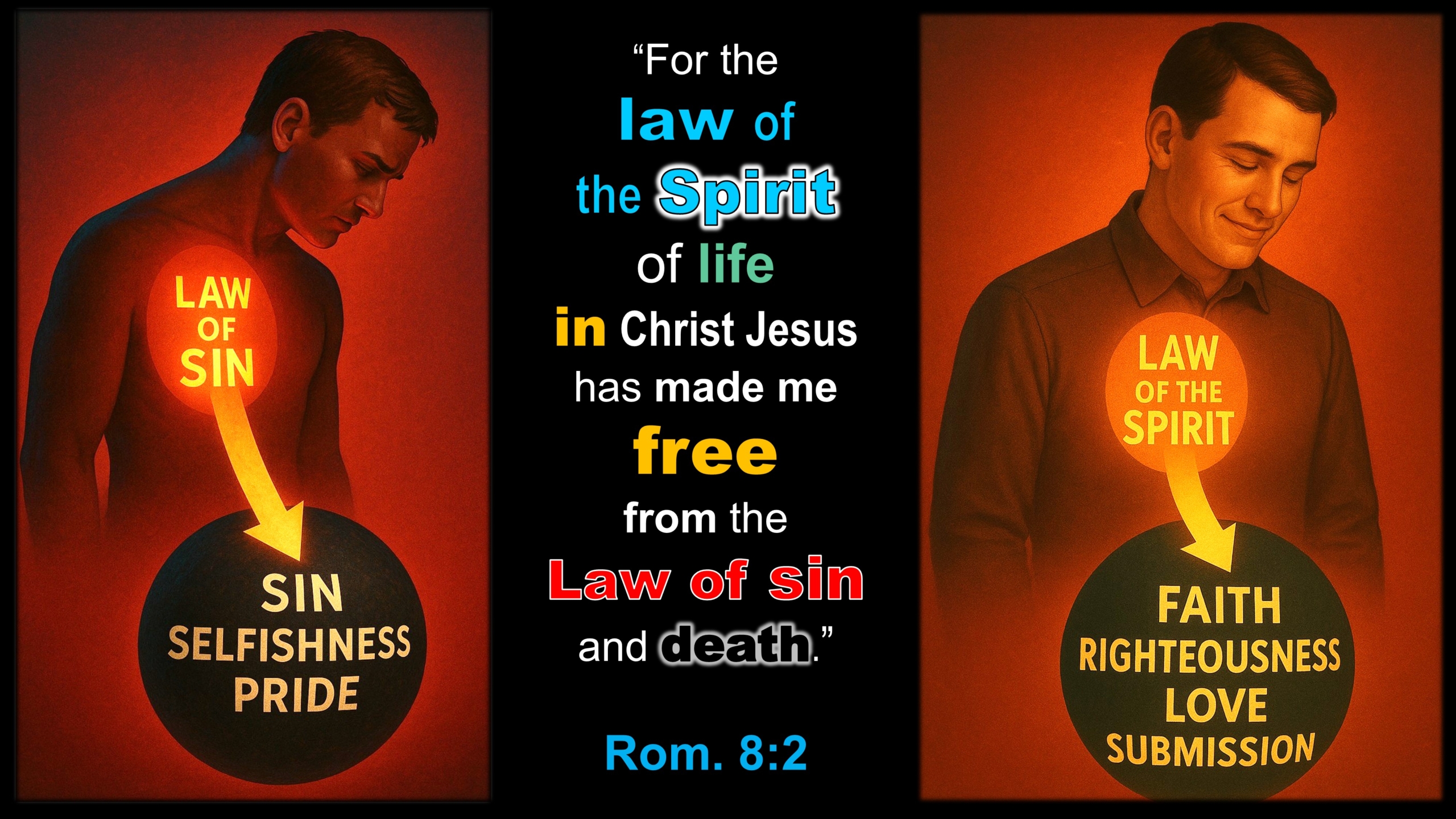
Notice that according to Romans 8:2 this “law of the Spirit of life” first overcame the “law of sin and deathin” first “in Christ Jesus”.
It means that at the incarnation Lord Jesus took our human nature, including the indwelling representative law of sin. He perfectly overcame it on our behalf, and then He took it to the tree (cross) where it was condemned by God in Christ’s flesh and destroyed forever, according to Romans 8:3!
In this way, Paul could write in Romans 8:1 that he and all of us were set free from the condemnation for having this law in us! There is now no condemnation for us (Rom. 8:1) because we were set free from the law of sin in Christ 2000 years ago (Rom 8:2-3).
And when we believe and accept this supreme gif of God in Christ, we should be born from the Spirit, and through the Holy Spirit now Christ can dwell in us. He is in us by faith, to repeat the same victory over the same law of sin, this time in us (Gal. 2:20; John 15:5), thus providing evidence that we truly accepted the gift of salvation and freedom in Him.
This root of all our sins is the key reason why we are all condemned to eternal death by the holy law.
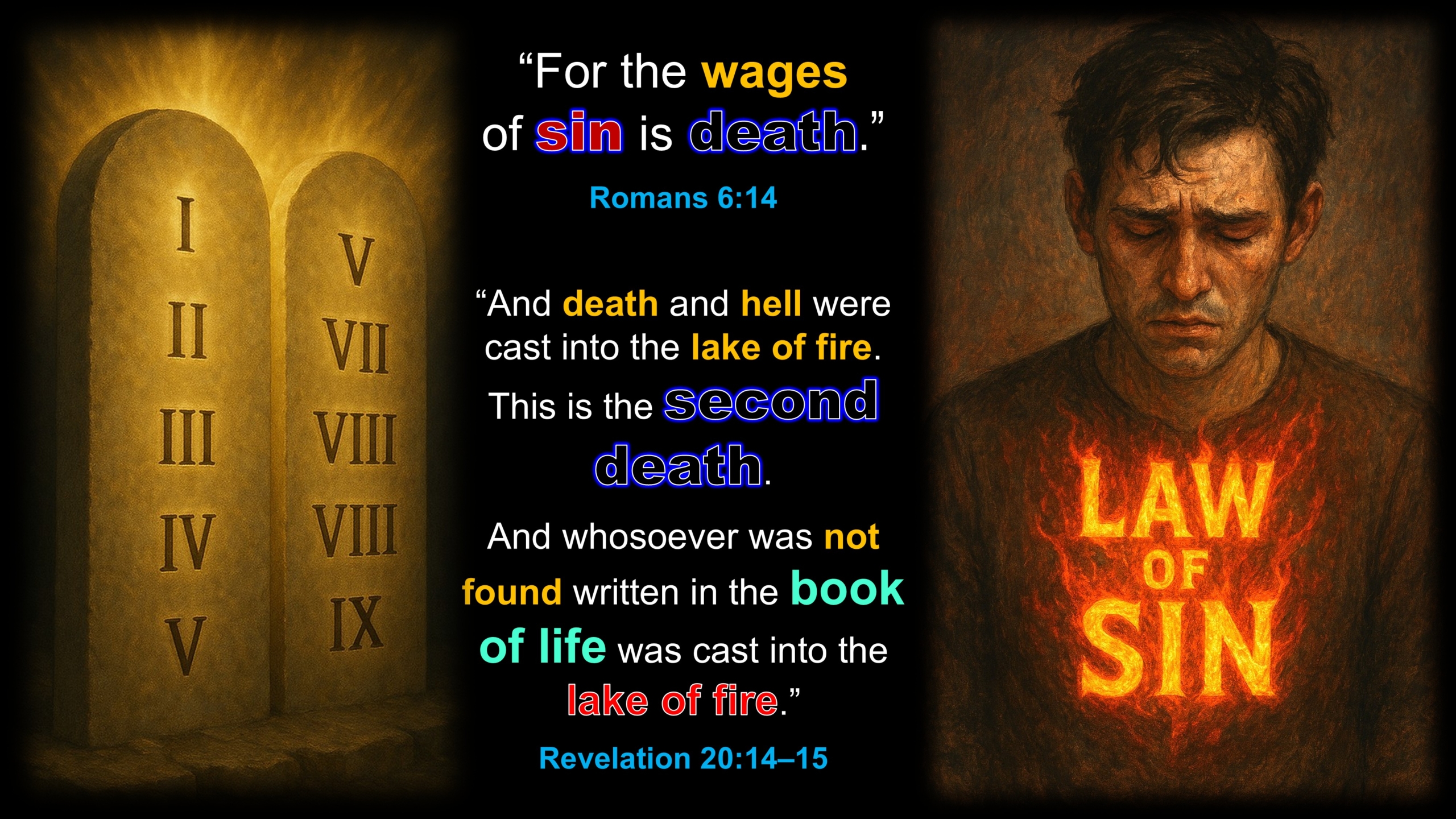
Eternal death is the wages or punishment for all sins, including our plural sins, but especially for the singular sin, the law of sin, because it is the source of all our plural sins.
According to Romans 8:3, this singular sin, or the law of sin in us, is the key cause why we can’t save ourselves by obeying the law:
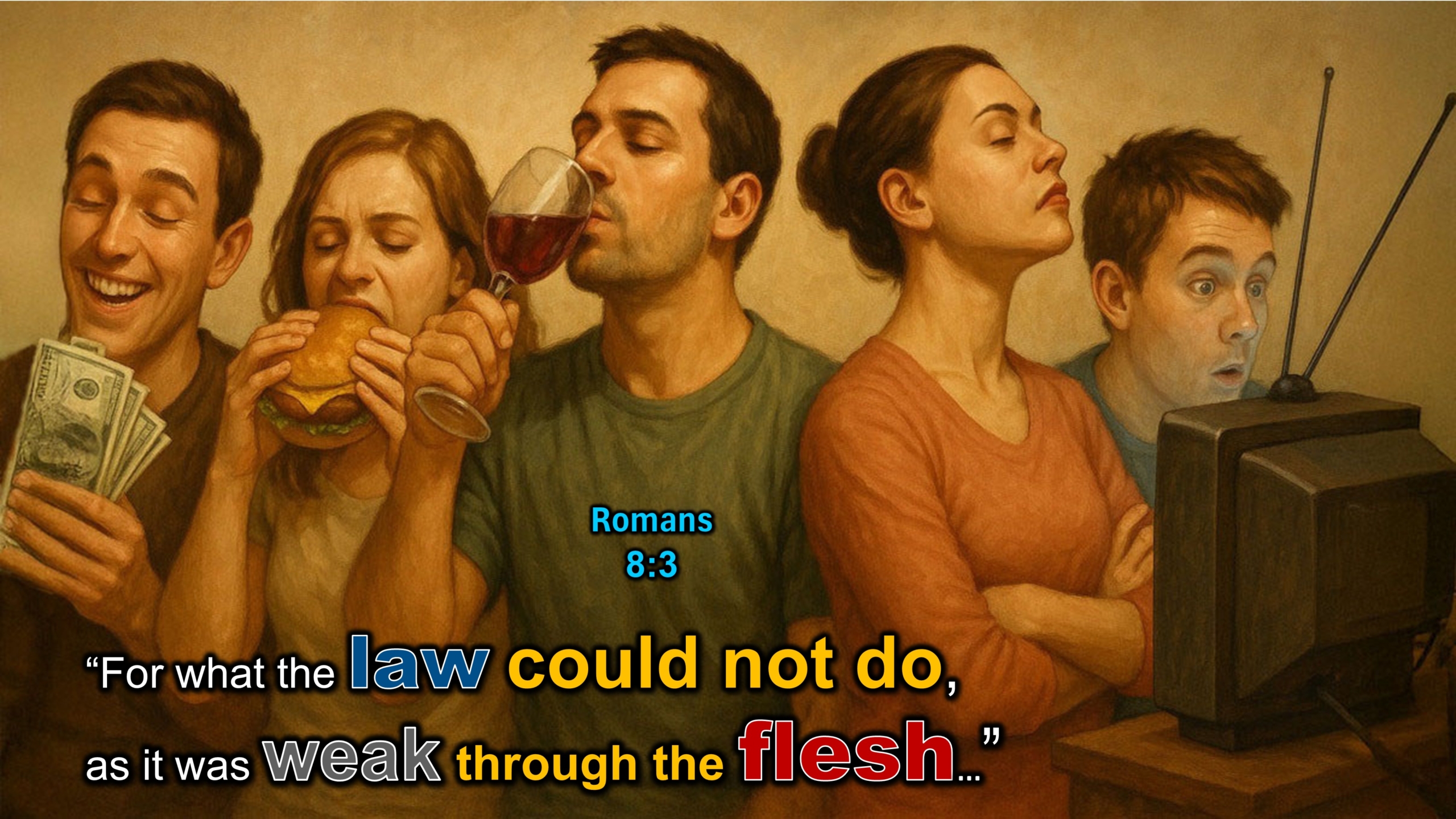
“For what the law could not do, as it was weak through the flesh”.
Paul tells us here that the law couldn’t save us, or that we can’t be saved by obeying the law, because of the flesh, or because of our sinful nature, and its key ingredient, which is the law of sin, as it is this constant force in us that makes us unable to keep the moral law perfectly.
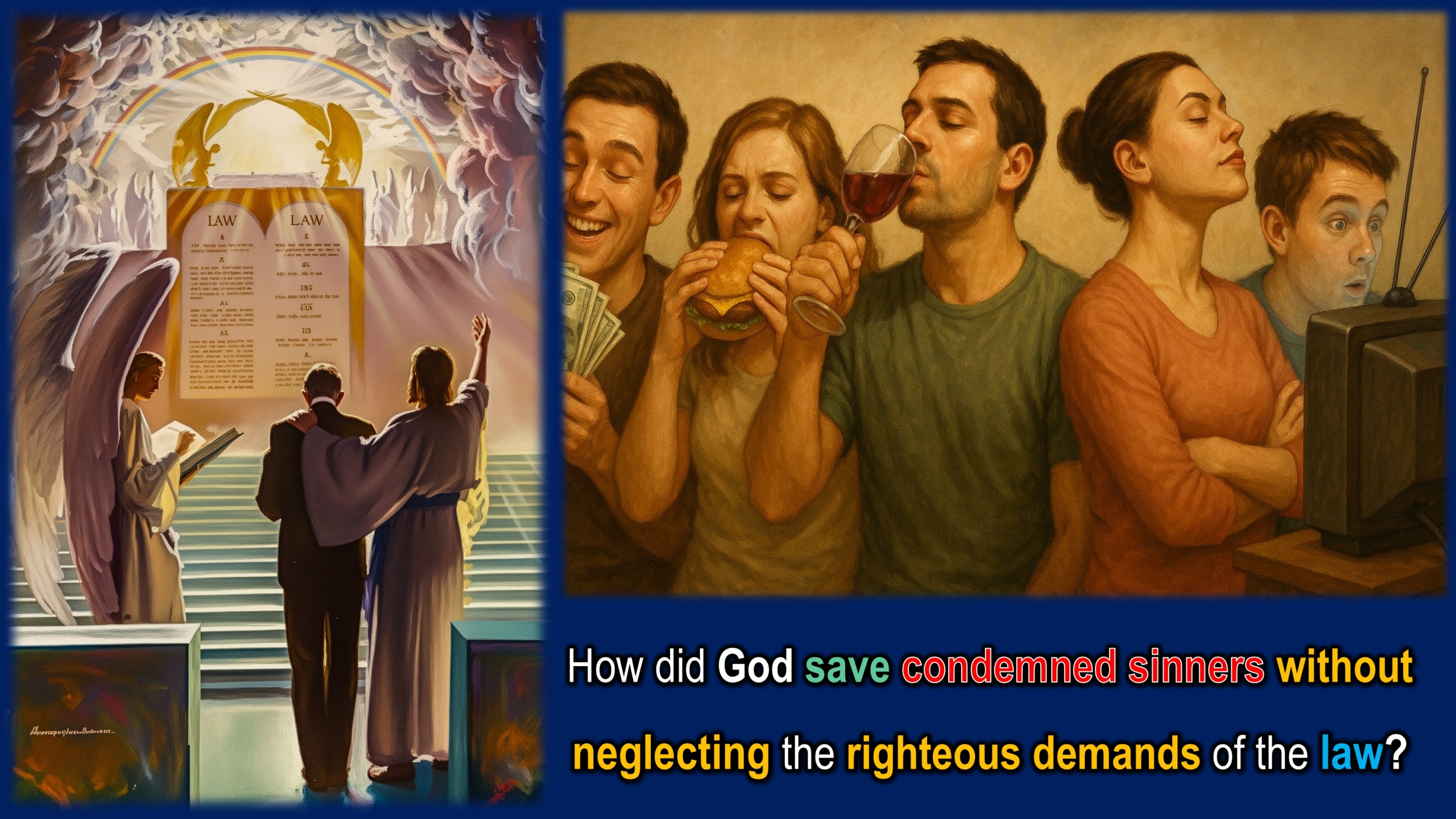
So, the question is, how could God save condemned sinners without nullifying the righteous demands of the holy, everlasting law?
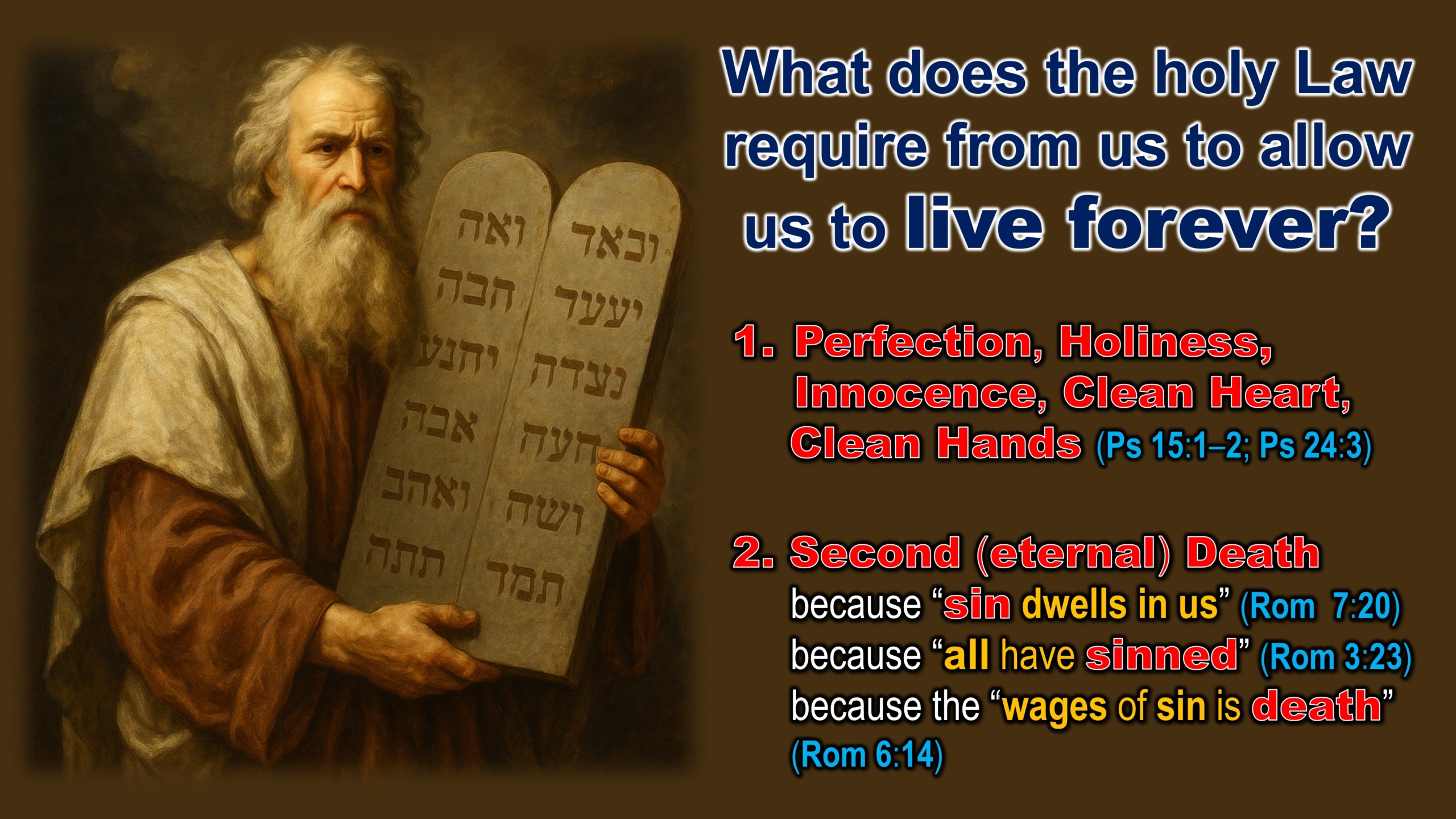
What does the holy Law require from us to allow us to live forever?
It always was, is, and will be – a perfect holiness!
1. The first requirement is: Perfection, Holiness, Innocence, Clean Heart, Clean Hands (Ps 15:1–2; Ps 24:3)
2. In addition, the holy law also requires from us the Second (eternal) Death:
– because “sin (law of selfishness) dwells in us” (Rom 7:20),
– because “all have sinned” (Rom 3:23),
– and because the “wages of sin is death” (Rom 6:14).
Can any of us meet these requirements of the law?
No, because we are born with unclean heart (natural selfishness) and in addition we made our hands unclean with many sins. And the wages for all of them is the second (eternal) death.
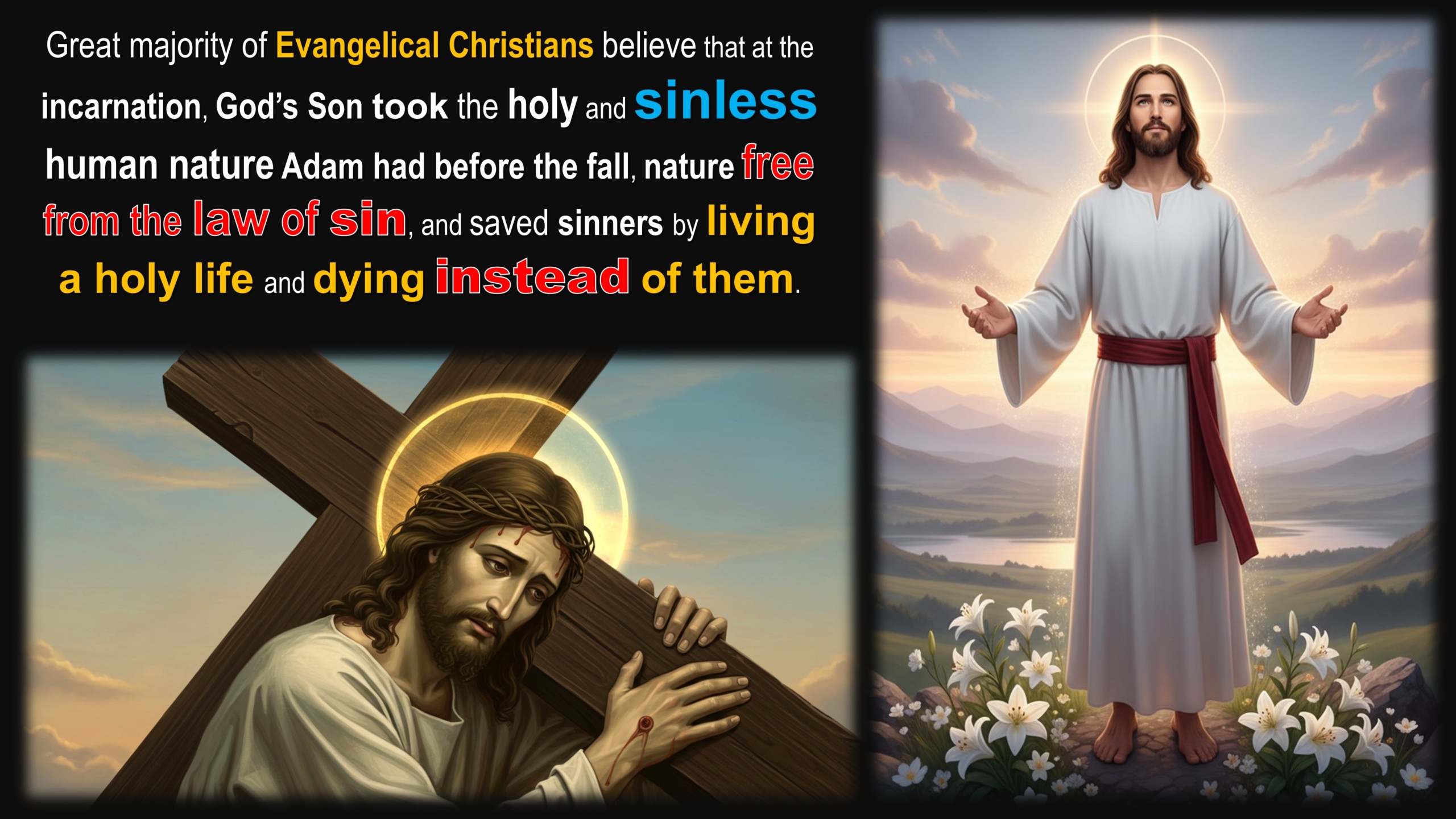
Because it is impossible for us to meet these conditions, great majority of Evangelical Christians accept and teach the following gospel, or substitutionary atonement theory:
They believe that at the incarnation, God’s Son took the holy, or sinless human nature Adam had before the fall, nature free from the law of sin, and in that holy, sinless nature, free from the law of sin, He was living a perfectly obedient life, instead of us. Then, He also took that holy, sinless human nature to the cross, where He suffered and died also instead of us guilty, condemned sinners.
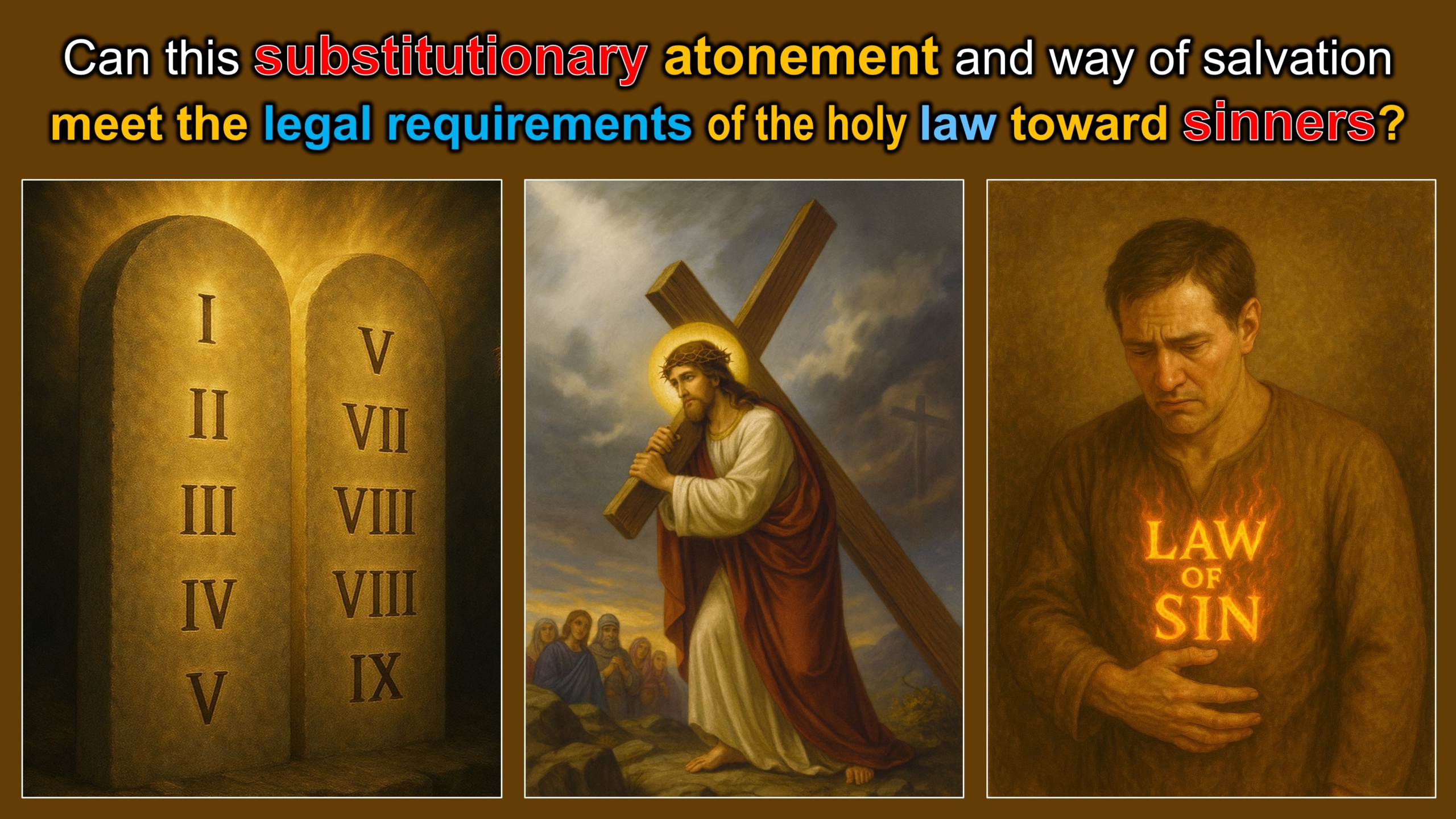
But would this way of salvation meet the requirements of the law toward us sinners?
No, because God’s changeless, eternal, holy Law demands perfect obedience, and since we were disobedient, it also demands second death from us. It does not require obedience and death from someone who is holy and innocent but from us, guilty sinners.
The holy just law can’t accept this gospel and set us free, because it demands death from our fallen nature, including especially the law of sin that is the root of our sins.
The holy, sinless human nature is not condemned by the law, and therefore, if Christ took that nature then He has no legal right to save us.
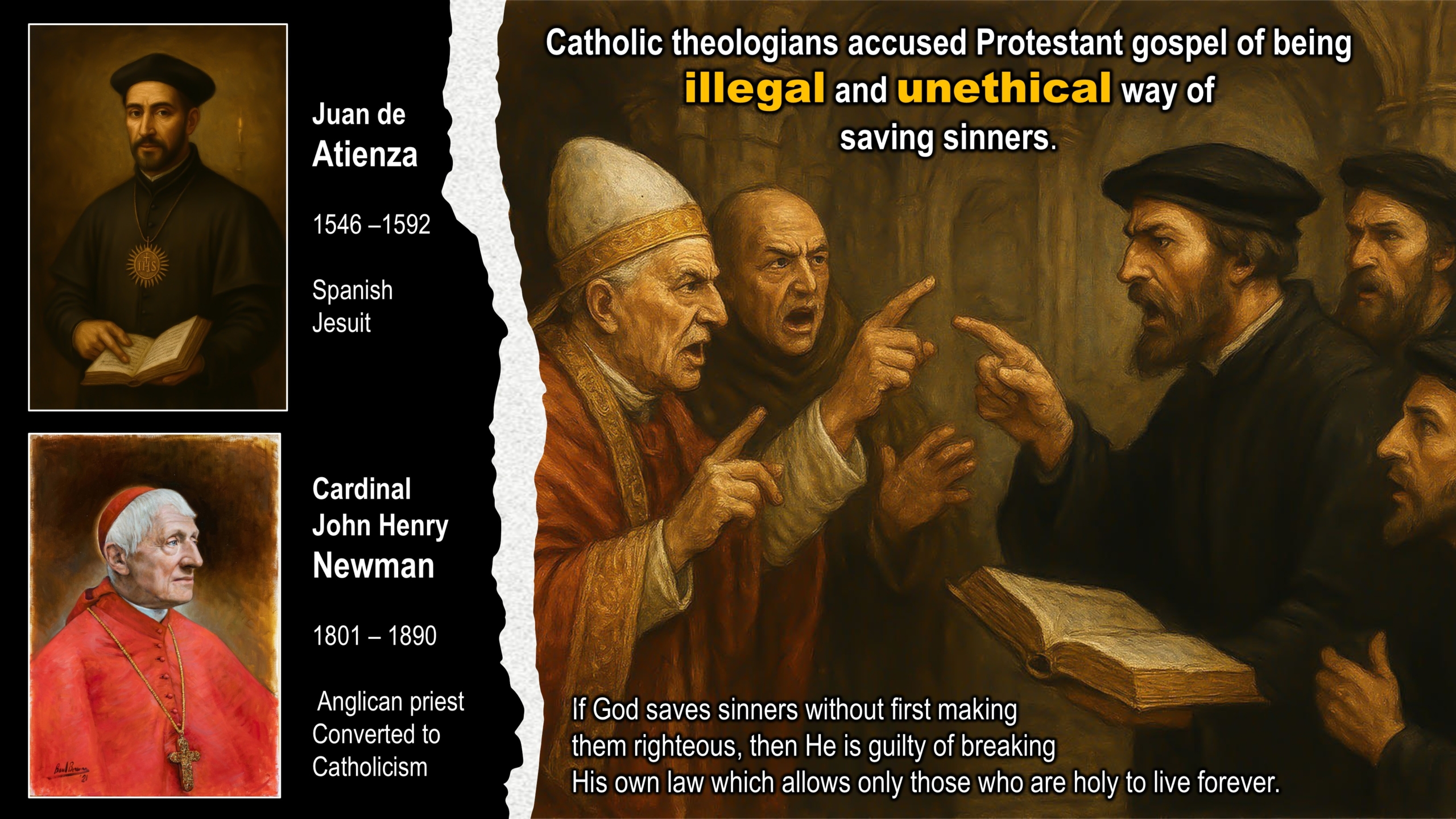
The same gospel presented by Reformers was furiously attacked during the time of Counter Reformation by the Roman Catholic scholars, like the Jesuit Juan de Atienza. And in 19th century by other catholic theologians, especially by John Henry Newman who was an Anglican priest who got converted to Catholicism and became a cardinal and one of the leading theologians.
Both accused the gospel promoted by reformers of illegal and unethical way of saving sinners.
Their argument was that if God justifies sinners without first enabling them to be holy and righteous, to live righteous and holy life, then He is guilty of breaking His own law because God’s law can allow only those who are holy to live forever.
But Catholic Church scholars themselves failed to provide an acceptable gospel because they teach that God saves believing sinners by infusing them with His grace (power), thus enabling them to live a righteous life and qualifying them to be saved.
The problem is that, in the Catholic Church, God seems to have a very hard time making believing sinners righteous and holy. And the reason for this is simply the fact that God can’t provide Catholics with true sanctification (a holy, obedient life) because, if He did, He would oppose His own gospel, according to which He already saved the entire world through the perfect obedience and death of His Son, expecting only from sinners a genuine acceptance of the gift by faith (leading to a new birth as an evidence of acceptance). For this reason, Catholics who are not righteous must go to purgatory, where they are cleansed from their remaining sins.
In addition, in the Catholic Church, believing sinners do not have direct access to the holy Christ in heaven but have to come to Him through human intercessors. First they need to come the Catholic priests, then those who used to be believing sinners but were regarded as saints after death, and then holy angels, and Mary, who, due to the Immaculate Conception, was free from the stain of original sin. Finally, through Mary they have access to Christ, who took a sinless human nature and died for them, and through Christ they have access to God.
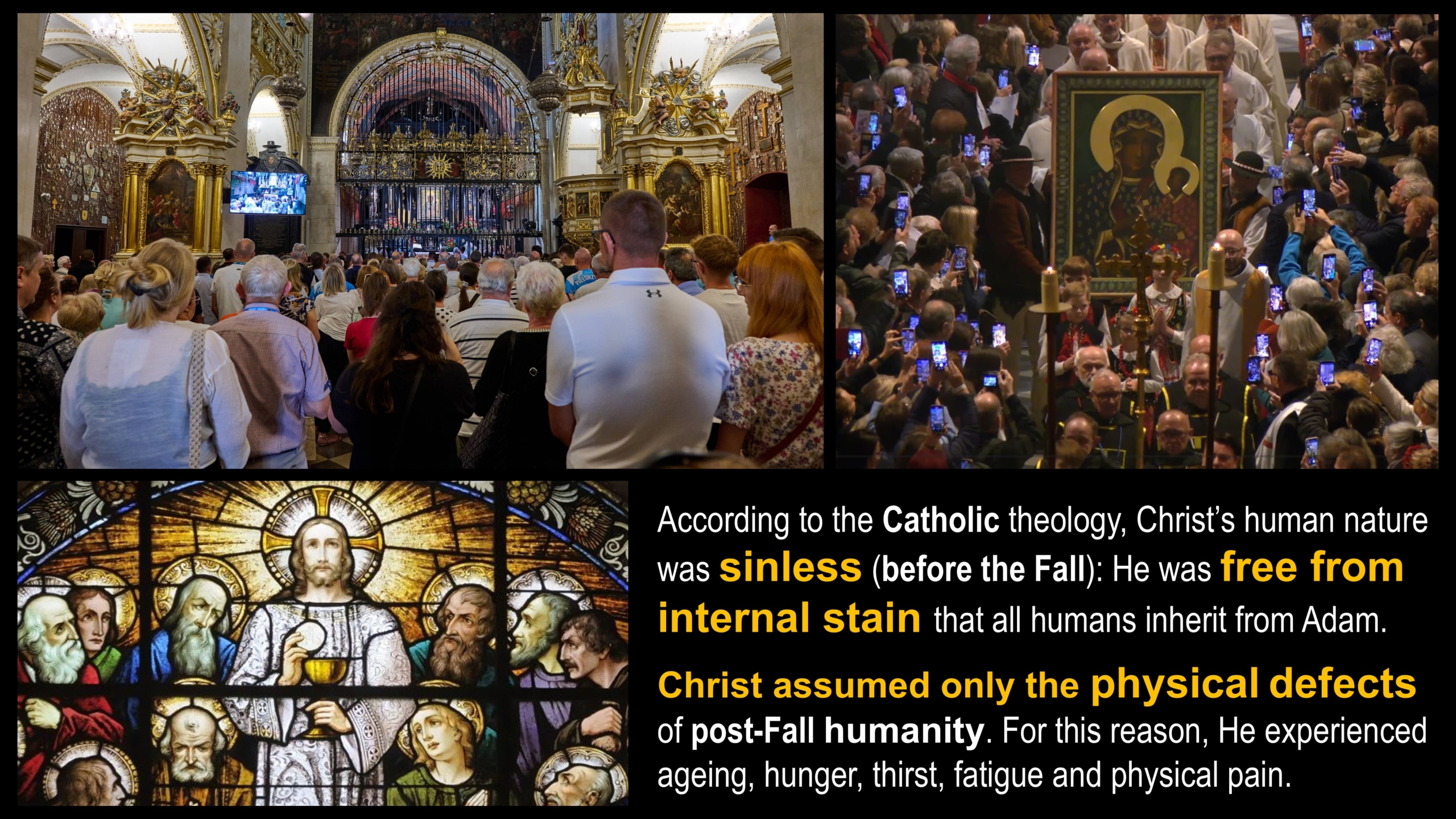
Therefore, the gospel offered by Catholic theologians is a salvation by faith plus works, salvation by sacraments and by purgatory. It is a complete contradiction of Paul’s message of justification by faith.

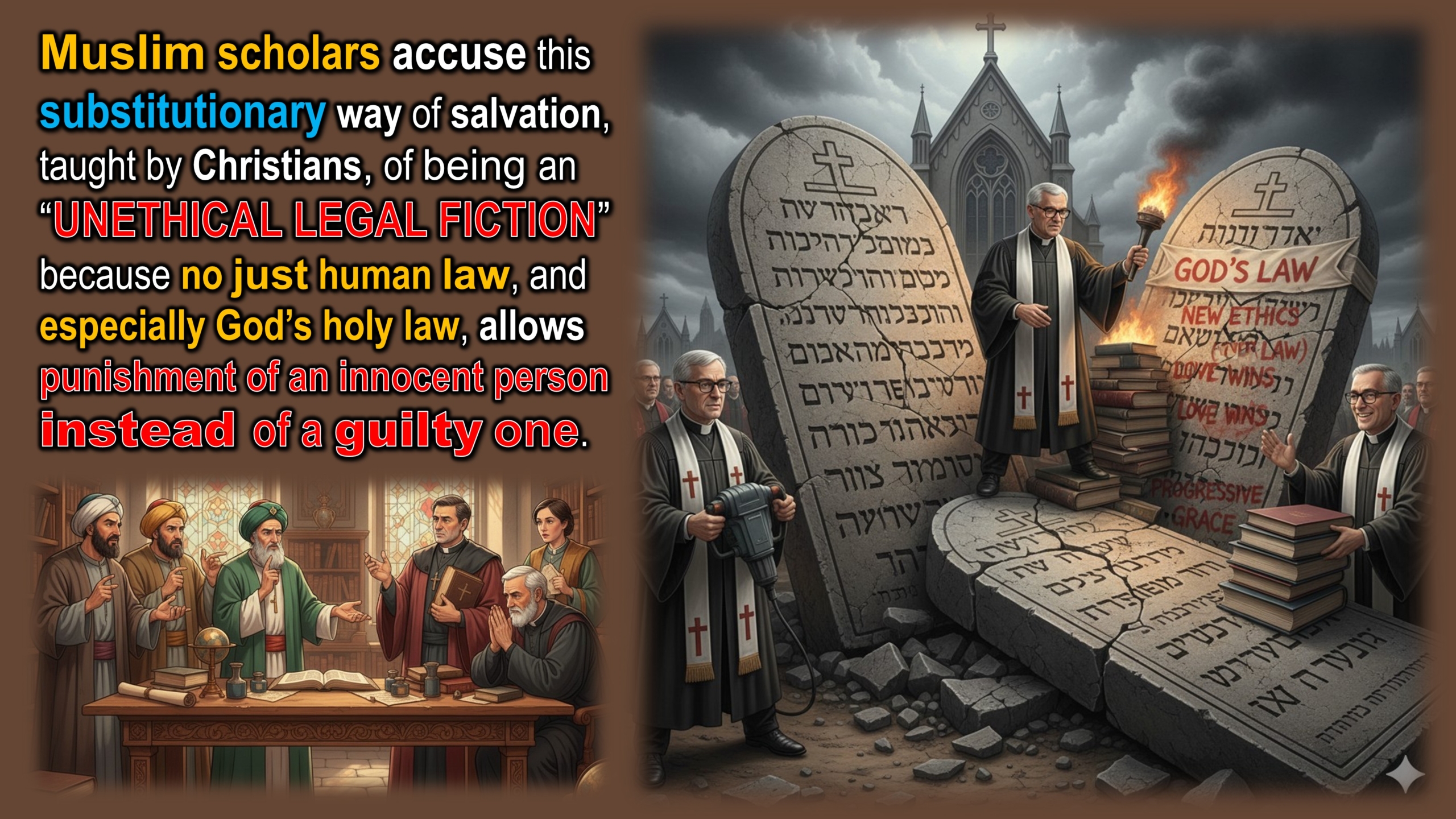
The popular evangelical gospel is the reason, why also Muslim scholars accuse this substitutionary way of salvation taught by evangelical Christians of being an “Unethical Legal Fiction”. They claim it is unethical and illigal because no just human law, they say, and especially God’s holy law, allows punishment of an innocent person instead of a guilty one!
The Catholic Council of Trent officially condemned justification by faith alone: “If anyone says that the sinner is justified by faith alone…let him be anathema [cursed]” (Council of Trent, Session VI, Canon 9). Canon 11 also condemns justification by “the sole imputation of the righteousness of Christ.”
These canons have never been revoked. Yet according to the inspired apostle Paul, those who formulated them—and anyone who continues to promote this false gospel—place themselves under God’s curse: “Even if we, or an angel from heaven, should preach a gospel other than the one we preached to you, let them be under God’s curse! As we have already said, so now I say again: If anybody is preaching to you a gospel other than what you accepted, let them be under God’s curse!” (Galatians 1:8–9).
The Council of Trent pronounced a curse upon those who teach justification by faith alone; but Scripture places the curse upon those who preach any gospel contrary to salvation by grace through faith in Jesus Christ. We must therefore follow the inspired Word of God rather than the decrees of men.
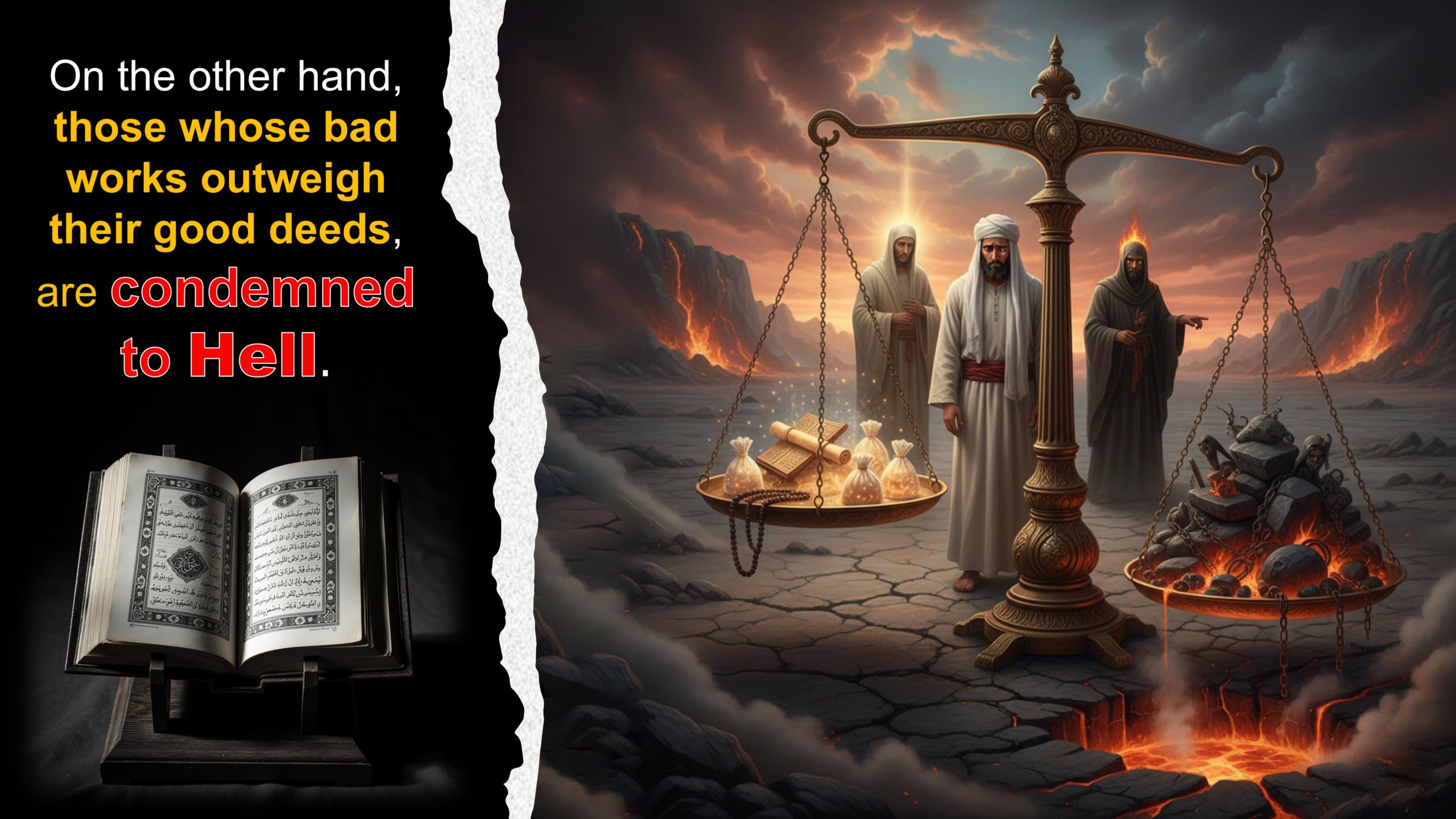
However, while Muslims attack the popular Christian gospel of being unethical, they themselves, like all pagan religions, teach salvation by human efforts. In Islam, on the Day of Judgment, each person’s good and bad works are weighed on a scale. Eternal life in Paradise is granted to those who did more righteous than bad works.
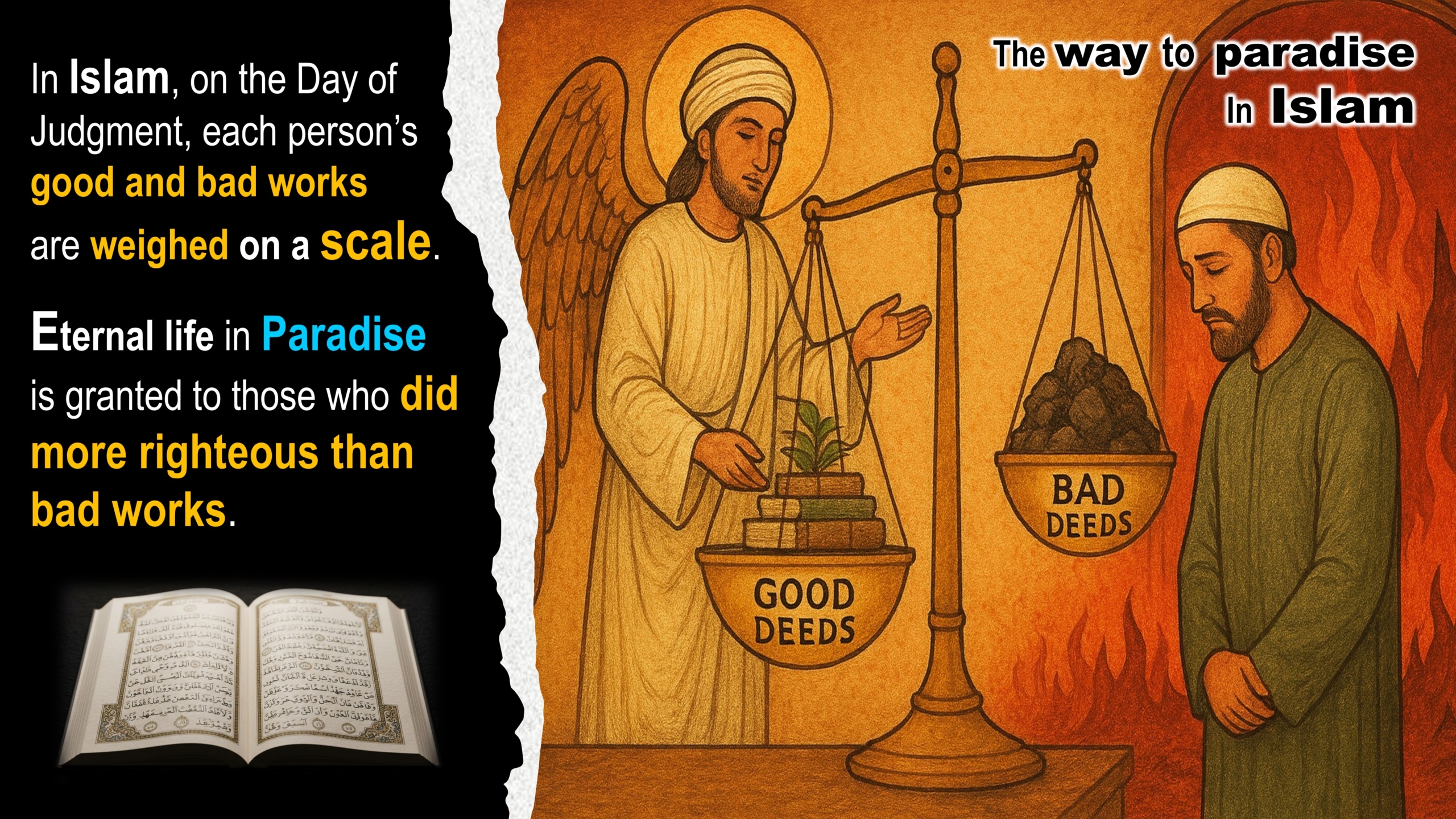
On the other hand, those whose bad works outweigh their good deeds, are condemned to Hell.
Islamic teaching also holds that sinful Muslims may eventually be released from hell and admitted into paradise. Hell therefore functions for them in a way similar to Catholic purgatory: temporary suffering purifies those who were not initially considered worthy of paradise.
However, those who reject Islam are condemned to eternal punishment. The Quran specifically condemns Christians who believe in the divinity of Christ and the Trinity (Quran 5:72–73). It classifies belief in the Trinity as the most serious sin.
The Islamic gospel is therefore similar to the Catholic gospel: both teach that salvation depends upon human effort, personal righteousness and religious works. Islam also contains an element resembling Catholic purgatory because sinful Muslims may suffer temporarily in hell before eventually being admitted into paradise. Both religions promote false ideas because they are inspired by the same source, the enemy of the true gospel and the love of God.
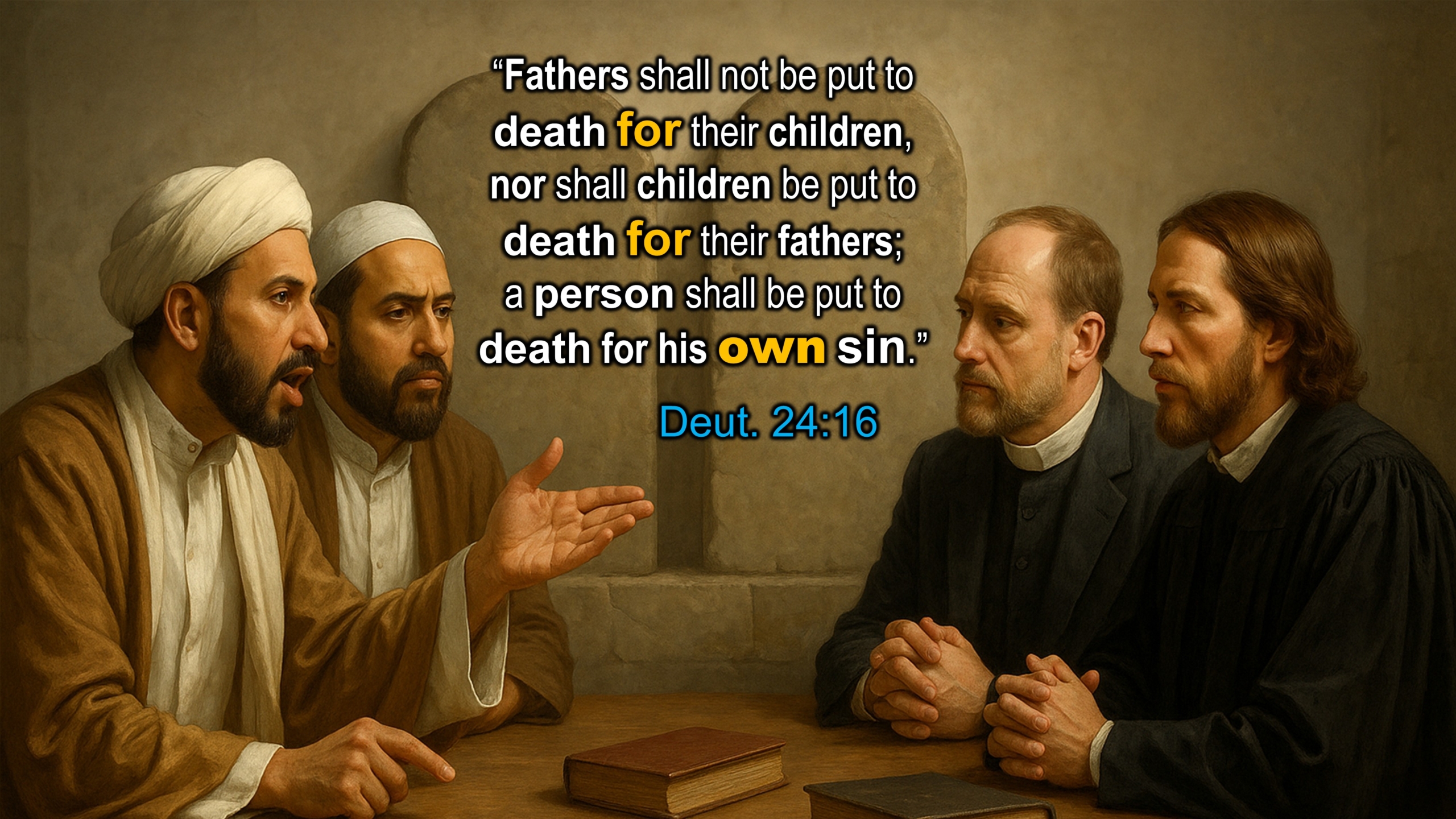
To prove their point, Muslim schoolers quote Christian Bible and say that God Himself in Deuteronomy 24:16 declares that,
“Fathers shall not be put to death for their children, nor shall children be put to death for their fathers; a person shall be put to death for his own sin.”
In 1980, an incident in Kenya intensified Muslim criticism of the popular evangelical understanding of the gospel. An American sailor stationed in Mombasa became drunk in a nightclub and stabbed to death a Kenyan woman. He was sentenced to death, but his mother, a Pentecostal Christian from New York sought help from the senator of her state. And, because the United States was providing aid to Kenya, diplomatic efforts eventually secured her son’s release. The decision, however, caused widespread outrage in Kenya.
The decision, however, caused widespread outrage throughout Kenya. Shortly afterwards, speaking before an audience of approximately fifteen thousand students at the University of Nairobi, the Muslim Dean of the Faculty of Law made the following statement:
“Kenya has lost all sense of justice. Nevertheless, we can’t blame the Kenyan government for this. The blame has to go to the Christian church because Christianity has taught us that we can commit a crime and transfer the guilt and punishment of the crime on an innocent person, Jesus Christ. No law will allow such an unethical solution to a sin problem. Christianity is the most unethical religion in the world!”
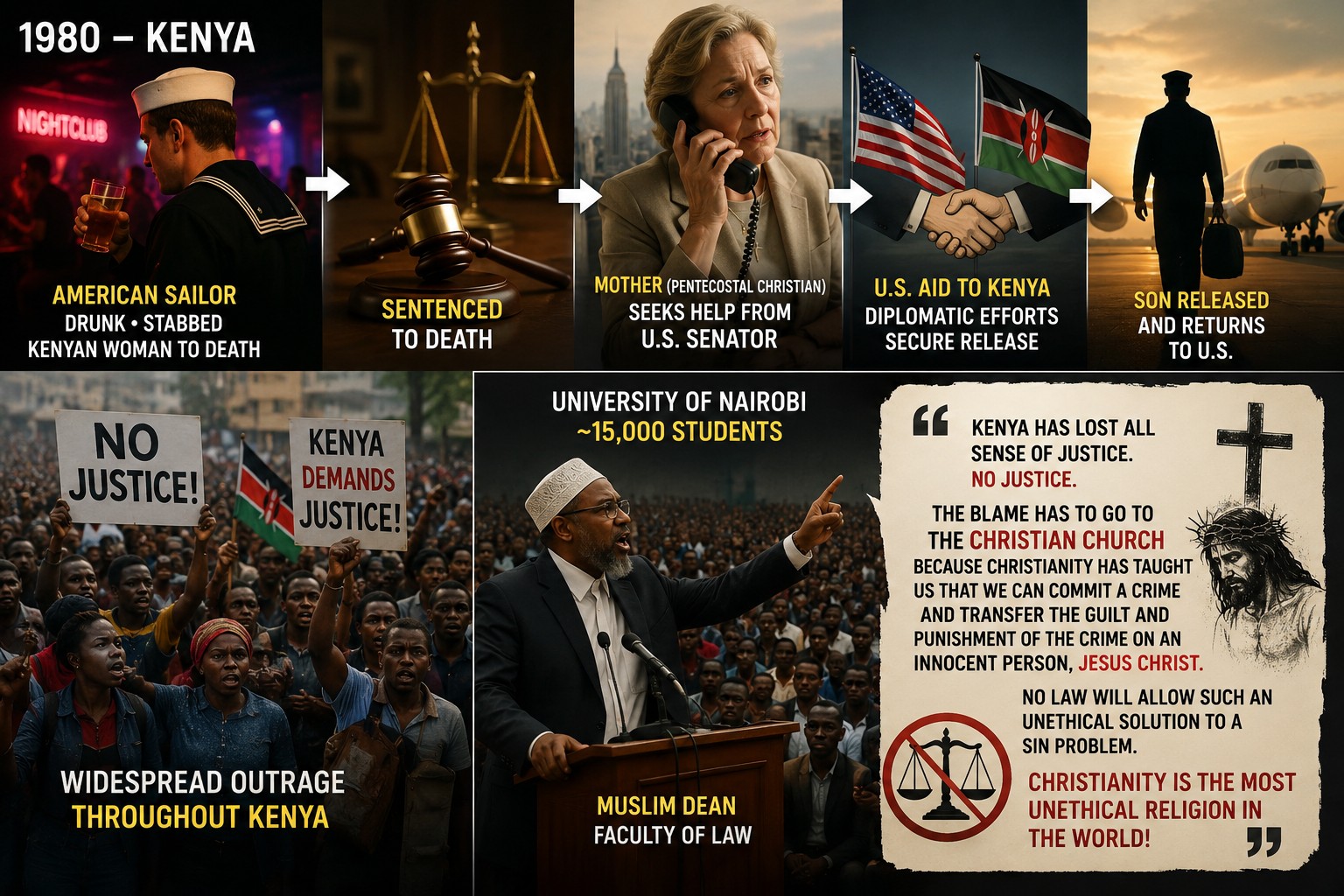
And when this professor finished his speech, none of the many Christians present there knew what to say in defense of Christianity and the truth. They could not do so because they were all brought up on the basis of the doctrine of Christ’s substitutionary sacrifice.
Therefore, until we solve this problem, we will always encounter similar criticism of the gospel. That is precisely why God gave us the message heralded in 1888, because it brought a solution to this problem based on the epistles to the Galatians and Romans proclaimed by Waggoner and Jones, which in 1895 was made complete by the beautiful “In Christ” motif preached by W. W. Prescott.
The Gospel is not a “legal fiction” because according to the Bible, Christ died not only INSTEAD OF us, but AS US! Every sinful human being, every transgressor of the law, was punished with death IN Christ. The plan of salvation was therefore implemented in accordance with the Law, which says “the soul who sins must die.” There are many biblical texts that speak about us dying in Christ.
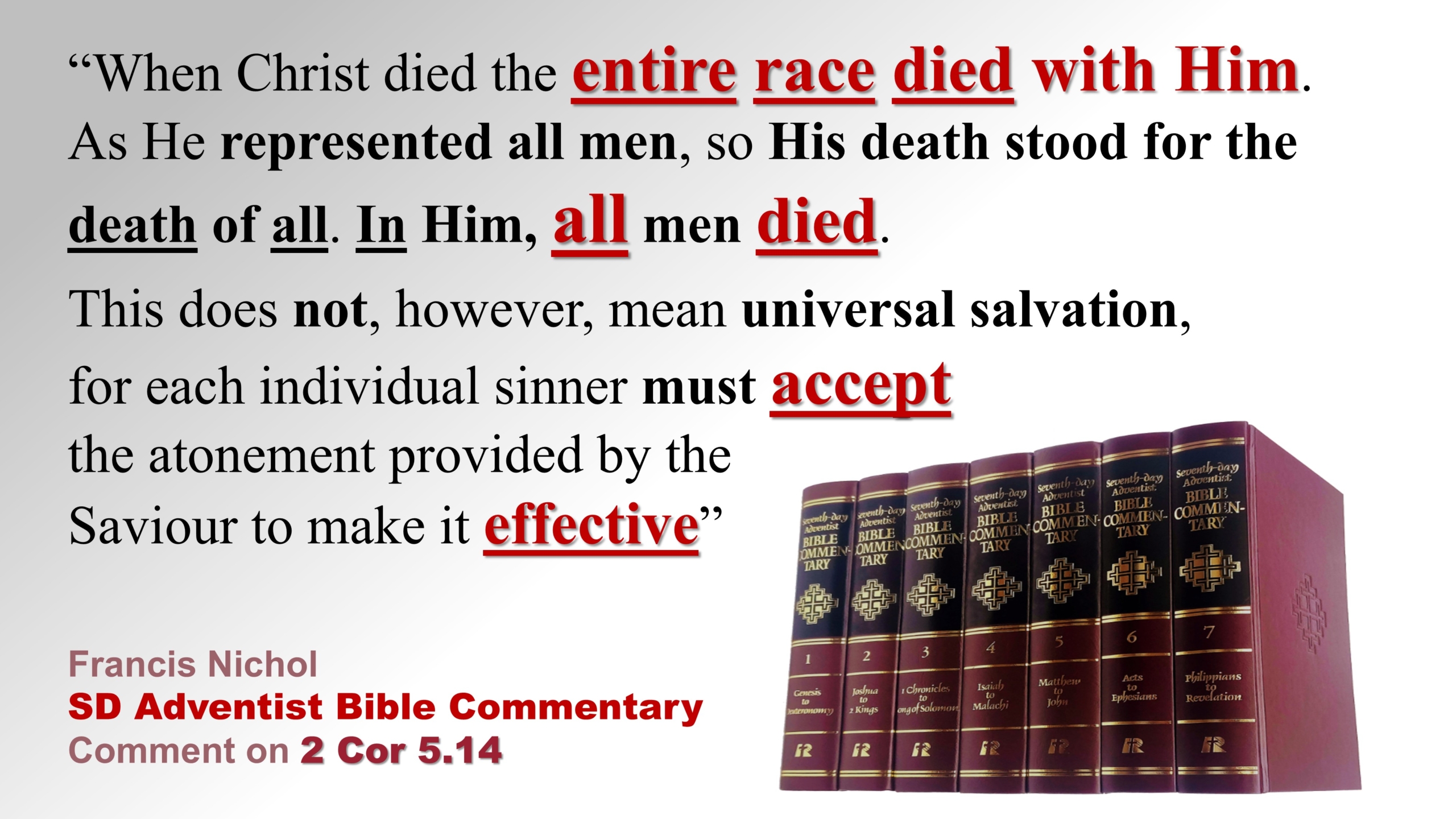
“For Christ’s love compels us, because we are convinced that one died for all, and therefore all died” (2 Corinthians 5:14).
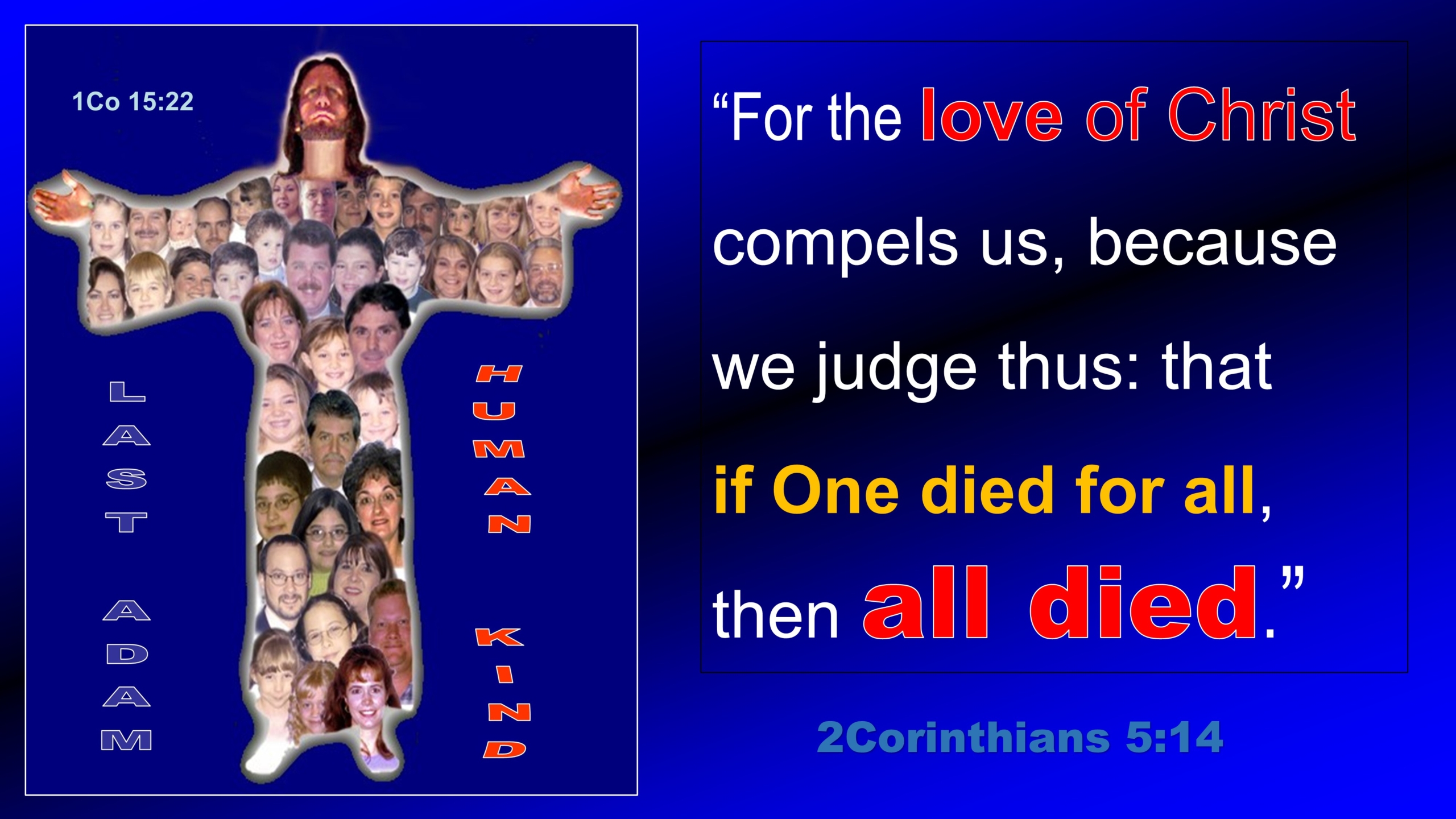
This verse does not stop only at the statement that one—”Christ died for all”—but goes on to say that also “ALL DIED” IN ONE—in Christ. And here is what commentary our Adventist theologians provided for this extremely important biblical statement of the Apostle Paul in the SDA BIBLE COMMENTARY (comment on 2 Cor. 5:14):
“Taking the place of Adam (1 Cor. 15:22, 45) Christ became the head of the fallen human race and died on the cross as its Representative. Consequently, when He died, the entire human race died in Him. His death personifies the death of all, as He represented all people. In Him all people died. In this way He fully satisfied the requirements of the law.”
You’ve probably heard about the serial killer by the name Ted Bundy who in 1970s killed between 30 and 70 young women and was finally caught by the police and sentenced to death in 1979.
But his mother went to the judge who sentenced her son and begged him to let her die instead of her son.
Do you think the judge and any just court would allow an innocent mother to die instead of a guilty and condemned to death son?
Of course not! Why? Because it would be unjust and unethical!

So, the very important question is, how can we defend the ethical aspect of the Gospel against the accusations of Muslim schoolers?
Are Catholic and Muslim scholers right accusing Christian gospel of being a legal fiction and saving condemned sinners by ignoring the righteous demands of God’s law?
To save us according to the demands of the holy law, which requires from us perfect obedience in the flesh, and second death for our sins, and especially for the indwelling law of sin as the root of all sins, first Christ had to identify himself with our sinful, condemned situation!
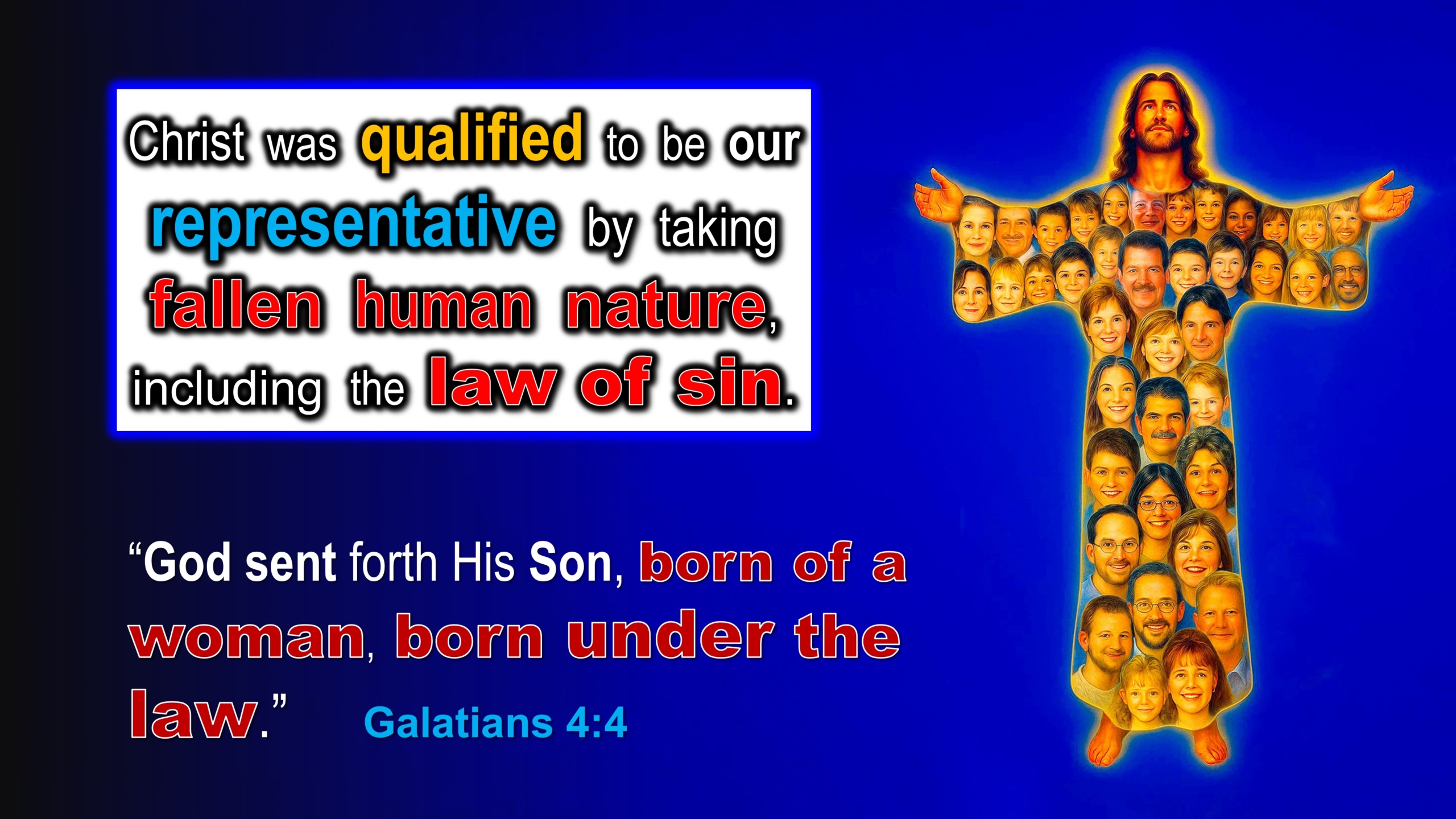
Therefore, to be qualified to be our legal substitute and saviour, Christ, at His incarnation, had to take our sinful nature, including that condemned representative law of sin.
That is why in Romans 8:3 we read that, “God sent His own Son in the likeness of sinful flesh”.
Paul used the words “sinful flesh” to assure us that Christ took the same nature we have, and not the sinless human nature Adam had before he sinned.

However, the question is, why Paul wrote that Christ came in the “likeness” of our sinful flesh (fallen nature) and not in sinful nature? Whu did he use the word “likeness”?
The phrase, “likeness of sinful flesh” is used here, first of all, because unlike all of us, although Christ took the same flesh (or sinful nature we have), including the indwelling law of sin, yet unlike all of us, He never sinned in this nature.

In addition, although He never used His divine nature to overcome sin, yet He took our sinful human nature on His divine nature, thus preventing our sinful nature from making Him sinful like all of us.
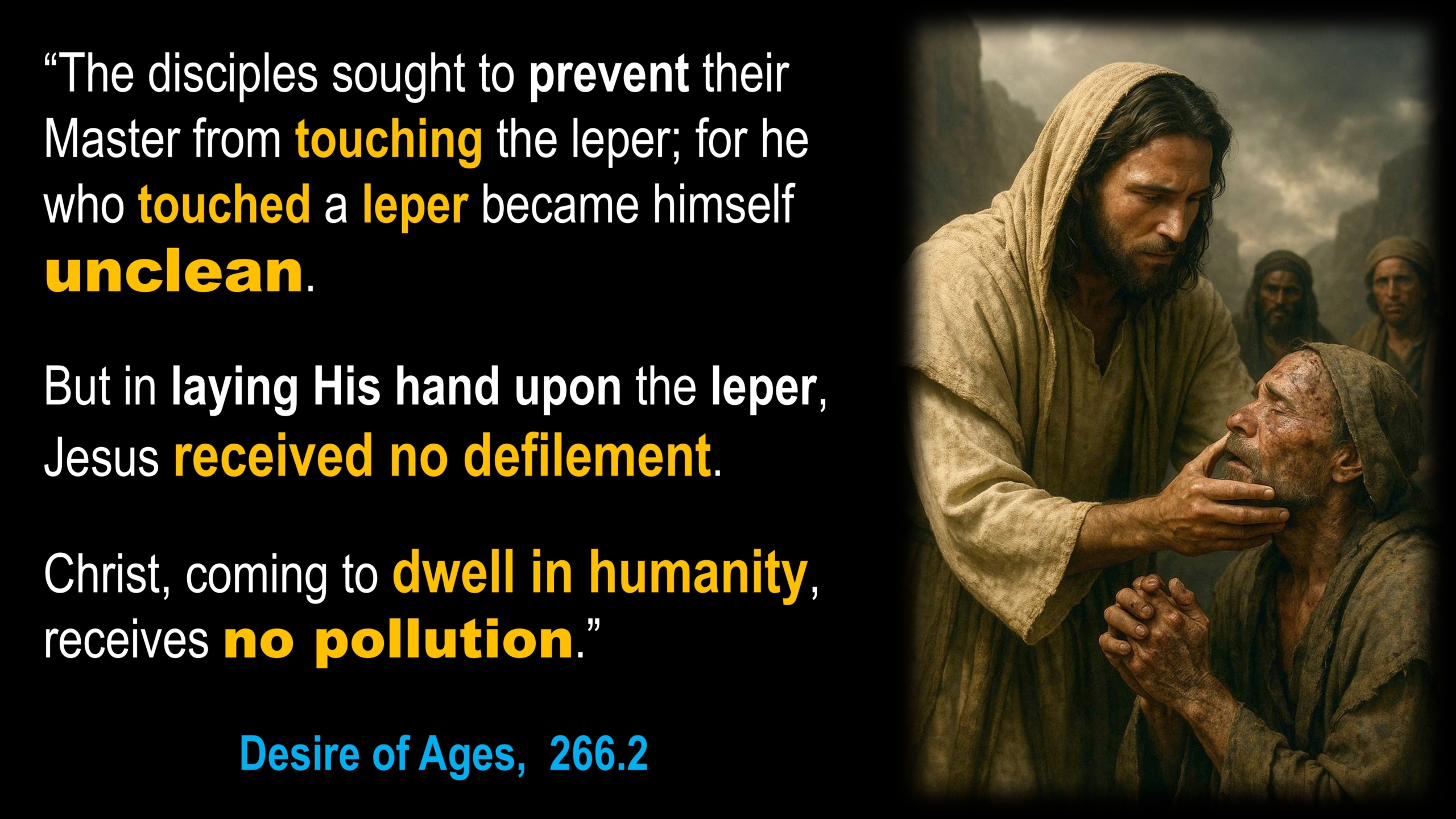
Let me give you an example. The Old Testament law strictly forbade touching lepers as it made those who touched them unclean. Did Christ touch lepers? Yes. Did He become unclean? No!! Why not?
His divine nature was the reason why! His inherent divine purity and life-giving power were far greater than any physical or ritual defilement.
“The disciples sought to prevent their Master from touching him; for he who touched a leper became himself unclean. But in laying His hand upon the leper, Jesus received no defilement… So it is with the leprosy of sin… Jesus, coming to dwell in humanity, receives no pollution” (Ellen G. White, The Desire of Ages, Chapter 27).
Likewise, when He accepted unclean, fallen human nature during the Incarnation, it did not make Him unclean and sinful for the exact same reason! Just as His divine nature prevented Him from becoming ceremonially defiled by touching leprosy, His divine purity ensured that taking upon Himself our weakened human nature never made Him sinful or defiled. His divine life remained perfectly pure while reaching directly into humanity’s fallen condition to heal and redeem it.
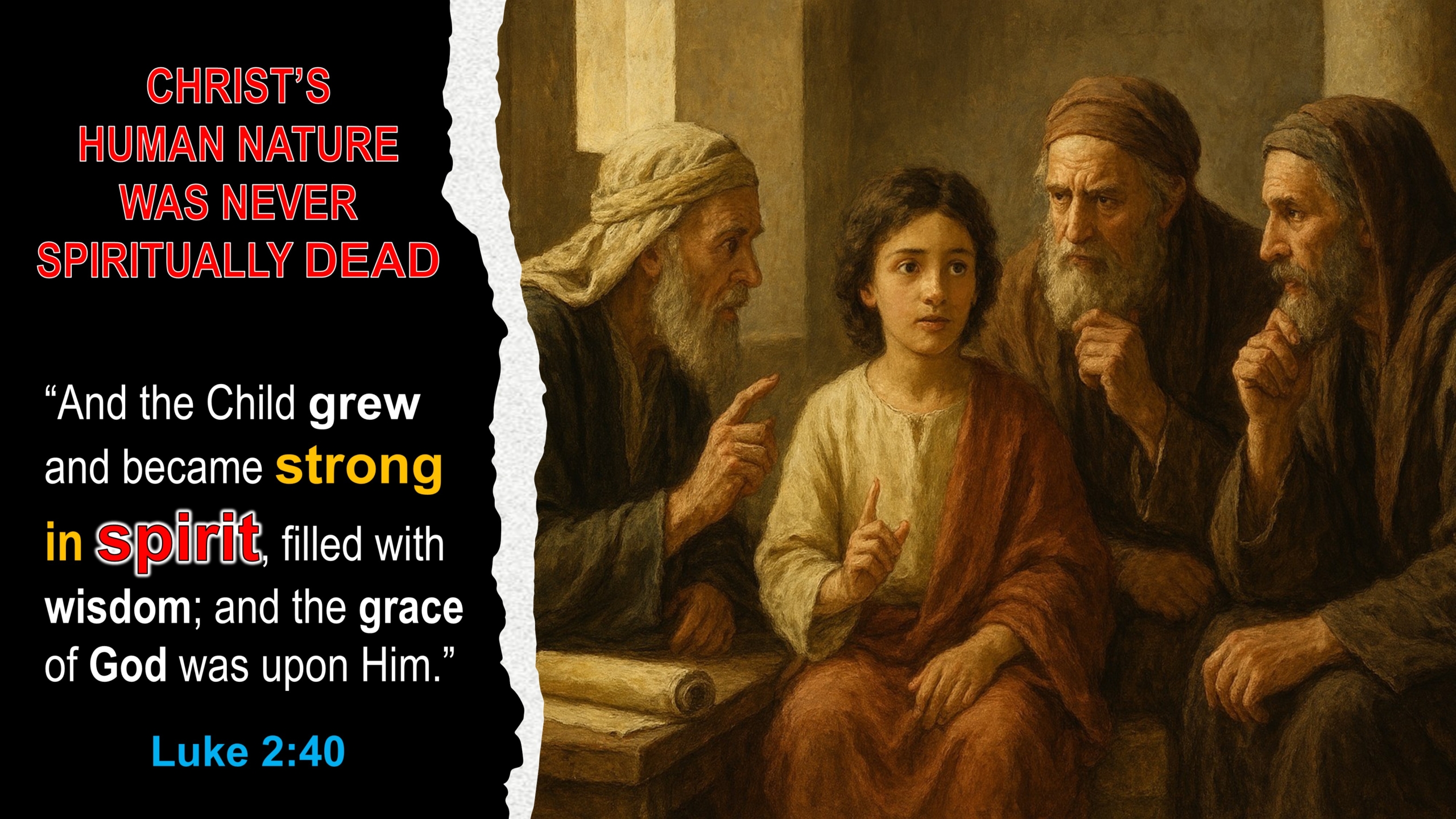
Another reason why Paul says that Jesus was sent in the likeness of sinful flesh is that the fallen human nature He took was never spiritually dead, or deprived of the internal presence of Holy Spirit. The sinful human nature Christ took was spiritually alive from His birth.
That is why in the beginning of the gospel of Luke we read that when Christ was a child He was “strong in Spirit”.
For this reason, we can assume that Christ’s human nature was like the nature of a born-again Christian, whose sinful human nature is spiritually alive because of the internal presence of Holy Spirit.
That is why in Hebrews 4:16 Paul tells us that “Christ was made like His brothers, (like Abraham’s descendants), in every way”, suggesting that His human nature was like that of born-again believers.

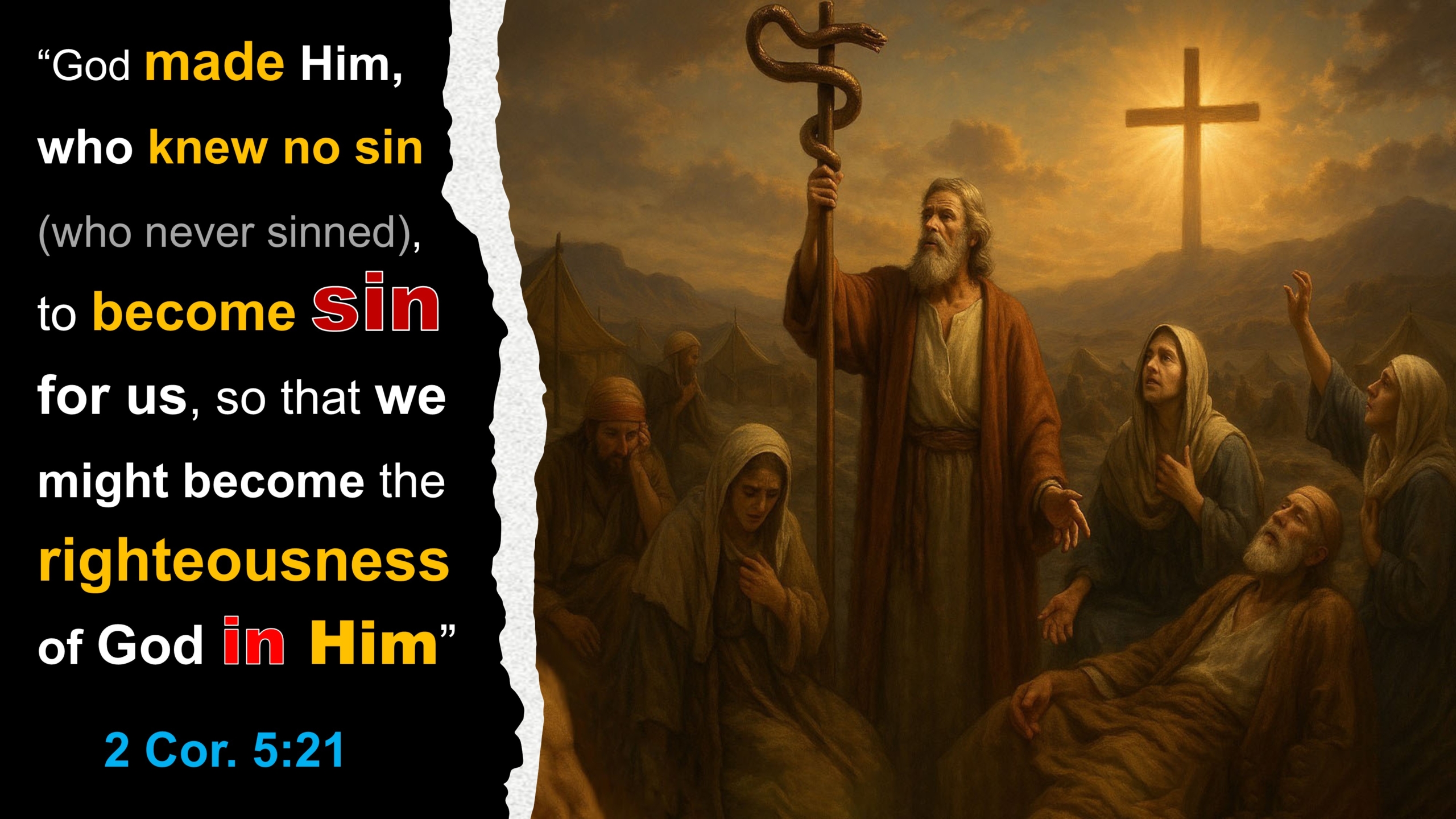
Another very important statement concerning the humanity of Christ, is found in 2 Corinthians 5:21 where we read that “God made Christ sin for us”.
Please notice that the word “sin” here is again in singular form, signifying that at His incarnation Jesus took our representative law of sin.
So, taking into consideration these verses and many others that are not quoted here, we can say that by taking fallen human nature, including the law of sin, Jesus was qualified to become the representative of the entire fallen humankind.
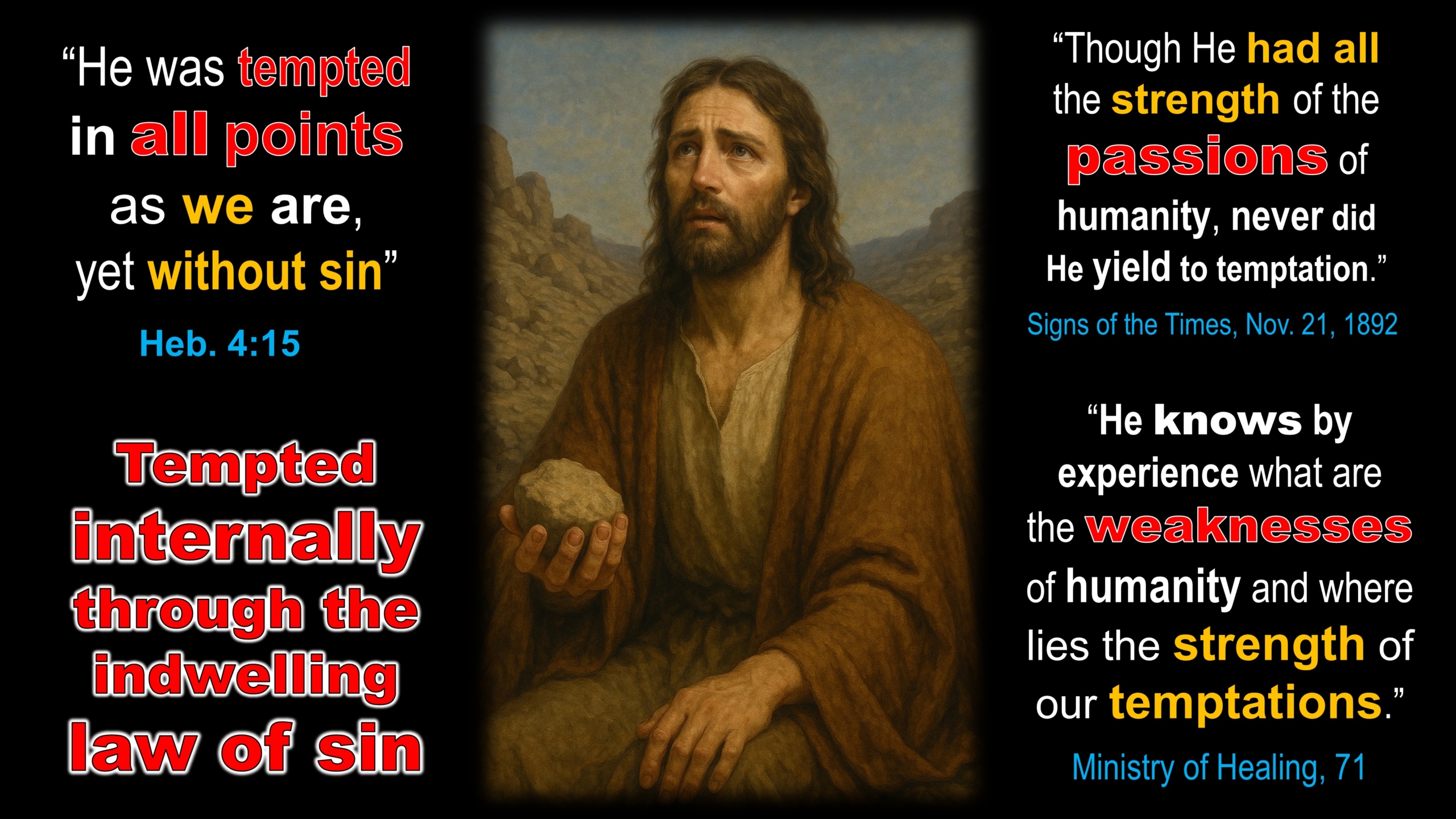
Then, after assuming the same nature we have, in order to meet the first requirement of the law concerning us sinners, Christ perfectly overcame the law of sin in His entire life on our behalf, or as humankind He represented.
For this reason, in Hebrews 4:15 we read that “He was tempted in all points as we are tempted, yet without sin”.

However, the fact that He was tempted in all points as we are, doesn’t mean that His temptations were exactly the same as ours because He was never tempted to watch bad movies, eat junk food, such as pizza, or drink coffee or Coca-Cola.

The Bible say that He was tempted in all points as we are tempted, because He, like us, was tempted internally through that indwelling law of sin, that was pulling Him toward sin, selfishness and pride.
Another reason, why we read that He was tempted in all points as we are, is because His temptations, like ours, involved three basic drives of the flesh.
These three drives of our flesh are listed in 1John 2:16:
The first drive of the flesh is the last of the eyes, which means that we crave for attractive to us things that we see with our eyes.
The second basic drive of our flesh, Christ was tempted through, was the last of the flesh, referring to appetite or for instance the sexual temptations.
And the last basic drive of the flesh, Christ had to overcome is our pride of life which refers to our self-centred attitude and natural tendencies to boast about who we are and about our achievements. It is the pride of life that drives us to legalism and attempts to save ourselves through our own efforts rather than by accepting God’s grace.
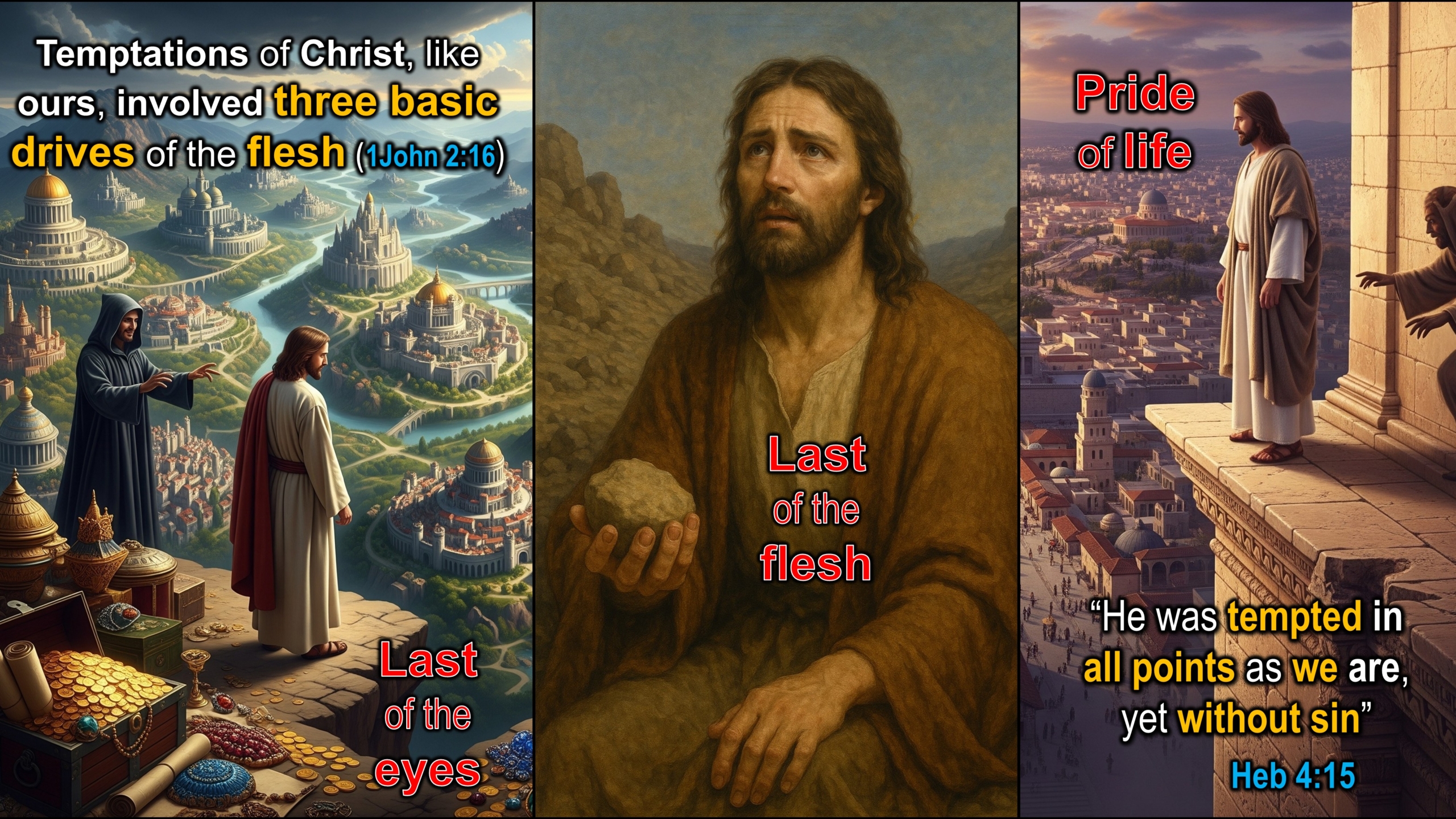
And the wonderful good news is, that the Son of Men perfectly overcame those three basic drives of our flesh on our behalf.
However, since He was divine and “in Him dwelled all the fullness of the Godhead”, does it mean that He used His divine powers to overcome sin? No, He couldn’t because He had to fight sin in our shues to hve legal right to save is in Him as our representative.
He had to overcome our law of sin, without using His divine powers, because in Philippians 2:7 the inspired apostle Paul tells us that Jesus “emptied Himself”. Emptied himself of what? Of His divine prerogatives and powers.
It means that He couldn’t use His divine powers to overcome sin but only the same power that is available to all born-again believers, which is the power of the indwelling Holy Spirit available by faith and prayers.
In the same verse of Philippians 2:7 we also read that Christ made Himself a slave to His Father, which means that He made Himself completely dependent on His Father for everything, including the power to overcome sin. For this reason, and to perfectly overcome sin on our behalf He had to have a constant communion with His Father through continual prayers and perfect submission.
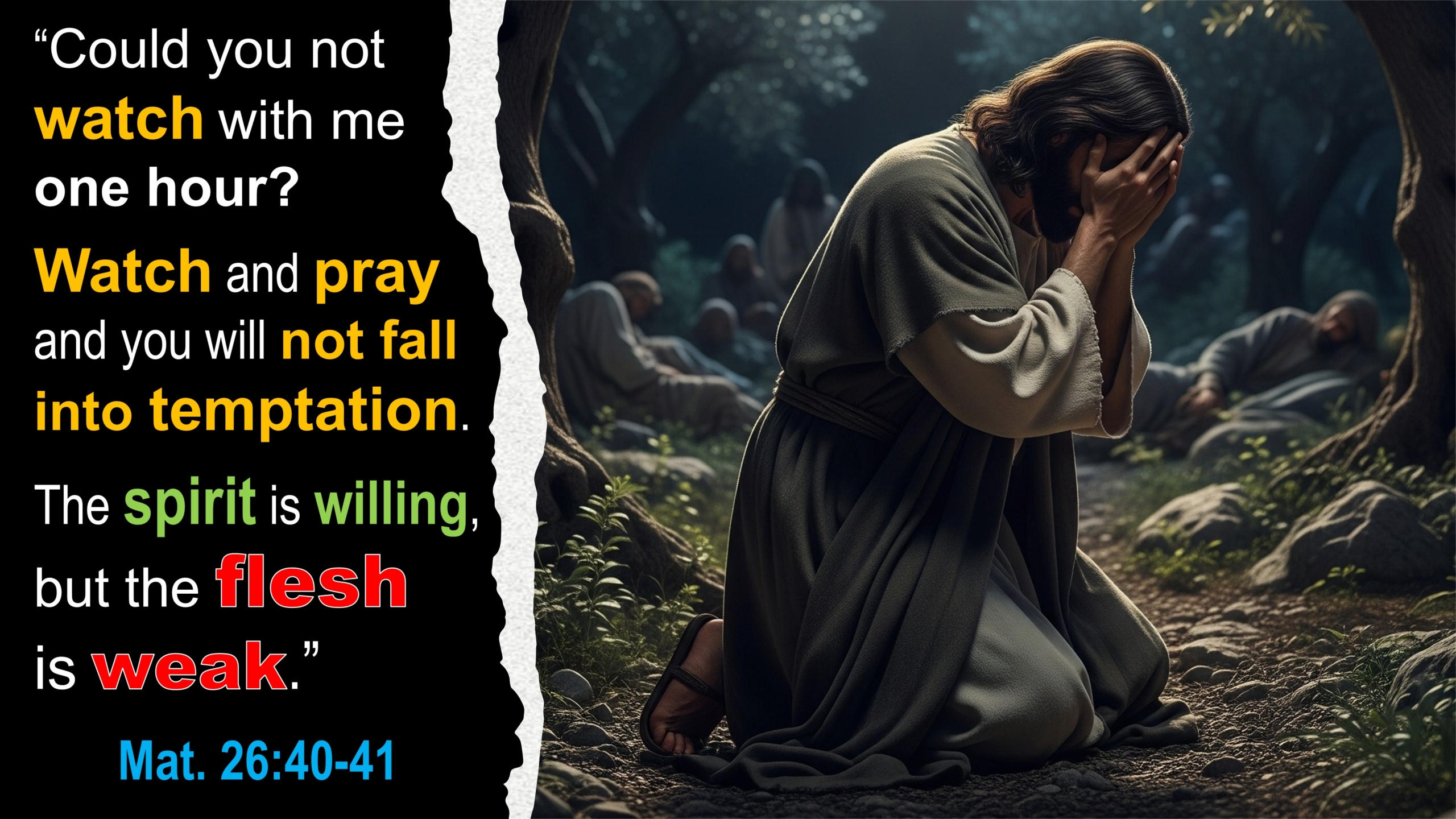
The best example of it is prayer in the Garden of Gethsemane where the disciples were sleeping but Jesus, although also tired, sleepy, and burdened with the same flesh, was praying to the point for shedding blood.
Then, out of love and care for his disciples, He came to them and said, could you not watch with me one hour? The Spirit is willing, but the flesh is weak.
He was fighting against the same flesh but unlike the disciples and all of us, He was never defeated by the law of sin, because He was always watching and praying, including when He was very tired, sleepy or discouraged by His enemies and unbelievers.
So, although Christ was tempted in all points as we are, although like us, He was tempted internally through the indwelling law of sin, and although His temptations involved the three basic drives of our flesh, yet He perfectly overcame them on our behalf, and His perfect victory is ours because He identified Himself with us and was qualified to be our representative.
Then, after perfectly overcoming the law of sin on our behalf, and thus fulfilling the first requirement of the holy law on our behalf, Christ also had to meet the second demand of the law concerning us, sinners, because the law also demands from us the second death as the wages of sin.
For this reason, Jesus took that representative law of sin of fallen humanity including all its rotten fruits, (all our plural sins), to the cross, where according to Romans 8:3, this root of our sins (the law of sin) was condemned by God in Christ’s flesh, (in His human nature), and destroyed with the everlasting death.
Romans 8:3: “For what the law could not do, as it was weak through the flesh, God did by sending His own Son in the likeness of sinful flesh, on account of sin: He (God) condemned sin in the flesh.”
Paul states here that since we were unable to save ourselves by keeping the law because of our flesh, or because of the indwelling law of sin, which constantly pools us toward sin, selfishness, and pride, God did it by sending His Son in the likeness of the same sinful flesh, which means Christ took the same fallen human nature, including the law of sin, as the root of all sins, then He perfectly overcame it on our behalf, and after that He took it on to the cursed tree (cross), where it was condemned by His Father and annihilated with the second death on the cross in Christ’s flesh, or in the fallen human nature He took.

In John 3:14, Christ said to Nikodemus: “As Moses lifted up the SNAKE in the wilderness, even so must the Son of Man be lifted up, so that whoever believes in Him shall not perish but have everlasting life”.
However, what a strange symbol Christ used here to present Himself as the saviour of the world!
It is very strange because who does the snake symbolise in the Bible?
It is the symbol of Satan!
Why did Jesus present Himself as the snake, symbol of Satan, on the pole?
Well, there is only one correct explanation.
Christ, referring to his death on the cross, used the symbol of a snake on the pole, because at the incarnation He took our representative flesh, including something that was invented and introduce in the perfect universe and here on earth, by the snake, by Satan.
What was it?
It was the snake’s venom of the evil law of sin injected into humanity by the snake through the sin of Adam and Eve.
Christ took the venom of the law of sin and selfishness, neutralised it on our behalf, and then took it to the pole (the tree), where it was condemned by God in Christ’s flesh and destroyed forever.

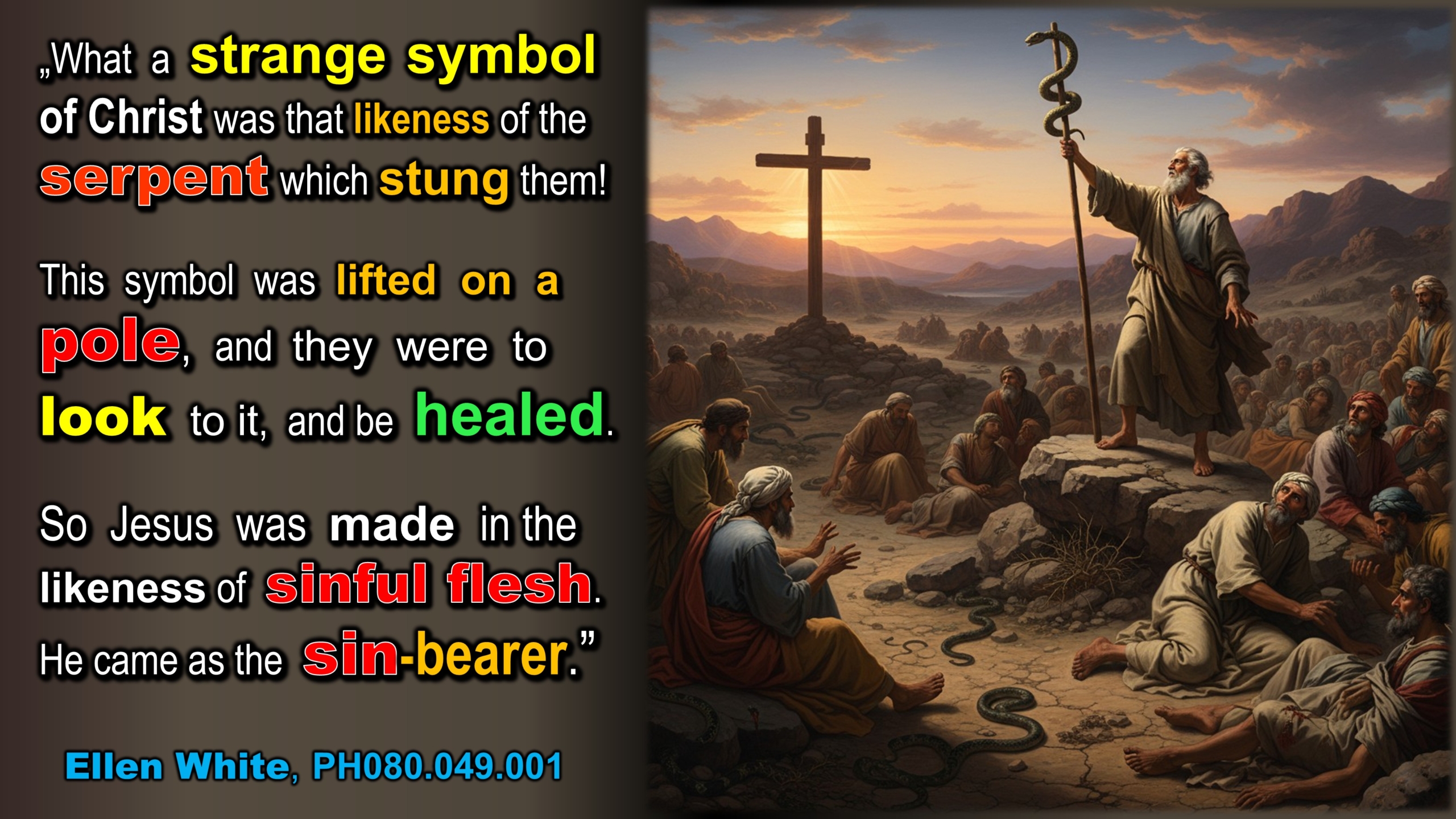
Ellen White expressed her astonished abot the same truth in the following way: „What a strange symbol of Christ was that likeness of the serpent which stung them! This symbol was lifted on a pole, and they were to look to it, and be healed. So Jesus was made in the likeness of sinful flesh. He came as the sin-bearer” [Ellen G. White, Bible Echo, December 2, 1895; reprinted in Pamphlet 80 (PH080), p. 49, par. 1 (PH080 49.1)].
Now, the very important question is, can we be healed from the venom of snake’s law of sin and selfishness, which is in us, by looking at the Catholic Christ hanging on the cursed tree with sinless, holy, human nature that is deprived of snake’s venom of the law of sin?
No, we can’t be healed by God if we look at such Christ, presented to our people by the unfortunate book “Question on Doctrine” or some theologians such as Raul Dederen and BRI!
In order to be healed from the snake’s venom of the law of sin, we must look at Christ hanging on the cross with the sinful human nature that includes snake’s venom of the law of sin!
Please notice, that Ellen White links the strange symbol of Christ with the fact that he took our sinful nature: “So Jesus was made in the likeness of sinful flesh. He came as the sin-bearer.”
It is therefore clear that she links the strange symbol of Christ as the snake to that fact that Jesus came in the likeness of sinful flesh and as the sin-bearer.
Please notice that again the word “sin” is in singular, referring to Christ taking the law of sin and bearing it to the cross.
Is Christ called the last or the second Adam in the Word of God?
Yes, in first Corinthians, Paul calls Him the last Adam.
Why does he call Jesus the last Adam?
Because the Hebrew word Adam means “Humankind”!
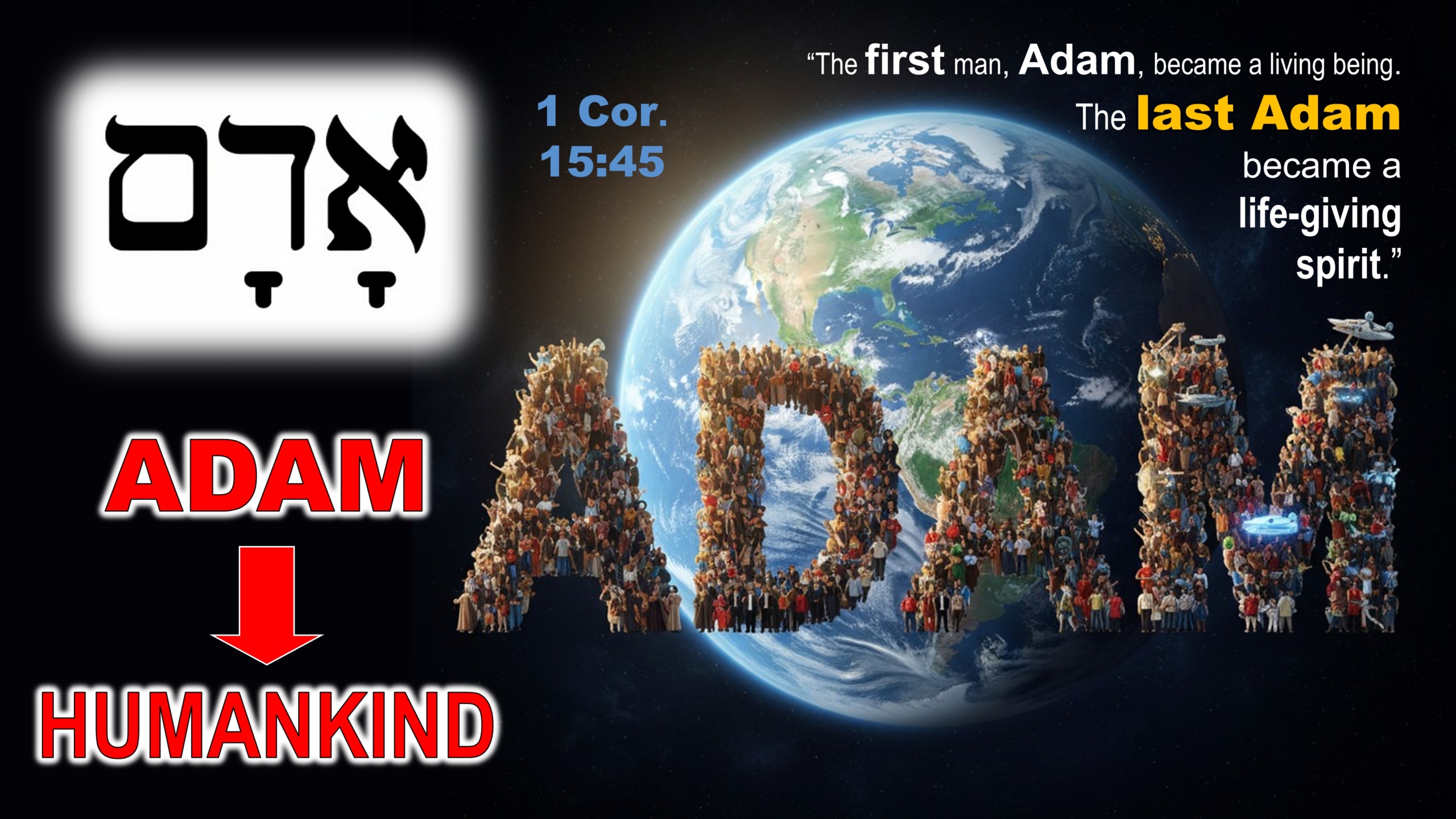
It is extremely important for us to remember that in the Hebrew language, the word “Adam” means “HUMAN RACE”! It follows that when God created Adam, He also created all of humanity in him. Adam was US, our REPRESENTATIVE, and we were in his loins. According to the authors of the “Small Biblical Encyclopedia”, the word “Adam” means “the original generic name for man or all of humanity.” In Genesis 2:7 it is written that God “formed a man from the dust of the ground and breathed into his nostrils the breath of life.” (BT) It is extremely interesting that the phrase “breath of life” found in this passage was written in the plural in the original Hebrew, which can also mean that in Adam, God created all people.
Remembering that the word Adam means “human race”, and that in Adam God created all people, and that Adam was the representative of us all, it should be noted that Jesus Christ is called in Holy Scripture “the last Adam”:
“So it is written: “The first man Adam became a living being”; the last Adam, a life-giving spirit” (1 Corinthians 15:45).
Why is Christ called “the last Adam” in the Bible? This is an extremely important question. Finding the correct answer to this key question will allow us to understand the basic principle of the Gospel and the method of humanity’s salvation.
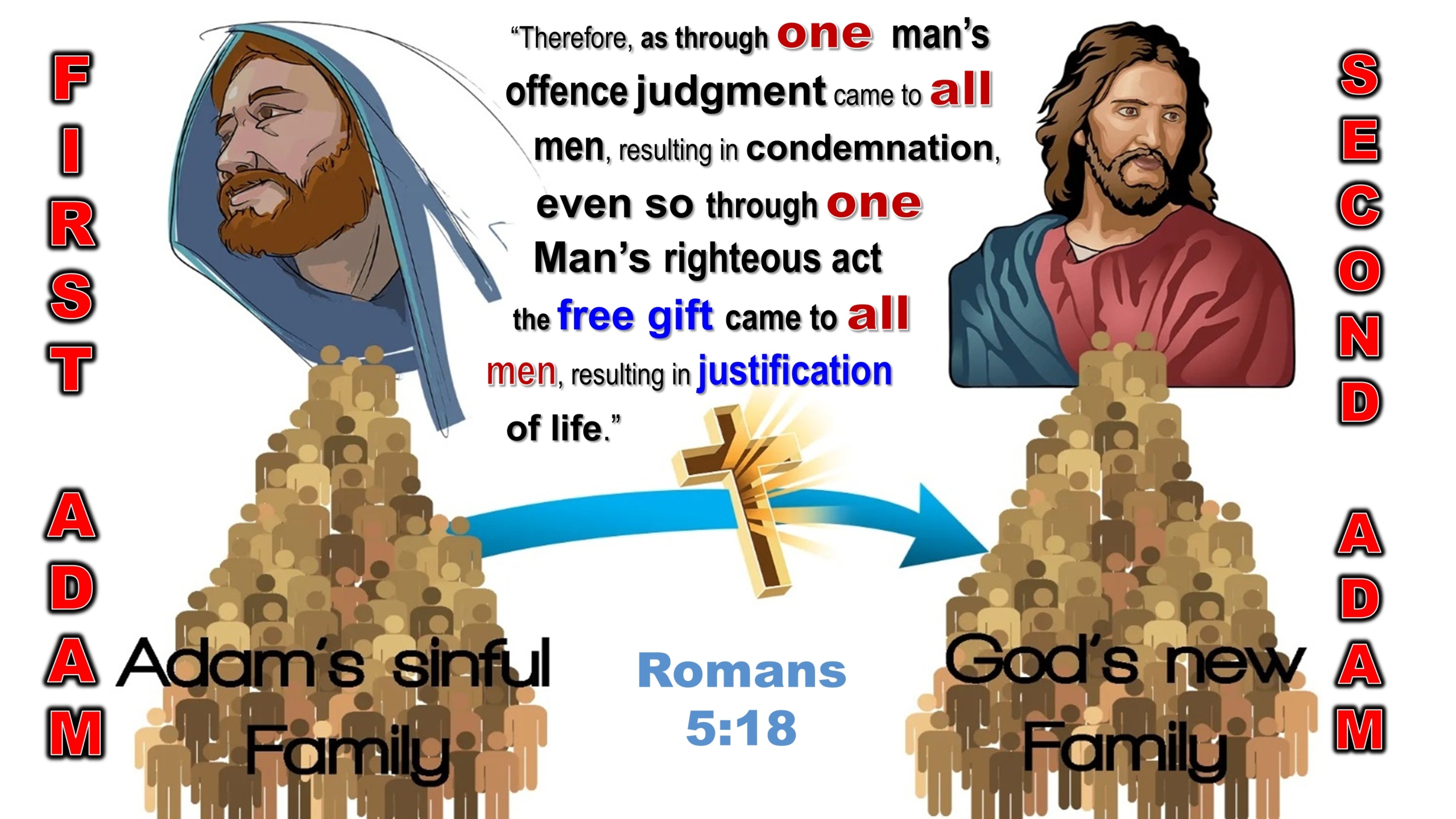
Christ was called “the last Adam” because the word “Adam” means “Humankind” in Hebrew, thanks to which the Son of God could become the representative of all humanity. And just as the first Adam represented the entire human race, so Christ as “the last Adam” also personified all people.
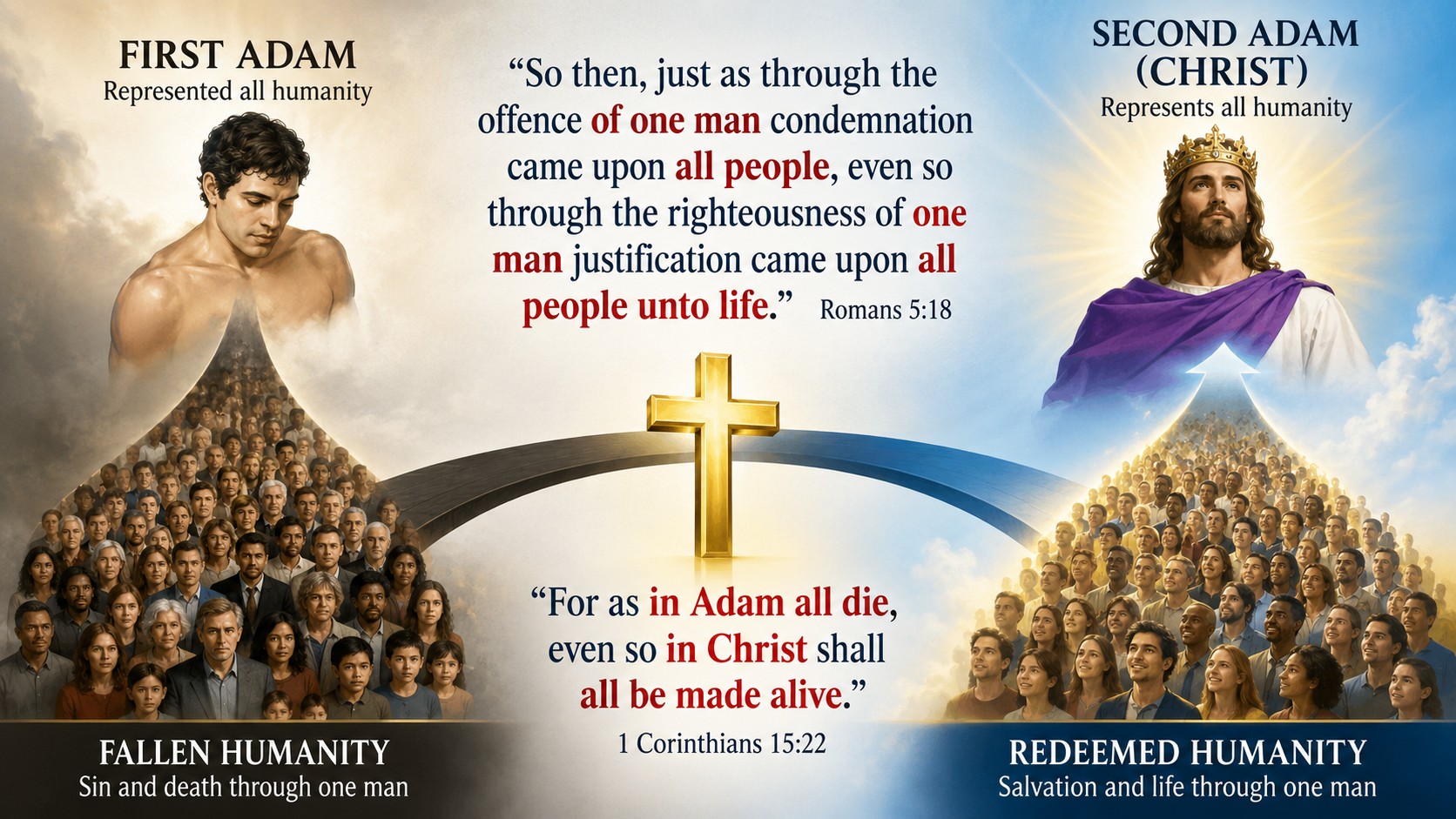
In Romans 5:12-21 Paul 6 times repeats the same truth.
– Through this legal way of saving guilty sinners by making them perfect in Christ, and by putting their representative law of sin to second death in Christ, and in this way by respecting and meeting the demands of the holy, eternal Law of God, the law was greatly vindicated, uplifted, and established.
– That is why in Romans 3: 26, Paul says that God remained “just, justifying (sinners) those who have faith in Jesus.“, and in verse 31 he adds that by this way of salvation the law was “established (upheld and vindicated)”.
– “Do we then make void the law through faith? Certainly not! On the contrary, we establish the law.“
– The law was established, uplifted, and vindicated through the gospel because Christ didn’t die only instead of us but also as us and because entire fallen human race was punished in Him.
So, Is Christian gospel an unethical legal fiction?
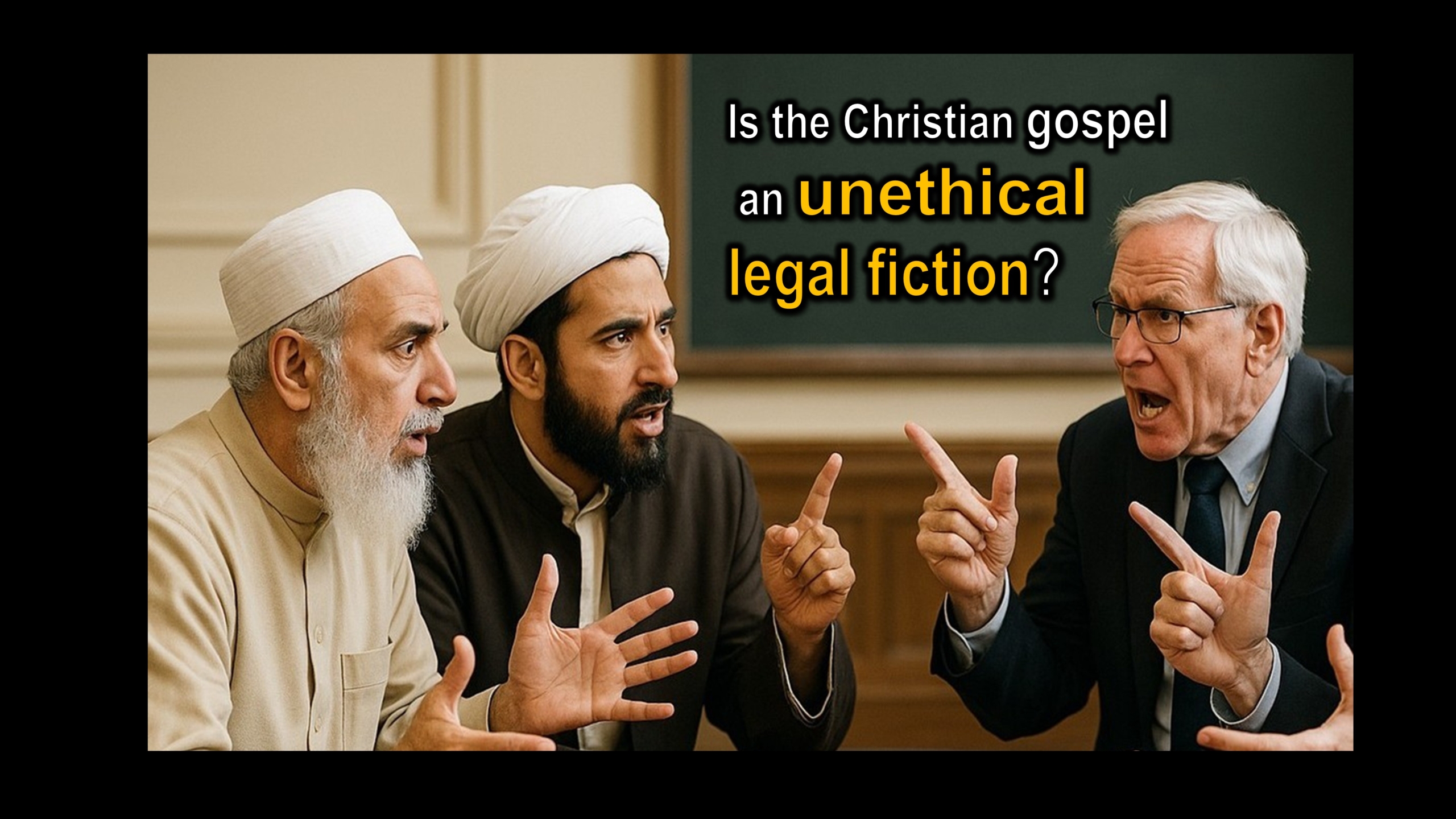
If we accept and proclaim the popular not completely restore evangelical gospel then yes, it can be accused of being illegal and unethical. But not if we accept and proclaim the everlasting gospel that was proclaimed during the 1888 era by Waggoner, Jones, and later on especially by Prof. W.W. Prescott.
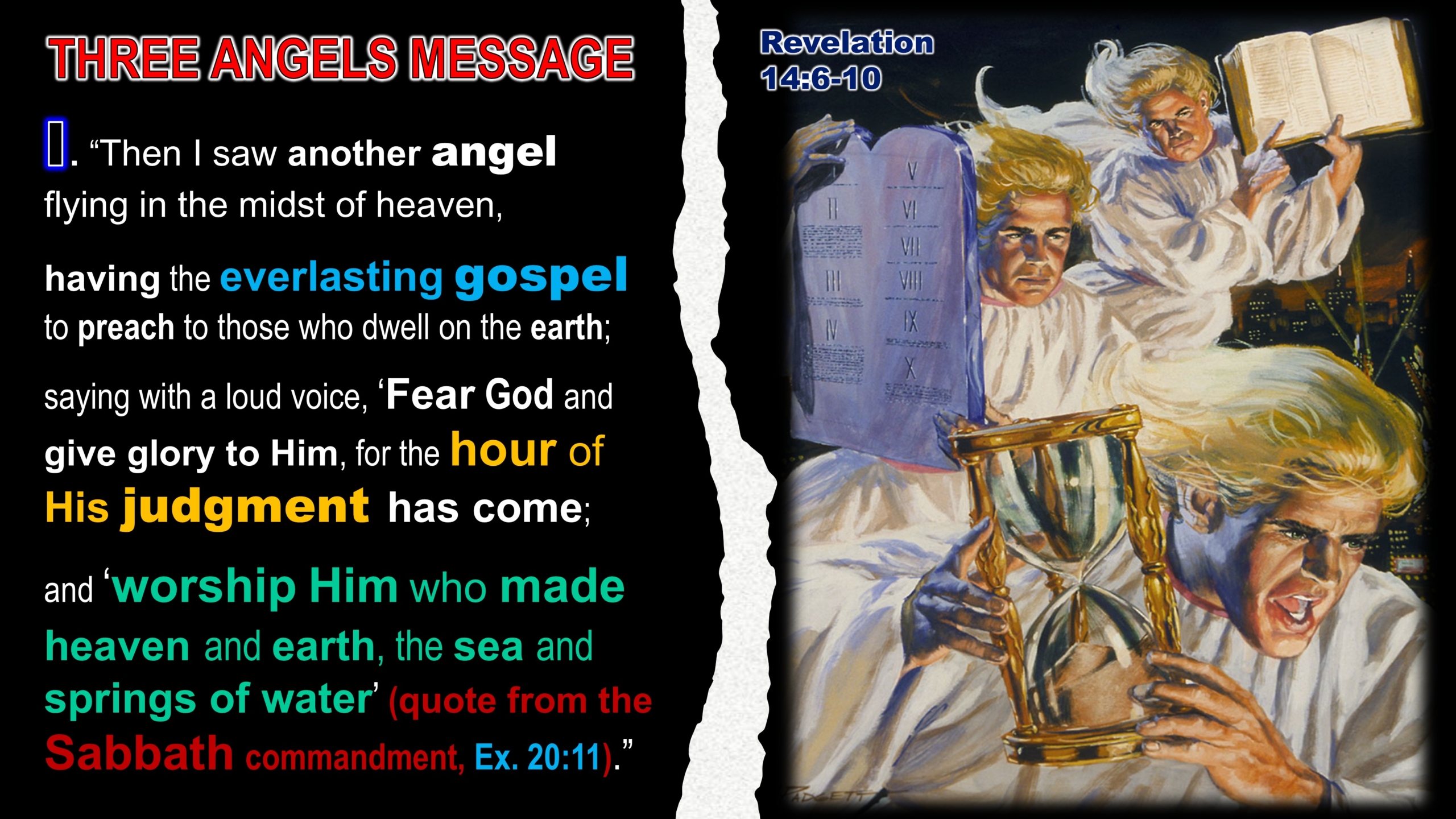
Are we able to defend the ethical aspect of the gospel against the accusations of Muslim schoolers?
Yes, we can, because according to the true gospel, it is not only one who died instead of all, but also all died in one!
And likewise, His perfect obedience in the flesh and perfect victory over the law of sin is the vitcory of the entire humankind!
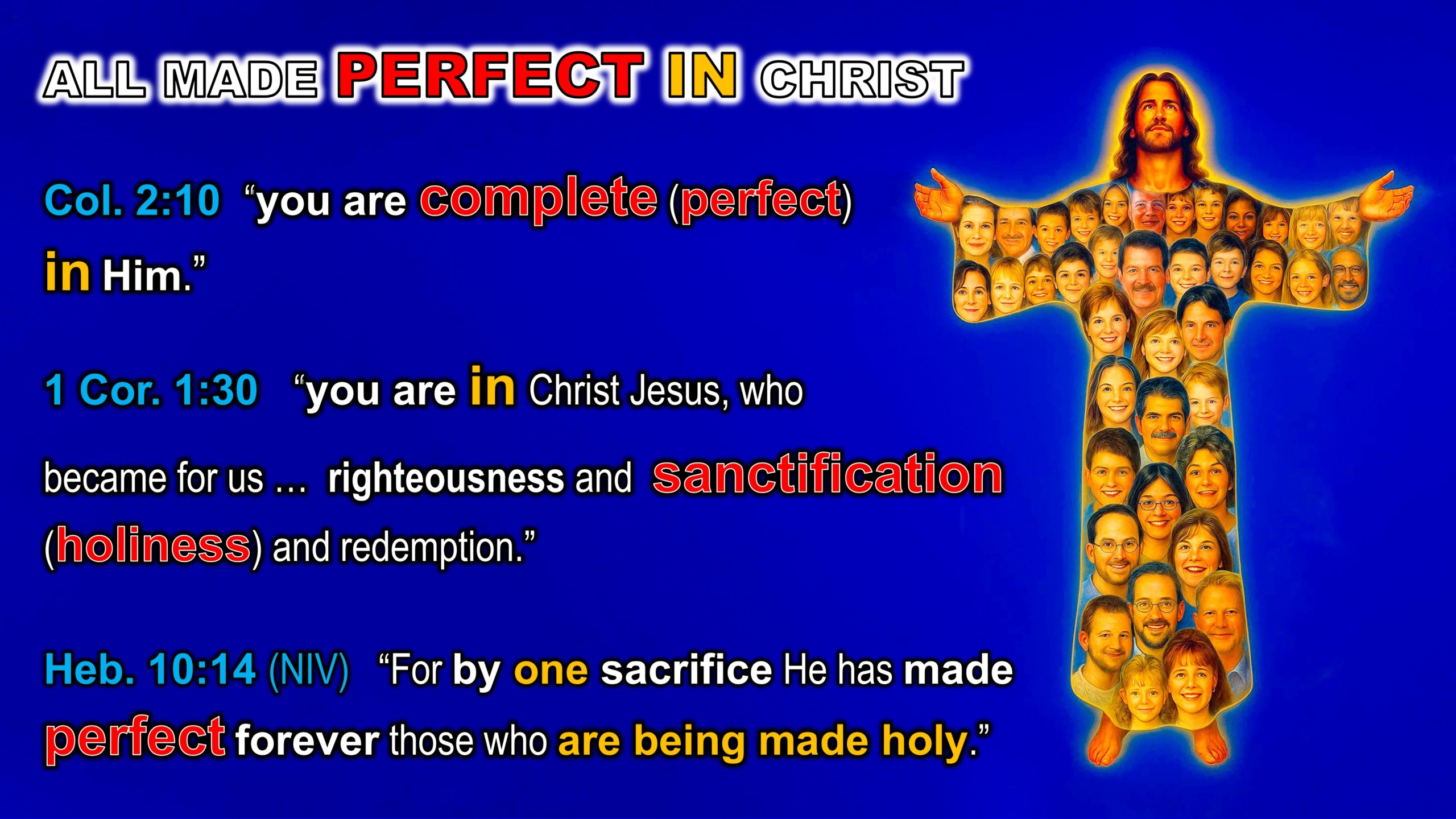
All sinners were made perfect in Christ 2000yearsago!
Col. 2:10 “You are complete (perfect) in Him.”
1 Cor. 1:30 “You are in Christ Jesus, who became for us … righteousness and sanctification (holiness) and redemption.”
Heb. 10:14 “For by one sacrifice He has made perfect forever those who are being made holy.”
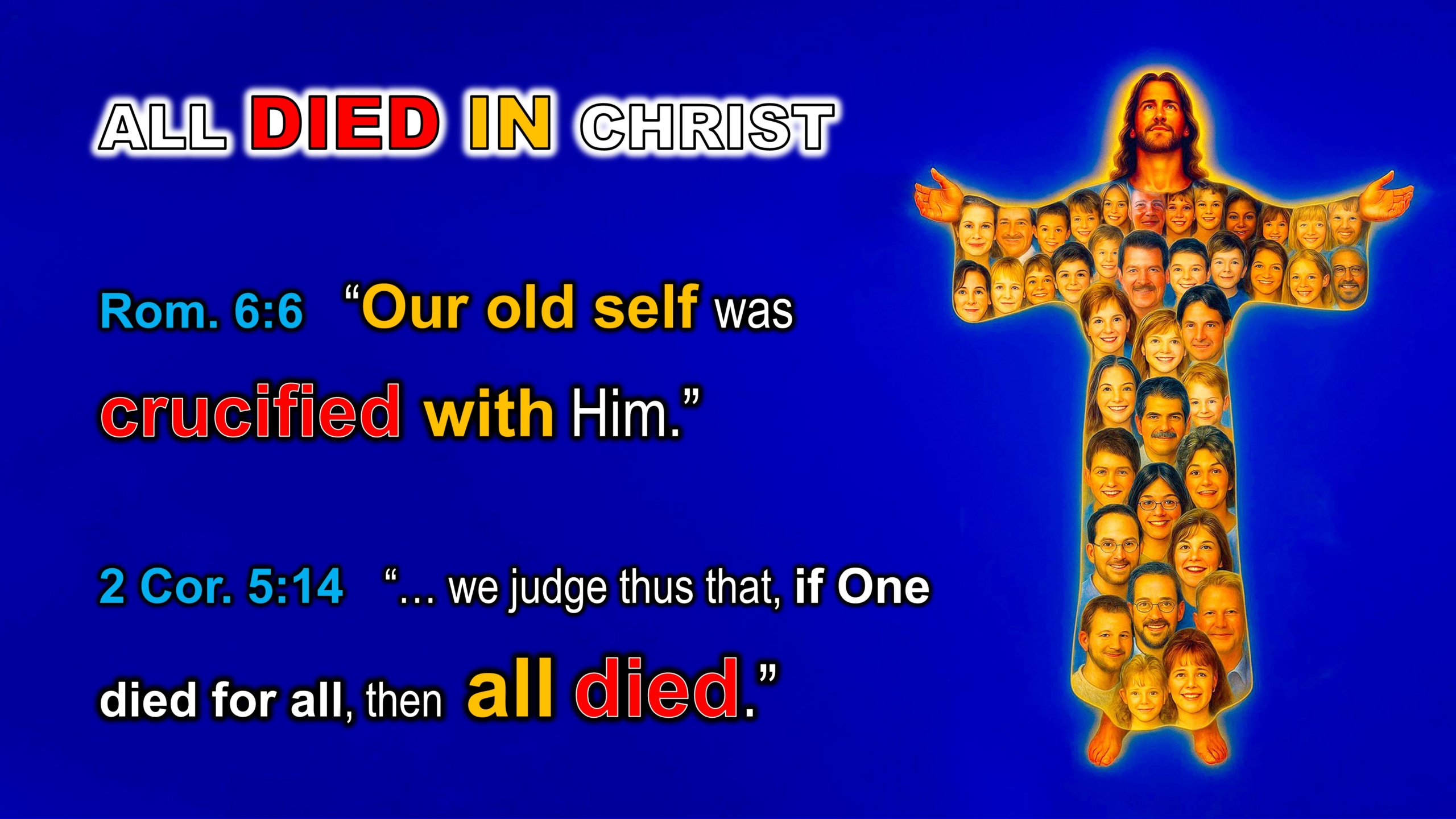
Not only we alle were perfect in Christ but we all also died in Him and were punished for our singular sin which is in us and all our plural sins!
Rom. 6:6 “Our old self was crucified with Him.”
2 Cor. 5:14 “We judge thus that, if One died for all, then all died.”
Professor William Warren Prescott was one of the best theologians we’ve ever had in this denomination.
The following beautiful quote comes from the sermon delivered by him in 1895 in Armadale (Australia) in the presence of Ellen White:
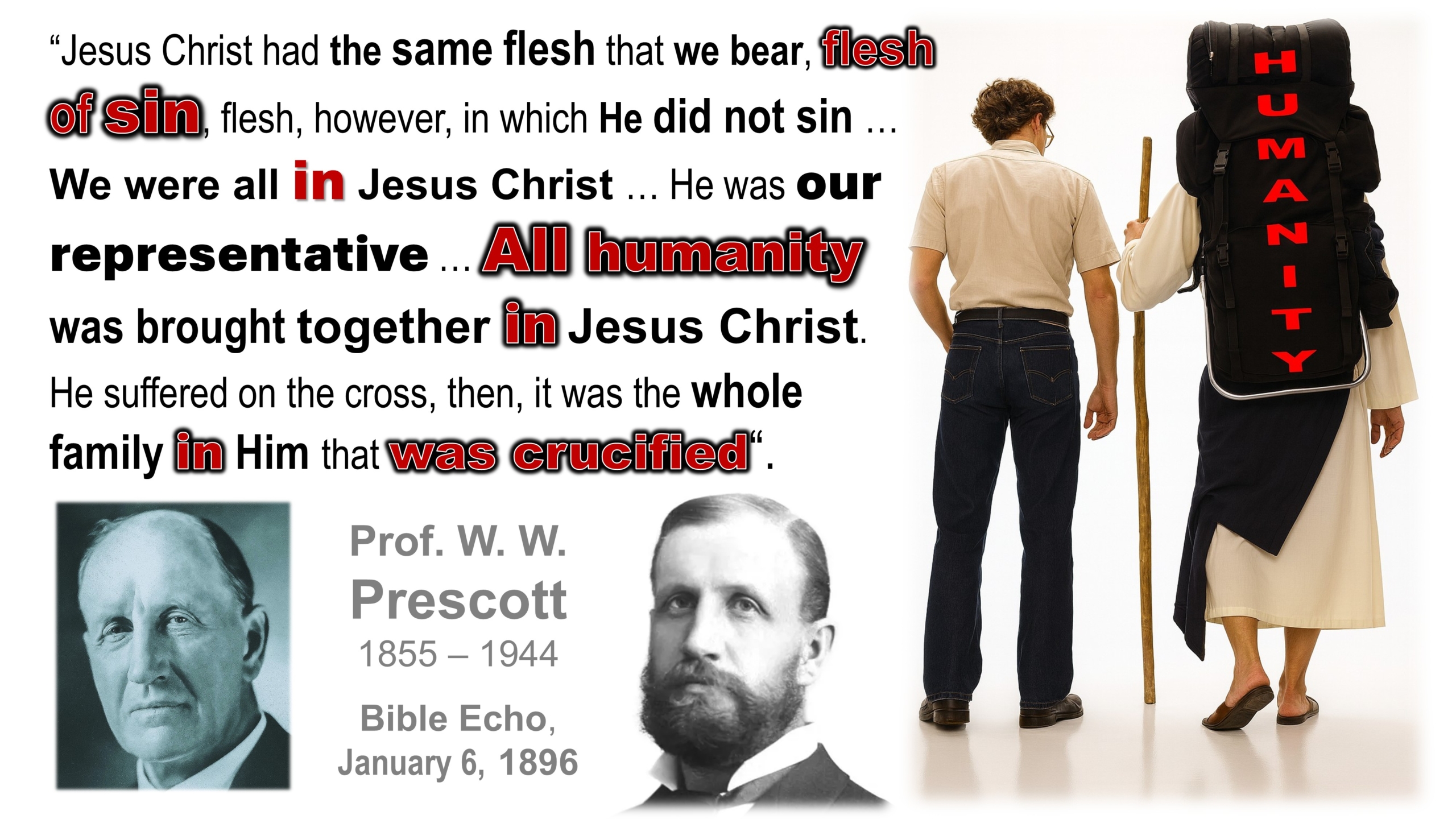
“Jesus Christ had exactly the same flesh that we bear, — flesh of sin, flesh in which we sin, flesh, however, in which He did not sin… We were all in Jesus Christ… He was our representative; He became flesh; He became we… All humanity was brought together in Jesus Christ. He suffered on the cross, then, it was the whole family in Jesus Christ that was crucified”.
 Let me read for you a very interesting quotation written by famous Chinese preacher and martyr by the name Watchman Nee, who was kept in prison by communists because of his faith in Jesus, for 20 years, and finally in 1972 he died in prison.
In the book “Dying With the Lord” he wrote:
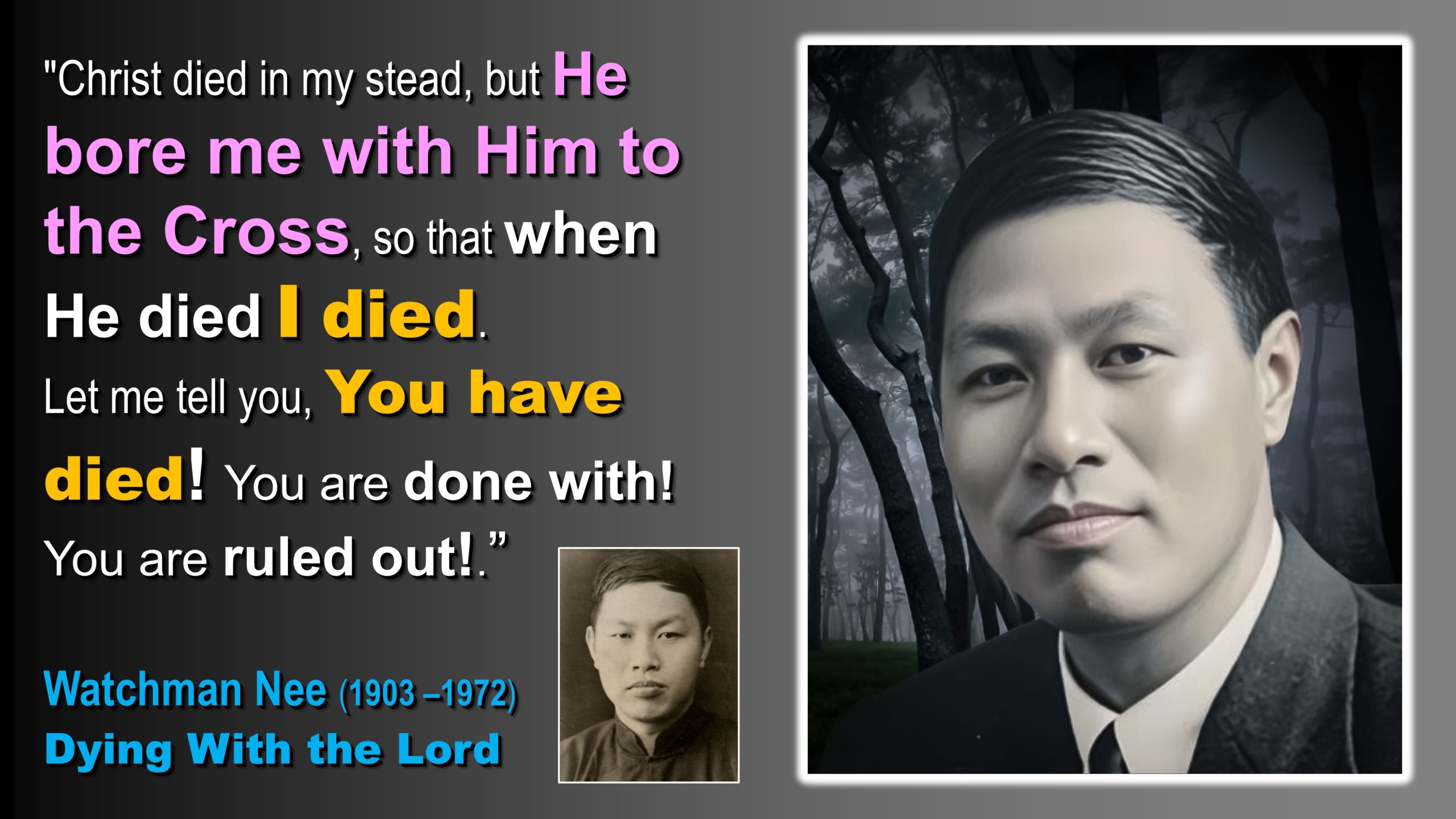
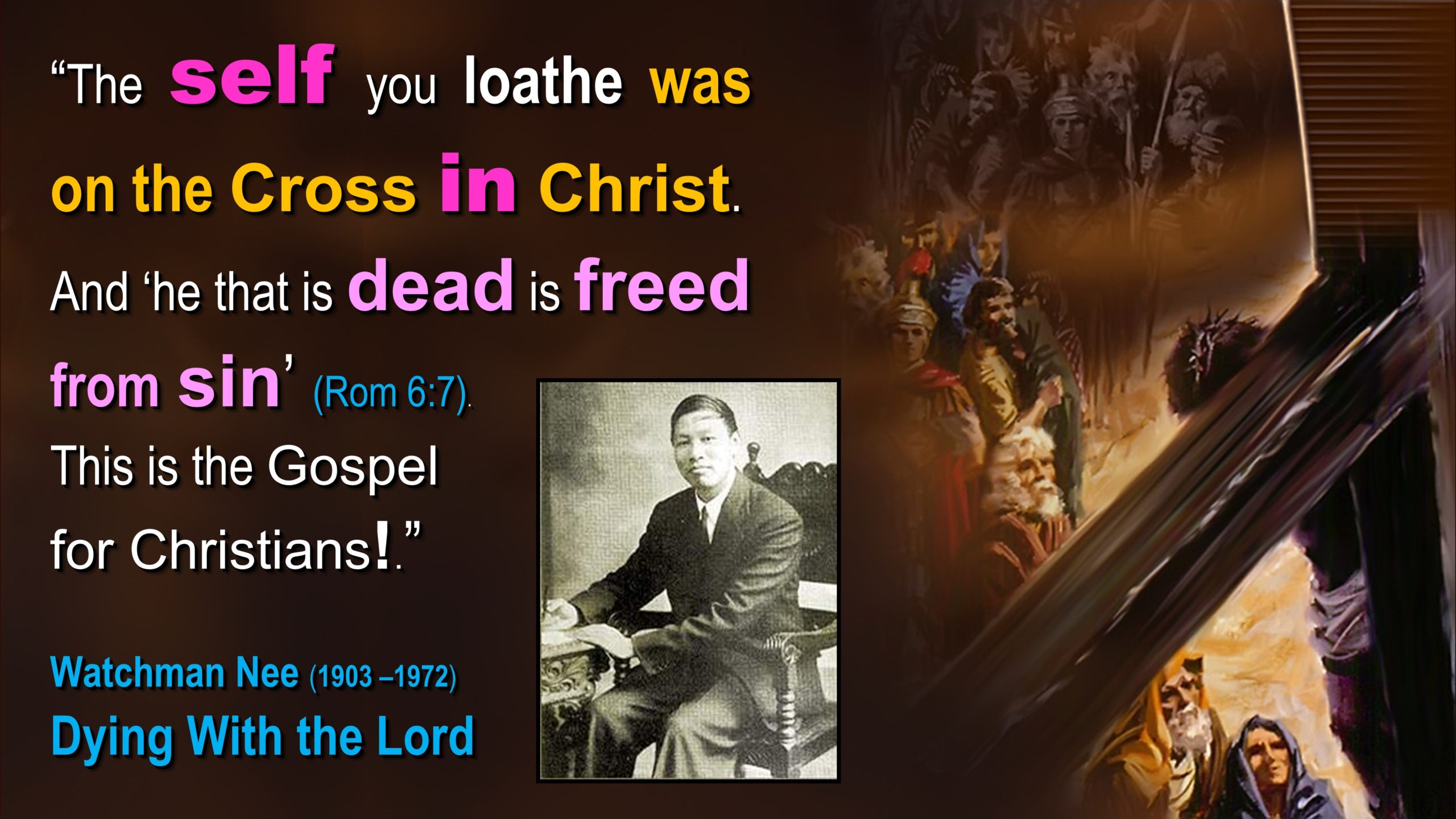
“The self you loathe was on the Cross in Christ!”
If we keep on claiming that Jesus took the sinless Human nature, deprived of the law of sin, and then lived a perfect life instead of us and died instead of us, then Paul’s claim that God was just justifying sinners and that this gospel establishes the law, doesn’t make sense, because such way of salvation doesn’t show any respect to the law but neglects its demands and ignores it.
Only when we proclaim the true gospel, the words of Paul make sense because it teaches that Christ took our sinful nature, including the law of sin, thus being qualified to become our representative and second Adam (second human kind). Therefore, we claim that “our old self was crucified with Him” (Romans 6:6), and that when “one (Christ) died for all, all died” (2 Corinthians 5:14). In this way the requirements of the holy law concerning us were not ignored but fulfilled and therefore, we can say that “God was just justifying us, sinners” (Romans 6:26), and that this gospel
through the legal way of saving guilty sinners by making them perfect in Christ, and by putting their representative law of sin to second death in Christ, and in this way by respecting and meeting the demands of the holy, eternal Law of God, the law was greatly vindicated, uplifted, and established.
That is why in Romans 3: 26, Paul says that God remained “just, justifying (sinners) those who have faith in Jesus.“, and in verse 31 he adds that by this way of salvation the law was “established (upheld and vindicated)”.
“Do we then make void the law through faith? Certainly not! On the contrary, we establish the law.“
The law was established, uplifted, and vindicated through the gospel because Christ didn’t die only instead of us but also as us and because entire fallen human race was punished in Him.
For the unbelieving Romans and Jews who rejected Christ, the cross of Christ was foolishness, because they regarded crucifixion as the most despised form of death.
And, therefore, believing that someone who died on the cross was God and the Saviour of the world was foolishness.
Like the Gospel, which according to Romans 1:16, is God’s power unto salvation for everyone who believes, also the message of the cross is “the power of God”.
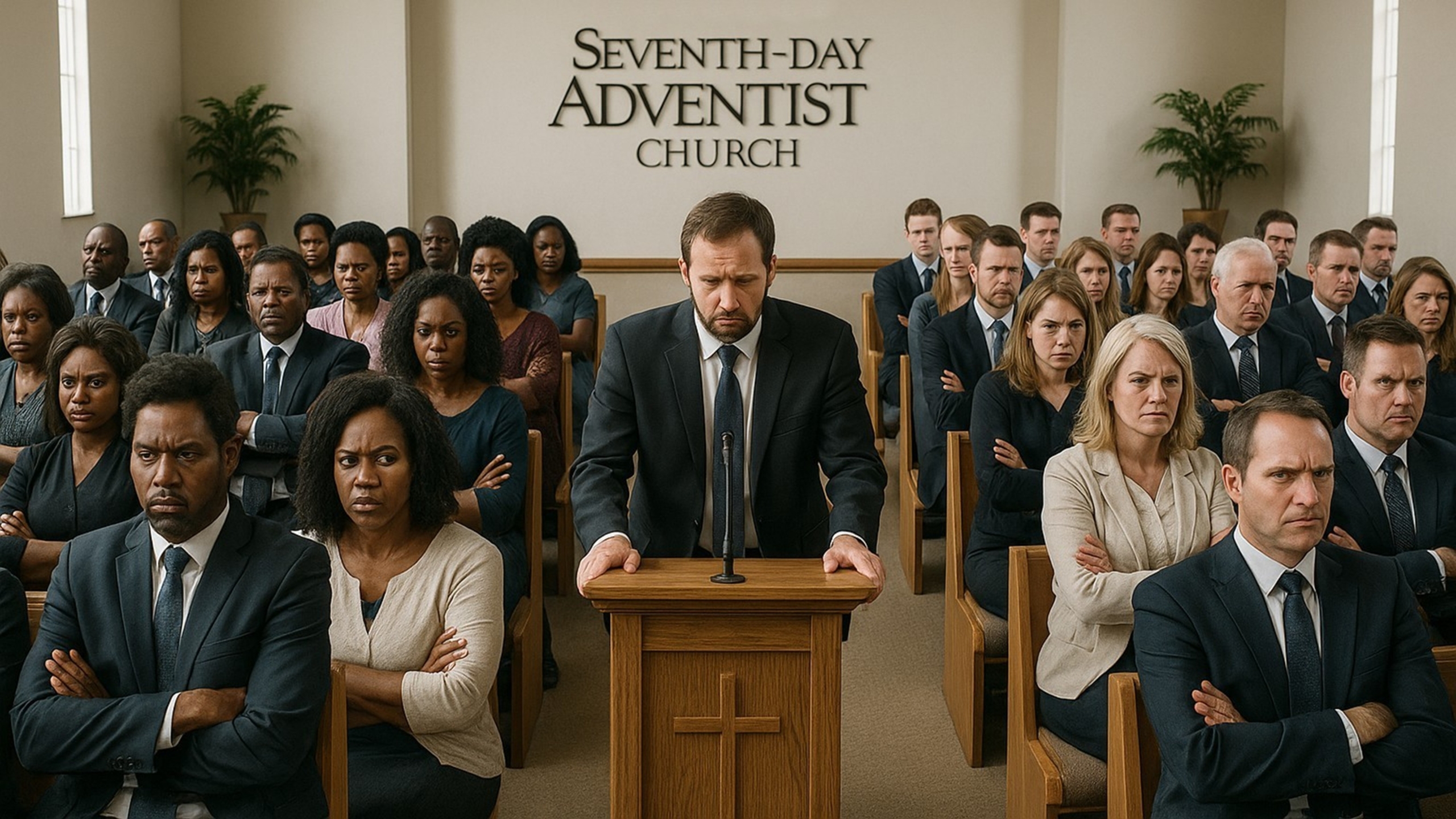
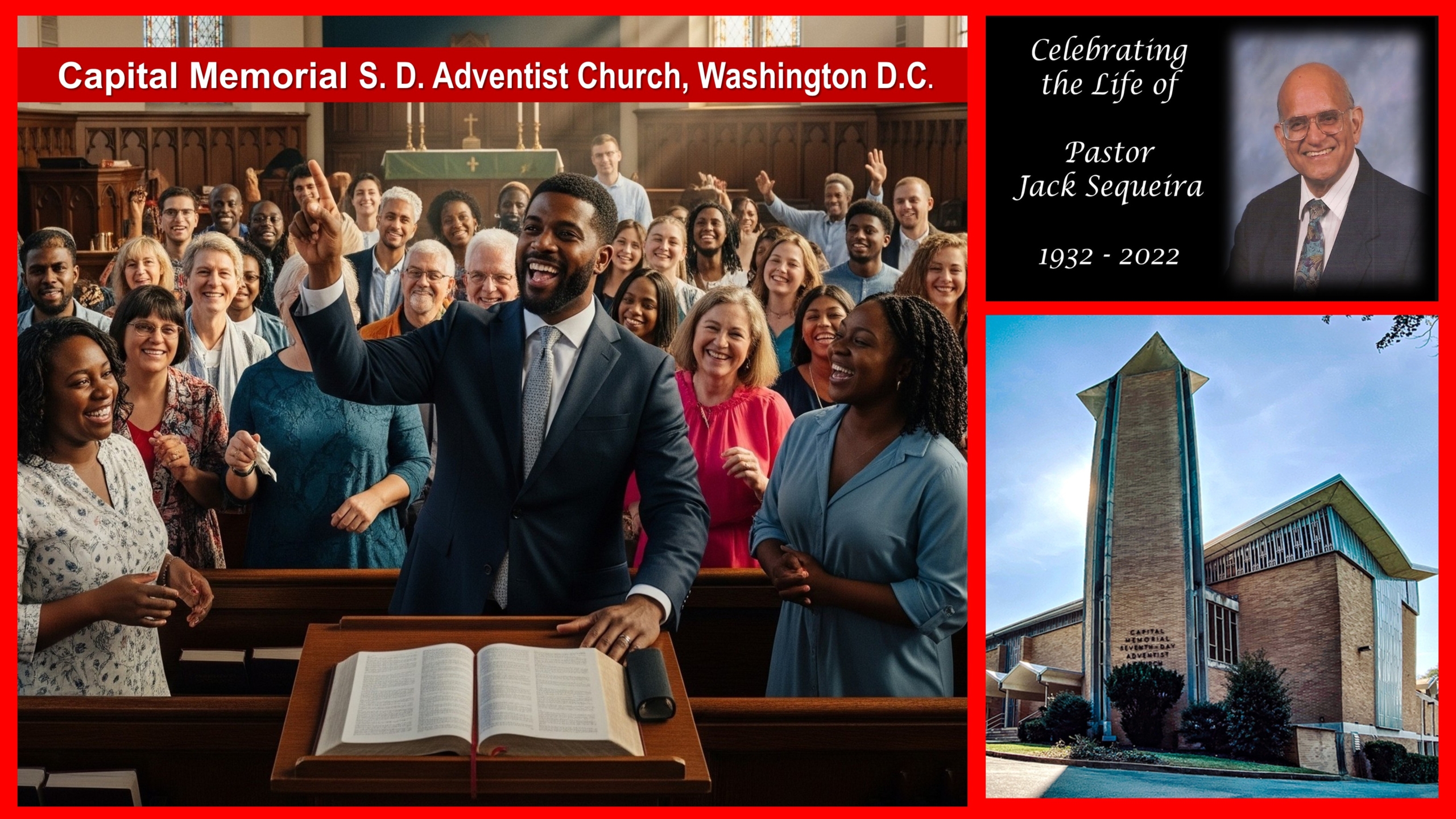
But, let me give you an example. There is a Seventh-day Adventist Church in Washington DC, and some time ago, the members of that church were divided into two groups, black and white. And they were fighting like cats and dogs. The white members complained that the black ones were too noisy. The black members, in turn, accused the white members of being proud and spiritually lifeless.
So, the conference sent one pastor after another to unite that church, but all of them failed.
And finally, the conference sent Pastor Jack Sequeira, who had served as a missionary in Africa and was known as a gospel-centred pastor.
When he arrived, both groups asked him which side he would take. He replied, “Neither. I am on the side of Jesus.”
And since that time on, everything he did was preaching the cross of Christ and the true, fully restored gospel.
It took two years of preaching this message, but after two years, the members were finally united. They stopped fighting, respected and loved one another. As a result, the membership grew from about 100 to over 500 members in just a few years!
Seeing what happened, the leaders asked Pastor Sequeira how he managed to unite that divided church. “It wasn’t me”, he answered, “but the message of the cross and the gospel of Christ, which is the power of God, did it”.
And also in our lives, this message will become a life-transforming power of God, if we study it carefully and patiently, pray over it, and believe with all our heart. It was true in the life of Christ’s disciples who after understanding that Christ became a curse for them, were never the same again.
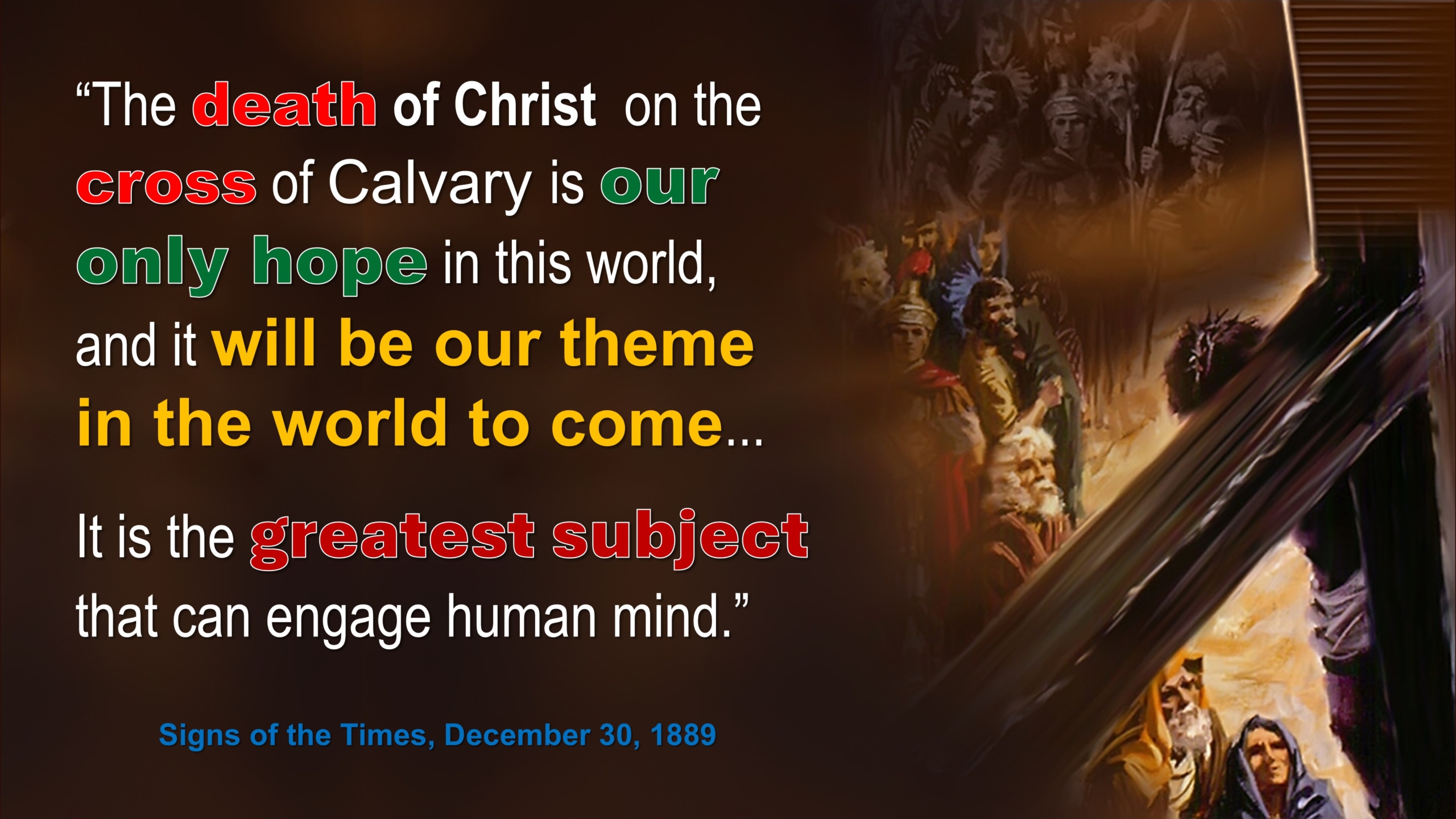
According to Ellen White,
“The death of Christ on the cross of Calvary is our only hope in this world, and it will be our theme in the world to come… It is the greatest subject that can engage the human mind” (Signs of the Times, December 30, 1889).
READ ABOT LOVE OF GOD REVEALED IN THE CROSS OF CHRIST