Uniform Day of Rest: Ben Carson and New Push for Sunday Laws
Slawomir Gromadzki
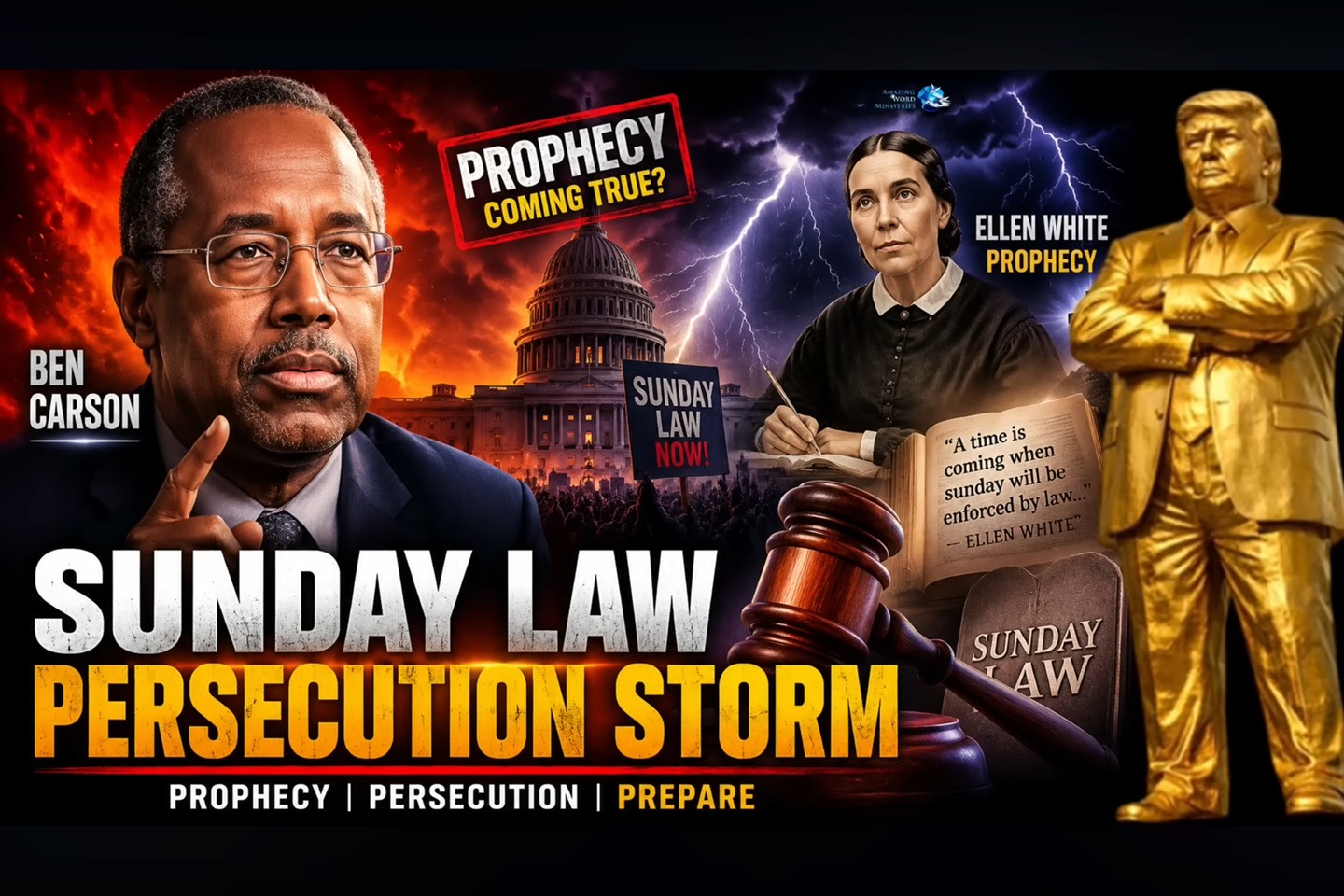
An intense debate is sweeping through religious liberty circles, church news outlets, and digital ministries. It was ignited by a policy proposal from the Washington, D.C.-based Heritage Foundation titled “Saving America by Saving the Family.”
What caught the immediate attention of the faith community—particularly Seventh-day Adventists—was a specific recommendation: the revival of “blue laws” to establish a “uniform day of rest” on Sundays.
The North American Division (NAD) of Seventh-day Adventists issued a strong corporate response, firmly opposing the initiative. The resulting digital ripple effect has completely re-energized prophetic and constitutional conversations across websites and YouTube ministries.
The Strategy: Frame it as Health and Family, Not Religion
The policy report does not openly demand that Americans go to church. Instead, it frames a mandatory Sunday pause as a compassionate, secular solution to modern societal burnout. The argument is straightforward: America is facing a crisis of collapsing birth rates, fractured families, and exhausted workers.
By legally restricting commercial activities on Sundays, the state could provide a regular day for families to gather, communities to connect, and workers to recharge. To back this up legally, proponents point to a landmark 1961 U.S. Supreme Court case, McGowan v. Maryland. In that 8-1 decision, the Court ruled that Sunday-closing laws are constitutional if they serve a modern, secular goal—like the community’s general well-being—even if those laws originally grew out of Christian traditions.
The Response: Why Coercion Destroys Conscience
For Seventh-day Adventists, who have spent more than 160 years advocating for the strict separation of church and state, this secular wrapping does not change the core issue. The problem isn’t the concept of rest; it is the element of compulsion.
The official response from the NAD highlights several critical dangers. First, there is the inherent danger of coercion, because worship and rest only have true spiritual value when they are completely voluntary. The moment a government steps in to regulate a specific day of the week, it crosses a dangerous line into territory that belongs to God alone.
Second, a legally mandated Sunday rest day places an unfair economic squeeze on minorities who already observe a different holy day, such as Orthodox Jews and Seventh-day Adventists who keep the biblical seventh-day Sabbath (Saturday). These individuals could face immense legal or economic pressure, essentially forcing them to lose two days of commercial activity every week just to stay true to their faith.
Finally, history shows that major legislative shifts always begin as cultural conversations. While the proposal is currently just a policy recommendation, church leaders urge discernment rather than panic, reminding believers that even well-intentioned laws can easily hollow out genuine faith by turning personal conviction into state-regulated behavior.
“We defend the right of Christians to worship on Sunday, the right of Jews or others to observe the Sabbath on Saturday, the right of Muslims to worship on Friday, and the right of every person to follow—or not follow—faith according to conscience. We oppose forced worship, not because we reject God’s law, but because we honor it too deeply to place it in human hands.” — Pastor Tull, Religious Liberty Engagement.
Paradox of Dr. Ben Carson
The most fascinating and heavily debated aspect of this entire conversation revolves around Dr. Ben Carson. For decades, Dr. Carson’s life has stood as a powerful, undeniable testimony of divine blessing. From his humble beginnings to becoming a world-renowned neurosurgeon, millions have recognized God’s hand guiding his historic career.
Much like Daniel in the Old Testament, he has been elevated to the highest political circles, using his unique platform to introduce presidents, powerful politicians, and the public to the Seventh-day Adventist Church. Critics must approach his legacy with deep care and respect, as his life has undeniably brought massive positive visibility to the faith.
This brings us to a major question currently circulating on YouTube and church forums: Why would Dr. Carson align himself with an organization like the Heritage Foundation and its broader project, which explicitly includes a call for a uniform day of rest?
The answer requires careful nuance. Dr. Carson’s primary desire is to see America return to its spiritual foundations—to truly be a nation “under God” once again. Crucially, wanting America to honor God does not mean he is willing to promote a Sunday law movement. When looking at the actual text, Dr. Carson did not write the proposal regarding a Sunday rest day. Furthermore, Dr. Carson has clarified his view on end-time prophecies in recent interviews. He suggests that focusing strictly on a future, localized American Sunday law might cause people to miss the bigger picture: the massive wave of religious persecution already facing Christians on a global scale today.
However, his high-profile position within this political ecosystem has sparked deep reflection within the church. The discussion centers on how the policy package attempts to bypass the First Amendment by framing Sunday rest as an amendment to the Fair Labor Standards Act—offering time-and-a-half pay for Sunday work rather than a direct religious decree.
For many online commentators, this serves as a powerful reminder of how easily good intentions, family-focused policies, and a desire to see a country rededicated to God can inadvertently build a framework that threatens absolute freedom of conscience, even if the individuals involved mean no harm and would never personally endorse forced worship.
Religious Liberty Commission Meeting at White House
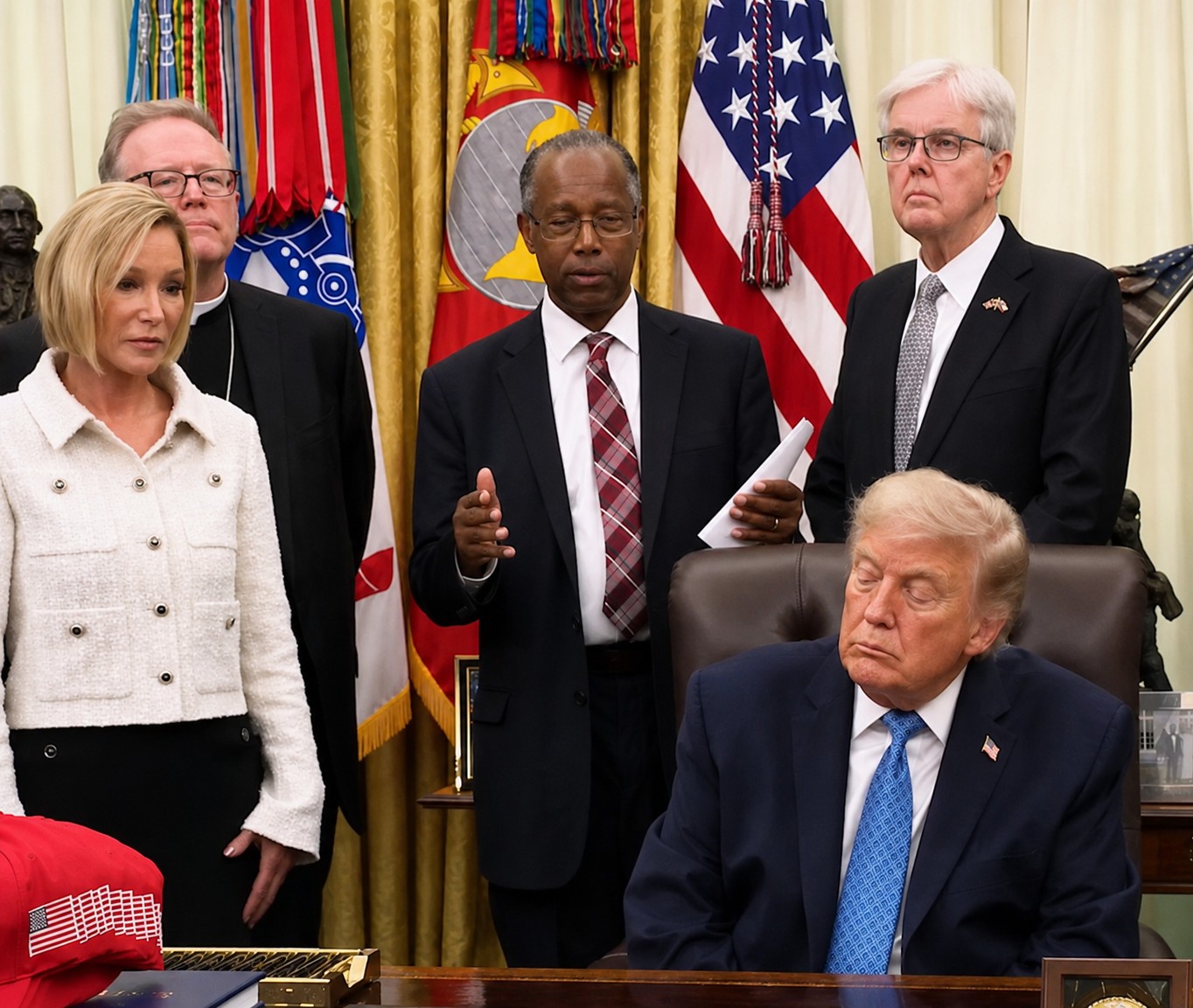
The massive wave of discussion following the recent high-profile presentation by the Presidential Religious Liberty Commission, where Dr. Ben Carson stood alongside Donald Trump to unveil a major 12-point plan for faith in America. While critics instantly looked for prophetic signs, Dr. Carson’s strong base of Adventist defenders has taken to blogs, forums, and YouTube comment sections to fiercely protect his legacy and clarify his true intentions.
Focus on Freedom of Conscience, Not Sunday Mandates
The primary defense being mounted online is that the newly released 12-point plan has absolutely nothing to do with establishing a national Sunday law or a uniform day of rest. Defenders are pointing directly to the actual text of the commission’s report, showing that the core proposals focus heavily on individual conscience and protecting believers from government overreach.
They highlight provisions such as protecting military service members from forced mandates, ensuring chaplains have a stronger voice, and stopping workplace discrimination against private religious expression. For these defenders, the event proves that Dr. Carson’s political influence is being used strictly to widen the umbrella of religious freedom for everyone, rather than creating a legal framework to restrict Saturday worship.
A recurring theme among Dr. Carson’s supporters is the direct comparison to the biblical Daniel, who served faithfully in the highest levels of a secular government without compromising his personal convictions. Defenders argue that it is unfair to criticize Dr. Carson simply for being in the room when conservative policies are drafted.
They emphasize that his lifelong dedication to the Seventh-day Adventist Church remains unshakeable, and his presence next to the nation’s leadership ensures that the unique perspective of Sabbath-keeping minorities is represented where it matters most. Rather than working to subvert religious liberty, they write, he is using his God-given platform to remind the country’s most powerful politicians about the fundamental importance of faith.
Nation Under God vs. Forced Worship
Supporters are also heavily clarifying the distinction between Dr. Carson’s desire to see America return to its moral foundations and the actual enforcement of religious decrees. They write that Dr. Carson deeply loves the concept of America as a nation “under God,” recognizing that spiritual strength is vital for the country’s well-being.
However, his defenders emphasize that wanting a culture to respect faith does not mean he supports the state forcing people to worship on a specific day. They argue that he knows the difference between voluntary spiritual revival and government compulsion, and they urge the wider church community to stop using alarmist prophetic lenses to mischaracterize a man whose life has been an undeniable testimony of divine blessing.
- Rights from the Creator: He emphasized that the nation’s founding documents clearly dictate that human rights come directly from God, rather than from the government. [1]
- One Nation Under God: He questioned critics trying to separate the country from its heritage, stating, “Do they realize that that’s our family document? Do they realize that our family just says we are one nation under God?” [1, 2]
- Misinterpretation of Church and State: He countered arguments regarding the strict separation of church and state, noting that the country’s founding was fundamentally a religious statement. [1]
- Defending Faith: In an official statement shared via his American Cornerstone Institute, he noted, “The greatest threat to religious freedom today may be public misunderstanding about it… It’s something that must be fought for and preserved.” [1]
- Support for Vouchers: He used recent Supreme Court decisions to defend the expansion of school vouchers, arguing they align with the basic American right to choose how to lead your life. [1]
Two Views on Church and State: Dr. Ben Carson vs. Ellen G. White
Dr. Carson argues that the separation of church and state was never intended to banish religious morality from public life. He maintains that it simply means the church cannot dominate the state, and the state cannot dominate the church. Beyond that, he believes the government and religious institutions should work together to promote moral excellence. From his viewpoint, the founding of the United States was a deeply religious statement designed to let Judeo-Christian values flourish. For Dr. Carson, advocating for a nation “under God” is about protecting the freedom of believers to influence culture for good, not about forcing anyone to worship.